
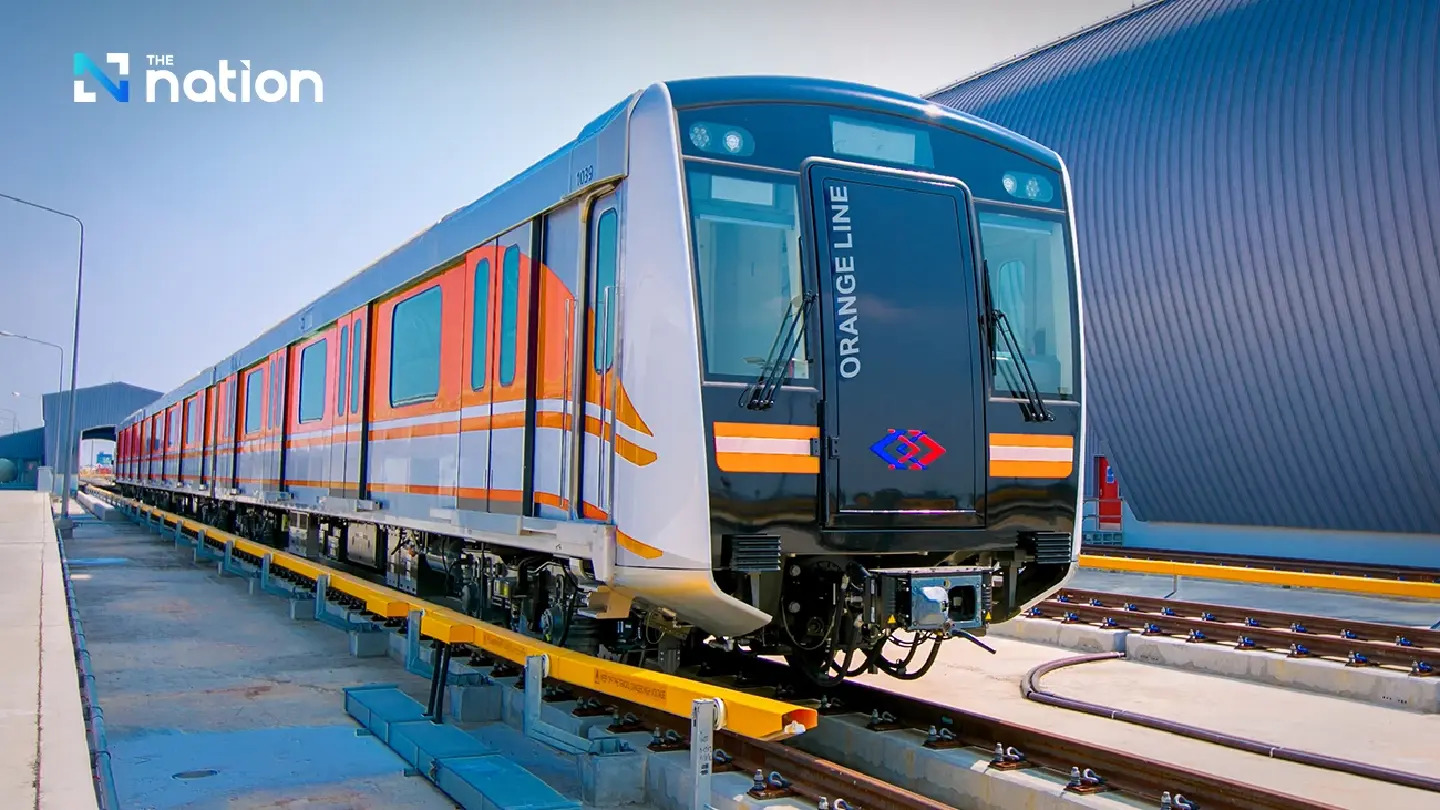
 Orange Line pushes Bangkok’s east-west hotspots as land prices climb
THIS NEWS ARTICLE KINDLY SPONSORED BY FALLPROTEC, A WORLD-RENOWNED NAME IN THE DESIGN AND MANUFACTURE OF PREMIUM FALL PROTECTION SYSTEMS AND HEIGHT ACCESS SOLUTIONS
Bangkok’s Orange Line train is reshaping property demand, with the East section due to open in January 2028 and the West line targeted for 2030, lifting land values.
The Mass Rapid Transit Authority of Thailand (MRTA) is accelerating construction of the Orange Line West (Bang Khun Non-Thailand Cultural Centre), which is expected to be completed and opened in 2030, linking with the Orange Line East (Thailand Cultural Centre-Min Buri), where construction is now 100% complete.
The latest estimate puts the East section’s opening at around January 2028, revised from the previous target of late 2027.
With private developers moving in around key stations, the project is expected to improve connectivity while boosting residential values and land potential along the corridor. The Orange Line is also projected to carry as many as 300,000 passengers per trip per day, moving commuters quickly between Bangkok’s western and eastern sides and creating new prime locations around major stations.
Key interchange stations are expected to be the main value drivers—particularly stations linking to existing and future rail lines.
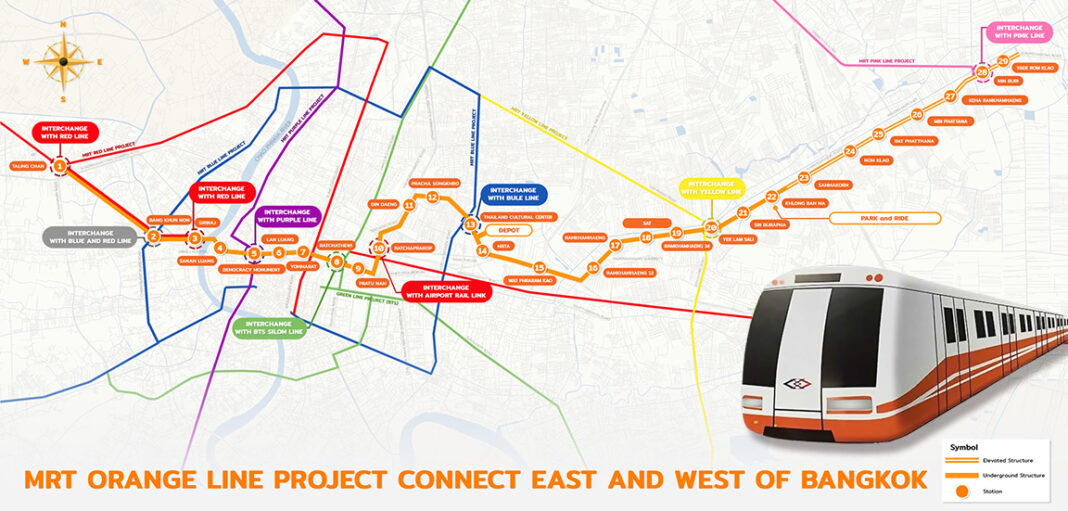
A major focal point is Thailand Cultural Centre station, which connects with the MRT Blue Line and is seen as a crucial interchange. Rama 9 is also in the spotlight, with the area changing rapidly amid major landholdings, including MCOT land, and investment plans by Central Pattana on a prominent Rama 9 corner plot.
The shift also aligns with Bangkok’s revised City Plan (4th revision), expected to take effect around mid-2027, which is designed to better match land-use planning with rail mass transit—supporting housing, mixed-use development and more efficient land use, while encouraging travel by rail rather than private cars to help ease congestion and air pollution.
Cushman & Wakefield Research estimates that the Orange Line’s progress has already pushed up land and condominium prices along the corridor.
On the eastern stretch—especially along Ramkhamhaeng Road around Hua Mak and Lam Sali—multiple new condo launches have emerged, with average selling prices at about THB85,000 per sq m, while some locations have climbed above THB100,000 per sq m. Land values in parts of the corridor have more than doubled in recent years, with some plots near Thailand Cultural Centre station exceeding THB1 million per sq wa.
On the western side, price movement has been most visible around Ratchathewi station, where some condo projects are priced as high as THB250,000 per sq m. Mixed-use development has also continued in the area, including projects such as JRK Tower and The Platinum Square, reflecting strong location potential despite local constraints related to land ownership and development rules.
Beyond housing, commercial projects have also continued to emerge, including Phoenix, a wholesale-retail food centre, alongside new hotels and office developments in the Phetchaburi-Pratunam area—underscoring the Orange Line’s influence on near-term urban change, even as the broader condo market cools.
Project overview
The Orange Line (Bang Khun Non-Min Buri) spans 35.9km with 28 stations, connecting Bangkok’s east and west. It is divided into two main sections:
East section (Thailand Cultural Centre-Min Buri): about 22.5km (10 underground stations and 7 elevated stations)
West section (Bang Khun Non-Thailand Cultural Centre): about 13.4km with 11 stations (all underground)
The Orange Line is widely seen as another key rail corridor drawing sustained developer interest, with station areas expected to remain a major battleground for new projects as openings draw closer.
Source: https://www.nationthailand.com/business/property/40065645
Google Translation:
รถไฟฟ้าสายสีส้มผลักดันทำเลทองฝั่งตะวันออก-ตะวันตกของกรุงเทพฯ ท่ามกลางราคาที่ดินที่พุ่งสูงขึ้น
บทความข่าวนี้ได้รับการสนับสนุนโดย FALLPROTEC บริษัทชั้นนำระดับโลกด้านการออกแบบและผลิตระบบป้องกันการตกจากที่สูงและโซลูชันการเข้าถึงที่สูงระดับพรีเมียม
รถไฟฟ้าสายสีส้มของกรุงเทพฯ กำลังเปลี่ยนแปลงความต้องการด้านอสังหาริมทรัพย์ โดยสายตะวันออกมีกำหนดเปิดให้บริการในเดือนมกราคม 2561 และสายตะวันตกมีเป้าหมายที่จะเปิดให้บริการในปี 2563 ซึ่งจะทำให้ราคาที่ดินสูงขึ้น
การรถไฟฟ้าขนส่งมวลชนแห่งประเทศไทย (รฟม.) กำลังเร่งการก่อสร้างรถไฟฟ้าสายสีส้มตะวันตก (ศูนย์วัฒนธรรมต่างประเทศบางขุน) ซึ่งคาดว่าจะแล้วเสร็จและเปิดให้บริการในปี 2563 เชื่อมต่อกับรถไฟฟ้าสายสีส้มตะวันออก (ศูนย์วัฒนธรรมไทย-มีนบุรี) ซึ่งขณะนี้การก่อสร้างเสร็จสมบูรณ์ 100% แล้ว
การประเมินล่าสุดระบุว่าส่วนตะวันออกจะเปิดให้บริการประมาณเดือนมกราคม 2561 ซึ่งปรับแก้ไขจากเป้าหมายเดิมที่ปลายปี 2560
ด้วยการที่ผู้พัฒนาเอกชนเข้ามาลงทุนรอบสถานีสำคัญ โครงการนี้คาดว่าจะช่วยปรับปรุงการเชื่อมต่อ พร้อมทั้งเพิ่มมูลค่าที่อยู่อาศัยและศักยภาพของที่ดินตามแนวเส้นทาง รถไฟฟ้าสายสีส้มคาดว่าจะรองรับผู้โดยสารได้มากถึง 300,000 คนต่อเที่ยวต่อวัน ช่วยให้ผู้โดยสารเดินทางระหว่างฝั่งตะวันตกและตะวันออกของกรุงเทพฯ ได้อย่างรวดเร็ว และสร้างทำเลทองใหม่ๆ รอบสถานีหลัก
สถานีเชื่อมต่อสำคัญคาดว่าจะเป็นตัวขับเคลื่อนมูลค่าหลัก โดยเฉพาะสถานีที่เชื่อมต่อกับเส้นทางรถไฟที่มีอยู่และในอนาคต
จุดสนใจหลักคือสถานีศูนย์วัฒนธรรมแห่งประเทศไทย ซึ่งเชื่อมต่อกับรถไฟฟ้าสายสีน้ำเงิน และถือเป็นจุดเชื่อมต่อที่สำคัญ นอกจากนี้ ถนนพระราม 9 ก็เป็นที่จับตามองเช่นกัน เนื่องจากพื้นที่กำลังเปลี่ยนแปลงอย่างรวดเร็วท่ามกลางการถือครองที่ดินขนาดใหญ่ รวมถึงที่ดินของ MCOT และแผนการลงทุนของเซ็นทรัลพัฒนาบนที่ดินหัวมุมถนนพระราม 9 ที่โดดเด่น
การเปลี่ยนแปลงนี้ยังสอดคล้องกับแผนพัฒนาเมืองฉบับปรับปรุงของกรุงเทพฯ (ฉบับที่ 4) ซึ่งคาดว่าจะมีผลบังคับใช้ประมาณกลางปี 2560 โดยมีจุดประสงค์เพื่อให้การวางแผนการใช้ที่ดินสอดคล้องกับการขนส่งมวลชนทางรางมากขึ้น สนับสนุนการสร้างที่อยู่อาศัย การพัฒนาแบบผสมผสาน และการใช้ที่ดินอย่างมีประสิทธิภาพมากขึ้น พร้อมทั้งส่งเสริมการเดินทางโดยรถไฟแทนรถยนต์ส่วนตัวเพื่อช่วยลดความแออัดและมลพิษทางอากาศ
บริษัทวิจัย Cushman & Wakefield ประเมินว่าความคืบหน้าของรถไฟฟ้าสายสีส้มได้ผลักดันราคาที่ดินและคอนโดมิเนียมตามแนวเส้นทางให้สูงขึ้นแล้ว
ในฝั่งตะวันออก โดยเฉพาะอย่างยิ่งตามถนนรามคำแหง บริเวณหัวหมากและลำสาลี มีการเปิดตัวคอนโดมิเนียมใหม่หลายแห่ง โดยมีราคาขายเฉลี่ยประมาณ 85,000 บาทต่อตารางเมตร ขณะที่บางแห่งมีราคาสูงกว่า 100,000 บาทต่อตารางเมตร มูลค่าที่ดินในบางส่วนของเส้นทางเพิ่มขึ้นมากกว่าสองเท่าในช่วงไม่กี่ปีที่ผ่านมา โดยบางแปลงใกล้สถานีศูนย์วัฒนธรรมแห่งประเทศไทยมีราคาสูงกว่า 1 ล้านบาทต่อตารางวา ทางฝั่งตะวันตก การเคลื่อนไหวของราคามีความชัดเจนที่สุดบริเวณสถานีราชเทวี ซึ่งโครงการคอนโดมิเนียมบางแห่งมีราคาสูงถึง 250,000 บาทต่อตารางเมตร การพัฒนาแบบผสมผสานก็ยังคงดำเนินต่อไปในพื้นที่นี้ รวมถึงโครงการต่างๆ เช่น เจ.อาร์.เค. ทาวเวอร์ และเดอะแพลทินัมสแควร์ สะท้อนให้เห็นถึงศักยภาพของทำเลที่ตั้งที่แข็งแกร่ง แม้จะมีข้อจำกัดในท้องถิ่นที่เกี่ยวข้องกับการถือครองที่ดินและกฎระเบียบการพัฒนา
นอกเหนือจากที่อยู่อาศัยแล้ว โครงการเชิงพาณิชย์ก็ยังคงเกิดขึ้นอย่างต่อเนื่อง รวมถึงฟีนิกซ์ ศูนย์อาหารค้าส่งและค้าปลีก ควบคู่ไปกับโรงแรมและอาคารสำนักงานใหม่ในพื้นที่เพชรบุรี-ประตูน้ำ ซึ่งเน้นย้ำถึงอิทธิพลของรถไฟฟ้าสายสีส้มต่อการเปลี่ยนแปลงเมืองในระยะสั้น แม้ว่าตลาดคอนโดมิเนียมโดยรวมจะชะลอตัวลงก็ตาม
ภาพรวมโครงการ
รถไฟฟ้าสายสีส้ม (บางขุนนนมิร์บุรี) มีความยาว 35.9 กิโลเมตร มี 28 สถานี เชื่อมต่อกรุงเทพฯ ฝั่งตะวันออกและตะวันตก รถไฟฟ้าสายสีส้มแบ่งออกเป็นสองส่วนหลัก:
ส่วนตะวันออก (ศูนย์วัฒนธรรมแห่งประเทศไทย-มีนบุรี): ประมาณ 22.5 กิโลเมตร (10 สถานีใต้ดินและ 7 สถานีลอยฟ้า)
ส่วนตะวันตก (บางขุน-ศูนย์วัฒนธรรมต่างชาติ): ประมาณ 13.4 กิโลเมตร มี 11 สถานี (ทั้งหมดเป็นสถานีใต้ดิน)
รถไฟฟ้าสายสีส้มได้รับการมองว่าเป็นอีกหนึ่งเส้นทางรถไฟสำคัญที่ดึงดูดความสนใจจากนักพัฒนาอย่างต่อเนื่อง โดยคาดว่าพื้นที่สถานีจะยังคงเป็นสนามรบสำคัญสำหรับโครงการใหม่ๆ เมื่อการเปิดให้บริการใกล้เข้ามา


