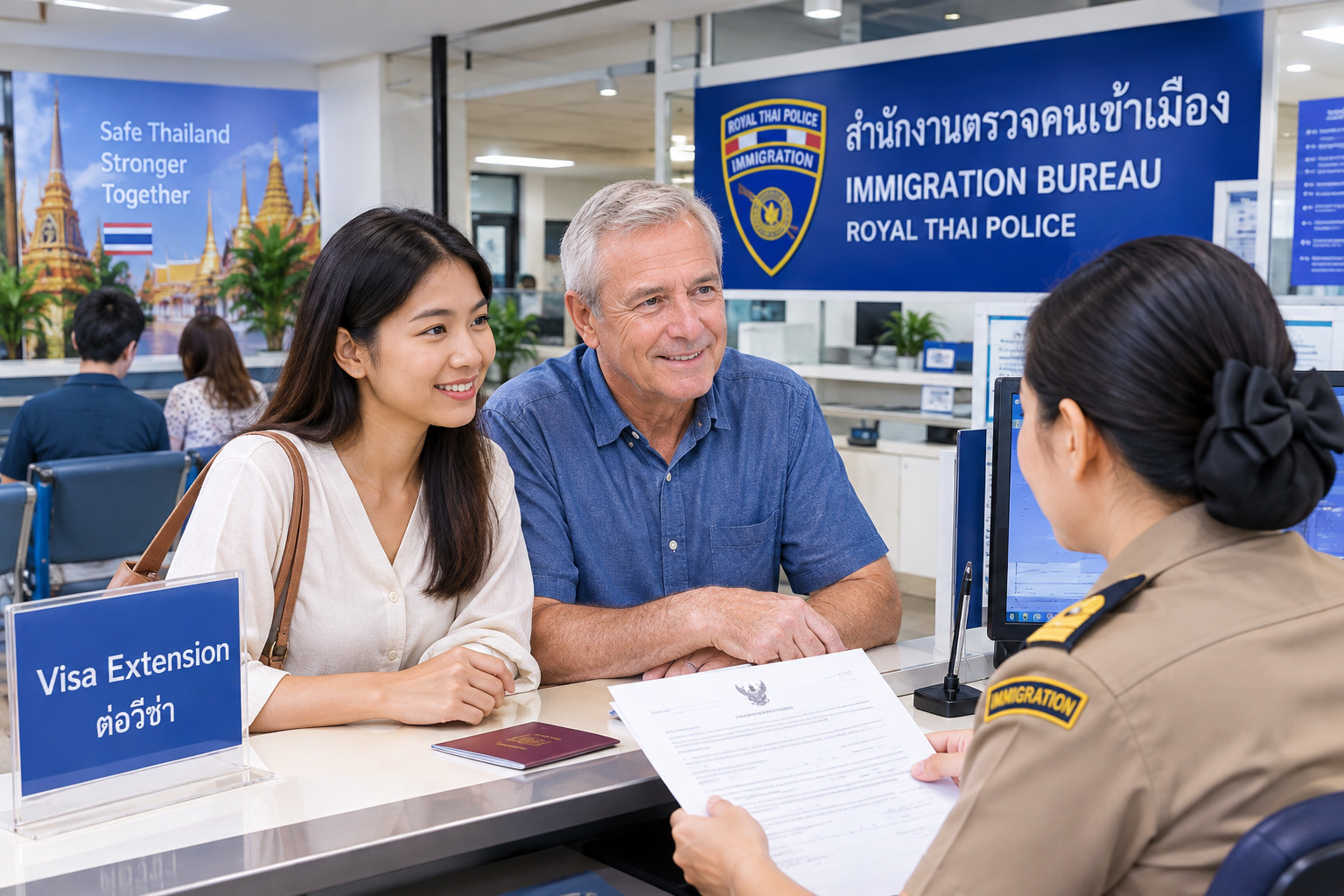
 How Foreign Parents of Adult Thai Children Can Obtain a One-Year Extension of Stay in Thailand
Most expatriates in Thailand are either working and holding a Non-Immigrant O Business visa and subsequent extensions, or are not working and holding a Non-Immigrant O visa and subsequent extensions based on one of the following categories:
- Family Members: Foreigners married to Thai nationals or supporting Thai children.
• Retirees: Individuals aged 50 or older who wish to retire in Thailand.
• Volunteers: Individuals working with registered NGOs or charities.
• Medical Treatment: Patients requiring long-term medical care in Thai hospitals.
• Dependents: Spouses or children of foreigners holding a valid work permit or retirement visa.
• Accompanying Foreigners: Those accompanying foreign workers or students.
The great majority of Non-Immigrant O visa extensions are granted to people who are either supporting a Thai family member, such as under a Support Thai Wife or Support Thai Child extension, or are on a Retirement extension.
In my article, A Simple and Practical Guide to Renewing a Support Thai Wife (Marriage) Extension of Stay in Thailand, I explained the process of applying for and renewing a Support Thai Wife (Marriage) extension.
But what happens if you are on a Support Thai Wife extension and your wife predeceases you? What options are available?
The most well-known option would be to apply to change from a Support Thai Wife extension to a Retirement extension.
- A Support Thai Wife extension requires that you meet the financial requirements of THB 400,000 (as of 24 September 2026 approximately USD 11,950 or GBP 9,035) maintained for a specified period in your personal Thai bank account, or demonstrate a minimum monthly income of THB 40,000 paid into your personal Thai bank account for the previous 12 months.
- A Retirement extension requires that you meet the financial requirements of THB 800,000 (as of 24 September 2026 approximately USD 23,900 or GBP 18,068) maintained for a specified period in your personal Thai bank account, or demonstrate a minimum monthly income of THB 65,000 paid into your personal Thai bank account for the previous 12 months.
Changing from a Support Thai Wife extension to a Retirement extension therefore requires the applicant to meet significantly higher financial requirements, which some expatriates may not be able to satisfy.
There is a second, but relatively little-known, option. Adult Thai children may sponsor their foreign parent for a one-year Non-Immigrant O extension. The criteria are relatively straightforward:
- The adult Thai child must either be:
• A Thai national who has been legally adopted by the foreign parent; or
• A Luk Khrueng (ลูกครึ่ง) – a person of mixed Thai and foreign parentage. - The adult Thai child must be 20 years of age or older. There is no age requirement applicable to the foreign parent.
- The adult Thai child must be employed in Thailand and provide:
• A letter from their employer confirming their position, employment start date and monthly salary;
• Evidence of three months’ salary payments into their Thai bank account; and
• A copy of their bank statement.
There is no stated minimum or maximum salary requirement.
- The adult Thai child and foreign parent must reside at the same address and both parties must provide evidence to demonstrate this.
There is no financial requirement for the foreign parent to meet. There is no THB 400,000 bank balance requirement, no THB 800,000 bank balance requirement and indeed no minimum monthly income requirement at all.
This option, whereby an adult Thai child sponsors their foreign parent, may provide a practical alternative for expatriates who no longer qualify for a Support Thai Wife extension or who do not meet the financial requirements for a Retirement extension.
In many ways it reflects traditional Thai family values. Parents support and care for their children while they are growing up; later in life, those same children may be able to provide support for their parents.
Disclaimer: Immigration requirements can vary between immigration offices and may change over time, and applicants should confirm the latest requirements with their local Immigration Office before applying.
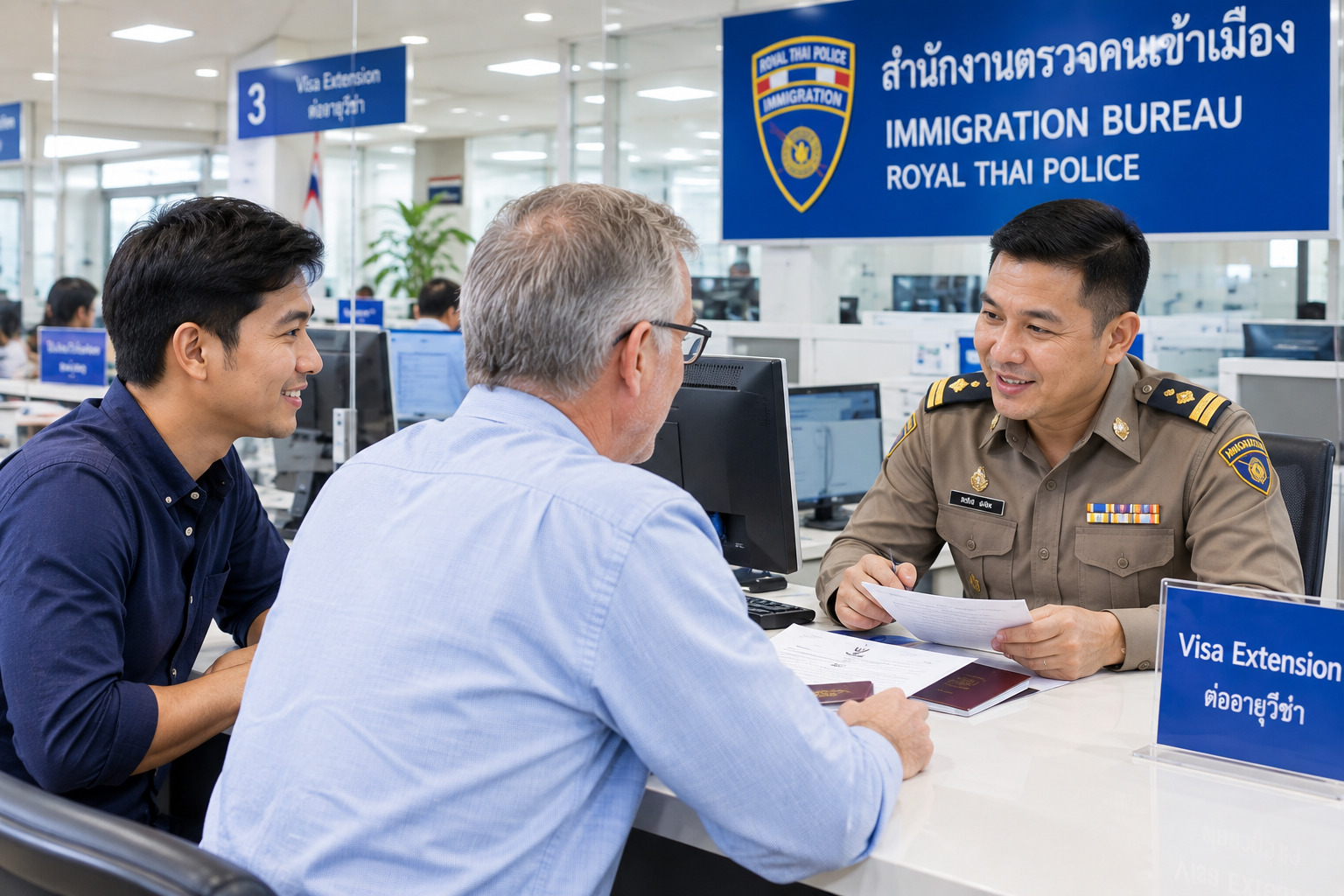
Conditions, details, criteria, and document requirements:
“Under Thai Immigration regulations, when a Thai child has reached legal adulthood, is working in Thailand, and shares the same residence, they can officially sponsor their foreign parent for a 1-year Extension of Stay. Under this specific pathway, the foreign parent does not need to show any personal funds (such as 400,000 THB / 800,000 THB) or personal monthly income. The financial responsibility shifts entirely to the adult Thai child who acts as the supporter.
Here are the exact details, criteria, and document requirements translated into English:
- Core Eligibility Criteria
- The Thai Child: Must be an adult (at least 20 years old), legally employed in Thailand, earning a stable income, and paying
- personal income tax.
- The Foreign Parent: No minimum age requirement (you do not need to be 50+ as required by a retirement visa).
- Relationship & Residence: The parent-child relationship must be legally recognized (via a birth certificate or legitimate child registration), and both parent and child must legally reside at the exact same address.
- Financial & Employment Proof (From the Thai Child)
Because the Thai child is acting as the sponsor/supporter, their financial documents are the most critical part of the application:
- Employment Certificate: An official letter from the child’s employer stating their current position, date of employment, and monthly salary.
- 3 Months of Salary Proof: Monthly pay slips or withholding tax certificates (T.W. 50) for the last 3 months.
- 3 Months Bank Statements: The child’s personal bank statements showing the salary being deposited consistently.
- Tax Documents: Personal income tax filings (such as P.N.D. 91 or P.N.D. 1) along with official receipts from the Revenue Department to prove legal earnings.
- Proof of Relationship & Shared Residence
- Child’s Birth Certificate: Original and a copy to conclusively prove the biological/legal link to the foreign parent.
- Thai Child’s ID & House Registration (Tabien Baan): Original and copies showing the child’s current address.
- Shared Residence Proof:
- Proof of residence showing both names
- tied to the property (e.g., House Registration or a valid rental agreement).
- TM.30 Registration: The mandatory address notification receipt for the foreign parent at that specific address.
- Family Photographs: Clear, color photos of the parent and adult child together inside the house, in front of the house, and showing the house/room number clearly.
- A hand-drawn map or printed map pin showing the exact location of the residence.
- Application Process
- Initial Visa: The foreign parent must currently hold a valid Non-Immigrant O (Family) visa or entry stamp.
- Form & Fee: Prepare the TM.7 Application Form (Extension of Temporary Stay) with a passport-sized photo and the 1,900 THB
- application fee.
- In-Person Appearance: Both the foreign parent and the adult Thai child must appear together in person at the local Immigration Office. Officers will interview both parties and take formal statements.
- The “Under Consideration” Period: Immigration will first stamp a 30-day “under consideration” period to verify the documents and background before granting the full 1-year extension.
Google Translation:
[We apologise if any of the translation is incorrect: google Translation occasionally gets it wrong]
วิธีที่ชาวต่างชาติซึ่งเป็นบิดามารดาของบุตรชาวไทยที่บรรลุนิติภาวะแล้วจะสามารถขอขยายเวลาพำนักในประเทศไทยได้อีก 1 ปี
ชาวต่างชาติส่วนใหญ่ที่พำนักอยู่ในประเทศไทยมักถือวีซ่าประเภท Non-Immigrant O (เพื่อการทำงานหรือเหตุผลอื่น) และทำการต่ออายุวีซ่าดังกล่าว โดยแบ่งออกเป็นกลุ่มที่ทำงานและกลุ่มที่ไม่ได้ทำงาน ซึ่งถือวีซ่า Non-Immigrant O ตามเงื่อนไขประเภทต่างๆ ดังนี้:
• สมาชิกในครอบครัว: ชาวต่างชาติที่สมรสกับคนไทยหรือมีภาระต้องดูแลบุตรชาวไทย
• ผู้เกษียณอายุ: บุคคลที่มีอายุตั้งแต่ 50 ปีขึ้นไปและประสงค์จะใช้ชีวิตหลังเกษียณในประเทศไทย
• อาสาสมัคร: บุคคลที่ทำงานร่วมกับองค์กรพัฒนาเอกชน (NGO) หรือองค์กรการกุศลที่จดทะเบียนถูกต้อง
• การรักษาพยาบาล: ผู้ป่วยที่จำเป็นต้องได้รับการรักษาพยาบาลระยะยาวในโรงพยาบาลของไทย
• ผู้ติดตาม: คู่สมรสหรือบุตรของชาวต่างชาติที่ถือใบอนุญาตทำงานหรือวีซ่าเกษียณอายุที่ยังไม่หมดอายุ
• ผู้ติดตามชาวต่างชาติ: ผู้ที่ติดตามชาวต่างชาติซึ่งเข้ามาทำงานหรือศึกษาต่อในประเทศไทย
การต่ออายุวีซ่า Non-Immigrant O ส่วนใหญ่นั้นมักเป็นการต่ออายุสำหรับผู้ที่มีภาระดูแลสมาชิกในครอบครัวชาวไทย (เช่น การต่ออายุเพื่อดูแลภรรยาชาวไทยหรือดูแลบุตรชาวไทย) หรือการต่ออายุสำหรับผู้เกษียณอายุ
ในบทความเรื่อง “คู่มือที่เข้าใจง่ายและนำไปใช้ได้จริงสำหรับการต่ออายุการพำนักในไทยเพื่อดูแลภรรยาชาวไทย (กรณีสมรส)” ผมได้อธิบายขั้นตอนการยื่นคำร้องและการต่ออายุวีซ่าประเภทนี้ไว้แล้ว
แต่จะเกิดอะไรขึ้นหากคุณถือวีซ่าประเภทดูแลภรรยาชาวไทยอยู่ แล้วภรรยาของคุณเสียชีวิตก่อนคุณ? คุณมีทางเลือกอย่างไรบ้าง?
ทางเลือกที่เป็นที่รู้จักกันดีที่สุดคือการยื่นคำร้องขอเปลี่ยนประเภทการต่ออายุวีซ่า จากเดิมที่เป็นการต่ออายุเพื่อดูแลภรรยาชาวไทย มาเป็นการต่ออายุในฐานะผู้เกษียณอายุแทน
สำหรับการต่ออายุวีซ่าเพื่อดูแลภรรยาชาวไทยนั้น คุณจำเป็นต้องปฏิบัติตามเงื่อนไขทางการเงิน โดยต้องมีเงินฝากในบัญชีธนาคารส่วนตัวในประเทศไทยจำนวน 400,000 บาท (ข้อมูล ณ วันที่ 24 กันยายน 2026 คิดเป็นเงินประมาณ 11,950 ดอลลาร์สหรัฐ หรือ 9,035 ปอนด์สเตอร์ลิง) โดยต้องคงยอดเงินดังกล่าวไว้ในบัญชีเป็นระยะเวลาตามที่กำหนด หรือแสดงหลักฐานรายได้ขั้นต่ำเดือนละ 40,000 บาทที่โอนเข้าบัญชีธนาคารส่วนตัวในประเทศไทยอย่างต่อเนื่องตลอดระยะเวลา 12 เดือนที่ผ่านมา การขอขยายระยะเวลาการพำนักในฐานะผู้เกษียณอายุ (Retirement extension) กำหนดให้คุณต้องมีคุณสมบัติด้านการเงินตามเกณฑ์ คือมีเงินฝากจำนวน 800,000 บาท (ณ วันที่ 24 กันยายน 2569 คิดเป็นเงินประมาณ 23,900 ดอลลาร์สหรัฐ หรือ 18,068 ปอนด์สเตอร์ลิง) คงค้างไว้ในบัญชีธนาคารส่วนตัวในประเทศไทยเป็นระยะเวลาที่กำหนด หรือแสดงหลักฐานรายได้ต่อเดือนขั้นต่ำ 65,000 บาทที่โอนเข้าบัญชีธนาคารส่วนตัวในประเทศไทยอย่างต่อเนื่องตลอด 12 เดือนที่ผ่านมา
ดังนั้น การเปลี่ยนประเภทการขอขยายระยะเวลาการพำนักจากการอุปการะภรรยาชาวไทย (Support Thai Wife extension) มาเป็นการเกษียณอายุ จึงกำหนดให้ผู้ยื่นคำร้องต้องมีคุณสมบัติด้านการเงินที่สูงขึ้นอย่างมาก ซึ่งชาวต่างชาติบางรายอาจไม่สามารถปฏิบัติตามเงื่อนไขดังกล่าวได้
อย่างไรก็ตาม ยังมีอีกทางเลือกหนึ่งที่ค่อนข้างเป็นที่รู้จักน้อยกว่า นั่นคือการที่บุตรชาวไทยที่มีอายุครบเกณฑ์แล้วสามารถเป็นผู้รับรอง (sponsor) ให้แก่บิดาหรือมารดาชาวต่างชาติ เพื่อขอขยายระยะเวลาการพำนักประเภท Non-Immigrant O (ระยะเวลา 1 ปี) โดยมีหลักเกณฑ์ที่ค่อนข้างชัดเจนและไม่ซับซ้อน ดังนี้:
บุตรชาวไทยที่มีอายุครบเกณฑ์แล้วจะต้องมีสถานะอย่างใดอย่างหนึ่งต่อไปนี้:
• เป็นบุคคลสัญชาติไทยที่ได้รับการจดทะเบียนรับบุตรบุญธรรมโดยชอบด้วยกฎหมายจากบิดาหรือมารดาชาวต่างชาติรายนั้น หรือ
• เป็นลูกครึ่ง (Luk Khrueng) – คือบุคคลที่มีเชื้อสายผสมระหว่างไทยและต่างชาติ
บุตรชาวไทยจะต้องมีอายุตั้งแต่ 20 ปีบริบูรณ์ขึ้นไป ส่วนบิดาหรือมารดาชาวต่างชาตินั้นไม่มีการกำหนดเกณฑ์อายุขั้นต่ำหรือขั้นสูง
บุตรชาวไทยจะต้องมีการจ้างงานในประเทศไทยและต้องแสดงเอกสารดังต่อไปนี้:
• หนังสือรับรองจากนายจ้างที่ระบุตำแหน่ง วันที่เริ่มงาน และเงินเดือนต่อเดือน;
• หลักฐานการรับเงินเดือนเข้าบัญชีธนาคารในประเทศไทยย้อนหลัง 3 เดือน; และ
• สำเนารายการเดินบัญชีธนาคาร (Bank statement)
ไม่มีการกำหนดเกณฑ์เงินเดือนขั้นต่ำหรือขั้นสูงสุดไว้
บุตรชาวไทยและบิดาหรือมารดาชาวต่างชาติต้องพักอาศัยอยู่ที่เดียวกัน และทั้งสองฝ่ายต้องแสดงหลักฐานเพื่อยืนยันข้อเท็จจริงดังกล่าว
ไม่มีข้อกำหนดด้านการเงินสำหรับบิดาหรือมารดาชาวต่างชาติ กล่าวคือ ไม่มีการกำหนดเกณฑ์เงินฝากในบัญชีธนาคารที่ 400,000 บาท หรือ 800,000 บาท และไม่มีข้อกำหนดเรื่องรายได้ขั้นต่ำต่อเดือนแต่อย่างใด
ทางเลือกนี้ ซึ่งบุตรชาวไทยทำหน้าที่เป็นผู้รับรองให้แก่บิดาหรือมารดาชาวต่างชาติ อาจเป็นทางเลือกที่เหมาะสมและปฏิบัติได้จริงสำหรับชาวต่างชาติที่ไม่เข้าเกณฑ์การขอขยายระยะเวลาการพำนักในฐานะผู้มีภรรยาชาวไทยอีกต่อไป หรือผู้ที่ไม่ผ่านเกณฑ์ด้านการเงินสำหรับการขอขยายระยะเวลาการพำนักในฐานะผู้เกษียณอายุ ในหลายแง่มุม สิ่งนี้สะท้อนถึงค่านิยมดั้งเดิมของครอบครัวไทย ที่พ่อแม่คอยดูแลและสนับสนุนลูกหลานในช่วงที่พวกเขายังเติบโต และเมื่อเวลาผ่านไป ลูกหลานเหล่านั้นก็สามารถกลับมาดูแลและสนับสนุนพ่อแม่ของตนได้เช่นกัน
ข้อควรทราบ: ข้อกำหนดด้านการตรวจคนเข้าเมืองอาจแตกต่างกันไปในแต่ละสำนักงานและอาจมีการเปลี่ยนแปลงได้ ผู้สมัครควรตรวจสอบข้อกำหนดล่าสุดกับสำนักงานตรวจคนเข้าเมืองในพื้นที่ของตนก่อนดำเนินการยื่นคำร้อง
เงื่อนไข รายละเอียด เกณฑ์ และข้อกำหนดด้านเอกสาร:
ตามระเบียบของสำนักงานตรวจคนเข้าเมืองไทย เมื่อบุตรสัญชาติไทยบรรลุนิติภาวะและทำงานอยู่ในประเทศไทยโดยอาศัยอยู่บ้านเดียวกัน บุตรสามารถเป็นผู้รับรอง (Sponsor) ให้บิดาหรือมารดาชาวต่างชาติเพื่อขอต่ออายุการอนุญาตให้อยู่ในราชอาณาจักร (Extension of Stay) ได้เป็นเวลา 1 ปี ภายใต้เงื่อนไขนี้ บิดาหรือมารดาชาวต่างชาติไม่จำเป็นต้องแสดงหลักฐานทางการเงินส่วนตัว (เช่น เงินฝาก 400,000 หรือ 800,000 บาท) หรือรายได้ส่วนตัวต่อเดือนแต่อย่างใด ภาระความรับผิดชอบทางการเงินจะตกอยู่กับบุตรสัญชาติไทยผู้ทำหน้าที่เป็นผู้รับรองเพียงฝ่ายเดียว
ต่อไปนี้คือรายละเอียด เกณฑ์ และเอกสารที่จำเป็นสำหรับการดำเนินการ:
- เกณฑ์คุณสมบัติหลัก
- บุตรสัญชาติไทย: ต้องบรรลุนิติภาวะ (อายุ 20 ปีบริบูรณ์ขึ้นไป) มีงานทำอย่างถูกต้องตามกฎหมายในประเทศไทย มีรายได้ที่มั่นคง และมีการชำระ
- ภาษีเงินได้บุคคลธรรมดา
- บิดาหรือมารดาชาวต่างชาติ: ไม่มีการกำหนดอายุขั้นต่ำ (ไม่จำเป็นต้องมีอายุ 50 ปีขึ้นไปเหมือนกรณีวีซ่าเกษียณอายุ)
- ความสัมพันธ์และการอยู่อาศัย: ความสัมพันธ์ระหว่างบิดา/มารดากับบุตรต้องได้รับการรับรองตามกฎหมาย (เช่น มีสูติบัตรหรือการจดทะเบียนรับรองบุตร) และทั้งสองฝ่ายต้องมีชื่ออยู่ในทะเบียนบ้านเดียวกันและอาศัยอยู่ ณ ที่อยู่เดียวกันจริง
- หลักฐานทางการเงินและการจ้างงาน (จากบุตรสัญชาติไทย)
เนื่องจากบุตรสัญชาติไทยทำหน้าที่เป็นผู้รับรอง เอกสารทางการเงินของบุตรจึงถือเป็นส่วนสำคัญที่สุดในการยื่นคำร้อง:
- หนังสือรับรองการทำงาน: หนังสืออย่างเป็นทางการจากนายจ้างที่ระบุตำแหน่ง วันที่เริ่มงาน และเงินเดือนปัจจุบัน
- หลักฐานแสดงรายได้ย้อนหลัง 3 เดือน: สลิปเงินเดือนหรือหนังสือรับรองการหักภาษี ณ ที่จ่าย (ท.วิ. 50) ย้อนหลัง 3 เดือน
- รายการเดินบัญชีธนาคารย้อนหลัง 3 เดือน: รายการเดินบัญชีส่วนตัวของบุตรที่แสดงยอดเงินเดือนเข้าอย่างสม่ำเสมอ
- เอกสารทางภาษี: หลักฐานการยื่นภาษีเงินได้บุคคลธรรมดา (เช่น ภ.ง.ด. 91 หรือ ภ.ง.ด. 1) พร้อมใบเสร็จรับเงินจากกรมสรรพากรเพื่อยืนยันรายได้ที่ถูกต้องตามกฎหมาย
- หลักฐานแสดงความสัมพันธ์และการอยู่อาศัยร่วมกัน
- สูติบัตรของบุตร: ฉบับจริงและสำเนา เพื่อยืนยันความสัมพันธ์ทางสายเลือดหรือความสัมพันธ์ตามกฎหมายกับบิดา/มารดาชาวต่างชาติอย่างชัดเจน
- บัตรประชาชนและทะเบียนบ้านของบุตร: ฉบับจริงและสำเนาที่ระบุที่อยู่ปัจจุบันของบุตร
- หลักฐานการอยู่อาศัยร่วมกัน:
- หลักฐานแสดงที่อยู่ที่ระบุชื่อของทั้งสองฝ่าย • เอกสารที่ระบุที่อยู่ของสถานที่พักอาศัย (เช่น ทะเบียนบ้าน หรือสัญญาเช่าที่ถูกต้องตามกฎหมาย)
- การแจ้งที่พักอาศัย (TM.30): ใบรับแจ้งที่พักอาศัยสำหรับคนต่างด้าว (บิดาหรือมารดา) ณ สถานที่พักอาศัยดังกล่าว
- ภาพถ่ายครอบครัว: ภาพถ่ายสีที่เห็นใบหน้าชัดเจน โดยถ่ายภาพบิดาหรือมารดาและบุตรชาวไทย (ที่บรรลุนิติภาวะแล้ว) ร่วมกัน ทั้งภายในบ้านและหน้าบ้าน รวมถึงภาพที่แสดงหมายเลขบ้านหรือหมายเลขห้องพักอย่างชัดเจน
- แผนที่ (วาดด้วยมือหรือพิมพ์จากระบบ) ที่ระบุตำแหน่งที่ตั้งของที่พักอาศัยอย่างถูกต้องแม่นยำ
- ขั้นตอนการยื่นคำร้อง
- วีซ่าเริ่มต้น: บิดาหรือมารดาชาวต่างชาติต้องถือวีซ่าประเภท Non-Immigrant O (สำหรับครอบครัว) หรือมีตราประทับอนุญาตให้อยู่ในราชอาณาจักรที่ยังไม่หมดอายุ
- แบบฟอร์มและค่าธรรมเนียม: จัดเตรียมแบบฟอร์ม TM.7 (คำร้องขออยู่ต่อในราชอาณาจักรเป็นการชั่วคราว) พร้อมรูปถ่ายขนาดติดหนังสือเดินทาง และเงินค่าธรรมเนียม 1,900 บาท
- ค่าธรรมเนียมการยื่นคำร้อง
- การแสดงตนต่อเจ้าหน้าที่: ทั้งบิดาหรือมารดาชาวต่างชาติและบุตรชาวไทย (ที่บรรลุนิติภาวะแล้ว) ต้องเดินทางมาแสดงตนพร้อมกันที่สำนักงานตรวจคนเข้าเมืองในเขตพื้นที่รับผิดชอบ เพื่อให้เจ้าหน้าที่สัมภาษณ์และบันทึกถ้อยคำอย่างเป็นทางการ
- ระยะเวลา “อยู่ระหว่างการพิจารณา” (Under Consideration): เจ้าหน้าที่ตรวจคนเข้าเมืองจะประทับตราอนุญาตให้อยู่ต่อชั่วคราวเป็นเวลา 30 วัน เพื่อตรวจสอบเอกสารและประวัติความเป็นมาก่อนที่จะอนุมัติการขยายเวลาพำนักเต็มจำนวน 1 ปี