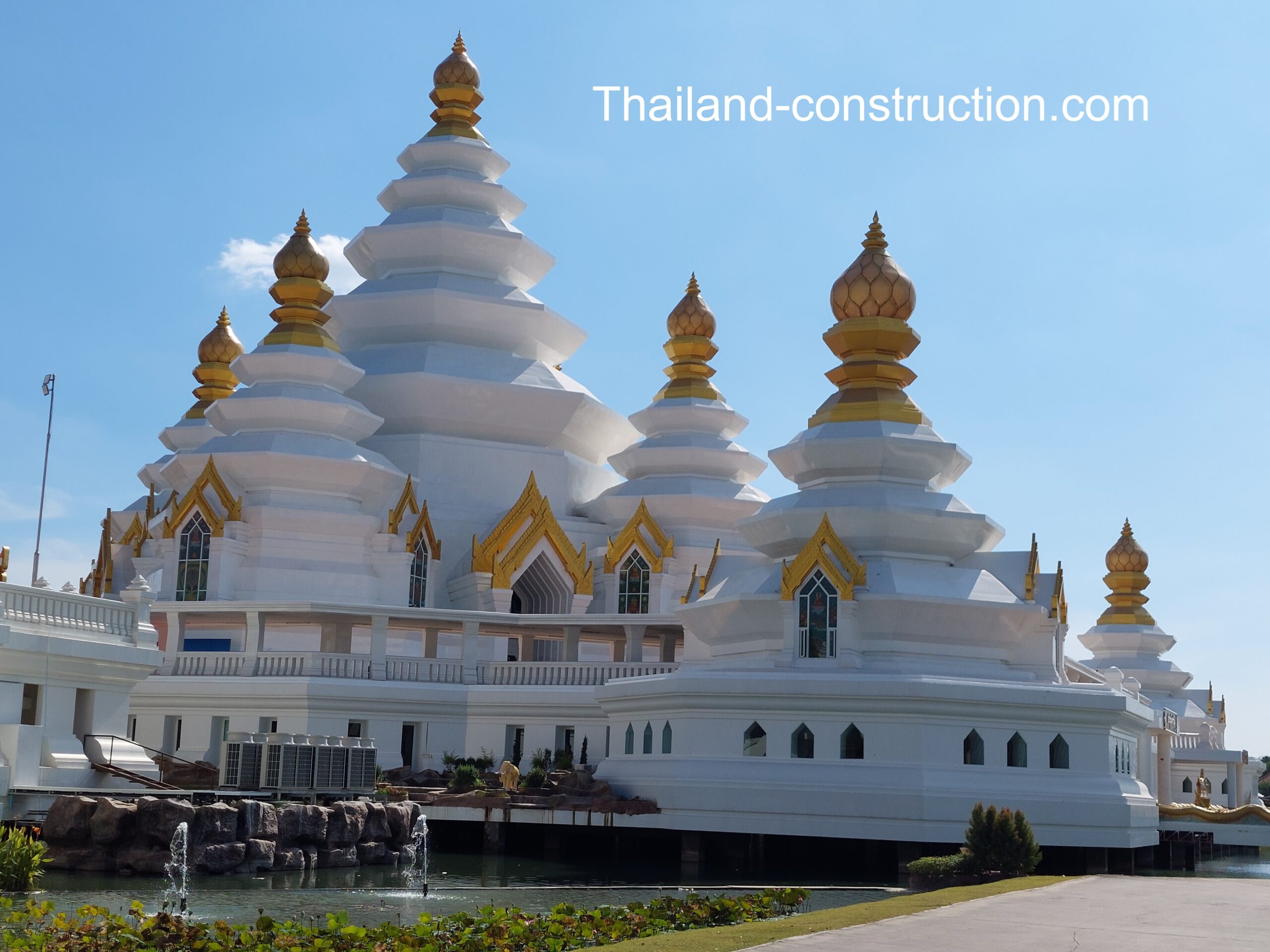
Day trip out of Bangkok to Bang Phli’s and Bang Sao Thong’s interesting wats – including the Meringue wat, Thailand’s longest Reclining Buddha, Five Million Baht toilets and more
If you are looking for a nice trip out of Bangkok, why not consider a tour of Bang Phli’s and Bang Sao Thong’s wats in the adjacent province to Bangkok of Samut Prakarn?
Bang Phli and Bang Sao Thong, like most districts in Thailand have an abundance of wats, but we bring you a few of the most well-known wats, and couple of new very eye-catching wat.
Below we have provided a tour of seven wats, four of them are in Bang Phli district and three more are in the neighbouring district of Bang Sao Thong; all of the wats are close to Suvarnabhumi airport.
As seven wats in a day may be too many for some people, you could make this tour a two-part visit, with the first three wats being on the south side of Bangna-trat highway, and the other four wats all being on the same road on the north side of Bangna-trat highway.
Bang Phli
Bang Phli (Thai: บางพลี, pronounced and sometimes written as Bang Plee) is a district (amphoe) of Samut Prakan province and the home to Suvarnabhumi Airport (also called (New) Bangkok International Airport), which opened in 2006 as Thailand’s primary airport. Travelling from Bangkok to Chonburi, Sri Racha, Pattaya and the east you will pass through Bang Phli on Bangna-Trat Road.
Bang Phli is around 20 minutes drive from Bangna and 40-50 minutes from central Bangkok.
The name “Bang Phli” came from the assumption that when King Naresuan the Great fought with the enemies that came to invade Ayutthaya. He stopped the army here and performed a ritual called “Bat Phli” to terrorize the enemies and to be an auspicious for the army.
1 Wat Bang Phli Yai Klang
Not quite next to Wat Bang Phli Yai Nai (see below), but a short 5-minute 1.2 km drive away, is Wat Bang Phli Yai Klang.
While Wat Bang Phli Yai Nai is probably the more well-known temple, that draws more visitors, Wat Bang Phli Yai Klang has a larger footprint and offers a quieter and more relaxing visit – both wats are popular with the Myanmar folk in the area.
Wat Bang Phli Yai Klang, also known as Wat Phra Non, is Buddhist temple in pair with Wat Bang Phli Yai Nai, and is located between Wat Bang Phli Yai Nai and Wat Khong Kharam (Wat Yai Nu), hence the name Wat Bang Phli Yai Klang (Klang in Thai means middle).
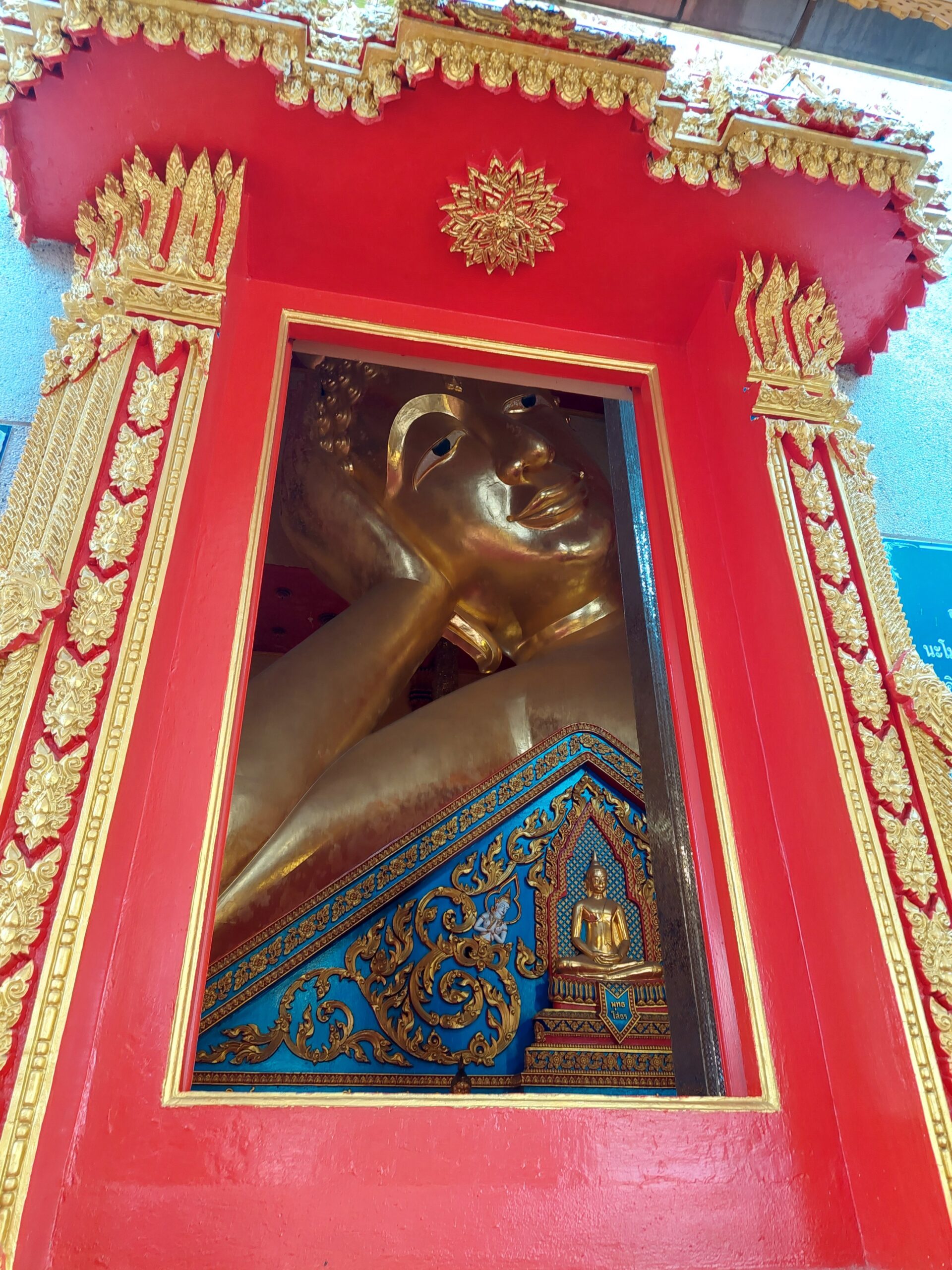
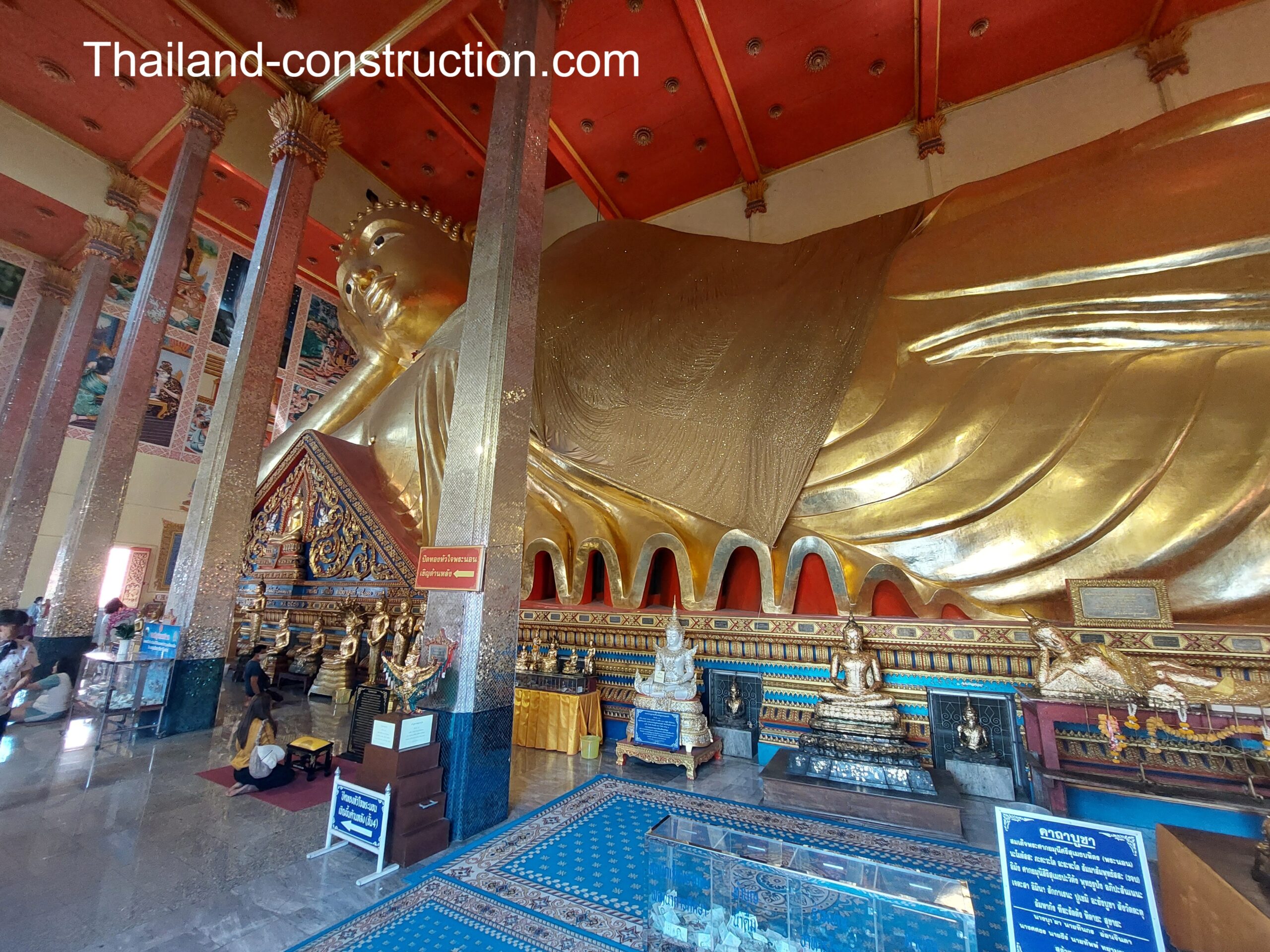
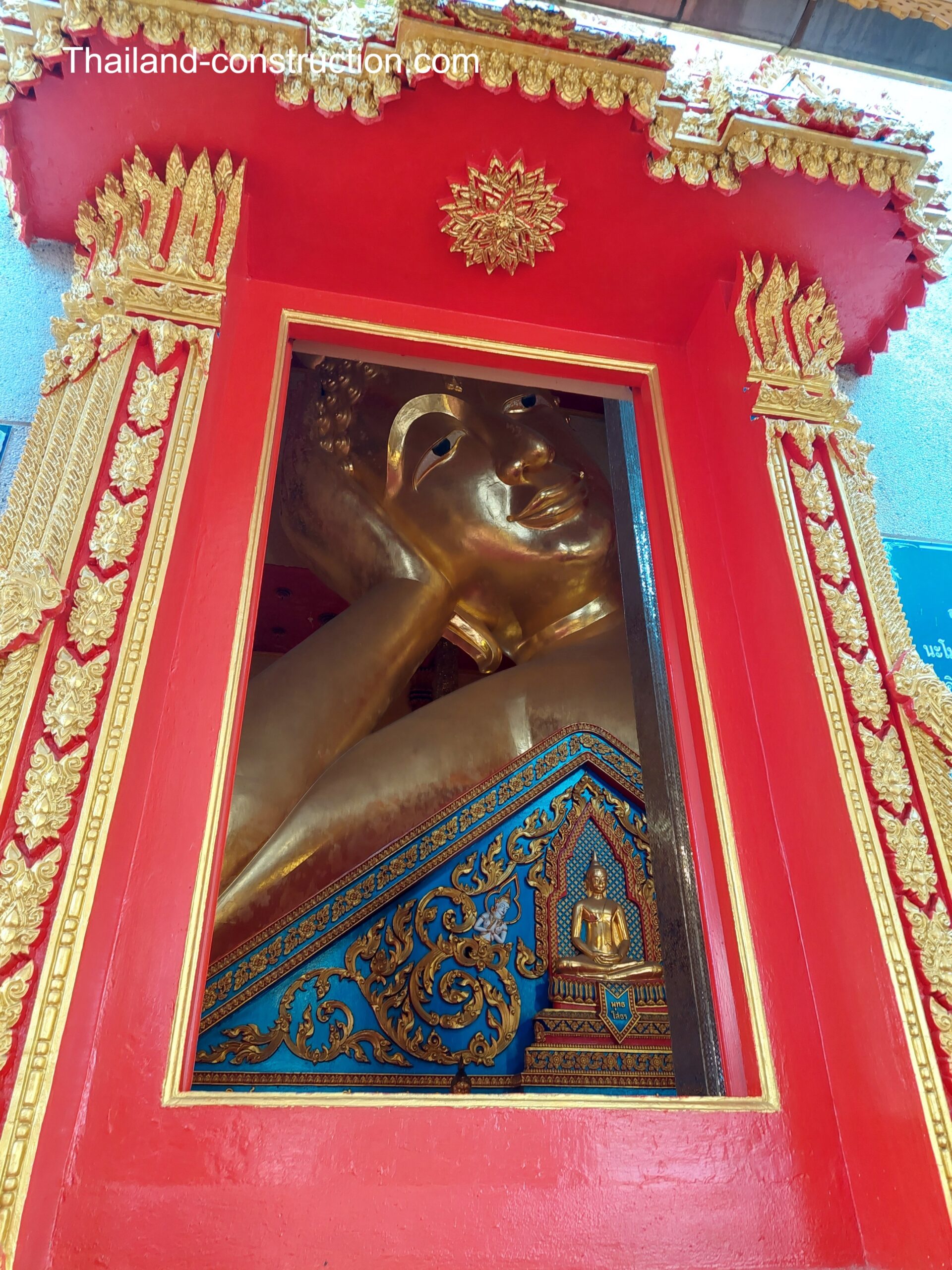
Wat Bang Phli Yai Klang is a historic Thai Buddhist temple in Samut Prakan, renowned for housing Thailand’s longest reclining Buddha, Somdet Phra Sakayamuni Si Sumet Bophit, measuring approximately 53 meters.
Wat Bang Phli Yai Klang is also located on the northern bank of Khlong Samrong, and was built around 1824. In the past, villagers in the Bang Phli area often called it “Wat Klang” (Central Temple) because it was situated between Wat Bang Phli Yai Nai and Wat Khongkharam (Wat Yai Nu), which is now a deserted temple. Originally, the temple land belonged to Mr. Chang Muenrat. His older brother, Mr. Noi Muenrat, built it and named it “Wat Noi Pathum Khongkha” because he dug a pond and planted lotus flowers there. Later, the temple was renamed “Wat Rat Satta Tham” and finally ” Wat Bang Phli Yai Klang,” as it is known today, although the exact year of this name change is unknown.
The temple’s centrepiece is the enormous reclining Buddha, Somdet Phra Sakayamuni Si Sumet Bophit, which stretches 53 meters in length, surpassing the famous Wat Pho reclining Buddha in Bangkok. It was constructed between 1978 and 2001 by Phra Khru Phisarnwuttikij, who was inspired by his experiences during his time as a monk and his travels to various places. He conceived the idea of creating something meritorious to encourage devotees to make donations to the temple, similar to other temples he had visited. Visitors can walk inside the statue, ascending internal stairs at the back of the statue to reach the Buddha’s heart, which is lined with gold leaf. The interior spans four floors. Visitors can place gold leaf on the Buddha’s heart to make wishes and enhance good fortune, walk under the ordination hall to ward off bad luck, and pay respect to Indra, the guardian deity, for blessings.
WHAT MOST PEOPLE MISS WHEN VISITING THIS WAT – that got your attention – is the huge chedi or stupa. You really can’t miss it as it is so tall, but in case you’re not sure, walk behind the building with the reclining buddha, continue walking through the wat grounds towards the khlong, and you will come to another carpark and there is the huge chedi or stupa. I was unable to find out it’s height, but it is certainly a landmark in the area. Go inside and up to the top of the chedi and you will be rewarded with fantastic views towards Bangkok.
A decent place to eat is ‘A-Sia’s Pork Leg Kitchen’ ครัวขาหมูอาเสี่ย pork dish restaurant one minute drive away. Parking in front and behind the restaurant.

2 Wat Bang Phli Yai Nai
Travel the short distance from Wat Bang Phli Yai Klang to Wat Bang Phli Yai Nai.
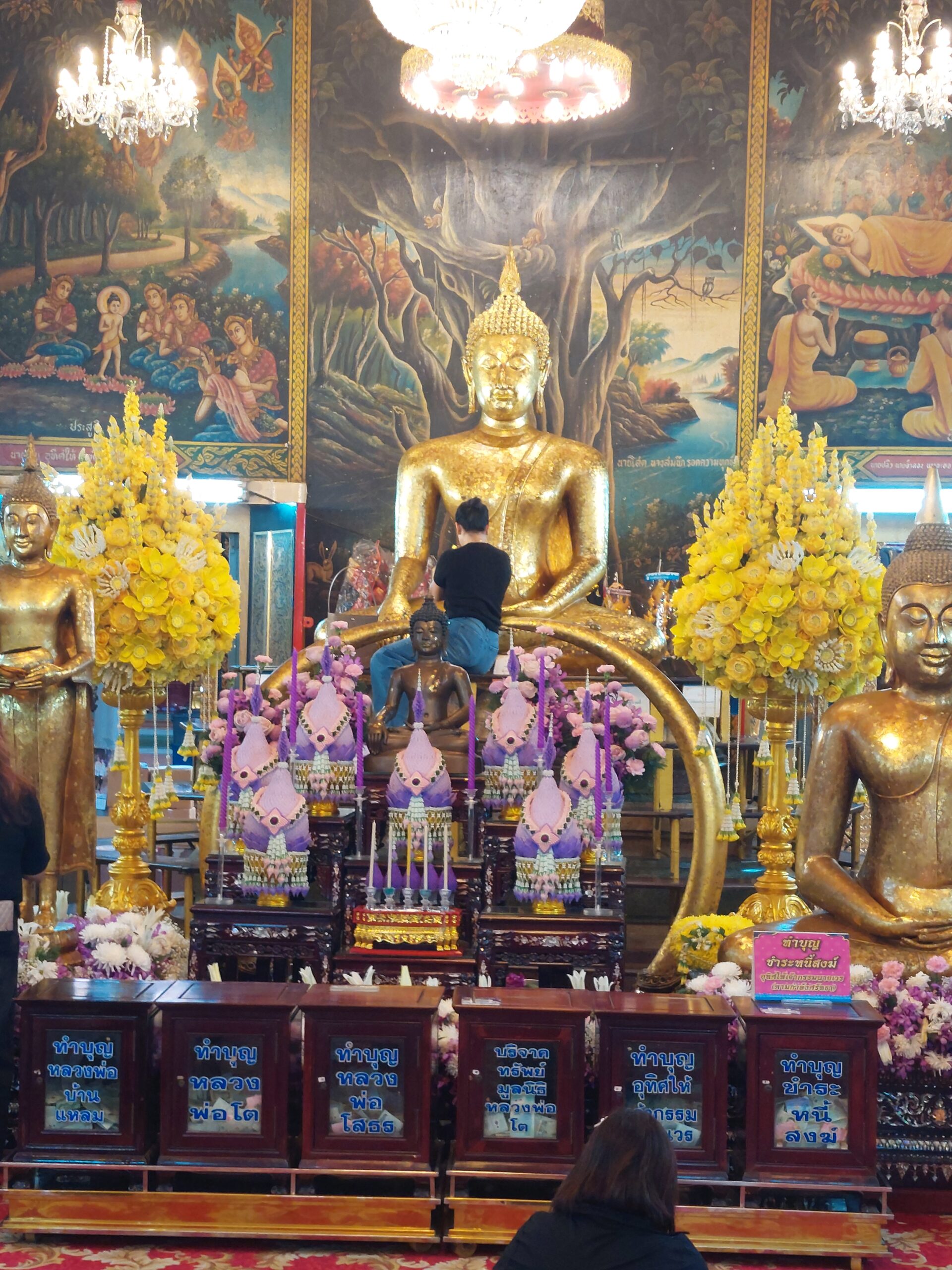
Bang Phli is known for its annual Lotus Flower (Rap Bua) Festival, which takes place on the last day of vassa on the fourteenth day of the waxing moon in the eleventh lunar month, usually the full moon in October. A boat carrying a replica of the ‘Luang Poh To’ Buddha statue from Wat Bang Phli Yai Nai is moved along the Khlong Samrong canal. The people on the banks of the canal throw lotus flowers onto the boat, as donating lotus flowers to Buddha is merit-making.
Wat Bang Phli Yai Nai is an ancient Buddhist temple rim Khlong Samrong next to floating market, where ‘Luang Poh To’ statue is enshrined. This Buddha statue has a folklore that is said to float over the water more than 200 years ago along with two other Buddha statues (Luang Poh Ban Laem of Wat Ban Laem and Luang Poh Sothon of Wat Sothonwararam) – refer to ‘Day-trip from Bangkok to Chachoengsao’s well-known Wat Sothon Wararam’ to learn more.
With a history dating back to the middle Ayutthaya period, Wat Bang Phli Yai Nai was originally known as Wat

Phlapphla Chai Chana Songkhram, which translates to the “Victory Pavilion,” the temple’s historical significance is deeply intertwined with the legendary triumph of King Naresuan over the Burmese army in the region. The temple was founded to commemorate the victory, and its name pays homage to the remarkable achievements of this revered monarch.
The wat also houses the ‘five-million-baht toilets‘. Anyone who has visited the toilets in a wat will know that they are usually adequate but pretty basic. I believe from a donation of five million baht, hence the name, the wat has a very good shout for the best toilets in a wat in Thailand. Super clean, aircon in each cubicle, they are a pleasure to use and have become a bit of an attraction.
In the grounds of the wat and on the bank of Khlong Samrong (canal) is the Bang Phli Floating Market, constructed in wood and has been around since 1857; it is also known as the Ancient Bang Phli Market. It was once a transportation hub for goods and passengers from the east coast to Bangkok. It is not a traditional floating market with boats but rather a floating shophouse market, set next to the temple, and is open daily. Visitors can enjoy a relaxed atmosphere, with vendors chatting and families living in traditional wooden houses. The market is open from 8 AM to 5 PM and offers a variety of fresh fruits, noodles, and handmade crafts.
Choices to eat or have a coffee are in Bang Phli Floating Market or drive 2-minutes to CosyHouse Cafe Bangplee, a lovely little place in a quiet street with decent parking.
Khlong Samrong (canal)
Khlong Samrong, was dug commencing in the late 1400s to link the mouths of Chao Phraya and Bang Pakong rivers. This made it an important transportation route since that time. The name “Samrong”, which is a tree (Sterculia foetida), comes from the Khmer (pronounced ‘somrong’).
Khlong Samrong is a long khlong, over 55 km (34 mi) long, 50 m (164 ft) wide at its widest point and more than 5 m (16 ft) deep. It starts at the eastern bank of the Chao Phraya at the subdistricts of Samrong Tai and Samrong Klang in Phra Pradaeng District and cuts through subdistrict of Samrong Nuea of Mueang Samut Prakan District to Bang Phli, Bang Sao Thong and Bang Bo Districts and reaches the Bang Pakong River at Tha Sa-an Subdistrict, Bang Pakong District, Chachoengsao Province. Khlong Samrong therefore connects the two rivers through two provinces, Samut Prakan and Chachoengsao.
As a Brit, familiar with the relatively small English canals which began in the late 17th century, indeed the Peak Forest Canal which runs through my village is only 7-foot (2.13 m) wide, every time I see the massive Khlong Samrong, that was built just with labourers, I am blown away – I also always wonder just where did the builders of this mighty canal put the excavated soil?
3 Wat Bang Chalong Nai
About 15 minutes 7.5 km drive from the Bang Phli wats, along Thepharak road, in to Bang Chalong district, through the Airplane Night Market area ตลาดนัดเรือบิน, over khlong Samrong and past Wat Bang Chalong Nok วัดบางโฉลงนอก (not much to see, but worth stopping to feed the huge fish in the khlong with bread), you will come to Wat Bang Chalong Nai วัดบางโฉลงใน.
The name “Bang Chalong” is believed to derive from the Khmer word “Chanlong” (จรรโลง), which literally means “lifting.” This refers to the act of lifting yo (ยอ), a traditional Thai fishing gear, or boats from the waters of the local canal, Khlong Bang Chalong. The word “Bang” denotes a riverside or waterfront community. Thus, Bang Chalong can be translated as “the place of lifting.
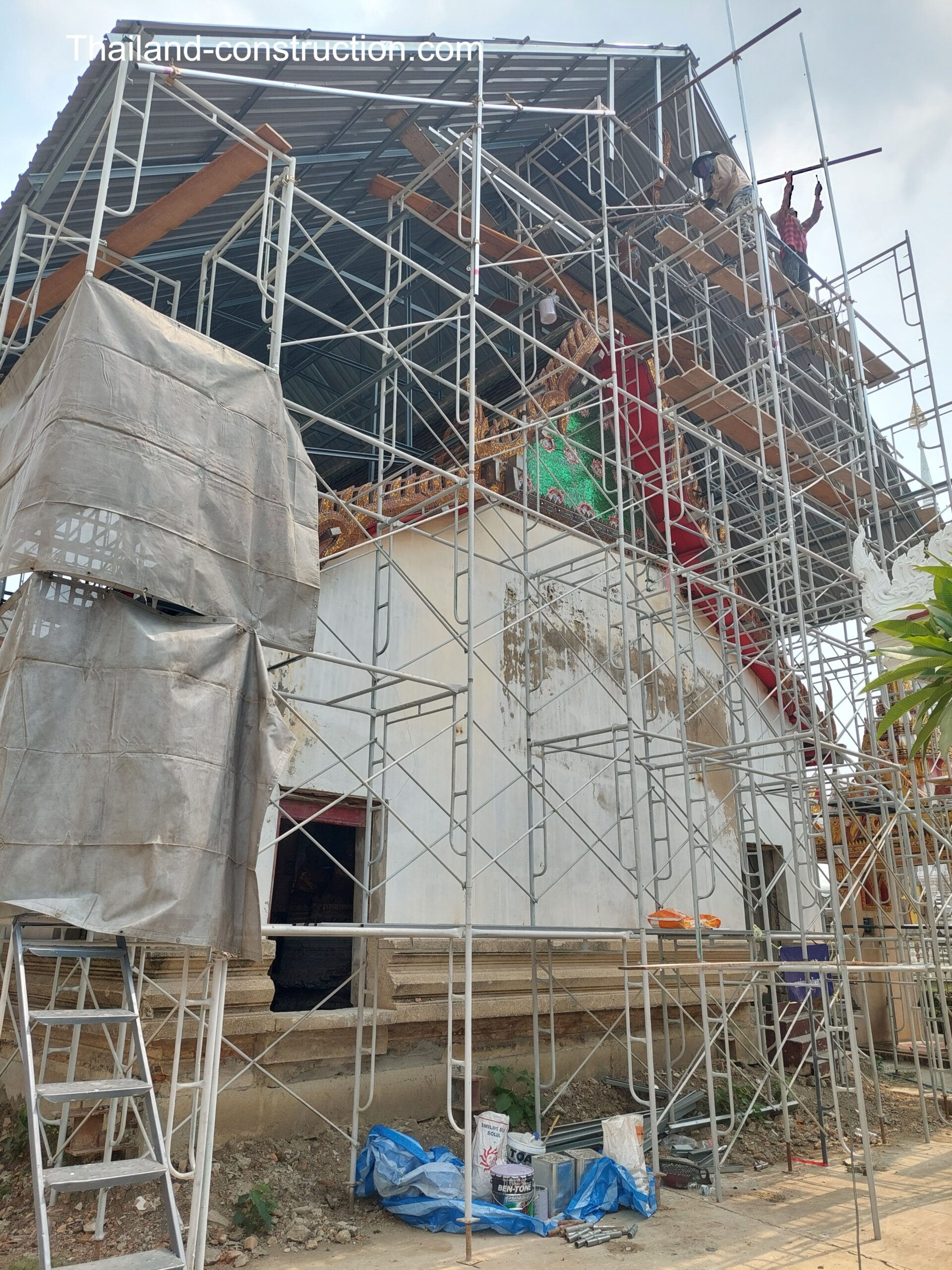
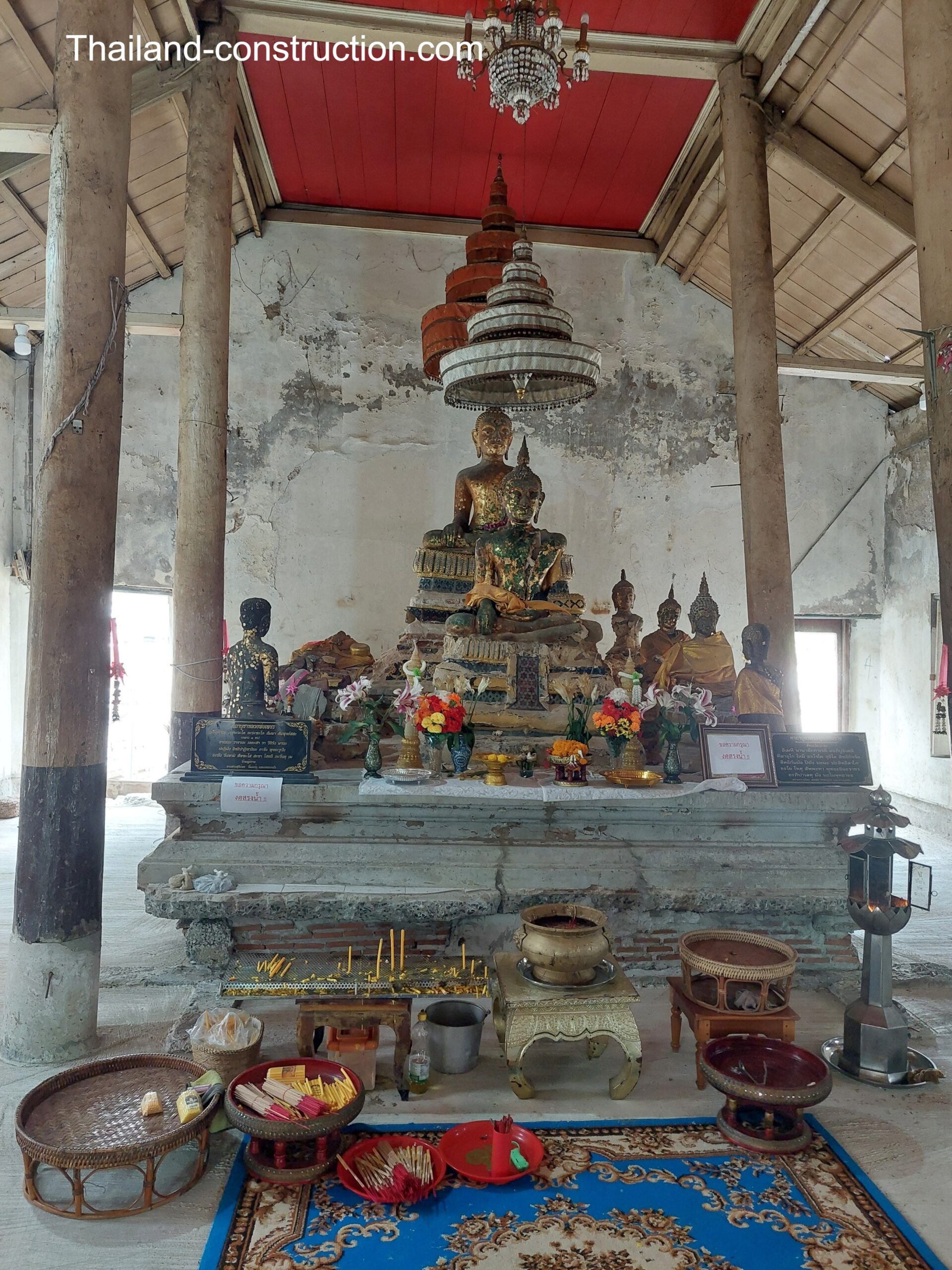
The area surrounding Wat Bang Chalong Nai is a lowland plain, resembling an island surrounded by water. It is bordered to the north and east by Khlong Bang Chalong, and to the south and west by Khlong Om Ko. It was built in 1758, during the late Ayutthaya period. Originally named Wat Ko Kaeo Sawang Aroman, it was later renamed “Wat Bang Chalong Nai” to reflect its location, and this name has been used ever since. The wat is over 200 years old.
Currently there ongoing interesting renovations and makes for a good visit for us construction folk.
4 Wat Srirattanatharam
Leaving Wat Bang Chalong Nai, set google map to take you to Wat Sri Rattana Thammaram (also written as Wat Srirattanatharam) วัดศรีรัตนธรรมาราม, which is also in Bang Chalong district but is on the other side of the Bangna-Trat highway.
Just a few metres before you meet the frontage road of Bangna-Trat highway, google maps will direct you to a tunnel road under the highway to get you to the other side. The journey is 20 minutes 9 km.
Right opposite the entrance to Wat Srirattanatharam is an excellent restaurant called Little Loft Café & Farm ลิตเติ้ลลอฟท์ คาเฟ่ แอนด์ ฟาร์ม.
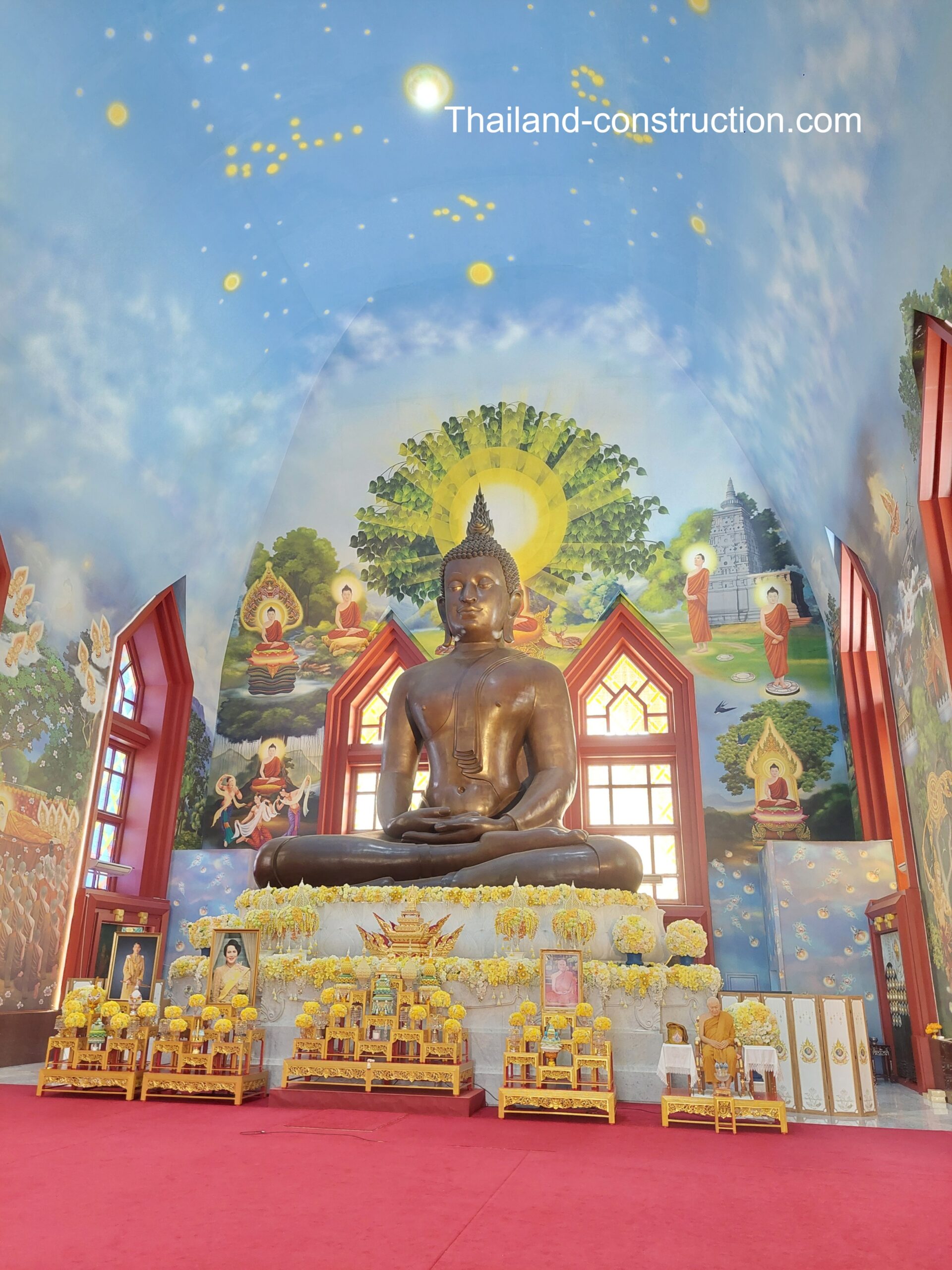
The wat features a remarkable two-story floating chapel. The lower level serves as a tranquil meeting and meditation space, while the upper-level hosts various religious ceremonies. This modern architectural marvel beautifully integrates traditional Thai artistry, creating an inviting atmosphere for visitors. In the huge upper hall, there is a massive seated buddha – really huge – and the wall paintings are some of the best I’ve ever seen, so lifelike.
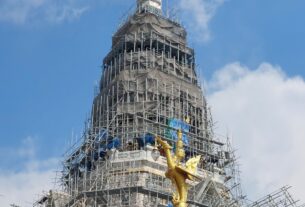
The other ‘attraction’ is Phra Kesa Kaeo Chulamani Maha Chedi พระเกศแก้วจุฬามณีมหาเจดีย์, and why I call this the Meringue Wat. The Chedi is quite a landmark and easily viewed from Bangkok Elevated Highway.
Wat Sri Ratthanathamaram is a temple affiliated with the Dhammayuttika Nikaya monastic order, specifically the branch led by the revered monk Phra Khru Winaitthammanun. It is part of the network of temples under the Dhamma Mongkol Thawip Bun Nontawitthaya. Originally, the land in this area was used for fish farming. On January 7, 2012, Mr. Chuchat and Mrs. Napaporn Pooncharoen, with their faith in Buddhism, donated the land to Somdet Phra Yanavachiradhammo, the abbot of Wat Dhammamongkol Thawip Bun Nontawitthaya. Construction of the monastic residence began on June 2, 2013, and on January 5, 2014, the ceremony to establish the Dhamma Hall, called “Thammasathan Sukhapinyha,” in the Sangkawas area for the monks and novices took place. Wat Sri Ratthanathamaram received official approval as a temple on February 15, 2016. Subsequently, the consecration ceremony for the central ubosot (ordination hall) in the water took place on March 23, 2017.
The designer of this ubosot was Pradit Bua Nam Jued.
Construction that has been ongoing for several years seems to have finished.
This is a place to practice meditation, with classes held regularly.
On our last visit we noticed that the current King and Queen of Thailand had visited.


Bang Sao Thong District
Bang Sao Thong (บางเสาธง), is a district in Samut Prakan Province, with neighbouring districts of Lat Krabang to the north, Bang Bo to the east and Bang Phli to the west. Home to Nissan car factory (on bangna-trat road).
Wikipedia describes it as known for its peaceful atmosphere, friendly locals, and strong sense of community. The district is home to beautiful temples, traditional markets, and delicious street food. The district is also home to the Bang Phli New Town, which was established as a residential area for high-income families.
5 Wat Sri Waree Noi
10 minutes 6 km drive from Wat Srirattanatharam is Wat Sri Waree Noi วัดศรีวารีน้อย famous for the large statue of ‘Luang Pu Thuat’, and in recent times there’s now a large statue ‘Luang Pho To’.
Make sure to have a walk through the wat to the excellent morning market along the side of the Khlong Chorakhe.
There are noodle restaurants along the khlong, and ‘Let me tell you our story café’ coffee/restaurant 2 minutes drive away is very scenic with excellent food and coffee (one for those who like taking photos).


6 Wat Suwannaphum Phutthachayanti
5 minutes 3 km drive from Wat Sri Waree Noi is the relatively new Wat Suwannaphum Phutthachayanti วัดสุวรรณภูมิพุทธชยันตี .
Visited a few times over recent years, and there’s usually some minor construction work going on.
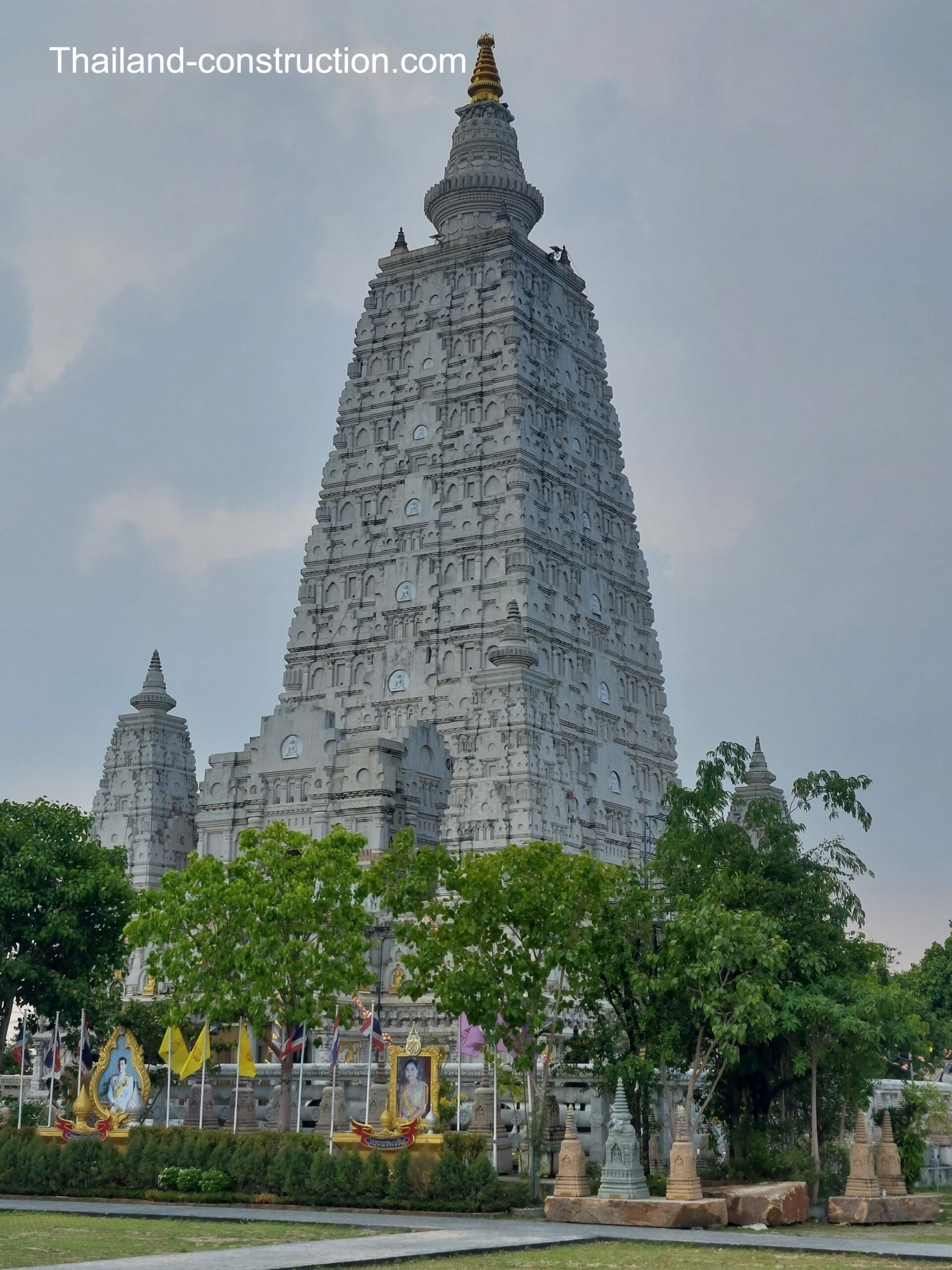
The wat has a unique Indian design, with nice architecture and garden areas. A very beautiful but quiet wat.
The Wat is similar to Mahabodhi Temple in Bodh Gaya (close to Varanasi), a UNESCO World Heritage Site, and which marks the location where the Buddha attained enlightenment under the Bodhi tree, making it one of the holiest sites in Buddhism.
I always think that the designer missed a trick by not including stairs up to a viewing platform at the very top of this tall wat, which looks out towards Suvarnabhumi Airport close by – would have brought more visitors (especially those keen on taking photos).

7 Wat Hua Koo
Finally travel the 8 minutes 4 km journey to Wat Hua Koo วัดหัวคู้.
The wat is affiliated with the Maha Nikaya Order of the Sangha. The temple location is shaped like a triangle at the intersection of Nong Ngoo Hao Canal and Chor Khao Noi Canal.
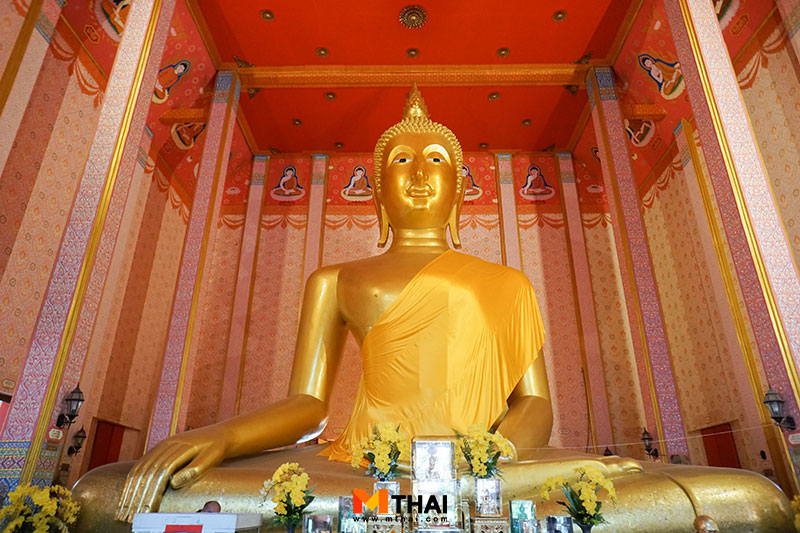
The temple houses the largest Buddha image in Samut Prakan Province, known as Luang Por Khiao Sukho Phuttho Phakwa. It measures 9.19 meters across the lap and stands 13 meters tall. It was constructed in 1977 (B.E. 2520).
The Wat is an ancient temple that, in the past, was where King Taksin the Great stopped to gather supplies before fighting in Chanthaburi Province. He also gave Buddha statues to the villagers, which marked the beginning of the construction of this temple.
Wat Huakoo was established around 1866 (B.E. 2409), although the name of its founder is not recorded. Locals commonly referred to it as Wat Koo or Wat Si Sa Koo.
In 1979 (BE 2522), the temple adopted its new official name, Wat Huakoo Wararam.
That concludes the tour.
On leaving Wat Hua Koo travel north a couple of kilometres to join Lat Krabang Road to travel to Bangkok, or travel south back down the road you’ve travelled to Bangna-trat road and u-turn to travel to Bangkok.
Whether you are interested in Thai history, impressive Buddhist architecture, local culture, unusual attractions, or simply enjoy exploring places that lie beyond Bangkok’s well-trodden tourist routes, the districts of Bang Phli and Bang Sao Thong offer a rewarding day out. From Thailand’s longest reclining Buddha and the famous floating market at Bang Phli, to the striking “Meringue Wat”, the Indian-inspired design of Wat Suwannaphum Phutthachayanti, and the largest Buddha image in Samut Prakan Province, each temple has its own unique character and story to tell. Combined with welcoming local communities, excellent food and coffee stops, and easy access from Bangkok, this collection of wats provides an enjoyable glimpse into a lesser-known corner of Samut Prakan that is well worth discovering.
Google Translation:
ทริปเที่ยวแบบไปเช้าเย็นกลับจากกรุงเทพฯ ไปชมวัดที่น่าสนใจในบางพลีและบางเสาทอง – รวมถึงวัดเมอแรงค์ พระพุทธรูปปางไสยาสน์ที่ยาวที่สุดในประเทศไทย ห้องน้ำห้าล้านบาท และอีกมากมาย
หากคุณกำลังมองหาทริปเที่ยวดีๆ นอกกรุงเทพฯ ลองพิจารณาทัวร์ชมวัดในบางพลีและบางเสาทองในจังหวัดสมุทรปราการที่อยู่ติดกับกรุงเทพฯ ดูสิ
บางพลีและบางเสาทอง เช่นเดียวกับอำเภออื่นๆ ในประเทศไทย มีวัดมากมาย แต่เราได้รวบรวมวัดที่มีชื่อเสียงที่สุดมาให้คุณชม รวมถึงวัดใหม่ๆ ที่น่าสนใจอีกสองสามแห่ง
ด้านล่างนี้ เราได้จัดทัวร์ชมวัดเจ็ดแห่ง โดยสี่แห่งอยู่ในอำเภอบางพลี และอีกสามแห่งอยู่ในอำเภอบางเสาทองที่อยู่ใกล้เคียง วัดทั้งหมดอยู่ใกล้สนามบินสุวรรณภูมิ
เนื่องจากการเที่ยวชมวัดเจ็ดแห่งในหนึ่งวันอาจมากเกินไปสำหรับบางคน คุณสามารถแบ่งทัวร์นี้ออกเป็นสองส่วน โดยวัดสามแห่งแรกอยู่ทางด้านใต้ของถนนบางนาตราด และวัดอีกสี่แห่งที่เหลืออยู่บนถนนสายเดียวกันทางด้านเหนือของถนนบางนาตราด
บางพลี
บางพลี (ภาษาไทย: บางพลี, ออกเสียงและบางครั้งเขียนว่า บางพลี) เป็นอำเภอหนึ่งในจังหวัดสมุทรปราการ และเป็นที่ตั้งของสนามบินสุวรรณภูมิ (หรือที่เรียกว่า ท่าอากาศยานนานาชาติกรุงเทพฯ แห่งใหม่) ซึ่งเปิดให้บริการในปี 2549 ในฐานะสนามบินหลักของประเทศไทย การเดินทางจากกรุงเทพฯ ไปยังชลบุรี ศรีราชา พัทยา และทางตะวันออก คุณจะผ่านบางพลีบนถนนบางนาตราด
บางพลีอยู่ห่างจากบางนาประมาณ 20 นาที และห่างจากใจกลางกรุงเทพฯ ประมาณ 40-50 นาที
ชื่อ “บางพลี” มาจากความเชื่อที่ว่าเมื่อพระนเรศวรมหาราชทรงต่อสู้กับศัตรูที่รุกรานอยุธยา เขาหยุดกองทัพไว้ที่นี่และประกอบพิธีกรรมที่เรียกว่า “บาทพลี” เพื่อข่มขู่ศัตรูและเป็นมงคลแก่กองทัพ
พระพุทธรูปปางไสยาสน์ที่ยาวที่สุดของประเทศไทย มีความยาวประมาณ 53 เมตร ตั้งอยู่ที่วัดบางพลีใหญ่กลาง
1 วัดบางพลีใหญ่กลาง
วัดบางพลีใหญ่กลาง ตั้งอยู่ไม่ไกลจากวัดบางพลีใหญ่ใน (ดูด้านล่าง) แต่ขับรถไปเพียง 5 นาที ระยะทาง 1.2 กิโลเมตร ก็ถึงแล้ว
แม้ว่าวัดบางพลีใหญ่ในจะเป็นวัดที่รู้จักกันดีกว่าและดึงดูดนักท่องเที่ยวมากกว่า แต่วัดบางพลีใหญ่กลางมีพื้นที่กว้างกว่าและให้บรรยากาศที่เงียบสงบและผ่อนคลายกว่า – ทั้งสองวัดเป็นที่นิยมในหมู่ชาวพม่าในพื้นที่
วัดบางพลีใหญ่กลาง หรือที่รู้จักกันในชื่อวัดพระนนท์ เป็นวัดพุทธคู่กับวัดบางพลีใหญ่ใน ตั้งอยู่ระหว่างวัดบางพลีใหญ่ในและวัดโขงขราม (วัดใหญ่นู) จึงเป็นที่มาของชื่อวัดบางพลีใหญ่กลาง (กลางในภาษาไทยหมายถึงกลาง)
วัดบางพลีใหญ่กลางเป็นวัดพุทธเก่าแก่ในจังหวัดสมุทรปราการ มีชื่อเสียงในฐานะที่ประดิษฐานพระพุทธรูปปางไสยาสน์ที่ยาวที่สุดในประเทศไทย คือ สมเด็จพระสกายามุนีศรีสุเมธบพิท มีความยาวประมาณ 53 เมตร
วัดบางพลีใหญ่กลางตั้งอยู่บนฝั่งเหนือของคลองสำโรง สร้างขึ้นราวปี ค.ศ. 1824 ในอดีต ชาวบ้านในพื้นที่บางพลีมักเรียกวัดนี้ว่า “วัดกลาง” เพราะตั้งอยู่ระหว่างวัดบางพลีใหญ่ในและวัดคงคาราม (วัดใหญ่นู) ซึ่งปัจจุบันเป็นวัดร้าง เดิมทีที่ดินของวัดเป็นของนายช้างเหรินรัตน์ พี่ชายของเขา นายหนุ่มเหรินรัตน์ ได้สร้างวัดขึ้นและตั้งชื่อว่า “วัดน้อยปทุมคงคา” เพราะเขาได้ขุดสระน้ำและปลูกดอกบัวไว้ในวัด ต่อมาวัดได้เปลี่ยนชื่อเป็น “วัดรัตสัตถัม” และในที่สุดก็เป็น “วัดบางพลีใหญ่กลาง” อย่างที่รู้จักกันในปัจจุบัน แม้ว่าจะไม่ทราบปีที่แน่ชัดของการเปลี่ยนชื่อก็ตาม
จุดเด่นของวัดคือพระพุทธรูปปางไสยาสน์ขนาดใหญ่ สมเด็จพระสกายามุนีศรีสุเมธบพิตร ซึ่งมีความยาวถึง 53 เมตร สูงกว่าพระพุทธรูปปางไสยาสน์ที่มีชื่อเสียงของวัดโพธิ์ในกรุงเทพฯ สร้างขึ้นระหว่างปี 1978 ถึง 2001 โดยพระครูพิสารวุฒิกิจ ผู้ซึ่งได้รับแรงบันดาลใจจากประสบการณ์ในช่วงที่ท่านเป็นพระภิกษุและจากการเดินทางไปยังสถานที่ต่างๆ ท่านมีความคิดที่จะสร้างสิ่งที่เป็นกุศลเพื่อกระตุ้นให้พุทธศาสนิกชนบริจาคให้แก่วัด เช่นเดียวกับวัดอื่นๆ ที่ท่านเคยไปเยือน นักท่องเที่ยวสามารถเดินเข้าไปภายในพระพุทธรูปได้ โดยขึ้นบันไดภายในด้านหลังพระพุทธรูปเพื่อไปยังหัวใจของพระพุทธเจ้าซึ่งประดับด้วยแผ่นทองคำเปลว ภายในมีทั้งหมดสี่ชั้น นักท่องเที่ยวสามารถวางแผ่นทองคำเปลวบนหัวใจพระพุทธรูปเพื่อขอพรและเสริมโชคลาภ เดินลอดใต้ศาลาอุปสมบทเพื่อปัดเป่าโชคร้าย และสักการะพระอินทร์ เทพผู้พิทักษ์ เพื่อขอพร
สิ่งที่คนส่วนใหญ่พลาดไปเมื่อมาเยือนวัดแห่งนี้ – ที่ดึงดูดความสนใจของคุณ – คือเจดีย์หรือสถูปขนาดใหญ่ คุณจะไม่พลาดมันอย่างแน่นอนเพราะมันสูงมาก แต่ถ้าคุณไม่แน่ใจ ให้เดินไปด้านหลังอาคารที่มีพระพุทธรูปปางไสยาสน์ เดินต่อไปผ่านบริเวณวัดไปยังคลอง คุณจะมาถึงที่จอดรถอีกแห่งและที่นั่นจะมีเจดีย์หรือสถูปขนาดใหญ่ตั้งอยู่ ฉันไม่สามารถหาความสูงของมันได้ แต่แน่นอนว่ามันเป็นแลนด์มาร์คในบริเวณนั้น เข้าไปข้างในและขึ้นไปบนยอดเจดีย์ คุณจะได้รับรางวัลเป็นทิวทัศน์อันงดงามของกรุงเทพฯ
สถานที่ที่น่ารับประทานคือ ‘ครัวขาหมูของอาเซีย’ ร้านเมนูขาหมูอาเสี่ยขับรถไปหนึ่งนาที ที่จอดรถด้านหน้าและด้านหลังร้านอาหาร
2 วัดบางพลีใหญ่ใน
เดินทางจากวัดบางพลีใหญ่กลางไปยังวัดบางพลีใหญ่ในซึ่งอยู่ไม่ไกลนัก
บางพลีเป็นที่รู้จักกันดีในเรื่องเทศกาลดอกบัวประจำปี ซึ่งจัดขึ้นในวันสุดท้ายของเดือนพรรษา ตรงกับวันที่สิบสี่ของข้างขึ้นในเดือนจันทรคติที่สิบเอ็ด ซึ่งโดยปกติจะเป็นวันเพ็ญในเดือนตุลาคม เรือที่บรรทุกพระพุทธรูปจำลอง ‘หลวงพ่อโต’ จากวัดบางพลีใหญ่ในจะล่องไปตามคลองสำโรง ผู้คนริมฝั่งคลองจะโยนดอกบัวลงบนเรือ เพราะการถวายดอกบัวแด่พระพุทธเจ้าเป็นการสร้างบุญ
วัดบางพลีใหญ่ในเป็นวัดพุทธโบราณริมคลองสำโรงติดกับตลาดน้ำ ซึ่งเป็นที่ประดิษฐานพระพุทธรูป ‘หลวงพ่อโต’ พระพุทธรูปองค์นี้มีตำนานเล่าว่าลอยน้ำมาเมื่อกว่า 200 ปีที่แล้ว พร้อมกับพระพุทธรูปอีกสององค์ (หลวงพ่อบ้านแหลม วัดบ้านแหลม และหลวงพ่อโสธร วัดโสธรวราราม) – โปรดดู “ทริปเที่ยวหนึ่งวันจากกรุงเทพฯ ไปวัดโสธรวรารามชื่อดัง จังหวัดฉะเชิงเทรา” เพื่อเรียนรู้เพิ่มเติม
วัดบางพลีใหญ่ใน มีประวัติศาสตร์ย้อนกลับไปถึงสมัยอยุธยาตอนกลาง เดิมทีรู้จักกันในชื่อวัด
ห้องน้ำห้าล้านบาทที่วัดบางพลีใหญ่ใน
พลับพลาชัยชนะสงคราม ซึ่งแปลว่า “ศาลาแห่งชัยชนะ” ความสำคัญทางประวัติศาสตร์ของวัดนี้เกี่ยวพันอย่างลึกซึ้งกับชัยชนะในตำนานของพระนเรศวรเหนือกองทัพพม่าในภูมิภาคนี้ วัดนี้สร้างขึ้นเพื่อระลึกถึงชัยชนะ และชื่อของวัดเป็นการถวายเกียรติแด่ความสำเร็จอันน่าทึ่งของพระมหากษัตริย์ผู้เป็นที่เคารพรักพระองค์นี้
วัดแห่งนี้ยังมี ‘ห้องน้ำห้าล้านบาท’ อีกด้วย ใครก็ตามที่เคยเข้าห้องน้ำในวัดจะรู้ว่าโดยทั่วไปแล้วห้องน้ำในวัดนั้นก็เพียงพอแต่ค่อนข้างเรียบง่าย เชื่อกันว่าด้วยเงินบริจาคห้าล้านบาท จึงเป็นที่มาของชื่อนี้ ทำให้วัดแห่งนี้มีชื่อเสียงว่าเป็นห้องน้ำที่ดีที่สุดในวัดของประเทศไทย สะอาดมาก มีเครื่องปรับอากาศในแต่ละห้อง ทำให้ใช้งานได้อย่างสะดวกสบายและกลายเป็นจุดดึงดูดนักท่องเที่ยวไปอย่างหนึ่ง
ภายในบริเวณวัดและริมฝั่งคลองสำโรง (คลอง) คือตลาดน้ำบางพลี ซึ่งสร้างด้วยไม้และมีมาตั้งแต่ปี 1857 เรียกอีกอย่างว่าตลาดบางพลีโบราณ ครั้งหนึ่งเคยเป็นศูนย์กลางการขนส่งสินค้าและผู้โดยสารจากชายฝั่งตะวันออกไปยังกรุงเทพฯ ไม่ใช่ตลาดน้ำแบบดั้งเดิมที่มีเรือ แต่เป็นตลาดร้านค้าลอยน้ำ ตั้งอยู่ติดกับวัด และเปิดทุกวัน นักท่องเที่ยวสามารถเพลิดเพลินกับบรรยากาศที่ผ่อนคลาย มีพ่อค้าแม่ค้าพูดคุยกัน และครอบครัวต่างๆ อาศัยอยู่ในบ้านไม้แบบดั้งเดิม ตลาดเปิดตั้งแต่ 8 โมงเช้าถึง 5 โมงเย็น มีผลไม้สด ก๋วยเตี๋ยว และงานหัตถกรรมหลากหลายชนิดให้เลือกซื้อ
หากต้องการรับประทานอาหารหรือดื่มกาแฟ สามารถไปที่ตลาดน้ำบางพลี หรือขับรถเพียง 2 นาทีไปยัง CosyHouse Cafe Bangplee ร้านกาแฟเล็กๆ น่ารักในซอยเงียบสงบ มีที่จอดรถสะดวกสบาย
คลองสำโรง
คลองสำโรงถูกขุดขึ้นตั้งแต่ปลายคริสต์ศตวรรษที่ 14 เพื่อเชื่อมปากแม่น้ำเจ้าพระยาและแม่น้ำบางปะกง ทำให้เป็นเส้นทางคมนาคมที่สำคัญตั้งแต่นั้นมา ชื่อ “สำโรง” มาจากภาษาเขมร (ออกเสียงว่า ‘สมรอง’) ซึ่งหมายถึงต้นไม้ชนิดหนึ่ง (Sterculia foetida)
คลองสำโรงเป็นคลองยาว มีความยาวกว่า 55 กิโลเมตร (34 ไมล์) กว้าง 50 เมตร (164 ฟุต) ณ จุดที่กว้างที่สุด และลึกกว่า 5 เมตร (16 ฟุต) คลองสำโรงเริ่มต้นที่ฝั่งตะวันออกของแม่น้ำเจ้าพระยา บริเวณตำบลสำโรงใต้และสำโรงกลาง อำเภอพระประแดง และไหลผ่านตำบลสำโรงเหนือ อำเภอเมืองสมุทรปราการ ไปยังอำเภอบางพลี บางเสาทอง และบางบ่อ ก่อนจะไปบรรจบกับแม่น้ำบางปะกงที่ตำบลท่าสาน อำเภอบางปะกง จังหวัดฉะเชิงเทรา ดังนั้น คลองสำโรงจึงเชื่อมต่อแม่น้ำสองสายผ่านสองจังหวัด คือ สมุทรปราการและฉะเชิงเทรา
ในฐานะชาวอังกฤษที่คุ้นเคยกับคลองขนาดเล็กของอังกฤษซึ่งเริ่มสร้างในปลายศตวรรษที่ 17 (คลองป่าชายเลนที่ไหลผ่านหมู่บ้านของผมนั้นกว้างเพียง 7 ฟุต (2.13 เมตร)) ทุกครั้งที่ผมเห็นคลองสำโรงขนาดมหึมาที่สร้างขึ้นด้วยแรงงานเพียงอย่างเดียว ผมก็รู้สึกทึ่งเสมอ และผมก็สงสัยอยู่เสมอว่าผู้สร้างคลองอันยิ่งใหญ่นี้เอาดินที่ขุดได้ไปไว้ที่ไหน?
3 วัดบางโฉลงใน
ขับรถประมาณ 15 นาที 7.5 กม. จากวัดบางพลี ไปตามถนนเทพารักษ์ เข้าเขตบางโฉลง ผ่านตลาดเครื่องบินกลางคืน ตลาดนัดเรือบิน เหนือคลองสำโรง และผ่านวัดบางโฉลงนอก วัดบางโฉลงนอก (ไม่ค่อยมีอะไรให้ดู แต่คุ้มค่าที่จะแวะให้อาหารปลาตัวใหญ่ในคลองพร้อมขนมปัง) คุณจะมาถึงวัดบางโฉลงใน วัดบางโฉลง
เชื่อกันว่าชื่อ “บางโฉลง” มาจากคำภาษาเขมร “จานลอง” (จรรโลง) ซึ่งแปลว่า “การยก” อย่างแท้จริง หมายถึง การยกโย (ยอ) อุปกรณ์ตกปลาแบบไทยโบราณ หรือเรือจากลำคลองท้องถิ่นคลองบางโฉลง คำว่า “บาง” หมายถึง ชุมชนริมแม่น้ำหรือริมน้ำ ดังนั้น บางฉลองจึงแปลว่า “สถานที่แห่งการยก”
บริเวณรอบวัดบางฉลองในเป็นที่ราบลุ่มคล้ายเกาะที่ล้อมรอบด้วยน้ำ มีคลองบางฉลองอยู่ทางทิศเหนือและทิศตะวันออก และคลองออมโคอยู่ทางทิศใต้และทิศตะวันตก วัดแห่งนี้สร้างขึ้นในปี ค.ศ. 1758 ในช่วงปลายสมัยอยุธยา เดิมชื่อวัดโคแก้วสว่างอรมาน ต่อมาเปลี่ยนชื่อเป็นวัดบางฉลองใน เพื่อให้สอดคล้องกับที่ตั้ง และใช้ชื่อนี้มาจนถึงปัจจุบัน วัดมีอายุมากกว่า 200 ปี
ปัจจุบันมีการบูรณะซ่อมแซมที่น่าสนใจ และเป็นสถานที่ที่เหมาะสำหรับคนทำงานด้านการก่อสร้างอย่างเราๆ ไปเยี่ยมชม
งานบูรณะวัดบางฉลองใน
วัดบางฉลองใน
ในหอชั้นบนขนาดใหญ่ของวัดศรีรัตนธรรมราม
4 วัดศรีรัตนธรรมราม
ออกจากวัดบางฉลองใน ให้ใช้ Google Maps นำทางไปยังวัดศรีรัตนธรรมราม (หรือเขียนว่า วัดศรีรัตนธรรมราม) ซึ่งอยู่ในอำเภอบางฉลองเช่นกัน แต่จะอยู่ฝั่งตรงข้ามของทางหลวงบางนา-ตราด
เพียงไม่กี่เมตรก่อนถึงถนนเลียบทางหลวงบางนา-ตราด Google Maps จะนำทางไปยังอุโมงค์ใต้ทางหลวงเพื่อไปยังอีกฝั่ง การเดินทางใช้เวลา 20 นาที ระยะทาง 9 กิโลเมตร
ตรงข้ามทางเข้าวัดศรีรัตนธรรมราม มีร้านอาหารที่ยอดเยี่ยมชื่อ Little Loft Café & Farm
วัดแห่งนี้มีศาลาลอยน้ำสองชั้นที่น่าทึ่ง ชั้นล่างเป็นสถานที่เงียบสงบสำหรับการพบปะและทำสมาธิ ในขณะที่ชั้นบนใช้ประกอบพิธีกรรมทางศาสนาต่างๆ สิ่งมหัศจรรย์ทางสถาปัตยกรรมสมัยใหม่นี้ผสานศิลปะไทยดั้งเดิมได้อย่างสวยงาม สร้างบรรยากาศที่อบอุ่นและน่าดึงดูดใจสำหรับผู้มาเยือน ในห้องโถงชั้นบนขนาดใหญ่ มีพระพุทธรูปปางนั่งขนาดมหึมา – ใหญ่มากจริงๆ – และภาพเขียนฝาผนังก็เป็นภาพที่สวยงามที่สุดเท่าที่ฉันเคยเห็นมา สมจริงมาก
อีกหนึ่ง ‘สถานที่ท่องเที่ยว’ คือ พระเกศแก้วจุฬามณีมหาเจดีย์ และนี่คือเหตุผลที่ฉันเรียกวัดนี้ว่าวัดเมอแรงก์ เจดีย์แห่งนี้เป็นแลนด์มาร์คที่สำคัญและมองเห็นได้ง่ายจากทางด่วนกรุงเทพฯ
วัดศรีรัตนธามรามเป็นวัดในสังกัดนิกายธรรมยุตติกานิกาย โดยเฉพาะนิกายที่นำโดยพระครูวินัยธรรมนันท์ผู้เป็นที่เคารพ เป็นส่วนหนึ่งของเครือข่ายวัดภายใต้ธรรมมงคลทวีพบุญนนท์วิทยะ เดิมทีที่ดินในบริเวณนี้เคยใช้ทำนาเลี้ยงปลา เมื่อวันที่ 7 มกราคม 2555 นายชูชาติและนางนภาพร พูนเจริญ ด้วยความศรัทธาในพระพุทธศาสนา ได้บริจาคที่ดินให้แก่สมเด็จพระยานวชิรธัมโม เจ้าอาวาสวัดธรรมมงคลทวีพบุญนนท์วิทยะ การก่อสร้างพระที่นั่งเริ่มขึ้นเมื่อวันที่ 2 มิถุนายน 2556 และเมื่อวันที่ 5 มกราคม 2557 ได้มีการจัดพิธีสถาปนาธรรมศาลา หรือ “ธรรมสถานสุขปิณยะ” ในบริเวณสังฆาวาสสำหรับพระภิกษุและสามเณร วัดศรีรัตนธรรมรามได้รับอนุมัติอย่างเป็นทางการเป็นวัดเมื่อวันที่ 15 กุมภาพันธ์ 2559 ต่อมาได้มีการจัดพิธีอภิเษกอุโบสถกลางในน้ำเมื่อวันที่ 23 มีนาคม 2560
ผู้ออกแบบอุโบสถนี้คือ ประดิษฐ์บัวน้ำจือด
การก่อสร้างที่ดำเนินมาหลายปีดูเหมือนจะเสร็จสมบูรณ์แล้ว
ที่นี่เป็นสถานที่สำหรับฝึกสมาธิ โดยมีการจัดชั้นเรียนเป็นประจำ
ในการเยี่ยมชมครั้งล่าสุด เราสังเกตเห็นว่าพระบาทสมเด็จพระเจ้าอยู่หัวและสมเด็จพระนางเจ้าฯ พระบรมราชินีนาถองค์ปัจจุบันได้เสด็จมาเสด็จเยือนด้วย
พระเกศาแก้วจุลามณีมหาเจดีย์ (“วัดเมอแรงก์”) ระหว่างการก่อสร้างที่วัดศรีรัตนธรรมราม
พระเกศาแก้วจุลามณีมหาเจดีย์ (“วัดเมอแรงก์”) ระหว่างการก่อสร้างที่วัดศรีรัตนธรรมราม
พระเกศาแก้วจุลามณีมหาเจดีย์ (“วัดเมอแรงก์”) ที่วัดศรีรัตนธรรมราม
พระเกศาแก้วจุลามณีมหาเจดีย์ (“วัดเมอแรงก์”) ที่วัดศรีรัตนธรรมราม
ภาพเขียนฝาผนังที่สวยงามในห้องโถงชั้นบนขนาดใหญ่ของวัดศรีรัตนธรรมราม
ภาพเขียนฝาผนังที่สวยงามในห้องโถงชั้นบนขนาดใหญ่ของวัดศรีรัตนธรรมราม
อำเภอบางเสาทอง
บางเสาทอง (บางเสาทอง) เป็นอำเภอหนึ่งในจังหวัดสมุทรปราการ มีอำเภอข้างเคียงคือ ลาดกระบังทางทิศเหนือ บางบ่อทางทิศตะวันออก และบางพลีทางทิศตะวันตก เป็นที่ตั้งของโรงงานผลิตรถยนต์นิสสัน (บนถนนบางนาตราด)
วิกิพีเดียอธิบายว่าย่านนี้ขึ้นชื่อเรื่องบรรยากาศที่เงียบสงบ ผู้คนเป็นมิตร และความสามัคคีในชุมชน ย่านนี้มีวัดที่สวยงาม ตลาดแบบดั้งเดิม และอาหารริมทางที่อร่อยมากมาย นอกจากนี้ยังเป็นที่ตั้งของเมืองใหม่บางพลี ซึ่งก่อตั้งขึ้นเป็นพื้นที่อยู่อาศัยสำหรับครอบครัวที่มีรายได้สูง
5 วัดศรีวารีน้อย
วัดศรีวารีน้อย (วัดศรีวารีน้อย) อยู่ห่างจากวัดศรีรัตนธารามประมาณ 6 กิโลเมตร (10 นาที) มีชื่อเสียงจากรูปปั้นขนาดใหญ่ของ ‘หลวงปู่ทวด’ และในปัจจุบันมีรูปปั้นขนาดใหญ่ของ ‘หลวงพ่อโต’ เพิ่มเข้ามาด้วย
อย่าลืมเดินเล่นชมตลาดเช้าริมคลองโชคี
มีร้านอาหารก๋วยเตี๋ยวอยู่ริมคลอง และร้านกาแฟ/ร้านอาหาร ‘Let me tell you our story café’ ซึ่งอยู่ห่างออกไปประมาณ 2 นาที มีทิวทัศน์สวยงาม อาหารและกาแฟอร่อย (เหมาะสำหรับผู้ที่ชอบถ่ายรูป)
รูปปั้น ‘หลวงปู่ทวด’ (ซ้าย) และ ‘หลวงพ่อโต’ (ขวา) ณ วัดศรีวารีน้อย
6. วัดสุวรรณภูมิพุทธชัยันตี
วัดสุวรรณภูมิพุทธชัยันตี (วัดสุวรรณภูมิพุทธชัยันตี) เป็นวัดที่ค่อนข้างใหม่ ห่างจากวัดศรีวารีน้อยเพียง 5 นาที (3 กิโลเมตร)
ผมเคยไปเยี่ยมชมหลายครั้งในช่วงไม่กี่ปีที่ผ่านมา และมักจะมีงานก่อสร้างเล็กๆ น้อยๆ อยู่บ้าง
วัดมีสถาปัตยกรรมแบบอินเดียที่เป็นเอกลักษณ์ มีสถาปัตยกรรมและสวนที่สวยงาม เป็นวัดที่สวยงามแต่เงียบสงบมาก
วัดนี้คล้ายกับวัดมหาโพธิ์ในพุทธคยา (ใกล้กับเมืองพาราณสี) ซึ่งเป็นมรดกโลกของยูเนสโก และเป็นสถานที่ที่พระพุทธเจ้าตรัสรู้ใต้ต้นโพธิ์ ทำให้เป็นหนึ่งในสถานที่ศักดิ์สิทธิ์ที่สุดในพระพุทธศาสนา
ผมคิดว่าผู้ออกแบบพลาดโอกาสไปที่ไม่ได้สร้างบันไดขึ้นไปยังจุดชมวิวที่ด้านบนสุดของวัดสูงแห่งนี้ ซึ่งสามารถมองเห็นสนามบินสุวรรณภูมิที่อยู่ใกล้เคียงได้ – น่าจะดึงดูดนักท่องเที่ยวได้มากขึ้น (โดยเฉพาะผู้ที่ชื่นชอบการถ่ายภาพ)
วัดสุวรรณภูมิพุทธชัยันตี
วัดสุวรรณภูมิพุทธชัยันตี
ภาพจาก mthai.com
7 วัดหัวกู
สุดท้ายนี้ เดินทาง 8 นาที ระยะทาง 4 กิโลเมตร ไปยังวัดหัวกู
วัดนี้สังกัดนิกายมหานิกาย ที่ตั้งของวัดเป็นรูปสามเหลี่ยม อยู่ที่จุดตัดของคลองหนองงูฮ่าวและคลองชอร์เขาน้อย
วัดนี้ประดิษฐานพระพุทธรูปที่ใหญ่ที่สุดในจังหวัดสมุทรปราการ คือ หลวงพ่อเขียวสุโขพุทธภควัน มีขนาดกว้าง 9.19 เมตร และสูง 13 เมตร สร้างขึ้นในปี พ.ศ. 2523 (พ.ศ. 2523)
วัดนี้เป็นวัดโบราณ ที่ในอดีต พระเจ้าตากสินมหาราชเคยแวะพักเพื่อรวบรวมเสบียงก่อนเสด็จประพาสจังหวัดจันทบุรี พระองค์ยังได้พระราชทานพระพุทธรูปแก่ชาวบ้าน ซึ่งเป็นจุดเริ่มต้นของการสร้างวัดนี้
วัดหัวกูสร้างขึ้นราวปี พ.ศ. 2409 แม้ว่าจะไม่มีบันทึกชื่อผู้ก่อตั้ง ชาวบ้านมักเรียกกันว่า วัดกู หรือ วัดศรีสะกู
ในปี พ.ศ. 2525 วัดได้เปลี่ยนชื่ออย่างเป็นทางการเป็น วัดหัวกูวราราม
จบทัวร์แล้ว
หลังจากออกจากวัดหัวกู ให้เดินทางไปทางเหนือประมาณสองกิโลเมตรเพื่อไปยังถนนลาดกระบังเพื่อไปยังกรุงเทพฯ หรือเดินทางกลับลงใต้ไปตามถนนเดิมไปยังถนนบางนะตราด แล้วกลับรถเพื่อไปยังกรุงเทพฯ
ไม่ว่าคุณจะสนใจประวัติศาสตร์ไทย สถาปัตยกรรมพุทธที่งดงาม วัฒนธรรมท้องถิ่น สถานที่ท่องเที่ยวแปลกใหม่ หรือเพียงแค่ต้องการสำรวจสถานที่ที่อยู่นอกเส้นทางท่องเที่ยวหลักของกรุงเทพฯ เขตบางพลีและบางเสาทองก็มอบประสบการณ์การท่องเที่ยวที่คุ้มค่า ตั้งแต่พระพุทธรูปปางไสยาสน์ที่ยาวที่สุดในประเทศไทยและตลาดน้ำชื่อดังที่บางพลี ไปจนถึงวัดสุวรรณภูมิพุทธชัยันตีที่มีสถาปัตยกรรมแบบอินเดียอันโดดเด่น และพระพุทธรูปที่ใหญ่ที่สุดในจังหวัดสมุทรปราการ แต่ละวัดล้วนมีเอกลักษณ์และเรื่องราวเฉพาะตัว เมื่อรวมกับการต้อนรับอย่างอบอุ่นจากชุมชนท้องถิ่น ร้านอาหารและร้านกาแฟชั้นเยี่ยม และการเดินทางจากกรุงเทพฯ ที่สะดวก วัดเหล่านี้จึงมอบประสบการณ์การท่องเที่ยวในมุมที่ไม่ค่อยมีคนรู้จักของสมุทรปราการที่คุ้มค่าแก่การค้นพบ