
 Thailand’s Industrial land prices flat as Chinese investors sell up
THIS NEWS ARTICLE KINDLY SPONSORED BY FALLPROTEC, A WORLD-RENOWNED NAME IN THE DESIGN AND MANUFACTURE OF PREMIUM FALL PROTECTION SYSTEMS AND HEIGHT ACCESS SOLUTIONS
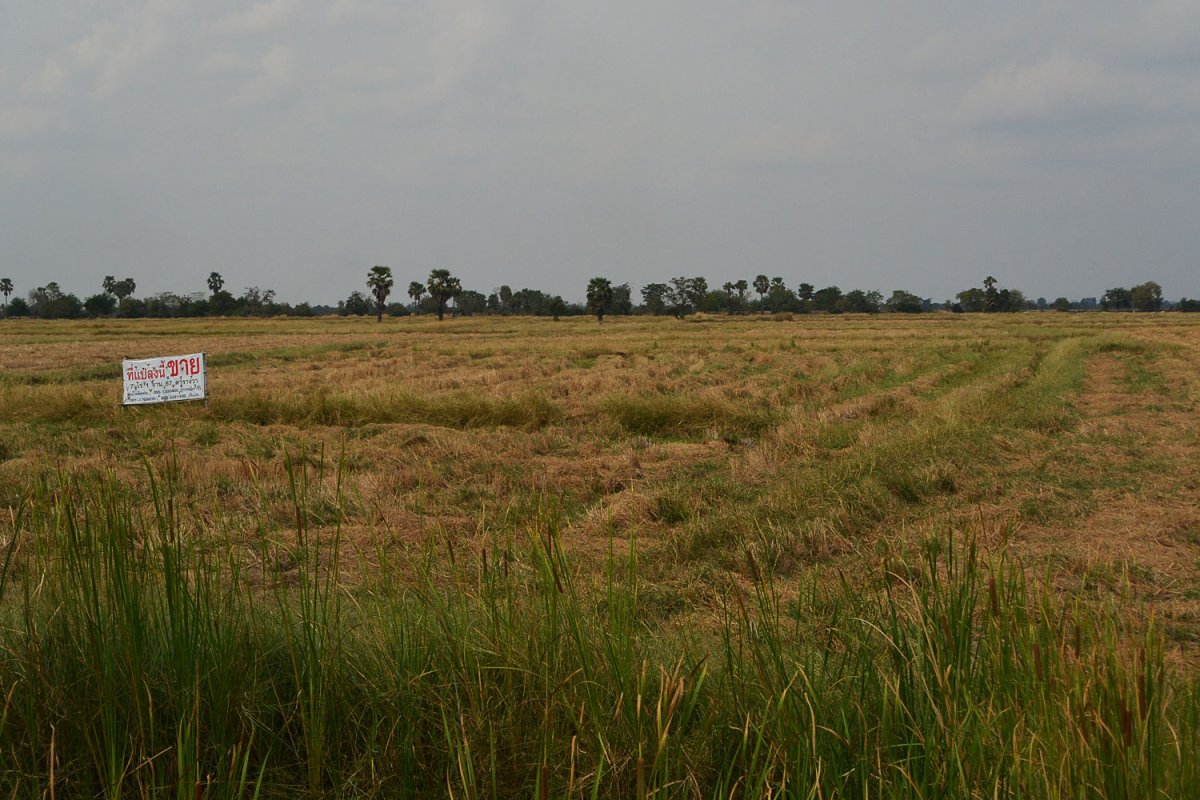
Despite strong demand, average asking prices for industrial land are expected to remain flat due to an influx of land from Chinese investors unable to lease or operate businesses on their plots, according to property consultancy Cushman & Wakefield Thailand.
Phongphan Phloiphet, director of logistics and industrial at the firm, said these investors acquired land both in and outside of industrial estates over the past two years, aiming to lease it to manufacturers during the recent industrial land boom.
“When the market surged, this group entered, either developing projects without fully understanding regulations or being persuaded by certain local parties,” he said.
“However, after authorities tightened inspections late last year, they found they could not continue operations through leasing or self-use.”
For self-use, some investors purchased plots within industrial estates, but used them for purposes that did not align with zoning regulations. For example, land designated for electronics manufacturing was instead used as warehouses.
Unable to operate or generate income from their investments, these investors have begun offloading land onto the market, putting downward pressure on industrial land prices in the first quarter of 2026, following initial signs in the fourth quarter of 2025.
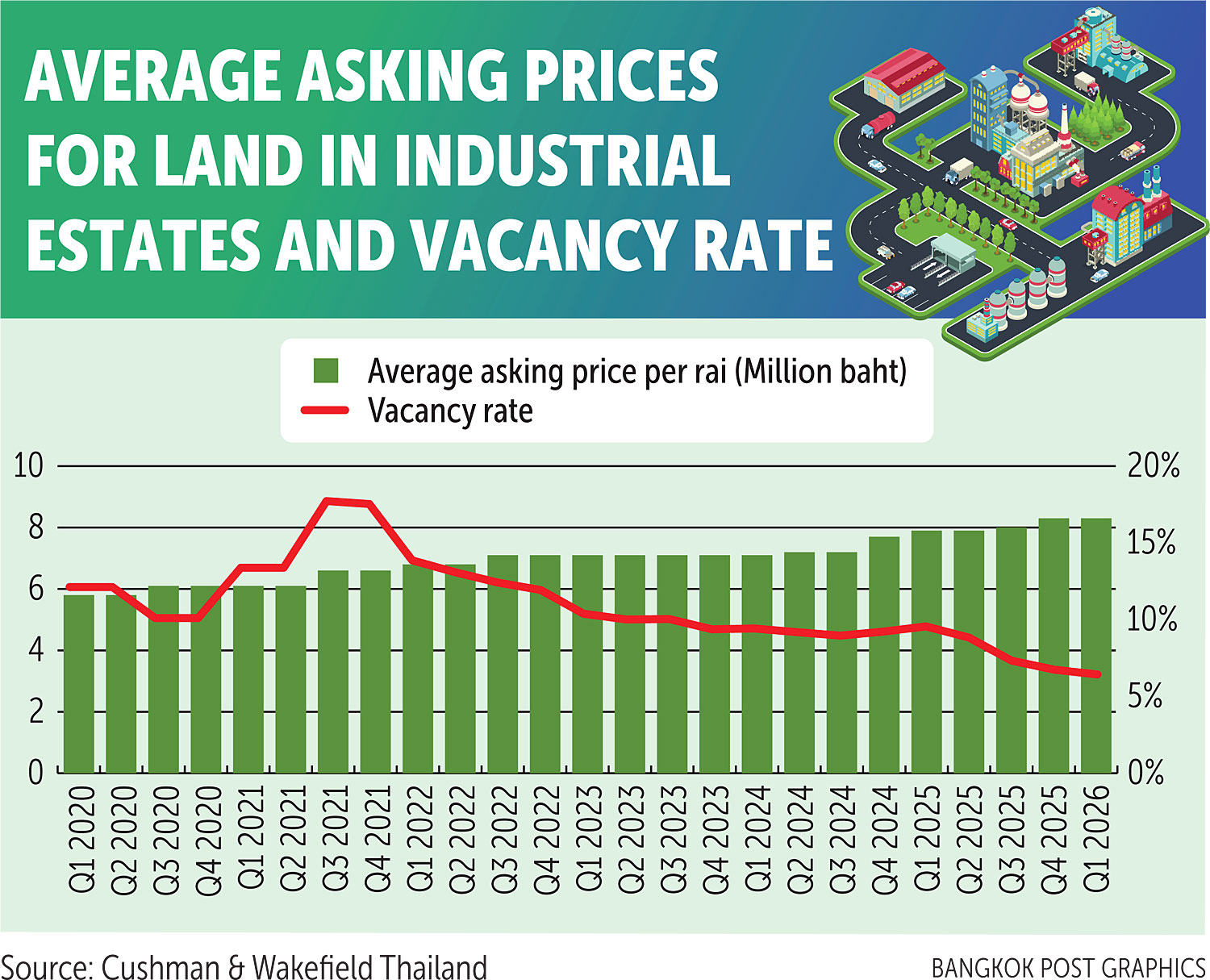 In the first quarter of 2026, the average asking price of logistics and industrial land nationwide was 8.3 million baht per rai, unchanged from the fourth quarter of 2025.
In Chon Buri, Rayong and Laem Chabang, prices remained unchanged at 9.5 million baht, 7.5 million baht and 6.25 million baht per rai, respectively.
Mr Phongphan said the asking prices for these plots are typically 10-15% below market rates. However, investors can still turn a profit as they acquired the land 1-2 years ago, when prices were rising.
He said he expects price pressure from second-hand land to persist through the third quarter this year, resulting in flat price growth despite strong demand.
These second-hand plots typically range from 30 to 100 rai each, totalling more than 1,000 rai. They are located both in and outside industrial estates in Chon Buri and Rayong, accounting for roughly 10-20% of land supply in each estate.
PERSISTENT DEMAND
Mr Phongphan said demand for industrial estates, as well as leasing and purchases of warehouses and ready-built factories, remained strong in the first two months of 2026.
“Some decisions were briefly delayed in early March due to travel disruptions and a wait-and-see approach. However, as conditions showed no clear improvement, investors continued with their plans and negotiations without significant changes,” he said.
Investors from the Middle East, particularly the United Arab Emirates, have been visiting to observe and study industrial estate markets in Thailand, Malaysia and Vietnam following the US-Israel and Iran war, noted Mr Phongphan.
“Most are interested in data centre investments, while some are exploring opportunities in the petrochemical sector,” he said. “Thailand is seen as more attractive than its regional peers due to stronger infrastructure and utilities.”
Investment decisions are expected within 3-6 months, depending on whether the conflict persists and whether governments introduce attractive investment incentives, said Mr Phongphan.
Source: https://www.bangkokpost.com/business/general/3241568/industrial-land-prices-flat-as-chinese-investors-sell-up
Google Translation:
ราคาที่ดินอุตสาหกรรมในประเทศไทยทรงตัว หลังนักลงทุนชาวจีนขายที่ดินออก
ข่าวนี้ได้รับการสนับสนุนโดย FALLPROTEC บริษัทชั้นนำระดับโลกด้านการออกแบบและผลิตระบบป้องกันการตกจากที่สูงและโซลูชันการเข้าถึงที่สูงระดับพรีเมียม
แม้จะมีความต้องการสูง แต่คาดว่าราคาเสนอขายเฉลี่ยของที่ดินอุตสาหกรรมจะยังคงทรงตัว เนื่องจากการไหลเข้าของที่ดินจากนักลงทุนชาวจีนที่ไม่สามารถให้เช่าหรือดำเนินธุรกิจในที่ดินของตนได้ ตามข้อมูลจากบริษัทที่ปรึกษาด้านอสังหาริมทรัพย์ Cushman & Wakefield ประเทศไทย
พงษ์พันธ์ พลอยเพชร ผู้อำนวยการฝ่ายโลจิสติกส์และอุตสาหกรรมของบริษัท กล่าวว่า นักลงทุนเหล่านี้ได้ซื้อที่ดินทั้งในและนอกนิคมอุตสาหกรรมในช่วงสองปีที่ผ่านมา โดยมีเป้าหมายที่จะให้เช่าแก่ผู้ผลิตในช่วงที่ตลาดที่ดินอุตสาหกรรมเฟื่องฟู
“เมื่อตลาดพุ่งขึ้น กลุ่มนี้ก็เข้ามา โดยอาจพัฒนาโครงการโดยไม่เข้าใจกฎระเบียบอย่างถ่องแท้ หรือถูกชักจูงโดยบุคคลในท้องถิ่นบางกลุ่ม” เขากล่าว
“อย่างไรก็ตาม หลังจากที่ทางการได้เข้มงวดการตรวจสอบเมื่อปลายปีที่แล้ว พบว่าผู้ประกอบการเหล่านี้ไม่สามารถดำเนินกิจการต่อไปได้ด้วยการให้เช่าหรือใช้เอง”
สำหรับการใช้เองนั้น นักลงทุนบางรายซื้อที่ดินในนิคมอุตสาหกรรม แต่ใช้เพื่อวัตถุประสงค์ที่ไม่สอดคล้องกับข้อกำหนดการแบ่งเขตพื้นที่ ตัวอย่างเช่น ที่ดินที่กำหนดไว้สำหรับการผลิตอุปกรณ์อิเล็กทรอนิกส์ กลับถูกนำไปใช้เป็นโกดังเก็บสินค้า
เนื่องจากไม่สามารถดำเนินกิจการหรือสร้างรายได้จากการลงทุนได้ นักลงทุนเหล่านี้จึงเริ่มขายที่ดินออกสู่ตลาด ส่งผลให้ราคาที่ดินอุตสาหกรรมลดลงในไตรมาสแรกของปี 2569 หลังจากมีสัญญาณเบื้องต้นในไตรมาสที่สี่ของปี 2568
ในไตรมาสแรกของปี 2569 ราคาเสนอขายเฉลี่ยของที่ดินโลจิสติกส์และอุตสาหกรรมทั่วประเทศอยู่ที่ 8.3 ล้านบาทต่อไร่ ไม่เปลี่ยนแปลงจากไตรมาสที่สี่ของปี 2568
ในจังหวัดชลบุรี ระยอง และแหลมฉบัง ราคาคงที่อยู่ที่ 9.5 ล้านบาท 7.5 ล้านบาท และ 6.25 ล้านบาทต่อไร่ ตามลำดับ
นายพงษ์พันธุ์กล่าวว่า ราคาเสนอขายที่ดินเหล่านี้โดยทั่วไปต่ำกว่าราคาตลาด 10-15% อย่างไรก็ตาม นักลงทุนยังคงสามารถทำกำไรได้ เนื่องจากพวกเขาซื้อที่ดินเมื่อ 1-2 ปีที่แล้ว ในช่วงที่ราคากำลังสูงขึ้น
เขากล่าวว่า เขาคาดว่าแรงกดดันด้านราคาจากที่ดินมือสองจะยังคงอยู่ตลอดไตรมาสที่สามของปีนี้ ส่งผลให้ราคาที่ดินทรงตัวแม้ว่าความต้องการจะสูงก็ตาม
ที่ดินมือสองเหล่านี้โดยทั่วไปมีขนาดตั้งแต่ 30 ถึง 100 ไร่ รวมแล้วมากกว่า 1,000 ไร่ ตั้งอยู่ในและนอกนิคมอุตสาหกรรมในจังหวัดชลบุรีและระยอง คิดเป็นประมาณ 10-20% ของอุปทานที่ดินในแต่ละนิคม
ความต้องการที่ต่อเนื่อง
นายพงษ์พันธุ์กล่าวว่า ความต้องการนิคมอุตสาหกรรม รวมถึงการเช่าและการซื้อคลังสินค้าและโรงงานสำเร็จรูป ยังคงแข็งแกร่งในช่วงสองเดือนแรกของปี 2026
“การตัดสินใจบางอย่างล่าช้าไปบ้างในช่วงต้นเดือนมีนาคมเนื่องจากปัญหาการเดินทางและการรอดูสถานการณ์ อย่างไรก็ตาม เนื่องจากสถานการณ์ไม่แสดงให้เห็นถึงการปรับปรุงที่ชัดเจน นักลงทุนจึงยังคงดำเนินแผนและเจรจาต่อไปโดยไม่มีการเปลี่ยนแปลงที่สำคัญ” เขากล่าว
นายพงษ์พันธุ์กล่าวว่า นักลงทุนจากตะวันออกกลาง โดยเฉพาะสหรัฐอาหรับเอมิเรตส์ ได้เดินทางมาสังเกตการณ์และศึกษาตลาดนิคมอุตสาหกรรมในประเทศไทย มาเลเซีย และเวียดนาม หลังจากสงครามระหว่างสหรัฐฯ-อิสราเอลและอิหร่าน
“ส่วนใหญ่สนใจการลงทุนในศูนย์ข้อมูล ขณะที่บางส่วนกำลังมองหาโอกาสในภาคปิโตรเคมี” เขากล่าว “ประเทศไทยถูกมองว่าน่าดึงดูดใจมากกว่าประเทศเพื่อนบ้านในภูมิภาคเดียวกัน เนื่องจากมีโครงสร้างพื้นฐานและสาธารณูปโภคที่แข็งแกร่งกว่า”
นายพงษ์พันธุ์กล่าวว่า คาดว่าจะมีการตัดสินใจลงทุนภายใน 3-6 เดือน ขึ้นอยู่กับว่าความขัดแย้งจะยังคงอยู่หรือไม่ และรัฐบาลจะออกมาตรการจูงใจการลงทุนที่น่าสนใจหรือไม่

