Thailand’s housing demand recovering but outlook still fragile
Government Housing Bank expects full-year contraction due to energy shock factors
THIS NEWS ARTICLE KINDLY SPONSORED BY FALLPROTEC, A WORLD-RENOWNED NAME IN THE DESIGN AND MANUFACTURE OF PREMIUM FALL PROTECTION SYSTEMS AND HEIGHT ACCESS SOLUTIONS
Thailand’s housing market showed signs of recovery in the first quarter of 2026, the Government Housing Bank said on Wednesday, with transaction volumes rising amid government stimulus even as gains in value lagged, underscoring weak purchasing power.
The outlook remains fragile, with rising energy costs linked to the Middle East war, soft domestic demand and a pullback in foreign buying expected to weigh on the sector through the rest of the year, the state-owned lender said.
The housing market is expected to decline slightly in 2026 due to energy costs and inflation, though declines will be limited by government stimulus, an extension of eased loan-to-value rules for mortgages for another year and fee cuts for certain transactions, the bank said.
Foreign condominium demand weakened sharply in the first quarter, with transfers down 17% year-on-year in both volume and value, though foreigners still accounted for a significant share of transactions.
Chinese buying declined steeply, by 43% in value, while Russian demand grew, with foreign activity concentrated in Bangkok, Chon Buri and Phuket, particularly in higher-end segments.
The GHB said it expected a mild contraction in 2026, with transfers to decline 1.1% in volume and 2.3% in value, and new mortgage lending projected to fall 1.6%.
Residential unit transfers rose 11.2% year-on-year in the first quarter, while value increased by a more modest 3.1%, highlighting a shift towards lower-priced homes.
Higher energy and construction costs, driven by geopolitical tensions, are weighing on household purchasing power, the bank said.
Thailand’s household debt was 16.44 trillion baht at the end of last year, or 86.7% of GDP, among Asia’s highest levels, dragging on consumption and growth.
Housing loans are starting to recover after a prolonged downturn, with new mortgage lending rising 11.1% year-on-year to about 122 billion baht in the first quarter.
Source: https://www.bangkokpost.com/business/general/3261720/housing-demand-recovering-but-outlook-still-fragile
Google Translation:
ความต้องการที่อยู่อาศัยของไทยฟื้นตัว แต่แนวโน้มยังคงเปราะบาง
ธนาคารเคหะแห่งชาติคาดการณ์ว่าตลาดจะหดตัวตลอดทั้งปีเนื่องจากปัจจัยด้านพลังงาน
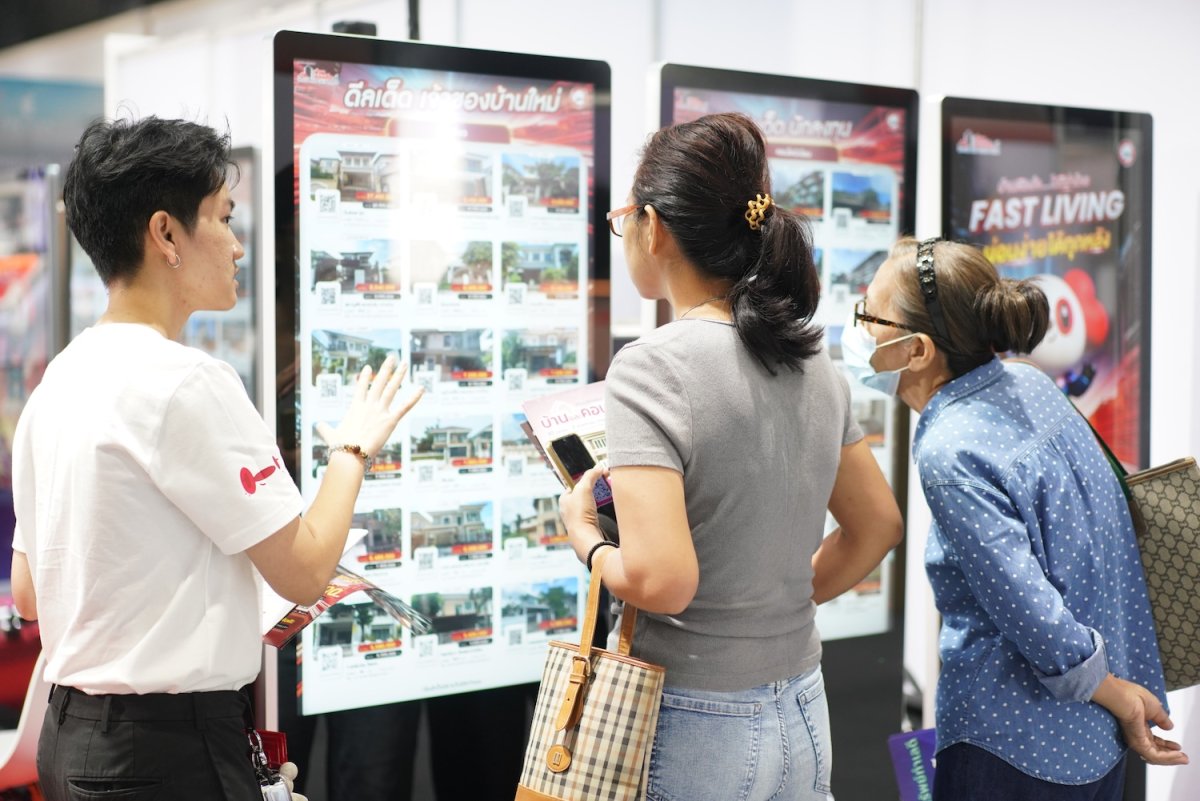
ผู้เข้าชมงานมหกรรมบ้านและคอนโดมิเนียม ครั้งที่ 48 ณ ศูนย์การประชุมแห่งชาติสิริกิติ์ กรุงเทพฯ เมื่อวันที่ 25 ตุลาคม 2568 (ภาพ: พัฒนาพงษ์ หิรนาถ)
บทความข่าวนี้ได้รับการสนับสนุนโดย FALLPROTEC บริษัทชั้นนำระดับโลกด้านการออกแบบและผลิตระบบป้องกันการตกจากที่สูงและโซลูชั่นการเข้าถึงที่สูง
ธนาคารเคหะแห่งชาติกล่าวเมื่อวันพุธว่า ตลาดที่อยู่อาศัยของไทยแสดงสัญญาณการฟื้นตัวในไตรมาสแรกของปี 2569 โดยปริมาณการทำธุรกรรมเพิ่มขึ้นท่ามกลางมาตรการกระตุ้นเศรษฐกิจของรัฐบาล แม้ว่ามูลค่าจะเพิ่มขึ้นช้ากว่า ซึ่งสะท้อนให้เห็นถึงกำลังซื้อที่อ่อนแอ
ธนาคารของรัฐกล่าวว่า แนวโน้มยังคงเปราะบาง โดยต้นทุนพลังงานที่เพิ่มสูงขึ้นซึ่งเชื่อมโยงกับสงครามในตะวันออกกลาง ความต้องการภายในประเทศที่อ่อนแอ และการซื้อจากชาวต่างชาติที่ลดลง คาดว่าจะส่งผลกระทบต่อภาคอสังหาริมทรัพย์ไปจนถึงสิ้นปี
ธนาคารกล่าวว่า ตลาดที่อยู่อาศัยคาดว่าจะลดลงเล็กน้อยในปี 2026 เนื่องจากต้นทุนพลังงานและภาวะเงินเฟ้อ แม้ว่าการลดลงจะถูกจำกัดด้วยมาตรการกระตุ้นเศรษฐกิจของรัฐบาล การขยายเวลาผ่อนปรนกฎเกณฑ์อัตราส่วนเงินกู้ต่อมูลค่าสำหรับสินเชื่อที่อยู่อาศัยออกไปอีกหนึ่งปี และการลดค่าธรรมเนียมสำหรับธุรกรรมบางประเภท
ความต้องการคอนโดมิเนียมจากชาวต่างชาติอ่อนตัวลงอย่างมากในไตรมาสแรก โดยการโอนกรรมสิทธิ์ลดลง 17% เมื่อเทียบกับปีต่อปี ทั้งในด้านปริมาณและมูลค่า แม้ว่าชาวต่างชาติยังคงมีส่วนแบ่งในธุรกรรมจำนวนมาก
การซื้อจากชาวจีนลดลงอย่างมากถึง 43% ในด้านมูลค่า ในขณะที่ความต้องการจากชาวรัสเซียเพิ่มขึ้น โดยกิจกรรมของชาวต่างชาติกระจุกตัวอยู่ในกรุงเทพฯ ชลบุรี และภูเก็ต โดยเฉพาะในกลุ่มอสังหาริมทรัพย์ระดับสูง
ธนาคารกลางแห่งประเทศไทย (GHB) คาดการณ์ว่าตลาดอสังหาริมทรัพย์จะหดตัวเล็กน้อยในปี 2026 โดยปริมาณการโอนกรรมสิทธิ์จะลดลง 1.1% และมูลค่าลดลง 2.3% ขณะที่การปล่อยสินเชื่อจำนองใหม่คาดว่าจะลดลง 1.6%
ในไตรมาสแรก การโอนกรรมสิทธิ์ที่อยู่อาศัยเพิ่มขึ้น 11.2% เมื่อเทียบกับปีก่อนหน้า ขณะที่มูลค่าเพิ่มขึ้นเพียง 3.1% ซึ่งแสดงให้เห็นถึงการเปลี่ยนแปลงไปสู่บ้านราคาประหยัด
ธนาคารกล่าวว่า ต้นทุนด้านพลังงานและการก่อสร้างที่สูงขึ้น ซึ่งเกิดจากความตึงเครียดทางภูมิรัฐศาสตร์ กำลังกดดันกำลังซื้อของครัวเรือน
หนี้ภาคครัวเรือนของไทยอยู่ที่ 16.44 ล้านล้านบาท ณ สิ้นปีที่แล้ว หรือคิดเป็น 86.7% ของ GDP ซึ่งอยู่ในระดับสูงที่สุดในเอเชีย ส่งผลกระทบต่อการบริโภคและการเติบโต
สินเชื่อที่อยู่อาศัยเริ่มฟื้นตัวหลังจากซบเซามายาวนาน โดยการปล่อยสินเชื่อจำนองใหม่เพิ่มขึ้น 11.1% เมื่อเทียบกับปีที่แล้ว มาอยู่ที่ประมาณ 122 พันล้านบาทในไตรมาสแรก