
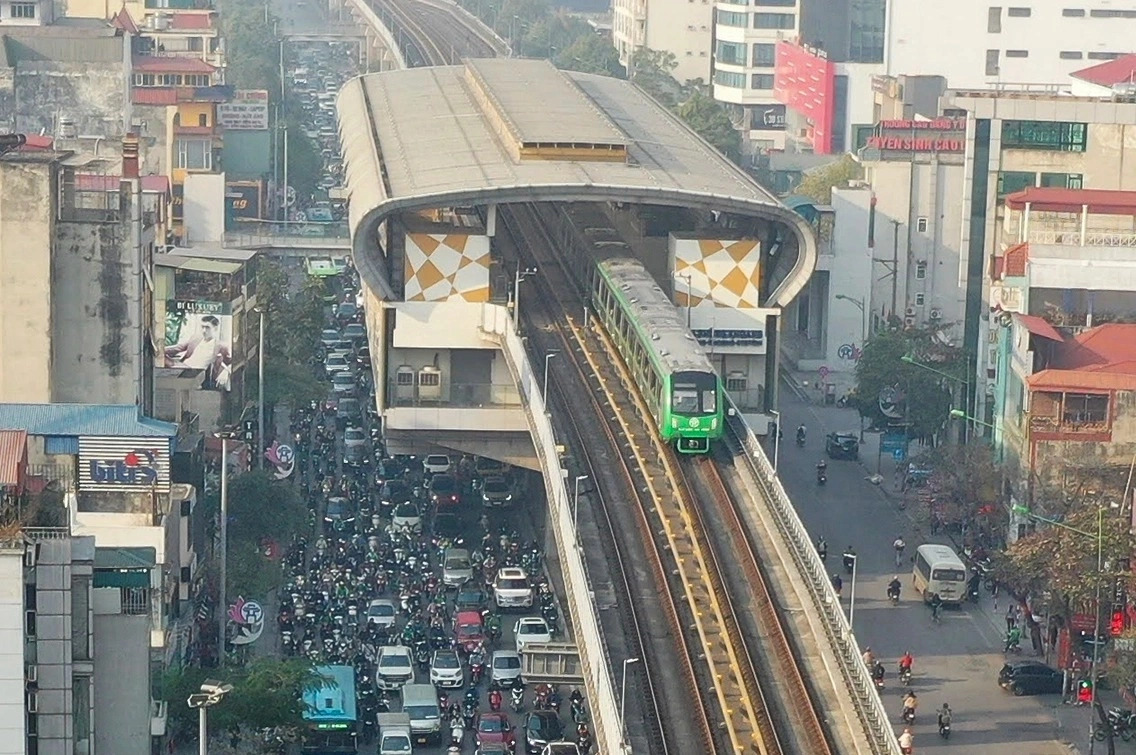
Hanoi plans $1.5B metro line 2A extension to serve 500,000 residents in southwestern suburbs
THIS NEWS ARTICLE KINDLY SPONSORED BY FALLPROTEC, A WORLD-RENOWNED NAME IN THE DESIGN AND MANUFACTURE OF PREMIUM FALL PROTECTION SYSTEMS AND HEIGHT ACCESS SOLUTIONS
Hanoi is preparing to launch the Metro Line 2A extension project with investment estimate exceeding US$1.5 billion, as part of efforts to ease traffic congestion in its southwestern gateway areas.
The Hanoi Metropolitan Railway Management Board (MRB) announced that it will organize an Early Market Engagement (EME) event for the project on June 18-19 in Hanoi to collect feedback from domestic and international businesses and consultants before the official bidding process begins.
The event will be held with the support of the Asian Infrastructure Investment Bank (AIIB) and is open to contractors, suppliers, consultants and potential partners with experience in urban railway projects.
According to the MRB, the project is expected to be financed through loans from the AIIB and counterpart funding from the Vietnamese government.
The feasibility study (FS), including the Front-End Engineering Design (FEED), began in February 2026 and is scheduled for completion in October this year. The study also covers environmental and social impact assessments, resettlement plans, project implementation strategy and procurement plans.
The MRB said the market consultation process aims to gather opinions on design options, contract packaging strategies, risk allocation mechanisms and technical and organizational solutions suitable for actual conditions.
The Metro 2A extension project is considered a key component of the first phase of Hanoi’s three-stage urban railway development master plan. The route is expected to improve connectivity between the city center and southwestern urban areas, particularly Xuan Mai satellite urban area, which is being developed as a western gateway urban zone of Hanoi.
Under the preliminary plan, the line will stretch around 20 km and run entirely on elevated tracks along National Highway 6, which is being expanded. The project is expected to include 12 elevated stations, 13 new four-car trains and a new 8.3 ha depot near Xuan Mai station.
The line will use the standard 1,435 mm gauge with a maximum design speed of 80-100 kph and a third-rail 750V DC power supply system. Its signalling system will apply Communications-Based Train Control (CBTC) technology integrated with Automatic Train Protection (ATP) and Computer-Based Interlocking (CBI) systems.
A key technical requirement is ensuring full operational and technical compatibility with the existing Cat Linh-Ha Dong Metro Line 2A.
Once completed, the project is expected to directly serve around 500,000 residents along the corridor, reduce traffic pressure on National Highway 6 and ease congestion around Mai Linh bridge, one of Hanoi’s busiest southwestern gateways.
The metro extension is also expected to promote urban development along the route, increase land values around stations, create jobs during construction and operation, and encourage a shift from road transport to mass public transit.
Source: https://e.vnexpress.net/news/news/traffic/hanoi-plans-1-5b-metro-extension-to-serve-500-000-residents-in-southwestern-suburbs-5079301.html
Google Translation:
ฮานอยวางแผนขยายเส้นทางรถไฟฟ้าใต้ดินสาย 2A มูลค่า 1.5 พันล้านดอลลาร์สหรัฐ เพื่อให้บริการประชาชน 500,000 คนในเขตชานเมืองทางตะวันตกเฉียงใต้
บทความข่าวนี้ได้รับการสนับสนุนโดย FALLPROTEC บริษัทชั้นนำระดับโลกด้านการออกแบบและผลิตระบบป้องกันการตกจากที่สูงและโซลูชันการเข้าถึงที่สูง
ฮานอยกำลังเตรียมเปิดตัวโครงการขยายเส้นทางรถไฟฟ้าใต้ดินสาย 2A ด้วยงบประมาณการลงทุนกว่า 1.5 พันล้านดอลลาร์สหรัฐ ซึ่งเป็นส่วนหนึ่งของความพยายามในการบรรเทาปัญหาการจราจรติดขัดในพื้นที่ทางเข้าออกทางตะวันตกเฉียงใต้
คณะกรรมการบริหารรถไฟฟ้าใต้ดินฮานอย (MRB) ประกาศว่าจะจัดงาน Early Market Engagement (EME) สำหรับโครงการนี้ในวันที่ 18-19 มิถุนายน ที่ฮานอย เพื่อรวบรวมความคิดเห็นจากธุรกิจและที่ปรึกษาทั้งในและต่างประเทศก่อนเริ่มกระบวนการประมูลอย่างเป็นทางการ
งานนี้จะจัดขึ้นโดยได้รับการสนับสนุนจากธนาคารเพื่อการลงทุนด้านโครงสร้างพื้นฐานแห่งเอเชีย (AIIB) และเปิดให้ผู้รับเหมา ผู้จัดจำหน่าย ที่ปรึกษา และพันธมิตรที่มีศักยภาพซึ่งมีประสบการณ์ในโครงการรถไฟฟ้าในเมืองเข้าร่วม
ตามข้อมูลของ MRB โครงการนี้คาดว่าจะได้รับเงินทุนผ่านเงินกู้จาก AIIB และเงินสมทบจากรัฐบาลเวียดนาม
การศึกษาความเป็นไปได้ (FS) รวมถึงการออกแบบทางวิศวกรรมขั้นต้น (FEED) เริ่มขึ้นในเดือนกุมภาพันธ์ 2569 และมีกำหนดแล้วเสร็จในเดือนตุลาคมปีนี้ การศึกษายังครอบคลุมถึงการประเมินผลกระทบด้านสิ่งแวดล้อมและสังคม แผนการย้ายถิ่นฐาน กลยุทธ์การดำเนินโครงการ และแผนการจัดซื้อจัดจ้าง
MRB กล่าวว่ากระบวนการปรึกษาหารือกับตลาดมีจุดมุ่งหมายเพื่อรวบรวมความคิดเห็นเกี่ยวกับตัวเลือกการออกแบบ กลยุทธ์การจัดแพ็กเกจสัญญา กลไกการจัดสรรความเสี่ยง และโซลูชันทางเทคนิคและองค์กรที่เหมาะสมกับสภาพความเป็นจริง
โครงการขยายรถไฟฟ้าเมโทร 2A ถือเป็นองค์ประกอบสำคัญของระยะแรกของแผนแม่บทการพัฒนารถไฟฟ้าในเมืองสามระยะของฮานอย คาดว่าเส้นทางนี้จะช่วยเพิ่มการเชื่อมต่อระหว่างใจกลางเมืองและพื้นที่เมืองทางตะวันตกเฉียงใต้ โดยเฉพาะอย่างยิ่งพื้นที่เมืองบริวารซวนมาย ซึ่งกำลังได้รับการพัฒนาให้เป็นเขตเมืองประตูทางตะวันตกของฮานอย
ตามแผนเบื้องต้น เส้นทางนี้จะมีความยาวประมาณ 20 กิโลเมตร และวิ่งบนรางยกระดับตลอดแนวทางหลวงหมายเลข 6 ซึ่งกำลังอยู่ระหว่างการขยาย โครงการนี้คาดว่าจะประกอบด้วยสถานียกระดับ 12 แห่ง ขบวนรถไฟใหม่ 13 ขบวน (แต่ละขบวนมี 4 ตู้) และโรงจอดรถไฟใหม่ขนาด 8.3 เฮกตาร์ ใกล้สถานีซวนมาย
เส้นทางนี้จะใช้รางมาตรฐานขนาด 1,435 มิลลิเมตร ด้วยความเร็วสูงสุดที่ออกแบบไว้ 80-100 กิโลเมตรต่อชั่วโมง และระบบจ่ายไฟแบบรางที่สาม 750 โวลต์ DC ระบบสัญญาณจะใช้เทคโนโลยีควบคุมรถไฟแบบสื่อสาร (CBTC) ที่บูรณาการกับระบบป้องกันรถไฟอัตโนมัติ (ATP) และระบบล็อกแบบคอมพิวเตอร์ (CBI)
ข้อกำหนดทางเทคนิคที่สำคัญคือการรับรองความเข้ากันได้ในการใช้งานและทางเทคนิคอย่างสมบูรณ์กับรถไฟฟ้าใต้ดินสาย 2A สายแคทลินห์-ฮาดงที่มีอยู่แล้ว
เมื่อโครงการแล้วเสร็จ คาดว่าจะให้บริการประชาชนประมาณ 500,000 คนตามแนวเส้นทางโดยตรง ลดความแออัดของการจราจรบนทางหลวงหมายเลข 6 และบรรเทาปัญหาการจราจรติดขัดบริเวณสะพานไม้หลิง ซึ่งเป็นหนึ่งในเส้นทางสัญจรทางตะวันตกเฉียงใต้ที่พลุกพล่านที่สุดของฮานอย
นอกจากนี้ การขยายเส้นทางรถไฟฟ้าใต้ดินยังคาดว่าจะส่งเสริมการพัฒนาเมืองตามแนวเส้นทาง เพิ่มมูลค่าที่ดินรอบสถานี สร้างงานในช่วงการก่อสร้างและการดำเนินงาน และกระตุ้นให้เกิดการเปลี่ยนจากการขนส่งทางถนนไปสู่ระบบขนส่งมวลชนมากขึ้น

