 Thailand pauses 166 data centre projects, under construction or awaiting approval, to rewrite rules
THIS NEWS ARTICLE KINDLY SPONSORED BY FALLPROTEC, A WORLD-RENOWNED NAME IN THE DESIGN AND MANUFACTURE OF PREMIUM FALL PROTECTION SYSTEMS AND HEIGHT ACCESS SOLUTIONS
- The government has paused 49 data centre projects under construction and 117 awaiting approval, totalling 166 projects.
- The board has established four subcommittees to develop standards covering economic benefits, infrastructure, locations and the environment within one month.
- The new rules will regulate water and electricity use, locations and safety, while promoting clean energy and technology transfers.
Thailand has ordered a temporary pause on 166 data centre projects while government agencies draw up nationwide standards governing resource use, locations, safety and economic benefits.
The data centre policy board issued the decision at its first meeting on September 4, 2026. It covers 49 projects under construction and 117 awaiting permission from various agencies.
Four subcommittees have been given one month to prepare the new criteria. The government intends to continue attracting investment while ensuring that projects generate jobs, income and technological benefits for Thailand, rather than simply providing space for servers.

Deputy Prime Minister and Finance Minister Ekniti Nitithanprapas, who chaired the meeting, identified three immediate priorities — consolidating industry data, establishing minimum standards and increasing the benefits Thailand receives from investment.
Project review extends to Bangkok
Danucha Pichayanan, secretary-general of the National Economic and Social Development Council (NESDC), said information gathered from 16 government agencies showed that 35 data centre projects were already operating.
Of these, 11 had received investment promotion from the Board of Investment (BOI), while 24 had obtained permission through other channels. Most of the latter were in industrial estates already subject to site controls. Financial institutions also operated about three or four smaller data centres.
Before approvals resume under common national standards, the board wants a fuller assessment of project details, locations, water and electricity sources, and effects on surrounding communities.
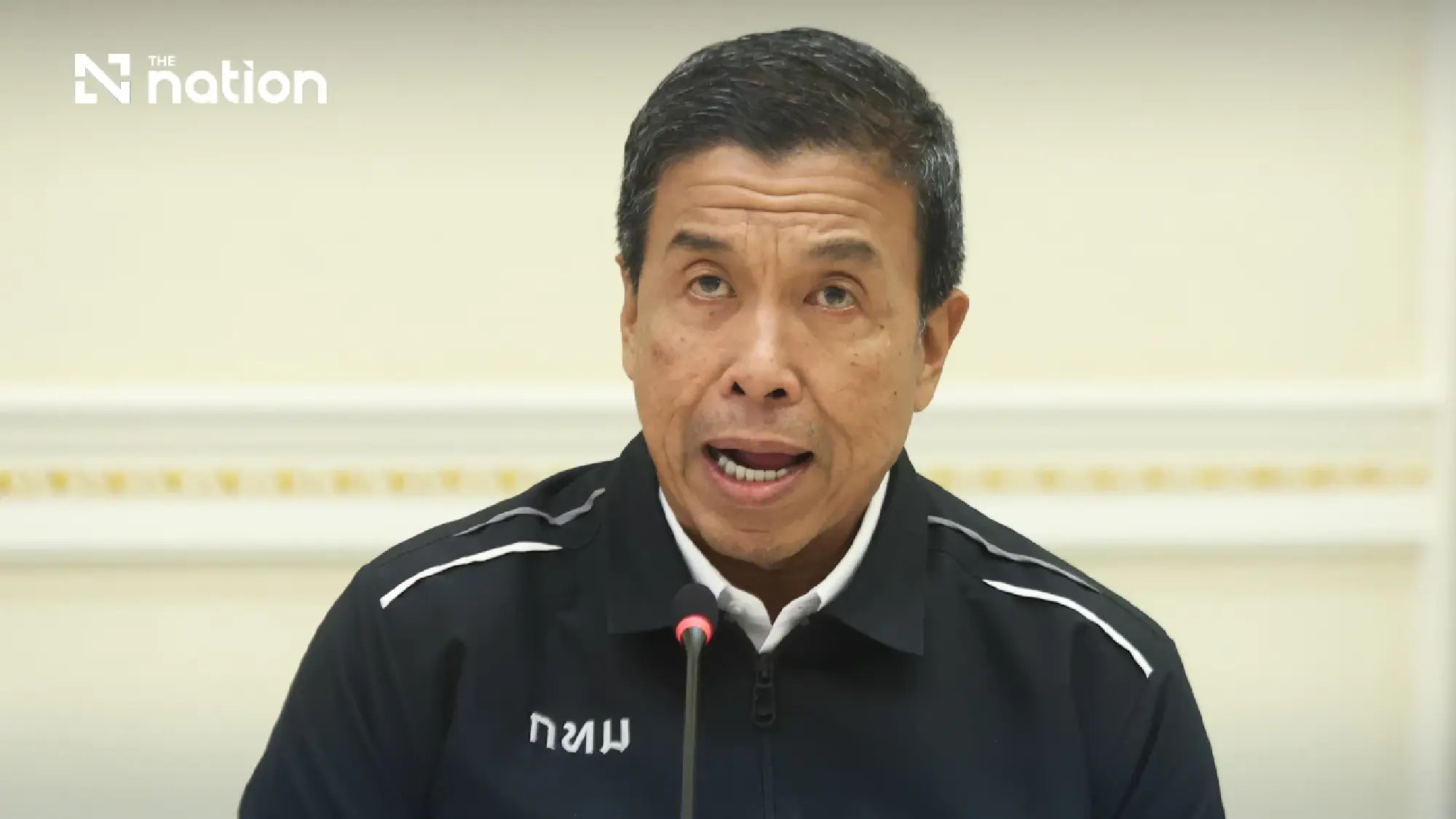
Bangkok Governor Chadchart Sittipunt said six data centre projects had applied for permission in the capital, each requiring between 9 and 23 megawatts of electricity.
Three were approved and began operating between 2022 and 2024. City officials will conduct spot checks covering noise, heat, safety and other nuisance impacts on communities, using the findings to inform the new rules.
The other three applications will remain on hold until the national board establishes clear policies and standards.
Fragmented approvals obscure resource demands
Investors currently seek permission separately from electricity utilities, water authorities and local building regulators. Each agency assesses matters within its remit, leaving no single body with a complete view of a project’s resource needs, proximity to communities or economic returns relative to its costs.
Some data centres are also registered under other business categories, including warehousing, making it harder to establish the industry’s true scale. The board has instructed the Department of Business Development to create a dedicated business classification.
Officials will also reconsider a proposal to regulate data centres with electricity demand exceeding 2 megawatts as industrial factories. The board considered that threshold too low for the scale of projects currently in the market.
Large data centres require electricity around the clock and substantial water supplies for cooling. Their locations therefore affect surrounding communities, local power networks and water resources.
Many projects also need substations and fuel storage for backup generators, adding safety concerns when facilities are located in urban areas or close to homes.
Minimum standards will cover both commercial facilities serving outside customers and data centres built for organisations’ own use.
New projects will have to meet requirements covering town planning, separation from neighbouring buildings, safety, electrical systems, backup fuel storage and environmental protection. Existing operators will receive a transition period to bring their premises and systems into compliance.

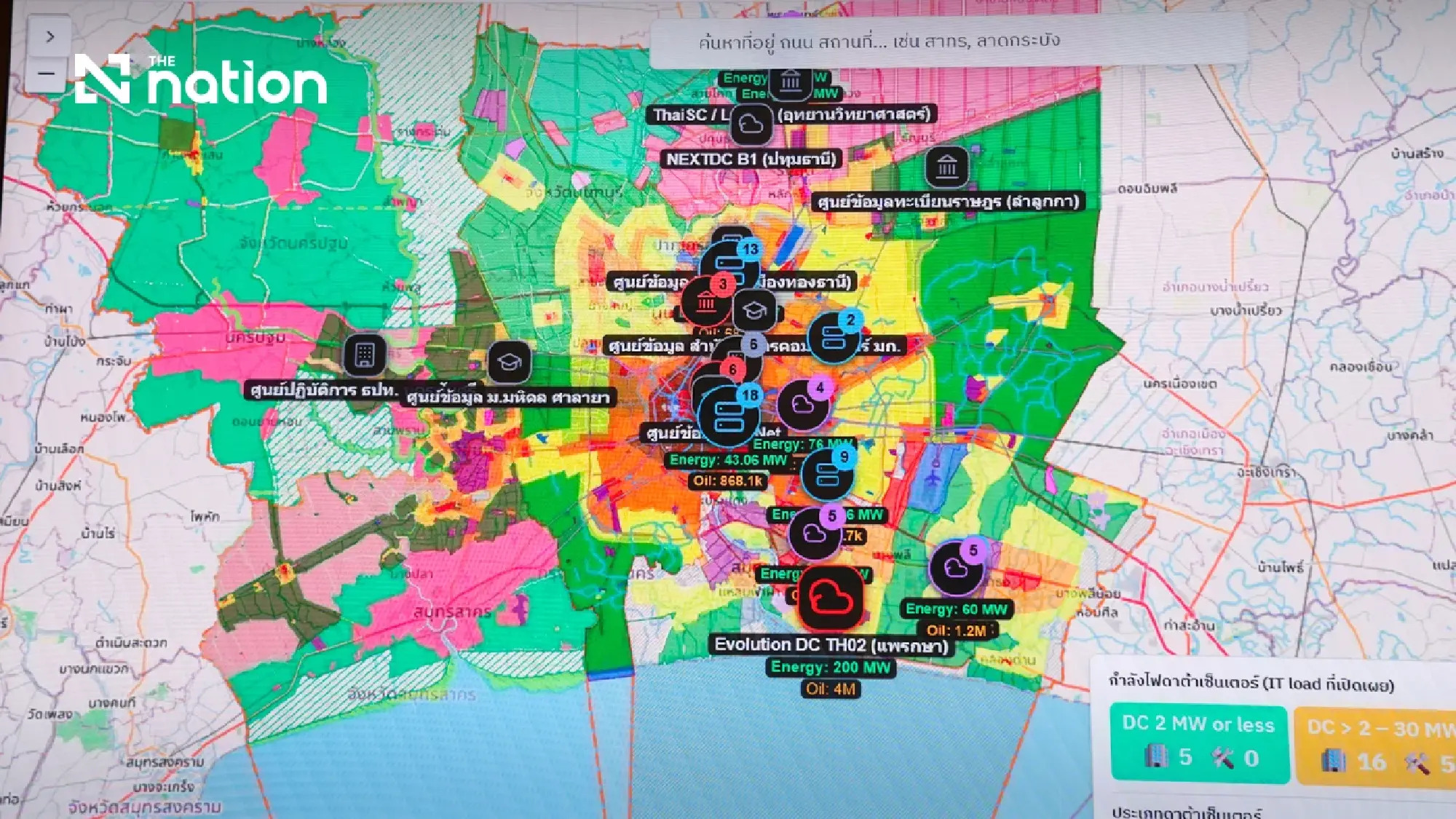
Digital Economy and Society Minister Chaichanok Chidchob proposed a central dashboard that can be updated immediately, displaying the following information.
- Project locations and status.
- Water sources and electricity supplies.
- Town-planning requirements.
- Applicable rules and regulations.
The dashboard would allow agencies to assess cumulative impacts and track projects from application through construction and operation to subsequent inspections.
Investment to be assessed on benefits for Thailand
The government wants data centres to give Thai people and small and medium-sized enterprises (SMEs) access to cloud services and artificial intelligence (AI) computing capacity at affordable costs.
It is also preparing a competitive proposal process for future projects, assessing investors on their contribution to Thai employment, technology transfers, clean-energy use and reductions in greenhouse gas emissions.
Water and electricity prices should reflect direct and indirect costs so that households and other businesses do not subsidise large operators’ resource use.
The board established four subcommittees to develop detailed criteria within one month.
- Economic benefits — Chaired by the NESDC secretary-general, this panel will assess value for money, employment and technological benefits.
- Infrastructure — Chaired by the permanent secretary for energy, it will examine water, electricity and digital-network provision, ensuring that allocation to data centres does not crowd out public needs.
- Sites and buildings — Chaired by the permanent secretary for interior, it will assess locations, buildings, substations and backup fuel-storage facilities.
- Environment — Chaired by the permanent secretary for natural resources and environment, it will develop green standards and procedures for inspections after facilities begin operating.
The measures form part of Thailand’s ambition to become an Asian hub for environmentally sustainable data centres.
BOI Secretary-General Narit Therdsteerasukdi said clear rules would strengthen long-term investor confidence by allowing businesses to understand costs, conditions and resource availability from the outset.
The four panels must submit their proposed criteria within one month.
Souce: https://www.nationthailand.com/business/tech/40070670 (Post Today (Amorndej Choosuwan))
Google Translation:
[We apologise if any of the translation is incorrect: google Translation occasionally gets it wrong]
ประเทศไทยสั่งระงับโครงการศูนย์ข้อมูล 166 โครงการ ที่อยู่ระหว่างการก่อสร้างหรือรอการอนุมัติ เพื่อปรับปรุงกฎระเบียบ
บทความข่าวนี้ได้รับการสนับสนุนโดย FALLPROTEC บริษัทชั้นนำระดับโลกด้านการออกแบบและผลิตระบบป้องกันการตกจากที่สูงและโซลูชันการเข้าถึงที่สูงระดับพรีเมียม
รัฐบาลได้สั่งระงับโครงการศูนย์ข้อมูลที่อยู่ระหว่างการก่อสร้าง 49 โครงการ และโครงการที่รอการอนุมัติอีก 117 โครงการ รวมทั้งหมด 166 โครงการ
คณะกรรมการได้จัดตั้งคณะอนุกรรมการ 4 ชุด เพื่อพัฒนากฎระเบียบมาตรฐานที่ครอบคลุมด้านผลประโยชน์ทางเศรษฐกิจ โครงสร้างพื้นฐาน สถานที่ตั้ง และสิ่งแวดล้อมภายในหนึ่งเดือน
กฎระเบียบใหม่จะควบคุมการใช้น้ำและไฟฟ้า สถานที่ตั้ง และความปลอดภัย พร้อมทั้งส่งเสริมพลังงานสะอาดและการถ่ายทอดเทคโนโลยี
ประเทศไทยได้สั่งระงับโครงการศูนย์ข้อมูล 166 โครงการเป็นการชั่วคราว ในขณะที่หน่วยงานของรัฐกำลังจัดทำมาตรฐานระดับประเทศที่ควบคุมการใช้ทรัพยากร สถานที่ตั้ง ความปลอดภัย และผลประโยชน์ทางเศรษฐกิจ
คณะกรรมการนโยบายศูนย์ข้อมูลได้ออกมติในการประชุมครั้งแรกเมื่อวันที่ 4 กันยายน 2569 ครอบคลุมโครงการที่อยู่ระหว่างการก่อสร้าง 49 โครงการ และโครงการที่รอการอนุมัติจากหน่วยงานต่างๆ อีก 117 โครงการ
คณะอนุกรรมการ 4 ชุดได้รับเวลา 1 เดือนในการจัดทำเกณฑ์ใหม่ รัฐบาลตั้งใจที่จะดึงดูดการลงทุนอย่างต่อเนื่อง พร้อมทั้งสร้างความมั่นใจว่าโครงการต่างๆ จะสร้างงาน สร้างรายได้ และผลประโยชน์ทางเทคโนโลยีให้กับประเทศไทย มากกว่าแค่การจัดหาพื้นที่สำหรับเซิร์ฟเวอร์
รองนายกรัฐมนตรีและรัฐมนตรีว่าการกระทรวงการคลัง เอกนิติ นิติธานประภาส ซึ่งเป็นประธานการประชุม ได้ระบุถึง 3 ประเด็นสำคัญเร่งด่วน ได้แก่ การรวบรวมข้อมูลอุตสาหกรรม การกำหนดมาตรฐานขั้นต่ำ และการเพิ่มผลประโยชน์ที่ประเทศไทยได้รับจากการลงทุน
การทบทวนโครงการขยายไปถึงกรุงเทพฯ
ดานุชชา พิชญานันท์ เลขาธิการสภาพัฒนาเศรษฐกิจและสังคมแห่งชาติ (กสทช.) กล่าวว่า ข้อมูลที่รวบรวมจากหน่วยงานภาครัฐ 16 แห่ง แสดงให้เห็นว่ามีโครงการศูนย์ข้อมูล 35 โครงการที่ดำเนินการอยู่แล้ว
ในจำนวนนี้ 11 โครงการได้รับการส่งเสริมการลงทุนจากสำนักงานส่งเสริมการลงทุน (BOI) ขณะที่ 24 โครงการได้รับอนุญาตผ่านช่องทางอื่นๆ ศูนย์ข้อมูลส่วนใหญ่ตั้งอยู่ในนิคมอุตสาหกรรมที่อยู่ภายใต้การควบคุมพื้นที่อยู่แล้ว นอกจากนี้สถาบันการเงินยังดำเนินการศูนย์ข้อมูลขนาดเล็กอีกประมาณสามถึงสี่แห่ง
ก่อนที่การอนุมัติจะกลับมาดำเนินการภายใต้มาตรฐานระดับชาติทั่วไป คณะกรรมการต้องการประเมินรายละเอียดโครงการ สถานที่ตั้ง แหล่งน้ำและไฟฟ้า และผลกระทบต่อชุมชนโดยรอบอย่างครบถ้วน
ผู้ว่าราชการกรุงเทพมหานคร นายชาดชาติ สิทธิพันธุ์ กล่าวว่า โครงการศูนย์ข้อมูล 6 โครงการได้ยื่นขออนุญาตในกรุงเทพฯ โดยแต่ละโครงการต้องการไฟฟ้าประมาณ 9 ถึง 23 เมกะวัตต์
สามโครงการได้รับการอนุมัติและเริ่มดำเนินการระหว่างปี 2022 ถึง 2024 เจ้าหน้าที่กรุงเทพมหานครจะทำการตรวจสอบแบบสุ่มครอบคลุมถึงเสียง ความร้อน ความปลอดภัย และผลกระทบอื่นๆ ต่อชุมชน โดยนำผลการตรวจสอบไปใช้ในการกำหนดกฎระเบียบใหม่
อีกสามโครงการที่เหลือจะถูกระงับไว้จนกว่าคณะกรรมการระดับชาติจะกำหนดนโยบายและมาตรฐานที่ชัดเจน
การอนุมัติที่กระจัดกระจายทำให้ความต้องการทรัพยากรไม่ชัดเจน
ปัจจุบันนักลงทุนต้องขออนุญาตแยกต่างหากจากหน่วยงานด้านไฟฟ้า การประปา และหน่วยงานควบคุมอาคารในท้องถิ่น แต่ละหน่วยงานจะประเมินเรื่องต่างๆ ภายในขอบเขตอำนาจหน้าที่ของตน ทำให้ไม่มีหน่วยงานใดหน่วยงานหนึ่งที่สามารถมองเห็นภาพรวมทั้งหมดของความต้องการทรัพยากรของโครงการ ความใกล้ชิดกับชุมชน หรือผลตอบแทนทางเศรษฐกิจเมื่อเทียบกับต้นทุนได้อย่างครบถ้วน
ศูนย์ข้อมูลบางแห่งยังจดทะเบียนภายใต้หมวดธุรกิจอื่นๆ เช่น คลังสินค้า ทำให้ยากต่อการประเมินขนาดที่แท้จริงของอุตสาหกรรม คณะกรรมการได้สั่งการให้กรมพัฒนาธุรกิจจัดทำประเภทธุรกิจเฉพาะขึ้นมา
เจ้าหน้าที่จะพิจารณาข้อเสนอในการควบคุมศูนย์ข้อมูลที่มีความต้องการใช้ไฟฟ้าเกิน 2 เมกะวัตต์ในฐานะโรงงานอุตสาหกรรมอีกครั้ง คณะกรรมการพิจารณาว่าเกณฑ์ดังกล่าวต่ำเกินไปสำหรับขนาดของโครงการในตลาดปัจจุบัน
ศูนย์ข้อมูลขนาดใหญ่ต้องการไฟฟ้าตลอด 24 ชั่วโมง และแหล่งน้ำจำนวนมากสำหรับการระบายความร้อน ดังนั้นที่ตั้งของศูนย์ข้อมูลจึงส่งผลกระทบต่อชุมชนโดยรอบ เครือข่ายไฟฟ้าในท้องถิ่น และทรัพยากรน้ำ
หลายโครงการยังต้องการสถานีไฟฟ้าย่อยและที่เก็บเชื้อเพลิงสำหรับเครื่องกำเนิดไฟฟ้าสำรอง ซึ่งเพิ่มความกังวลด้านความปลอดภัยเมื่อสิ่งอำนวยความสะดวกตั้งอยู่ในเขตเมืองหรือใกล้บ้านเรือน
มาตรฐานขั้นต่ำจะครอบคลุมทั้งสิ่งอำนวยความสะดวกเชิงพาณิชย์ที่ให้บริการลูกค้าภายนอกและศูนย์ข้อมูลที่สร้างขึ้นเพื่อใช้เองขององค์กร
โครงการใหม่จะต้องเป็นไปตามข้อกำหนดต่างๆ เช่น การวางผังเมือง การเว้นระยะห่างจากอาคารข้างเคียง ความปลอดภัย ระบบไฟฟ้า ระบบจัดเก็บเชื้อเพลิงสำรอง และการรักษาสิ่งแวดล้อม ผู้ประกอบการรายเดิมจะได้รับระยะเวลาเปลี่ยนผ่านเพื่อปรับปรุงสถานที่และระบบให้เป็นไปตามข้อกำหนด
นายชัยชนก ชิดชอบ รัฐมนตรีว่าการกระทรวงดิจิทัลเพื่อเศรษฐกิจและสังคม เสนอให้จัดทำแดชบอร์ดส่วนกลางที่สามารถอัปเดตข้อมูลได้ทันที โดยแสดงข้อมูลดังต่อไปนี้:
สถานที่ตั้งและสถานะของโครงการ
แหล่งน้ำและระบบไฟฟ้า
ข้อกำหนดด้านการวางผังเมือง
กฎระเบียบที่เกี่ยวข้อง
แดชบอร์ดนี้จะช่วยให้หน่วยงานต่างๆ สามารถประเมินผลกระทบสะสมและติดตามโครงการตั้งแต่การยื่นขออนุญาต การก่อสร้าง การดำเนินงาน ไปจนถึงการตรวจสอบในภายหลัง
การลงทุนจะได้รับการประเมินจากผลประโยชน์ต่อประเทศไทย
รัฐบาลต้องการให้ศูนย์ข้อมูลช่วยให้คนไทยและวิสาหกิจขนาดกลางและขนาดย่อม (SMEs) เข้าถึงบริการคลาวด์และความสามารถในการประมวลผลปัญญาประดิษฐ์ (AI) ในราคาที่เหมาะสม
นอกจากนี้ รัฐบาลกำลังเตรียมกระบวนการเสนอโครงการอย่างแข่งขันสำหรับโครงการในอนาคต โดยประเมินนักลงทุนจากผลงานที่สร้างงานให้กับคนไทย การถ่ายทอดเทคโนโลยี การใช้พลังงานสะอาด และการลดการปล่อยก๊าซเรือนกระจก
ราคาค่าน้ำและค่าไฟฟ้าควรสะท้อนต้นทุนทางตรงและทางอ้อม เพื่อไม่ให้ครัวเรือนและธุรกิจอื่นๆ ต้องอุดหนุนการใช้ทรัพยากรของผู้ประกอบการรายใหญ่
คณะกรรมการได้จัดตั้งคณะอนุกรรมการ 4 ชุด เพื่อพัฒนากฎเกณฑ์โดยละเอียดภายใน 1 เดือน
ผลประโยชน์ทางเศรษฐกิจ — คณะอนุกรรมการชุดนี้มีเลขาธิการ NESDC เป็นประธาน จะประเมินความคุ้มค่า การจ้างงาน และผลประโยชน์ทางเทคโนโลยี
โครงสร้างพื้นฐาน — คณะอนุกรรมการชุดนี้มีปลัดกระทรวงพลังงานเป็นประธาน จะตรวจสอบการจัดหาน้ำ ไฟฟ้า และเครือข่ายดิจิทัล เพื่อให้แน่ใจว่าการจัดสรรให้กับศูนย์ข้อมูลจะไม่เบียดบังความต้องการของประชาชน
สถานที่ตั้งและอาคาร — คณะกรรมการซึ่งมีปลัดกระทรวงมหาดไทยเป็นประธาน จะประเมินสถานที่ตั้ง อาคาร สถานีไฟฟ้าย่อย และสถานที่จัดเก็บเชื้อเพลิงสำรอง
สิ่งแวดล้อม — คณะกรรมการซึ่งมีปลัดกระทรวงทรัพยากรธรรมชาติและสิ่งแวดล้อมเป็นประธาน จะพัฒนาระบบมาตรฐานสีเขียวและขั้นตอนการตรวจสอบหลังจากที่สถานที่เริ่มดำเนินการแล้ว
มาตรการเหล่านี้เป็นส่วนหนึ่งของความมุ่งมั่นของประเทศไทยที่จะเป็นศูนย์กลางด้านศูนย์ข้อมูลที่เป็นมิตรต่อสิ่งแวดล้อมในเอเชีย
นายณฤทธิ์ เถิดสตีรสุขดี เลขาธิการ BOI กล่าวว่า กฎระเบียบที่ชัดเจนจะเสริมสร้างความเชื่อมั่นของนักลงทุนในระยะยาว โดยช่วยให้ธุรกิจเข้าใจต้นทุน เงื่อนไข และความพร้อมของทรัพยากรตั้งแต่เริ่มต้น
คณะกรรมการทั้งสี่ชุดต้องส่งเกณฑ์ที่เสนอภายในหนึ่งเดือน