How to Find Construction and Engineering Jobs for Expatriates in Thailand
Thailand is one of the world’s most popular destinations for tourists, and many visitors eventually find themselves asking the same question:
“Could I actually live and work here?”
For construction and engineering professionals, the answer is yes. However, finding the right opportunity is not always easy.
Having worked in Thailand’s construction industry since 1991, I have seen enormous changes in both the country and the employment market. During that time, I have worked for international contractors, local companies and, eventually, for my own business. I have experienced both the highs and lows of finding work as an expatriate in Thailand.
In this article, I share some observations, personal experiences and practical advice that may help construction and engineering professionals considering a move to Thailand or looking for their next opportunity here.
How Many Foreign Professionals Work in Thailand?
According to statistics published by Thailand’s Ministry of Labour (Department of Employment), foreign workers in Thailand fall broadly into two categories:
- Skilled foreign professionals and executives (traditionally referred to as expatriates), numbering approximately 120,000–150,000.
- Legally registered migrant workers from neighbouring countries, numbering between 2.5 and 3 million.
Among the skilled foreign worker category, the largest nationality groups include:
- China – More than 55,000 work permit holders, largely driven by investment in electric vehicle manufacturing, technology and infrastructure projects.
- Japan – Historically the largest expatriate community, now accounting for around 22,000 permit holders.
- Philippines and India – Strongly represented in education, IT services, language instruction and management positions.
- United Kingdom, United States and Western Europe – A comparatively small but steady group of approximately 9,000–15,000 permit holders working in specialist, consulting and corporate roles.
Most readers of this article will probably come from the UK, North America, Australia or Europe. These figures highlight an important reality: there are relatively few expatriate positions available for Western professionals in Thailand. Opportunities certainly exist, but competition can be intense.
Working in Thailand During the Boom Years
The Thailand I arrived in during 1991 was very different from the Thailand of today.
Most construction projects employing expatriates were located in and around Bangkok. The city felt smaller, less congested and far more intimate than the sprawling metropolis we know today.
Thailand welcomed just over five million international visitors a year in 1991, compared with the vastly larger numbers seen today. The internet did not exist in everyday life, and information travelled largely through newspapers, personal contacts and word of mouth.
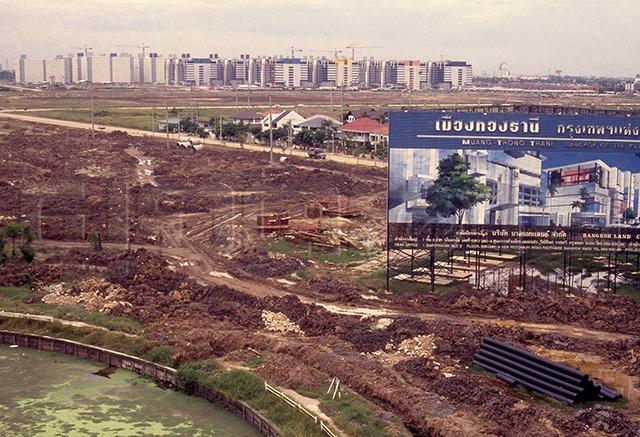
If you wanted to know what was happening around town, you bought the Bangkok Post. Bernard Trink’s famous Night Owl column was essential reading for many expatriates. Patpong, Nana Plaza and Soi Cowboy were the main social hubs, while hotels such as The Landmark, Hyatt Erawan and Novotel Siam Square were popular meeting places. Because there were relatively few places where expatriates gathered, you were almost guaranteed to bump into somebody you knew on a night out.
Finding a job was relatively straightforward. The place to look was the classified advertising section of the Bangkok Post. Applications involved preparing a CV, writing a cover letter and sending them through the post to the company advertising the job. Recruitment agencies existed, but there were far fewer than today.
Personal contacts were invaluable. Relationships formed through work, social circles and industry networks frequently led to new opportunities.
My own journey to Thailand began after I lost my position with a contractor in Sydney during the Australian construction downturn of the late 1980s and early 1990s.
Fortunately, I quickly secured a role with a small chartered quantity surveying practice in Bangkok, although I had to fund my own relocation from Australia. From memory, my salary was around THB 60,000 per month. While that seemed modest even then, it would equate to approximately THB 143,000–144,000 per month in today’s money. But it got me in to Thailand as a starting point.
At that time, Bangkok was experiencing a major construction boom. Western contractors from the UK, Australia, Germany and elsewhere were heavily involved in projects throughout the city. As a result, there were significantly more expatriate opportunities than there are today.
Within a few months of arriving, new opportunities began appearing regularly for me and I soon moved on from the quantity surveying practice to join a major Japanese contractor working on the construction of a five-star hotel on Sathorn Road.
Throughout the 1990s I worked for several companies. One common feature of the industry was project-based employment, that is, a contract to work on a specific construction project with that company. Employers would often suggest that, once the current project finished, there would be another project waiting. In my experience, that ‘carrot that was dangled’ was frequently more hopeful than certain.
A good example of the scale of expatriate employment during that era was Christiani & Nielsen (Thai) Construction (CNT), where I worked in the mid 1990s. Initially based at the company’s Bangna head office, I was later transferred to the All-Seasons Place development on Wireless Road to replace someone as the project Commercial Manager. The project comprised a 35-storey condominium tower and two 28-storey office towers. At that time CNT employed more than 100 expatriates—a figure that would be difficult to imagine in today’s market.
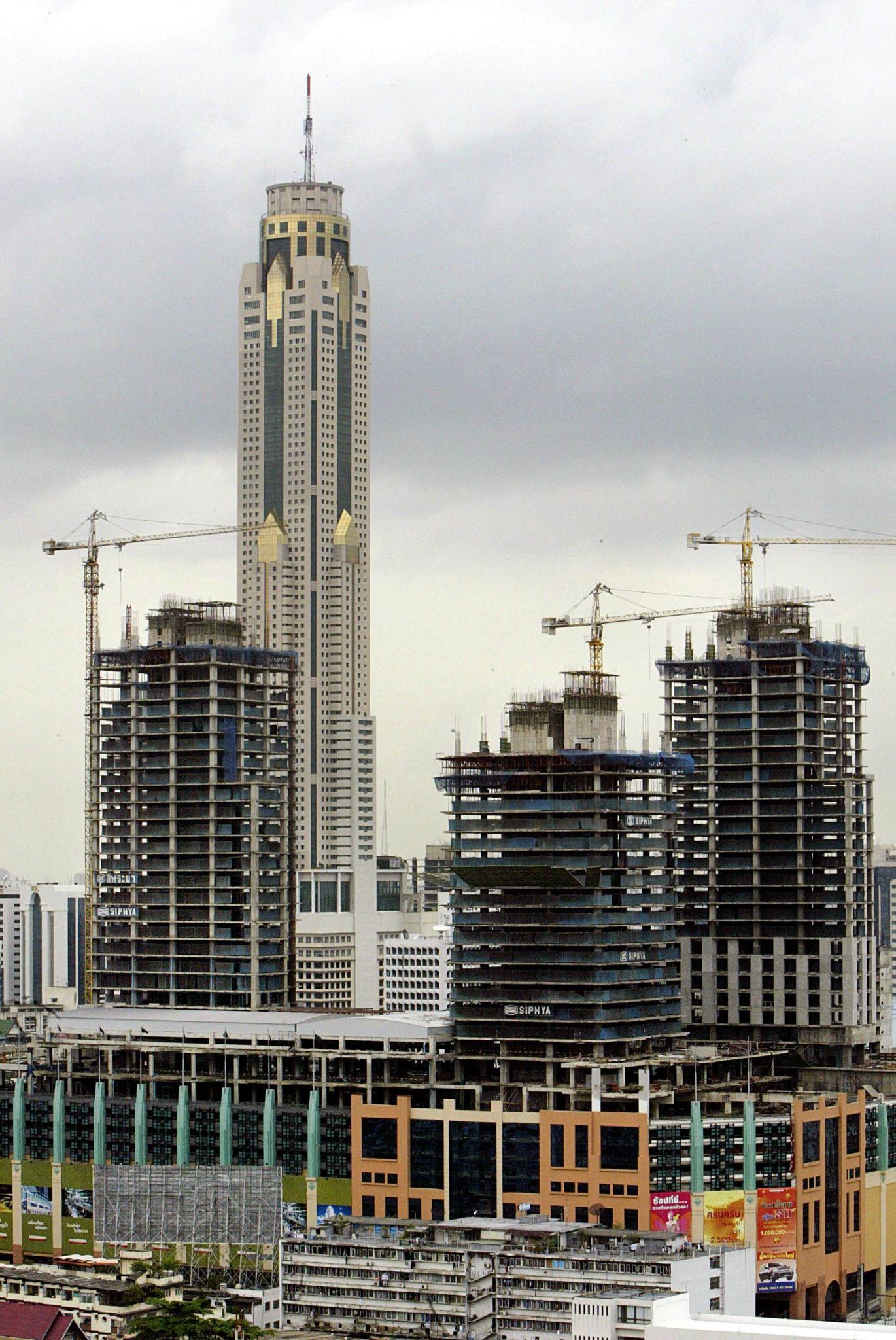
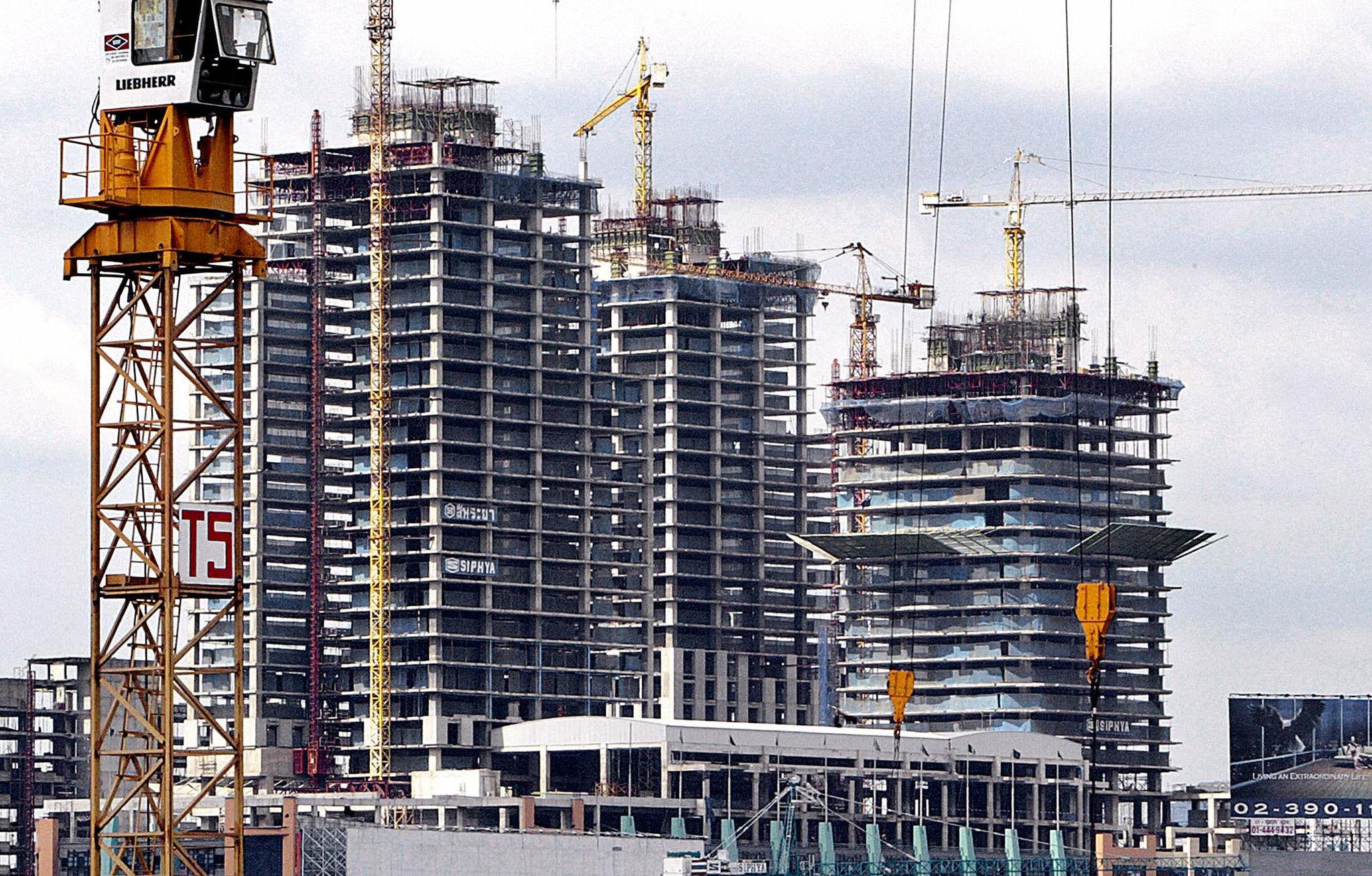
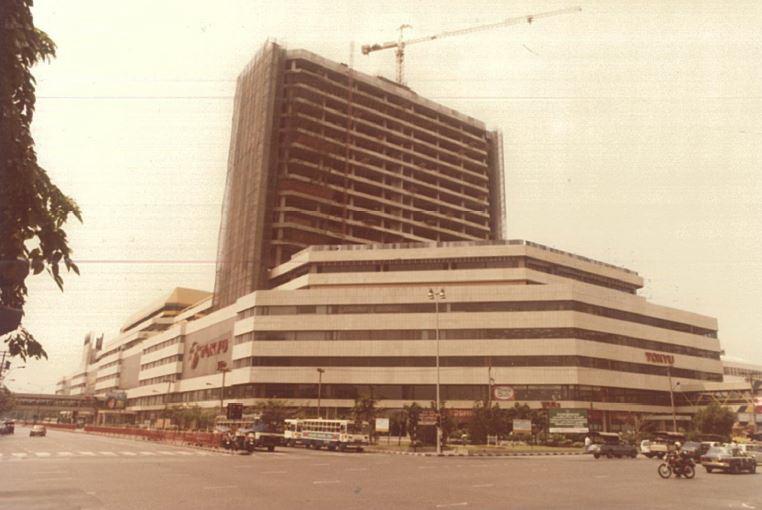
Bangkok during the construction boom of the mid-1990s. Tower cranes became a familiar sight across the city as new office towers, hotels and condominiums transformed the skyline.
The Visa Run Years
One aspect of expatriate life that younger readers may find hard to imagine was the famous “visa run.”
Work permits were generally straightforward to obtain, but many people worked without them and relied on regular trips to neighbouring countries to renew their visas. Penang and Singapore were among the most popular destinations, while others occasionally travelled to Hong Kong or Manila.
I remember flying to Penang and spending a night or two at the famous Eastern & Oriental Hotel while an agent handled the paperwork.
Singapore was another favourite destination of mine. Although there was always the possibility of encountering the notoriously strict young female Indian visa officer who seemed determined to make every one’s application a challenge, the city itself was a pleasure to visit.
Once the paperwork had been submitted, there was usually time to enjoy some sightseeing, shopping or entertainment before returning to Bangkok. In Singapore I still remember watching Four Weddings and a Funeral in a Singapore cinema shortly after its release, which made Hugh Grant an international star. Back then my favourite Bangkok cinema was in Washington Square on Sukhumvit soi 22, long since demolished in 2012-13 and now Emsphere, and it paled in to insignificance compared to the very modern Singapore cinemas back then – Thai cinemas have long since caught up with the best of foreign cinemas.
Officially, these trips were viewed as an administrative necessity. Unofficially, many expatriates regarded them as short company-funded holidays. We would dutifully tell our employers what a chore it was to spend a few days overseas arranging visa extensions while privately enjoying the break from work.
Looking back, it was all part of a very different era in Thailand’s expatriate community—one that has largely disappeared today.
By 2000, I had grown tired of moving from one project-based contract to another. Rather than waiting for employers to decide my future, I decided to take control of it myself.
Using the network of contacts I had built during nearly a decade in Thailand, I established my own company and began providing contract and claims management services to clients throughout the region. Like any independent consultant, I was constantly searching for the next assignment, but for most of the following twenty-five years I was fortunate to have a steady stream of work and good clients.
Finding Construction and Engineering Work in Thailand Today
Finding work in Thailand today is very different from when I first arrived.
The newspaper classified advertisements have long disappeared, replaced by online job boards, recruitment agencies and professional networking platforms. While technology has made job searching easier in many respects, it has also made the market considerably more competitive.
Many of the international websites that once regularly advertised construction and engineering positions in Thailand have either disappeared or significantly reduced their regional coverage. Today, most opportunities are found through a combination of specialist recruitment websites, LinkedIn and personal contacts.
Among the major job platforms, Indeed, Glassdoor and SEEK continue to advertise vacancies throughout the region. However, for Thailand-based opportunities, Jobs DB and LinkedIn are often the most useful resources.
Jobs DB has been a recognised source of employment opportunities across Asia for many years and remains particularly strong in Thailand and neighbouring countries.
LinkedIn, meanwhile, has become one of the most powerful recruitment tools available anywhere in the world. In many cases, employers and recruiters now search directly for candidates rather than waiting for applications to arrive.
For expatriates seeking work in Thailand, maintaining an up-to-date LinkedIn profile is no longer optional—it is essential.
Years ago I maintained a list of recruitment agencies that occasionally handled expatriate construction and engineering vacancies in Thailand. Unfortunately, I allowed that list to lapse over time. If any recruiters reading this article specialise in expatriate construction and engineering recruitment in Thailand, I would be pleased to hear from you and update this article accordingly.
Despite the increased competition, opportunities still exist. They may not be as plentiful as they were during the construction boom years of the 1990s, but foreign professionals continue to be recruited where specialist expertise, international project experience or niche technical knowledge is required.
Current areas generating demand include:
- Major transportation infrastructure projects.
- Expressways and highway developments.
- BTS and MRT rail projects.
- Renewable energy developments.
- Industrial and manufacturing facilities.
- The rapidly expanding data centre sector.
The growth of data centres in particular has created a new wave of opportunities for experienced engineering, construction, commissioning and project management professionals. Many international companies involved in these projects are accustomed to working with multinational teams and are often willing to consider expatriate candidates with the right experience.
One of the best ways to identify potential opportunities is simply to stay informed about what is being built and who is involved. Following construction and engineering news can provide valuable insights into future projects and the companies likely to require staff.
Keeping abreast of industry developments is one reason we recommend reading the latest articles published daily in our Thailand Construction News.
We also regularly review international job websites and compile a list of vacancies that may be suitable for expatriate candidates. While job advertisements rarely state explicitly whether expatriates will be considered, many positions appear likely to be open to suitably qualified international applicants.
These vacancies are published:
- in the free Thailand Construction News (TCN) e-newsletter, which is issued every fortnight/bi-weekly. To receive join the subscription list, simply send us an email at ‘tcnthailand AT gmail.com’ with the word ‘SUBSCRIBE’ in the email subject line – it’s FREE to receive,
- and,
- on the Thailand Construction News website (latest article: Construction & Engineering jobs in Thailand – need ASSISTANCE TO SOURCE EXPATRIATE CANDIDATES, or, are you an EXPATRIATE SEEKING A JOB? (31.07.2026)
For job seekers looking to stay informed about developments in the market, these resources can provide a useful starting point.
Extract below from Job List Construction & Engineering Jobs in Thailand of 30 July 2026
| 22 July 2026 | Bangkok | CSA Inspector (Data Center) – Architecture | https://www.linkedin.com/jobs/view/4442610319 | Turner & Townsend |
| 23 July 2026 | Bangkok | Proposal Lead-APAC | https://www.linkedin.com/jobs/view/4425968642 | Black & Veatch |
| 23 July 2026 | Bangkok | Project Director, Data Centres | https://www.linkedin.com/jobs/view/4442957692 | Korn Ferry |
| 23 July 2026 | Chonburi | PM / CM (Ban Bueng On-site) | https://www.linkedin.com/jobs/view/4443102338 | office for interior & architecture (OIA) |
| 24 July 2026 | Bangkok | Construction Manager | https://www.linkedin.com/jobs/view/4443459381 | Adecco |
Thailand Construction News also assists companies seeking expatriate candidates for construction and engineering vacancies throughout Asia. Companies interested in discussing recruitment support are welcome to contact us at ‘tcnthailand AT gmail.com’.
Key Takeaways for Expatriate Job Seekers
- Maintain a professional and up-to-date LinkedIn profile.
- Build and nurture industry contacts.
- Follow major infrastructure, energy and data centre projects.
- Develop specialist skills that are difficult to source locally.
- Monitor construction and engineering news regularly.
- Engage with recruiters who operate in the region.
- Be persistent—many opportunities are never publicly advertised.
Final Thoughts
When I first arrived in Thailand in 1991, finding a construction job often depended on who you knew, what appeared in the Bangkok Post classifieds and a fair amount of luck.
Today, the tools have changed, the market has become more competitive and the number of expatriate opportunities is undoubtedly smaller than during the boom years. Yet one thing remains unchanged: companies still need experienced professionals who can add value to their projects.
Thailand continues to invest heavily in infrastructure, transportation, energy, manufacturing and technology. New opportunities continue to emerge as the country develops, particularly in sectors requiring specialist expertise and international experience.
The opportunities may be fewer than they were during the boom years of the 1990s, but for those prepared to be persistent, adaptable and proactive, Thailand can still offer the chance to build not only a successful career, but an extraordinary life.