Can you keep a secret? A Road Trip Through the Northern Esaan Provinces – Part 2 of 2
A two-part journey north through Sakon Nakhon, Nakhon Phanom and Bueng Kan provinces
PART 2 – EXPLORING BUENG KAN AND THE JOURNEY HOME – The journey north, Nakee Cave, Three Whale Rocks, Phu Thok, the return to Sakon Nakhon and the journey home
Link to: PART 1 – DISCOVERING SAKON NAKHON AND NAKHON PHANOM – The journey from Bangkok, the wife’s village, Sakon Nakhon, Tha Rae and the two days exploring Nakhon Phanom.
North to Bueng Kan
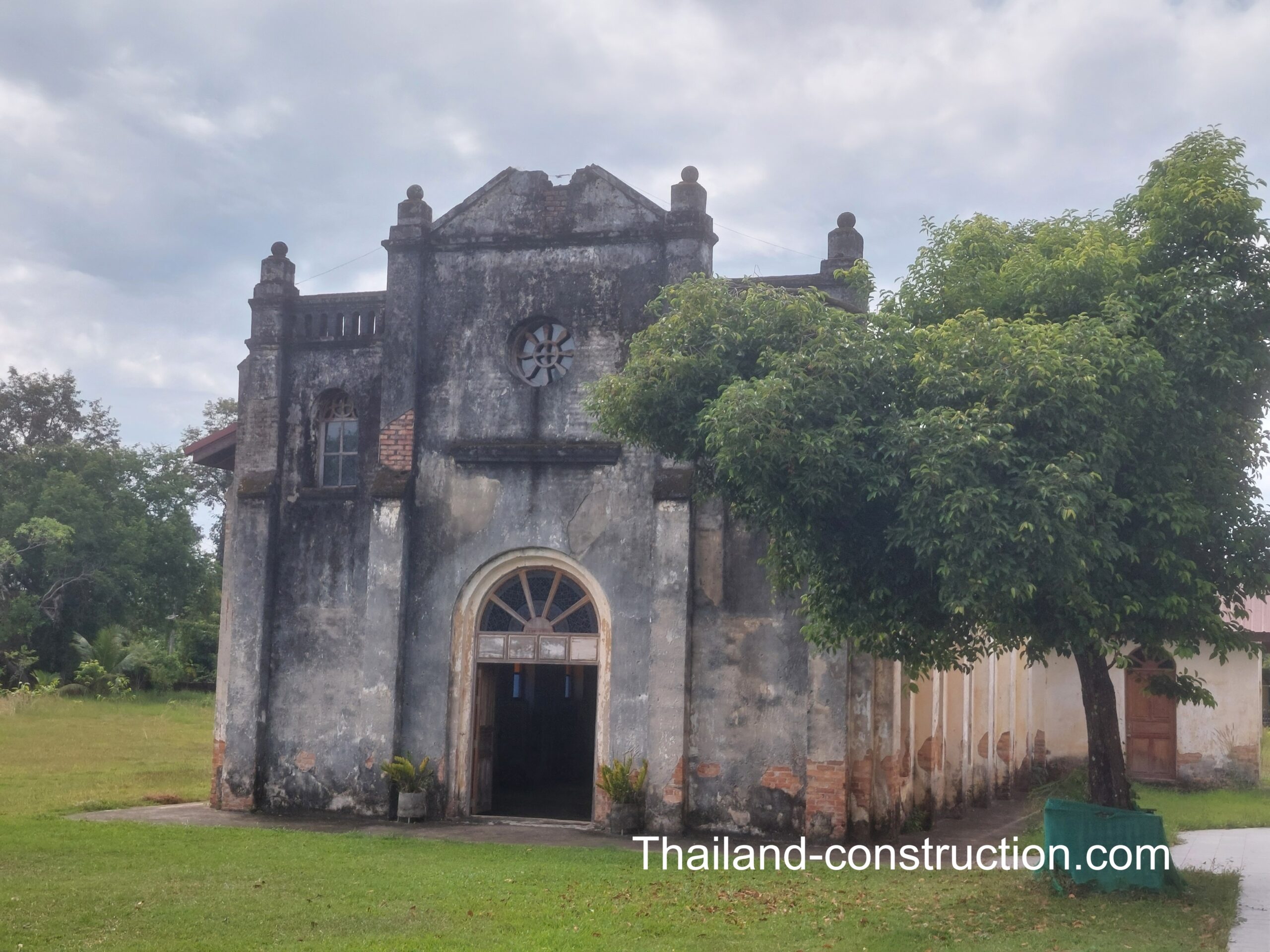
On Friday morning, we set off north towards Bueng Kan province. Our first stop, requiring just a 15-minute detour, was St Joseph’s Church (Saint Joseph Ban Kham Koem), a historic Catholic church just outside Nakhon Phanom. Built by French Catholic missionaries and inaugurated in 1907, it is recognised as the oldest surviving Catholic church in northeastern Thailand. Its distinctive architecture combines European-style brick and plaster walls with a traditional local timber roof, making it an interesting reminder of the early French missionary presence and the region’s Catholic heritage.
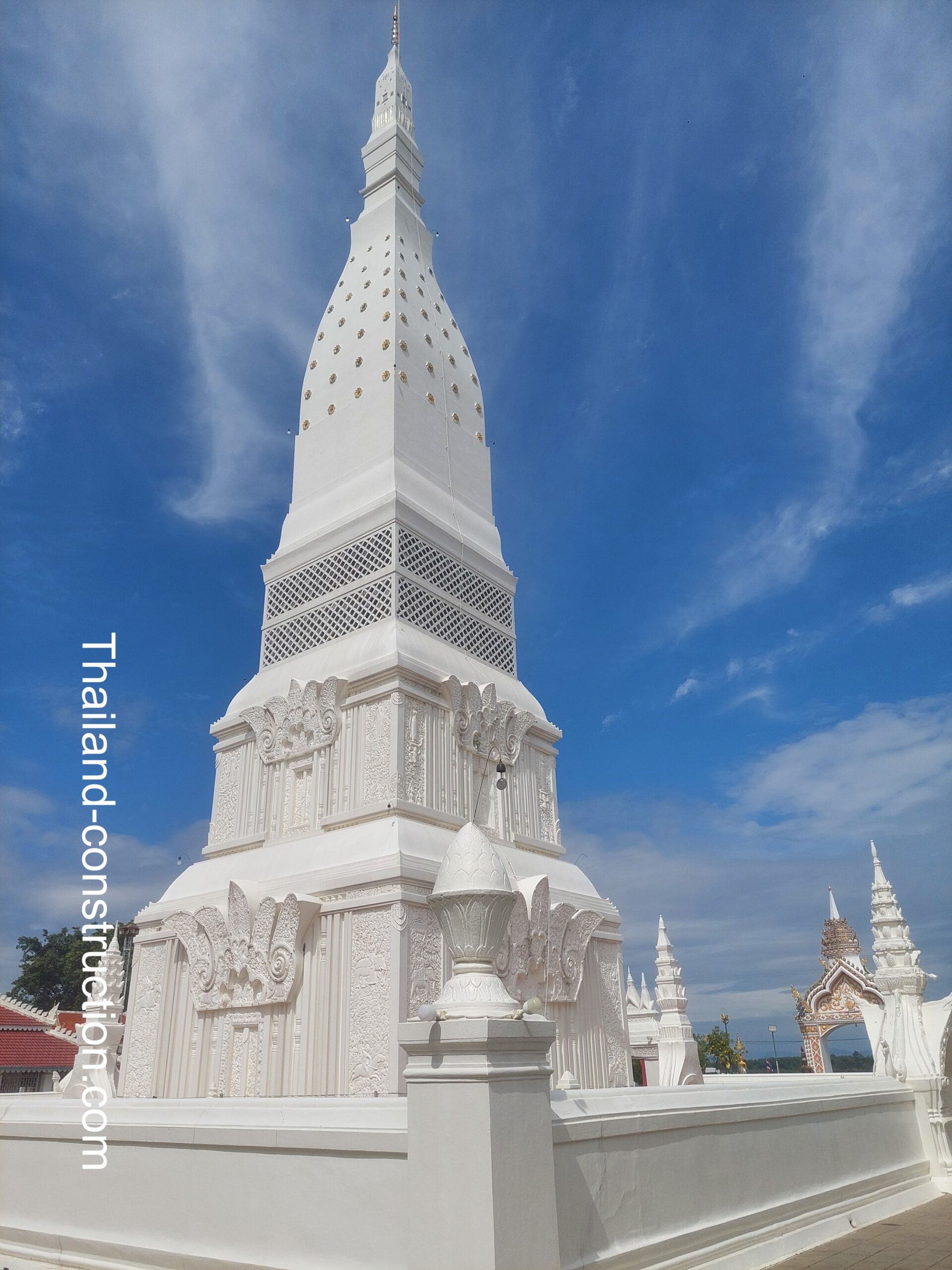
Our second stop was Wat Phra That Tha Uthen, approximately 40 kilometres north of Nakhon Phanom, in the quiet riverside town of Tha Uthen. Situated close to the banks of the Mekong, its impressive 66-metre-high white stupa was built between 1911 and 1916. Inspired by the design of Phra That Phanom, about a 75-minute drive further south, the three-tiered structure is an impressive sight. It is particularly sacred to Buddhists born on a Friday, who traditionally visit to pay their respects and make merit. As my wife and I were both born on a Friday, she was particularly keen to visit – and the friendly lottery ticket seller there did rather well out of her! The peaceful riverside setting and lack of crowds made this a particularly enjoyable stop on our journey.
There are seven principal Phra That (sacred stupas) of Nakhon Phanom Province, traditionally associated with the seven days of the week. Each is regarded as especially auspicious for people born on the corresponding day.
Here is the traditional list:
Day of birth / Phra That / Location
Sunday Phra That Phanom That Phanom District
Monday Phra That Renu Renu Nakhon District
Tuesday Phra That Si Khun Na Kae District
Wednesday (daytime) Phra That Mahachai Pla Pak District
Thursday Phra That Prasit Na Wa District
Friday Phra That Tha Uthen Tha Uthen District
Saturday Phra That Nakhon Mueang Nakhon Phanom District
Following the visit to Phra That Tha Uthen, I have now visited all except Phra That Prasit: another place added to the to-visit list.
We pressed on northwards along Route 212, which runs through the northeastern provinces of Nakhon Phanom, Bueng Kan and Nong Khai.
By now it was mid-afternoon when we spotted a sign for the famous Nakee Cave, located a few kilometres away within Phu Langka National Park (อุทยานแห่งชาติภูลังกา). Too good an opportunity to miss, we headed for the park, hoping we weren’t too late to tackle the trek up to the cave.
We arrived at around 2.30 pm. We were told that 3 pm was the latest time visitors were allowed to start the trek. Before setting off, you have to complete a form with the details of all trekkers, and a guide is compulsory. It was quiet when we visited; we saw only a few other people during the trek.
We paid the park entrance fee – no double pricing here! – hired a guide for ฿300, plus whatever tip we wished to give, and set off.
The trek to Nakee Cave (Tham Nakee) is a moderately demanding walk of approximately 3–4 kilometres return, usually taking 2–3 hours for those with moderate fitness and allowing for multiple photo stops. The trail winds through forest, over natural sandstone formations and up a series of steps and rocky sections. The main attraction is the remarkable sandstone formations, weathered over thousands of years into shapes resembling the scales and head of a giant Naga, or mythical serpent. Those with enough energy can continue to Pha Nakee viewpoint for impressive panoramic views across the forested mountains, the Mekong River and Laos.
It was a challenging but very enjoyable walk, which we thoroughly enjoyed.
We had a lovely guide, Khun Watcharaporn. She explained everything in Esaan to my wife and in Thai to me, and even tried to teach me a few Esaan words – she failed. She acted as our photographer and helped make the visit particularly enjoyable. She even had drinks for us in her backpack. She told us that we were her only customers that day in November, which was the quiet season. The busiest period is during the rainy season, when people come to do the trek and see the many waterfalls at their best.
I’m in my mid-60s and reasonably fit, going to the gym several times a week, and I managed the trek without any problem. It took us 75 minutes to reach the top, 15 minutes at the viewpoint and 50 minutes to get back down to the car park. It is manageable if you have reasonable fitness. There are metal stairs to climb, but much of the route is an easy walk along a tarmac path.
The views are spectacular, and the rock formations are very interesting, particularly their Naga- or snake-like shapes. There was very little water in the waterfalls when we visited.
One point worth noting: Nakee Cave, in Nakhon Phanom province, should not be confused with the more challenging trek to Naga Cave in neighbouring Bueng Kan province. Both are located within the same Phu Langka mountain range, but they are separate attractions with different access routes. There is also a distinction in their names: Nakee is the feminine form of Naga, the mythical serpent. We vowed to return and do the Naga Cave trek sometime soon.
A night beside the Mekong
We arrived at HimFai HomeStay Bueng Kan just after dark. Why do we always seem to arrive everywhere in the dark?
The homestay is just off Route 212, in Nong Doen, in Bung Khla District, right beside the Mekong. Its six bungalows are set in a clearing within a rubber plantation, next to a weir on the river just below the property. Our room was quiet, comfortable and had everything we needed. A couple of kilometres further towards Bueng Kan, there’s a Lotus’s, a CJ More, a few restaurants and a Caltex petrol station – pretty much everything you need.
The young lady who checked us in apologised that they weren’t preparing food that evening but recommended Suntree Kitchen, a restaurant about five minutes away by car. One word of warning: Google Maps will tell you to turn right when leaving the homestay, giving a journey of 11 minutes. Ignore it – turn LEFT! Silly Google Maps!
Suntree Kitchen is also tucked away inside a rubber plantation. When we arrived, there was just one young lady there, doing everything herself, including cooking. She produced a fantastic five-dish meal, and we couldn’t believe that such a lovely little restaurant, practically in the middle of nowhere, could serve such excellent food at such reasonable prices.
After dinner, we returned to the homestay, enjoyed a few glasses of wine we’d brought with us and called it a night.
Three Whale Rocks
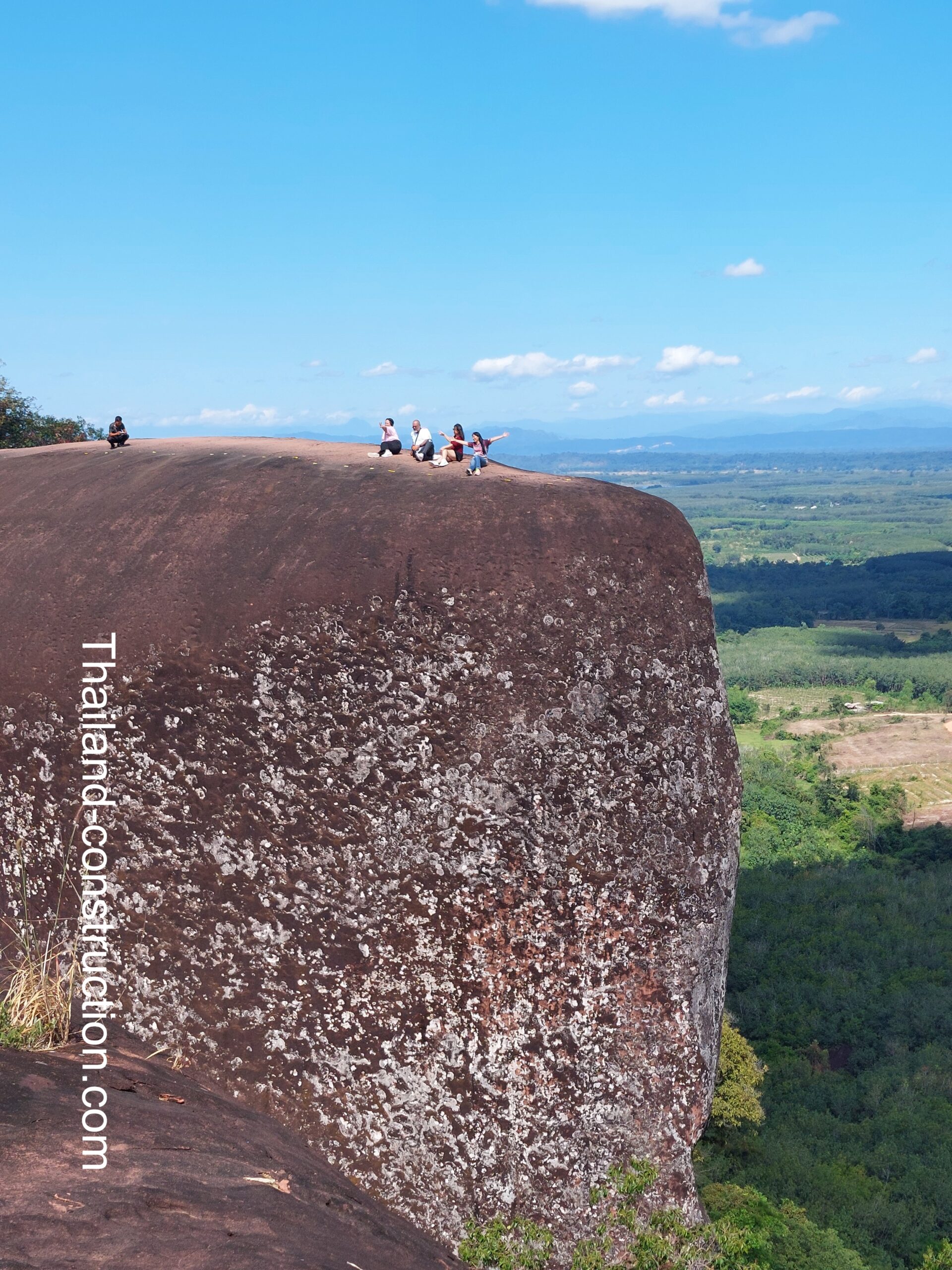
On Saturday, our plans depended on whether our leg muscles had recovered sufficiently from the climb up to Nakee Cave the previous day. Thankfully, they had! So we set off for Hin Sam Wan Recreation Forest, better known to foreigners as Three Whale Rocks, a 25-kilometre drive away.
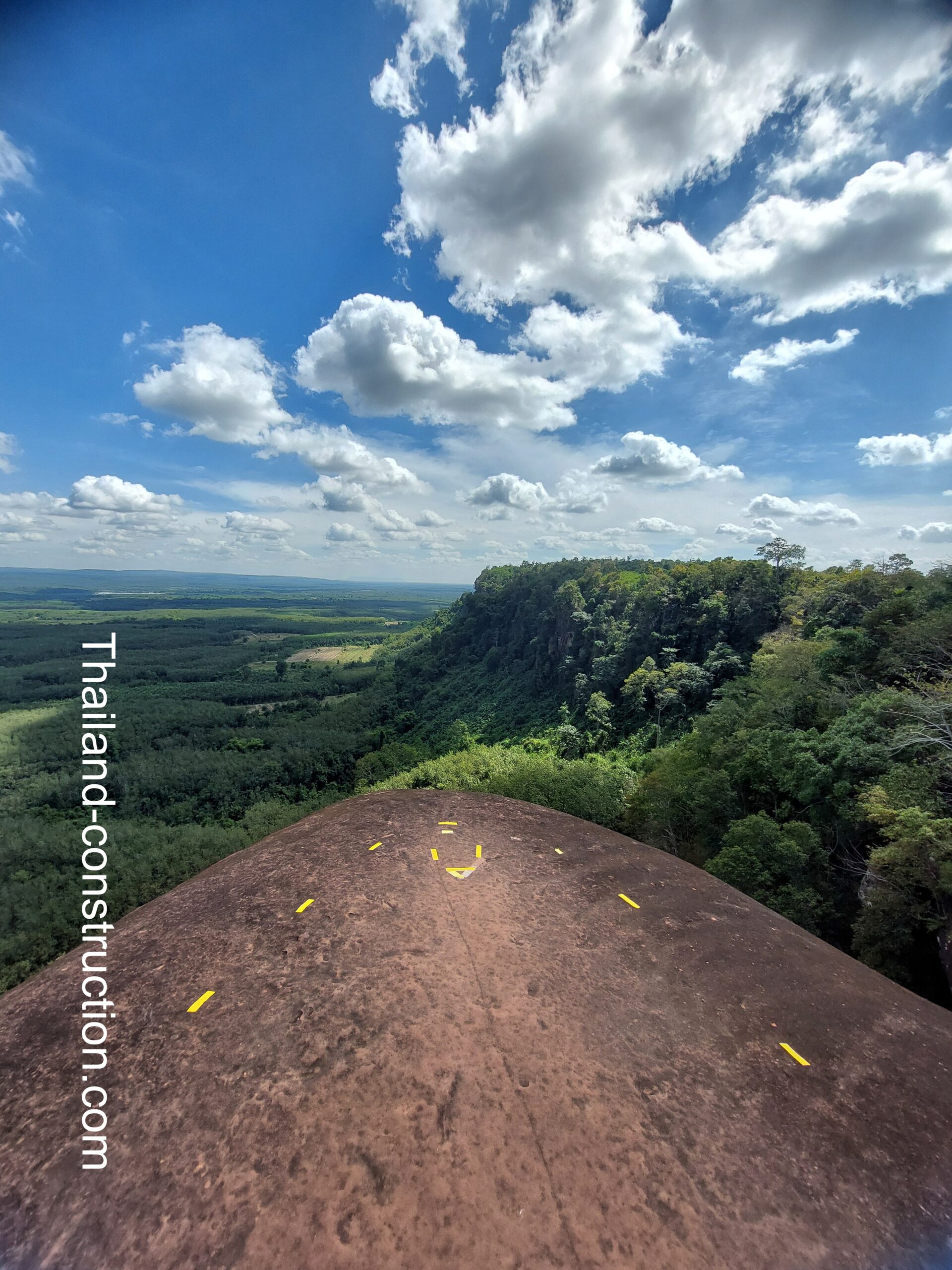
We were expecting it to be busy when we arrived at around 11 am on a Saturday, but fortunately it wasn’t. At the entrance, we paid the park fees – ฿10 for my wife and ฿100 for me. Double-pricing alert!
We then hired a driver-cum-guide and a pickup truck (a powerful Toyota) for ฿500 and set off up the steep hill. Some visitors choose to share the vehicle with others to split the cost.
The road is now a decent concrete surface all the way to the top; a few years ago, it was little more than an unsurfaced track. Drivers use walkie-talkies to communicate with one another and avoid mishaps on some of the narrow, twisting bends. Along the way, our driver stopped at several interesting viewpoints, but the main attraction is undoubtedly the enormous Father, Mother and Baby Whale Rocks, believed to be around 75 million years old. You can walk out onto the rocks themselves, but take care and keep well away from the steep drop-offs.
There is at least one guide stationed on the rocks who, for an additional fee, offers drone photography and videos of visitors exploring the formations below. I read somewhere that the entrance fee, pickup truck and driver/guide, together with the drone operator, came to about ฿1,600, although I cannot confirm the drone operator’s charge. The spectacular views across the surrounding countryside towards the Mekong River and Laos in the distance make the trip well worthwhile.
A wacky-looking café, a golden wat and the weekend market
We’d been exploring the Rocks for a few hours and decided it was time for some sustenance. Close to the homestay, we’d spotted the rather wacky-looking Nakhee Magic Café (นาคีมีมนตร์คาเฟ่ บึงกาฬ), so off we went for coffee and snacks. It’s a lovely place and, surprisingly, was quite busy on a Saturday afternoon.
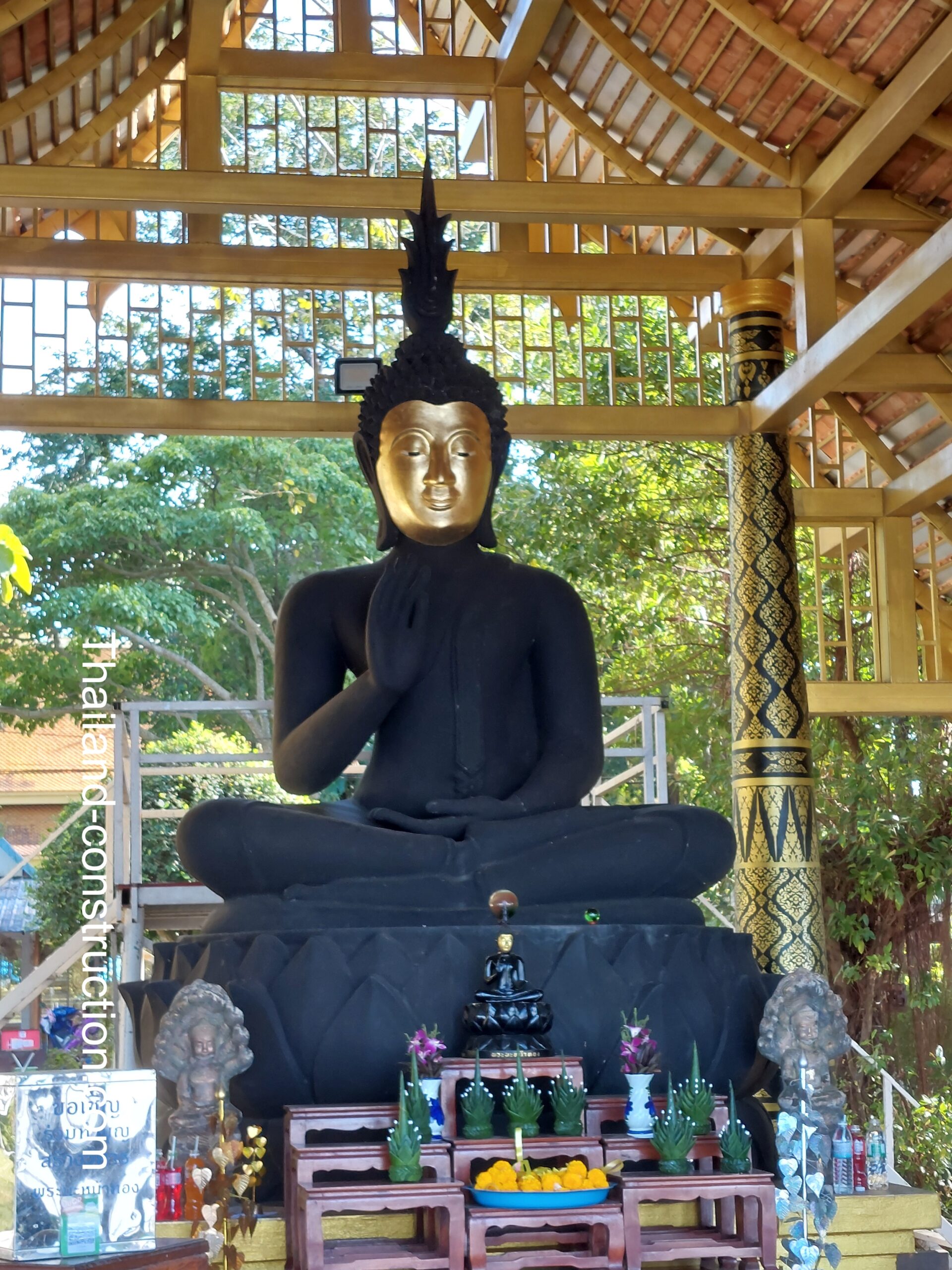
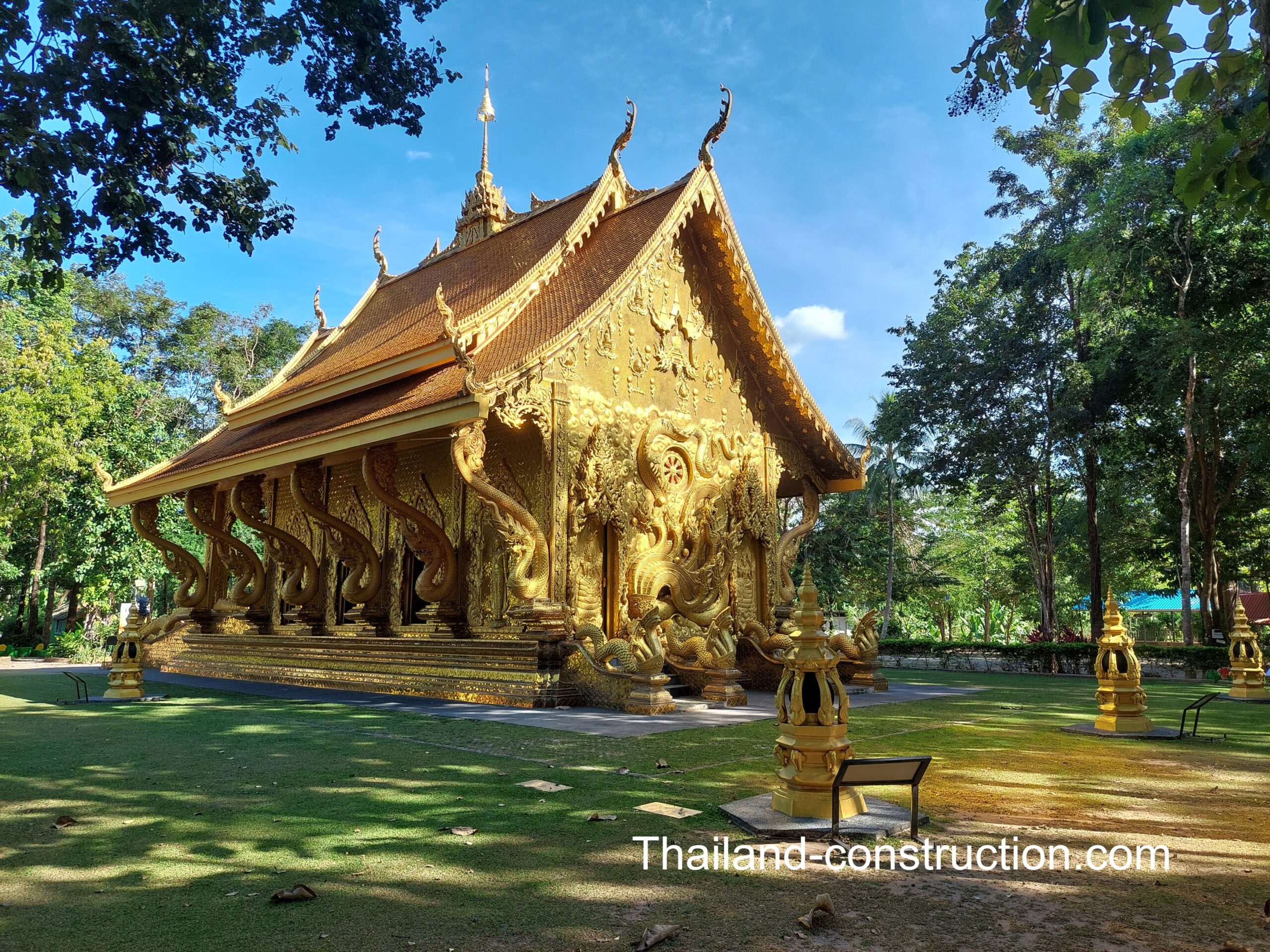
Just a four-minute drive from the café is the gem that is Wat Pa Muang Hueng, situated on the banks of the Mekong at a bend in the river. It’s a quiet but gorgeous golden wat, famous for Phra Phuttha Nak Nimit, a striking Buddha image with a golden face and an otherwise black body. I’d never seen anything quite like it before.
We headed back to the homestay for an afternoon rest before driving the 40 kilometres into Bueng Kan town for the weekend market, which takes place every Friday, Saturday and Sunday between 4 pm and 7 pm. It has all the usual Thai street-market fare, but must stretch for well over a kilometre. We’d originally planned to return to Suntree Kitchen, but instead decided to buy a selection of snacks from the market and enjoy them at a table outside our room at the homestay.
A rare visitor
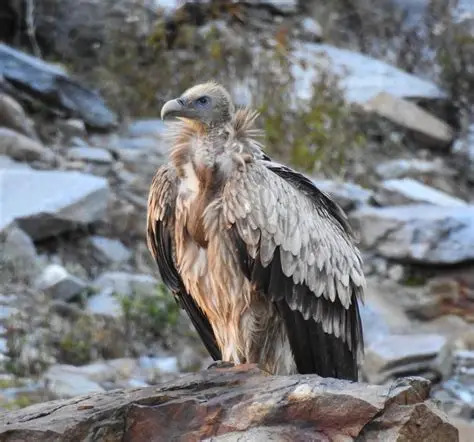
Sunday morning at the homestay was particularly memorable. I was sitting at the table outside our room, using my binoculars to see what birds were about, when a massive bird with an enormous wingspan landed in a tree not far from me. It had a rather strange, ugly, vulture-like head. Knowing that Thailand doesn’t have resident vultures these days, I quickly Googled it and discovered that it was a Himalayan griffon vulture, a species native to the Himalayas and foothills of northern and northeastern India, as well as the neighbouring Tibetan Plateau. Apparently, they have become an almost annual, although rare, winter visitor to Thailand and the Thai-Malay Peninsula. What a sighting – it made my day!
Back to Phu Thok
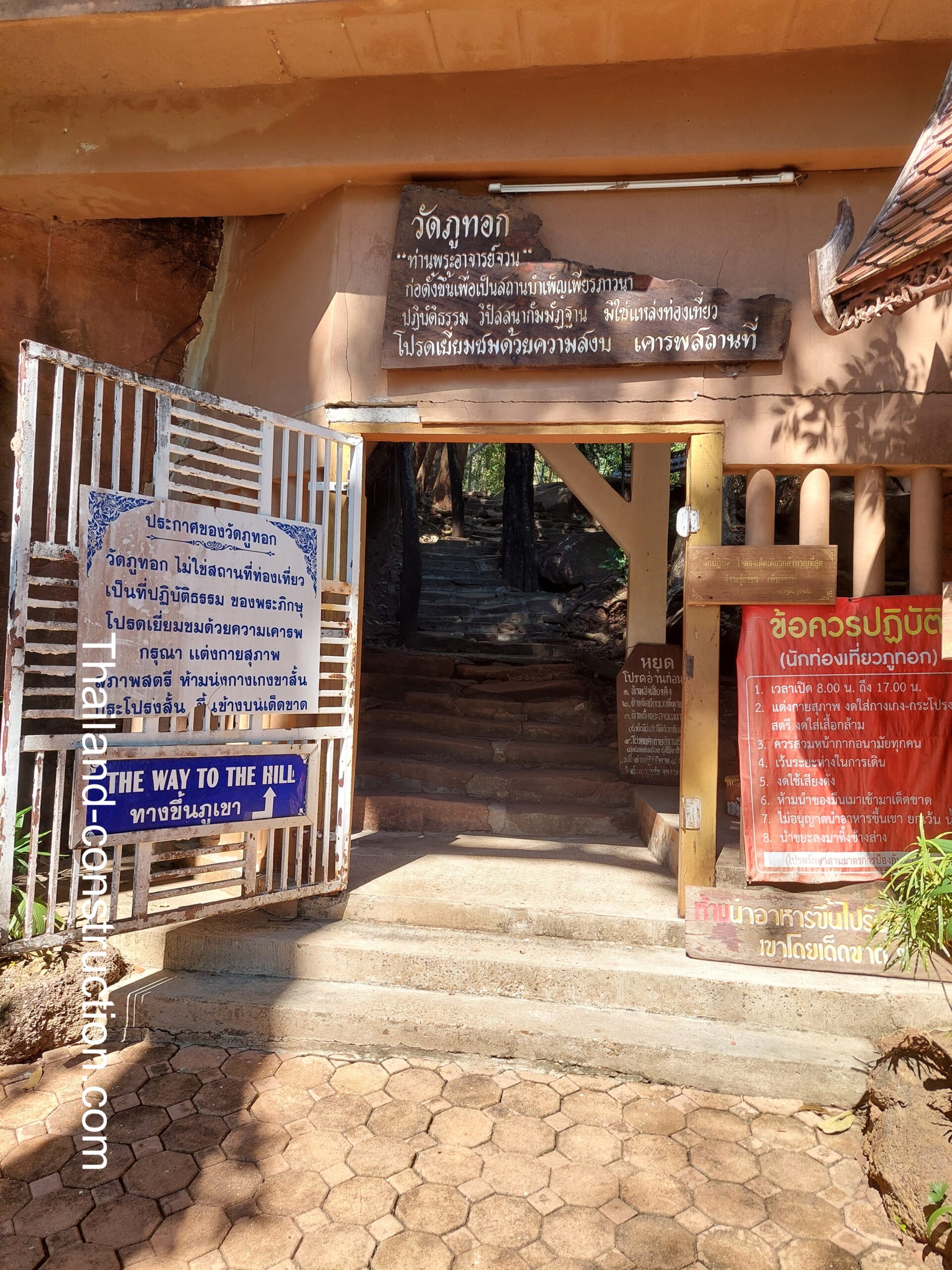
We were then off on our 140-kilometre journey back to the wife’s village and The Farm Sakon Resort, with a planned stop along the way to climb the huge hill at Wat Phu Thok, about 35 kilometres south of the homestay.
Phu Thok (ภูทอก, also spelt Phu Tok), meaning ‘lonely mountain’ in the Esaan language, is a 359-metre-high isolated hill in Si Wilai District, at the centre of Bueng Kan province. It has become one of the province’s best-known landmarks and is often regarded as a symbol of Bueng Kan. Phu Thok has two peaks, Phu Thok Yai and Phu Thok Noi. Wat Phu Thok, an important Buddhist temple, is located in a cave near the top of the smaller peak.
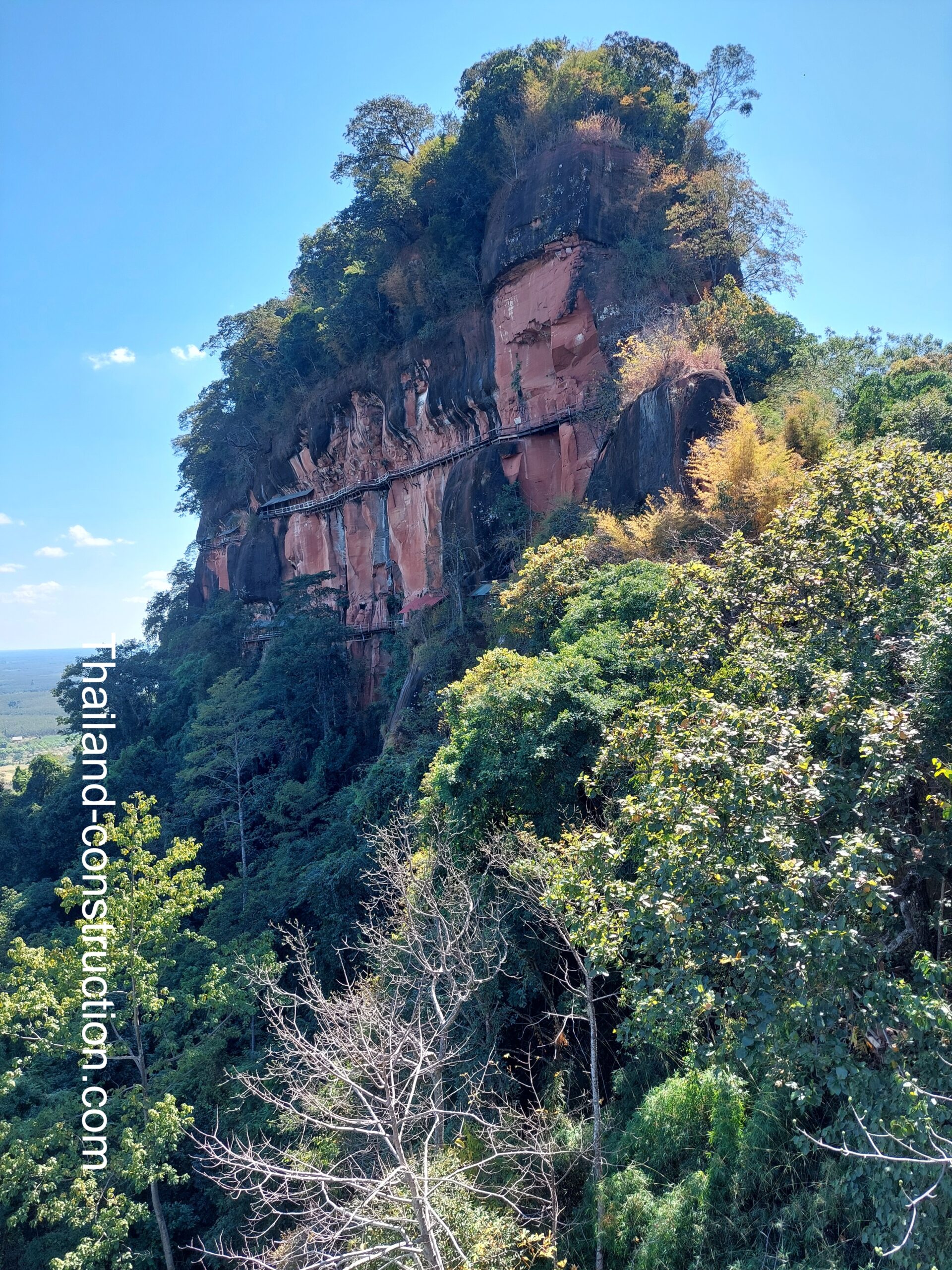
The summit can be reached by climbing a series of steep stairways and wooden walkways built around the rocky hillside. There are seven levels, offering amazing views across the surrounding flat countryside.
I’d climbed up and down three years earlier with my family, when I was nowhere near as fit as I am now. By the time I reached the bottom, my legs were shaking and wobbling so much that the Thai families around me were cracking up laughing at the sight of the farang’s legs! This time, I wanted to put my improved fitness – and, in particular, my legs – to the test. I absolutely aced it!
The climb up and down takes a couple of hours. The rather rickety wooden walkways cling to the steep rocky hillside, with some pretty daunting drop-offs, so it’s definitely not a place for anyone afraid of heights. In my opinion, it has to be one of the best temple and hill attractions in Thailand. I’ll be back for a third visit!
Final days in Sakon Nakhon
Monday was to be our last day exploring Esaan, and we decided to take it easy with another family trip into Sakon Nakhon.
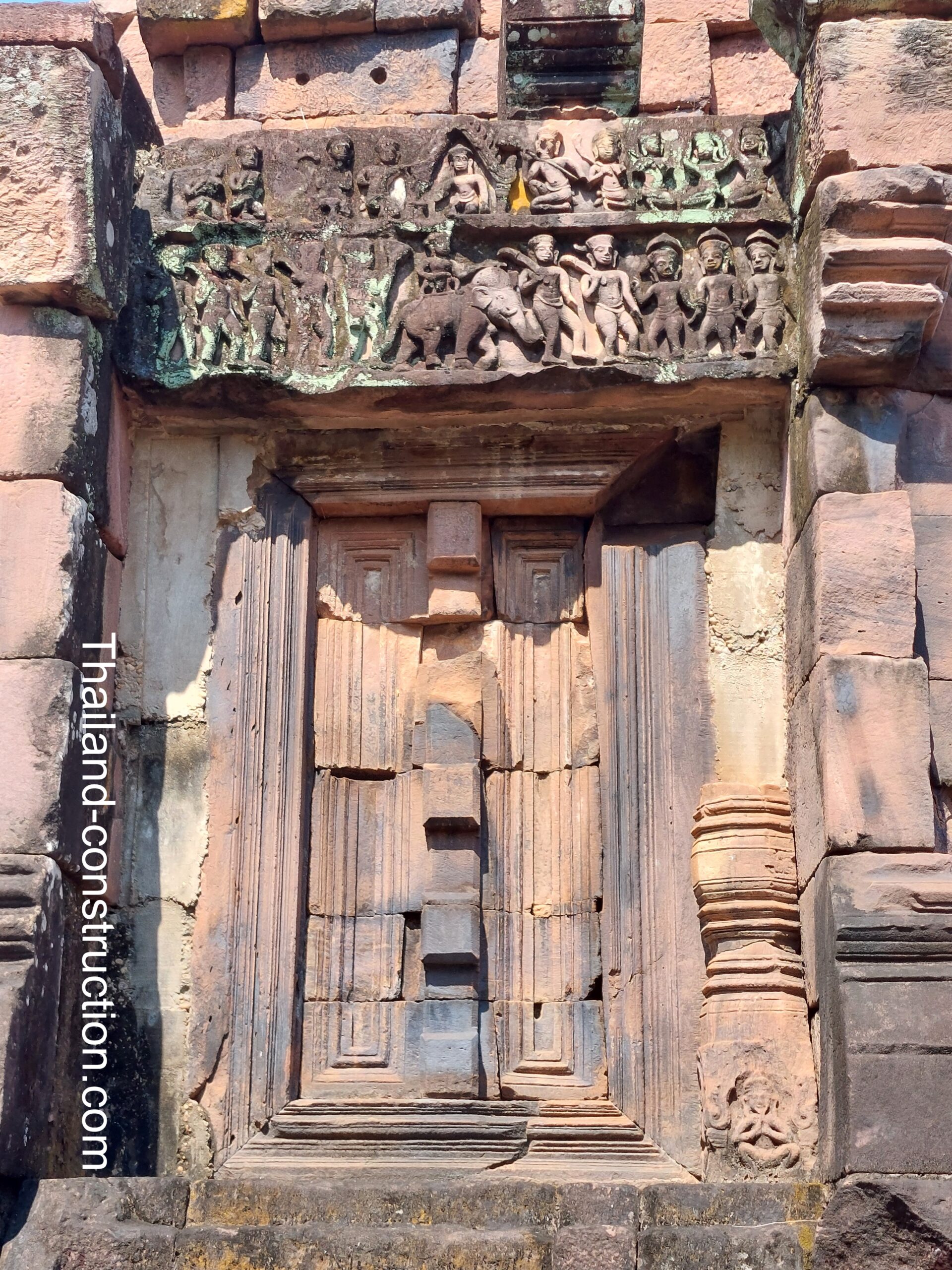
Our first stop was the ancient Khmer ruins of Phra That Narai Cheng Weng (พระธาตุนารายณ์เจงเวง), an ancient Khmer Hindu sanctuary dating from around the 11th century, located 5–6 kilometres northwest of Sakon Nakhon town. Built mainly of sandstone on a laterite base, this small but impressive temple tower features beautifully carved stonework and is a reminder of the Khmer civilisation’s influence in northeastern Thailand long before the rise of the Thai kingdoms.
Then we were off to Pon Yang Kham (บ้านโพนยางคำ), a small village approximately 14 kilometres south of Sakon Nakhon town, famous throughout Thailand for its premium-quality beef, known as Pon Yang Kham beef. The village is home to the Pon Yang Kham Steakhouse, where visitors can enjoy freshly prepared steaks and other dishes made using this renowned local beef. Developed through a Thai-French cattle-breeding programme, the beef is particularly well regarded for its tenderness, flavour and marbling. For anyone who enjoys a good steak, a visit to the village and its restaurant is well worth the short drive from Sakon Nakhon. I’ve visited many times, and in my opinion the best dish is the delicious oxtail soup. It reminds me of a spicier version of the one I used to eat back in England.
We then took a quick trip to KramSakon (ครามสกล) before returning to The Farm Sakon Resort for the night. KramSakon is a lovely place to discover Sakon Nakhon’s traditional indigo-dyeing heritage. The word ‘Kram’ (คราม) means indigo, referring to the plant from which the natural blue dye is produced. Located at Ban Pha Nao, in Huai Yang, approximately 15 minutes outside Sakon Nakhon town on the way to Wat Tham Pha Daen (another place I would recommend visiting), KramSakon showcases locally produced, handwoven cotton fabrics dyed using traditional natural indigo techniques. Its shop sells a wide range of products, including shirts, dresses, scarves, bags, hats, shoes, bedding and souvenirs, combining traditional patterns with more contemporary designs. Visitors can browse the displays, learn about the indigo-dyeing process and, when workshops are available, try their hand at dyeing a T-shirt, scarf or bag themselves. There is also a pleasant garden setting and a café, making it an enjoyable stop for anyone interested in local crafts and culture. Workshops may need to be arranged in advance, so it is worth checking availability before visiting.
One thing that surprised us when travelling around these three provinces, was the amount of roadwork taking place, with very long sections of Routes 212, 3009 and 222 in Bueng Kan and Sakon Nakhon being widened. Great to see the Government spending money on improvements to Esaan.
Rice, rain and village life
We arranged to pop into my wife’s village at around 10 am on Tuesday morning, on our way back south, to collect some bags of my brother-in-law’s freshly harvested and dried sticky rice and jasmine rice.
It seems most people in the village grow jasmine rice these days, as it is easier for them to sell. So my brother-in-law’s sticky rice, was in great demand, with other villagers keen to buy some.
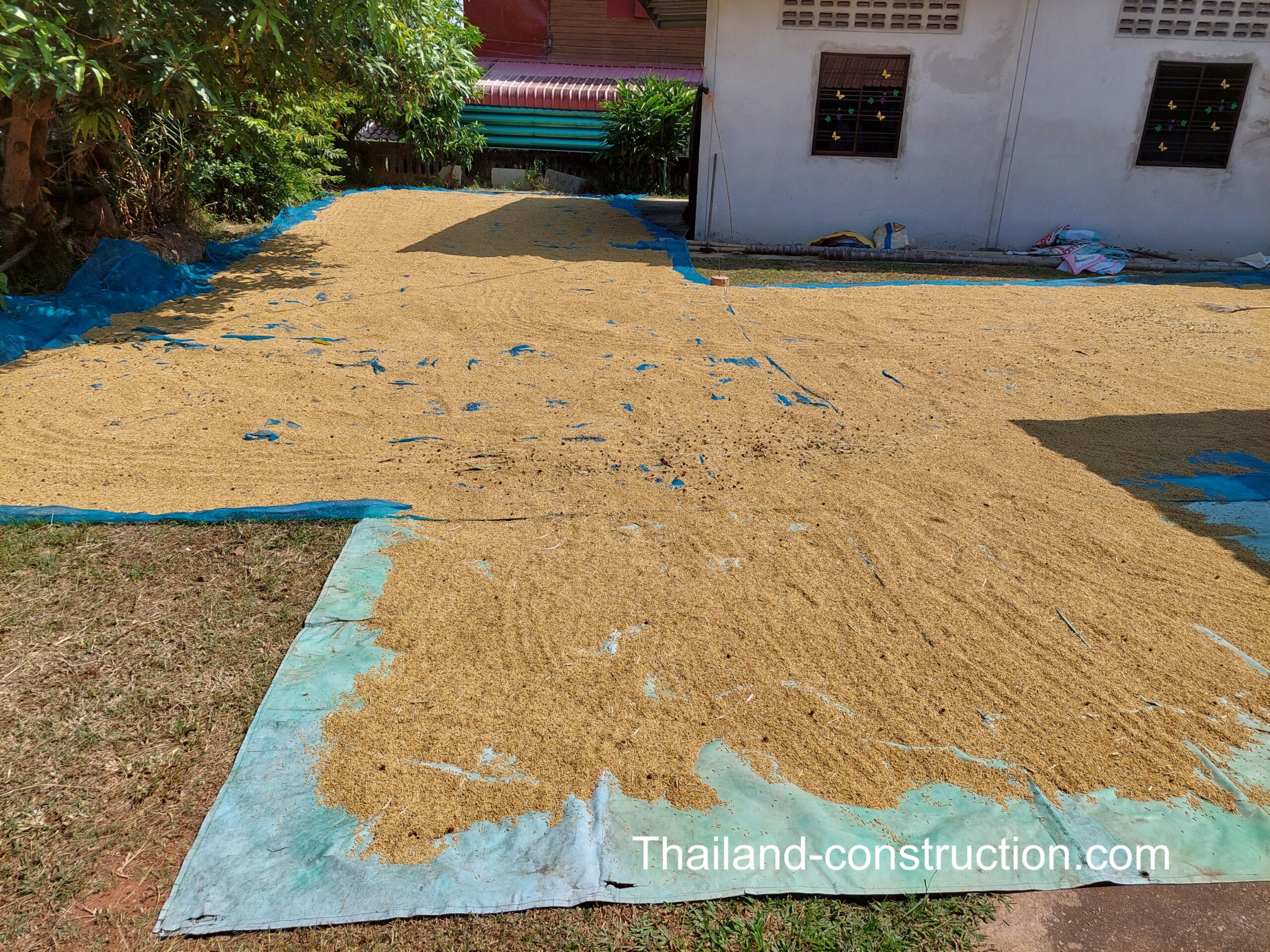
We arrived expecting the rice to be ready, bagged and waiting for us. One thing to know about Thai village life: it doesn’t run to a 24-hour clock like in the West. Things get done, maybe, but often at a much slower pace and only after a bit of prompting, well after lots of prompting. Two hours later, we had a worrying amount of heavy bags of rice, bunches of bananas and other produce weighing down the back of the car, but we were finally off home.
We got about 20 minutes down the road towards Udon Thani, beneath a very threatening, dark skyline, when we drove into a torrential downpour. We pulled over and called back to the village to warn them to cover the remaining rice that was still drying.
Just about everyone in my wife’s village is a rice farmer. Some also grow vegetables and fruit. The ladies of the village go to the local weir and use their nets to catch fish in the river every day. My mother-in-law’s next-door neighbour still keeps several buffalo under the raised stilted-house, as well as letting them graze in the fields. It’s a very communal way of living, lots of people are related, but occasionally there are squabbles. For example, my brother-in-law wants access to the water that runs through a neighbouring plot of land so he can grow rice twice a year. At present, he grows rice once a year, and has to rely for the water for his rice fields from rainfall which he keeps in a small pond. The neighbour will not allow access to the water on his neighbouring plot of land. Fortunately, the local amphoe is digging a new road with a side canal right near my brother-in-law’s land that will give him access to water throughout the year.
The journey home – and one last car problem
We filled up with petrol for the ten-hour journey home. Not long afterwards, the car started juddering occasionally. Was it the petrol? We’d decided to drive for about five hours to the Seth Thee Hotel in Phon, Khon Kaen – yet another place beside Route 2 famous for its sausages. As we progressed, the juddering increased. Petrol, car problem or road surface? It’s never a dull moment on a road trip.
We arrived at the Seth Thee Hotel, in the dark of course, and booked a room for ฿690 a night. It seemed a popular place. There was parking underneath and behind the building. We found the room comfortable, but NO KETTLE for our morning drip-coffee! The air-conditioning was cold, but dripped all night. The shower was good and the bed was OK. As with all these types of hotels, there was some noise from other guests in the corridor, which turned out to be a drunken farang and his Thai wife, but it wasn’t too bad.
As with all the hotels we had stayed in, except VELA Dhi, there were some ants in the room. We travel with insect spray, so it wasn’t a problem, but do be aware that when travelling upcountry in Thailand, insects all around you are part of daily life.
Less than a 200-metre walk from the hotel, we dined at the wonderful Japanese restaurant Kodai Sushi – Japanese Cuisine (โคได ซูชิ อาหารญี่ปุ่น). I’m not a huge fan of Japanese food, as I like a little spice in my meals, but it was delicious, very enjoyable and, once again, reasonably priced.
On Wednesday morning, we skipped breakfast, as it looked a bit so-so and we wanted to get going. We travelled back the same way we’d driven north, leaving Route M6 behind us at the Pak Chong exit. As we always do when we’re near Khao Yai, we stopped at Suwan Corn Farm (ข้าวโพดหวานไร่สุวรรณ) to buy its delicious corn for people in our village and for ourselves. We stocked up on lots of corn, noi-na (custard apple, น้อยหน่า), sao-wa-rot (passion fruit, เสาวรส) and other fruit and vegetables.
By now, the car problem had worsened and become a real worry. The car was juddering, shuddering and kangaroo-hopping down the road at increasingly frequent intervals. We limped the last two hours home. The following day, when we took it in to Nissan, we discovered that the problem was with the ignition system and spark plugs. Thankfully, we got it sorted.
So, was it worth the trip?
So that was the end of our car tour of the northern Esaan provinces – and what a trip it turned out to be!
We’d covered a fair few kilometres, visited places we’d never been to before and discovered some real hidden gems. What I particularly enjoyed was getting away from the usual tourist trail, making unexpected discoveries along the way and experiencing the friendliness, relaxed pace and quietness of rural Esaan. From the Mekong River and its spectacular views across to Laos, to caves, waterfalls, unusual rock formations, hilltop temples and the wonderful scenery around Phu Thok, there was always something different to enjoy. We’d eaten some fantastic local food, explored traditional villages, discovered a little more about the region’s history and culture, visited the in-laws, and even had the unexpected pleasure of spotting a Himalayan griffon vulture. Not bad for a week or so away from home!
Of course, a car tour isn’t without its worries. Will the car behave itself? Will you find somewhere decent to stay? Will Google Maps send you in the wrong direction, AGAIN? Will you arrive at your destination before it gets dark? We managed to experience most of those little challenges. The air-conditioning packed up, the car developed an increasingly worrying judder on the journey home, and we had our fair share of navigational confusion. Thankfully, the air-conditioning was quickly repaired, the ignition and spark plug problem was sorted the following day, and we got home safely. That’s all part of the adventure, I suppose – although I could have done without the car problems!
We thoroughly enjoyed ourselves and, if truth be told, we didn’t really want to return home to our usual daily life. I love visiting my wife’s village and spending time in Esaan. I enjoy experiencing the local way of life, although I’m still not sure whether I’d actually want to live in the village permanently! What I particularly enjoy is getting off the beaten track and exploring rural Thailand, where you can travel for miles and count the number of foreigners you encounter on one or two hands. Foreigners, mainly men travelling with their Thai wives or girlfriends, were noticeable in Nakhon Phanom, but rare almost everywhere else.
Would I recommend a road trip through these provinces? Absolutely. Just make sure your car is in good condition, allow yourself plenty of time, don’t expect everything to go according to plan, and be prepared to discover places you never knew existed. You might even find yourself wanting to stay a little longer.
So, pack your bags, get in the car and get up there. But remember – it’s our secret, so don’t tell anyone, OK?