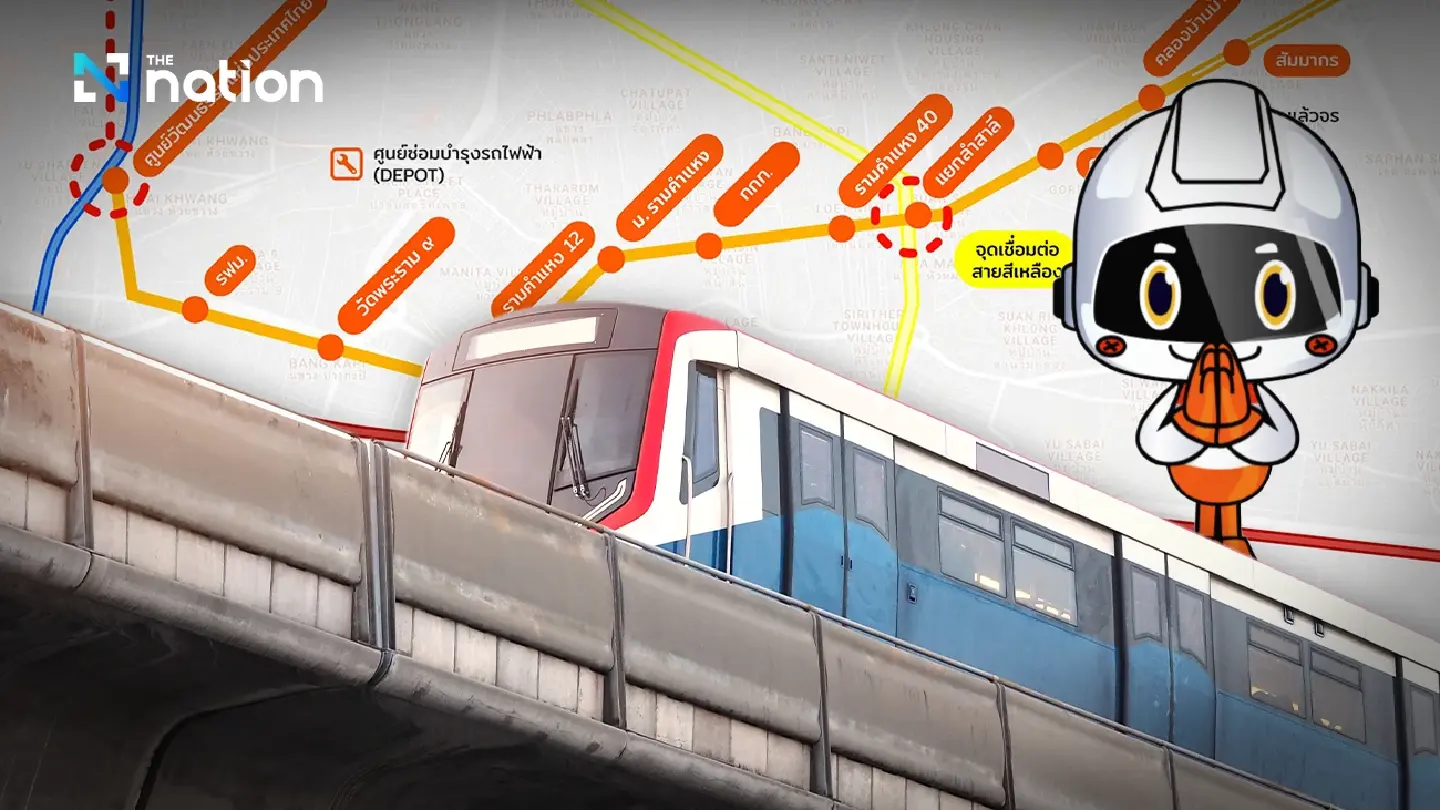
 Bangkok land bets shift from high-priced Central Business District (CBD) to more affordable expanding electric rail lines
THIS NEWS ARTICLE KINDLY SPONSORED BY FALLPROTEC, A WORLD-RENOWNED NAME IN THE DESIGN AND MANUFACTURE OF PREMIUM FALL PROTECTION SYSTEMS AND HEIGHT ACCESS SOLUTIONS
- Property investment in Bangkok is shifting from the high-priced Central Business District (CBD) to more affordable outer-city areas along new and expanding electric rail lines.
- The eastern Orange Line corridor, running to Min Buri, is identified as the top growth prospect due to its future role as a major transport hub connecting multiple lines.
- Other key corridors with strong investment potential include the southern Purple Line, the Pink Line, and Green Line extensions towards Samut Prakan and Khu Khot.
- This trend is driven by significantly lower land costs and higher potential for capital gains in these emerging transport-linked areas compared to the saturated CBD market.
Outer rail corridors emerge as new investment frontier
Bangkok’s land market is entering a new investment cycle as developers and investors turn from high-priced central business district plots to outer-city locations along new electric rail lines, with the eastern Orange Line corridor tipped as the strongest growth prospect over the next five years.
The shift comes as several new mass-transit routes reshape the capital’s land-value map, pushing up prices along emerging rail corridors while prompting major property developers to accumulate land banks ahead of expected urban expansion over the next five to 10 years.
Although prime inner-city locations such as Phloen Chit, Sukhumvit, Silom and Sathorn continue to command the highest land values, analysts say the stronger upside is increasingly moving to outer Bangkok, where land remains several times cheaper than in the CBD.
Eastern Orange Line tipped as top growth bet
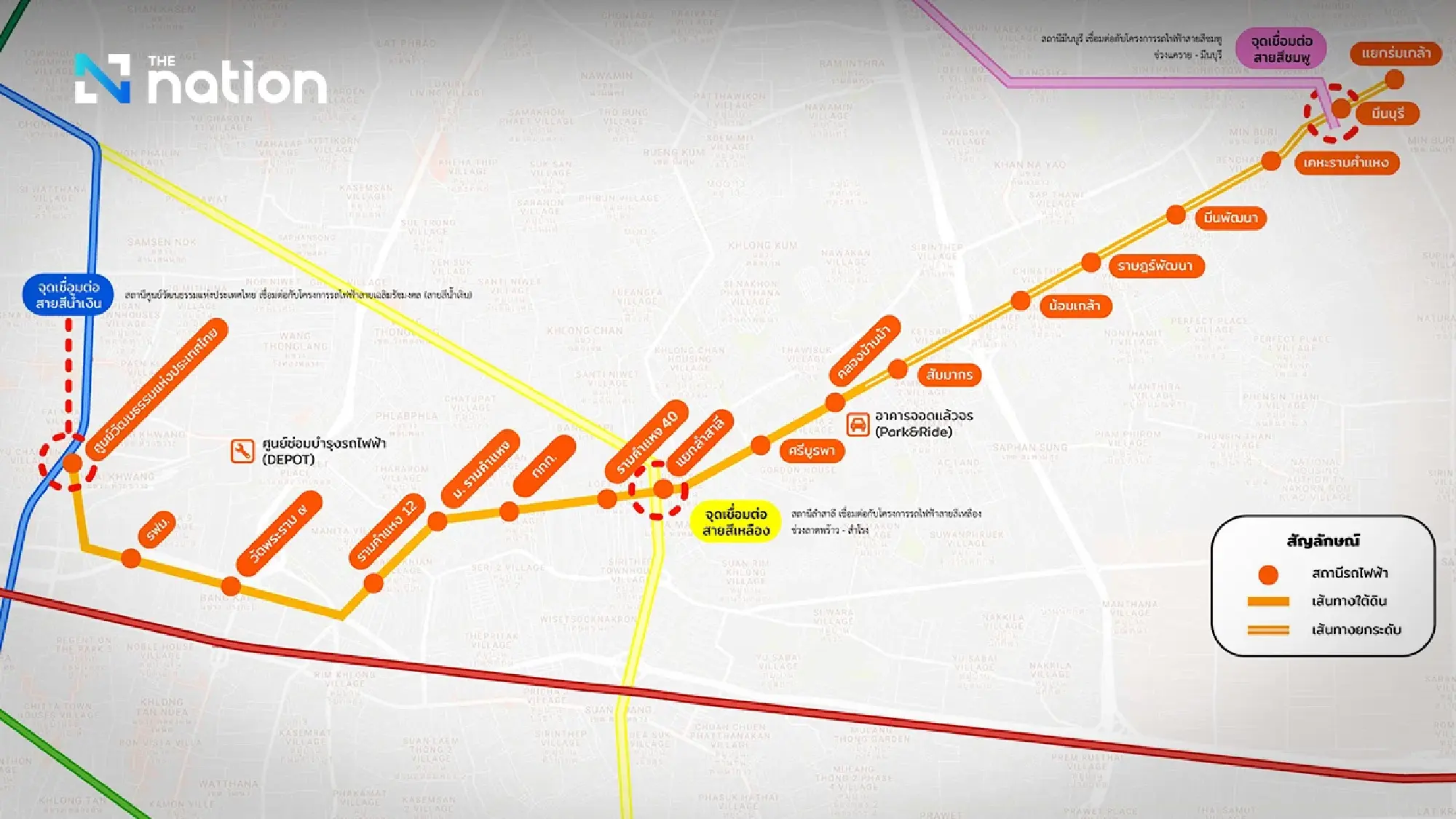
The eastern section of the Orange Line, running from the Thailand Cultural Centre to Min Buri, is seen as the most attractive investment corridor.
The Ramkhamhaeng-Lam Sali-Min Buri area is gaining attention because of its role as a future transport hub, linking the Orange Line with the Yellow Line and the planned Brown Line. That connectivity is expected to support new condominium, mixed-use and commercial developments in eastern Bangkok.
Property market data shows that land prices along the Orange Line have previously increased by an average of around 6% per year. Around Lam Sali station, a key interchange location, prices have risen at double-digit annual rates in some periods, reflecting stronger developer demand.
Current land prices along Ramkhamhaeng Road from Lam Sali to Min Buri range from about 150,000 to 500,000 baht per square wah, depending on location and proximity to stations. Land in secondary sois remains available at below 100,000 baht per square wah, suggesting further upside compared with more mature corridors such as Sukhumvit and Ratchadaphisek.
Pink Line areas still below full potential
The Pink Line corridor is also drawing investor interest, particularly around Min Buri, Ram Intra and Khu Bon.
Although the line has already opened, land values in several areas have yet to fully reflect its long-term potential. Analysts say these districts are gradually shifting from suburban areas into new residential hubs for northern and eastern Bangkok.
Housing costs in these locations remain around 40-60% lower than in inner-city areas, making them attractive to both homebuyers and developers targeting more affordable segments.
Previous market surveys found that the Pink Line was among the new rail routes with the strongest land-price growth, with average increases of nearly 5% per year along several sections. Land along Ram Intra and Min Buri currently ranges from about 80,000 to 300,000 baht per square wah, still significantly lower than many established mass-transit locations.
 Southern Purple Line seen as Thonburi game changer
Another route under close watch is the southern section of the Purple Line, from Tao Poon to Rat Burana.
The project is viewed as a game changer for Thonburi because it will connect major economic areas such as Wongwian Yai, Samre, Dao Khanong and Rat Burana with Bangkok’s main rail network.
Property experts say land prices around Wongwian Yai and Samre have already begun rising ahead of full development. Rat Burana, however, is still viewed as a relatively affordable location with strong future potential.
Current land prices along the corridor range from about 120,000 to 400,000 baht per square wah. Analysts estimate prices could rise by another 20-40% within five years after the line begins full service.
Samut Prakan-Bang Pu offers long-term returns
The Green Line extension towards Samut Prakan and Bang Pu has recorded some of the strongest land-price growth in recent years.
Data from the Real Estate Information Center shows that land prices along the Samut Prakan-Bang Pu corridor have risen by more than 20% per year in some periods, supported by industrial expansion in the Eastern Economic Corridor, logistics investment and growing demand for mid- to upper-market housing.
Land along the outer section of Sukhumvit Road is currently priced at about 70,000 to 250,000 baht per square wah, still far below locations such as Bearing and On Nut.
Analysts say the area is better suited to medium- and long-term investors seeking gains from industrial, logistics and residential expansion.
Khu Khot-Lam Luk Ka becomes northern growth corridor
Khu Khot, Lam Luk Ka and Khlong Luang are also emerging as new residential bases for people working in Bangkok.
The area benefits from Green Line connectivity and access to motorway networks, supporting demand for low-rise housing and more affordable residential projects.
Although land prices have increased steadily in recent years, they remain relatively affordable at around 30,000 to 120,000 baht per square wah. This allows housing developers to continue launching projects at prices accessible to middle-income buyers.
Property analysts expect the corridor to become one of northern Bangkok’s key growth zones over the next decade.
CBD remains valuable but upside shifts outward
Industry observers say CBD land will remain Bangkok’s most expensive and prestigious property market, but high entry costs are limiting opportunities for outsized returns.
By contrast, outer-city rail corridors still offer lower land costs, stronger development potential and room for capital gains as transport connectivity improves.
Over the next five years, the eastern Orange Line is expected to remain the leading investment location because of its multi-line connectivity and strong urban-development potential. The southern Purple Line is viewed as a dark horse, while Samut Prakan-Bang Pu and Khu Khot-Lam Luk Ka are seen as longer-term plays tied to Bangkok’s outward expansion.
As inner-city land becomes scarcer and increasingly unaffordable, investing along new mass-transit routes is becoming a core strategy for developers and property investors seeking returns above the broader market.
Source: https://www.nationthailand.com/business/property/40067172
Google Translation:
การลงทุนด้านอสังหาริมทรัพย์ในกรุงเทพฯ กำลังเปลี่ยนทิศทางจากย่านศูนย์กลางธุรกิจ (CBD) ที่มีราคาสูง ไปสู่พื้นที่รอบนอกเมืองที่มีราคาเหมาะสมกว่าตามแนวรถไฟฟ้าที่กำลังขยายตัว
บทความข่าวนี้ได้รับการสนับสนุนโดย FALLPROTEC บริษัทชั้นนำระดับโลกด้านการออกแบบและผลิตระบบป้องกันการตกจากที่สูงและโซลูชันการเข้าถึงที่สูงระดับพรีเมียม
การลงทุนด้านอสังหาริมทรัพย์ในกรุงเทพฯ กำลังเปลี่ยนทิศทางจากย่านศูนย์กลางธุรกิจ (CBD) ที่มีราคาสูง ไปสู่พื้นที่รอบนอกเมืองที่มีราคาเหมาะสมกว่าตามแนวรถไฟฟ้าสายใหม่และที่กำลังขยายตัว
เส้นทางรถไฟฟ้าสายสีส้มฝั่งตะวันออก ซึ่งวิ่งไปยังมีนบุรี ถูกระบุว่าเป็นเส้นทางที่มีศักยภาพการเติบโตสูงสุด เนื่องจากบทบาทในอนาคตที่จะเป็นศูนย์กลางการคมนาคมขนส่งที่สำคัญเชื่อมต่อหลายสาย
เส้นทางสำคัญอื่นๆ ที่มีศักยภาพการลงทุนสูง ได้แก่ สายสีม่วง สายสีชมพู และส่วนต่อขยายสายสีเขียวไปยังสมุทรปราการและคูคต
แนวโน้มนี้เกิดจากต้นทุนที่ดินที่ต่ำกว่าอย่างมากและศักยภาพในการสร้างผลกำไรที่สูงกว่าในพื้นที่ที่เชื่อมโยงการคมนาคมขนส่งเหล่านี้ เมื่อเทียบกับตลาด CBD ที่อิ่มตัวแล้ว
เส้นทางรถไฟฟ้ารอบนอกกลายเป็นแหล่งลงทุนใหม่
ตลาดที่ดินของกรุงเทพฯ กำลังเข้าสู่รอบการลงทุนใหม่ เนื่องจากผู้พัฒนาและนักลงทุนหันจากที่ดินราคาสูงในย่านศูนย์กลางธุรกิจ ไปสู่ทำเลรอบนอกเมืองตามแนวรถไฟฟ้าสายใหม่ โดยเฉพาะอย่างยิ่งเส้นทางรถไฟฟ้าสายสีส้มฝั่งตะวันออก ซึ่งคาดว่าจะเป็นทำเลที่มีศักยภาพการเติบโตสูงที่สุดในอีก 5 ปีข้างหน้า
การเปลี่ยนแปลงนี้เกิดขึ้นพร้อมกับการเปิดให้บริการรถไฟฟ้าหลายสายใหม่ ซึ่งกำลังปรับเปลี่ยนแผนที่ราคาที่ดินของเมืองหลวง ส่งผลให้ราคาที่ดินตามแนวเส้นทางรถไฟฟ้าใหม่เพิ่มสูงขึ้น และกระตุ้นให้ผู้พัฒนาอสังหาริมทรัพย์รายใหญ่สะสมที่ดินไว้ล่วงหน้าเพื่อรองรับการขยายตัวของเมืองที่คาดว่าจะเกิดขึ้นในอีก 5-10 ปีข้างหน้า
แม้ว่าทำเลทองในใจกลางเมือง เช่น เพลินจิต สุขุมวิท สีลม และสาทร ยังคงมีราคาที่ดินสูงที่สุด แต่ผู้เชี่ยวชาญกล่าวว่า ศักยภาพในการเติบโตที่แข็งแกร่งกว่ากำลังเคลื่อนตัวไปยังรอบนอกของกรุงเทพฯ ซึ่งที่ดินยังมีราคาถูกกว่าในย่านศูนย์กลางธุรกิจหลายเท่า
รถไฟฟ้าสายสีส้มฝั่งตะวันออก คาดว่าจะเป็นทำเลที่มีศักยภาพการเติบโตสูงสุด
ส่วนตะวันออกของรถไฟฟ้าสายสีส้ม ซึ่งวิ่งจากศูนย์วัฒนธรรมแห่งประเทศไทยไปยังมีนบุรี ถือเป็นเส้นทางการลงทุนที่น่าดึงดูดที่สุด
พื้นที่รามคำแหง-ลำสาลี-มีนบุรี กำลังได้รับความสนใจมากขึ้นเนื่องจากมีบทบาทสำคัญในฐานะศูนย์กลางการคมนาคมแห่งอนาคต ซึ่งเชื่อมต่อรถไฟฟ้าสายสีส้มกับสายสีเหลือง และสายสีน้ำตาลที่กำลังจะเปิดให้บริการ คาดว่าการเชื่อมต่อนี้จะช่วยสนับสนุนการพัฒนาคอนโดมิเนียม โครงการแบบผสมผสาน และพื้นที่เชิงพาณิชย์ใหม่ๆ ในกรุงเทพฯ ฝั่งตะวันออก
ข้อมูลตลาดอสังหาริมทรัพย์แสดงให้เห็นว่า ราคาที่ดินตามแนวรถไฟฟ้าสายสีส้มเพิ่มขึ้นเฉลี่ยประมาณ 6% ต่อปี บริเวณสถานีลำสาลี ซึ่งเป็นจุดเชื่อมต่อสำคัญ ราคาที่ดินเพิ่มขึ้นในอัตราเลขสองหลักต่อปีในบางช่วง สะท้อนให้เห็นถึงความต้องการของนักพัฒนาอสังหาริมทรัพย์ที่แข็งแกร่งขึ้น
ราคาที่ดินปัจจุบันตามแนวถนนรามคำแหงจากลำสาลีถึงมีนบุรี อยู่ระหว่างประมาณ 150,000 ถึง 500,000 บาทต่อตารางวา ขึ้นอยู่กับทำเลและความใกล้กับสถานี ที่ดินในซอยรองยังคงมีราคาต่ำกว่า 100,000 บาทต่อตารางวา ซึ่งบ่งชี้ว่ายังมีศักยภาพในการเติบโตอีกมากเมื่อเทียบกับพื้นที่ที่มีความเจริญแล้ว เช่น สุขุมวิทและรัชดาภิเศก
พื้นที่รถไฟฟ้าสายสีชมพูยังไม่แสดงศักยภาพเต็มที่
เส้นทางรถไฟฟ้าสายสีชมพูกำลังดึงดูดความสนใจจากนักลงทุน โดยเฉพาะอย่างยิ่งในบริเวณมีนบุรี รามอินทรา และคูบอน
แม้ว่ารถไฟฟ้าจะเปิดให้บริการแล้ว แต่ราคาที่ดินในหลายพื้นที่ยังไม่สะท้อนศักยภาพในระยะยาวอย่างเต็มที่ นักวิเคราะห์กล่าวว่าเขตเหล่านี้กำลังค่อยๆ เปลี่ยนจากชานเมืองกลายเป็นศูนย์กลางที่อยู่อาศัยแห่งใหม่สำหรับกรุงเทพฯ ฝั่งเหนือและตะวันออก
ต้นทุนที่อยู่อาศัยในทำเลเหล่านี้ยังคงต่ำกว่าในตัวเมืองประมาณ 40-60% ทำให้เป็นที่น่าสนใจสำหรับทั้งผู้ซื้อบ้านและผู้พัฒนาอสังหาริมทรัพย์ที่ต้องการที่อยู่อาศัยราคาไม่แพง
จากการสำรวจตลาดก่อนหน้านี้พบว่ารถไฟฟ้าสายสีชมพูเป็นหนึ่งในเส้นทางรถไฟฟ้าสายใหม่ที่มีการเติบโตของราคาที่ดินสูงที่สุด โดยมีราคาเพิ่มขึ้นเฉลี่ยเกือบ 5% ต่อปีในหลายช่วง ราคาที่ดินตามแนวรามอินทราและมีนบุรีในปัจจุบันอยู่ที่ประมาณ 80,000 ถึง 300,000 บาทต่อตารางวา ซึ่งยังคงต่ำกว่าทำเลที่มีระบบขนส่งมวลชนอยู่แล้วหลายแห่ง
รถไฟฟ้าสายสีม่วงตอนใต้ ถือเป็นตัวเปลี่ยนเกมสำหรับธนบุรี
อีกเส้นทางหนึ่งที่กำลังจับตามองอย่างใกล้ชิดคือ รถไฟฟ้าสายสีม่วงตอนใต้ จากเตาปูน ไปยังรัตบูรณะ
โครงการนี้ถูกมองว่าเป็นตัวเปลี่ยนเกมสำหรับธนบุรี เพราะจะเชื่อมต่อพื้นที่เศรษฐกิจสำคัญๆ เช่น วงเวียนใหญ่ สามเร ดาวโขนง และรัตบูรณะ เข้ากับเครือข่ายรถไฟหลักของกรุงเทพฯ
ผู้เชี่ยวชาญด้านอสังหาริมทรัพย์กล่าวว่า ราคาที่ดินรอบๆ วงเวียนใหญ่และสามเรเริ่มปรับตัวสูงขึ้นแล้วก่อนที่จะมีการพัฒนาอย่างเต็มรูปแบบ อย่างไรก็ตาม รัตบูรณะยังคงถูกมองว่าเป็นทำเลที่ค่อนข้างราคาไม่แพงและมีศักยภาพในอนาคตที่แข็งแกร่ง
ราคาที่ดินในปัจจุบันตามแนวเส้นทางอยู่ที่ประมาณ 120,000 ถึง 400,000 บาทต่อตารางวา นักวิเคราะห์คาดการณ์ว่าราคาอาจเพิ่มขึ้นอีก 20-40% ภายในห้าปีหลังจากที่เส้นทางเปิดให้บริการอย่างเต็มรูปแบบ
สมุทรปราการ-บางปู ให้ผลตอบแทนระยะยาว
การขยายเส้นทางรถไฟฟ้าสายสีเขียวไปยังสมุทรปราการและบางปู มีการเติบโตของราคาที่ดินที่แข็งแกร่งที่สุดในรอบหลายปีที่ผ่านมา
ข้อมูลจากศูนย์ข้อมูลอสังหาริมทรัพย์แสดงให้เห็นว่า ราคาที่ดินตามแนวระเบียงสมุทรปราการ-บางปู เพิ่มขึ้นมากกว่า 20% ต่อปีในบางช่วงเวลา โดยได้รับการสนับสนุนจากการขยายตัวทางอุตสาหกรรมในเขตเศรษฐกิจพิเศษภาคตะวันออก การลงทุนด้านโลจิสติกส์ และความต้องการที่อยู่อาศัยระดับกลางถึงระดับสูงที่เพิ่มขึ้น
ราคาที่ดินตามแนวถนนสุขุมวิทส่วนนอก ปัจจุบันอยู่ที่ประมาณ 70,000 ถึง 250,000 บาทต่อตารางวา ซึ่งยังคงต่ำกว่าทำเลต่างๆ เช่น แบริ่งและออนนุช
นักวิเคราะห์กล่าวว่า พื้นที่นี้เหมาะสำหรับนักลงทุนระยะกลางและระยะยาวที่ต้องการผลกำไรจากการขยายตัวทางอุตสาหกรรม โลจิสติกส์ และที่อยู่อาศัย
คูโคท-ลำลุกกะ กลายเป็นระเบียงการเติบโตทางเหนือ
คูโคท ลำลุกกะ และคลองหลวง กำลังกลายเป็นฐานที่อยู่อาศัยใหม่สำหรับผู้ที่ทำงานในกรุงเทพฯ
พื้นที่นี้ได้รับประโยชน์จากการเชื่อมต่อรถไฟฟ้าสายสีเขียวและการเข้าถึงเครือข่ายมอเตอร์เวย์ ซึ่งสนับสนุนความต้องการที่อยู่อาศัยแบบโลว์ไรส์และโครงการที่อยู่อาศัยราคาไม่แพงมากขึ้น
แม้ว่าราคาที่ดินจะเพิ่มขึ้นอย่างต่อเนื่องในช่วงไม่กี่ปีที่ผ่านมา แต่ก็ยังคงอยู่ในระดับที่ค่อนข้างเหมาะสมที่ประมาณ 30,000 ถึง 120,000 บาทต่อตารางวา ทำให้ผู้พัฒนาอสังหาริมทรัพย์สามารถเปิดตัวโครงการต่างๆ ในราคาที่ผู้ซื้อระดับกลางสามารถเข้าถึงได้
นักวิเคราะห์อสังหาริมทรัพย์คาดการณ์ว่าพื้นที่นี้จะกลายเป็นหนึ่งในเขตการเติบโตที่สำคัญของกรุงเทพฯ ตอนเหนือในอีกสิบปีข้างหน้า
ย่านศูนย์กลางธุรกิจ (CBD) ยังคงมีมูลค่าสูง แต่ศักยภาพในการเติบโตกำลังขยายออกไป
ผู้สังเกตการณ์ในอุตสาหกรรมกล่าวว่า ที่ดินในย่านศูนย์กลางธุรกิจ (CBD) จะยังคงเป็นตลาดอสังหาริมทรัพย์ที่มีราคาแพงและมีชื่อเสียงที่สุดของกรุงเทพฯ แต่ต้นทุนการเข้าลงทุนที่สูงกำลังจำกัดโอกาสในการได้รับผลตอบแทนที่สูงเกินคาด
ในทางตรงกันข้าม เส้นทางรถไฟฟ้ารอบนอกเมืองยังคงมีต้นทุนที่ดินต่ำกว่า ศักยภาพในการพัฒนาที่แข็งแกร่งกว่า และมีโอกาสได้รับผลกำไรจากส่วนต่างราคามากขึ้น เนื่องจากระบบคมนาคมขนส่งมีการเชื่อมต่อที่ดีขึ้น
ในอีกห้าปีข้างหน้า คาดว่ารถไฟฟ้าสายสีส้มฝั่งตะวันออกจะยังคงเป็นทำเลการลงทุนชั้นนำ เนื่องจากมีการเชื่อมต่อหลายสายและมีศักยภาพในการพัฒนาเมืองที่แข็งแกร่ง รถไฟฟ้าสายสีม่วงตอนใต้ถูกมองว่าเป็นม้ามืด ในขณะที่สายสมุทรปราการ-บางปู และคูคต-ลำลุกกา ถูกมองว่าเป็นการลงทุนระยะยาวที่เชื่อมโยงกับการขยายตัวของกรุงเทพฯ ออกสู่ภายนอก
เนื่องจากที่ดินในใจกลางเมืองเริ่มหายากและมีราคาสูงขึ้นเรื่อยๆ การลงทุนตามเส้นทางรถไฟฟ้าสายใหม่จึงกลายเป็นกลยุทธ์หลักสำหรับผู้พัฒนาอสังหาริมทรัพย์และนักลงทุนที่ต้องการผลตอบแทนสูงกว่าตลาดโดยรวม