
 Airports of Thailand Plc plans major airport expansion to lift annual passenger capacity across six Thai airports to 180 million by 2034
THIS NEWS ARTICLE KINDLY SPONSORED BY FALLPROTEC, A WORLD-RENOWNED NAME IN THE DESIGN AND MANUFACTURE OF PREMIUM FALL PROTECTION SYSTEMS AND HEIGHT ACCESS SOLUTIONS
AOT is revising its 365-billion-baht airport expansion roadmap to lift annual passenger capacity across six Thai airports to 180 million by 2034.
Airports of Thailand Plc (AOT) is revising its development roadmap for the six airports under its management, with total investment estimated at more than 364.98 billion baht.
The new timeline is aimed at increasing annual passenger-handling capacity to 180 million by 2034, while upgrading services to international standards.
A major focus of the plan is Suvarnabhumi Airport, where AOT aims to raise capacity to 120 million passengers a year over the next decade through two key projects.
The first is the East Expansion project, with a construction budget of 13.52 billion baht, including 7% value-added tax. The project will expand passenger service areas, including check-in zones, passport control facilities and other spaces for airport users.
AOT is preparing to submit the project to the Cabinet for approval. Construction is expected to proceed between 2026 and 2030. Once completed, the expansion will lift Suvarnabhumi Airport’s capacity to 70 million passengers per year.
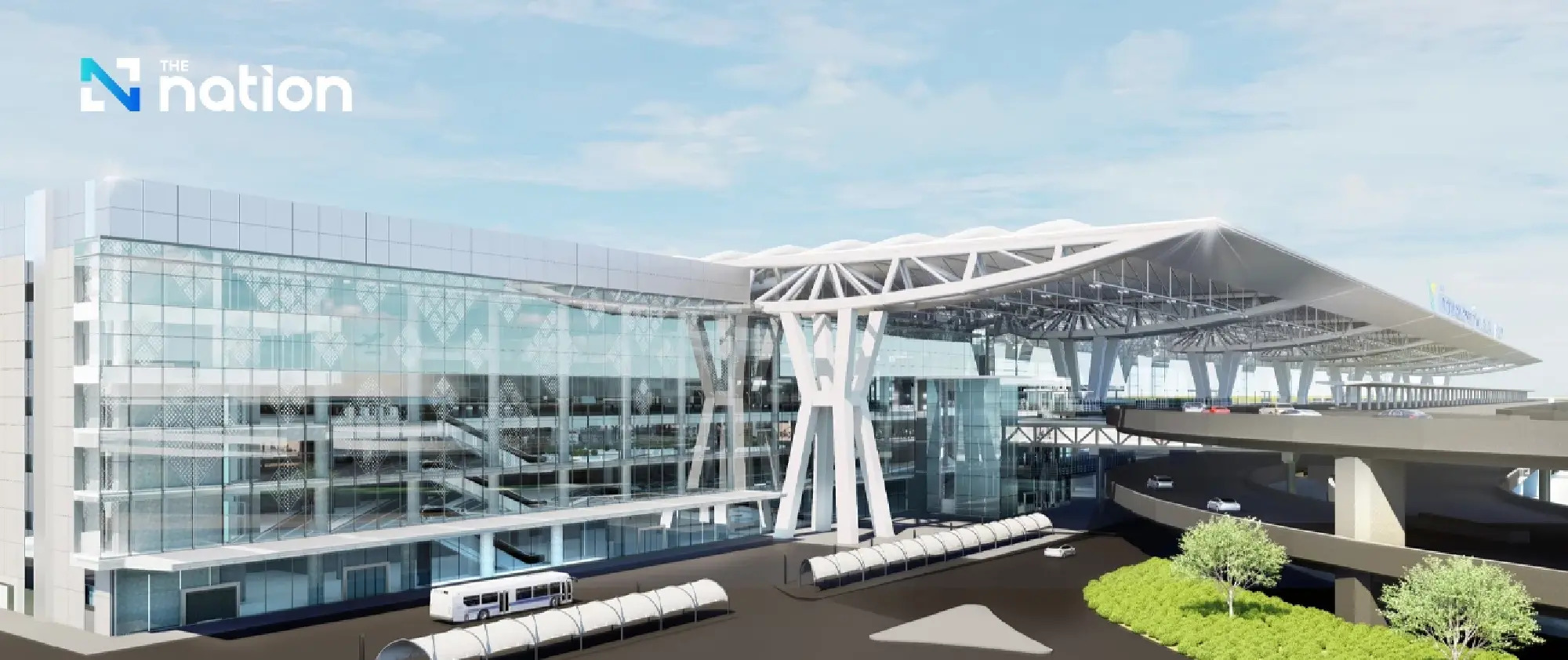 South Terminal plan awaits Cabinet approval
AOT is also moving ahead with the South Terminal development at Suvarnabhumi Airport, with estimated investment of 245.37 billion baht, including VAT and contingency costs.
The AOT board has already approved the draft Suvarnabhumi Airport development master plan for 2025. The plan is now under consideration by the Civil Aviation Authority of Thailand (CAAT) before being submitted to the Cabinet.
The South Terminal project is designed to increase Suvarnabhumi’s capacity to 120 million passengers per year and enable the airport to handle 120 flights per hour.
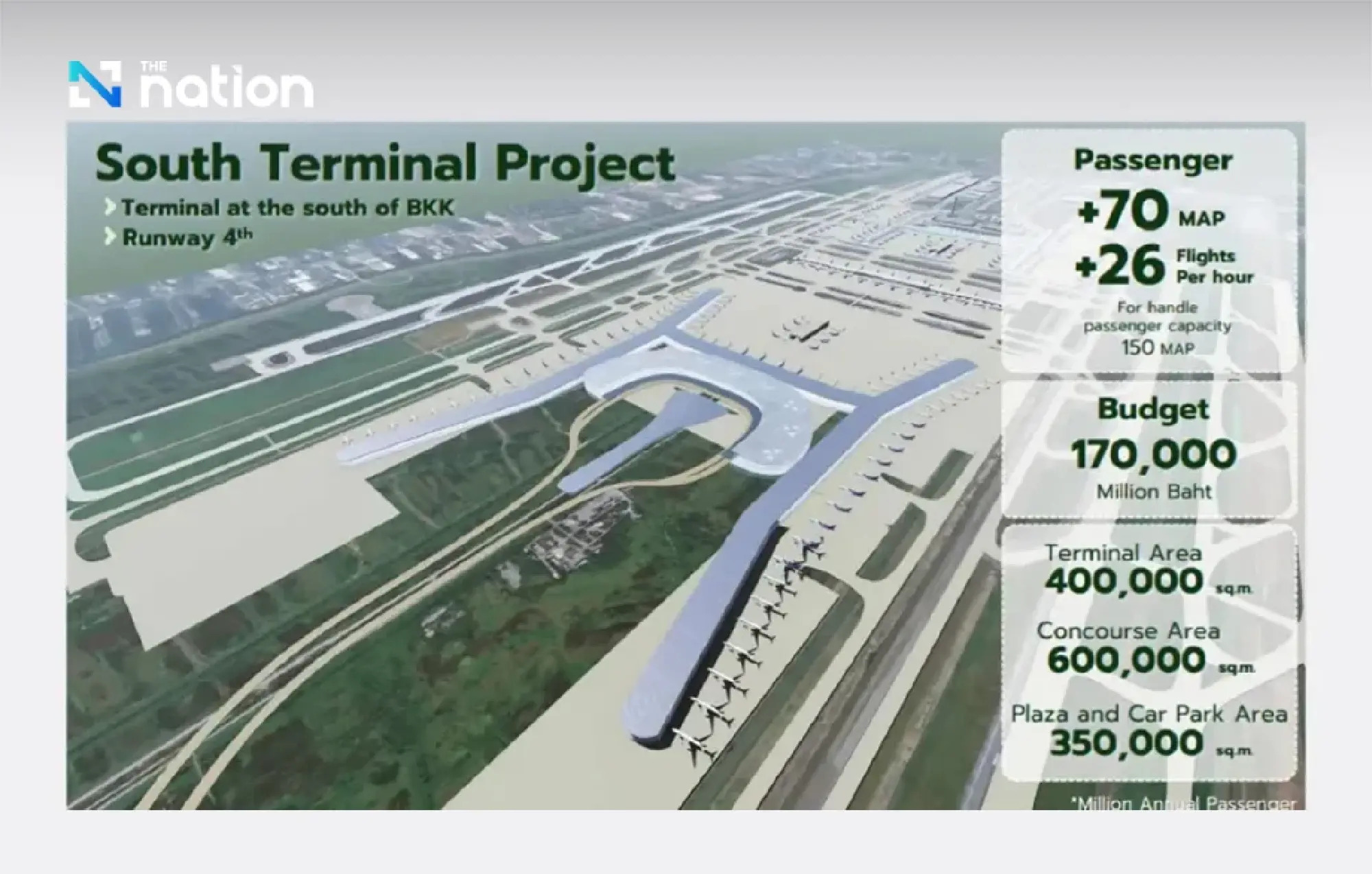 The project includes construction of a main southern passenger terminal covering 750,000 square metres, along with an automated people mover system linking passenger terminal areas.
The development will also allow passengers to access the airport from Bang Na-Trat Road and the motorway, in line with plans to expand passenger service areas.
AOT also plans to build a fourth runway on the eastern side of the airport. The runway will be around four kilometres long and is intended to support future growth in air traffic.
The new master plan also allocates space for additional airport activities, including an aircraft maintenance, repair and overhaul (MRO) centre, an expanded cargo area north of the existing facilities, and a General Aviation zone for private aircraft and other aviation services.
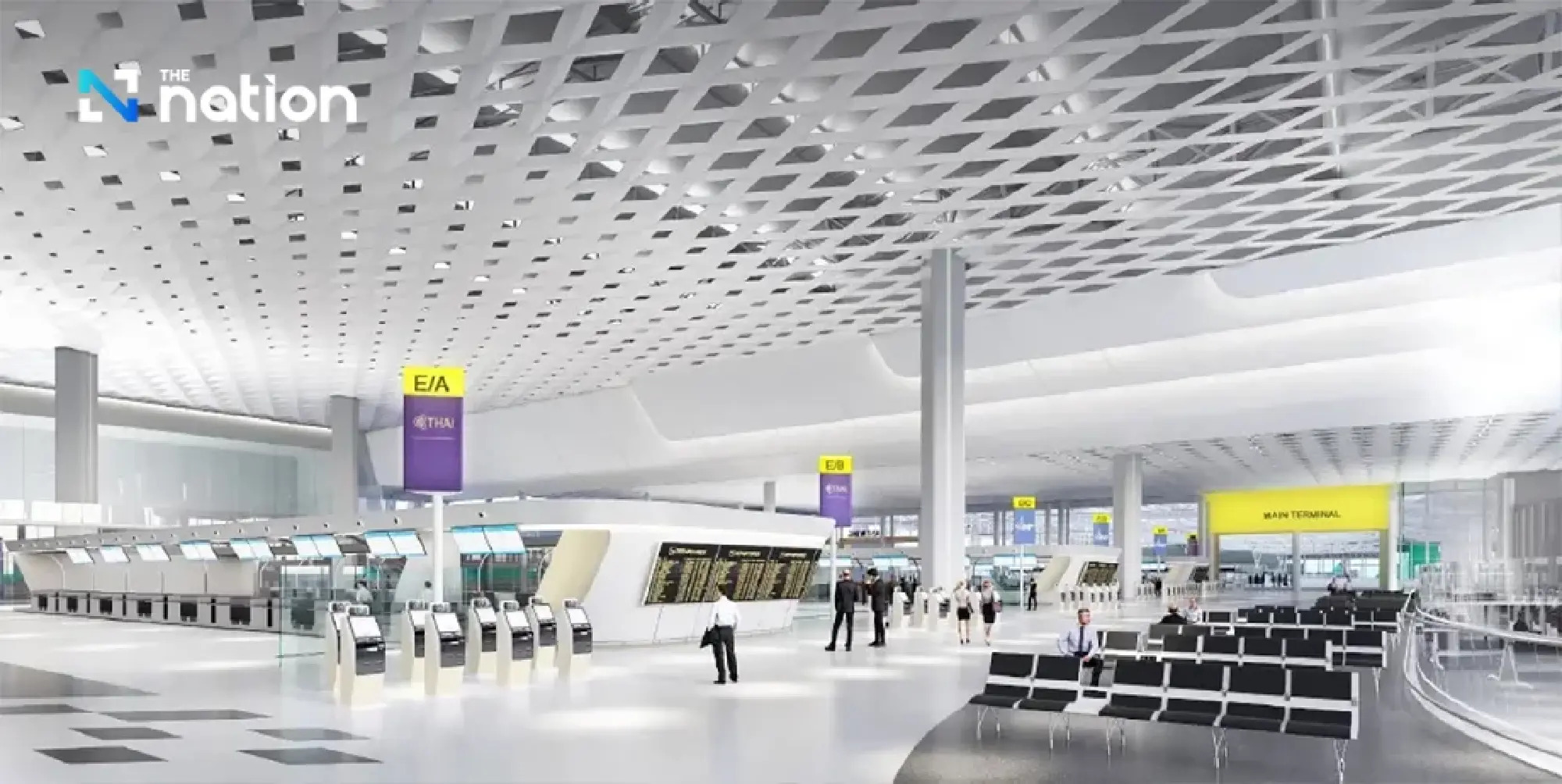 AOT said these additions would support Suvarnabhumi’s goal of becoming a more comprehensive airport, comparable with leading international aviation hubs.
The South Terminal project is expected to take 10 years, from 2027 to 2035, and will be divided into four phases. The first phase will cover design and ground improvement from 2027 to 2029, as the site is on wetland and requires time for soil settlement.
The initial phase is expected to require around 20 billion baht. Construction of passenger terminal buildings will then begin gradually from 2029, with work carried out in phases according to future passenger demand.
AOT plans major airport expansion to serve 180m passengers
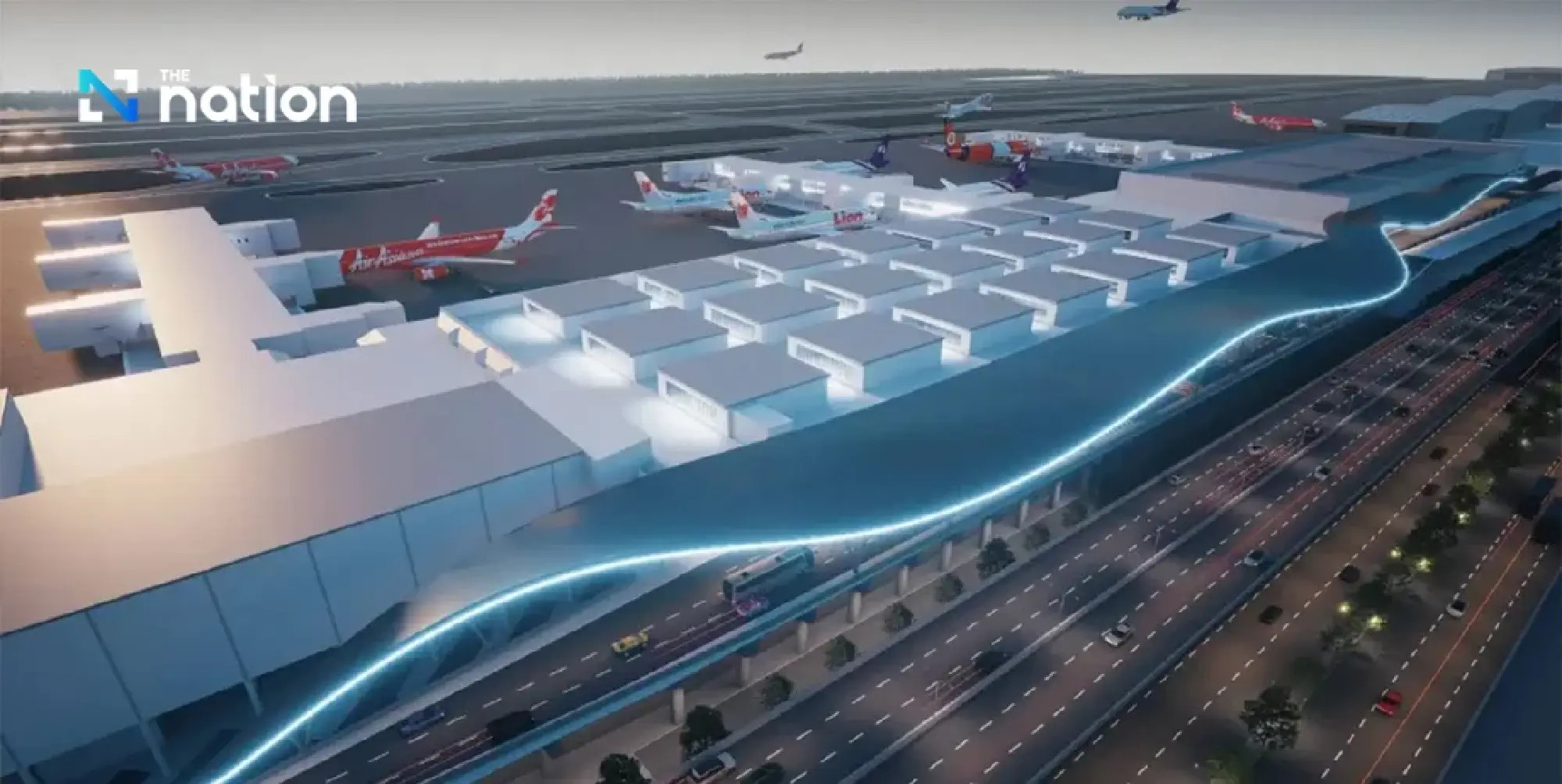 Don Mueang upgrade rises to 69 billion baht
AOT is also adjusting the third-phase development plan for Don Mueang Airport, with construction investment now estimated at 69.29 billion baht, including VAT and contingency costs.
The AOT board has approved changes to project details and an expanded investment framework. Detailed design work has been completed, and the project is being prepared for submission to the Cabinet for approval of changes to some elements.
The revision follows changes from the original plan approved by the Cabinet in November 2022, which had an investment budget of 36 billion baht.
The Don Mueang expansion is not a minor renovation, but a major infrastructure overhaul. AOT has updated the original plan, which covered 21 sub-projects, to better reflect current conditions and future demand.
If approved by the Cabinet, the project will move to the bidding process. Construction is targeted for 2028 to 2034.
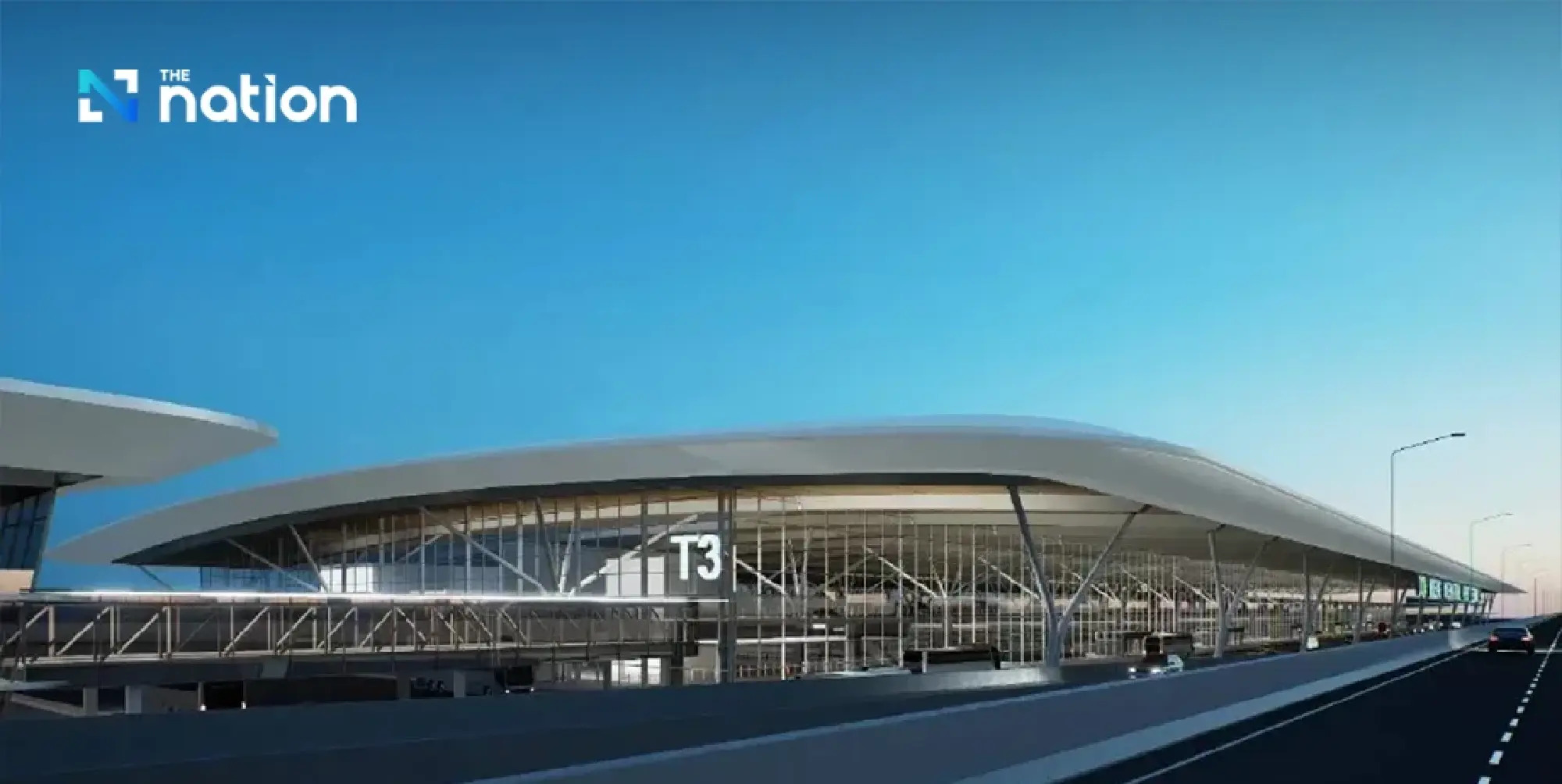 The project aims to restore and increase Don Mueang’s capacity by another 15 million passengers, bringing annual capacity to 45 million. The airport will also be managed to handle up to 50 million passengers a year and 55 flights per hour, compared with its current capacity of 30 million passengers per year.
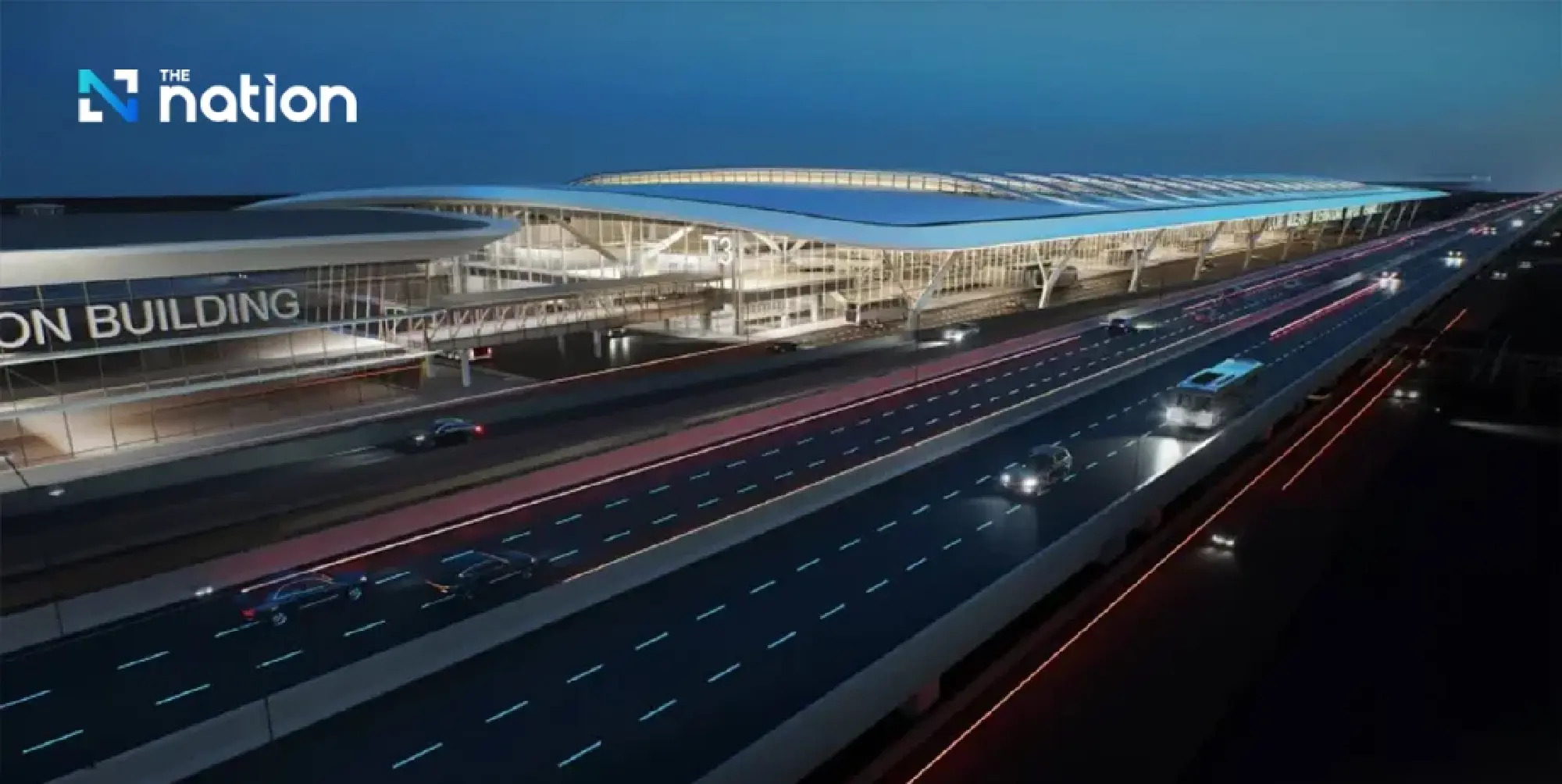
The plan includes construction of a new international passenger terminal, Terminal 3, covering 208,000 square metres. Current detailed designs show that Terminal 3 is 25% larger than the original concept, which has contributed to the higher investment cost.
AOT will also renovate Terminal 1 to support domestic passengers alongside Terminal 2. Other works include construction of a terminal for private jet flights, improvements to Cargo Buildings 1 and 2 to support 500,000 tonnes of cargo per year, and upgrades to traffic systems and related utilities.
In addition to the third-phase Don Mueang development, AOT is also pursuing a project to improve links with other public transport systems. This will be carried out through private-sector investment in a Junction Building, which will serve as a central connection point directly linked to the Red Line rail system.
The Junction Building will be located between Terminal 2 and the new Terminal 3.
 Regional airport plans move forward
AOT is also progressing with development plans for Phuket Airport Phase 2, Chiang Mai Airport Phase 1 and Mae Fah Luang Chiang Rai Airport Phase 1.
These projects are currently in the design stage, which is expected to be completed by 2026. AOT expects to seek project approval by 2027.
Hat Yai Airport is currently undergoing a review of its master plan, which is expected to be completed by 2027.
Under the Phuket Airport Phase 2 plan, investment of around 10 billion baht will be used to expand the international passenger terminal and utility systems. The project will add capacity for 5.5 million passengers per year, bringing total capacity to at least 18 million passengers annually.
Chiang Mai Airport Phase 1 will require around 16 billion baht. The project includes construction of a new passenger terminal, renovation of the existing terminal, and development of road systems, utilities and other related infrastructure.
The Chiang Mai project will increase capacity from 8 million passengers per year to at least 20 million passengers annually.
Mae Fah Luang Chiang Rai Airport Phase 1 will require around 7 billion baht. The plan includes construction of a new passenger terminal, renovation of the existing terminal, construction of a car park building, and upgrades to roads, utilities and related systems.
The project will double the airport’s capacity from 3 million passengers per year to at least 6 million passengers annually.
Hat Yai Airport Phase 1, with estimated investment of around 4.49 billion baht, remains under master plan review.
AOT is also studying the investment feasibility of two new airports: Andaman Airport in Phang Nga and Lanna Airport. Once the feasibility studies are completed and approved, the projects will be prepared for submission to the Cabinet.
Together, the projects form AOT’s new roadmap for expanding Thailand’s airport network under its revised development timeline.
Source: https://www.nationthailand.com/news/tourism/40066296
Google Translation:
บริษัทท่าอากาศยานไทย จำกัด (มหาชน) วางแผนขยายสนามบินครั้งใหญ่เพื่อเพิ่มขีดความสามารถในการรองรับผู้โดยสารต่อปีใน 6 สนามบินของไทยให้ถึง 180 ล้านคนภายในปี 2034
บทความข่าวนี้ได้รับการสนับสนุนโดย FALLPROTEC บริษัทชั้นนำระดับโลกด้านการออกแบบและผลิตระบบป้องกันการตกจากที่สูงและโซลูชันการเข้าถึงที่สูง
บริษัทท่าอากาศยานไทย จำกัด (มหาชน) กำลังปรับปรุงแผนงานขยายสนามบินมูลค่า 365 พันล้านบาท เพื่อเพิ่มขีดความสามารถในการรองรับผู้โดยสารต่อปีใน 6 สนามบินของไทยให้ถึง 180 ล้านคนภายในปี 2034
บริษัทท่าอากาศยานไทย จำกัด (มหาชน) กำลังปรับปรุงแผนงานพัฒนาสำหรับสนามบินทั้ง 6 แห่งที่อยู่ภายใต้การบริหารจัดการ โดยมีมูลค่าการลงทุนรวมกว่า 364.98 พันล้านบาท
แผนงานใหม่นี้มีเป้าหมายเพื่อเพิ่มขีดความสามารถในการรองรับผู้โดยสารต่อปีให้ถึง 180 ล้านคนภายในปี 2034 พร้อมทั้งยกระดับการบริการให้ได้มาตรฐานสากล
หนึ่งในเป้าหมายหลักของแผนคือสนามบินสุวรรณภูมิ ซึ่งการท่าอากาศยานแห่งประเทศไทย (AOT) ตั้งเป้าที่จะเพิ่มขีดความสามารถในการรองรับผู้โดยสารเป็น 120 ล้านคนต่อปีภายในทศวรรษหน้า ผ่านสองโครงการสำคัญ
โครงการแรกคือโครงการขยายฝั่งตะวันออก ด้วยงบประมาณการก่อสร้าง 13.52 พันล้านบาท รวมภาษีมูลค่าเพิ่ม 7% โครงการนี้จะขยายพื้นที่บริการผู้โดยสาร รวมถึงโซนเช็คอิน จุดตรวจหนังสือเดินทาง และพื้นที่อื่นๆ สำหรับผู้ใช้สนามบิน
AOT กำลังเตรียมเสนอโครงการต่อคณะรัฐมนตรีเพื่อขออนุมัติ คาดว่าจะเริ่มก่อสร้างระหว่างปี 2026 ถึง 2030 เมื่อแล้วเสร็จ การขยายสนามบินจะเพิ่มขีดความสามารถในการรองรับผู้โดยสารเป็น 70 ล้านคนต่อปี
แผนอาคารผู้โดยสารฝั่งใต้รอการอนุมัติจากคณะรัฐมนตรี
AOT ยังเดินหน้าพัฒนาอาคารผู้โดยสารฝั่งใต้ที่สนามบินสุวรรณภูมิด้วยงบประมาณการลงทุนประมาณ 245.37 พันล้านบาท รวมภาษีมูลค่าเพิ่มและค่าใช้จ่ายสำรอง
คณะกรรมการบริหารการบินแห่งประเทศไทย (AOT) ได้อนุมัติร่างแผนแม่บทการพัฒนาสนามบินสุวรรณภูมิปี 2025 แล้ว ขณะนี้แผนดังกล่าวอยู่ระหว่างการพิจารณาของสำนักงานการบินพลเรือนแห่งประเทศไทย (CAAT) ก่อนที่จะเสนอต่อคณะรัฐมนตรี
โครงการอาคารผู้โดยสารฝั่งใต้ มีเป้าหมายเพื่อเพิ่มขีดความสามารถของสนามบินสุวรรณภูมิให้รองรับผู้โดยสารได้ 120 ล้านคนต่อปี และสามารถรองรับเที่ยวบินได้ 120 เที่ยวต่อชั่วโมง
โครงการนี้รวมถึงการก่อสร้างอาคารผู้โดยสารหลักฝั่งใต้ พื้นที่ 750,000 ตารางเมตร พร้อมระบบขนส่งผู้โดยสารอัตโนมัติเชื่อมต่อพื้นที่อาคารผู้โดยสารต่างๆ
การพัฒนาครั้งนี้จะช่วยให้ผู้โดยสารสามารถเข้าถึงสนามบินจากถนนบางนา-ตราดและมอเตอร์เวย์ได้ สอดคล้องกับแผนการขยายพื้นที่บริการผู้โดยสาร
นอกจากนี้ AOT ยังวางแผนที่จะสร้างรันเวย์ที่สี่ทางด้านตะวันออกของสนามบิน รันเวย์นี้จะมีความยาวประมาณสี่กิโลเมตร เพื่อรองรับการเติบโตของปริมาณการจราจรทางอากาศในอนาคต
แผนแม่บทฉบับใหม่ยังจัดสรรพื้นที่สำหรับกิจกรรมเพิ่มเติมของสนามบิน รวมถึงศูนย์ซ่อมบำรุงอากาศยาน (MRO) พื้นที่ขนส่งสินค้าที่ขยายใหญ่ขึ้นทางทิศเหนือของสิ่งอำนวยความสะดวกที่มีอยู่ และเขตการบินทั่วไปสำหรับเครื่องบินส่วนตัวและบริการการบินอื่นๆ
บริษัทท่าอากาศยานไทย (AOT) กล่าวว่า การเพิ่มเติมเหล่านี้จะสนับสนุนเป้าหมายของสุวรรณภูมิในการเป็นสนามบินที่ครบวงจรมากขึ้น เทียบเท่ากับศูนย์กลางการบินระหว่างประเทศชั้นนำ
โครงการอาคารผู้โดยสารฝั่งใต้คาดว่าจะใช้เวลา 10 ปี ตั้งแต่ปี 2027 ถึง 2035 และจะแบ่งออกเป็นสี่เฟส เฟสแรกจะครอบคลุมการออกแบบและการปรับปรุงพื้นที่ตั้งแต่ปี 2027 ถึง 2029 เนื่องจากพื้นที่ตั้งอยู่ในพื้นที่ชุ่มน้ำและต้องใช้เวลาในการทรุดตัวของดิน
เฟสแรกคาดว่าจะใช้งบประมาณประมาณ 20,000 ล้านบาท จากนั้นการก่อสร้างอาคารผู้โดยสารจะเริ่มขึ้นอย่างค่อยเป็นค่อยไปตั้งแต่ปี 2029 โดยจะดำเนินการเป็นระยะๆ ตามความต้องการของผู้โดยสารในอนาคต
บริษัท การท่าอากาศยานแห่งประเทศไทย (AOT) วางแผนขยายสนามบินครั้งใหญ่เพื่อรองรับผู้โดยสาร 180 ล้านคน
โครงการพัฒนาสนามบินดอนเมืองเพิ่มงบประมาณเป็น 69,000 ล้านบาท
AOT กำลังปรับแผนพัฒนาสนามบินดอนเมืองระยะที่ 3 โดยคาดการณ์งบประมาณการก่อสร้างอยู่ที่ 69.29 ล้านบาท รวมภาษีมูลค่าเพิ่มและค่าใช้จ่ายสำรอง
คณะกรรมการ AOT ได้อนุมัติการเปลี่ยนแปลงรายละเอียดโครงการและกรอบการลงทุนที่ขยายออกไป งานออกแบบรายละเอียดเสร็จสมบูรณ์แล้ว และโครงการกำลังเตรียมเสนอต่อคณะรัฐมนตรีเพื่อขออนุมัติการเปลี่ยนแปลงในบางส่วน
การแก้ไขดังกล่าวเป็นไปตามการเปลี่ยนแปลงจากแผนเดิมที่คณะรัฐมนตรีอนุมัติในเดือนพฤศจิกายน 2565 ซึ่งมีงบประมาณการลงทุน 36,000 ล้านบาท
การขยายสนามบินดอนเมืองไม่ใช่การปรับปรุงเล็กน้อย แต่เป็นการยกเครื่องโครงสร้างพื้นฐานครั้งใหญ่ AOT ได้ปรับปรุงแผนเดิมซึ่งครอบคลุม 21 โครงการย่อย เพื่อให้สอดคล้องกับสภาพปัจจุบันและความต้องการในอนาคตมากขึ้น
หากได้รับการอนุมัติจากคณะรัฐมนตรี โครงการจะเข้าสู่กระบวนการประมูล การก่อสร้างมีเป้าหมายที่จะเริ่มระหว่างปี 2028 ถึง 2034
โครงการนี้มีเป้าหมายเพื่อฟื้นฟูและเพิ่มขีดความสามารถของสนามบินดอนเมืองให้รองรับผู้โดยสารได้อีก 15 ล้านคนต่อปี ทำให้มีขีดความสามารถในการรองรับผู้โดยสารต่อปีถึง 45 ล้านคน สนามบินจะสามารถรองรับผู้โดยสารได้มากถึง 50 ล้านคนต่อปี และ 55 เที่ยวบินต่อชั่วโมง เทียบกับขีดความสามารถในปัจจุบันที่ 30 ล้านคนต่อปี
แผนดังกล่าวรวมถึงการก่อสร้างอาคารผู้โดยสารระหว่างประเทศแห่งใหม่ อาคาร 3 ซึ่งมีพื้นที่ 208,000 ตารางเมตร แบบรายละเอียดในปัจจุบันแสดงให้เห็นว่าอาคาร 3 มีขนาดใหญ่กว่าแนวคิดเดิมถึง 25% ซึ่งส่งผลให้ต้นทุนการลงทุนสูงขึ้น
นอกจากนี้ บริษัท โอที จะปรับปรุงอาคาร 1 เพื่อรองรับผู้โดยสารภายในประเทศควบคู่ไปกับอาคาร 2 งานอื่นๆ ได้แก่ การก่อสร้างอาคารสำหรับเที่ยวบินเครื่องบินเจ็ตส่วนตัว การปรับปรุงอาคารขนส่งสินค้า 1 และ 2 เพื่อรองรับสินค้า 500,000 ตันต่อปี และการปรับปรุงระบบจราจรและสาธารณูปโภคที่เกี่ยวข้อง
นอกเหนือจากการพัฒนาโครงการดอนเมืองระยะที่สามแล้ว บริษัท โอที ยังดำเนินโครงการปรับปรุงการเชื่อมต่อกับระบบขนส่งสาธารณะอื่นๆ โดยจะดำเนินการผ่านการลงทุนจากภาคเอกชนในอาคารชุมทาง ซึ่งจะทำหน้าที่เป็นจุดเชื่อมต่อหลักที่เชื่อมโยงโดยตรงกับระบบรถไฟฟ้าสายสีแดง
อาคาร Junction จะตั้งอยู่ระหว่างอาคารผู้โดยสาร 2 และอาคารผู้โดยสาร 3 แห่งใหม่
แผนพัฒนาสนามบินระดับภูมิภาคมีความคืบหน้า
บริษัท การท่าอากาศยานแห่งประเทศไทย (มหาชน) กำลังดำเนินการตามแผนพัฒนาสนามบินภูเก็ต เฟส 2 สนามบินเชียงใหม่ เฟส 1 และสนามบินแม่ฟ้าหลวงเชียงราย เฟส 1
โครงการเหล่านี้อยู่ในขั้นตอนการออกแบบ ซึ่งคาดว่าจะแล้วเสร็จภายในปี 2569 และคาดว่าจะขออนุมัติโครงการภายในปี 2560
สนามบินหาดใหญ่กำลังอยู่ระหว่างการทบทวนแผนแม่บท ซึ่งคาดว่าจะแล้วเสร็จภายในปี 2560
ภายใต้แผนพัฒนาสนามบินภูเก็ต เฟส 2 จะมีการลงทุนประมาณ 10,000 ล้านบาท เพื่อขยายอาคารผู้โดยสารระหว่างประเทศและระบบสาธารณูปโภค โครงการนี้จะเพิ่มขีดความสามารถในการรองรับผู้โดยสาร 5.5 ล้านคนต่อปี ทำให้มีขีดความสามารถในการรองรับผู้โดยสารรวมอย่างน้อย 18 ล้านคนต่อปี
สนามบินเชียงใหม่ เฟส 1 จะต้องใช้เงินลงทุนประมาณ 16,000 ล้านบาท โครงการนี้รวมถึงการก่อสร้างอาคารผู้โดยสารใหม่ การปรับปรุงอาคารผู้โดยสารเดิม และการพัฒนาระบบถนน สาธารณูปโภค และโครงสร้างพื้นฐานอื่นๆ ที่เกี่ยวข้อง
โครงการเชียงใหม่จะเพิ่มขีดความสามารถในการรองรับผู้โดยสารจาก 8 ล้านคนต่อปี เป็นอย่างน้อย 20 ล้านคนต่อปี
บริษัท โอที วางแผนขยายสนามบินครั้งใหญ่เพื่อรองรับผู้โดยสาร 180 ล้านคน
โครงการสนามบินแม่ฟ้าหลวงเชียงราย เฟส 1 จะใช้งบประมาณประมาณ 7 พันล้านบาท แผนดังกล่าวรวมถึงการก่อสร้างอาคารผู้โดยสารใหม่ การปรับปรุงอาคารผู้โดยสารเดิม การก่อสร้างอาคารจอดรถ และการปรับปรุงถนน สาธารณูปโภค และระบบที่เกี่ยวข้อง
โครงการนี้จะเพิ่มขีดความสามารถของสนามบินเป็นสองเท่า จาก 3 ล้านคนต่อปี เป็นอย่างน้อย 6 ล้านคนต่อปี
โครงการสนามบินหาดใหญ่ เฟส 1 ซึ่งมีมูลค่าการลงทุนประมาณ 4.49 พันล้านบาท ยังอยู่ระหว่างการพิจารณาแผนแม่บท
นอกจากนี้ บริษัท โอที ยังกำลังศึกษาความเป็นไปได้ในการลงทุนของสนามบินใหม่ 2 แห่ง ได้แก่ สนามบินอันดามัน จังหวัดพังงา และสนามบินล้านนา เมื่อการศึกษาความเป็นไปได้เสร็จสิ้นและได้รับการอนุมัติ โครงการจะถูกเตรียมเสนอต่อคณะรัฐมนตรี
โดยรวมแล้ว โครงการเหล่านี้ประกอบกันเป็นแผนงานใหม่ของ AOT ในการขยายเครือข่ายสนามบินของประเทศไทยภายใต้กรอบเวลาการพัฒนาที่ปรับปรุงใหม่
