 How’s it been as an expat watching English football in Asia and Australia these past almost 40 years?
With Arsenal finally getting over the line to finish as English Premier League Champions 2025/26 for their first championship win for 22 years – well done Gunners, and the Bangkok Post news story ‘Thailand closer to missing out on watching World Cup’ and how we in Thailand might not get the chance to watch this year’s tournament, it got me thinking about how I’ve watched football in Asia and Australia as an expat these past almost 40 years.
Emigrate from the UK in 1989
In the 1970’s to the late 1980’s I used to be a regular matchday supporter of Manchester City, first as a season ticket holder (from age 12 onwards), and then as an occasional matchday supporter after I’d moved away south from Manchester to study in Nottingham and then work as a quantity surveyor in Cambridge.
In 1989 I decided to emigrate to work in booming Australia. I flew to Hongkong, then backpacked for a couple of months in the newly ‘opened to independent travellers’ China, then a few more months in Thailand, quick transit through Singapore, to Darwin to see people I’d been with on a tour of Malawi, Zambia and Zimbabwe the previous year, and then overland from Darwin through the outback to Sydney, where I worked until the 1990 recession caused me to lose my job in 1991 and move to settle in Thailand.
At the time of leaving the UK, there was regular coverage of live English league and cup matches, and football highlight programmes, on the UK’s television channels (just the four channels back then: BBC1, BBC2, ITV and Channel 4). Sky Television launched in 1989 its direct-to-home satellite service, which introduced the first multi-channel pay-TV package to British viewers, but I never saw their new service.
 On 20 May 1989, I was in a small cheap hostel room, somewhere in southern China that I do not recall. China had only a few years before opened its doors to independent travellers (“backpackers”). China’s infrastructure for tourists at that time, was very very basic. It was FA Cup final day. My little hostel room was packed with Brits, surrounding me and listening in to my new Sony shortwave radio, specially bought for my UK to Australia trip, that was tuned to the BBC World Service coverage of the final from Wembley, that finished Liverpool 3 vs 2 Everton. The sound from the little radio wasn’t great at the best of times, made worse by the signal coming and going over the airwaves on that miserable Chinese rainy night, but we all enjoyed listening live to England’s biggest football match of the season. Listening in on a radio was all that was available to us in those pre-internet days.
Two weeks later on 4 June 1989, we were confined to our Beijing backpackers hostel located 10 minutes cycle from Tiananmen Square. That Sony shortwave radio was to become the only link for all of us backpackers in the hotel to the world outside of China, to find out what the hell was happening all around us in Beijing and China in the curfew days after the bloody Tiananmen Square incident – but that’s an article for another day.
Football on television in Australia during the late 1980s / early 1990s
During late 1989 to 1991, while working in Australia, English football on Australian television was pretty much none existent as I remember it. My only recollection of watching any football on television ‘down under’, was watching England games in the 1992 World Cup in Italy at ‘stupid o’clock’ in the wee hours, and seeing some brief football shows from time-to-time by Les Murray, who was the ‘face and voice of football in Australia’ at that time.
I survived my football fixation while in Australia, by purchasing a copy of Australia’s ‘British Soccer Week’ newspaper, at the newsagents every Saturday.
 British Soccer Week was a popular weekly sports newspaper that provided comprehensive coverage, match results, and summaries for all four divisions of British soccer. Published out of Western Australia, it was widely read by fans outside of the UK before the widespread availability of the internet. I believe it ceased publication around 2001, no doubt due to football news being readily available on the internet. It wasn’t great, but it was the best thing around – correction, it was the ONLY thing around.
I also used to receive from my parents, one or two Manchester City matchday programmes and newspaper clippings, all wrapped up in the Manchester Evening News ‘Football Pink’ newspaper. The ‘Football Pink’ was one of those newspapers around the UK, that was printed right after the Saturday final whistle at 5pm. You could buy it from a van behind the North Stand at City’s Maine Road ground and in the newsagents around 6 pm – it sold out quickly so there would usually be a queue at our local newsagent waiting for the delivery of the ‘Pink’. I would gratefully lap up every word in print I received. It took about 2 weeks for the post to be delivered from the UK to Australia – so pretty old news by the time I received it.
Football on television in Thailand in the early 1990s / 2000s
In 1991 I moved to work in Thailand. At that time, according to the Lonely Planet’s ‘travel survival Thailand’ book, Thailand had 5 television channels: Channels 3, 5, 7, 9 and 11 – some of them only broadcast from late afternoon to midnight.
My recollection is that only one of the channels used to show English football, a less-than-20 minute highlight reel of the previous week’s games, early on a Saturday afternoon; I rarely was home to catch it on tv.
I’m pretty sure that the only live English football match shown all season back then was the FA Cup Final.
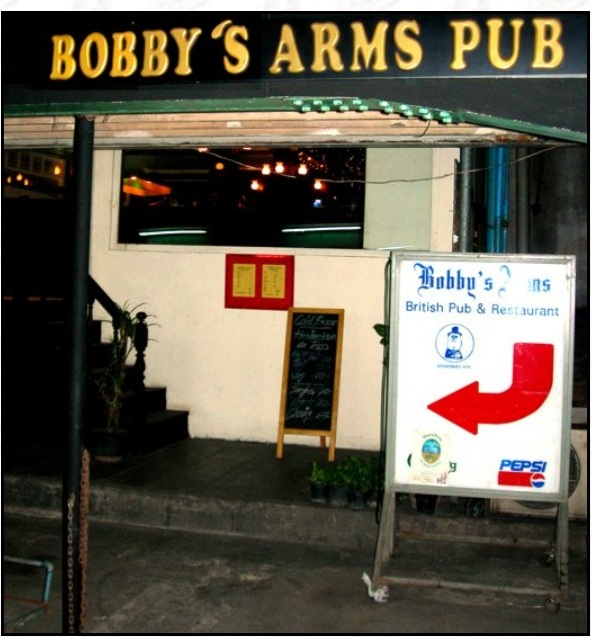
I used to watch the Final in a packed Bobby’s Arms pub, in Patpong 2 carpark. Back then there weren’t many pubs in Bangkok, and definitely not many places showing live football, and Bobby’s Arms was definitely the best place at the time. I seem to remember having one of my first dates with my girlfriend/future wife on a packed FA cup Final night in Bobby’s Arms – she wasn’t impressed.
Sunday’s edition of the Bangkok Post used to have a little write-up of English Premier League matches, but as it wasn’t really sufficient to follow what was going on back home in the football, I again took to subscribing to Australia’s ‘British Soccer Week’ newspaper, which I received in the post from Australia a week after it was published, so REALLY OLD news.
So following your Premier League team from the southern hemisphere back then really wasn’t possible to do any more than keeping up with their results and league positions. During the six seasons of 1996-97 to 2001-02, it was even more difficult for me as Man City yo-yoed up and down between the Premier and the two divisions below – how things have changed.
The coming of regular football on cable / satellite television in Thailand
As a football fan in Thailand in past three decades, we have had to put up with different companies fighting to win the exclusive rights to show the Premier League (see brief summary below), resulting in a somewhat chaotic and everchanging of pay-television boxes.
- In 1989, Thaksin Shinawatra, at the time when he was the chairperson of Shinawatra Computer Co., Ltd., established The International Broadcasting Corporation (“IBC”), the first national cable TV provider.
- In 1992, UTV Cable Network was founded to provide cable service under TelecomAsia (now True Corporation).
- In 1998, after the onset of the 1997 Asian financial crisis, IBC was merged with UTV in order to decrease operational costs. The United Broadcasting Corporation (“UBC”) was formed on July 1, 1998.
- UBC rebranded to “UBC-True” in April 2006.
- On January 24, 2007, UBC-True was re-branded as “TrueVisions” (at the time called TrueVisions UBC). It announced its purchase of exclusive rights to the Premier League.
- In 2012, TrueVisions lost its bid for the 2013 – 2016 Premier League broadcast rights to a new company, : Cable Thai Holding (“CTH”). In came CTH television and set-top boxes (this marked the end of TrueVisions’ long hold on the league at the time).
- In 2016, the TrueVisions restored its rights to broadcast Premier League on 6 channels of beIN Sports, the Qatar based sports network. Options now were the beIN Sports app or watching TrueVisions sub-licensed broadcast rights from beIN Sports app during this period to show the matches on their platform.
- TrueVisions also won the rights to broadcast the Premier League in Thailand for three more seasons, from 2019 through 2025 on TrueVisions tv channels.
Are you following all of this?
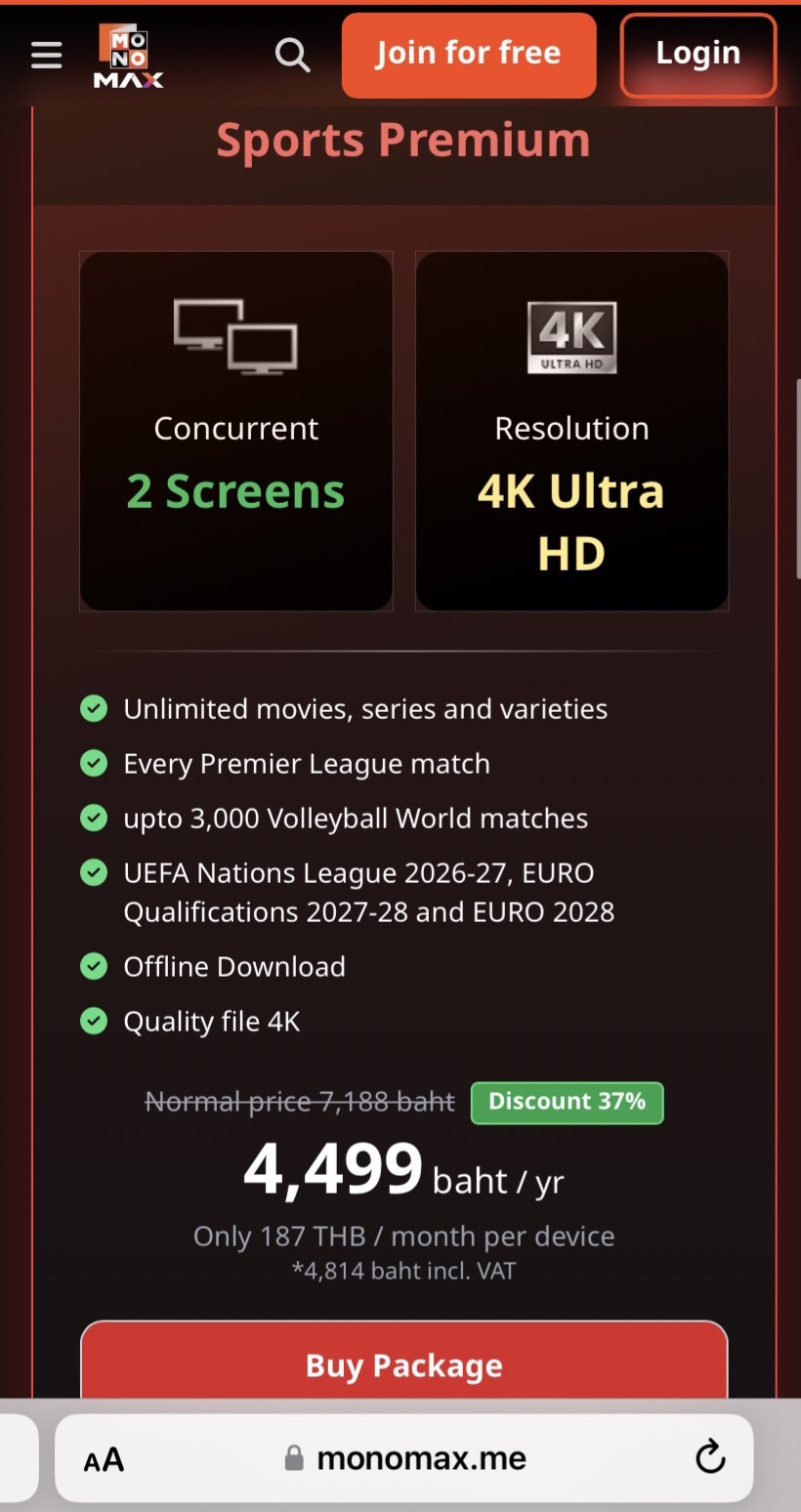
- Currently, commencing the 2025-26 season, the exclusive rights to the Premier League in Thailand are held by Jasmine International (JAS) in a six-season deal. Matches are broadcast on MONOMAX streaming service. Packages feature Thai or English commentary and are distributed in partnership with AIS PLAY.
 I recall having all of those everchanging pay-television service boxes over the years.
Some companies have been better at providing coverage than others. Years back I used to dread a storm during a live tv coverage as the signal could go down completely or come and go.
Truevisions generally, in my opinion, provided the best coverage and service.
CTH, again, in my opinion, were pretty hopeless (from memory I don’t even think they collected all of the monthly subscriptions that were due).
So this season I have been using MONOMAX for Premier League, FA Cup, and Carabao Cup games. Over the weekend I was even able to watch the Championship and Division One Play-off Finals from Wembley, which is quite impressive and better coverage than anything that came before MONOMAX. The coverage of games is quite comprehensive, andin the first months of their coverage there were some hiccups but they seem to have worked it all out now and the service is quite decent.
I still have the cheapest possible version of Truevisions, which allows us to watch European games via their beIN Sports channels; apart from football matches, I don’t watch anything else on Truevisions.
I also have a (legal/illegal?) pay-for-app which I won’t name – but don’t we all – that I use to watch UK football, rugby and cricket.
Basically, I am fully equipped to watch all English football matches.
Last Sunday, the last day of the 2025-26 season, I paid for MONOMAX’s ‘early bird’ offer of Baht 4,814 (approx. £110 or USD$148) for next seasons’ football.
So how has it been?
From nearly 40 years ago just listening to shortwave radio and reading Australia’s ‘British Soccer Week’ newspaper and 2-week-old UK newspaper clippings, to one match a season live on tv, to now ‘gorging’ on being able to watch every Premier League match, every Champions League match, minor European competitions, EFL matches and English Domestic cup matches, it’s been a hell of a progression, and now in Thailand we are able to watch whatever they are watching back home in “Blighty”, but at a cheaper cost – it’s not bad is it!
The story of watching English football overseas mirrors the wider revolution in global communications.
Over nearly forty years, football coverage has evolved, from delayed newspaper reports to high-definition streaming services delivering every match live to our living rooms.
For those of us who remember the days of shortwave radios and week-old football papers, today’s access feels nothing short of miraculous.
Supporting a team from the other side of the world is no longer a challenge—it is easier, cheaper and more comprehensive than ever before, and that is something football fans abroad can truly appreciate.
Google Translation:
ในฐานะชาวต่างชาติที่มาอาศัยอยู่ในเอเชียและออสเตรเลีย การได้ชมฟุตบอลอังกฤษตลอดเกือบ 40 ปีที่ผ่านมาเป็นอย่างไรบ้างครับ?
หลังจากที่อาร์เซนอลคว้าแชมป์พรีเมียร์ลีกอังกฤษฤดูกาล 2025/26 ได้สำเร็จ ซึ่งเป็นการคว้าแชมป์ครั้งแรกในรอบ 22 ปี – ขอแสดงความยินดีกับอาร์เซนอลด้วยครับ และข่าวจากบางกอกโพสต์เรื่อง ‘ประเทศไทยอาจพลาดชมฟุตบอลโลก’ และความเป็นไปได้ที่ประเทศไทยอาจไม่มีโอกาสได้ชมการแข่งขันในปีนี้ ทำให้ผมนึกถึงประสบการณ์การชมฟุตบอลในเอเชียและออสเตรเลียในฐานะชาวต่างชาติตลอดเกือบ 40 ปีที่ผ่านมา
ผมอพยพมาจากสหราชอาณาจักรในปี 1989
ในช่วงทศวรรษ 1970 ถึงปลายทศวรรษ 1980 ผมเคยเป็นแฟนบอลแมนเชสเตอร์ซิตี้ตัวยง เริ่มจากเป็นผู้ถือตั๋วปี (ตั้งแต่อายุ 12 ปี) และหลังจากย้ายจากแมนเชสเตอร์ไปเรียนที่นอตติงแฮมและทำงานเป็นผู้สำรวจปริมาณงานก่อสร้างในเคมบริดจ์ ก็เป็นแฟนบอลแบบไปชมเป็นครั้งคราวครับ
ในปี 1989 ผมตัดสินใจอพยพไปทำงานในออสเตรเลียซึ่งกำลังเฟื่องฟู ผมบินไปฮ่องกง จากนั้นก็แบ็คแพ็คเที่ยวในจีนสองสามเดือน ซึ่งเพิ่งเปิดรับนักท่องเที่ยวอิสระ จากนั้นก็ไปอยู่ประเทศไทยอีกสองสามเดือน แวะพักที่สิงคโปร์อย่างรวดเร็ว แล้วไปดาร์วินเพื่อไปเยี่ยมเพื่อนที่ผมเคยไปเที่ยวมาลาวี แซมเบีย และซิมบับเวด้วยกันเมื่อปีก่อน จากนั้นก็เดินทางทางบกจากดาร์วินผ่านถิ่นทุรกันดารไปยังซิดนีย์ ที่ซึ่งผมทำงานจนกระทั่งเกิดภาวะเศรษฐกิจถดถอยในปี 1990 ทำให้ผมตกงานในปี 1991 และย้ายไปตั้งรกรากในประเทศไทย
ในขณะที่ผมออกจากสหราชอาณาจักร มีการถ่ายทอดสดการแข่งขันฟุตบอลลีกและถ้วยของอังกฤษ รวมถึงรายการไฮไลท์ฟุตบอลทางช่องโทรทัศน์ของสหราชอาณาจักรเป็นประจำ (ตอนนั้นมีแค่สี่ช่อง ได้แก่ BBC1, BBC2, ITV และ Channel 4) Sky Television เปิดตัวบริการดาวเทียมรับชมตรงถึงบ้านในปี 1989 ซึ่งเป็นการแนะนำแพ็กเกจโทรทัศน์แบบเสียค่าบริการหลายช่องเป็นครั้งแรกให้กับผู้ชมชาวอังกฤษ แต่ผมไม่เคยได้ดูบริการใหม่ของพวกเขาเลย
วันที่ 20 พฤษภาคม 1989 ผมอยู่ในห้องพักโฮสเทลเล็กๆ ราคาถูกแห่งหนึ่งทางตอนใต้ของจีน ซึ่งผมจำไม่ได้แล้วว่าที่ไหน จีนเพิ่งเปิดประตูต้อนรับนักท่องเที่ยวอิสระ (“แบ็กแพ็กเกอร์”) ได้ไม่กี่ปี โครงสร้างพื้นฐานสำหรับนักท่องเที่ยวของจีนในเวลานั้นยังพื้นฐานมาก วันนั้นเป็นวันแข่งขันฟุตบอลเอฟเอคัพรอบชิงชนะเลิศ ห้องพักเล็กๆ ของผมเต็มไปด้วยชาวอังกฤษ พวกเขาล้อมรอบตัวผมและฟังวิทยุคลื่นสั้นโซนี่เครื่องใหม่ของผม ซึ่งซื้อมาเป็นพิเศษสำหรับทริปจากอังกฤษไปออสเตรเลีย ผมเปิดฟังการถ่ายทอดสดรอบชิงชนะเลิศจากสนามเวมบลีย์ของบีบีซีเวิลด์เซอร์วิส ซึ่งจบลงด้วยผลลิเวอร์พูลชนะเอฟเวอร์ตัน 3-2 เสียงจากวิทยุเครื่องเล็กๆ นั้นไม่ค่อยดีนัก ยิ่งแย่ลงไปอีกเพราะสัญญาณขาดๆ หายๆ ในคืนฝนตกที่แสนเลวร้ายของจีน แต่พวกเราทุกคนก็สนุกกับการฟังการถ่ายทอดสดฟุตบอลนัดสำคัญที่สุดของอังกฤษในฤดูกาลนั้น การฟังทางวิทยุเป็นสิ่งเดียวที่เราทำได้ในยุคก่อนอินเทอร์เน็ต
สองสัปดาห์ต่อมา ในวันที่ 4 มิถุนายน 1989 พวกเราถูกกักตัวอยู่ในโฮสเทลสำหรับนักท่องเที่ยวแบ็กแพ็กในปักกิ่ง ซึ่งอยู่ห่างจากจัตุรัสเทียนอันเหมินเพียง 10 นาทีโดยจักรยาน วิทยุคลื่นสั้นโซนี่เครื่องนั้นกลายเป็นเพียงช่องทางเดียวที่เชื่อมต่อพวกเรานักท่องเที่ยวแบ็กแพ็กในโรงแรมกับโลกภายนอกประเทศจีน เพื่อหาว่าเกิดอะไรขึ้นรอบตัวเราในปักกิ่งและจีนในช่วงเคอร์ฟิวหลังเหตุการณ์นองเลือดที่จัตุรัสเทียนอันเหมิน – แต่นั่นเป็นบทความสำหรับวันอื่น
ฟุตบอลทางโทรทัศน์ในออสเตรเลียช่วงปลายทศวรรษ 1980 / ต้นทศวรรษ 1990
ในช่วงปลายปี 1989 ถึงปี 1991 ขณะที่ผมทำงานในออสเตรเลีย ฟุตบอลอังกฤษทางโทรทัศน์ของออสเตรเลียแทบไม่มีให้เห็นเลยเท่าที่ผมจำได้ ความทรงจำเดียวของผมเกี่ยวกับการดูฟุตบอลทางโทรทัศน์ในออสเตรเลีย คือการดูเกมของอังกฤษในฟุตบอลโลกปี 1992 ที่อิตาลีในช่วงดึกดื่น และการดูรายการฟุตบอลสั้นๆ เป็นครั้งคราวโดยเลส เมอร์เรย์ ซึ่งเป็น “หน้าตาและเสียงของฟุตบอลในออสเตรเลีย” ในเวลานั้น
ผมเอาชนะความคลั่งไคล้ฟุตบอลของตัวเองขณะอยู่ที่ออสเตรเลียได้ด้วยการซื้อหนังสือพิมพ์ ‘British Soccer Week’ ของออสเตรเลียจากแผงหนังสือทุกวันเสาร์
British Soccer Week เป็นหนังสือพิมพ์กีฬาประจำสัปดาห์ยอดนิยมที่ให้ข้อมูลครอบคลุม ผลการแข่งขัน และบทสรุปสำหรับฟุตบอลทั้งสี่ดิวิชั่นของอังกฤษ ตีพิมพ์จากรัฐเวสเทิร์นออสเตรเลีย และมีแฟนบอลนอกสหราชอาณาจักรอ่านกันอย่างกว้างขวางก่อนที่อินเทอร์เน็ตจะแพร่หลาย ผมเชื่อว่ามันหยุดตีพิมพ์ประมาณปี 2001 อย่างไม่ต้องสงสัยเลยว่าเป็นเพราะข่าวฟุตบอลหาได้ง่ายบนอินเทอร์เน็ต มันอาจจะไม่ดีเลิศ แต่ก็เป็นสิ่งที่ดีที่สุดในเวลานั้น – หรือพูดให้ถูก มันเป็นสิ่งเดียวที่มีอยู่ในเวลานั้น
ผมเคยได้รับโปรแกรมการแข่งขันของแมนเชสเตอร์ซิตี้หนึ่งหรือสองชุด และข่าวตัดจากหนังสือพิมพ์จากพ่อแม่ของผม โดยทั้งหมดห่อรวมกันอยู่ในหนังสือพิมพ์ Manchester Evening News ฉบับ ‘Football Pink’ ‘Football Pink’ เป็นหนังสือพิมพ์ฉบับหนึ่งในสหราชอาณาจักร ที่พิมพ์เสร็จทันทีหลังเสียงนกหวีดหมดเวลา 5 โมงเย็นวันเสาร์ คุณสามารถซื้อได้จากรถขายหนังสือพิมพ์ที่อยู่ด้านหลังอัฒจันทร์ฝั่งเหนือของสนามเมนโร้ดของซิตี้ และที่ร้านขายหนังสือพิมพ์ประมาณ 6 โมงเย็น – มันขายหมดเร็วมาก ดังนั้นมักจะมีคิวรอซื้อ ‘Pink’ ที่ร้านขายหนังสือพิมพ์ในท้องถิ่นของเรา ผมจะอ่านทุกคำในหนังสือพิมพ์อย่างเอร็ดอร่อย การส่งไปรษณีย์จากสหราชอาณาจักรมาถึงออสเตรเลียใช้เวลาประมาณ 2 สัปดาห์ ดังนั้นข่าวก็ค่อนข้างเก่าไปแล้วเมื่อผมได้รับมัน
ฟุตบอลทางโทรทัศน์ในประเทศไทยช่วงต้นทศวรรษ 1990/2000
ในปี 1991 ผมย้ายมาทำงานที่ประเทศไทย ในเวลานั้น ตามหนังสือ ‘Travel Survival Thailand’ ของ Lonely Planet ประเทศไทยมีช่องโทรทัศน์ 5 ช่อง ได้แก่ ช่อง 3, 5, 7, 9 และ 11 ซึ่งบางช่องออกอากาศเฉพาะช่วงบ่ายแก่ๆ ถึงเที่ยงคืนเท่านั้น
เท่าที่จำได้ มีเพียงช่องเดียวที่ถ่ายทอดฟุตบอลอังกฤษ เป็นไฮไลท์สั้นๆ ไม่ถึง 20 นาที จากเกมของสัปดาห์ก่อน ในช่วงบ่ายวันเสาร์ ผมแทบไม่เคยอยู่บ้านเลยจึงไม่ได้ดูทางทีวี
ผมค่อนข้างแน่ใจว่าการแข่งขันฟุตบอลอังกฤษสดที่ถ่ายทอดสดตลอดทั้งฤดูกาลในเวลานั้นคือรอบชิงชนะเลิศเอฟเอคัพ
ร้าน Bobby’s Arms อยู่ในลานจอดรถปัตพงษ์ 2 – จาก bangkokeyes.com
ผมเคยดูรอบชิงชนะเลิศในผับ Bobby’s Arms ที่แน่นขนัด ในลานจอดรถปัตพงษ์ 2 ในเวลานั้นมีผับในกรุงเทพฯ ไม่มากนัก และแน่นอนว่ามีสถานที่ที่ถ่ายทอดสดฟุตบอลไม่มากนัก และ Bobby’s Arms ก็เป็นสถานที่ที่ดีที่สุดในเวลานั้น ผมจำได้ว่าเคยออกเดทครั้งแรกๆ กับแฟนสาว/ภรรยาในอนาคต ในคืนที่คนแน่นขนัดกับการแข่งขันเอฟเอคัพรอบชิงชนะเลิศที่ร้าน Bobby’s Arms – เธอไม่ประทับใจเลย
หนังสือพิมพ์บางกอกโพสต์ฉบับวันอาทิตย์เคยมีบทความสั้นๆ เกี่ยวกับการแข่งขันพรีเมียร์ลีกอังกฤษ แต่เนื่องจากมันไม่เพียงพอที่จะติดตามสิ่งที่เกิดขึ้นในวงการฟุตบอลที่บ้าน ผมจึงกลับไปสมัครสมาชิกหนังสือพิมพ์ ‘British Soccer Week’ ของออสเตรเลียอีกครั้ง ซึ่งผมได้รับทางไปรษณีย์จากออสเตรเลียหนึ่งสัปดาห์หลังจากที่ตีพิมพ์ ดังนั้นข่าวจึงเก่ามากจริงๆ
ดังนั้นการติดตามทีมพรีเมียร์ลีกที่คุณชื่นชอบจากซีกโลกใต้ในสมัยนั้นจึงทำได้เพียงแค่ติดตามผลการแข่งขันและอันดับในลีกเท่านั้น ในช่วงหกฤดูกาลตั้งแต่ปี 1996-97 ถึง 2001-02 มันยิ่งยากขึ้นไปอีกสำหรับผม เพราะแมนซิตี้ขึ้นๆ ลงๆ ระหว่างพรีเมียร์ลีกและสองดิวิชั่นล่าง – ทุกอย่างเปลี่ยนไปมากแค่ไหนแล้ว
การมาถึงของการถ่ายทอดฟุตบอลเป็นประจำทางเคเบิล/โทรทัศน์ดาวเทียมในประเทศไทย
ในฐานะแฟนฟุตบอลในประเทศไทยในช่วงสามทศวรรษที่ผ่านมา เราต้องทนกับบริษัทต่างๆ ที่แย่งชิงสิทธิ์ในการถ่ายทอดพรีเมียร์ลีก (ดูสรุปโดยย่อด้านล่าง) ส่งผลให้กล่องรับสัญญาณโทรทัศน์แบบเสียค่าบริการมีความสับสนวุ่นวายและเปลี่ยนแปลงอยู่ตลอดเวลา
ในปี 1989 นายทักษิณ ชินวัตร ในขณะนั้นดำรงตำแหน่งประธานกรรมการของบริษัท ชินวัตร คอมพิวเตอร์ จำกัด ได้ก่อตั้งบริษัท อินเตอร์เนชั่นแนล บรอดแคสติ้ง คอร์ปอเรชั่น (“IBC”) ซึ่งเป็นผู้ให้บริการเคเบิลทีวีแห่งชาติรายแรก
ในปี 1992 บริษัท ยูทีวี เคเบิล เน็ตเวิร์ก ก่อตั้งขึ้นเพื่อให้บริการเคเบิลภายใต้บริษัท เทเลคอมเอเชีย (ปัจจุบันคือ ทรู คอร์ปอเรชั่น)
ในปี 1998 หลังจากเกิดวิกฤตการณ์ทางการเงินในเอเชียปี 1997 IBC ได้ควบรวมกิจการกับ UTV เพื่อลดต้นทุนการดำเนินงาน บริษัท ยูไนเต็ด บรอดแคสติ้ง คอร์ปอเรชั่น (“UBC”) ก่อตั้งขึ้นเมื่อวันที่ 1 กรกฎาคม 1998
UBC เปลี่ยนชื่อเป็น “UBC-True” ในเดือนเมษายน 2006
เมื่อวันที่ 24 มกราคม 2007 UBC-True เปลี่ยนชื่อเป็น “TrueVisions” (ในขณะนั้นเรียกว่า TrueVisions UBC) และประกาศซื้อสิทธิ์การถ่ายทอดสดพรีเมียร์ลีกแต่เพียงผู้เดียว
ในปี 2012 TrueVisions พลาดโอกาสในการประมูลสิทธิ์การถ่ายทอดสดพรีเมียร์ลีกฤดูกาล 2013-2016 ให้กับบริษัทใหม่คือ เคเบิล ไทย โฮลดิ้ง (“CTH”) ซึ่งต่อมา CTH ได้เข้ามาเป็นเจ้าของโทรทัศน์และกล่องรับสัญญาณ (ซึ่งเป็นการสิ้นสุดการครองสิทธิ์การถ่ายทอดสดลีกของ TrueVisions ในขณะนั้น)
ในปี 2016 TrueVisions ได้รับสิทธิ์ในการถ่ายทอดสดพรีเมียร์ลีกคืนมาอีกครั้งทาง 6 ช่องของ beIN Sports เครือข่ายกีฬาจากประเทศกาตาร์ ตอนนี้มีตัวเลือกคือแอป beIN Sports หรือดูการถ่ายทอดสดที่ TrueVisions ได้รับลิขสิทธิ์จากแอป beIN Sports ในช่วงเวลานี้เพื่อแสดงการแข่งขันบนแพลตฟอร์มของพวกเขา
นอกจากนี้ TrueVisions ยังได้รับสิทธิ์ในการถ่ายทอดสดพรีเมียร์ลีกในประเทศไทยอีกสามฤดูกาล ตั้งแต่ปี 2019 ถึง 2025 ทางช่องทีวี TrueVisions
คุณติดตามเรื่องทั้งหมดนี้อยู่หรือเปล่า?
ปัจจุบัน ตั้งแต่ฤดูกาล 2025-26 เป็นต้นไป สิทธิ์แต่เพียงผู้เดียวในการถ่ายทอดสดพรีเมียร์ลีกในประเทศไทยเป็นของ Jasmine International (JAS) ในข้อตกลงหกฤดูกาล การแข่งขันจะออกอากาศทางบริการสตรีมมิ่ง MONOMAX แพ็กเกจมีคำบรรยายภาษาไทยหรือภาษาอังกฤษ และจัดจำหน่ายร่วมกับ AIS PLAY
ฉันจำได้ว่าเคยใช้กล่องบริการโทรทัศน์แบบเสียค่าบริการที่เปลี่ยนแปลงไปเรื่อยๆ ตลอดหลายปีที่ผ่านมา
บางบริษัทให้บริการครอบคลุมได้ดีกว่าบริษัทอื่นๆ หลายปีก่อน ฉันเคยกลัวพายุระหว่างการถ่ายทอดสดทางทีวี เพราะสัญญาณอาจหายไปเลยหรือติดๆ ดับๆ
โดยทั่วไปแล้ว ในความคิดของฉัน TrueVisions ให้บริการครอบคลุมและดีที่สุด
CTH นั้น ในความคิดของผมแล้วค่อนข้างแย่ (เท่าที่จำได้ ผมคิดว่าพวกเขายังเก็บค่าสมาชิกรายเดือนไม่ครบด้วยซ้ำ)
ดังนั้นในฤดูกาลนี้ ผมจึงใช้ MONOMAX สำหรับการแข่งขันพรีเมียร์ลีก เอฟเอคัพ และคาราบาวคัพ สุดสัปดาห์ที่ผ่านมา ผมยังได้ดูการแข่งขันแชมเปี้ยนชิพและรอบชิงชนะเลิศเพลย์ออฟดิวิชั่นหนึ่งจากเวมบลีย์ ซึ่งถือว่าน่าประทับใจมากและครอบคลุมกว่าทุกอย่างที่เคยมีมาก่อน MONOMAX การถ่ายทอดสดเกมค่อนข้างครอบคลุม และในช่วงเดือนแรกๆ มีปัญหาบ้าง แต่ตอนนี้ดูเหมือนว่าพวกเขาแก้ไขทุกอย่างแล้ว และบริการก็ค่อนข้างดี
ผมยังคงใช้ Truevisions เวอร์ชันที่ถูกที่สุด ซึ่งทำให้เราดูเกมยุโรปผ่านช่อง beIN Sports ของพวกเขาได้ นอกเหนือจากฟุตบอลแล้ว ผมไม่ดูอย่างอื่นบน Truevisions เลย
นอกจากนี้ ผมยังมีแอปแบบเสียเงิน (ถูกกฎหมาย/ผิดกฎหมาย?) ที่ผมจะไม่เอ่ยชื่อ – แต่เราทุกคนก็ทำแบบนั้น – ที่ผมใช้ดูฟุตบอล รักบี้ และคริกเก็ตของอังกฤษ
โดยพื้นฐานแล้ว ผมพร้อมเต็มที่ที่จะดูฟุตบอลอังกฤษทุกนัดแล้วครับ
วันอาทิตย์ที่ผ่านมา ซึ่งเป็นวันสุดท้ายของฤดูกาล 2025-26 ผมจ่ายเงินซื้อแพ็กเกจ ‘early bird’ ของ MONOMAX ในราคา 4,814 บาท (ประมาณ 110 ปอนด์ หรือ 148 ดอลลาร์สหรัฐ) เพื่อดูฟุตบอลฤดูกาลหน้า
แล้วเป็นยังไงบ้าง?
จากเกือบ 40 ปีที่แล้ว ที่เราฟังแค่คลื่นวิทยุระยะสั้น อ่านหนังสือพิมพ์ ‘British Soccer Week’ ของออสเตรเลีย และข่าวตัดจากหนังสือพิมพ์อังกฤษเมื่อ 2 สัปดาห์ก่อน มาเป็นดูสดทางทีวีแค่แมตช์เดียวต่อฤดูกาล และตอนนี้เราได้ดูทุกนัดในพรีเมียร์ลีก ทุกนัดในแชมเปี้ยนส์ลีก การแข่งขันระดับยุโรปเล็กๆ การแข่งขัน EFL และการแข่งขันฟุตบอลถ้วยในประเทศอังกฤษ มันเป็นการพัฒนาที่ยอดเยี่ยมมาก และตอนนี้ในประเทศไทย เราสามารถดูสิ่งที่พวกเขาดูกันที่ “อังกฤษ” ได้ในราคาที่ถูกกว่า – ไม่เลวเลยใช่ไหม!
เรื่องราวของการรับชมฟุตบอลอังกฤษจากต่างประเทศสะท้อนให้เห็นถึงการปฏิวัติครั้งใหญ่ในด้านการสื่อสารระดับโลก
ตลอดเกือบสี่สิบปีที่ผ่านมา การถ่ายทอดฟุตบอลได้พัฒนาไปอย่างมาก จากรายงานข่าวในหนังสือพิมพ์ที่ล่าช้า ไปสู่บริการสตรีมมิ่งความคมชัดสูงที่ถ่ายทอดสดทุกแมตช์มาถึงห้องนั่งเล่นของเรา
สำหรับพวกเราที่ยังจำยุคของวิทยุคลื่นสั้นและหนังสือพิมพ์ฟุตบอลที่ออกมาก่อนหน้าได้ การเข้าถึงในปัจจุบันจึงรู้สึกเหมือนเป็นปาฏิหาริย์
การสนับสนุนทีมจากอีกฟากหนึ่งของโลกไม่ใช่เรื่องยากอีกต่อไป—มันง่ายขึ้น ถูกกว่า และครอบคลุมมากกว่าที่เคย และนั่นคือสิ่งที่แฟนฟุตบอลในต่างประเทศสามารถชื่นชมได้อย่างแท้จริง