
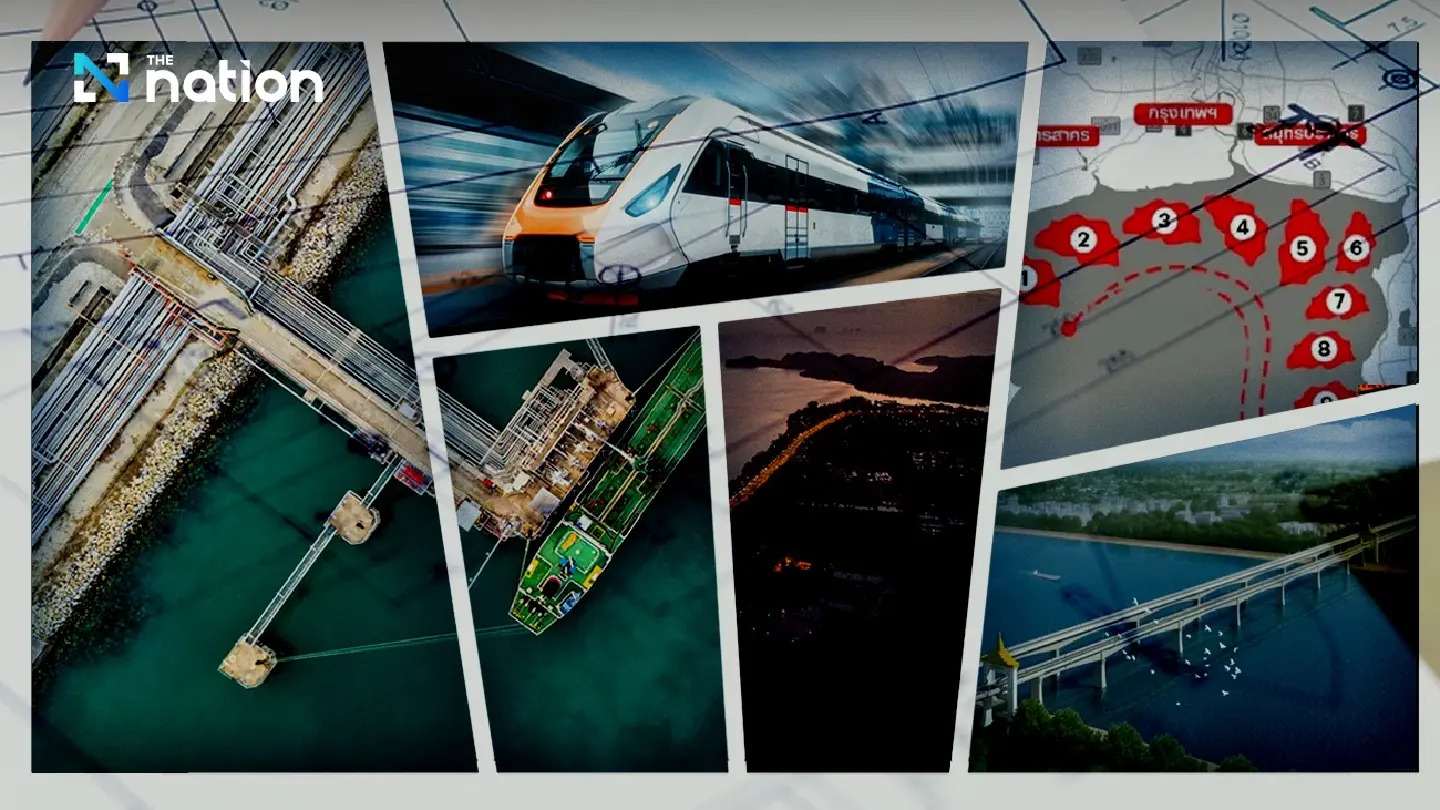
 Five Thai mega-projects that never left the drawing board
Thailand’s past mega-projects promised major economic gains, but several stalled over costs, politics, environment and feasibility
THIS NEWS ARTICLE KINDLY SPONSORED BY FALLPROTEC, A WORLD-RENOWNED NAME IN THE DESIGN AND MANUFACTURE OF PREMIUM FALL PROTECTION SYSTEMS AND HEIGHT ACCESS SOLUTIONS
Large-scale investment projects, or “mega-projects”, have been proposed by almost every Thai government. These projects are often promoted as key economic drivers and tend to attract attention from both domestic and foreign investors.
Governments have frequently used such projects as selling points during international roadshows, from the Yingluck administration’s 2-trillion-baht infrastructure investment plan, to the Prayut government’s Eastern Economic Corridor (EEC), and the Srettha administration’s Land Bridge project.
However, these projects have also raised repeated questions over investment value, environmental impact and transparency. Several schemes announced by governments, some even backed by feasibility studies, were never actually built. They remained projects on paper, without the first pile ever being driven.
Nation Group’s Krungthep Turakij has compiled five mega-projects that were once pushed by Thai governments but never reached the finish line.
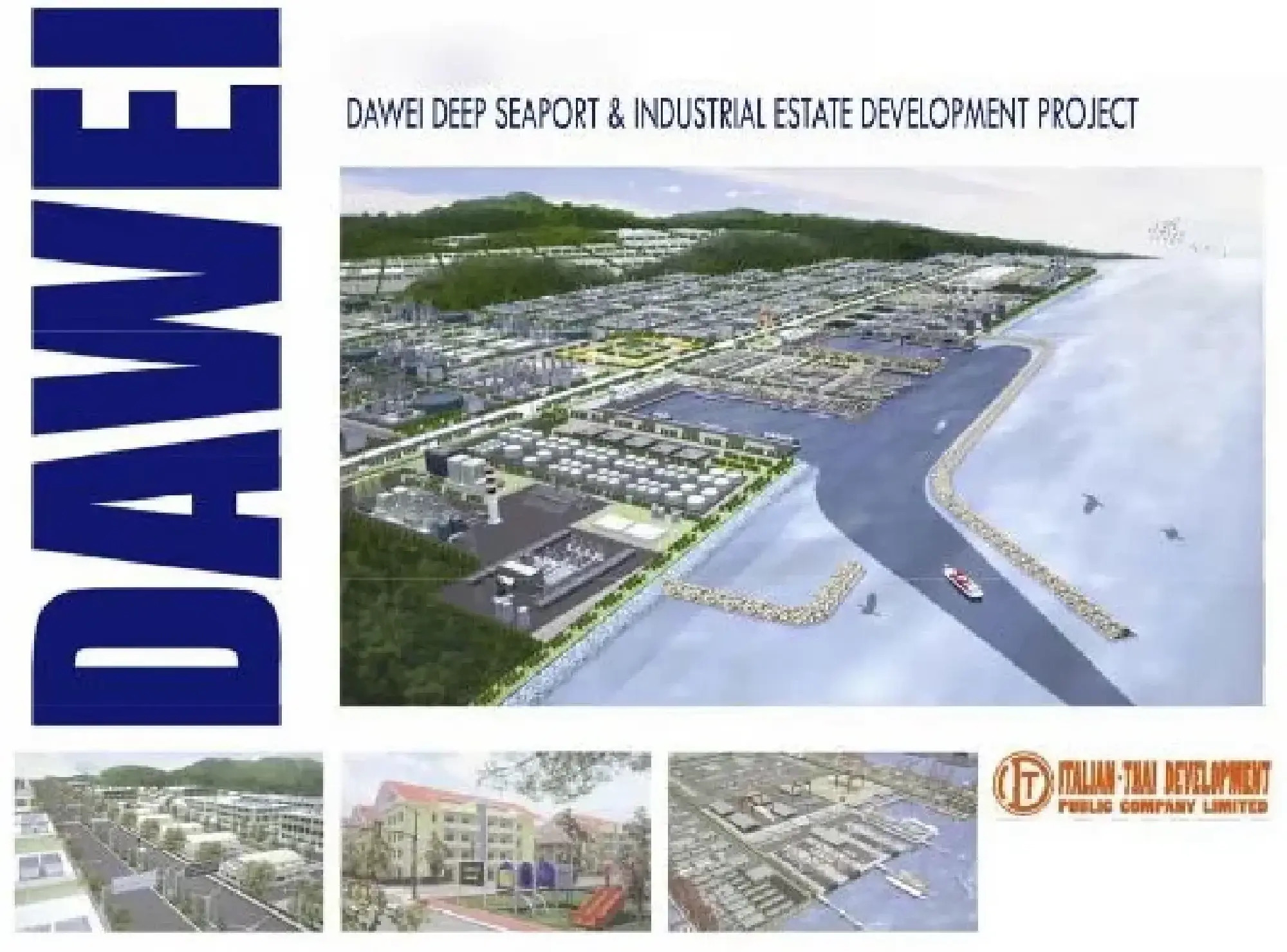 1. Dawei deep-sea port and industrial estate
Although located in Dawei, in Myanmar’s Tanintharyi Region, the Dawei Special Economic Zone was once regarded as a key strategic project for Thailand. The project began in 2008, when Thai private company Italian-Thai Development Plc, or ITD, secured a concession.
It was later elevated into a strategic investment project, designed as a deep-sea port and the largest special economic zone in Southeast Asia. Japan was brought in as a third country to support investment. The planned components included a deep-sea port, heavy industrial estate, steel plant and power plant.
Thailand once aimed to develop Dawei port as a gateway linking cargo transport from the Indian Ocean to the South China Sea without passing through the Strait of Malacca. The project was expected to help strengthen Thailand’s role as a logistics hub.
However, the Dawei project was repeatedly delayed and suspended amid Myanmar’s unstable political situation. As the project was outside Thailand, it involved many factors beyond Thai control. Both Thailand and Japan eventually withdrew.
As of 2025, Russia had signed an agreement to jointly develop a port, power plant and high-tech industrial estate in the area, with approval from Myanmar’s military government.
[We have posted +100 news on Dawei between 2010 and 2025, with the last article being ‘Myanmar to build 110MW nuclear plant, partner on Dawei Port with Russia’ March 2025]
2. Bangkok-Chiang Mai high-speed rail project
The Bangkok-Chiang Mai high-speed rail project was once planned as Thailand’s first high-speed railway and was dubbed the country’s first “Shinkansen high-speed rail line”.
The 668-kilometre project was developed under cooperation between Thailand’s Transport Ministry and Japan’s Ministry of Land, Infrastructure, Transport and Tourism (MLIT). The two sides signed a memorandum of cooperation on rail development.
The project was divided into two phases: Bangkok-Phitsanulok, covering 380 kilometres, and Phitsanulok-Chiang Mai, covering 288 kilometres.
The project has now been postponed indefinitely. Under the Pheu Thai-led government, then-transport minister Suriya Jungrungreangkit ordered the project to be put on hold so that the government could accelerate the two phases of the Thai-Chinese high-speed rail project first. The government also faced budget constraints, while Japan was not ready to co-invest under Thailand’s proposal.
According to a 2017 study by the Japan International Cooperation Agency (JICA), the project’s investment cost was estimated at 276.226 billion baht. A 2021 review later reduced the estimate by 14.472 billion baht to 261.754 billion baht.
The route was planned to have 12 stations: Bang Sue Grand Station, Don Mueang, Ayutthaya, Lop Buri, Nakhon Sawan, Phichit, Phitsanulok, Sukhothai, Si Satchanalai, Lampang, Lamphun and Chiang Mai.
The project currently has no progress after Japan declined to jointly invest, although it remained willing to support Shinkansen technology. Thailand’s more recent rail policy has focused on double-track railway investment. For high-speed rail, only the Thai-Chinese project remains under construction, while the high-speed rail project linking three airports is still awaiting contract amendments between the state and the private sector.
[We have posted many news articles on Bangkok-Chiang Mai high-speed rail project, with the latest being ‘Thailand’s first high-speed rail line, “Bangkok-Chiang Mai,” is facing challenges‘ January 2026]
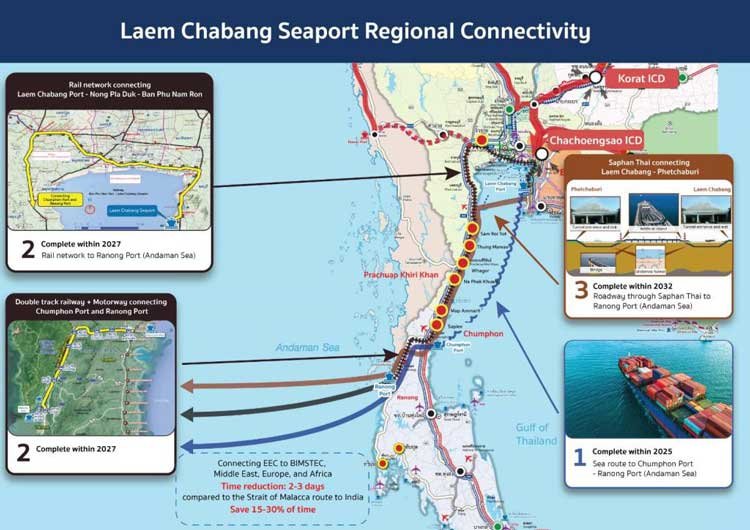 3. Thai Bridge project
The Thai Bridge project was proposed by Pailin Chuchottaworn when he chaired the committee driving economic management measures and the subcommittee analysing and proposing medium- and long-term economic management and investment promotion measures under the Centre for Economic Situation Administration, or CESA, during the Covid-19 period.
The project carried an estimated investment cost of about 900 billion baht. It involved building an 80-100-kilometre bridge linking the EEC area with the lower western region and upper South. The route would connect the EEC with the western side of the Gulf of Thailand in Phetchaburi or Prachuap Khiri Khan.
The aim was to spread “prosperity” from the EEC to the western Gulf coast and the upper South.
The government at the time assigned the Eastern Economic Corridor Office to study the project’s feasibility, with budget to be allocated in fiscal 2021. The proposal was also submitted to the Cabinet for acknowledgement, and a preliminary pre-feasibility study was approved.
In the end, however, the project was not taken forward in practice and was not continued as a concrete policy.
[Refer to ‘Greenlight for studies for 80-100 kilometre “Thai Bridge” to connect Petchaburi (west) and Laem Chabang (east) across the Gulf of Thailand’ October 2020]
4. Gulf of Thailand Pearl Necklace project
The Gulf of Thailand Pearl Necklace project drew public attention in 2024 after former prime minister Thaksin Shinawatra returned to Thailand and appeared on a public forum to present his vision. He said Bangkok and its surrounding provinces needed investment in flood-prevention infrastructure.
Apart from preventing floods by reclaiming land in Bang Khun Thian, he said a green city should be built as a new urban area with electric trains, rail connections and flood protection.
The idea was later expanded into a massive mega-project by Plodprasop Suraswadi, former deputy prime minister and chair of the Pheu Thai Party’s environmental policy committee.
He said that, when considering the idea of building structures to protect Bangkok and major provinces from sea flooding, structures would have to be built into the sea. The informal name was the “Gulf of Thailand Pearl Necklace” project.
The concept involved a chain of islands. Initially, there could be nine islands, each serving as part of a water barrier with gates that could open and close. The first island would be built off the coast of Bang Khun Thian, followed by other islands stretching to Chonburi, covering about 100 kilometres along the Gulf’s inner curve.
Each artificial island, designed as a connection point for the flood barriers, would cover about 50 square kilometres and be built one kilometre from the coast, with roads linking it to the mainland.
The idea was that the islands would be privately funded, with investors receiving concessions, possibly for 99 years. The islands could then be developed for various uses, such as tourism landmarks or new smart cities powered by clean energy, including wind turbines and solar panels.
After the concession period ended, the land would return to the state.
Supporters argued that the concept would benefit the government by creating infrastructure to protect economic areas, low-lying parts of Bangkok and surrounding provinces, and central lowlands that could face future sea flooding.
Although the idea generated excitement and public interest when first floated, no agency eventually took it up for further study. As a result, the concept has not become government policy. Even when Pheu Thai was in government, the project did not move forward.
[Refer to ‘Thai PM’s policy statement likely to focus on three mega projects’ September 2024]
5. Pak Bara deep-sea port project
The Pak Bara deep-sea port project is located in La-ngu district, Satun province. It was one of the mega-projects under the transport network development plan linking the Gulf of Thailand and the Andaman Sea, or the original Land Bridge route.
In 2017, the government designated the project as a key scheme to transform the southern economy into an international trade gateway on the Andaman coast.
Its main objective was to develop an international-standard commercial port to support exports and imports, linking Andaman Sea shipping routes without requiring vessels to detour through the Strait of Malacca.
However, the project repeatedly stalled due to strong opposition from local communities and conservationists. Public hearings were unable to proceed smoothly because of concerns over damage to Satun’s marine ecosystem.
The construction of a deep-sea port and major shipping route would directly affect the ecological richness of Tarutao National Park, Mu Ko Phetra National Park and the famous seven-colour coral reef at Jabang Channel.
Pak Bara beach also currently serves as a main tourism pier for boats taking visitors to Ko Lipe. It is also part of a coastal fishery conservation area that supports local livelihoods.
Satun residents have therefore questioned whether sacrificing natural resources and sustainable community-based tourism for a large industrial project would truly be worthwhile.
Facing intense social pressure, the government at the time resolved to shelve the project to ease conflict.
To date, the Pak Bara deep-sea port remains “delayed and under review”, with no construction started. It is another mega-project that has never materialised.
With the Land Bridge project now being pushed again, the question remains whether it can actually be realised or whether it will become yet another project backed by studies but never built.
[Refer to ‘Transport Ministry mulls revival of Thailand’s southern Pak Bara and Songkhla deep-sea port projects’ December 2019]
Source: https://www.nationthailand.com/news/policy/40065994
Google Translation:
5 โครงการขนาดใหญ่ของไทยที่ไม่เคยถูกนำไปปฏิบัติจริง
โครงการขนาดใหญ่ในอดีตของไทยเคยให้คำมั่นสัญญาว่าจะสร้างผลประโยชน์ทางเศรษฐกิจมหาศาล แต่หลายโครงการกลับหยุดชะงักลงเนื่องจากต้นทุน การเมือง สิ่งแวดล้อม และความเป็นไปได้
บทความข่าวนี้ได้รับการสนับสนุนโดย FALLPROTEC บริษัทชั้นนำระดับโลกด้านการออกแบบและผลิตระบบป้องกันการตกจากที่สูงและโซลูชันการเข้าถึงที่สูง
โครงการลงทุนขนาดใหญ่ หรือ “โครงการเมกะโปรเจกต์” ถูกเสนอโดยรัฐบาลไทยเกือบทุกชุด โครงการเหล่านี้มักถูกส่งเสริมให้เป็นตัวขับเคลื่อนเศรษฐกิจที่สำคัญและดึงดูดความสนใจจากนักลงทุนทั้งในและต่างประเทศ
รัฐบาลมักใช้โครงการเหล่านี้เป็นจุดขายในระหว่างการโรดโชว์ระดับนานาชาติ ตั้งแต่แผนการลงทุนด้านโครงสร้างพื้นฐาน 2 ล้านล้านบาทของรัฐบาลยิ่งลักษณ์ ไปจนถึงระเบียงเศรษฐกิจภาคตะวันออก (EEC) ของรัฐบาลประยุทธ์ และโครงการสะพานเชื่อมแผ่นดินของรัฐบาลศเรษฐา
อย่างไรก็ตาม โครงการเหล่านี้ได้ก่อให้เกิดคำถามซ้ำแล้วซ้ำเล่าเกี่ยวกับมูลค่าการลงทุน ผลกระทบต่อสิ่งแวดล้อม และความโปร่งใส โครงการหลายโครงการที่รัฐบาลประกาศ บางโครงการได้รับการสนับสนุนจากการศึกษาความเป็นไปได้แล้ว แต่ก็ไม่เคยถูกสร้างขึ้นจริง พวกมันยังคงเป็นโครงการบนกระดาษ โดยที่ยังไม่เคยมีการตอกเสาเข็มแม้แต่ต้นเดียว
กรุงเทพ ตุรกิจ จากเนชั่นกรุ๊ป ได้รวบรวมโครงการขนาดใหญ่ 5 โครงการที่ครั้งหนึ่งเคยได้รับการผลักดันจากรัฐบาลไทย แต่ไม่เคยไปถึงเส้นชัย
1. ท่าเรือน้ำลึกและนิคมอุตสาหกรรมดะเว
แม้ว่าจะตั้งอยู่ในเมืองดะเว ในเขตตะนินทารีของเมียนมาร์ เขตเศรษฐกิจพิเศษดะเวเคยถูกมองว่าเป็นโครงการเชิงยุทธศาสตร์ที่สำคัญสำหรับประเทศไทย โครงการเริ่มต้นในปี 2551 เมื่อบริษัทเอกชนของไทย อิตาเลียน-ไทย ดีเวลลอปเมนท์ จำกัด (มหาชน) หรือ อิทีดี ได้รับสัมปทาน
ต่อมาได้ยกระดับเป็นโครงการลงทุนเชิงยุทธศาสตร์ ออกแบบให้เป็นท่าเรือน้ำลึกและเขตเศรษฐกิจพิเศษที่ใหญ่ที่สุดในเอเชียตะวันออกเฉียงใต้ ญี่ปุ่นเข้ามาเป็นประเทศที่สามเพื่อสนับสนุนการลงทุน ส่วนประกอบที่วางแผนไว้ ได้แก่ ท่าเรือน้ำลึก นิคมอุตสาหกรรมหนัก โรงงานเหล็ก และโรงไฟฟ้า
ประเทศไทยเคยตั้งเป้าหมายที่จะพัฒนาท่าเรือดะเวให้เป็นประตูเชื่อมต่อการขนส่งสินค้าจากมหาสมุทรอินเดียไปยังทะเลจีนใต้โดยไม่ต้องผ่านช่องแคบมะละกา โครงการนี้คาดว่าจะช่วยเสริมสร้างบทบาทของประเทศไทยในฐานะศูนย์กลางด้านโลจิสติกส์
อย่างไรก็ตาม โครงการดะเวประสบกับความล่าช้าและการระงับหลายครั้งท่ามกลางสถานการณ์ทางการเมืองที่ไม่มั่นคงของเมียนมาร์ เนื่องจากโครงการนี้อยู่นอกประเทศไทย จึงเกี่ยวข้องกับหลายปัจจัยที่อยู่นอกเหนือการควบคุมของไทย ในที่สุดทั้งไทยและญี่ปุ่นก็ถอนตัวออกไป
ณ ปี 2025 รัสเซียได้ลงนามในข้อตกลงเพื่อร่วมกันพัฒนาท่าเรือ โรงไฟฟ้า และนิคมอุตสาหกรรมไฮเทคในพื้นที่ดังกล่าว โดยได้รับการอนุมัติจากรัฐบาลทหารของเมียนมาร์
[เราได้โพสต์ข่าวเกี่ยวกับดะเวมากกว่า 100 ข่าวระหว่างปี 2010 ถึง 2025 โดยบทความสุดท้ายคือ ‘เมียนมาร์เตรียมสร้างโรงไฟฟ้านิวเคลียร์ 110 เมกะวัตต์ ร่วมมือกับรัสเซียในการพัฒนาท่าเรือดะเว’ มีนาคม 2025]
2. โครงการรถไฟความเร็วสูงกรุงเทพฯ-เชียงใหม่
โครงการรถไฟความเร็วสูงกรุงเทพฯ-เชียงใหม่เคยถูกวางแผนให้เป็นรถไฟความเร็วสูงสายแรกของประเทศไทย และถูกขนานนามว่าเป็น “รถไฟความเร็วสูงชินคันเซ็น” สายแรกของประเทศ
โครงการระยะทาง 668 กิโลเมตรนี้ได้รับการพัฒนาภายใต้ความร่วมมือระหว่างกระทรวงคมนาคมของไทยและกระทรวงที่ดิน โครงสร้างพื้นฐาน การขนส่ง และการท่องเที่ยวของญี่ปุ่น (MLIT) ทั้งสองฝ่ายได้ลงนามในบันทึกความเข้าใจว่าด้วยความร่วมมือด้านการพัฒนาระบบราง
โครงการนี้แบ่งออกเป็นสองช่วง ได้แก่ กรุงเทพฯ-พิษณุโลก ระยะทาง 380 กิโลเมตร และพิษณุโลก-เชียงใหม่ ระยะทาง 288 กิโลเมตร
ขณะนี้โครงการดังกล่าวถูกเลื่อนออกไปอย่างไม่มีกำหนด ในสมัยรัฐบาลเพื่อไทย นายสุริยา จุงรุ่งเรืองกิจ รัฐมนตรีว่าการกระทรวงคมนาคมในขณะนั้น ได้สั่งระงับโครงการนี้ไว้ชั่วคราว เพื่อให้รัฐบาลสามารถเร่งดำเนินการโครงการรถไฟความเร็วสูงไทย-จีน 2 เฟสก่อน นอกจากนี้ รัฐบาลยังประสบปัญหาด้านงบประมาณ ขณะที่ญี่ปุ่นยังไม่พร้อมที่จะร่วมลงทุนตามข้อเสนอของไทย
จากการศึกษาในปี 2017 โดยสำนักงานความร่วมมือระหว่างประเทศของญี่ปุ่น (JICA) ต้นทุนการลงทุนของโครงการนี้ประเมินไว้ที่ 276.226 พันล้านบาท ต่อมาการทบทวนในปี 2021 ได้ลดประมาณการลง 14.472 พันล้านบาท เหลือ 261.754 พันล้านบาท
เส้นทางรถไฟความเร็วสูงนี้วางแผนไว้ 12 สถานี ได้แก่ สถานีบางซื่อ ดอนเมือง อยุธยา ลพบุรี นครสวรรค์ พิชิต พิษณุโลก สุโขทัย ศรีสัชนาลัย ลำปาง ลำพูน และเชียงใหม่
ปัจจุบันโครงการนี้ไม่มีความคืบหน้าใดๆ หลังจากที่ญี่ปุ่นปฏิเสธที่จะร่วมลงทุน แม้ว่าจะยังคงเต็มใจที่จะสนับสนุนเทคโนโลยีชินคันเซ็นก็ตาม นโยบายด้านรถไฟของไทยในช่วงหลังมานี้เน้นการลงทุนในทางรถไฟรางคู่ สำหรับรถไฟความเร็วสูง ปัจจุบันเหลือเพียงโครงการร่วมทุนไทย-จีนที่อยู่ระหว่างการก่อสร้าง ขณะที่โครงการรถไฟความเร็วสูงเชื่อมต่อสนามบิน 3 แห่งยังคงรอการแก้ไขสัญญาจากภาครัฐและภาคเอกชนอยู่
[เราได้ลงบทความข่าวเกี่ยวกับโครงการรถไฟความเร็วสูงกรุงเทพฯ-เชียงใหม่ไปแล้วหลายบทความ โดยบทความล่าสุดคือ ‘รถไฟความเร็วสูงสายแรกของประเทศไทย “กรุงเทพฯ-เชียงใหม่” กำลังเผชิญกับความท้าทาย’ มกราคม 2569]
3. โครงการสะพานไทย
โครงการสะพานไทยได้รับการเสนอโดยนายไพลิน ชูโชฏฐวร เมื่อครั้งดำรงตำแหน่งประธานคณะกรรมการขับเคลื่อนมาตรการบริหารเศรษฐกิจ และคณะอนุกรรมการวิเคราะห์และเสนอแนะมาตรการบริหารเศรษฐกิจและการส่งเสริมการลงทุนระยะกลางและระยะยาว ภายใต้ศูนย์บริหารสถานการณ์เศรษฐกิจ (CESA) ในช่วงสถานการณ์โควิด-19
โครงการนี้มีมูลค่าการลงทุนประมาณ 900,000 ล้านบาท โดยเกี่ยวข้องกับการสร้างสะพานยาว 80-100 กิโลเมตร เชื่อมพื้นที่ภาคเศรษฐกิจภาคตะวันออก (EEC) กับภาคตะวันตกตอนล่างและภาคใต้ตอนบน เส้นทางจะเชื่อม EEC กับฝั่งตะวันตกของอ่าวไทยในจังหวัดเพชรบุรีหรือประจวบคีรีขันธ์
เป้าหมายคือการกระจาย “ความเจริญรุ่งเรือง” จาก EEC ไปสู่ชายฝั่งอ่าวไทยฝั่งตะวันตกและภาคใต้ตอนบน
รัฐบาลในขณะนั้นได้มอบหมายให้สำนักงานเขตเศรษฐกิจพิเศษภาคตะวันออกศึกษาโครงการนี้ โดยจัดสรรงบประมาณในปีงบประมาณ 2564 ข้อเสนอดังกล่าวได้ถูกส่งไปยังคณะรัฐมนตรีเพื่อรับทราบ และได้รับการอนุมัติให้ทำการศึกษาความเป็นไปได้เบื้องต้น
อย่างไรก็ตาม ในที่สุดโครงการนี้ก็ไม่ได้ดำเนินการต่อไปในทางปฏิบัติ และไม่ได้เป็นนโยบายที่เป็นรูปธรรม
[อ้างอิงจาก ‘ไฟเขียวสำหรับการศึกษาโครงการ “สะพานไทย” ระยะทาง 80-100 กิโลเมตร เชื่อมเพชรบุรี (ตะวันตก) และแหลมฉบัง (ตะวันออก) ข้ามอ่าวไทย’ ตุลาคม 2563]
4. โครงการสร้อยคอไข่มุกอ่าวไทย
โครงการสร้อยคอไข่มุกอ่าวไทยได้รับความสนใจจากสาธารณชนในปี 2567 หลังจากอดีตนายกรัฐมนตรีทักษิณ ชินวัตร กลับมาประเทศไทยและปรากฏตัวในเวทีสาธารณะเพื่อนำเสนอวิสัยทัศน์ของเขา โดยกล่าวว่ากรุงเทพฯ และจังหวัดโดยรอบต้องการการลงทุนในโครงสร้างพื้นฐานด้านการป้องกันอุทกภัย
นอกจากการป้องกันน้ำท่วมด้วยการถมทะเลในบางขุนเทียนแล้ว เขากล่าวว่าควรสร้างเมืองสีเขียวเป็นพื้นที่เมืองใหม่ที่มีรถไฟฟ้า การเชื่อมต่อทางรถไฟ และระบบป้องกันน้ำท่วม
ต่อมาแนวคิดนี้ได้รับการขยายเป็นโครงการขนาดใหญ่โดยเสรีประสพ สุรสวดี อดีตรองนายกรัฐมนตรีและประธานคณะกรรมการนโยบายสิ่งแวดล้อมของพรรคเพื่อไทย
เขากล่าวว่า เมื่อพิจารณาถึงแนวคิดในการสร้างโครงสร้างเพื่อปกป้องกรุงเทพฯ และจังหวัดสำคัญๆ จากน้ำท่วมจากทะเล โครงสร้างเหล่านั้นจะต้องสร้างลงไปในทะเล ชื่อเรียกอย่างไม่เป็นทางการคือโครงการ “สร้อยคอไข่มุกอ่าวไทย”
แนวคิดนี้เกี่ยวข้องกับหมู่เกาะเรียงกันเป็นแนวยาว ในเบื้องต้นอาจมีเกาะทั้งหมดเก้าเกาะ แต่ละเกาะทำหน้าที่เป็นส่วนหนึ่งของกำแพงกั้นน้ำที่มีประตูเปิดปิดได้ เกาะแรกจะสร้างขึ้นนอกชายฝั่งบางขุนเทียน ตามด้วยเกาะอื่นๆ ที่ทอดยาวไปถึงชลบุรี ครอบคลุมระยะทางประมาณ 100 กิโลเมตรตามแนวโค้งด้านในของอ่าว
เกาะเทียมแต่ละแห่ง ซึ่งออกแบบมาเพื่อเป็นจุดเชื่อมต่อของแนวกั้นน้ำท่วม จะมีพื้นที่ประมาณ 50 ตารางกิโลเมตร และสร้างขึ้นห่างจากชายฝั่ง 1 กิโลเมตร โดยมีถนนเชื่อมต่อกับแผ่นดินใหญ่
แนวคิดนี้คือ เกาะเหล่านี้จะได้รับการสนับสนุนทางการเงินจากภาคเอกชน โดยนักลงทุนจะได้รับสัมปทาน อาจนานถึง 99 ปี จากนั้นเกาะเหล่านี้สามารถพัฒนาเพื่อใช้ประโยชน์ต่างๆ เช่น สถานที่ท่องเที่ยว หรือเมืองอัจฉริยะแห่งใหม่ที่ขับเคลื่อนด้วยพลังงานสะอาด รวมถึงกังหันลมและแผงโซลาร์เซลล์
หลังจากสิ้นสุดระยะเวลาสัมปทาน ที่ดินจะกลับคืนสู่รัฐ
ผู้สนับสนุนโต้แย้งว่า แนวคิดนี้จะเป็นประโยชน์ต่อรัฐบาลโดยการสร้างโครงสร้างพื้นฐานเพื่อปกป้องพื้นที่เศรษฐกิจ พื้นที่ต่ำของกรุงเทพฯ และจังหวัดโดยรอบ และที่ราบลุ่มตอนกลางที่อาจเผชิญกับน้ำท่วมจากทะเลในอนาคต
แม้ว่าแนวคิดนี้จะสร้างความตื่นเต้นและความสนใจจากสาธารณชนเมื่อแรกเริ่ม แต่ในที่สุดก็ไม่มีหน่วยงานใดนำไปศึกษาต่อ ส่งผลให้แนวคิดนี้ไม่ได้กลายเป็นนโยบายของรัฐบาล แม้กระทั่งในสมัยที่พรรคเพื่อไทยเป็นรัฐบาล โครงการนี้ก็ไม่ได้คืบหน้า
[อ้างอิงจาก ‘แถลงการณ์นโยบายของนายกรัฐมนตรีไทยน่าจะเน้นที่โครงการขนาดใหญ่ 3 โครงการ’ กันยายน 2567]
5. โครงการท่าเรือน้ำลึกปากบารา
โครงการท่าเรือน้ำลึกปากบาราตั้งอยู่ในอำเภอลำงู จังหวัดสตูล เป็นหนึ่งในโครงการขนาดใหญ่ภายใต้แผนพัฒนาเครือข่ายการขนส่งที่เชื่อมระหว่างอ่าวไทยและทะเลอันดามัน หรือเส้นทางสะพานบกเดิม
ในปี 2560 รัฐบาลได้กำหนดให้โครงการนี้เป็นโครงการสำคัญในการเปลี่ยนเศรษฐกิจภาคใต้ให้เป็นประตูการค้าระหว่างประเทศบนชายฝั่งทะเลอันดามัน
วัตถุประสงค์หลักคือการพัฒนาท่าเรือพาณิชย์มาตรฐานสากลเพื่อสนับสนุนการส่งออกและนำเข้า เชื่อมโยงเส้นทางการเดินเรือในทะเลอันดามันโดยไม่ต้องให้เรืออ้อมผ่านช่องแคบมะละกา
อย่างไรก็ตาม โครงการนี้หยุดชะงักหลายครั้งเนื่องจากการต่อต้านอย่างรุนแรงจากชุมชนท้องถิ่นและนักอนุรักษ์ การรับฟังความคิดเห็นสาธารณะไม่สามารถดำเนินไปได้อย่างราบรื่นเนื่องจากความกังวลเกี่ยวกับความเสียหายต่อระบบนิเวศทางทะเลของสตูล
การก่อสร้างท่าเรือน้ำลึกและเส้นทางเดินเรือหลักจะส่งผลกระทบโดยตรงต่อความอุดมสมบูรณ์ทางนิเวศวิทยาของอุทยานแห่งชาติตะรุเตา อุทยานแห่งชาติหมู่เกาะเพตรา และแนวปะการังเจ็ดสีอันเลื่องชื่อที่ช่องแคบจาบัง
ปัจจุบันหาดปากบาราเป็นท่าเรือท่องเที่ยวหลักสำหรับเรือที่พานักท่องเที่ยวไปยังเกาะลิเปะ นอกจากนี้ยังเป็นส่วนหนึ่งของพื้นที่อนุรักษ์การประมงชายฝั่งที่สนับสนุนการดำรงชีวิตของคนในท้องถิ่น
ด้วยเหตุนี้ ชาวบ้านในจังหวัดสตูลจึงตั้งคำถามว่า การเสียสละทรัพยากรธรรมชาติและการท่องเที่ยวเชิงชุมชนที่ยั่งยืนเพื่อโครงการอุตสาหกรรมขนาดใหญ่จะคุ้มค่าจริงหรือไม่
เมื่อเผชิญกับแรงกดดันทางสังคมอย่างรุนแรง รัฐบาลในขณะนั้นจึงตัดสินใจระงับโครงการเพื่อลดความขัดแย้ง
จนถึงปัจจุบัน โครงการท่าเรือน้ำลึกปากบารายังคงอยู่ในสถานะ “ล่าช้าและอยู่ระหว่างการพิจารณา” โดยไม่มีการเริ่มก่อสร้างใดๆ นับเป็นอีกโครงการขนาดใหญ่ที่ไม่เคยเกิดขึ้นจริง
ด้วยโครงการสะพานเชื่อมแผ่นดินที่กำลังถูกผลักดันอีกครั้ง คำถามยังคงอยู่ว่าโครงการนี้จะสามารถเกิดขึ้นได้จริงหรือไม่ หรือจะเป็นเพียงอีกโครงการหนึ่งที่ได้รับการสนับสนุนจากการศึกษาแต่ไม่เคยสร้างขึ้นจริง
[อ้างอิงจาก ‘กระทรวงคมนาคมพิจารณาฟื้นฟูโครงการท่าเรือน้ำลึกปากบาราและสงขลาภาคใต้ของประเทศไทย’ ธันวาคม 2562]
