
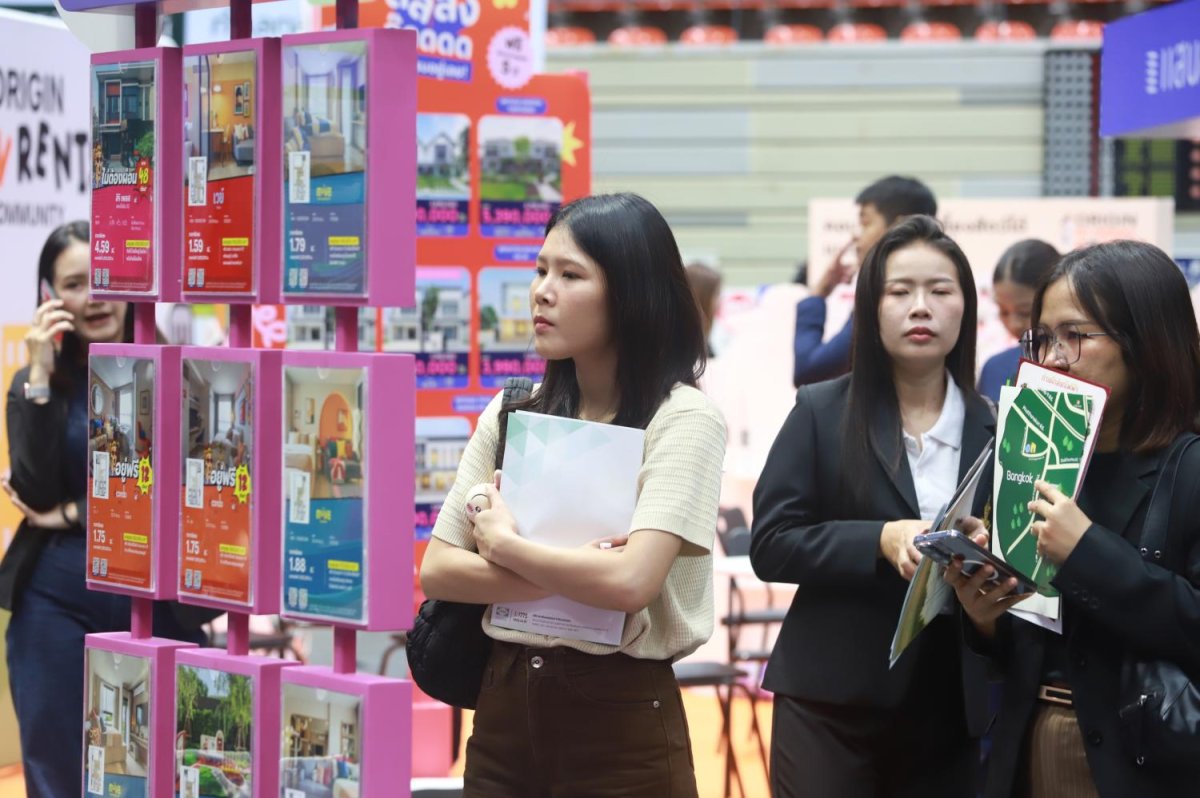
Thais put home ownership on hold
THIS NEWS ARTICLE KINDLY SPONSORED BY FALLPROTEC, A WORLD-RENOWNED NAME IN THE DESIGN AND MANUFACTURE OF PREMIUM FALL PROTECTION SYSTEMS AND HEIGHT ACCESS SOLUTIONS
The proportion of consumers with no plans to buy a home within five years has risen sharply to 56%, from 47% a year earlier, marking the highest level in four years as concerns about the economy weigh on purchasing decisions.
According to Siam Commercial Bank Economic Intelligence Center (EIC), worries about the economy was the most common reason among Thais with no plans to purchase a home, accounting for 15% of respondents, up from 7% a year earlier.
Income levels and household expenses that made homeownership less affordable was another key factor, cited by 15% of respondents, down from 19% last year.
Meanwhile, the proportion of respondents who viewed housing prices as too high more than doubled to 9%, from 4% a year earlier.
Concerns about household debt and limited access to mortgage financing remained unchanged at 7% and 1%, respectively.
EIC noted some prospective buyers were reluctant to proceed with mortgage applications or chose not to apply at all because they believed their loan applications would be rejected.
Others decided against applying from the outset after assessing that their financial position was not strong enough to qualify for a housing loan.
The research centre conducted residential real estate surveys in March the last four years, and the share of consumers with no plans to buy a home within five years rose to 56% this year, up from 50% in 2023, 44% in 2024 and 47% in 2025.
The 2026 survey covered 1,528 respondents and found 38% of those with no plans to purchase a home cited already owning a home or paying off a mortgage as the main reason, down from 44% a year earlier.
MAJOR CONCERNS
Among the key issues respondents wanted the government to address to improve access to homeownership was the rising cost of living outpacing income growth, which has reduced affordability and borrowers’ ability to service housing loans. This issue was cited by 32% of respondents, followed by household debt burdens, which affect both access to new mortgage financing and the ability to repay existing housing loans, at 29%.
Other major concerns were the high prices of new homes, cited by 16% of respondents, and stricter mortgage lending criteria imposed by financial institutions, at 15%.
Meanwhile, 8% of respondents highlighted economic volatility, which has led many people to postpone or cancel their home purchase plans.
Respondents also called for short-term government measures to improve housing affordability, with 44% seeking support for people to become homeowners, such as soft loan schemes and affordable housing programmes for low-income earners.
Roughly one-fifth of respondents sought assistance for borrowers facing difficulties with mortgage repayments, including more flexible repayment terms for borrowers with good credit records, debt restructuring programmes, debt moratoriums and credit record rehabilitation.
Another 18% of respondents called for measures to reduce homebuying costs and tax incentives for homeowners, such as extending the transfer and mortgage registration fee cut to 0.01%, due to expire at the end of this month, as well as extending the temporary easing of loan-to-value rules, expiring on June 30, 2027.
Regarding tax incentives, respondents suggested expanding tax deductions for homebuyers as well as reducing land and building taxes for homeowners.
RESIDENTIAL OUTLOOK
According to EIC, Thailand’s residential property market is expected to contract this year, with a gradual recovery anticipated over the medium term amid persistent economic headwinds.
Key challenges include the slow pace of Thailand’s economic recovery, elevated household debt, and tighter mortgage lending criteria imposed by financial institutions.
Demand remains lukewarm as consumers postpone home purchases and property investments due to economic uncertainty, exacerbated by the war in the Middle East, which weighs on domestic and foreign purchasing power.
Source: https://www.bangkokpost.com/property/3269058/thais-put-home-ownership-on-hold
Google Translation:
คนไทยชะลอการซื้อบ้าน
ผู้บริโภคจำนวนมากขึ้นไม่คาดว่าจะซื้อบ้านในอีก 5 ปีข้างหน้า โดยส่วนใหญ่เป็นผลมาจากความกังวลด้านเศรษฐกิจ (ภาพ: อภิชาติ จินากุล)
บทความข่าวนี้ได้รับการสนับสนุนโดย FALLPROTEC บริษัทชั้นนำระดับโลกด้านการออกแบบและผลิตระบบป้องกันการตกจากที่สูงและโซลูชั่นการเข้าถึงที่สูง
สัดส่วนของผู้บริโภคที่ไม่มีแผนจะซื้อบ้านภายใน 5 ปี เพิ่มขึ้นอย่างมากเป็น 56% จาก 47% ในปีก่อนหน้า ซึ่งเป็นระดับสูงสุดในรอบ 4 ปี เนื่องจากความกังวลเกี่ยวกับเศรษฐกิจมีผลต่อการตัดสินใจซื้อ
จากข้อมูลของศูนย์ข่าวกรองเศรษฐกิจ (EIC) ธนาคารไทยพาณิชย์ ความกังวลเกี่ยวกับเศรษฐกิจเป็นเหตุผลที่พบบ่อยที่สุดในกลุ่มคนไทยที่ไม่มีแผนจะซื้อบ้าน คิดเป็น 15% ของผู้ตอบแบบสอบถาม เพิ่มขึ้นจาก 7% ในปีก่อนหน้า
ระดับรายได้และค่าใช้จ่ายในครัวเรือนที่ทำให้การเป็นเจ้าของบ้านเป็นไปได้ยากขึ้น เป็นอีกปัจจัยสำคัญที่ผู้ตอบแบบสอบถาม 15% กล่าวถึง ลดลงจาก 19% ในปีที่แล้ว
ขณะเดียวกัน สัดส่วนของผู้ตอบแบบสอบถามที่มองว่าราคาบ้านสูงเกินไป เพิ่มขึ้นมากกว่าสองเท่าเป็น 9% จาก 4% ในปีก่อน
ความกังวลเกี่ยวกับหนี้สินในครัวเรือนและการเข้าถึงสินเชื่อจำนองที่จำกัดยังคงไม่เปลี่ยนแปลงอยู่ที่ 7% และ 1% ตามลำดับ
EIC ตั้งข้อสังเกตว่าผู้ซื้อบ้านบางรายลังเลที่จะดำเนินการยื่นขอสินเชื่อจำนอง หรือเลือกที่จะไม่ยื่นขอเลย เพราะเชื่อว่าคำขอสินเชื่อของตนจะถูกปฏิเสธ
บางรายตัดสินใจไม่ยื่นขอตั้งแต่แรกหลังจากประเมินแล้วว่าฐานะทางการเงินของตนไม่แข็งแกร่งพอที่จะมีคุณสมบัติในการขอสินเชื่อบ้าน
ศูนย์วิจัยได้ทำการสำรวจตลาดอสังหาริมทรัพย์ที่อยู่อาศัยในเดือนมีนาคมตลอดสี่ปีที่ผ่านมา และพบว่าสัดส่วนของผู้บริโภคที่ไม่มีแผนจะซื้อบ้านภายในห้าปีข้างหน้าเพิ่มขึ้นเป็น 56% ในปีนี้ จาก 50% ในปี 2023, 44% ในปี 2024 และ 47% ในปี 2025
การสำรวจในปี 2026 ครอบคลุมผู้ตอบแบบสอบถาม 1,528 คน และพบว่า 38% ของผู้ที่ไม่มีแผนจะซื้อบ้านระบุว่าการมีบ้านอยู่แล้วหรือผ่อนชำระสินเชื่อบ้านอยู่เป็นเหตุผลหลัก ลดลงจาก 44% ในปีก่อนหน้า
ข้อกังวลหลัก
ในบรรดาประเด็นสำคัญที่ผู้ตอบแบบสอบถามต้องการให้รัฐบาลแก้ไขเพื่อปรับปรุงการเข้าถึงการเป็นเจ้าของบ้านคือ ค่าครองชีพที่เพิ่มสูงขึ้นเร็วกว่าการเติบโตของรายได้ ซึ่งลดความสามารถในการซื้อและศักยภาพของผู้กู้ในการชำระหนี้สินเชื่อบ้าน ประเด็นนี้ถูกกล่าวถึงโดยผู้ตอบแบบสอบถาม 32% ตามมาด้วยภาระหนี้ครัวเรือน ซึ่งส่งผลกระทบต่อทั้งการเข้าถึงสินเชื่อบ้านใหม่และความสามารถในการชำระหนี้สินเชื่อบ้านที่มีอยู่แล้ว ที่ 29%
ข้อกังวลหลักอื่นๆ ได้แก่ ราคาบ้านใหม่ที่สูง ซึ่งมีผู้ตอบแบบสอบถาม 16% ระบุ และเกณฑ์การให้สินเชื่อจำนองที่เข้มงวดมากขึ้นจากสถาบันการเงิน ซึ่งคิดเป็น 15%
ขณะเดียวกัน ผู้ตอบแบบสอบถาม 8% เน้นย้ำถึงความผันผวนทางเศรษฐกิจ ซึ่งทำให้หลายคนเลื่อนหรือยกเลิกแผนการซื้อบ้าน
ผู้ตอบแบบสอบถามยังเรียกร้องให้รัฐบาลออกมาตรการระยะสั้นเพื่อปรับปรุงความสามารถในการซื้อบ้าน โดย 44% ต้องการการสนับสนุนเพื่อให้ประชาชนสามารถเป็นเจ้าของบ้านได้ เช่น โครงการสินเชื่อดอกเบี้ยต่ำและโครงการบ้านราคาประหยัดสำหรับผู้มีรายได้น้อย
ประมาณหนึ่งในห้าของผู้ตอบแบบสอบถามต้องการความช่วยเหลือสำหรับผู้กู้ที่ประสบปัญหาในการชำระหนี้จำนอง รวมถึงเงื่อนไขการชำระหนี้ที่ยืดหยุ่นมากขึ้นสำหรับผู้กู้ที่มีประวัติเครดิตดี โครงการปรับโครงสร้างหนี้ การพักชำระหนี้ และการฟื้นฟูประวัติเครดิต
อีก 18% ของผู้ตอบแบบสอบถามเรียกร้องให้มีมาตรการลดต้นทุนการซื้อบ้านและมาตรการลดหย่อนภาษีสำหรับเจ้าของบ้าน เช่น การขยายเวลาลดค่าธรรมเนียมการโอนและการจดทะเบียนจำนองเหลือ 0.01% ซึ่งจะหมดอายุในสิ้นเดือนนี้ รวมถึงการขยายเวลาผ่อนปรนกฎเกณฑ์อัตราส่วนเงินกู้ต่อมูลค่าทรัพย์สินชั่วคราว ซึ่งจะหมดอายุในวันที่ 30 มิถุนายน 2560
ในส่วนของมาตรการลดหย่อนภาษี ผู้ตอบแบบสอบถามแนะนำให้ขยายการหักลดหย่อนภาษีสำหรับผู้ซื้อบ้าน รวมถึงการลดภาษีที่ดินและภาษีสิ่งปลูกสร้างสำหรับเจ้าของบ้าน
ภาพรวมตลาดที่อยู่อาศัย
จากข้อมูลของ EIC คาดว่าตลาดอสังหาริมทรัพย์เพื่อที่อยู่อาศัยของไทยจะหดตัวในปีนี้ โดยคาดว่าจะฟื้นตัวอย่างค่อยเป็นค่อยไปในระยะกลาง ท่ามกลางภาวะเศรษฐกิจที่ชะลอตัวอย่างต่อเนื่อง
ความท้าทายที่สำคัญ ได้แก่ การฟื้นตัวทางเศรษฐกิจของไทยที่ช้า หนี้ครัวเรือนที่สูง และเกณฑ์การให้สินเชื่อจำนองที่เข้มงวดมากขึ้นของสถาบันการเงิน
ความต้องการยังคงซบเซา เนื่องจากผู้บริโภคชะลอการซื้อบ้านและการลงทุนในอสังหาริมทรัพย์เนื่องจากความไม่แน่นอนทางเศรษฐกิจ ซึ่ง exacerbated โดยสงครามในตะวันออกกลาง ซึ่งส่งผลกระทบต่อกำลังซื้อทั้งในประเทศและต่างประเทศ
