 Thailand’s Ranong-Chumphon Land Bridge blind spot
Bangkok Post Editorial
THIS NEWS ARTICLE KINDLY SPONSORED BY FALLPROTEC, A WORLD-RENOWNED NAME IN THE DESIGN AND MANUFACTURE OF PREMIUM FALL PROTECTION SYSTEMS AND HEIGHT ACCESS SOLUTIONS
The Lower House has made a regrettable decision on the study of the Land Bridge project. Instead of allowing the House to launch a study and promote public participation, a majority of lawmakers on May 29 voted 266:174 to let the cabinet handle the study. The decision undermines the parliamentary principle of checks and balances.
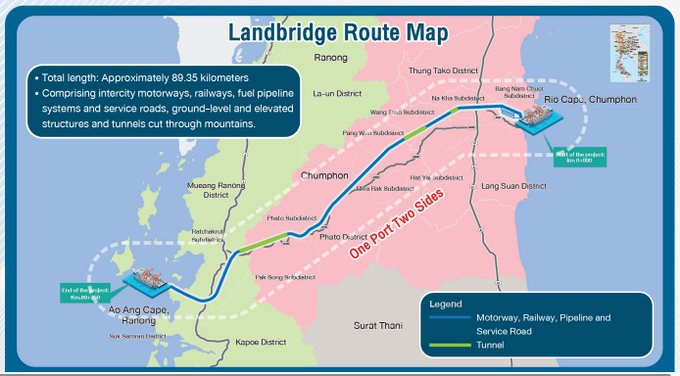
It has become common practice for both the Lower and Upper Houses to establish subcommittees to study controversial public projects. These parliamentary studies do not carry legal force; however, they serve as an important mechanism for scrutiny and public participation, as committees often invite stakeholders from all sides to take part. They are also part of the public record and inform parliamentary debates. Yet MPs in the 266-vote bloc argued that “multiple reviews” had already been conducted and that additional scrutiny would duplicate existing work. But is that the case? Since the project was first floated under the Prayut Chan-o-cha government in 2018, there have been at least three feasibility studies. The first two were conducted by the Office of Transport and Traffic Policy and Planning (OTP). The proposed project — costing more than one trillion baht — includes a land transport corridor across the southern peninsula, with deep-sea ports in Chumphon and Ranong connected by road and rail.
The OTP, a think-tank agency under the Transport Ministry, commissioned local consulting firms to conduct the initial feasibility study in 2021, followed by an updated version in 2023. These firms have experience in infrastructure projects such as reservoirs, irrigation systems, and transport developments. However, governments have often treated these reports as a “bible” for guiding decisions, even though the feasibility studies provide only basic conceptual designs, preliminary environmental assessments, and broad business models.
Another study was commissioned by the Office of the National Economic and Social Development Council (NESDC), the national think tank. NESDC engaged UniSearch, a research unit at Chulalongkorn University, to assess the accuracy of the OTP’s findings and compare the project with competing logistics corridors and ports in Myanmar. The NESDC study presented a different picture, suggesting significantly lower economic returns and calling the project’s viability into question.
Last month, Prime Minister Anutin Charnvirakul established another committee, chaired by Deputy Prime Minister and Finance Minister Ekniti Nitithanprapas, along with three subcommittees, to continue examining implementation plans and public consultation. However, this government-led review will reassess existing OTP and NESDC studies rather than commission new research. With a centralised and less inclusive approach, the latest review risks producing an overly optimistic assessment once again.
The proposed Land Bridge project continues to raise valid questions. Beyond economic feasibility, it lacks a comprehensive environmental impact assessment. Economists have also pointed to a lack of data and input from logistics companies. Critics question why shipping firms would choose to spend more time and money moving containers across land only to reload them again. Alongside concerns about state feasibility studies, reports of land speculation involving local politicians are also growing louder. Without a strong parliamentary counterbalance, these questions are unlikely to be fully addressed.
Source: https://www.bangkokpost.com/opinion/opinion/3266068/land-bridge-blind-spot
Google Translation:
จุดบอดของสะพานเชื่อมแผ่นดินระนอง-ชุมพร ประเทศไทย
บทบรรณาธิการ บางกอกโพสต์
บทความข่าวนี้ได้รับการสนับสนุนโดย FALLPROTEC บริษัทชั้นนำระดับโลกด้านการออกแบบและผลิตระบบป้องกันการตกจากที่สูงและโซลูชันการเข้าถึงที่สูงระดับพรีเมียม
สภาผู้แทนราษฎรได้ตัดสินใจที่น่าเสียใจเกี่ยวกับการศึกษาโครงการสะพานเชื่อมแผ่นดิน แทนที่จะอนุญาตให้สภาเริ่มการศึกษาและส่งเสริมการมีส่วนร่วมของประชาชน สมาชิกสภาส่วนใหญ่ลงมติเมื่อวันที่ 29 พฤษภาคม ด้วยคะแนนเสียง 266 ต่อ 174 ให้คณะรัฐมนตรีจัดการศึกษาโครงการนี้ การตัดสินใจดังกล่าวบั่นทอนหลักการตรวจสอบและถ่วงดุลของรัฐสภา
เป็นเรื่องปกติที่ทั้งสภาผู้แทนราษฎรและวุฒิสภาจะจัดตั้งคณะอนุกรรมการเพื่อศึกษาโครงการสาธารณะที่เป็นข้อถกเถียง การศึกษาของรัฐสภาเหล่านี้ไม่มีผลบังคับทางกฎหมาย อย่างไรก็ตาม การศึกษาเหล่านี้ทำหน้าที่เป็นกลไกสำคัญสำหรับการตรวจสอบและการมีส่วนร่วมของประชาชน เนื่องจากคณะกรรมการมักเชิญผู้มีส่วนได้ส่วนเสียจากทุกฝ่ายเข้าร่วม รายงานเหล่านี้เป็นส่วนหนึ่งของบันทึกสาธารณะและเป็นข้อมูลประกอบการอภิปรายในรัฐสภา อย่างไรก็ตาม สมาชิกสภาผู้แทนราษฎรในกลุ่ม 266 เสียงแย้งว่า “การตรวจสอบหลายครั้ง” ได้ดำเนินการไปแล้ว และการตรวจสอบเพิ่มเติมจะเป็นการซ้ำซ้อนกับงานที่มีอยู่ แต่เป็นเช่นนั้นจริงหรือ? นับตั้งแต่โครงการนี้ถูกเสนอขึ้นครั้งแรกในสมัยรัฐบาลพลเอกประยุทธ์ จันทร์โอชา ในปี 2561 มีการศึกษาความเป็นไปได้แล้วอย่างน้อยสามครั้ง สองครั้งแรกดำเนินการโดยสำนักงานนโยบายและการวางแผนการขนส่ง (OTP) โครงการที่เสนอนี้มีมูลค่ามากกว่าหนึ่งล้านล้านบาท ประกอบด้วยเส้นทางคมนาคมทางบกข้ามคาบสมุทรภาคใต้ โดยมีท่าเรือน้ำลึกในจังหวัดชุมพรและระนองเชื่อมต่อกันด้วยถนนและทางรถไฟ
OTP ซึ่งเป็นหน่วยงานวิจัยภายใต้กระทรวงคมนาคม ได้ว่าจ้างบริษัทที่ปรึกษาในประเทศให้ทำการศึกษาความเป็นไปได้เบื้องต้นในปี 2564 ตามด้วยฉบับปรับปรุงในปี 2566 บริษัทเหล่านี้มีประสบการณ์ในโครงการโครงสร้างพื้นฐาน เช่น อ่างเก็บน้ำ ระบบชลประทาน และการพัฒนาด้านการขนส่ง อย่างไรก็ตาม รัฐบาลมักใช้รายงานเหล่านี้เป็น “คัมภีร์” สำหรับชี้นำการตัดสินใจ แม้ว่าการศึกษาความเป็นไปได้จะให้เพียงแบบร่างแนวคิดพื้นฐาน การประเมินผลกระทบสิ่งแวดล้อมเบื้องต้น และแบบจำลองธุรกิจในวงกว้างเท่านั้น
สำนักงานคณะกรรมการพัฒนาเศรษฐกิจและสังคมแห่งชาติ (กสท.) ซึ่งเป็นหน่วยงานวิจัยระดับชาติ ได้ว่าจ้างให้ทำการศึกษาอีกโครงการหนึ่ง โดยว่าจ้าง UniSearch ซึ่งเป็นหน่วยงานวิจัยของจุฬาลงกรณ์มหาวิทยาลัย เพื่อประเมินความถูกต้องของผลการศึกษาของ OTP และเปรียบเทียบโครงการกับเส้นทางโลจิสติกส์และท่าเรืออื่นๆ ในเมียนมาร์ ผลการศึกษาของกสท. นำเสนอภาพที่แตกต่างออกไป โดยชี้ให้เห็นถึงผลตอบแทนทางเศรษฐกิจที่ต่ำกว่าอย่างมาก และตั้งคำถามถึงความเป็นไปได้ของโครงการ
เมื่อเดือนที่แล้ว นายกรัฐมนตรีอนุทิน ชาญวีรกุล ได้จัดตั้งคณะกรรมการอีกชุดหนึ่ง โดยมีรองนายกรัฐมนตรีและรัฐมนตรีว่าการกระทรวงการคลัง เอกนิติ นิติธันประภาส เป็นประธาน พร้อมด้วยคณะอนุกรรมการอีกสามชุด เพื่อดำเนินการตรวจสอบแผนการดำเนินงานและการปรึกษาหารือกับประชาชนต่อไป อย่างไรก็ตาม การทบทวนโดยรัฐบาลครั้งนี้จะประเมินผลการศึกษาของ OTP และกสท. NESDC ที่มีอยู่แล้ว แทนที่จะว่าจ้างงานวิจัยใหม่ ด้วยแนวทางการรวมศูนย์และไม่ครอบคลุมเท่าที่ควร การทบทวนครั้งล่าสุดจึงเสี่ยงที่จะนำไปสู่การประเมินที่มองโลกในแง่ดีเกินไปอีกครั้ง
โครงการสะพานเชื่อมแผ่นดินที่เสนอมายังคงก่อให้เกิดคำถามที่สมเหตุสมผลมากมาย นอกเหนือจากความเป็นไปได้ทางเศรษฐกิจแล้ว โครงการนี้ยังขาดการประเมินผลกระทบต่อสิ่งแวดล้อมอย่างครอบคลุม นักเศรษฐศาสตร์ยังชี้ให้เห็นถึงการขาดข้อมูลและการมีส่วนร่วมจากบริษัทโลจิสติกส์ นักวิจารณ์ตั้งคำถามว่าทำไมบริษัทขนส่งสินค้าจึงเลือกที่จะใช้เวลาและเงินมากขึ้นในการเคลื่อนย้ายตู้คอนเทนเนอร์ข้ามแผ่นดินเพียงเพื่อจะบรรจุสินค้าใหม่ นอกจากความกังวลเกี่ยวกับการศึกษาความเป็นไปได้ของรัฐแล้ว รายงานเกี่ยวกับการเก็งกำไรที่ดินที่เกี่ยวข้องกับนักการเมืองท้องถิ่นก็ดังขึ้นเรื่อยๆ หากปราศจากการถ่วงดุลอำนาจในรัฐสภาที่เข้มแข็ง คำถามเหล่านี้ก็ไม่น่าจะได้รับการแก้ไขอย่างครบถ้วน