
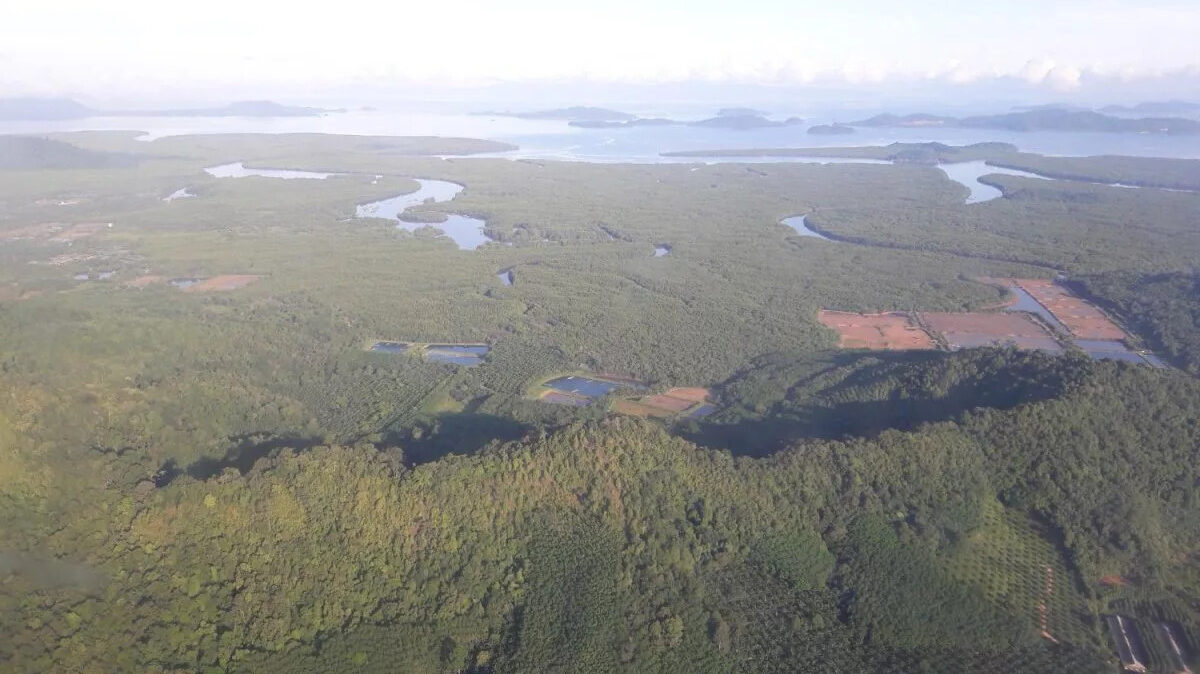
Thailand’s Kra Isthmus Land bridge megaproject will harm nature
The end of 2025 brought Thais the good news that one of the world’s most endangered felines — the flat-headed cat — has not gone extinct in our nation, as had long been feared. But our natural heritage is under relentless pressure. We need to treat our habitats, flora and fauna as assets that demand science-led protection.
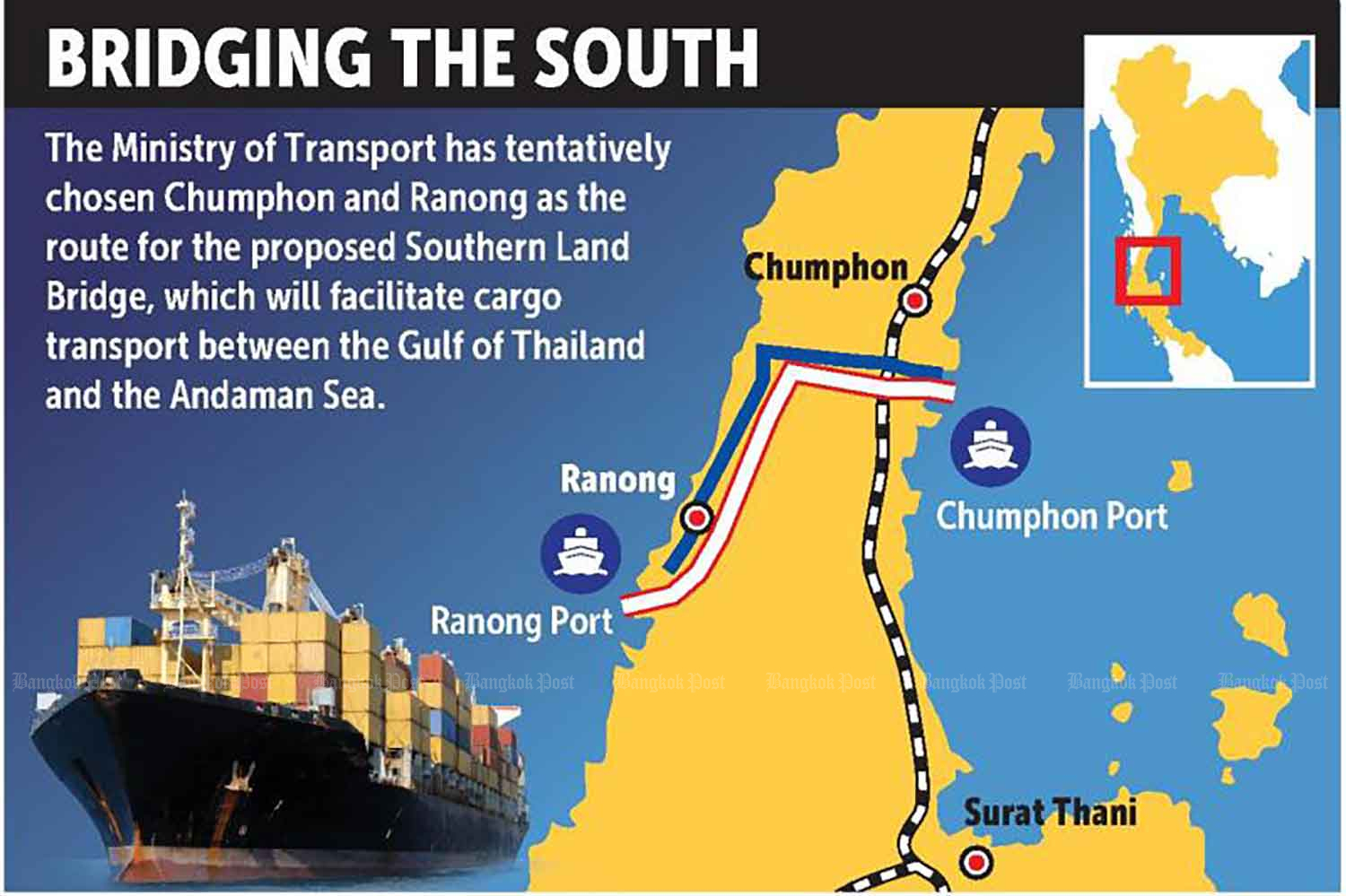
In 2026, the government might hope to solicit bids for the Kra Isthmus Land bridge megaproject, intended to reduce cargo transit times between the Pacific and Indian oceans. Plans describe a 90km overland corridor linking two deep-sea ports, alongside industrial estates and oil-and-gas pipelines. It would become the biggest transport project in Thai history, with costs as high as 1 trillion baht.
The economic case is being debated. But the ecological case is barely being examined. Start with the name. This is not a “bridge” in the ordinary sense — a structure that rises above a waterway or road so that life can continue underneath.
The land bridge, as proposed, would lay down a multi-lane highway and double-track rail line at ground level across the narrow waist of the peninsula, from Chumphon on the Gulf of Thailand to Ranong on the Andaman Sea. Yes, it will include tunnels and elevated sections, but for the most part, it will form a cement-and-steel barrier that interrupts the movement of wildlife, seeds and water across the isthmus.
That matters because the Kra region is not just any landscape. Ecologists call it the “Kra Ecotone”: a rare continental transition zone where northern Southeast Asia meets the climate and species of Malesia (the Thai–Malay peninsula and island Southeast Asia) — including the flat-headed cat, which survives in Narathiwat province.

Where ecosystems overlap, biodiversity tends to be high. But edge zones are also fragile: their richness depends on connection. The closest parallel is Panama’s isthmus, where a narrow strip of land connects continents and two oceans meet.
This is where the land bridge poses its most serious long-term risk — habitat fragmentation. Large habitats do not fail only because trees are cut. They fail because barriers divide living systems into smaller, isolated pockets. Once separated by roads, rail lines and industrial development, wildlife populations breed within shrinking groups. Over generations, the exchange of genetic traits declines.
Reduced genetic diversity makes populations less resilient to disease, invasive species and climate change, leading to decline — and sometimes local extinction.
Thailand cannot afford to treat that as an abstract concern. Healthy mangroves, forests and watersheds provide “ecosystem services” that support livelihoods and reduce risk: clean water, fertile soil, fisheries, pollination, flood and storm protection, carbon storage, and climate resilience. These benefits have real economic value even when they do not appear on a balance sheet. Lose the system, and the losses are often irreversible.
Supporters will note, correctly, that the project must undergo an environmental impact assessment (EIA). But Thailand’s EIA track record offers little comfort. Committees rarely include ecologists and field biologists, who are the experts best equipped to evaluate wildlife movement, ecosystem dynamics and population genetics.
Instead, they are usually dominated by environmental engineers, agricultural-forestry scientists, and environmental management specialists. These experts tend to focus on economic benefits and mitigation measures, not protection.
Even foreign specialists will struggle to assess impacts properly if Thailand lacks the baseline field data to begin with — data we have long underfunded.
The predictable outcome is that large projects are approved so long as they include “restoration” components — reforestation schemes, planted buffers or engineered habitats. These may help in limited ways, but they are not substitutes for intact ecosystems. A biologically rich, self-sustaining landscape cannot be replaced by rows of planted trees; artificial ecosystems are typically less diverse, less resilient and less beneficial than what they replace.
Moreover, the project will bring emissions to the area from internal combustion engines on ships, trucks, cars and locomotives. Even electric vehicles there will ultimately rely on our national power generation system, which still runs mostly on burning fossil fuels. Keep in mind that in 2022, Unesco tentatively listed Ranong’s mangroves as World Heritage.
 None of this is an argument against development. It is an argument for honest accounting. If we are considering a trillion-baht bet, ecological costs must be assessed with the same seriousness as construction costs — and by the right experts, using transparent baseline data.
If local ecological knowledge is thin, the answer is not to proceed anyway. We should pause, study and design properly.
There is also a question of who truly benefits. Too often, megaprojects deliver outsized gains to a small circle of large firms — frequently those with political connections — while ordinary people see only limited access to the promised jobs and prosperity. The land bridge is expected to raise GDP, but it is reasonable to ask: for whom, and at what price?
Before any tender is issued, the government should put ecology at the centre of planning. That means EIAs led by qualified ecologists and field biologists, with open data, peer review and genuine public scrutiny.
It means designing wildlife corridors and crossings — overpasses, underpasses and real bridges — that keep species movement intact, alongside strict protections for mangroves, forests and coastal habitats. And it means binding conditions with independent monitoring and enforcement, not mitigation plans that simply tick boxes on paper.
The Kra Ecotone is a national and global asset. If the land bridge cannot be built with credible safeguards that protect this living corridor, the wisest course is to rethink it radically — or cancel it.
Biologist Kitichate Sridith is a retired fellow of Prince of Songkhla University. ‘Heritage Matters’ is presented by The Siam Society Under Royal Patronage to advocate conservation of the cultural and natural heritage of Thailand and the region. The views expressed here are those of the author.
Source: https://www.bangkokpost.com/opinion/opinion/3166509/land-bridge-will-harm-nature

