
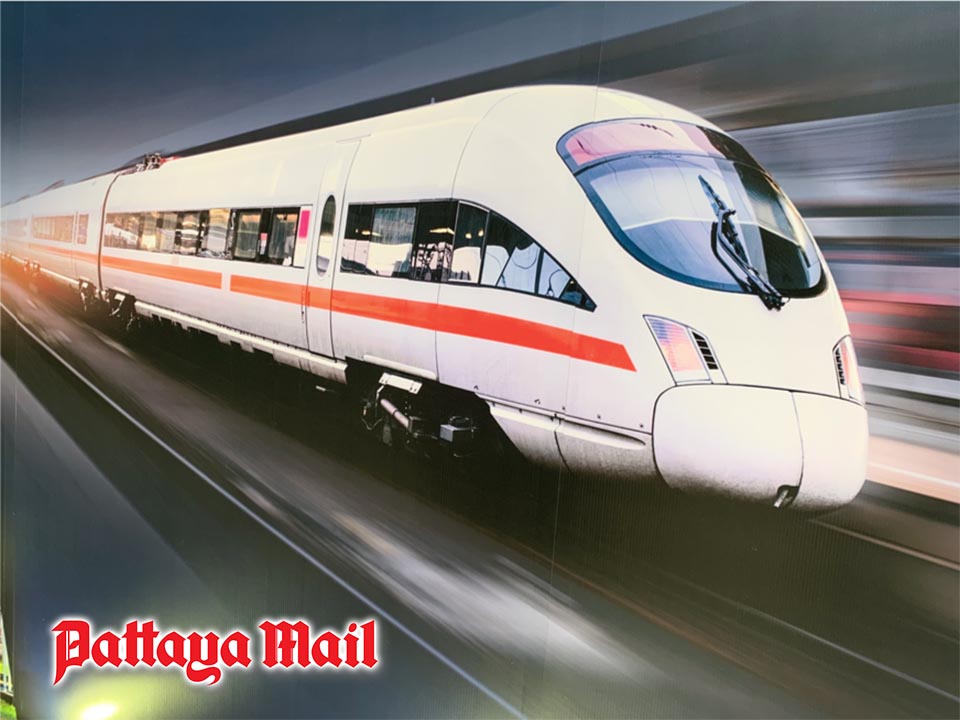
 Thailand’s 224-billion-baht high-speed rail project linking Don Mueang, Suvarnabhumi and U-Tapao airports faces collapse
THIS NEWS ARTICLE KINDLY SPONSORED BY FALLPROTEC, A WORLD-RENOWNED NAME IN THE DESIGN AND MANUFACTURE OF PREMIUM FALL PROTECTION SYSTEMS AND HEIGHT ACCESS SOLUTIONS
Thailand’s 220-kilometre high-speed rail project linking Don Mueang, Suvarnabhumi and U-Tapao airports remains stalled nearly seven years after the concession was signed, with a 13.34-billion-baht lawsuit adding to uncertainty over its future.
Thailand’s high-speed rail project linking Don Mueang, Suvarnabhumi and U-Tapao airports remains stalled nearly seven years after its concession agreement was signed on October 24, 2019. The 220-kilometre project, valued at 224.544 billion baht, was awarded to Asia Era One Co., a consortium led by the Charoen Pokphand Group (CP), under a 50-year concession.
The project’s future has become increasingly uncertain following a dispute over proposed changes to the joint investment contract and the State Railway of Thailand’s (SRT) latest legal action against the private concessionaire and related parties.
Dispute over construction payments
The central issue is CP’s request to change the construction payment arrangement to a “build-and-pay-as-you-go” model. Under the original agreement, the private sector was expected to finance construction during the first five years, with the government reimbursing the investment from the sixth to the fifteenth year.
The COVID-19 pandemic disrupted travel patterns and financing plans, prompting the concessionaire to seek a revised arrangement. The proposal received consideration from the Eastern Economic Corridor (EEC) Policy Committee and the Office of the Attorney General in 2024, but final approval remains outstanding.
Prime Minister and Interior Minister Anutin Charnvirakul and Transport Minister Phiphat Ratchakitprakarn have indicated that amending the contract will not be straightforward. The proposal must again pass through the EEC Policy Committee and Cabinet before it can proceed.
CP seeks to end the agreement
On July 6, 2026, Asia Era One wrote to the SRT exercising its contractual rights to seek termination of the joint investment agreement, with September 30 specified as the proposed termination date. The request also covered the Airport Rail Link operation.
The SRT subsequently asked the company to withdraw its termination notice to allow negotiations to continue. CP did not withdraw the letter but agreed to continue operating the Airport Rail Link for a further four months, until January 2027, while arrangements are made for an SRT subsidiary to take over. The extension is subject to separating the Airport Rail Link arrangement from the high-speed rail concession.
SRT Governor Anan Phonimdaeng said the two sides had held one round of talks but had not reached agreement. The railway had asked the private company to confirm its position on termination, but had not yet received a response.
The SRT board is due to meet on October 30, when the issue may become clearer before being referred to the EEC Policy Committee.
SRT files 13.34-billion-baht lawsuit
On October 21, the SRT filed a lawsuit with the Central Administrative Court seeking payment of Airport Rail Link concession fees and default interest totaling 13.33593 billion baht.
The principal claim against Asia Era One amounts to 10.67109 billion baht, with a further 2.66484 billion baht in default interest calculated up to the filing date.
The railway also named Bangkok Bank and Siam Commercial Bank as guarantors, each with a guarantee limit of 1 billion baht. Five companies were named in connection with letters of guarantee covering potential damages arising from contractual non-performance: Charoen Pokphand Holding, with a 70% investment share; China Railway Construction Corporation, with 10%; Bangkok Expressway and Metro, with 10%; CH. Karnchang, with 5%; and Italian-Thai Development, with 5%.
The SRT said the legal action was intended to protect the state’s rights and would not affect public services. Airport Rail Link trains continue to operate normally.
Contract dispute could take years
The Airport Rail Link payment issue is closely connected to the wider dispute over the high-speed rail contract. According to a report citing a Transport Ministry source, the concession fee had originally been due from October 24, 2021. Following the pandemic, a memorandum of understanding and Cabinet approval allowed the payment issue to be incorporated into the proposed contract-revision package.
However, the revised agreement had not received the necessary EEC committee and Cabinet approvals before the September 30 deadline. As a result, neither the revised payment arrangement nor the wider contract changes had been finalised.
The SRT maintains that the private partner cannot terminate the agreement unilaterally and considers the signed contract valid. The parties are expected to face a further dispute over the termination request, with the possibility of court proceedings if negotiations fail.
A lengthy legal process could take three to five years or more, depending on whether the case proceeds to the Supreme Administrative Court. Any termination could also lead to separate disputes over damages, which both parties would need to establish.
Alternative rail plans under consideration
If the original high-speed rail project cannot proceed, the government may need to consider alternative rail development plans. The SRT has previously discussed services operating at up to 160 kilometres per hour, alongside other infrastructure projects.
Options include the 25.9-kilometre Red Line Missing Link connecting Bang Sue, Phaya Thai, Makkasan and Hua Mak, together with a section between Bang Sue and Hua Lamphong, estimated to cost 44.573 billion baht.
Another proposal would extend the Airport Rail Link from Phaya Thai to Krung Thep Aphiwat Central Terminal, covering 7.8 kilometres at an estimated cost of 14.984 billion baht. Plans have also included electrifying and developing double-track rail infrastructure along the 187-kilometre Hua Mak–Chachoengsao–U-Tapao corridor.
Extending the Thailand–China railway towards Laem Chabang and Rayong has also been raised as a possible option.
With the seventh anniversary of the concession agreement approaching on October 24, the project remains at a crossroads. Its next phase will depend on whether the government and private partner can resolve the payment and contract disputes, or whether Thailand must pursue a different rail development model.
Source: https://www.pattayamail.com/latestnews/news/thailands-224-billion-baht-high-speed-rail-project-faces-collapse-569494 (Story, Photo: Prachachat Business)
Google Translation:
[We apologise if any of the translation is incorrect: google Translation occasionally gets it wrong]
โครงการรถไฟความเร็วสูงเชื่อม 3 สนามบิน (ดอนเมือง-สุวรรณภูมิ-อู่ตะเภา) มูลค่า 2.24 แสนล้านบาท ส่อเค้าล้มเหลว
บทความข่าวนี้ได้รับการสนับสนุนโดย FALLPROTEC แบรนด์ระดับโลกที่มีชื่อเสียงด้านการออกแบบและผลิตระบบป้องกันการตกจากที่สูงและโซลูชันสำหรับการเข้าถึงพื้นที่สูงคุณภาพเยี่ยม
โครงการรถไฟความเร็วสูงระยะทาง 220 กิโลเมตร ซึ่งเชื่อมต่อสนามบินดอนเมือง สุวรรณภูมิ และอู่ตะเภา ยังคงหยุดชะงักแม้เวลาจะล่วงเลยมาเกือบ 7 ปีนับตั้งแต่มีการลงนามในสัญญาสัมปทาน อีกทั้งยังเผชิญกับการฟ้องร้องเรียกค่าเสียหายมูลค่า 1.334 หมื่นล้านบาท ซึ่งยิ่งตอกย้ำความไม่แน่นอนของโครงการในอนาคต
โครงการรถไฟความเร็วสูงเชื่อม 3 สนามบิน (ดอนเมือง-สุวรรณภูมิ-อู่ตะเภา) ยังคงไม่มีความคืบหน้า นับตั้งแต่มีการลงนามในสัญญาสัมปทานเมื่อวันที่ 24 ตุลาคม 2019 โครงการระยะทาง 220 กิโลเมตรนี้มีมูลค่ารวม 2.24544 แสนล้านบาท โดยตกเป็นของกลุ่มบริษัท เอเชีย เอรา วัน (Asia Era One Co.) ซึ่งเป็นกลุ่มกิจการร่วมค้าที่นำโดยเครือเจริญโภคภัณฑ์ (CP) ภายใต้สัญญาสัมปทานระยะเวลา 50 ปี
อนาคตของโครงการนี้มีความไม่แน่นอนมากขึ้นเรื่อยๆ หลังจากเกิดข้อพิพาทเกี่ยวกับการขอแก้ไขสัญญาการร่วมลงทุน ประกอบกับการที่การรถไฟแห่งประเทศไทย (รฟท.) ได้ดำเนินการทางกฎหมายต่อกลุ่มเอกชนคู่สัญญาและฝ่ายที่เกี่ยวข้อง
ข้อพิพาทเรื่องการชำระค่าก่อสร้าง
ประเด็นสำคัญคือการที่กลุ่ม CP ได้ยื่นข้อเสนอขอปรับเปลี่ยนรูปแบบการชำระค่าก่อสร้างเป็นแบบ “สร้างไป-จ่ายไป” (build-and-pay-as-you-go) โดยตามสัญญาเดิมนั้น ฝ่ายเอกชนจะต้องเป็นผู้รับผิดชอบจัดหาเงินทุนสำหรับการก่อสร้างในช่วง 5 ปีแรก จากนั้นภาครัฐจึงจะทยอยชำระคืนเงินลงทุนดังกล่าวให้ในช่วงปีที่ 6 ถึงปีที่ 15
การแพร่ระบาดของโควิด-19 ส่งผลกระทบต่อรูปแบบการเดินทางและแผนการจัดหาเงินทุน ทำให้กลุ่มเอกชนคู่สัญญาต้องร้องขอให้มีการปรับเปลี่ยนเงื่อนไขดังกล่าว แม้ข้อเสนอนี้จะได้รับการพิจารณาจากคณะกรรมการนโยบายเขตพัฒนาพิเศษภาคตะวันออก (EEC) และสำนักงานอัยการสูงสุดในปี 2024 แล้ว แต่จนถึงปัจจุบันก็ยังไม่มีการอนุมัติขั้นสุดท้ายแต่อย่างใด นายอนุทิน ชาญวีรกูล รองนายกรัฐมนตรีและรัฐมนตรีว่าการกระทรวงมหาดไทย และนายพิพัฒน์ รัชกิจประการ รัฐมนตรีว่าการกระทรวงคมนาคม ระบุว่าการแก้ไขสัญญาจะไม่ใช่เรื่องง่าย โดยข้อเสนอดังกล่าวจะต้องผ่านความเห็นชอบจากคณะกรรมการนโยบายเขตพัฒนาพิเศษภาคตะวันออก (EEC) และคณะรัฐมนตรีก่อน จึงจะสามารถดำเนินการต่อไปได้
เครือซีพีต้องการยกเลิกสัญญา
เมื่อวันที่ 6 กรกฎาคม 2567 บริษัท เอเชีย เอรา วัน จำกัด (Asia Era One) ได้ทำหนังสือถึงการรถไฟแห่งประเทศไทย (รฟท.) เพื่อใช้สิทธิตามสัญญาในการขอยกเลิกสัญญาร่วมลงทุน โดยเสนอให้วันที่ 30 กันยายน เป็นวันที่มีผลในการยกเลิกสัญญา ซึ่งคำขอดังกล่าวรวมถึงการดำเนินงานโครงการแอร์พอร์ต เรล ลิงก์ ด้วย
ต่อมา รฟท. ได้ขอให้บริษัทถอนหนังสือแจ้งยกเลิกสัญญาดังกล่าว เพื่อให้การเจรจาสามารถดำเนินต่อไปได้ แม้ทางเครือซีพีจะไม่ได้ถอนหนังสือฉบับนั้น แต่ก็ตกลงที่จะดำเนินการให้บริการแอร์พอร์ต เรล ลิงก์ ต่อไปอีก 4 เดือน จนถึงเดือนมกราคม 2570 ในระหว่างที่มีการเตรียมการให้บริษัทลูกของ รฟท. เข้ามารับช่วงดำเนินการแทน ทั้งนี้ การขยายเวลาดังกล่าวมีเงื่อนไขว่าจะต้องแยกการดำเนินงานโครงการแอร์พอร์ต เรล ลิงก์ ออกจากสัมปทานโครงการรถไฟความเร็วสูง
นายอนันต์ โพธิ์นิ่มแดง รองผู้ว่าการการรถไฟแห่งประเทศไทย เปิดเผยว่า ทั้งสองฝ่ายได้มีการหารือกันไปแล้วหนึ่งรอบแต่ยังไม่สามารถหาข้อสรุปได้ โดยทาง รฟท. ได้ขอให้บริษัทเอกชนยืนยันจุดยืนเรื่องการยกเลิกสัญญา แต่จนถึงขณะนี้ยังไม่ได้รับคำตอบกลับมา
ทั้งนี้ คณะกรรมการ รฟท. มีกำหนดจะประชุมกันในวันที่ 30 ตุลาคม ซึ่งคาดว่าจะมีความชัดเจนมากขึ้นในประเด็นดังกล่าว ก่อนที่จะนำเสนอต่อคณะกรรมการนโยบาย EEC ต่อไป
รฟท. ยื่นฟ้องเรียกค่าเสียหาย 1.334 หมื่นล้านบาท
เมื่อวันที่ 21 ตุลาคมที่ผ่านมา รฟท. ได้ยื่นฟ้องต่อศาลปกครองกลาง เพื่อเรียกร้องค่าธรรมเนียมสัมปทานโครงการแอร์พอร์ต เรล ลิงก์ พร้อมดอกเบี้ยผิดนัดชำระ รวมเป็นเงินทั้งสิ้น 13,359.3 ล้านบาท
โดยเป็นเงินต้นที่เรียกร้องจากบริษัท เอเชีย เอรา วัน จำกัด จำนวน 10,671.09 ล้านบาท และดอกเบี้ยผิดนัดชำระอีก 2,664.84 ล้านบาท (คำนวณถึงวันที่ยื่นฟ้อง)
นอกจากนี้ รฟท. ยังได้ระบุชื่อธนาคารกรุงเทพและธนาคารไทยพาณิชย์ในฐานะผู้ค้ำประกัน โดยมีวงเงินค้ำประกันธนาคารละ 1,000 ล้านบาท พร้อมทั้งระบุชื่อบริษัทอีก 5 แห่งที่เกี่ยวข้องกับหนังสือค้ำประกัน ซึ่งครอบคลุมถึงความเสียหายที่อาจเกิดขึ้นจากการไม่ปฏิบัติตามสัญญา โดยหนึ่งในนั้นคือบริษัท เจริญโภคภัณฑ์ โฮลดิ้ง จำกัด ซึ่งถือหุ้นในสัดส่วน 70% China Railway Construction Corporation ถือหุ้น 10%, Bangkok Expressway and Metro ถือหุ้น 10%, CH. Karnchang ถือหุ้น 5% และ Italian-Thai Development ถือหุ้น 5%
การรถไฟแห่งประเทศไทย (รฟท.) ระบุว่า การดำเนินการทางกฎหมายดังกล่าวมีจุดมุ่งหมายเพื่อปกป้องสิทธิของรัฐ และจะไม่ส่งผลกระทบต่อการให้บริการสาธารณะ โดยรถไฟฟ้าแอร์พอร์ต เรล ลิงก์ ยังคงเปิดให้บริการตามปกติ
ข้อพิพาทเรื่องสัญญานี้อาจยืดเยื้อนานหลายปี
ประเด็นการชำระเงินของโครงการแอร์พอร์ต เรล ลิงก์ มีความเกี่ยวข้องอย่างใกล้ชิดกับข้อพิพาทในวงกว้างที่เกี่ยวข้องกับสัญญาโครงการรถไฟความเร็วสูง ข้อมูลจากแหล่งข่าวในกระทรวงคมนาคมระบุว่า เดิมทีถึงกำหนดชำระค่าสัมปทานตั้งแต่วันที่ 24 ตุลาคม 2564 แต่ภายหลังสถานการณ์การแพร่ระบาด ได้มีการจัดทำบันทึกความเข้าใจ (MOU) และได้รับอนุมัติจากคณะรัฐมนตรีให้รวมประเด็นการชำระเงินนี้ไว้ในข้อเสนอการแก้ไขสัญญา
อย่างไรก็ตาม ร่างสัญญาฉบับแก้ไขดังกล่าวยังไม่ได้รับความเห็นชอบจากคณะกรรมการนโยบายเขตพัฒนาพิเศษภาคตะวันออก (EEC) และคณะรัฐมนตรี ก่อนถึงกำหนดเส้นตายในวันที่ 30 กันยายน ส่งผลให้ทั้งข้อตกลงเรื่องการชำระเงินฉบับใหม่และการแก้ไขสัญญาในส่วนอื่น ๆ ยังไม่มีผลสรุปที่ชัดเจน
การรถไฟแห่งประเทศไทย (รฟท.) ยืนยันว่าคู่สัญญาฝ่ายเอกชนไม่สามารถยกเลิกสัญญาโดยพลการได้ และถือว่าสัญญาที่ลงนามไปแล้วนั้นยังมีผลสมบูรณ์ ทั้งสองฝ่ายอาจเผชิญกับข้อพิพาทเพิ่มเติมเกี่ยวกับการขอยกเลิกสัญญา ซึ่งหากการเจรจาไม่ประสบผลสำเร็จ ก็มีความเป็นไปได้ที่จะนำไปสู่กระบวนการทางศาล
กระบวนการทางกฎหมายอาจใช้เวลายาวนานถึง 3–5 ปีหรือมากกว่านั้น ขึ้นอยู่กับว่าคดีจะดำเนินไปถึงศาลปกครองสูงสุดหรือไม่ นอกจากนี้ การยกเลิกสัญญาอาจนำไปสู่ข้อพิพาทแยกต่างหากในประเด็นเรื่องค่าเสียหาย ซึ่งทั้งสองฝ่ายจะต้องพิสูจน์ให้เห็นถึงความเสียหายที่เกิดขึ้นจริง
ทางเลือกอื่นสำหรับการพัฒนาระบบราง
หากโครงการรถไฟความเร็วสูงเดิมไม่สามารถดำเนินการต่อไปได้ รัฐบาลอาจจำเป็นต้องพิจารณาแผนการพัฒนาระบบรางทางเลือกอื่น โดยก่อนหน้านี้ รฟท. ได้หารือถึงแนวทางการให้บริการรถไฟด้วยความเร็วสูงสุด 160 กิโลเมตรต่อชั่วโมง ควบคู่ไปกับโครงการโครงสร้างพื้นฐานอื่น ๆ
ทางเลือกดังกล่าวรวมถึงโครงการรถไฟสายสีแดงช่วงที่ขาดหายไป (Missing Link) ระยะทาง 25.9 กิโลเมตร ซึ่งเชื่อมต่อระหว่างสถานีกลางบางซื่อ พญาไท มักกะสัน และหัวหมาก รวมถึงช่วงสถานีกลางบางซื่อถึงสถานีหัวลำโพง โดยมีมูลค่าโครงการประมาณ 44,573 ล้านบาท
อีกข้อเสนอหนึ่งคือการขยายเส้นทางรถไฟฟ้าแอร์พอร์ต เรล ลิงก์ จากสถานีพญาไทไปยังสถานีกลางกรุงเทพอภิวัฒน์ ระยะทาง 7.8 กิโลเมตร ด้วยมูลค่าประมาณ 14,984 ล้านบาท นอกจากนี้ ยังมีแผนการปรับปรุงโครงสร้างพื้นฐานรถไฟให้เป็นระบบไฟฟ้าและเป็นทางคู่ ในเส้นทางช่วงหัวหมาก–ฉะเชิงเทรา–อู่ตะเภา ระยะทาง 187 กิโลเมตร
รวมถึงมีการหยิบยกแนวคิดเรื่องการขยายเส้นทางรถไฟไทย–จีน ไปยังแหลมฉบังและระยองขึ้นมาเป็นอีกหนึ่งทางเลือกที่เป็นไปได้
ในขณะที่วาระครบรอบ 7 ปีของสัญญาสัมปทานกำลังจะมาถึงในวันที่ 24 ตุลาคมนี้ โครงการดังกล่าวยังคงอยู่ในจุดเปลี่ยนสำคัญ โดยก้าวต่อไปจะขึ้นอยู่กับว่ารัฐบาลและคู่สัญญาฝ่ายเอกชนจะสามารถหาข้อยุติในประเด็นเรื่องการชำระเงินและข้อพิพาททางสัญญาได้หรือไม่ หรือประเทศไทยจำเป็นต้องหันไปใช้รูปแบบการพัฒนาระบบรางในแนวทางอื่นแทน


