 Samut Prakarn’s Wat Chak Daeng Recycles Plastic Bottles Into Monk Robes
18 September 2019
READ ALSO: How a monk and a Hippo joined forces to tackle Bangkok’s plastic pollution
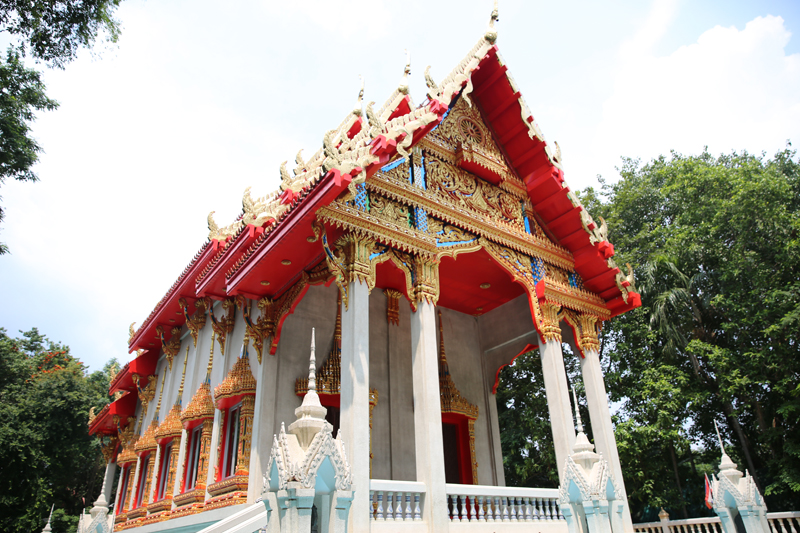
SAMUT PRAKAN — A temple in central Thailand gives plastic bottles new, consecrated life in the form of new robes for monks.
“Don’t think that the waste problem can’t be solved. Buddha taught us that there is always a solution to every problem,” the deputy abbot of Wat Chak Daeng, Phra Maha Pranom Dhammalangkaro, said.
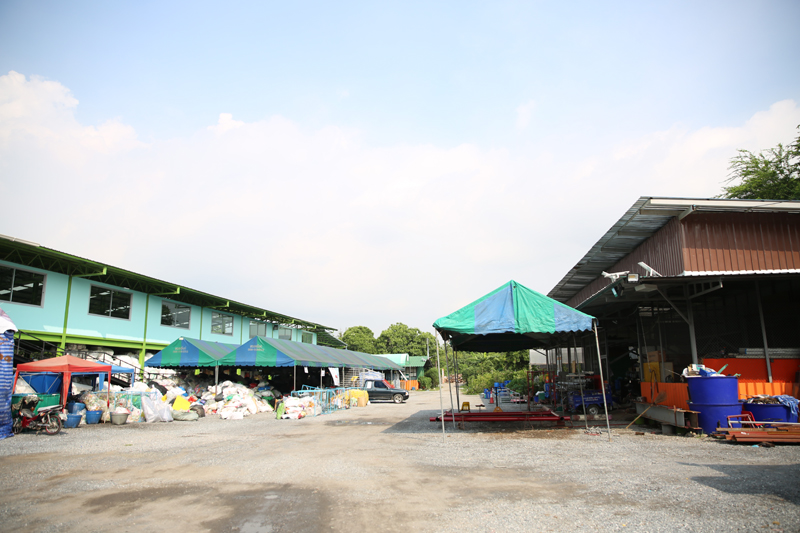
The temple manages a campaign calling for donations of plastic bottles, which are processed into synthetic fibres and used to make robes. The upcycling initiative has already saved 40 tons of plastic since its inception last year.
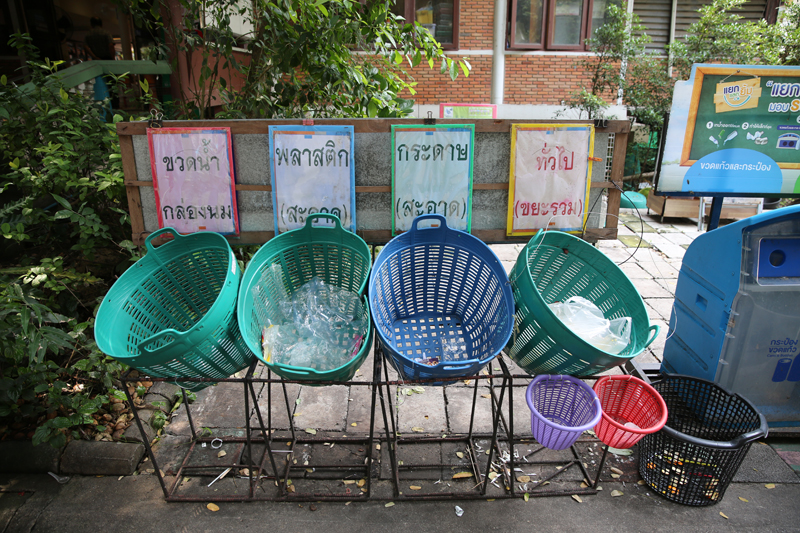
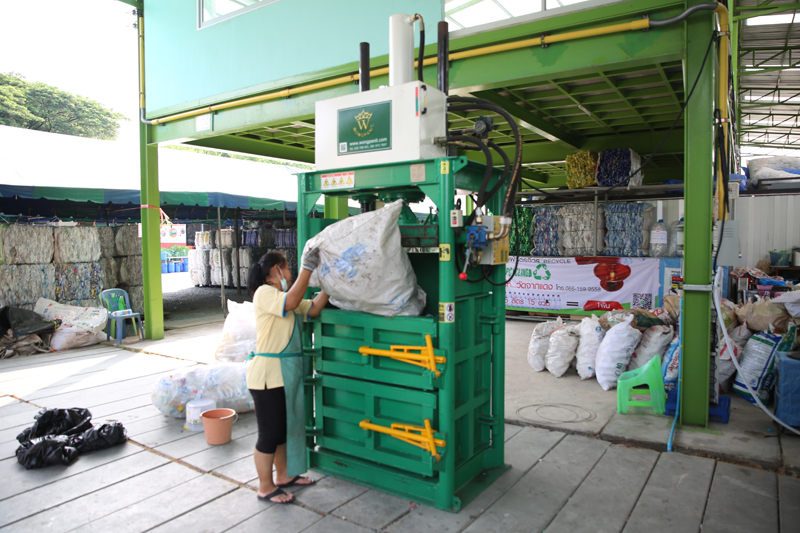
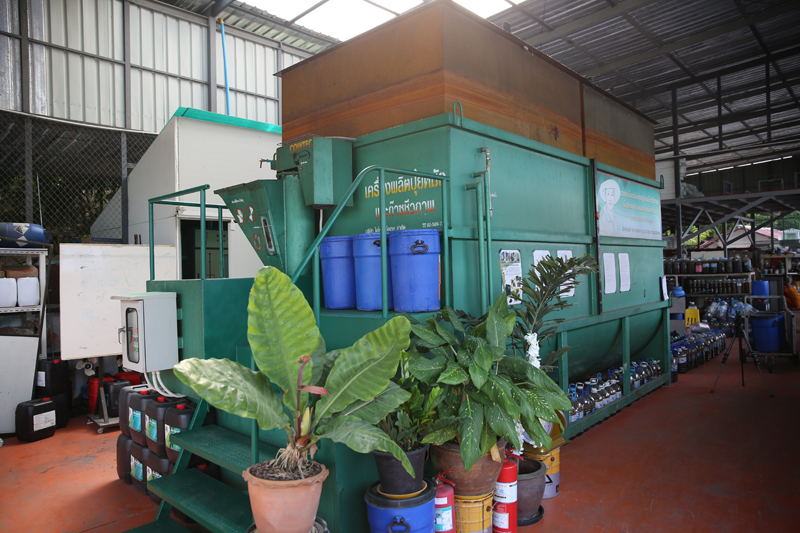
Visitors walking into the vast temple in Bang Krachao, dubbed “Bangkok’s green lung,” could easily mistake it for a waste processing plant. Volunteers sort waste in a large warehouse, while a monk pours food waste into a compost machine to make organic fertilizer and biogas. The clamor of plastic bottles being crushed drowns out the chant of afternoon prayers.
The temple’s recycling operations, which began more than a decade ago in 2005, are spearheaded by Phra Maha Pranom. The monk never received a formal education in science, but plastic waste piling up by the river bank sparked his passion for waste management, and ultimately the idea for a “recycled robe.”
As a Buddhist studies teacher, he was also inspired by religious teachings and scriptures, which describe several monastic duties that are similar to the modern-day practice of recycling.
“Buddha has become a role model for recycling,” Phra Maha Pranom said. “The Buddhist canon said he made robes from discarded fabric obtained from trash piles and corpses, which he then cleaned and sewed into robes.”
“Even when the cloth became old, he would use it as a mattress. When the mattress became old, he would use it as a floor mat. He has set an example for his devotees to see how much use they can make out of a piece of fabric,” the deputy abbot added.
Phra Maha Pranom started his operations by attempting to extract petrol from plastic bottles in a process called pyrolysis, where they are heated in a vacuum to extract oil. However, he abandoned the process as twenty kilograms of plastic yielded less than a litre of oil.
About the same time, the Royal Chaipattana Foundation launched an environmental conservation project in Bang Krachao. The project brought a devotee to the temple, who told Phra Maha Pranom that the shirt he was wearing was made from plastic bottles. The monk asked the man whether plastic bottles could be turned into a robe.
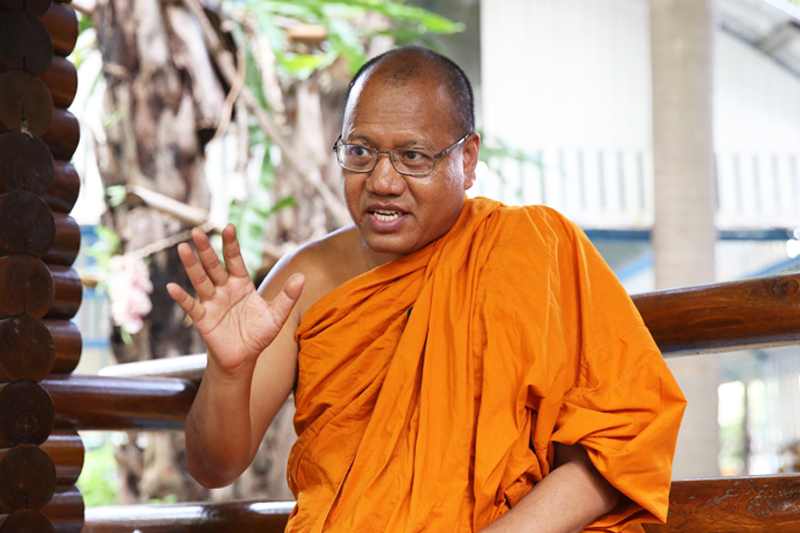
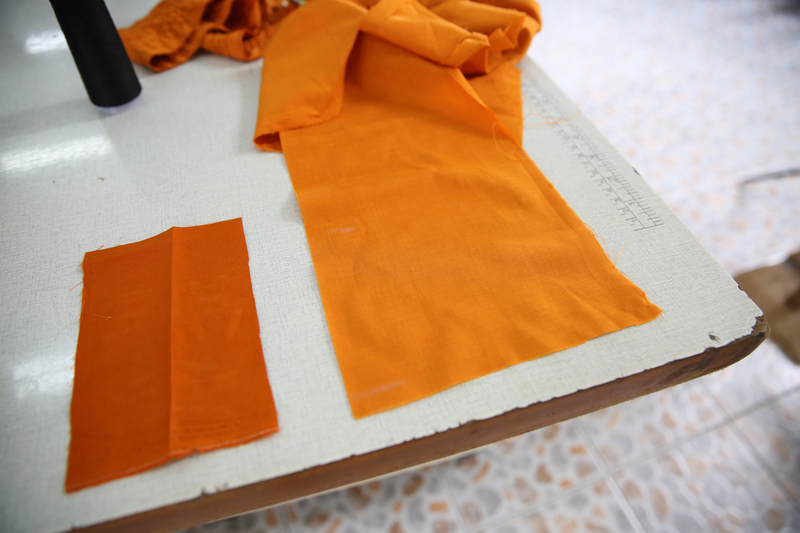
After three years of trialing and collaboration with a chemical company, the first set of “recycled robes” were rolled out in 2018. Phra Maha Pranom claims that the texture of the resulting cloth is not as rough as plastic bags, but instead soft and smooth like silk. The robes also boast anti-odor properties as they are sewn with antibacterial polyester zinc strands.
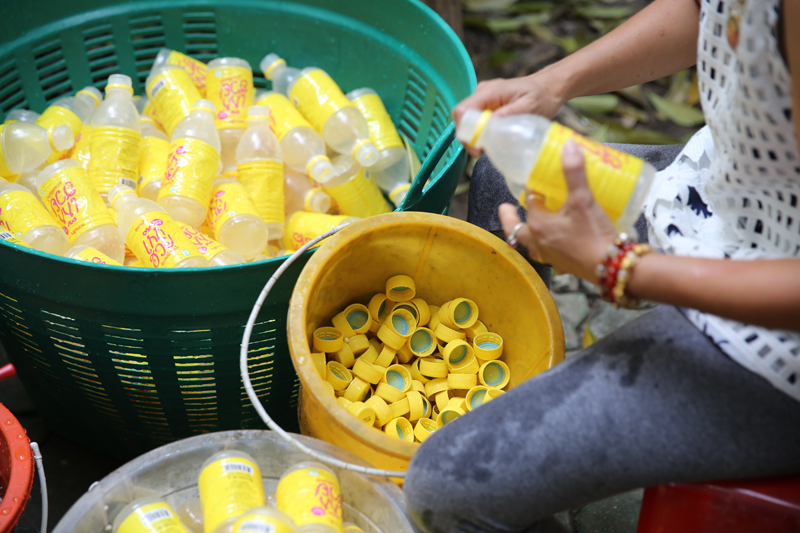
However, the process is meticulous and labor-intensive. Only bottles made of polyethylene terephthalate (PET) can be used, which volunteers clean and press into blocks. They are shipped to a factory, where a machine shreds the plastic, while another churns out polyester threads. The threads are blended with cotton and antibacterial strands to create a fabric, before being dyed saffron.
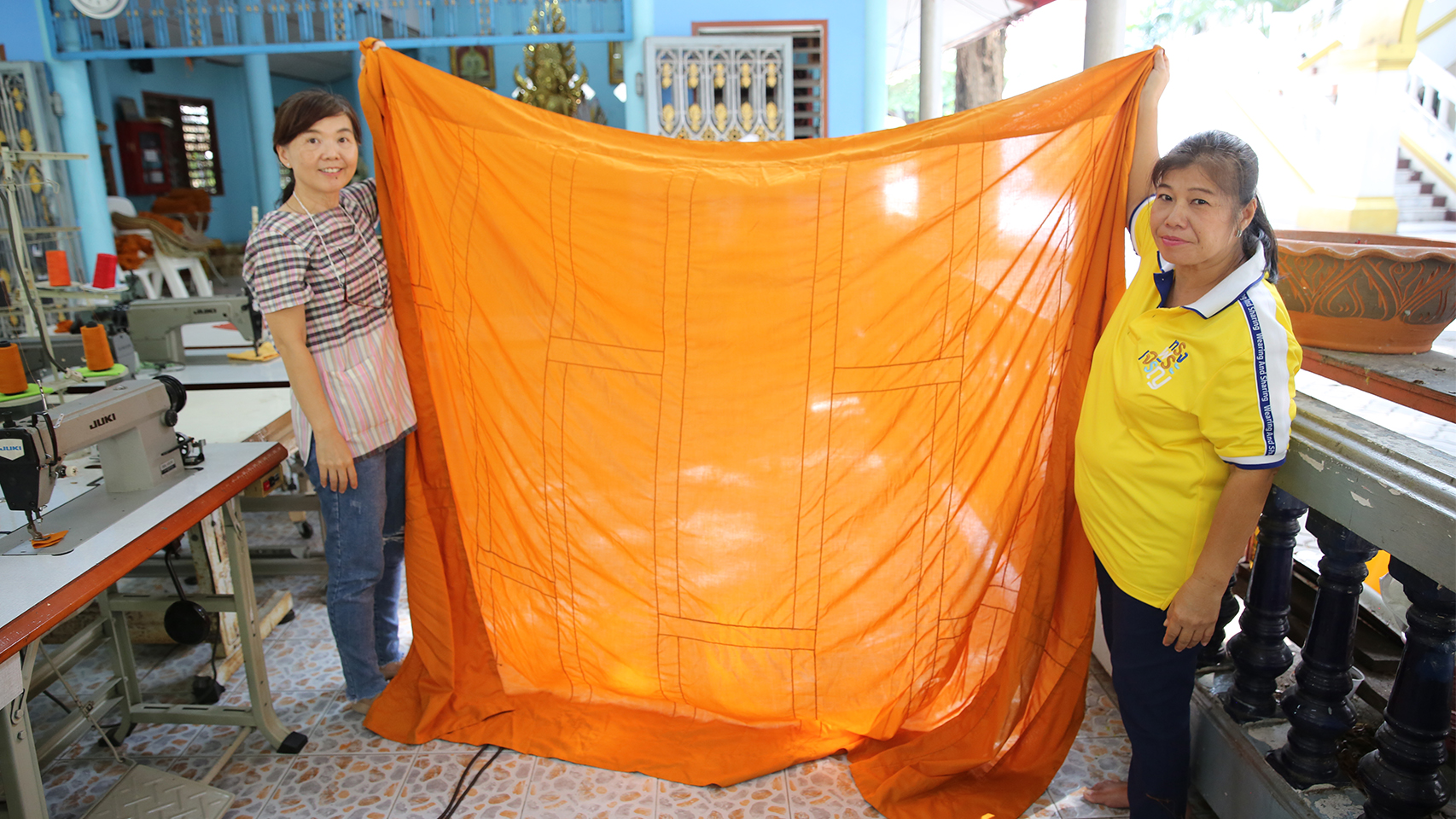
The factory then sells the fabric back to the temple, where another group of volunteers cuts and stitches robes. One piece of robe consumes 15 plastic bottles. A set of full monk attire requires four pieces of robe, or 60 plastic bottles.
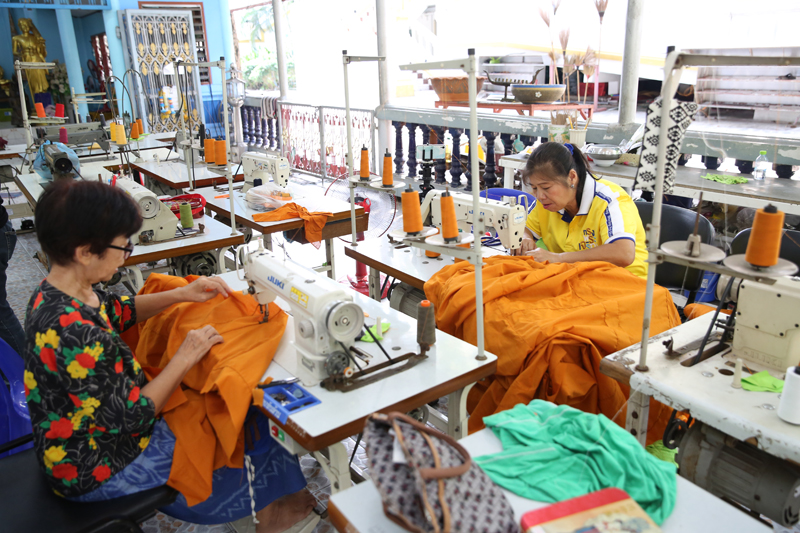
Like many green products, the price of a recycled robe is higher. A set of “recycled robes” is sold at 5,000 baht, compared to 3,000 baht for an ordinary set of robes.
“It costs around one million baht to produce one batch of fabric, or 12,000 yards,” Phra Maha Pranom said. “Up to 400 robe pieces can be made out of a batch.”
Apart from preserving the environment, the initiative creates jobs for locals and generates income for the temple. Phra Maha Pranom also hopes to use the waste problem as a tool to teach dhamma to devotees.
“We have to use our wisdom to see the hidden value of things around us. If we can see their value, there will be no excess or dearth,” Phra Maha Pranom said.
In the long run, he aims to establish a conservation center alongside a Buddhist studies institute.
“Plastics are not bad. Don’t let your bias overwhelm you. Plastic is like nuclear energy, which gives tremendous benefits to mankind, but can also wipe out our civilization. Plastic takes time to decompose, but it can also be reused for many purposes,” Phra Maha Pranom added.
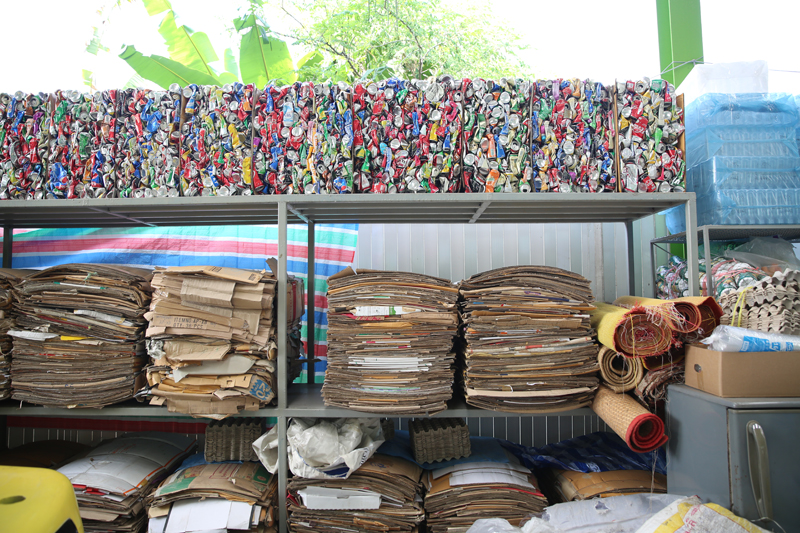
Apart from PET bottles, Wat Chak Daeng also processes other types of waste including plastic bags, beverage cartons, glass bottles, styrofoam, paper, paper cartons, and aluminium cans.
To donate your waste, drop it off at the temple or mail it to:
Wat Chak Daeng
16 Moo 6, Phetchahung Road, Tambon Song Khanong,
Amphoe Phra Pradaeng, Samut Prakan 10130
Google Translation:
วัดจักรแดง จังหวัดสมุทรปราการ นำขวดพลาสติกมาแปรรูปเป็นจีวรพระ
18 กันยายน 2562
อ่านเพิ่มเติม: พระภิกษุและฮิปโปผนึกกำลังแก้ปัญหาขยะพลาสติกในกรุงเทพฯ
สมุทรปราการ — วัดแห่งหนึ่งในภาคกลางของประเทศไทย นำขวดพลาสติกมาแปรรูปเป็นจีวรใหม่สำหรับพระภิกษุ
“อย่าคิดว่าปัญหาขยะแก้ไม่ได้ พระพุทธเจ้าทรงสอนเราว่า ทุกปัญหาย่อมมีทางออกเสมอ” พระมหาปรานอม ธัมมาลังกาโร เจ้าอาวาสวัดจักรแดง กล่าว
โรงงานรีไซเคิลของวัด
วัดดำเนินโครงการรับบริจาคขวดพลาสติก ซึ่งจะนำไปแปรรูปเป็นเส้นใยสังเคราะห์และใช้ทำจีวร โครงการรีไซเคิลนี้ช่วยลดขยะพลาสติกไปแล้ว 40 ตันนับตั้งแต่เริ่มโครงการเมื่อปีที่แล้ว
นักท่องเที่ยวที่เดินเข้าไปในวัดขนาดใหญ่ในบางกระเจ้า ซึ่งได้รับการขนานนามว่า “ปอดสีเขียวของกรุงเทพฯ” อาจเข้าใจผิดคิดว่าเป็นโรงงานแปรรูปขยะได้ง่ายๆ อาสาสมัครกำลังคัดแยกขยะในโกดังขนาดใหญ่ ขณะที่พระภิกษุรูปหนึ่งกำลังเทเศษอาหารลงในเครื่องทำปุ๋ยหมักเพื่อผลิตปุ๋ยอินทรีย์และก๊าซชีวภาพ เสียงดังจากการบดขวดพลาสติกกลบเสียงสวดมนต์ในช่วงบ่าย
การดำเนินงานรีไซเคิลของวัด ซึ่งเริ่มต้นเมื่อกว่าทศวรรษที่แล้วในปี 2548 นำโดยพระมหาปรานอม พระภิกษุรูปนี้ไม่เคยได้รับการศึกษาด้านวิทยาศาสตร์อย่างเป็นทางการ แต่ขยะพลาสติกที่กองพะเนินอยู่ริมฝั่งแม่น้ำจุดประกายความสนใจในการจัดการขยะของท่าน และในที่สุดก็เกิดความคิดเรื่อง “จีวรรีไซเคิล” ขึ้นมา
ในฐานะอาจารย์สอนพระพุทธศาสนา ท่านยังได้รับแรงบันดาลใจจากคำสอนและพระคัมภีร์ทางศาสนา ซึ่งบรรยายถึงหน้าที่ของพระภิกษุหลายประการที่คล้ายคลึงกับการปฏิบัติการรีไซเคิลในปัจจุบัน
กระป๋องอลูมิเนียมและกล่องกระดาษถูกเก็บไว้ในโกดัง รอการขายหรือนำกลับมาใช้ใหม่
“พระพุทธเจ้าทรงเป็นแบบอย่างของการรีไซเคิล” พระมหาประนอมกล่าว “คัมภีร์พุทธศาสนิกชนกล่าวว่า พระองค์ทรงทำจีวรจากเศษผ้าเหลือทิ้งที่เก็บได้จากกองขยะและศพ ซึ่งพระองค์ทรงทำความสะอาดและเย็บเป็นจีวร”
“แม้ผ้าจะเก่าแล้ว พระองค์ก็ยังทรงใช้เป็นที่นอน เมื่อที่นอนเก่าแล้ว พระองค์ก็ยังทรงใช้เป็นพรมปูพื้น พระองค์ทรงเป็นแบบอย่างให้แก่พุทธศาสนิกชนเห็นว่าพวกเขาสามารถใช้ประโยชน์จากผ้าชิ้นเล็กๆ ได้มากเพียงใด” รองเจ้าอาวาสกล่าวเสริม
พระมหาประนอมเริ่มต้นการดำเนินงานโดยพยายามสกัดน้ำมันเบนซินจากขวดพลาสติกด้วยกระบวนการที่เรียกว่าไพโรไลซิส ซึ่งเป็นการนำขวดพลาสติกไปให้ความร้อนในสุญญากาศเพื่อสกัดน้ำมัน อย่างไรก็ตาม พระองค์ทรงล้มเลิกกระบวนการนี้เนื่องจากพลาสติก 20 กิโลกรัมได้น้ำมันน้อยกว่า 1 ลิตร
ในเวลาเดียวกันนั้น มูลนิธิราชกุศลชัยพัฒนาได้ริเริ่มโครงการอนุรักษ์สิ่งแวดล้อมในบางกระเจ้า โครงการนี้ได้นำพุทธศาสนิกชนท่านหนึ่งมาที่วัด และบอกกับพระมหาประนอมว่าเสื้อที่เขาสวมอยู่นั้นทำมาจากขวดพลาสติก พระภิกษุรูปหนึ่งถามชายคนนั้นว่า ขวดพลาสติกสามารถนำมาทำเป็นจีวรได้หรือไม่
พระมหาปรานอม ธัมมาลังกาโร
หลังจากทดลองและร่วมมือกับบริษัทเคมีภัณฑ์เป็นเวลาสามปี จีวร “รีไซเคิล” ชุดแรกก็ถูกผลิตออกมาในปี 2561 พระมหาปรานอมกล่าวว่า เนื้อผ้าที่ได้นั้นไม่หยาบเหมือนถุงพลาสติก แต่กลับนุ่มและเรียบลื่นเหมือนผ้าไหม จีวรเหล่านี้ยังมีคุณสมบัติป้องกันกลิ่นไม่พึงประสงค์ เนื่องจากเย็บด้วยเส้นใยโพลีเอสเตอร์ผสมสังกะสีที่มีคุณสมบัติต้านเชื้อแบคทีเรีย
อย่างไรก็ตาม กระบวนการผลิตนั้นพิถีพิถันและต้องใช้แรงงานมาก ต้องใช้เฉพาะขวดที่ทำจากโพลีเอทิลีนเทเรฟทาเลต (PET) เท่านั้น ซึ่งอาสาสมัครจะช่วยกันทำความสะอาดและอัดเป็นก้อน จากนั้นจึงส่งไปยังโรงงาน ที่ซึ่งเครื่องจักรจะบดพลาสติก ในขณะที่อีกเครื่องหนึ่งจะผลิตเส้นใยโพลีเอสเตอร์ เส้นใยเหล่านี้จะถูกผสมกับฝ้ายและเส้นใยต้านเชื้อแบคทีเรียเพื่อสร้างเป็นผ้า ก่อนที่จะย้อมด้วยสีเหลืองหญ้าฝรั่น
จากนั้นโรงงานจะขายผ้าคืนให้กับวัด ซึ่งกลุ่มอาสาสมัครอีกกลุ่มหนึ่งจะนำไปตัดเย็บเป็นจีวร จีวรหนึ่งผืนใช้พลาสติก 15 ขวด ชุดจีวรเต็มยศหนึ่งชุดต้องใช้จีวรสี่ผืน หรือพลาสติก 60 ขวด
อาสาสมัครกำลังเย็บจีวร
เช่นเดียวกับผลิตภัณฑ์รักษ์โลกหลายอย่าง ราคาของจีวรที่ทำจากวัสดุรีไซเคิลจะสูงกว่า ชุดจีวร “รีไซเคิล” ขายในราคา 5,000 บาท เทียบกับ 3,000 บาทสำหรับชุดจีวรธรรมดา
“การผลิตผ้าหนึ่งล็อตมีต้นทุนประมาณหนึ่งล้านบาท หรือ 12,000 หลา” พระมหาประนอมกล่าว “สามารถทำจีวรได้มากถึง 400 ผืนจากหนึ่งล็อต”
นอกจากการรักษาสิ่งแวดล้อมแล้ว โครงการนี้ยังสร้างงานให้กับคนในท้องถิ่นและสร้างรายได้ให้กับวัด พระมหาประนอมยังหวังที่จะใช้ปัญหาขยะเป็นเครื่องมือในการสอนธรรมะแก่พุทธศาสนิกชนด้วย
“เราต้องใช้ปัญญาของเราเพื่อมองเห็นคุณค่าที่ซ่อนอยู่ของสิ่งต่างๆ รอบตัวเรา หากเรามองเห็นคุณค่าของสิ่งเหล่านั้น ก็จะไม่มีความเหลือเฟือหรือขาดแคลน” พระมหาปรานอมกล่าว
ในระยะยาว ท่านตั้งเป้าที่จะจัดตั้งศูนย์อนุรักษ์ควบคู่ไปกับสถาบันพุทธศาสนา
“พลาสติกไม่ใช่สิ่งเลวร้าย อย่าปล่อยให้ความลำเอียงครอบงำคุณ พลาสติกก็เหมือนกับพลังงานนิวเคลียร์ ซึ่งให้ประโยชน์มหาศาลแก่มนุษยชาติ แต่ก็สามารถทำลายอารยธรรมของเราได้เช่นกัน พลาสติกใช้เวลานานในการย่อยสลาย แต่ก็สามารถนำกลับมาใช้ใหม่ได้หลายอย่าง” พระมหาประนอมกล่าวเสริม
นอกจากขวดพลาสติก PET แล้ว วัดจักรแดงยังรับจัดการขยะประเภทอื่นๆ ด้วย เช่น ถุงพลาสติก กล่องเครื่องดื่ม ขวดแก้ว โฟม กระดาษ กล่องกระดาษ และกระป๋องอลูมิเนียม
หากต้องการบริจาคขยะ สามารถนำมาส่งที่วัดหรือส่งทางไปรษณีย์ได้ที่:
วัดจักรแดง
16 หมู่ 6 ถนนเพชรหงส์ ตำบลสองโขนง
อำเภอพระประแดง จังหวัดสมุทรปราการ 10130