Hanoi plans second international airport south of the capital for up to 50 million passengers
THIS NEWS ARTICLE KINDLY SPONSORED BY FALLPROTEC, A WORLD-RENOWNED NAME IN THE DESIGN AND MANUFACTURE OF PREMIUM FALL PROTECTION SYSTEMS AND HEIGHT ACCESS SOLUTIONS
Hanoi plans to build a second international airport in the south of the capital, conceived as an “airport city” tied to a free trade zone, logistics and high-tech industry, under a 100-year master plan.
The plan, a blueprint for Hanoi’s development over the coming century, identifies the second airport as a multimodal transport hub and a strategic economic driver for the capital over the decades ahead. It places the airport in the Ung Hoa and Chuyen My area, about 40 km south of the city center, built to international standards with a designed capacity of 30 to 50 million passengers and around 1 million metric tons of cargo a year.
The ambition extends well beyond runways and terminals. Hanoi wants the surrounding area developed as an airport city that combines aviation services, a free trade zone, outlet malls, hotels, logistics, high-tech industry and other international services. Planners expect the airport to anchor an international cargo transshipment hub linking air, road and rail, with the surrounding corridor of warehousing, cold-chain logistics, an agricultural trade center and high-tech industrial parks built up as the logistics core of the entire capital region.
The plan also calls for a southern industry, logistics and high-tech growth pole in the Phu Xuyen and Ung Hoa area, tied to the second airport, high-speed rail and a river port.
The southern zone is slated to double as a tourism gateway. The plan would link the airport to the Tam Chuc-Trang An tourism circuit and to a chain of spiritual heritage sites taking in the Perfume Pagoda, Tam Chuc, Bai Dinh and Trang An, the last a UNESCO World Heritage site. It designates the area as a logistics base and an international tourism transfer point between the airport and some of northern Vietnam’s most visited destinations, what the plan calls the capital’s “southern tourism gateway.” The airport zone would also be tied to high-quality healthcare complexes and a university town in southern Hanoi.
Rail is meant to be the main link between the airport and central Hanoi. The plan prioritizes urban railway line 1A, connecting Ngoc Hoi station with the second airport, for construction in the 2026-2030 window. Ngoc Hoi is designated as a major rail hub in the south, joining urban rail, the national network, the North-South high-speed railway and inter-regional rail ring lines, in order to reduce traffic cutting through the city center.
Road access in the south would rely on National Highway 1A, the North-South Expressway and a system of inter-regional ring roads, while the plan also envisions waterway transport to add logistics capacity.
Research and investment in the second airport and its accompanying free trade zone are grouped among the plan’s priority projects for the 2031-2045 period. Hanoi intends to draw on a mix of private and social resources and to apply special mechanisms to attract investment into what it frames as strategic infrastructure for the capital.
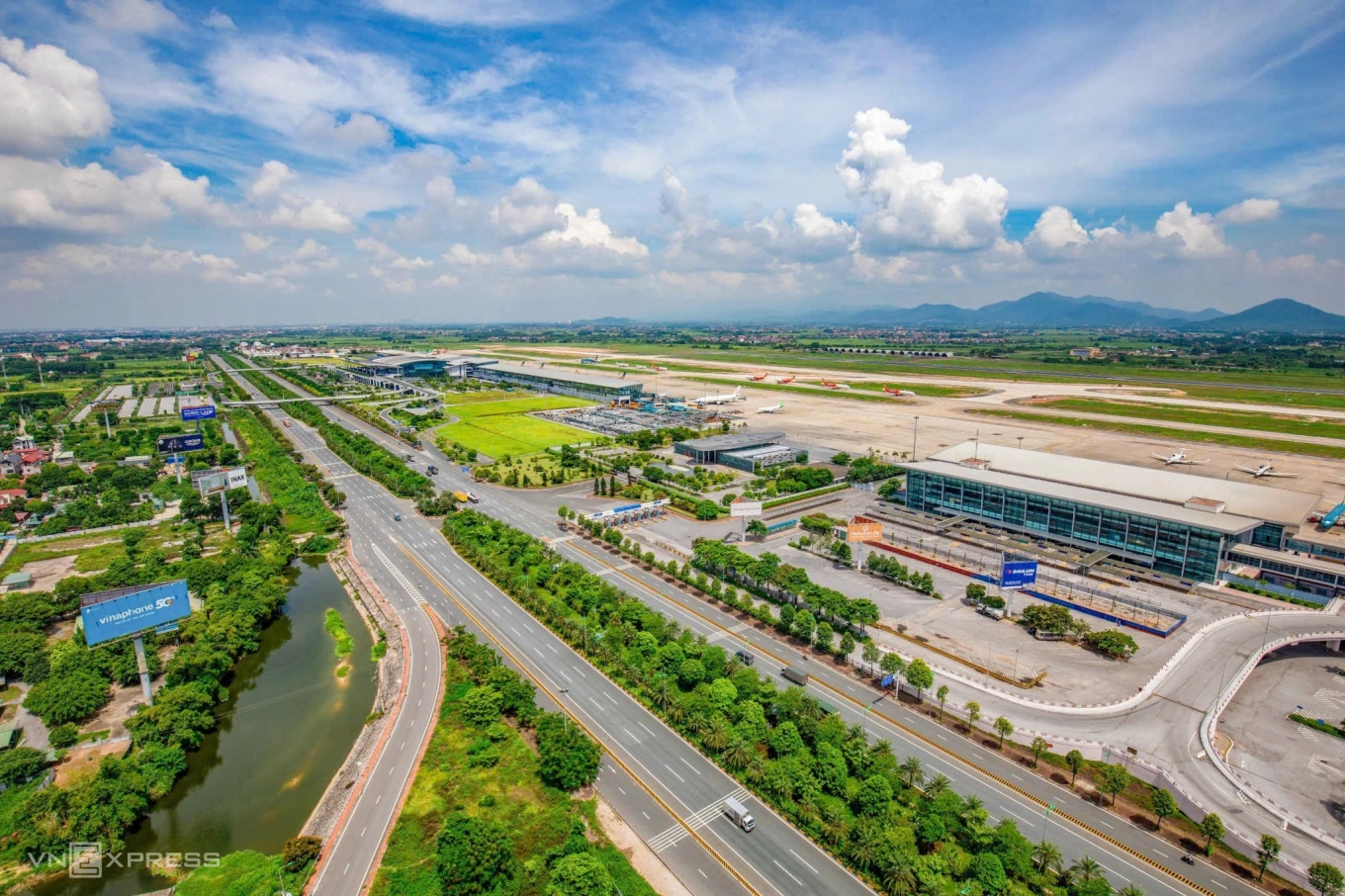
Hanoi currently has one airport, Noi Bai International Airport. Alongside the new southern project, the master plan calls for upgrading Noi Bai to a capacity of 50 million passengers a year and expanding it by about 1,500 hectares to the south. The city also plans to develop the Hoa Lac and Gia Lam airfields under a dual-use model serving both military and civilian aviation.
Source: https://e.vnexpress.net/news/news/traffic/hanoi-plans-second-international-airport-for-up-to-50-million-passengers-5075599.html
Google Translation:
ฮานอยวางแผนสร้างสนามบินนานาชาติแห่งที่สองทางตอนใต้ของเมืองหลวง รองรับผู้โดยสารได้มากถึง 50 ล้านคนต่อปี
บทความข่าวนี้ได้รับการสนับสนุนโดย FALLPROTEC บริษัทที่มีชื่อเสียงระดับโลกด้านการออกแบบและการผลิตระบบป้องกันการตกจากที่สูงและโซลูชันการเข้าถึงที่สูงระดับพรีเมียม
ฮานอยวางแผนสร้างสนามบินนานาชาติแห่งที่สองทางตอนใต้ของเมืองหลวง โดยมีแนวคิดเป็น “เมืองสนามบิน” ที่เชื่อมโยงกับเขตการค้าเสรี โลจิสติกส์ และอุตสาหกรรมไฮเทค ภายใต้แผนแม่บท 100 ปี
แผนดังกล่าวเป็นพิมพ์เขียวสำหรับการพัฒนาของฮานอยในศตวรรษที่จะมาถึง โดยระบุว่าสนามบินแห่งที่สองจะเป็นศูนย์กลางการขนส่งแบบหลายรูปแบบและเป็นตัวขับเคลื่อนทางเศรษฐกิจเชิงกลยุทธ์สำหรับเมืองหลวงในอีกหลายทศวรรษข้างหน้า แผนดังกล่าววางตำแหน่งสนามบินไว้ในพื้นที่อุงฮวาและชูเยนมี ห่างจากใจกลางเมืองไปทางใต้ประมาณ 40 กิโลเมตร สร้างตามมาตรฐานสากลด้วยศักยภาพในการรองรับผู้โดยสาร 30 ถึง 50 ล้านคน และสินค้าประมาณ 1 ล้านตันต่อปี
ความทะเยอทะยานนั้นไม่ได้จำกัดอยู่แค่เพียงรันเวย์และอาคารผู้โดยสารเท่านั้น ฮานอยต้องการพัฒนาพื้นที่โดยรอบให้เป็นเมืองสนามบินที่รวมบริการด้านการบิน เขตการค้าเสรี ศูนย์การค้าเอาท์เล็ต โรงแรม โลจิสติกส์ อุตสาหกรรมไฮเทค และบริการระหว่างประเทศอื่นๆ เข้าด้วยกัน นักวางแผนคาดหวังว่าสนามบินจะเป็นศูนย์กลางการขนส่งสินค้าทางอากาศ ทางบก และทางรถไฟระหว่างประเทศ โดยมีพื้นที่คลังสินค้า โลจิสติกส์แบบควบคุมอุณหภูมิ ศูนย์การค้าเกษตร และนิคมอุตสาหกรรมไฮเทคโดยรอบสร้างขึ้นเป็นศูนย์กลางโลจิสติกส์ของภูมิภาคเมืองหลวงทั้งหมด
แผนดังกล่าวยังเรียกร้องให้มีการพัฒนาพื้นที่ทางใต้ให้เป็นศูนย์กลางการเติบโตของอุตสาหกรรม โลจิสติกส์ และไฮเทคในพื้นที่ฟูเซียนและอุงฮวา ซึ่งเชื่อมโยงกับสนามบินแห่งที่สอง รถไฟความเร็วสูง และท่าเรือแม่น้ำ
นอกจากนี้ พื้นที่ทางใต้ยังถูกกำหนดให้เป็นประตูสู่การท่องเที่ยวอีกด้วย แผนดังกล่าวจะเชื่อมโยงสนามบินเข้ากับเส้นทางการท่องเที่ยว Tam Chuc-Trang An และแหล่งท่องเที่ยวเชิงวัฒนธรรมที่สำคัญ ได้แก่ วัดน้ำหอม Tam Chuc, Bai Dinh และ Trang An ซึ่ง Trang An เป็นแหล่งมรดกโลกของ UNESCO แผนนี้กำหนดให้พื้นที่ดังกล่าวเป็นฐานโลจิสติกส์และจุดเชื่อมต่อการท่องเที่ยวระหว่างประเทศระหว่างสนามบินกับสถานที่ท่องเที่ยวที่ได้รับความนิยมมากที่สุดในภาคเหนือของเวียดนาม ซึ่งแผนนี้เรียกว่า “ประตูสู่การท่องเที่ยวทางใต้” ของเมืองหลวง เขตสนามบินจะเชื่อมโยงกับศูนย์สุขภาพคุณภาพสูงและเมืองมหาวิทยาลัยทางตอนใต้ของฮานอยด้วย
ระบบรถไฟจะเป็นเส้นทางหลักในการเชื่อมต่อระหว่างสนามบินและใจกลางฮานอย แผนนี้ให้ความสำคัญกับรถไฟฟ้าสาย 1A ซึ่งเชื่อมต่อสถานี Ngoc Hoi กับสนามบินแห่งที่สอง โดยจะเริ่มก่อสร้างในช่วงปี 2026-2030 Ngoc Hoi ถูกกำหนดให้เป็นศูนย์กลางทางรถไฟที่สำคัญทางตอนใต้ เชื่อมต่อกับรถไฟฟ้าในเมือง รถไฟฟ้าแห่งชาติ รถไฟความเร็วสูงสายเหนือ-ใต้ และรถไฟวงแหวนระหว่างภูมิภาค เพื่อลดปริมาณการจราจรที่ตัดผ่านใจกลางเมือง
การเข้าถึงทางถนนในภาคใต้จะอาศัยทางหลวงหมายเลข 1A ทางด่วนเหนือ-ใต้ และระบบถนนวงแหวนระหว่างภูมิภาค ขณะเดียวกันแผนยังมองเห็นถึงการขนส่งทางน้ำเพื่อเพิ่มขีดความสามารถด้านโลจิสติกส์
การวิจัยและการลงทุนในสนามบินแห่งที่สองและเขตการค้าเสรีที่เกี่ยวข้องนั้นถูกจัดอยู่ในกลุ่มโครงการสำคัญลำดับต้นๆ ของแผนสำหรับช่วงปี 2031-2045 ฮานอยตั้งใจที่จะดึงเอาทรัพยากรจากภาคเอกชนและภาคสังคมมาใช้ และใช้กลไกพิเศษเพื่อดึงดูดการลงทุนในสิ่งที่มองว่าเป็นโครงสร้างพื้นฐานเชิงยุทธศาสตร์สำหรับเมืองหลวง
ปัจจุบันฮานอยมีสนามบินเพียงแห่งเดียว คือ สนามบินนานาชาตินอยบาย นอกเหนือจากโครงการใหม่ทางภาคใต้แล้ว แผนแม่บทเรียกร้องให้ยกระดับสนามบินนอยบายให้มีขีดความสามารถรองรับผู้โดยสารได้ 50 ล้านคนต่อปี และขยายพื้นที่ไปทางใต้ประมาณ 1,500 เฮกตาร์ เมืองนี้ยังวางแผนที่จะพัฒนาสนามบินฮวาหลักและเกียลัมภายใต้รูปแบบการใช้งานแบบสองทางเพื่อรองรับทั้งการบินทางทหารและพลเรือน