
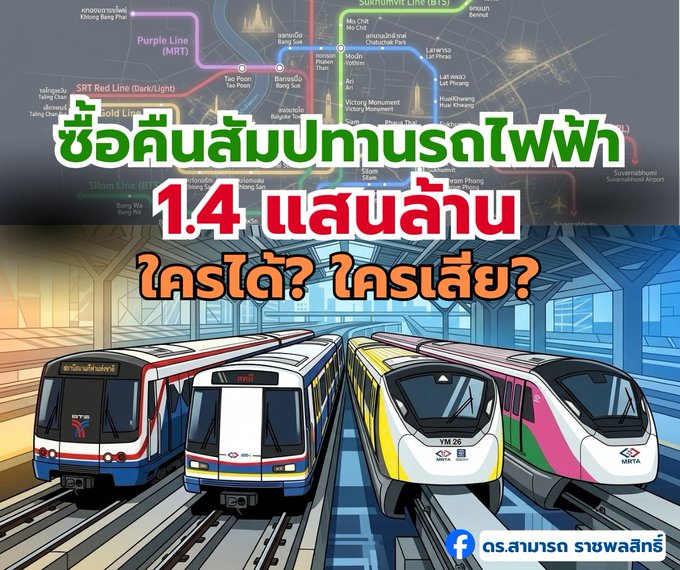
 Concerns raised over Thai government’s 140bn-baht rail concession buyback plan
THIS NEWS ARTICLE KINDLY SPONSORED BY FALLPROTEC, A WORLD-RENOWNED NAME IN THE DESIGN AND MANUFACTURE OF PREMIUM FALL PROTECTION SYSTEMS AND HEIGHT ACCESS SOLUTIONS
Concerns have been raised over a reported government plan to spend up to 140 billion baht buying back urban rail concessions, with questions over who stands to benefit and whether the state could face long-term financial risks.
Samart Ratchapolsitte, a former deputy Bangkok governor and former Democrat Party deputy leader, warned that the proposal could disproportionately benefit private concessionaires while shifting financial burdens onto the public sector.
According to reports, the government is considering buying back concessions on four lines—the Green Line (Mo Chit–Ekkamai and National Stadium–Saphan Taksin sections), as well as the Blue, Yellow and Pink lines—where private operators currently invest, collect revenue and bear full risk.
The plan is intended to pave the way for lower fares and bring all lines under the oversight of the Mass Rapid Transit Authority of Thailand (MRTA).
Under the proposed model, the state would fully fund the system, collect all revenue and assume all risks, while hiring the same private operators to run and maintain services under operation and maintenance (O&M) contracts.
Samart questioned how the 140-billion-baht figure was calculated, noting the government has yet to disclose details.
Typically, such valuations include infrastructure assets, additional income streams such as advertising and retail space, and projected profits over the remaining concession period.
He argued that private operators would benefit most, as selling back concessions would eliminate their exposure to ridership risk—particularly on underperforming lines—while still allowing them to secure steady income through O&M contracts.
He also raised concerns over whether fare reductions would significantly boost ridership.
If passenger numbers fail to rise enough, fare revenue may not cover buyback and operational costs, potentially forcing the government to subsidise the system over the long term.
Questions were also raised about MRTA’s capacity to manage all lines efficiently.
The agency has directly operated only one line—the Purple Line’s northern section—with ridership gains largely attributed to fare cuts rather than broader measures to attract passengers.
Other lines under its oversight continue to be run by private concessionaires.
Samart called on the government to compare the costs and risks of buying back concessions against maintaining the current model, in which the state would subsidise fare reductions without taking on full operational and financial risk.
Source: Thai Enquirer on twitter / X
Google Translation:
เกิดความกังวลเกี่ยวกับแผนการซื้อคืนสัมปทานรถไฟของรัฐบาลไทยมูลค่า 140,000 ล้านบาท
บทความข่าวนี้ได้รับการสนับสนุนโดย FALLPROTEC บริษัทชั้นนำระดับโลกด้านการออกแบบและผลิตระบบป้องกันการตกจากที่สูงและโซลูชันการเข้าถึงที่สูง
เกิดความกังวลเกี่ยวกับแผนการของรัฐบาลที่รายงานว่าจะใช้เงินมากถึง 140,000 ล้านบาทในการซื้อคืนสัมปทานรถไฟในเมือง โดยมีคำถามว่าใครจะเป็นผู้ได้รับประโยชน์และรัฐอาจเผชิญกับความเสี่ยงทางการเงินในระยะยาวหรือไม่
สมาร์ท รัชพลสิทธิ์ อดีตรองผู้ว่าราชการกรุงเทพมหานครและอดีตรองหัวหน้าพรรคประชาธิปัตย์ เตือนว่าข้อเสนอดังกล่าวอาจเอื้อประโยชน์แก่ผู้รับสัมปทานเอกชนมากกว่า ในขณะที่ผลักภาระทางการเงินไปสู่ภาครัฐ
ตามรายงาน รัฐบาลกำลังพิจารณาซื้อสัมปทานรถไฟฟ้า 4 สาย ได้แก่ สายสีเขียว (หมอชิต-เอกมัย และ สถานีกีฬาแห่งชาติ-สะพานตากสิน) รวมถึงสายสีน้ำเงิน สีเหลือง และสีชมพู ซึ่งปัจจุบันผู้ประกอบการเอกชนเป็นผู้ลงทุน เก็บรายได้ และรับความเสี่ยงทั้งหมด
แผนดังกล่าวมีจุดประสงค์เพื่อลดค่าโดยสารและนำรถไฟฟ้าทุกสายมาอยู่ภายใต้การกำกับดูแลขององค์การขนส่งมวลชนแห่งประเทศไทย (รฟฟ.)
ภายใต้รูปแบบที่เสนอ รัฐบาลจะให้เงินทุนสนับสนุนระบบทั้งหมด เก็บรายได้ทั้งหมด และรับความเสี่ยงทั้งหมด ในขณะที่ว่าจ้างผู้ประกอบการเอกชนรายเดิมให้ดำเนินการและบำรุงรักษาบริการภายใต้สัญญาการดำเนินงานและการบำรุงรักษา (O&M)
สมาร์ทตั้งคำถามถึงวิธีการคำนวณตัวเลข 140,000 ล้านบาท โดยระบุว่ารัฐบาลยังไม่ได้เปิดเผยรายละเอียด
โดยทั่วไป การประเมินมูลค่าดังกล่าวจะรวมถึงสินทรัพย์โครงสร้างพื้นฐาน รายได้เพิ่มเติม เช่น โฆษณาและพื้นที่ค้าปลีก และกำไรที่คาดการณ์ไว้ในช่วงระยะเวลาสัมปทานที่เหลืออยู่
เขาแย้งว่าผู้ประกอบการเอกชนจะได้รับประโยชน์มากที่สุด เนื่องจากการขายสัมปทานคืนจะช่วยลดความเสี่ยงจากจำนวนผู้โดยสาร โดยเฉพาะอย่างยิ่งในสายที่ผลประกอบการไม่ดี ในขณะเดียวกันก็ยังคงรักษารายได้ที่มั่นคงผ่านสัญญาการดำเนินงานและการบำรุงรักษา
เขายังแสดงความกังวลว่าการลดค่าโดยสารจะช่วยเพิ่มจำนวนผู้โดยสารได้อย่างมีนัยสำคัญหรือไม่
หากจำนวนผู้โดยสารไม่เพิ่มขึ้นมากพอ รายได้จากค่าโดยสารอาจไม่ครอบคลุมค่าใช้จ่ายในการซื้อคืนและค่าใช้จ่ายในการดำเนินงาน ซึ่งอาจทำให้รัฐบาลต้องอุดหนุนระบบในระยะยาว
นอกจากนี้ยังมีการตั้งคำถามเกี่ยวกับศักยภาพของ MRTA ในการบริหารจัดการทุกสายอย่างมีประสิทธิภาพ
หน่วยงานดังกล่าวได้ดำเนินการโดยตรงเพียงสายเดียว คือ สายสีม่วงส่วนเหนือ ซึ่งการเพิ่มขึ้นของผู้โดยสารส่วนใหญ่มาจากการลดค่าโดยสารมากกว่ามาตรการที่กว้างขึ้นเพื่อดึงดูดผู้โดยสาร
สายอื่นๆ ที่อยู่ภายใต้การดูแลของ MRTA ยังคงดำเนินการโดยผู้รับสัมปทานเอกชน
สมาร์ทเรียกร้องให้รัฐบาลเปรียบเทียบต้นทุนและความเสี่ยงของการซื้อคืนสัมปทานกับการรักษารูปแบบปัจจุบัน ซึ่งรัฐจะอุดหนุนการลดค่าโดยสารโดยไม่ต้องรับความเสี่ยงด้านการดำเนินงานและการเงินทั้งหมด

