
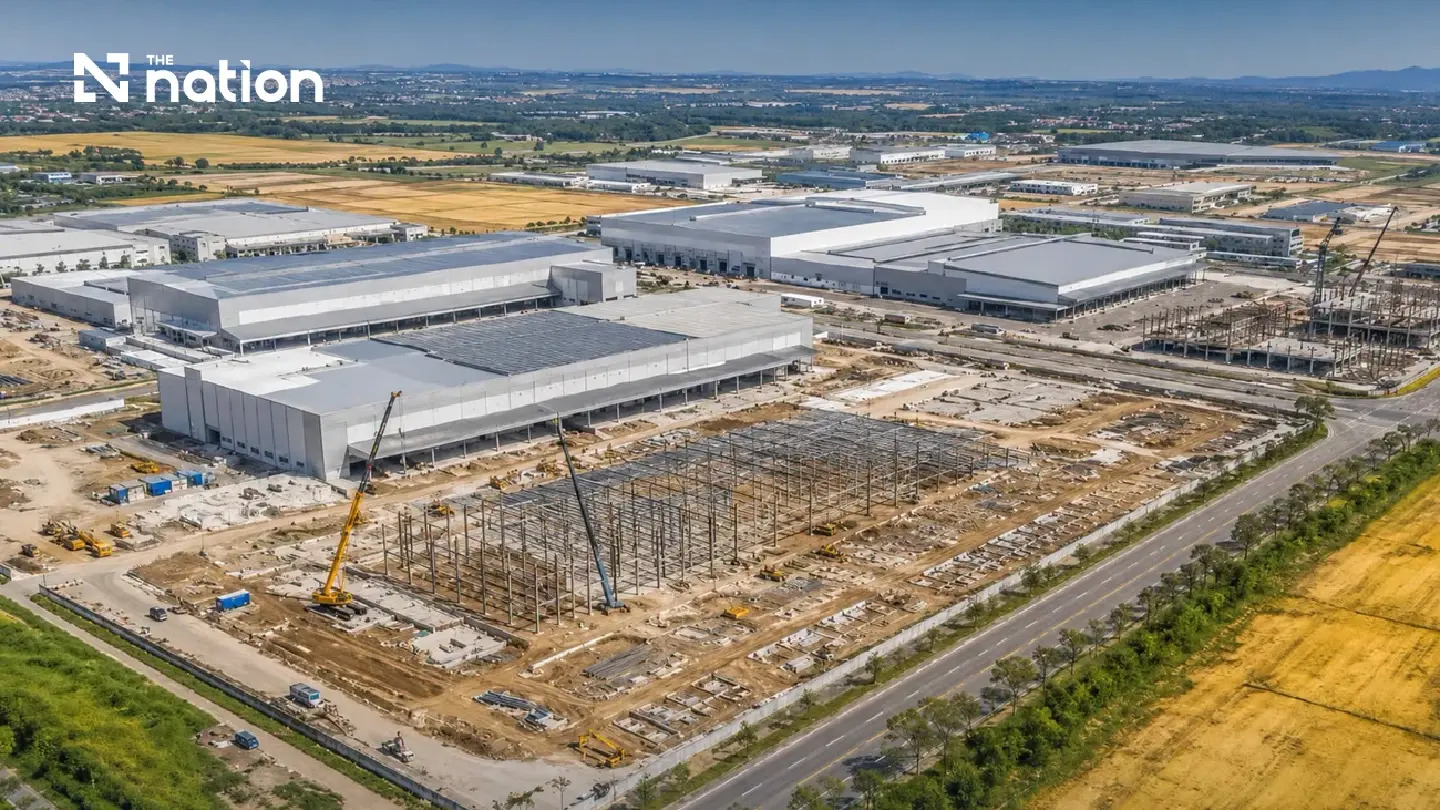
 Chinese land deals in Thailand’s Chonburi province EEC expose industrial park loophole
28 June 2026
THIS NEWS ARTICLE KINDLY SPONSORED BY FALLPROTEC, A WORLD-RENOWNED NAME IN THE DESIGN AND MANUFACTURE OF PREMIUM FALL PROTECTION SYSTEMS AND HEIGHT ACCESS SOLUTIONS
- Hengtu Industrial Park, which has 40% Chinese shareholding, is reportedly acquiring land in Bo Thong district, Chonburi province, and has begun developing an initial phase of around 1,000 rai for an industrial park project.
- The project is located in a “light-yellow” zoning area, which is legally designated as rural community land. Such zoning prohibits land allocation for industrial purposes and projects that could cause severe environmental impacts.
- The company has chosen to develop the project as an “industrial park”, a model that does not require approval from the Department of Industrial Works or the Industrial Estate Authority of Thailand, or IEAT.
- Although the company is registered as a real-estate brokerage business, it has applied for up to 300 megawatts of electricity, a level comparable to that of a large industrial estate. This suggests planning capacity for heavy industrial activity.
- Its shareholding structure, with Thai shareholders holding 60% and Chinese shareholders 40%, has raised questions over whether Thai nationals could be acting as nominees to hold land on behalf of foreign investors and bypass restrictions on foreign land ownership.
Chinese investors’ growing appetite for factory sites in Thailand is reshaping the industrial land market in the Eastern Economic Corridor, with one planned industrial park in Chonburi now attracting close scrutiny over zoning, infrastructure demand and possible gaps in state oversight.
Demand from Chinese companies has continued to rise inside Thai industrial estates, reflecting a broader wave of Chinese investment applications submitted to the Board of Investment between 2021 and September 2025. During that period, Chinese investors applied for investment promotion in 2,449 projects, with a combined value of 608.738 billion baht.
The surge has also spilled into land purchases inside and outside industrial estates in the EEC. Cushman & Wakefield Thailand has reported that Chinese buying over the past two years has helped push land prices in Chonburi and Rayong up by 20-30%.
Chonburi now has the highest quoted price at 9.5 million baht per rai, followed by Chachoengsao at 7.75 million baht per rai and Rayong at 7.5 million baht per rai.
Industrial park model draws attention
The rapid increase in land purchases by Chinese investors, particularly in industrial estates, has begun to lead to land acquisitions for projects designed to support factories operated by Chinese companies.
Until recently, investment in industrial estates, industrial zones and industrial parks had largely been driven by Thai operators. However, some Chinese investors are now looking at industrial park models that involve fewer legal requirements.
Industrial parks are subject mainly to the law on land allocation for industrial purposes, allowing development to proceed once land has been acquired. By contrast, industrial estates require approval under the Industrial Estate Authority of Thailand Act, while industrial zones must be approved under the Factory Act and require an environmental impact assessment.
An industrial-sector source told BangkokBizNews that Hengtu Industrial Park Co Ltd had bought land in That Thong subdistrict, Bo Thong district, Chonburi, to develop “Hengtu Industrial Park”.
The source said developing the site as an industrial park meant the project would not need approval from either the Department of Industrial Works or the Industrial Estate Authority of Thailand.
Large land holding raises questions
In practice, the source said, a large land bank may have been assembled, potentially reaching 5,000 rai. Initial land filling, development work and infrastructure preparation have already begun, while an electricity request of up to 300 megawatts has reportedly been submitted.
That level of power demand is comparable to a large industrial estate. The project has also reportedly contacted industrial raw-water suppliers, although some companies declined because of concerns about Chinese-backed land accumulation.
The area in Bo Thong, Chonburi, is subject to the land-use and infrastructure development plan for the Eastern Economic Corridor issued in 2019.
Under that plan, land classified as light-yellow zone, is designated as rural community land. Its purpose is to support communities, social service centres, rural economic activity and agriculture.
The rules for light-yellow land prohibit industrial projects that may cause severe environmental or health impacts as defined by the Industry Ministry. They also prohibit land allocation for industrial purposes under the land allocation law.
Authorities find no industrial estate application
A source from the Industry Ministry said no application had been found from Hengtu Industrial Park Co Ltd to establish an industrial zone.
The Industrial Estate Authority of Thailand also found no record of an application to establish an industrial estate under the same project name.
Checks with the Department of Business Development show that Hengtu Industrial Park Co Ltd has registered capital of 5 million baht, with its main business objective listed as real-estate agency and brokerage.
“There has been large-scale land collection and accumulation, with the first phase of development beginning at around 1,000 rai to support future industrial development. This pattern raises questions about whether an intermediary model is being used to hold land in preparation for future foreign investment,” the source said.
The company’s shareholding structure is reported as 60% Thai and 40% Chinese. This does not breach restrictions under the Foreign Business Act. However, in practice, the source said state agencies would still need to monitor closely whether Thai shareholders were being used as nominees to hold assets on behalf of foreign investors.
Yellow zoning becomes a key issue
Another concern is that the project site is located in a light-yellow planning zone, which is legally intended for rural community use.
In principle, such land is not designated to support large-scale industrial development and is subject to limits on activities that could affect the environment and residents’ quality of life.
However, available information indicates that land filling and some construction have already begun. The site may eventually be divided into areas for factories, the source said.
Large projects would normally have to go through detailed planning checks. If the land has not been designated as an industrial zone, the project would need to enter a zoning adjustment process, including impact studies, public hearings and consultations with local residents.
“Proceeding with the project before these processes are completed could become a major loophole that requires comprehensive scrutiny,” the source said.
Power demand matches a major estate
The reported request for up to 300 megawatts of electricity has become another major point of concern.
The figure is at the same level as an industrial estate and is much higher than the power demand of a typical real-estate development.
The source said the case raised several questions. It remained unclear whether the project’s power investment plan had already been coordinated with the Provincial Electricity Authority, whether the application was being submitted in phases or as a single full-project request, and whether the project should come under a special state-supervision framework.
“Developing land to support industrial investment requires a full infrastructure plan, including electricity, water supply, drainage and wastewater treatment systems. If this is truly industrial development, a 300-megawatt power request may reflect planning for large-scale industry,” the source said.
Water supply could affect communities
Water use is another issue requiring scrutiny.
Initial information indicates that companies have been contacted to help secure water sources for investment in the EEC. This has raised questions about the volume of water required and the possible impact on local communities.
The EEC is already a strategic area with high water demand from industry, agriculture and the public.
If water is not managed properly, the source said, long-term water security could be affected.
Although Hengtu Industrial Park Co Ltd is legally registered as a real-estate brokerage business, its operational pattern appears closer to industrial-estate-style development, including large land holdings, utility preparation, major electricity planning and land preparation for investors.
Foreign capital oversight faces new test
The project is now being seen as a test of Thailand’s ability to regulate land and infrastructure development linked to foreign investment.
The infrastructure work and 300-megawatt power request have raised questions over whether the case could expose gaps in oversight of land development intended to serve industrial investment.
Security agencies have previously coordinated inspections into expanding foreign investment and nominee practices, including cases in Rayong and Chonburi. In one major case, a Chinese investment group allegedly used Thai employees, including drivers and sales staff, to hold 51% of shares in companies used to acquire 72 rai of land worth about 2 billion baht.
Violations under Sections 111-113 of the Land Code carry penalties of up to two years in prison and fines. The Land Department also has authority to order land to be sold within 180 days to one year if nominee ownership is found.
The Land Department now links data with the Department of Business Development to examine financial trails and shareholder structures in greater detail before allowing registrations.
The Hengtu Industrial Park case therefore reflects a new challenge for Thailand as it manages a rapid inflow of foreign investment. If regulatory gaps are allowed to open in the strategic EEC area, the model could become a new investment pattern that the government will have to address.
Concerns over Chinese end-to-end investment model
A source from the Thai industrial sector said Chinese investment should be watched closely because some groups were moving into multiple parts of the supply chain, from upstream to downstream operations.
As more Chinese companies enter Thailand and industrial-estate land in the EEC becomes increasingly expensive, some Chinese investors are buying land themselves to develop and sell to other Chinese companies.
Some investment structures reportedly involve Thai accounting or legal firms helping set up companies to acquire land inside and outside EEC industrial estates, as well as in commercial districts such as Yaowarat and Huai Khwang.
This pattern has helped push land prices up by 20-30%, while rents for commercial buildings in some districts have risen threefold to tenfold. Local Thai operators have struggled to compete with the higher costs, with some forced to close.
Chinese investors have also been acquiring land outside industrial estates in EEC areas such as Pluak Daeng district in Rayong and Bo Win subdistrict in Si Racha district, Chonburi.
In some cases, the source said, Chinese capital has been invested through nominee structures, pushing land prices higher and making it harder for Thai businesses to expand. In some locations, land and rental costs have nearly tripled, preventing local operators from renting space for livelihoods or factory expansion and causing some local businesses to disappear.
Source: https://www.nationthailand.com/business/investment/40067845
Google Translation:
ข้อตกลงที่ดินของบริษัทจีนในจังหวัดชลบุรี ประเทศไทย เผยช่องโหว่ของนิคมอุตสาหกรรมในเขตเศรษฐกิจพิเศษภาคตะวันออกของไทย
28 มิถุนายน 2569
บทความข่าวนี้ได้รับการสนับสนุนโดย FALLPROTEC บริษัทชั้นนำระดับโลกด้านการออกแบบและผลิตระบบป้องกันการตกจากที่สูงและโซลูชันการเข้าถึงที่สูง
นิคมอุตสาหกรรมเหิงตู ซึ่งมีผู้ถือหุ้นชาวจีน 40% รายงานว่ากำลังเข้าซื้อที่ดินในอำเภอบ่อทอง จังหวัดชลบุรี และเริ่มพัฒนาเฟสแรกประมาณ 1,000 ไร่ สำหรับโครงการนิคมอุตสาหกรรม
โครงการนี้ตั้งอยู่ในพื้นที่โซน “สีเหลืองอ่อน” ซึ่งตามกฎหมายกำหนดให้เป็นที่ดินชุมชนชนบท การจัดโซนเช่นนี้ห้ามการจัดสรรที่ดินเพื่อวัตถุประสงค์ทางอุตสาหกรรมและโครงการที่อาจก่อให้เกิดผลกระทบต่อสิ่งแวดล้อมอย่างรุนแรง
บริษัทเลือกที่จะพัฒนาโครงการในรูปแบบ “นิคมอุตสาหกรรม” ซึ่งเป็นรูปแบบที่ไม่ต้องขออนุมัติจากกรมโยธาธิการหรือการนิคมอุตสาหกรรมแห่งประเทศไทย (IEAT)
แม้ว่าบริษัทจะจดทะเบียนเป็นธุรกิจนายหน้าอสังหาริมทรัพย์ แต่ได้ยื่นขอใช้ไฟฟ้าสูงถึง 300 เมกะวัตต์ ซึ่งเทียบเท่ากับนิคมอุตสาหกรรมขนาดใหญ่ แสดงให้เห็นว่าบริษัทวางแผนรองรับกิจกรรมอุตสาหกรรมหนัก
โครงสร้างการถือหุ้นของบริษัท โดยมีผู้ถือหุ้นชาวไทยถือหุ้น 60% และผู้ถือหุ้นชาวจีน 40% ทำให้เกิดคำถามว่าชาวไทยอาจทำหน้าที่เป็นตัวแทนถือครองที่ดินในนามของนักลงทุนต่างชาติและหลีกเลี่ยงข้อจำกัดเกี่ยวกับการถือครองที่ดินของชาวต่างชาติหรือไม่
ความต้องการที่ดินเพื่อโรงงานในประเทศไทยที่เพิ่มขึ้นของนักลงทุนชาวจีนกำลังเปลี่ยนแปลงตลาดที่ดินอุตสาหกรรมในเขตเศรษฐกิจพิเศษภาคตะวันออก โดยนิคมอุตสาหกรรมแห่งหนึ่งที่วางแผนไว้ในจังหวัดชลบุรี กำลังถูกจับตามองอย่างใกล้ชิดในเรื่องการแบ่งเขตพื้นที่ ความต้องการโครงสร้างพื้นฐาน และช่องโหว่ที่อาจเกิดขึ้นในการกำกับดูแลของรัฐ
ความต้องการจากบริษัทจีนในนิคมอุตสาหกรรมของไทยยังคงเพิ่มขึ้นอย่างต่อเนื่อง สะท้อนให้เห็นถึงกระแสการลงทุนจากจีนที่ยื่นขออนุมัติจากคณะกรรมการส่งเสริมการลงทุน (BOI) ระหว่างปี 2564 ถึงเดือนกันยายน 2568 ในช่วงเวลาดังกล่าว นักลงทุนชาวจีนได้ยื่นขออนุมัติการลงทุนในโครงการ 2,449 โครงการ รวมมูลค่า 608.738 พันล้านบาท
การเพิ่มขึ้นอย่างรวดเร็วนี้ยังส่งผลต่อการซื้อที่ดินทั้งในและนอกนิคมอุตสาหกรรมในเขตเศรษฐกิจพิเศษภาคตะวันออก (EEC) บริษัท Cushman & Wakefield Thailand รายงานว่า การซื้อที่ดินของชาวจีนในช่วงสองปีที่ผ่านมาได้ช่วยผลักดันราคาที่ดินในจังหวัดชลบุรีและระยองให้สูงขึ้น 20-30%
ปัจจุบันชลบุรีมีราคาเสนอขายสูงสุดที่ 9.5 ล้านบาทต่อไร่ รองลงมาคือฉะเชิงเทราที่ 7.75 ล้านบาทต่อไร่ และระยองที่ 7.5 ล้านบาทต่อไร่
โมเดลนิคมอุตสาหกรรมดึงดูดความสนใจ
การเพิ่มขึ้นอย่างรวดเร็วของการซื้อที่ดินโดยนักลงทุนชาวจีน โดยเฉพาะในนิคมอุตสาหกรรม เริ่มนำไปสู่การซื้อที่ดินสำหรับโครงการที่ออกแบบมาเพื่อรองรับโรงงานที่ดำเนินการโดยบริษัทจีน
จนกระทั่งเมื่อไม่นานมานี้ การลงทุนในนิคมอุตสาหกรรม เขตอุตสาหกรรม และนิคมอุตสาหกรรมส่วนใหญ่ขับเคลื่อนโดยผู้ประกอบการชาวไทย อย่างไรก็ตาม ปัจจุบันนักลงทุนชาวจีนบางรายกำลังมองหาโมเดลนิคมอุตสาหกรรมที่มีข้อกำหนดทางกฎหมายน้อยกว่า
นิคมอุตสาหกรรมอยู่ภายใต้กฎหมายว่าด้วยการจัดสรรที่ดินเพื่อวัตถุประสงค์ทางอุตสาหกรรมเป็นหลัก ทำให้สามารถดำเนินการพัฒนาได้เมื่อได้ที่ดินมาแล้ว ในทางตรงกันข้าม นิคมอุตสาหกรรมต้องได้รับการอนุมัติภายใต้พระราชบัญญัติการนิคมอุตสาหกรรมแห่งประเทศไทย ในขณะที่เขตอุตสาหกรรมต้องได้รับการอนุมัติภายใต้พระราชบัญญัติโรงงาน และต้องมีการประเมินผลกระทบสิ่งแวดล้อม
แหล่งข่าวจากภาคอุตสาหกรรมเปิดเผยกับ BangkokBizNews ว่า บริษัท เฮงตู อินดัสเทรียล พาร์ค จำกัด ได้ซื้อที่ดินในตำบลธาตุทอง อำเภอบ่อทอง จังหวัดชลบุรี เพื่อพัฒนา “นิคมอุตสาหกรรมเฮงตู”
แหล่งข่าวกล่าวว่า การพัฒนาพื้นที่เป็นนิคมอุตสาหกรรมหมายความว่าโครงการจะไม่ต้องขออนุมัติจากกรมโยธาธิการหรือการนิคมอุตสาหกรรมแห่งประเทศไทย
การถือครองที่ดินจำนวนมากก่อให้เกิดคำถาม
ในทางปฏิบัติ แหล่งข่าวกล่าวว่า อาจมีการสะสมที่ดินจำนวนมาก ซึ่งอาจสูงถึง 5,000 ไร่ การถมดิน การพัฒนาพื้นที่ และการเตรียมโครงสร้างพื้นฐานขั้นต้นได้เริ่มขึ้นแล้ว ขณะเดียวกันก็มีรายงานว่าได้มีการยื่นขอใช้ไฟฟ้าสูงถึง 300 เมกะวัตต์
ระดับความต้องการใช้ไฟฟ้าดังกล่าวเทียบได้กับนิคมอุตสาหกรรมขนาดใหญ่ โครงการนี้ยังมีรายงานว่าได้ติดต่อผู้จัดหาน้ำดิบสำหรับอุตสาหกรรมแล้ว แม้ว่าบางบริษัทจะปฏิเสธเนื่องจากกังวลเกี่ยวกับการผูกขาดที่ดินโดยได้รับการสนับสนุนจากจีน
พื้นที่ในบ่อทอง จังหวัดชลบุรี อยู่ภายใต้แผนการใช้ที่ดินและการพัฒนาโครงสร้างพื้นฐานของเขตเศรษฐกิจพิเศษภาคตะวันออกที่ออกในปี 2562
ภายใต้แผนดังกล่าว ที่ดินที่จัดอยู่ในเขตสีเหลืองอ่อน ถูกกำหนดให้เป็นที่ดินชุมชนชนบท เพื่อสนับสนุนชุมชน ศูนย์บริการสังคม กิจกรรมทางเศรษฐกิจในชนบท และการเกษตร
กฎระเบียบสำหรับที่ดินสีเหลืองอ่อนห้ามโครงการอุตสาหกรรมที่อาจก่อให้เกิดผลกระทบร้ายแรงต่อสิ่งแวดล้อมหรือสุขภาพตามที่กระทรวงอุตสาหกรรมกำหนด นอกจากนี้ยังห้ามการจัดสรรที่ดินเพื่อวัตถุประสงค์ทางอุตสาหกรรมภายใต้กฎหมายการจัดสรรที่ดิน
เจ้าหน้าที่ไม่พบใบสมัครจัดตั้งนิคมอุตสาหกรรม
แหล่งข่าวจากกระทรวงอุตสาหกรรมระบุว่า ไม่พบใบสมัครจัดตั้งเขตอุตสาหกรรมจากบริษัท เฮงตู อินดัสเทรียล พาร์ค จำกัด
สำนักงานนิคมอุตสาหกรรมแห่งประเทศไทยก็ไม่พบข้อมูลใบสมัครจัดตั้งนิคมอุตสาหกรรมภายใต้ชื่อโครงการเดียวกันเช่นกัน
จากการตรวจสอบกับกรมพัฒนาธุรกิจ พบว่า บริษัท เฮงตู อินดัสเทรียล พาร์ค จำกัด มีทุนจดทะเบียน 5 ล้านบาท โดยมีวัตถุประสงค์หลักในการประกอบธุรกิจนายหน้าและตัวแทนซื้อขายอสังหาริมทรัพย์
“มีการรวบรวมและสะสมที่ดินขนาดใหญ่ โดยเริ่มพัฒนาเฟสแรกที่ประมาณ 1,000 ไร่ เพื่อรองรับการพัฒนาอุตสาหกรรมในอนาคต รูปแบบนี้ทำให้เกิดคำถามว่ามีการใช้โมเดลตัวกลางในการถือครองที่ดินเพื่อเตรียมการลงทุนจากต่างประเทศในอนาคตหรือไม่” แหล่งข่าวกล่าว
โครงสร้างการถือหุ้นของบริษัทระบุว่ามีผู้ถือหุ้นไทย 60% และผู้ถือหุ้นจีน 40% ซึ่งไม่ขัดต่อข้อจำกัดภายใต้พระราชบัญญัติธุรกิจต่างประเทศ อย่างไรก็ตาม ในทางปฏิบัติ แหล่งข่าวกล่าวว่าหน่วยงานของรัฐยังคงต้องตรวจสอบอย่างใกล้ชิดว่าผู้ถือหุ้นไทยถูกใช้เป็นตัวแทนในการถือครองทรัพย์สินในนามของนักลงทุนต่างชาติหรือไม่
การกำหนดเขตสีเหลืองกลายเป็นประเด็นสำคัญ
อีกข้อกังวลหนึ่งคือ ที่ตั้งโครงการอยู่ในเขตวางผังเมืองสีเหลืองอ่อน ซึ่งตามกฎหมายแล้วมีไว้สำหรับใช้ประโยชน์ในชุมชนชนบท
โดยหลักการแล้ว ที่ดินดังกล่าวไม่ได้ถูกกำหนดไว้เพื่อรองรับการพัฒนาอุตสาหกรรมขนาดใหญ่ และอยู่ภายใต้ข้อจำกัดเกี่ยวกับกิจกรรมที่อาจส่งผลกระทบต่อสิ่งแวดล้อมและคุณภาพชีวิตของผู้อยู่อาศัย
อย่างไรก็ตาม ข้อมูลที่มีอยู่บ่งชี้ว่า การถมดินและการก่อสร้างบางส่วนได้เริ่มต้นขึ้นแล้ว แหล่งข่าวกล่าวว่า ในที่สุดแล้ว พื้นที่ดังกล่าวอาจถูกแบ่งออกเป็นพื้นที่สำหรับโรงงาน
โดยปกติแล้ว โครงการขนาดใหญ่จะต้องผ่านการตรวจสอบการวางแผนอย่างละเอียด หากที่ดินไม่ได้ถูกกำหนดให้เป็นเขตอุตสาหกรรม โครงการจะต้องเข้าสู่กระบวนการปรับเปลี่ยนเขตการใช้ที่ดิน ซึ่งรวมถึงการศึกษาผลกระทบ การรับฟังความคิดเห็นสาธารณะ และการปรึกษาหารือกับผู้อยู่อาศัยในท้องถิ่น
แหล่งข่าวกล่าวว่า “การดำเนินการโครงการก่อนที่กระบวนการเหล่านี้จะเสร็จสมบูรณ์ อาจกลายเป็นช่องโหว่สำคัญที่ต้องได้รับการตรวจสอบอย่างครอบคลุม”
ความต้องการพลังงานสอดคล้องกับโครงการขนาดใหญ่
คำขอใช้ไฟฟ้าสูงถึง 300 เมกะวัตต์ที่รายงานมานั้น กลายเป็นอีกประเด็นสำคัญที่น่ากังวล
ตัวเลขดังกล่าวอยู่ในระดับเดียวกับนิคมอุตสาหกรรม และสูงกว่าความต้องการพลังงานของโครงการพัฒนาอสังหาริมทรัพย์ทั่วไปมาก
แหล่งข่าวกล่าวว่ากรณีนี้ทำให้เกิดคำถามหลายประการ ยังไม่ชัดเจนว่าแผนการลงทุนด้านพลังงานของโครงการได้ประสานงานกับหน่วยงานการไฟฟ้าส่วนภูมิภาคแล้วหรือไม่ การยื่นขออนุญาตนั้นดำเนินการเป็นระยะหรือเป็นการยื่นขออนุญาตโครงการทั้งหมดในครั้งเดียว และโครงการนี้ควรอยู่ภายใต้กรอบการกำกับดูแลพิเศษของรัฐหรือไม่
“การพัฒนาที่ดินเพื่อรองรับการลงทุนทางอุตสาหกรรมนั้น จำเป็นต้องมีแผนโครงสร้างพื้นฐานที่ครบถ้วน รวมถึงระบบไฟฟ้า ระบบประปา ระบบระบายน้ำ และระบบบำบัดน้ำเสีย หากนี่เป็นการพัฒนาอุตสาหกรรมอย่างแท้จริง การขอใช้ไฟฟ้า 300 เมกะวัตต์ อาจสะท้อนถึงการวางแผนสำหรับอุตสาหกรรมขนาดใหญ่” แหล่งข่าวกล่าว
การจัดหาน้ำอาจส่งผลกระทบต่อชุมชน
การใช้น้ำเป็นอีกประเด็นหนึ่งที่ต้องได้รับการตรวจสอบอย่างละเอียด
ข้อมูลเบื้องต้นระบุว่า มีการติดต่อบริษัทต่างๆ เพื่อขอความช่วยเหลือในการจัดหาแหล่งน้ำสำหรับการลงทุนในเขตเศรษฐกิจพิเศษภาคตะวันออก (EEC) ซึ่งทำให้เกิดคำถามเกี่ยวกับปริมาณน้ำที่ต้องการและผลกระทบที่อาจเกิดขึ้นกับชุมชนท้องถิ่น
เขตเศรษฐกิจพิเศษภาคตะวันออก (EEC) เป็นพื้นที่ยุทธศาสตร์ที่มีความต้องการน้ำสูงจากภาคอุตสาหกรรม เกษตรกรรม และประชาชนทั่วไปอยู่แล้ว
แหล่งข่าวกล่าวว่า หากน้ำไม่ได้รับการจัดการอย่างเหมาะสม ความมั่นคงด้านน้ำในระยะยาวอาจได้รับผลกระทบ
แม้ว่าบริษัท Hengtu Industrial Park Co Ltd จะจดทะเบียนอย่างถูกต้องตามกฎหมายในฐานะธุรกิจนายหน้าอสังหาริมทรัพย์ แต่รูปแบบการดำเนินงานดูเหมือนจะใกล้เคียงกับการพัฒนาแบบนิคมอุตสาหกรรมมากกว่า ซึ่งรวมถึงการถือครองที่ดินขนาดใหญ่ การเตรียมการด้านสาธารณูปโภค การวางแผนระบบไฟฟ้าขนาดใหญ่ และการเตรียมที่ดินสำหรับนักลงทุน
การกำกับดูแลเงินทุนต่างชาติเผชิญบททดสอบใหม่
โครงการนี้ถูกมองว่าเป็นบททดสอบความสามารถของประเทศไทยในการควบคุมการพัฒนาที่ดินและโครงสร้างพื้นฐานที่เชื่อมโยงกับการลงทุนจากต่างประเทศ
งานก่อสร้างโครงสร้างพื้นฐานและการขออนุมัติโรงไฟฟ้า 300 เมกะวัตต์ ทำให้เกิดคำถามว่ากรณีนี้อาจเปิดเผยช่องโหว่ในการกำกับดูแลการพัฒนาที่ดินเพื่อรองรับการลงทุนทางอุตสาหกรรมหรือไม่
หน่วยงานด้านความมั่นคงเคยประสานงานตรวจสอบการขยายตัวของการลงทุนจากต่างประเทศและการใช้ชื่อตัวแทน รวมถึงกรณีในระยองและชลบุรี ในกรณีสำคัญกรณีหนึ่ง กลุ่มลงทุนชาวจีนถูกกล่าวหาว่าใช้พนักงานไทย รวมถึงคนขับรถและพนักงานขาย ถือหุ้น 51% ในบริษัทที่ใช้ในการซื้อที่ดิน 72 ไร่ มูลค่าประมาณ 2 พันล้านบาท
การฝ่าฝืนมาตรา 111-113 แห่งประมวลกฎหมายที่ดิน มีโทษจำคุกสูงสุด 2 ปี และปรับ กรมที่ดินยังมีอำนาจสั่งให้ขายที่ดินภายใน 180 วันถึง 1 ปี หากพบว่ามีการใช้ชื่อตัวแทนในการถือครองที่ดิน
กรมที่ดินได้เชื่อมโยงข้อมูลกับกรมพัฒนาธุรกิจเพื่อตรวจสอบเส้นทางการเงินและโครงสร้างผู้ถือหุ้นอย่างละเอียดมากขึ้นก่อนอนุมัติการจดทะเบียน
กรณีของนิคมอุตสาหกรรมเหิงตูจึงสะท้อนให้เห็นถึงความท้าทายใหม่สำหรับประเทศไทยในการจัดการกับการไหลเข้าของการลงทุนจากต่างประเทศอย่างรวดเร็ว หากปล่อยให้เกิดช่องโหว่ทางกฎหมายในพื้นที่ยุทธศาสตร์ EEC รูปแบบนี้อาจกลายเป็นรูปแบบการลงทุนใหม่ที่รัฐบาลจะต้องจัดการ
ความกังวลเกี่ยวกับรูปแบบการลงทุนแบบครบวงจรของจีน
แหล่งข่าวจากภาคอุตสาหกรรมของไทยกล่าวว่า ควรจับตาดูการลงทุนของจีนอย่างใกล้ชิด เนื่องจากบางกลุ่มกำลังขยายไปสู่หลายส่วนของห่วงโซ่อุปทาน ตั้งแต่ต้นน้ำถึงปลายน้ำ
เมื่อบริษัทจีนเข้ามาในประเทศไทยมากขึ้น และที่ดินในนิคมอุตสาหกรรม EEC มีราคาสูงขึ้นเรื่อยๆ นักลงทุนชาวจีนบางรายจึงซื้อที่ดินเองเพื่อพัฒนาและขายต่อให้กับบริษัทจีนอื่นๆ
มีรายงานว่าโครงสร้างการลงทุนบางประเภทเกี่ยวข้องกับบริษัทบัญชีหรือบริษัทกฎหมายของไทยที่ช่วยจัดตั้งบริษัทเพื่อซื้อที่ดินทั้งภายในและภายนอกนิคมอุตสาหกรรม EEC รวมถึงในย่านธุรกิจต่างๆ เช่น เยาวราชและห้วยขวาง
รูปแบบนี้ส่งผลให้ราคาที่ดินสูงขึ้น 20-30% ขณะที่ค่าเช่าอาคารพาณิชย์ในบางพื้นที่เพิ่มขึ้นถึงสามเท่าหรือสิบเท่า ผู้ประกอบการไทยในท้องถิ่นต่างดิ้นรนเพื่อแข่งขันกับต้นทุนที่สูงขึ้น บางรายถูกบังคับให้ปิดกิจการ
นักลงทุนชาวจีนยังได้เข้าซื้อที่ดินนอกเขตนิคมอุตสาหกรรมในพื้นที่ EEC เช่น อำเภอปลวกแดง จังหวัดระยอง และตำบลบ่อวิน อำเภอศรีราชา จังหวัดชลบุรี
แหล่งข่าวระบุว่า ในบางกรณี เงินทุนจากจีนได้ลงทุนผ่านโครงสร้างตัวแทน ทำให้ราคาที่ดินสูงขึ้นและทำให้ธุรกิจไทยขยายตัวได้ยากขึ้น ในบางพื้นที่ ราคาที่ดินและค่าเช่าเพิ่มขึ้นเกือบสามเท่า ทำให้ผู้ประกอบการในท้องถิ่นไม่สามารถเช่าพื้นที่เพื่อประกอบอาชีพหรือขยายโรงงานได้ และทำให้ธุรกิจในท้องถิ่นบางแห่งต้องปิดตัวลง

