 Thai government’s Solar for the People scheme promises savings, but at what cost?
Electricity bills should come down, but consumers still need to be wary of the details
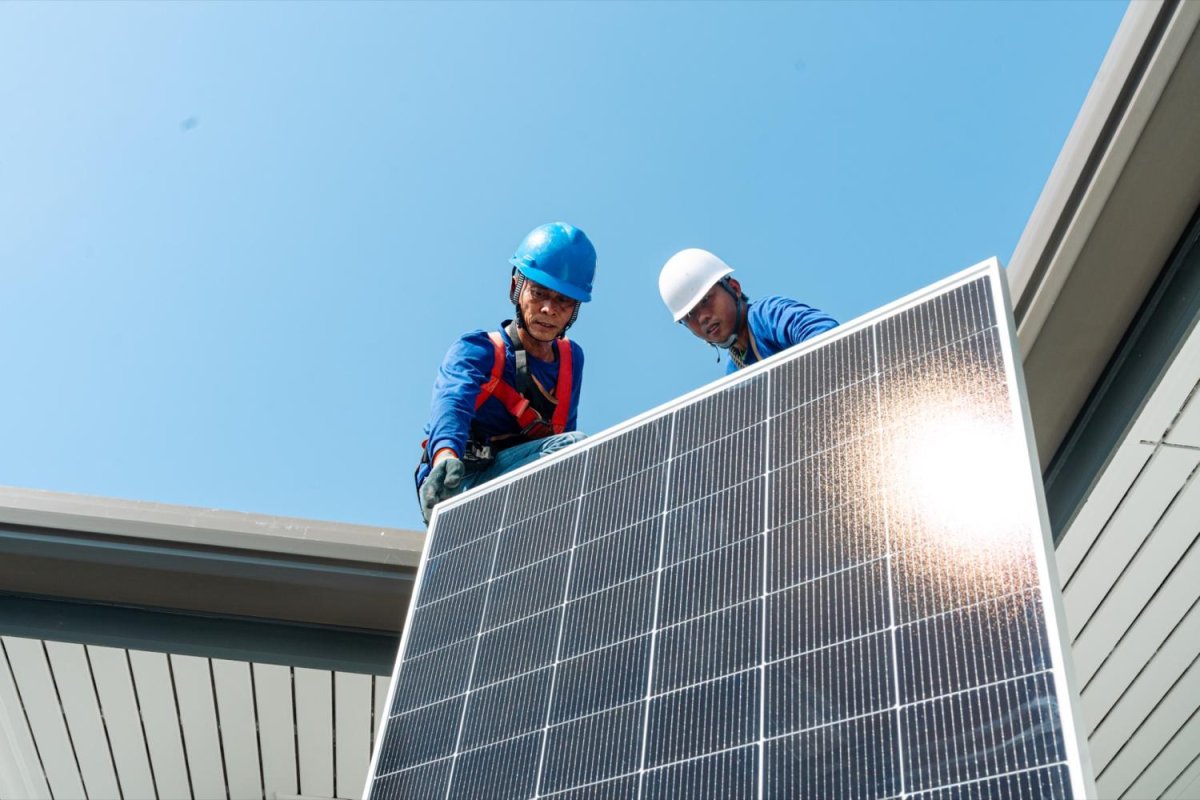
Technicians install rooftop solar panels on a building. The government aims to equip one million households with solar power systems. (Photo: ION Energy Corporation)
THIS NEWS ARTICLE KINDLY SPONSORED BY FALLPROTEC, A WORLD-RENOWNED NAME IN THE DESIGN AND MANUFACTURE OF PREMIUM FALL PROTECTION SYSTEMS AND HEIGHT ACCESS SOLUTIONS
The government’s Solar for the People scheme offers households subsidies of up to 50,000 baht to install solar power systems, but consumers should weigh installation costs, eligibility requirements and potential savings before signing up.
The government aims to extend the programme to one million households. Solar panels can be installed on rooftops, on the ground or on floating structures, but the subsidy will not cover the full installation cost. Whether the investment pays off depends largely on household electricity consumption, property suitability and financing costs.
Who is eligible?
The scheme is open to Thai nationals whose names match those registered against household electricity meters. Each person or meter can receive the subsidy only once.
Eligible households can install systems with capacities of 5-10 kilowatts through the Metropolitan Electricity Authority (MEA), Provincial Electricity Authority (PEA) or contractors registered with either agency.
State welfare card holders can also participate, but must forgo their 300-baht monthly electricity bill subsidy for 20 years.
Registration runs from Oct 27 to Jan 31, 2027. Households taking out loans must complete the disbursement process by Dec 31, 2027.
How much does it cost?
The standard package for a 5kW single-phase system is capped at 140,000 baht, including VAT. After the maximum 50,000-baht subsidy, households would pay the remaining 90,000 baht.
The package covers site surveys, system design, installation, grid connection, permits and after-sales service. It also includes a seven-year installation warranty, fire insurance and annual panel cleaning for seven years.
However, batteries, additional roof structures, upgrades to existing electrical systems and work beyond basic installation are excluded.
The published information does not specify a standard price for a 10kW system, so households considering a larger installation should request a detailed quotation.
How much can one save?
Savings depend on system capacity and how much electricity a household uses during daylight hours.
The MEA estimates that a 5kW system could reduce monthly electricity bills by 1,800-2,200 baht, while systems ranging from 5-10kW could generate savings of about 2,200-4,400 baht.
The PEA estimates that a 5kW system could support two refrigerators, four air conditioners and 25 light bulbs. A 10kW system could support four refrigerators, eight air conditioners and 50 light bulbs.
These are indicative figures, not guaranteed savings. Actual results depend on electricity consumption, installation conditions and the amount of power generated.
Households can also sell surplus electricity to the MEA or PEA at 2.20 baht per unit, subject to the applicable arrangements. For households using loans, revenue from surplus power sales will first go towards reducing the loan principal, with any remaining amount returned to the household.
The People’s Party has proposed replacing the fixed 2.20-baht purchase rate with a 1:1 net metering system, under which each unit of electricity supplied to the grid would be credited against one unit drawn from it.
The party argues that this would give households a stronger incentive to invest in solar power and encourage wider adoption without relying as heavily on direct government subsidies.
Can loans cover the cost?
The Government Savings Bank, Government Housing Bank and Bank for Agriculture and Agricultural Cooperatives are among the participating lenders.
Under an illustrative financing arrangement provided by the Finance Ministry, a household buying a 140,000-baht system could borrow the full amount to pay the installer. The 50,000-baht subsidy would then be deducted from the loan principal, leaving 90,000 baht to repay.
At an annual interest rate of 2.5% over seven years, monthly repayments would be about 1,200 baht.
Households should compare their monthly repayments with expected electricity savings and income from surplus power sales. Savings may not cover instalments if consumption is low or most electricity is used at night.
Is it suitable for everyone?
Not necessarily. Daytime electricity consumption is a key factor in determining whether a solar installation is worthwhile.
Households that use air conditioning and other appliances during the day are more likely to benefit directly from solar generation. Those that are mostly empty during daylight hours may use less of the electricity produced.
A battery can store surplus electricity for use at night, but it is not included in the standard package and would add to installation costs.
Roof condition, available space and exposure to sunlight also affect suitability. A site survey can help determine the system capacity that can be installed safely and efficiently.
Price controversy
Questions have been raised over pricing transparency after Treerat Sirichantaropas, a Democrat Party energy adviser, highlighted a discrepancy between the amount sought from contractors and the price advertised to consumers.
Mr Treerat posted on Facebook a PEA survey of contractors in its Northern Region asking whether they would accept 110,000 baht, excluding VAT, to install a 5kWp single-phase system.
He compared this with an MEA advertisement offering a similar installation for 140,000 baht, including VAT, questioning who would benefit from the 22,300-baht difference after VAT was taken into account.
The comparison has raised questions about procurement costs and whether households are getting value for money.
Collusion concerns
Another concern is whether the scheme’s registration requirements could give larger companies an advantage over smaller solar installers.
Contractors must provide a 50,000-baht guarantee for each installation, refundable once the system is connected to the MEA or PEA grid. They must also provide a separate 10,000-baht guarantee covering seven years of maintenance.
Small operators may struggle to meet these financial and administrative requirements. An installer in Dan Khun Thot district of Nakhon Ratchasima said the guarantees could prevent businesses with limited capital from joining the scheme.
The installer called on the government to ease the requirements and give smaller operators, particularly those serving rural communities, a fairer opportunity to participate.
Prime Minister Anutin Charnvirakul said the government must ensure the criteria are fair while maintaining safety standards. Both installers and equipment must meet the required standards because the systems will be connected to household electricity networks, he said.
Tax deduction alternative
Households may opt for a separate tax deduction of up to 200,000 baht for actual equipment and installation expenses under a tax measure running until Dec 31, 2028.
However, the tax deduction cannot be combined with the 50,000-baht subsidy. Households should compare the potential tax benefit with the direct subsidy before deciding which option offers greater savings.
How can households check installers and equipment quality? Households should use contractors registered with the MEA or PEA and check their technical expertise, engineers’ professional licences and relevant training.
Solar equipment must comply with International Electrotechnical Commission (IEC) and Thai Industrial Standards (TIS) requirements.
Before signing a contract, households should request the brands and models of the panels, inverters and other equipment, together with certification documents and written warranty terms.
They should also distinguish between the package’s seven-year installation warranty and warranties covering individual components, which may have different terms.
End-of-cycle plan
Solar panels and related equipment will eventually need to be replaced or disposed of.
The Industry Ministry has been assigned responsibility for developing disposal measures, but the published scheme information does not specify a collection, recycling or disposal system.
Source: https://www.bangkokpost.com/thailand/general/3347625/solar-scheme-promises-savings-but-at-what-cost
Google Translation:
[We apologise if any of the translation is incorrect: google Translation occasionally gets it wrong]
โครงการ “โซลาร์เพื่อประชาชน” ของรัฐบาลไทย: สัญญาว่าจะช่วยประหยัดค่าไฟ แต่ต้องแลกมาด้วยอะไร?
แม้ค่าไฟฟ้าอาจลดลง แต่ผู้บริโภคยังคงต้องพิจารณารายละเอียดต่าง ๆ ให้รอบคอบ
ช่างกำลังติดตั้งแผงโซลาร์เซลล์บนหลังคาอาคาร โดยรัฐบาลตั้งเป้าหมายที่จะสนับสนุนให้ครัวเรือนไทยหนึ่งล้านครัวเรือนหันมาใช้ระบบพลังงานแสงอาทิตย์ (ภาพ: ION Energy Corporation)
บทความข่าวนี้ได้รับการสนับสนุนโดย FALLPROTEC แบรนด์ระดับโลกที่มีชื่อเสียงด้านการออกแบบและผลิตระบบป้องกันการตกจากที่สูงและโซลูชันสำหรับการเข้าถึงพื้นที่สูงที่มีคุณภาพระดับพรีเมียม
โครงการ “โซลาร์เพื่อประชาชน” ของรัฐบาลเสนอเงินอุดหนุนสูงสุด 50,000 บาทแก่ครัวเรือนที่ติดตั้งระบบพลังงานแสงอาทิตย์ อย่างไรก็ตาม ผู้บริโภคควรพิจารณาต้นทุนการติดตั้ง เงื่อนไขคุณสมบัติ และความคุ้มค่าที่จะได้รับก่อนตัดสินใจเข้าร่วมโครงการ
รัฐบาลตั้งเป้าขยายโครงการนี้ให้ครอบคลุมครัวเรือนจำนวนหนึ่งล้านครัวเรือน โดยแผงโซลาร์เซลล์สามารถติดตั้งได้ทั้งบนหลังคา บนพื้นดิน หรือบนโครงสร้างแบบลอยน้ำ ทั้งนี้ เงินอุดหนุนดังกล่าวจะไม่ครอบคลุมค่าใช้จ่ายในการติดตั้งทั้งหมด ความคุ้มค่าของการลงทุนจึงขึ้นอยู่กับปัจจัยหลายประการ เช่น ปริมาณการใช้ไฟฟ้าของครัวเรือน ความเหมาะสมของสถานที่ติดตั้ง และต้นทุนทางการเงิน
ใครบ้างที่มีสิทธิ์เข้าร่วม?
โครงการนี้เปิดให้คนไทยที่มีชื่อตรงกับชื่อผู้ลงทะเบียนมิเตอร์ไฟฟ้าสามารถเข้าร่วมได้ โดยหนึ่งคนหรือหนึ่งมิเตอร์ไฟฟ้าสามารถรับเงินอุดหนุนได้เพียงครั้งเดียวเท่านั้น
ครัวเรือนที่มีคุณสมบัติครบถ้วนสามารถติดตั้งระบบที่มีกำลังการผลิตระหว่าง 5-10 กิโลวัตต์ ผ่านการดำเนินการของการไฟฟ้านครหลวง (MEA) การไฟฟ้าส่วนภูมิภาค (PEA) หรือผู้รับเหมาที่ขึ้นทะเบียนไว้กับหน่วยงานทั้งสองแห่ง
สำหรับผู้ถือบัตรสวัสดิการแห่งรัฐก็สามารถเข้าร่วมโครงการได้เช่นกัน แต่จะต้องสละสิทธิ์การรับเงินช่วยเหลือค่าไฟฟ้าจำนวน 300 บาทต่อเดือน เป็นระยะเวลา 20 ปี
เปิดให้ลงทะเบียนตั้งแต่วันที่ 27 ตุลาคม เป็นต้นไป จนถึงวันที่ 31 มกราคม 2027 สำหรับครัวเรือนที่ขอสินเชื่อ จะต้องดำเนินการเบิกจ่ายเงินกู้ให้แล้วเสร็จภายในวันที่ 31 ธันวาคม 2027
ค่าใช้จ่ายอยู่ที่เท่าไร?
แพ็กเกจมาตรฐานสำหรับระบบไฟฟ้าแบบเฟสเดียวขนาด 5 กิโลวัตต์ มีราคาจำกัดไว้ที่ไม่เกิน 140,000 บาท (รวมภาษีมูลค่าเพิ่มแล้ว) หลังจากหักเงินอุดหนุนสูงสุด 50,000 บาท ครัวเรือนจะต้องรับผิดชอบค่าใช้จ่ายส่วนที่เหลืออีก 90,000 บาท แพ็กเกจนี้ครอบคลุมบริการสำรวจหน้างาน การออกแบบระบบ การติดตั้ง การเชื่อมต่อเข้ากับโครงข่ายไฟฟ้า การขออนุญาตต่างๆ และบริการหลังการขาย นอกจากนี้ยังรวมถึงการรับประกันงานติดตั้งเป็นเวลา 7 ปี ประกันอัคคีภัย และบริการทำความสะอาดแผงโซลาร์เซลล์ปีละครั้งตลอดระยะเวลา 7 ปี
อย่างไรก็ตาม แพ็กเกจนี้ไม่รวมแบตเตอรี่ โครงสร้างหลังคาเพิ่มเติม การปรับปรุงระบบไฟฟ้าเดิมที่มีอยู่แล้ว รวมถึงงานอื่นๆ ที่นอกเหนือไปจากการติดตั้งพื้นฐาน
ข้อมูลที่เผยแพร่ไม่ได้ระบุราคามาตรฐานสำหรับระบบขนาด 10 กิโลวัตต์ (kW) ดังนั้นครัวเรือนที่พิจารณาติดตั้งระบบขนาดใหญ่กว่านี้ควรสอบถามเพื่อขอใบเสนอราคาโดยละเอียด
จะประหยัดค่าใช้จ่ายได้เท่าไร?
การประหยัดค่าใช้จ่ายขึ้นอยู่กับขนาดของระบบและปริมาณการใช้ไฟฟ้าของครัวเรือนในช่วงเวลากลางวัน
การไฟฟ้านครหลวง (MEA) ประเมินว่าระบบขนาด 5 กิโลวัตต์ (kW) สามารถช่วยลดค่าไฟฟ้าต่อเดือนได้ประมาณ 1,800–2,200 บาท ในขณะที่ระบบขนาด 5–10 กิโลวัตต์ (kW) อาจช่วยประหยัดค่าใช้จ่ายได้ประมาณ 2,200–4,400 บาท
การไฟฟ้าส่วนภูมิภาค (PEA) ประเมินว่าระบบขนาด 5 กิโลวัตต์ (kW) สามารถรองรับการใช้งานตู้เย็น 2 เครื่อง เครื่องปรับอากาศ 4 เครื่อง และหลอดไฟ 25 ดวง ส่วนระบบขนาด 10 กิโลวัตต์ (kW) สามารถรองรับตู้เย็น 4 เครื่อง เครื่องปรับอากาศ 8 เครื่อง และหลอดไฟ 50 ดวง
ตัวเลขเหล่านี้เป็นเพียงการประมาณการเท่านั้น ไม่ใช่การรับประกันว่าจะประหยัดได้ตามจำนวนดังกล่าว ผลลัพธ์ที่เกิดขึ้นจริงจะขึ้นอยู่กับปริมาณการใช้ไฟฟ้า สภาพหน้างานในการติดตั้ง และปริมาณพลังงานไฟฟ้าที่ผลิตได้
นอกจากนี้ ครัวเรือนยังสามารถขายไฟฟ้าส่วนเกินให้กับ MEA หรือ PEA ได้ในราคาหน่วยละ 2.20 บาท ตามเงื่อนไขที่กำหนด สำหรับครัวเรือนที่ใช้สินเชื่อ รายได้จากการขายไฟฟ้าส่วนเกินจะถูกนำไปหักลบกับเงินต้นของสินเชื่อก่อน ส่วนที่เหลือจึงจะส่งคืนให้กับครัวเรือน
พรรคประชาชน (People’s Party) ได้เสนอให้เปลี่ยนจากอัตราการรับซื้อไฟฟ้าคงที่ที่หน่วยละ 2.20 บาท มาเป็นระบบหักลบหน่วยไฟฟ้า (Net Metering) ในอัตรา 1:1 ซึ่งหมายความว่าไฟฟ้าทุก 1 หน่วยที่จ่ายเข้าสู่โครงข่ายไฟฟ้า จะสามารถนำไปหักลบกับไฟฟ้า 1 หน่วยที่ดึงมาจากโครงข่ายได้
ทางพรรคให้เหตุผลว่า แนวทางนี้จะช่วยจูงใจให้ครัวเรือนหันมาลงทุนในพลังงานแสงอาทิตย์มากขึ้น และส่งเสริมให้มีการใช้งานอย่างแพร่หลาย โดยไม่จำเป็นต้องพึ่งพาเงินอุดหนุนโดยตรงจากภาครัฐมากนัก
สินเชื่อสามารถครอบคลุมค่าใช้จ่ายได้หรือไม่?
ธนาคารที่เข้าร่วมโครงการให้สินเชื่อ ได้แก่ ธนาคารออมสิน ธนาคารอาคารสงเคราะห์ และธนาคารเพื่อการเกษตรและสหกรณ์การเกษตร (ธ.ก.ส.) ภายใต้รูปแบบการสนับสนุนทางการเงินที่กระทรวงการคลังจัดเตรียมไว้ ครัวเรือนที่ซื้อระบบโซลาร์เซลล์ในราคา 140,000 บาท สามารถกู้ยืมเงินเต็มจำนวนเพื่อนำไปชำระค่าติดตั้งได้ โดยเงินสนับสนุนจำนวน 50,000 บาทจะถูกนำไปหักออกจากยอดเงินต้น ทำให้เหลือยอดที่ต้องชำระคืนเพียง 90,000 บาท
หากคิดอัตราดอกเบี้ย 2.5% ต่อปี เป็นระยะเวลา 7 ปี ยอดผ่อนชำระต่อเดือนจะอยู่ที่ประมาณ 1,200 บาท
ครัวเรือนควรเปรียบเทียบยอดผ่อนชำระรายเดือนกับมูลค่าไฟฟ้าที่ประหยัดได้ รวมถึงรายได้จากการขายไฟฟ้าส่วนเกิน ทั้งนี้ หากมีการใช้ไฟฟ้าในปริมาณน้อย หรือใช้ไฟฟ้าส่วนใหญ่ในช่วงเวลากลางคืน เงินที่ประหยัดได้อาจไม่เพียงพอต่อการนำไปชำระค่างวด
ระบบนี้เหมาะกับทุกคนหรือไม่?
ไม่จำเป็นเสมอไป ปริมาณการใช้ไฟฟ้าในช่วงกลางวันเป็นปัจจัยสำคัญในการตัดสินใจว่าการติดตั้งระบบโซลาร์เซลล์นั้นคุ้มค่าหรือไม่
ครัวเรือนที่มีการเปิดเครื่องปรับอากาศหรือใช้งานเครื่องใช้ไฟฟ้าอื่นๆ ในช่วงกลางวัน จะได้รับประโยชน์โดยตรงจากการผลิตไฟฟ้าด้วยพลังงานแสงอาทิตย์มากกว่า ในขณะที่ครัวเรือนที่ไม่มีคนอยู่หรือไม่มีการใช้ไฟฟ้าในช่วงกลางวัน อาจใช้ประโยชน์จากไฟฟ้าที่ผลิตได้น้อยกว่า
แบตเตอรี่สามารถกักเก็บไฟฟ้าส่วนเกินไว้ใช้ในช่วงกลางคืนได้ แต่ไม่ได้รวมอยู่ในแพ็กเกจมาตรฐาน ซึ่งจะทำให้มีค่าใช้จ่ายในการติดตั้งเพิ่มขึ้น
สภาพหลังคา พื้นที่ว่าง และการได้รับแสงแดด ล้วนส่งผลต่อความเหมาะสมในการติดตั้ง การสำรวจหน้างานจะช่วยกำหนดขนาดของระบบที่สามารถติดตั้งได้อย่างปลอดภัยและมีประสิทธิภาพ
ประเด็นถกเถียงเรื่องราคา
เกิดคำถามเกี่ยวกับความโปร่งใสของราคา หลังจากนายตรีรัตน์ ศิริจันทโรภาส ที่ปรึกษาด้านพลังงานของพรรคประชาธิปัตย์ ได้ชี้ให้เห็นถึงความแตกต่างระหว่างราคาที่เสนอให้กับผู้รับเหมา กับราคาที่โฆษณาต่อผู้บริโภค
นายตรีรัตน์ได้โพสต์ข้อความผ่านเฟซบุ๊ก โดยอ้างถึงการสำรวจผู้รับเหมาในพื้นที่ภาคเหนือของการไฟฟ้าส่วนภูมิภาค (PEA) ซึ่งสอบถามว่าผู้รับเหมาจะยอมรับงานติดตั้งระบบโซลาร์เซลล์ขนาด 5 กิโลวัตต์สูงสุด (kWp) แบบเฟสเดียว ในราคา 110,000 บาท (ไม่รวมภาษีมูลค่าเพิ่ม) หรือไม่
เขาได้นำตัวเลขดังกล่าวไปเปรียบเทียบกับโฆษณาของการไฟฟ้านครหลวง (MEA) ที่เสนอการติดตั้งในลักษณะเดียวกันในราคา 140,000 บาท (รวมภาษีมูลค่าเพิ่มแล้ว) พร้อมตั้งคำถามว่าส่วนต่างจำนวน 22,300 บาท (หลังจากหักภาษีมูลค่าเพิ่มออกแล้ว) นั้น ตกไปอยู่กับใคร
การเปรียบเทียบนี้ก่อให้เกิดข้อสงสัยเกี่ยวกับต้นทุนการจัดซื้อจัดจ้าง และตั้งคำถามว่าครัวเรือนต่าง ๆ ได้รับความคุ้มค่าสมกับราคาที่จ่ายไปหรือไม่
ข้อกังวลเรื่องการฮั้วประมูล
อีกหนึ่งประเด็นที่น่ากังวลคือ ข้อกำหนดในการลงทะเบียนสำหรับโครงการนี้อาจทำให้บริษัทขนาดใหญ่ได้เปรียบผู้ประกอบการติดตั้งโซลาร์เซลล์รายย่อย
ผู้รับเหมาจะต้องวางเงินประกันจำนวน 50,000 บาทต่อการติดตั้งหนึ่งโครงการ ซึ่งจะได้รับคืนเมื่อระบบเชื่อมต่อเข้ากับโครงข่ายไฟฟ้าของการไฟฟ้าส่วนภูมิภาค (PEA) หรือการไฟฟ้านครหลวง (MEA) แล้ว นอกจากนี้ ยังต้องวางเงินประกันแยกต่างหากอีก 10,000 บาท เพื่อเป็นหลักประกันสำหรับการบำรุงรักษาเป็นระยะเวลา 7 ปี
ผู้ประกอบการรายย่อยอาจประสบปัญหาในการปฏิบัติตามเงื่อนไขทางการเงินและขั้นตอนการบริหารจัดการเหล่านี้ โดยผู้ประกอบการรายหนึ่งในอำเภอด่านขุนทด จังหวัดนครราชสีมา ระบุว่าเงินประกันดังกล่าวอาจเป็นอุปสรรคที่ทำให้ธุรกิจที่มีเงินทุนจำกัดไม่สามารถเข้าร่วมโครงการได้
ผู้ประกอบการรายนี้เรียกร้องให้รัฐบาลผ่อนปรนเงื่อนไขต่าง ๆ เพื่อเปิดโอกาสให้ผู้ประกอบการรายย่อย โดยเฉพาะกลุ่มที่ให้บริการในพื้นที่ชนบท สามารถเข้าร่วมโครงการได้อย่างเป็นธรรมมากขึ้น
ด้านนายอนุทิน ชาญวีรกูล รองนายกรัฐมนตรี กล่าวว่า รัฐบาลจำเป็นต้องตรวจสอบให้แน่ใจว่าเกณฑ์ต่าง ๆ มีความยุติธรรม ควบคู่ไปกับการรักษามาตรฐานความปลอดภัย โดยทั้งผู้ติดตั้งและอุปกรณ์จะต้องเป็นไปตามมาตรฐานที่กำหนด เนื่องจากระบบเหล่านี้จะถูกเชื่อมต่อเข้ากับโครงข่ายไฟฟ้าภายในครัวเรือน ทางเลือกในการหักลดหย่อนภาษี
ครัวเรือนสามารถเลือกใช้สิทธิ์หักลดหย่อนภาษีเพิ่มเติมได้สูงสุด 200,000 บาท สำหรับค่าใช้จ่ายจริงในการจัดซื้ออุปกรณ์และการติดตั้ง โดยเป็นมาตรการทางภาษีที่มีผลบังคับใช้จนถึงวันที่ 31 ธันวาคม 2568
ทั้งนี้ สิทธิ์การหักลดหย่อนภาษีดังกล่าวไม่สามารถใช้ร่วมกับเงินอุดหนุนจำนวน 50,000 บาทได้ ครัวเรือนจึงควรเปรียบเทียบระหว่างผลประโยชน์ทางภาษีที่จะได้รับกับเงินอุดหนุนโดยตรง เพื่อตัดสินใจว่าทางเลือกใดจะช่วยประหยัดค่าใช้จ่ายได้มากกว่ากัน
ครัวเรือนจะตรวจสอบผู้ติดตั้งและคุณภาพของอุปกรณ์ได้อย่างไร? ควรเลือกใช้บริการผู้รับเหมาที่ขึ้นทะเบียนกับการไฟฟ้าส่วนภูมิภาค (PEA) หรือการไฟฟ้านครหลวง (MEA) พร้อมทั้งตรวจสอบความเชี่ยวชาญทางเทคนิค ใบอนุญาตประกอบวิชาชีพของวิศวกร และหลักฐานการผ่านการฝึกอบรมที่เกี่ยวข้อง
อุปกรณ์โซลาร์เซลล์จะต้องเป็นไปตามมาตรฐานของคณะกรรมาธิการระหว่างประเทศว่าด้วยมาตรฐานสาขาอิเล็กทรอเทคโนโลยี (International Electrotechnical Commission หรือ IEC) และมาตรฐานผลิตภัณฑ์อุตสาหกรรม (มอก.) ของไทย
ก่อนลงนามในสัญญา ครัวเรือนควรสอบถามยี่ห้อและรุ่นของแผงโซลาร์เซลล์ อินเวอร์เตอร์ และอุปกรณ์อื่นๆ รวมถึงขอเอกสารรับรองมาตรฐานและรายละเอียดการรับประกันที่เป็นลายลักษณ์อักษร
นอกจากนี้ ควรแยกแยะระหว่างการรับประกันงานติดตั้ง (ซึ่งมักครอบคลุมระยะเวลา 7 ปี) กับการรับประกันอุปกรณ์แต่ละชิ้น ซึ่งอาจมีเงื่อนไขที่แตกต่างกันออกไป
แผนการจัดการเมื่อสิ้นอายุการใช้งาน
แผงโซลาร์เซลล์และอุปกรณ์ที่เกี่ยวข้องจำเป็นต้องได้รับการเปลี่ยนหรือกำจัดทิ้งเมื่อครบอายุการใช้งาน
แม้กระทรวงอุตสาหกรรมจะได้รับมอบหมายให้ดูแลเรื่องมาตรการกำจัดอุปกรณ์เหล่านี้ แต่ข้อมูลโครงการที่เผยแพร่ออกมาในปัจจุบันยังไม่ได้ระบุรายละเอียดเกี่ยวกับระบบการจัดเก็บ การรีไซเคิล หรือการกำจัดทิ้งไว้อย่างชัดเจน