 Hanoi is launching five metro lines, aiming for completion by 2030
THIS NEWS ARTICLE KINDLY SPONSORED BY FALLPROTEC, A WORLD-RENOWNED NAME IN THE DESIGN AND MANUFACTURE OF PREMIUM FALL PROTECTION SYSTEMS AND HEIGHT ACCESS SOLUTIONS
Hanoi has signed contracts to implement 5 metro lines totaling 253.5km, with preliminary capital requirements exceeding 1 trillion VND, aiming for completion by 2030 and contributing to reducing traffic congestion.
On the afternoon of October 15th, the Hanoi People’s Committee held a signing ceremony for turnkey contracts to implement five urban railway lines: numbers 1, 2, 8, 10, and 14.
The routes have a total length of approximately 253.5km within the city, with a preliminary capital requirement of over 1 trillion VND for the project. The goal is to complete all 5 routes by 2030.
The general contractor handles everything from design to handover.
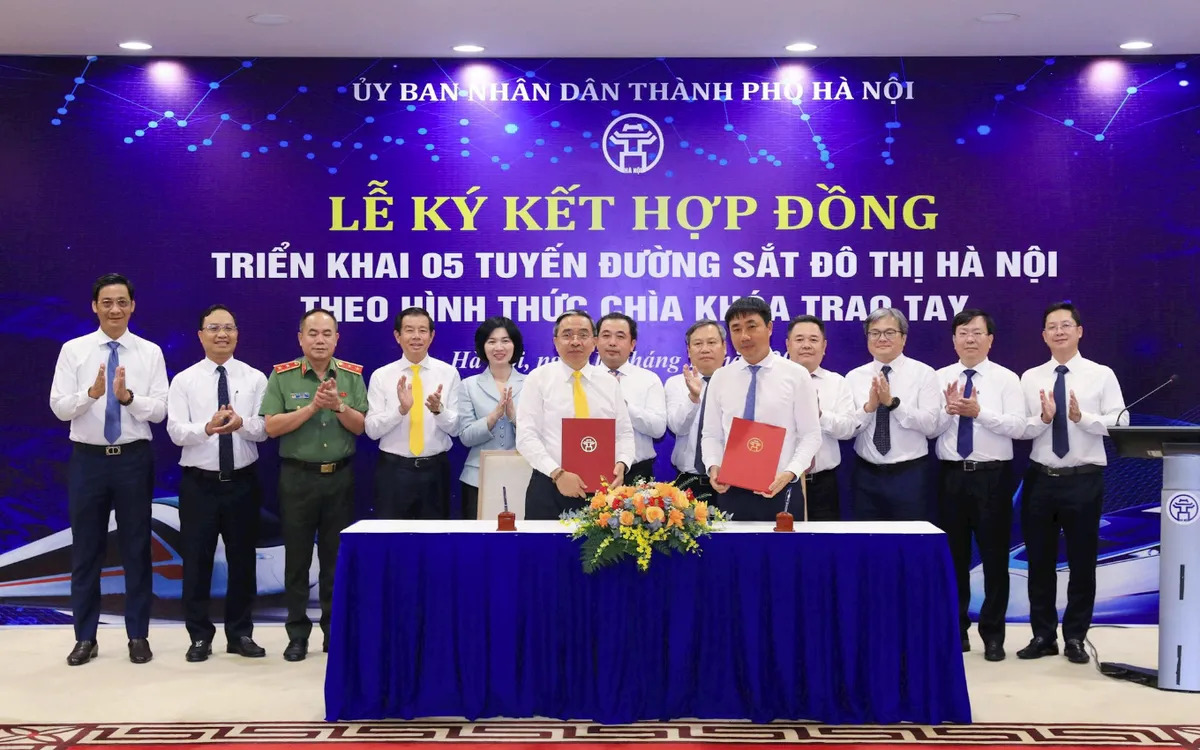
The contract is signed under the EPC/Turnkey model, applying the FIDIC contract template with adjustments to comply with Vietnamese law . The contractor is responsible for the entire process, from surveying, design, equipment procurement, construction, to installation, system integration, testing, commissioning, and handover of the project.
This method facilitates the organization of parallel work, increases coordination between the construction and engineering systems, and meets the project’s schedule requirements.
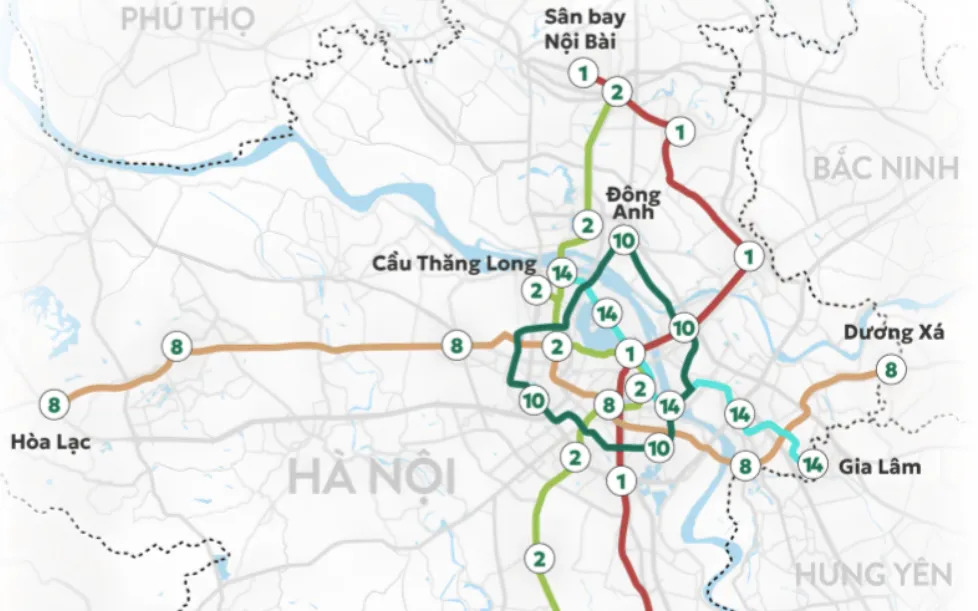
Of the five lines, line number 1 is approximately 59km long, connecting Hung Vuong Stadium, Ngoc Hoi, Hanoi Railway Station, Yen Vien, and Noi Bai Airport. Line number 2 is approximately 60km long, running from Noi Bai Airport through Nam Thang Long, Tran Hung Dao, Thuong Dinh to Thuong Phuc/Hung Vuong Stadium.
Route 8 is approximately 64km long, connecting Hoa Lac with Thuan An via Son Dong, Mai Dich, Ring Road 3, and Linh Nam. Route 10 is approximately 38.7km long, following the direction of Vo Chi Cong – Ring Road 2.5 – Times City/Vinh Tuy – Co Loa/Dong Anh. Route 14 is approximately 31.8km long, connecting Thang Long Bridge – Hong Ha – Ocean Park/Gia Lam.
The network is oriented towards connecting the city center with urban areas, airports, and transportation hubs, contributing to reducing pressure on road networks and promoting transport-oriented urban development (TOD).
Requires synchronized technology and interconnected operation.
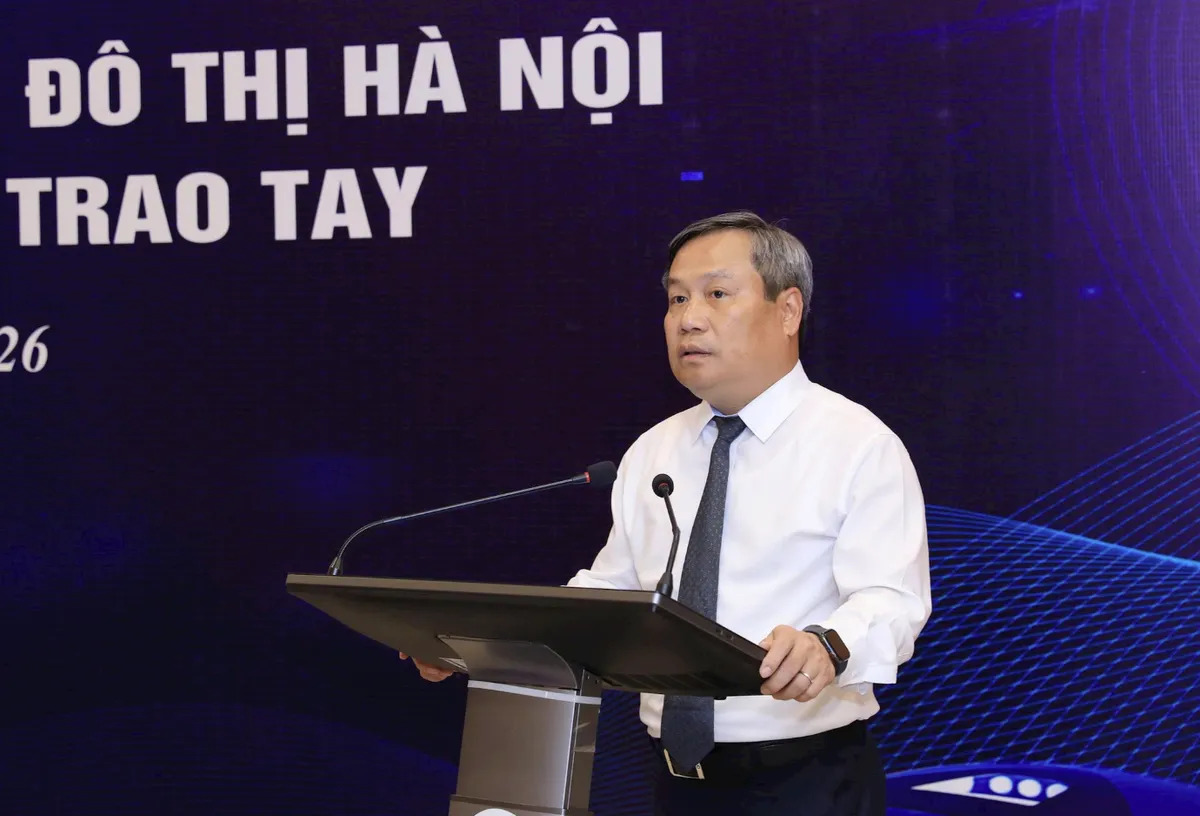
Speaking at the signing ceremony, Chairman of the Hanoi People’s Committee Vu Dai Thang emphasized: “In particular, it is essential to ensure the synchronization, connectivity, and interoperability between the five railway lines as well as with the city’s future urban railway network.”
According to the technical guidelines, the five planned routes will utilize a standard 1,435mm gauge track, communication-based train control (CBTC) technology, and aim for GoA4 automation level, enabling unmanned operation according to approved design and safety procedures.
The implementation requirements also include technology transfer coupled with human resource training; quality control, investment costs, and operating and maintenance costs. For underground projects, construction using TBM (Tunnel Boring Machine) must have a risk control plan to ensure the safety of existing infrastructure and the public.
To meet the 2030 targets, the implementation plan needs to clearly define the progress for each route and item, as well as the resource requirements. Land clearance, relocation of technical infrastructure, and procedural handling require timely coordination to avoid impacting the overall schedule.
According to the 100-year Hanoi Capital City plan, Hanoi’s urban railway network is approximately 979km long. Currently, Hanoi operates the Cat Linh – Ha Dong line and the elevated section from Nho Son to Cau Giay, part of the Nho Son – Hanoi Station line. The city plans to invest in approximately 500km of urban railway by 2035, and then complete the remaining 479km between 2036 and 2045.
Source: https://www.vietnam.vn/en
Google Translation:
[We apologise if any of the translation is incorrect: google Translation occasionally gets it wrong]
ฮานอยเดินหน้าโครงการรถไฟฟ้า 5 สาย ตั้งเป้าแล้วเสร็จภายในปี 2030
บทความข่าวนี้ได้รับการสนับสนุนโดย FALLPROTEC แบรนด์ระดับโลกที่มีชื่อเสียงด้านการออกแบบและผลิตระบบป้องกันการตกจากที่สูงและโซลูชันสำหรับการเข้าถึงพื้นที่สูงระดับพรีเมียม
กรุงฮานอยได้ลงนามในสัญญาเพื่อดำเนินโครงการรถไฟฟ้าจำนวน 5 สาย รวมระยะทาง 253.5 กิโลเมตร โดยมีมูลค่าการลงทุนเบื้องต้นกว่า 1 ล้านล้านดองเวียดนาม ทั้งนี้ตั้งเป้าหมายให้แล้วเสร็จภายในปี 2030 เพื่อช่วยบรรเทาปัญหาการจราจรติดขัด
เมื่อช่วงบ่ายวันที่ 15 ตุลาคมที่ผ่านมา คณะกรรมการประชาชนกรุงฮานอยได้จัดพิธีลงนามสัญญาแบบเบ็ดเสร็จ (Turnkey) สำหรับการดำเนินโครงการรถไฟฟ้าในเขตเมืองจำนวน 5 สาย ได้แก่ สายที่ 1, 2, 8, 10 และ 14
โครงการดังกล่าวมีระยะทางรวมประมาณ 253.5 กิโลเมตรภายในเขตเมือง โดยมีมูลค่าการลงทุนเบื้องต้นกว่า 1 ล้านล้านดองเวียดนาม และตั้งเป้าหมายที่จะดำเนินการให้แล้วเสร็จทั้ง 5 สายภายในปี 2030
ผู้รับเหมาหลักจะเป็นผู้รับผิดชอบทุกขั้นตอน ตั้งแต่การออกแบบไปจนถึงการส่งมอบโครงการ
พิธีลงนามสัญญาแบบเบ็ดเสร็จ (Turnkey) ระหว่างคณะกรรมการบริหารโครงการรถไฟฟ้ากรุงฮานอยและกลุ่มบริษัทผู้รับเหมา ภาพโดย: Viet Thanh
สัญญาฉบับนี้จัดทำขึ้นภายใต้รูปแบบ EPC/Turnkey โดยอ้างอิงตามมาตรฐานสัญญาของ FIDIC ซึ่งมีการปรับปรุงให้สอดคล้องกับกฎหมายของเวียดนาม โดยผู้รับเหมามีหน้าที่รับผิดชอบกระบวนการทั้งหมด ตั้งแต่การสำรวจ การออกแบบ การจัดหาอุปกรณ์ การก่อสร้าง การติดตั้ง การบูรณาการระบบ การทดสอบ การเตรียมความพร้อมก่อนเปิดใช้งานจริง ไปจนถึงการส่งมอบโครงการ
แนวทางนี้ช่วยให้สามารถดำเนินงานหลายส่วนไปพร้อมกันได้ เพิ่มประสิทธิภาพในการประสานงานระหว่างงานก่อสร้างและงานระบบวิศวกรรม อีกทั้งยังช่วยให้โครงการเป็นไปตามกำหนดเวลาที่วางไว้
สำหรับรถไฟฟ้าทั้ง 5 สายนั้น สายที่ 1 มีระยะทางประมาณ 59 กิโลเมตร เชื่อมต่อระหว่างสนามกีฬา Hung Vuong, Ngoc Hoi, สถานีรถไฟฮานอย, Yen Vien และสนามบินนานาชาติ Noi Bai ส่วนสายที่ 2 มีระยะทางประมาณ 60 กิโลเมตร เริ่มต้นจากสนามบินนานาชาติ Noi Bai ผ่าน Nam Thang Long, Tran Hung Dao, Thuong Dinh ไปจนถึง Thuong Phuc/สนามกีฬา Hung Vuong เส้นทางที่ 8 มีความยาวประมาณ 64 กิโลเมตร เชื่อมต่อระหว่าง Hoa Lac กับ Thuan An โดยผ่าน Son Dong, Mai Dich, ถนนวงแหวนหมายเลข 3 (Ring Road 3) และ Linh Nam ส่วนเส้นทางที่ 10 มีความยาวประมาณ 38.7 กิโลเมตร ครอบคลุมแนวเส้นทาง Vo Chi Cong – ถนนวงแหวนหมายเลข 2.5 (Ring Road 2.5) – Times City/Vinh Tuy – Co Loa/Dong Anh และเส้นทางที่ 14 มีความยาวประมาณ 31.8 กิโลเมตร เชื่อมต่อระหว่างสะพาน Thang Long – Hong Ha – Ocean Park/Gia Lam
โครงข่ายนี้มุ่งเน้นการเชื่อมต่อใจกลางเมืองเข้ากับพื้นที่เขตเมืองต่างๆ สนามบิน และศูนย์กลางการคมนาคมขนส่ง ซึ่งจะช่วยลดความแออัดบนโครงข่ายถนน และส่งเสริมการพัฒนาเมืองที่เน้นระบบขนส่งมวลชนเป็นศูนย์กลาง (Transit-Oriented Development หรือ TOD)
ทั้งนี้ จำเป็นต้องอาศัยเทคโนโลยีที่สอดประสานกันและการดำเนินงานที่เชื่อมโยงถึงกัน
Vu Dai Thang ประธานคณะกรรมการประชาชนกรุงฮานอย กล่าวในพิธีลงนาม (ภาพ: Viet Thanh)
ในการกล่าวระหว่างพิธีลงนาม Vu Dai Thang ประธานคณะกรรมการประชาชนกรุงฮานอย ได้เน้นย้ำว่า “สิ่งสำคัญคือต้องรับประกันถึงความสอดประสาน การเชื่อมโยง และการทำงานร่วมกันได้ระหว่างเส้นทางรถไฟทั้ง 5 สาย รวมถึงโครงข่ายรถไฟในเขตเมืองที่จะเกิดขึ้นในอนาคตของกรุงฮานอย”
ตามแนวทางทางเทคนิค เส้นทางทั้ง 5 สายที่วางแผนไว้จะใช้รางมาตรฐานขนาด 1,435 มิลลิเมตร พร้อมด้วยเทคโนโลยีควบคุมรถไฟด้วยระบบสื่อสาร (Communication-Based Train Control หรือ CBTC) และตั้งเป้าหมายให้เป็นระบบอัตโนมัติในระดับ GoA4 ซึ่งสามารถเดินรถได้โดยไม่ต้องมีพนักงานขับรถ โดยเป็นไปตามขั้นตอนการออกแบบและความปลอดภัยที่ได้รับอนุมัติ
ข้อกำหนดในการดำเนินงานยังรวมถึงการถ่ายทอดเทคโนโลยีควบคู่ไปกับการฝึกอบรมบุคลากร การควบคุมคุณภาพ การบริหารต้นทุนการลงทุน รวมถึงค่าใช้จ่ายในการดำเนินงานและบำรุงรักษา สำหรับโครงการส่วนที่เป็นอุโมงค์ใต้ดิน การก่อสร้างด้วยเครื่องขุดเจาะอุโมงค์ (Tunnel Boring Machine หรือ TBM) จะต้องมีแผนควบคุมความเสี่ยง เพื่อรับรองความปลอดภัยของโครงสร้างพื้นฐานที่มีอยู่เดิมและสาธารณชน
เพื่อให้บรรลุเป้าหมายภายในปี ค.ศ. 2030 แผนการดำเนินงานจำเป็นต้องระบุความคืบหน้าของแต่ละเส้นทางและแต่ละส่วนประกอบอย่างชัดเจน รวมถึงทรัพยากรที่จำเป็นต้องใช้ ทั้งนี้ การเวนคืนที่ดิน การย้ายสาธารณูปโภค และการดำเนินการตามขั้นตอนต่างๆ จำเป็นต้องมีการประสานงานอย่างทันท่วงที เพื่อไม่ให้ส่งผลกระทบต่อกำหนดการโดยรวม
ตามแผนแม่บทกรุงฮานอยระยะ 100 ปี โครงข่ายรถไฟในเขตเมืองของกรุงฮานอยจะมีความยาวรวมประมาณ 979 กิโลเมตร ปัจจุบัน ฮานอยเปิดให้บริการรถไฟฟ้าสาย Cat Linh – Ha Dong และส่วนยกระดับจาก Nho Son ไปยัง Cau Giay ซึ่งเป็นส่วนหนึ่งของเส้นทาง Nho Son – สถานีฮานอย โดยทางเมืองมีแผนที่จะลงทุนในระบบรถไฟฟ้าในเขตเมืองรวมระยะทางประมาณ 500 กิโลเมตรภายในปี ค.ศ. 2035 และจะดำเนินการส่วนที่เหลืออีก 479 กิโลเมตรให้แล้วเสร็จในช่วงระหว่างปี ค.ศ. 2036 ถึง 2045