 Thailand advances high-speed rail program amid Asia-wide expansion
THIS NEWS ARTICLE KINDLY SPONSORED BY FALLPROTEC, A WORLD-RENOWNED NAME IN THE DESIGN AND MANUFACTURE OF PREMIUM FALL PROTECTION SYSTEMS AND HEIGHT ACCESS SOLUTIONS
- Thailand is advancing its high-speed rail program, specifically the Thai-Chinese project, as part of a broader trend of rail network expansion across Asia.
- The government is pushing to accelerate construction on the project’s first phase (Bangkok to Nakhon Ratchasima) to meet a target opening date in 2031.
- The project is facing significant delays, with overall construction progress at 55.9% against a planned 90.4%.
- A key obstacle is an unresolved infrastructure overlap with the separate three-airport high-speed rail project in the Bang Sue–Don Mueang section.
High-speed rail development is gathering pace across Asia, supported by advances in technology and safety, a growing number of industry players and demand for transport that is faster, more convenient and more environmentally friendly than many other forms of travel.
East Asia, particularly China, has emerged as a leading high-speed rail market, with rapid and extensive network expansion driven by government policy and the country’s large domestic market. Investment in Chinese railway projects has exceeded US$500 billion, helping China establish the world’s largest high-speed rail network.
Japan, which pioneered high-speed rail technology through its Shinkansen system, continues to develop new technology while focusing on reliability and passenger experience. High-speed rail is estimated to contribute about US$20 billion a year to the Japanese economy.
ASEAN steps up high-speed rail development
Southeast Asia is also seeing significant expansion in high-speed rail development, while countries in the Middle East have begun exploring similar systems, attracted by their potential to support economic growth and improve connectivity.
Investment in individual projects typically ranges from US$5 billion to US$15 billion per route, equivalent to about THB100 billion to THB500 billion.
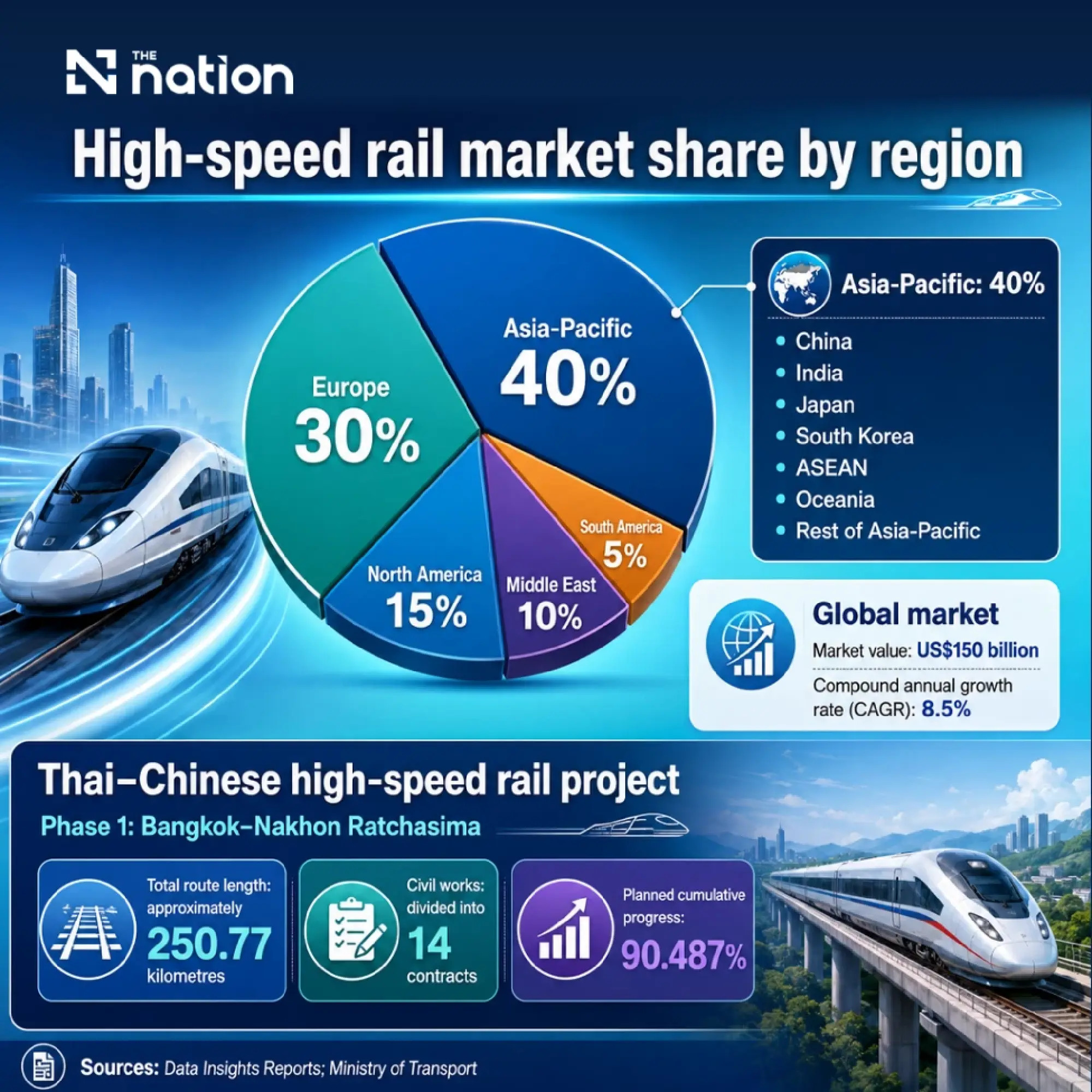
A forecast published by Data Insights Reports projected that the global high-speed rail market would reach about US$150 billion by 2025, supported by a compound annual growth rate of 8.5%.
The report attributed the expansion to rising demand for efficient, sustainable and fast transport solutions, describing the sector as a dynamic and developing industry.
Against this backdrop, Thailand is pushing ahead with its own high-speed rail programme.
Deputy Transport Minister Siripong Angkasakulkiat recently inspected Contract 4-7 of Phase 1 of the Thai–Chinese high-speed rail project, covering the Saraburi–Kaeng Khoi section and Saraburi Station on the Bangkok–Nakhon Ratchasima route.
Siripong explained that the visit was intended to monitor progress and accelerate construction to keep the project aligned with its timetable.
He instructed the State Railway of Thailand (SRT) to manage the project efficiently while placing the highest priority on safety standards, particularly at construction sites close to existing railway lines and areas used by the public.
Strict measures must be maintained to prevent accidents and minimise potential effects on surrounding areas.
Decision sought on three-airport rail overlap
For areas involving tunnel construction, Siripong instructed the SRT to closely monitor conditions and safety while preparing preventive measures and emergency response plans to maintain public confidence.
The Transport Ministry is seeking to accelerate construction so the Thai–Chinese high-speed rail project can be completed and opened for service in 2031, improving both passenger travel and freight transport.
Although overall construction remains behind schedule, Siripong expressed confidence that work could be accelerated sufficiently to meet the target.
Several construction contracts have yet to begin, most notably Contract 4-1 covering the Bang Sue–Don Mueang section, where infrastructure is shared with the three-airport high-speed rail project linking Don Mueang, Suvarnabhumi and U-Tapao airports.
Officials expect a conclusion on the overlapping section by the end of 2026.
“We now have to see how the EEC committee views amendments to the public-private partnership agreement for the three-airport high-speed rail project and how that project will proceed,” Siripong explained.
“The SRT has the option of putting the shared structure under Contract 4-1 back out to tender and starting construction so that the Thai–Chinese high-speed rail project is not affected.”
“If this section is built first, it could support the Thai–Chinese high-speed line as well as a two-airport high-speed connection between Don Mueang and Suvarnabhumi.”
Bangkok–Nakhon Ratchasima route reaches 55.978%
Kampol Boonchom, chief engineer for special projects and construction at the SRT, reported that Phase 1 of the Thai–Chinese high-speed rail project between Bangkok and Nakhon Ratchasima covers about 250.77 kilometres and is divided into 14 civil works contracts.
Scheduled cumulative progress currently stands at 90.487%, while actual progress has reached 55.978%, leaving construction 34.509 percentage points behind plan.
The SRT is closely monitoring and accelerating work under individual contracts while coordinating with relevant agencies to resolve obstacles and keep the project moving towards its targets.
Scheduled cumulative progress on Contract 4-7, covering the 12.99-kilometre Saraburi–Kaeng Khoi section, stands at 81.50%, compared with actual progress of 73.25%, putting it 8.25 percentage points behind plan.
Construction of elevated railway structures and other components of the high-speed rail system is continuing. Segment installation has reached 86%, balance-beam construction 33% and switch-beam construction 68%.
Saraburi high-speed rail station is located in Takut subdistrict of Mueang Saraburi district in Saraburi province and is being built as an elevated, four-level station.
The first level will house the building entrance and platforms for long-distance trains, while the second will contain ticketing facilities for both high-speed and long-distance rail services.
The third level will serve as a passenger waiting area, with the fourth level housing the high-speed rail platforms.
The station will have two 450-metre platforms and four tracks.
Construction of Saraburi Station has reached 29.30%, against scheduled progress of 47.22%, leaving the work 17.92 percentage points behind plan.
The SRT will continue monitoring and accelerating construction while overseeing compliance with required standards so that the station can support future high-speed rail services.
Private sector role grows in major rail projects
Data Insights Reports also noted that major global infrastructure tenders can exceed US$10 billion, while privatisation and public-private partnerships are increasingly reshaping competition for large-scale projects.
Private companies are competing for operating concessions and development rights, creating a market in which innovation and value for money are increasingly important in securing long-term contracts worth tens of billions of dollars.
Source: https://www.nationthailand.com/business/trading-investment/40070267 (Bangkokbiznews)
Google Translation:
[We apologise if any of the translation is incorrect: google Translation occasionally gets it wrong]
ประเทศไทยเร่งพัฒนาโครงการรถไฟความเร็วสูง ท่ามกลางการขยายเครือข่ายรถไฟทั่วเอเชีย
บทความข่าวนี้ได้รับการสนับสนุนโดย FALLPROTEC บริษัทชั้นนำระดับโลกด้านการออกแบบและผลิตระบบป้องกันการตกจากที่สูงและโซลูชันสำหรับการทำงานบนที่สูง
ประเทศไทยกำลังเร่งพัฒนาโครงการรถไฟความเร็วสูง โดยเฉพาะโครงการร่วมทุนระหว่างไทยและจีน ซึ่งเป็นส่วนหนึ่งของแนวโน้มการขยายเครือข่ายรถไฟทั่วเอเชีย
รัฐบาลกำลังเร่งการก่อสร้างในระยะแรก (กรุงเทพฯ ถึง นครราชสีมา) เพื่อให้บรรลุเป้าหมายการเปิดให้บริการในปี 2574
โครงการกำลังเผชิญกับความล่าช้าอย่างมาก โดยความคืบหน้าการก่อสร้างโดยรวมอยู่ที่ 55.9% เทียบกับแผนที่วางไว้ 90.4%
อุปสรรคสำคัญคือปัญหาการทับซ้อนของโครงสร้างพื้นฐานที่ยังไม่ได้รับการแก้ไขกับโครงการรถไฟความเร็วสูงสามสนามบินอีกโครงการหนึ่งในส่วนของบางซื่อ-ดอนเมือง
การพัฒนาระบบรถไฟความเร็วสูงกำลังเร่งตัวขึ้นทั่วเอเชีย โดยได้รับการสนับสนุนจากความก้าวหน้าทางเทคโนโลยีและความปลอดภัย จำนวนผู้ประกอบการที่เพิ่มขึ้น และความต้องการการขนส่งที่รวดเร็ว สะดวกสบาย และเป็นมิตรต่อสิ่งแวดล้อมมากกว่าการเดินทางรูปแบบอื่นๆ
เอเชียตะวันออก โดยเฉพาะจีน ได้กลายเป็นตลาดรถไฟความเร็วสูงชั้นนำ ด้วยการขยายเครือข่ายอย่างรวดเร็วและกว้างขวาง ซึ่งขับเคลื่อนโดยนโยบายของรัฐบาลและตลาดภายในประเทศขนาดใหญ่ การลงทุนในโครงการรถไฟของจีนมีมูลค่าเกิน 500 พันล้านดอลลาร์สหรัฐ ช่วยให้จีนสร้างเครือข่ายรถไฟความเร็วสูงที่ใหญ่ที่สุดในโลก
ญี่ปุ่น ซึ่งเป็นผู้บุกเบิกเทคโนโลยีรถไฟความเร็วสูงผ่านระบบชินคันเซ็น ยังคงพัฒนาเทคโนโลยีใหม่ๆ อย่างต่อเนื่อง โดยมุ่งเน้นที่ความน่าเชื่อถือและประสบการณ์ของผู้โดยสาร คาดว่ารถไฟความเร็วสูงจะสร้างรายได้ให้กับเศรษฐกิจญี่ปุ่นประมาณ 20 พันล้านดอลลาร์สหรัฐต่อปี
อาเซียนเร่งพัฒนาระบบรถไฟความเร็วสูง
เอเชียตะวันออกเฉียงใต้ก็กำลังเห็นการขยายตัวอย่างมากในการพัฒนาระบบรถไฟความเร็วสูงเช่นกัน ในขณะที่ประเทศต่างๆ ในตะวันออกกลางได้เริ่มสำรวจระบบที่คล้ายคลึงกัน โดยได้รับแรงดึงดูดจากศักยภาพในการสนับสนุนการเติบโตทางเศรษฐกิจและปรับปรุงการเชื่อมต่อ
โดยทั่วไปแล้ว การลงทุนในโครงการแต่ละโครงการมีมูลค่าตั้งแต่ 5 พันล้านดอลลาร์สหรัฐถึง 15 พันล้านดอลลาร์สหรัฐต่อเส้นทาง หรือเทียบเท่าประมาณ 100,000 ถึง 500,000 ล้านบาท
รายงานการคาดการณ์ที่เผยแพร่โดย Data Insights Reports คาดการณ์ว่าตลาดรถไฟความเร็วสูงทั่วโลกจะแตะระดับประมาณ 150,000 ล้านดอลลาร์สหรัฐภายในปี 2025 โดยมีอัตราการเติบโตเฉลี่ยต่อปีที่ 8.5%
รายงานดังกล่าวระบุว่าการขยายตัวนี้เกิดจากความต้องการที่เพิ่มขึ้นสำหรับโซลูชันการขนส่งที่มีประสิทธิภาพ ยั่งยืน และรวดเร็ว โดยอธิบายว่าภาคส่วนนี้เป็นอุตสาหกรรมที่มีพลวัตและกำลังพัฒนา
ด้วยเหตุนี้ ประเทศไทยจึงกำลังผลักดันโครงการรถไฟความเร็วสูงของตนเอง
เมื่อเร็ว ๆ นี้ นายศิริพงษ์ อังกะสกุลเกียรติ รัฐมนตรีช่วยว่าการกระทรวงคมนาคม ได้ตรวจสอบสัญญาที่ 4-7 ระยะที่ 1 ของโครงการรถไฟความเร็วสูงไทย-จีน ซึ่งครอบคลุมส่วนสระบุรี-แก่งคอย และสถานีสระบุรีบนเส้นทางกรุงเทพฯ-นครราชสีมา
นายศิริพงษ์อธิบายว่า การเยี่ยมชมครั้งนี้มีวัตถุประสงค์เพื่อติดตามความคืบหน้าและเร่งการก่อสร้างเพื่อให้โครงการเป็นไปตามกำหนดเวลา
พระองค์ทรงสั่งการให้การรถไฟแห่งประเทศไทย (รฟ.ท.) บริหารจัดการโครงการอย่างมีประสิทธิภาพ โดยให้ความสำคัญสูงสุดกับมาตรฐานความปลอดภัย โดยเฉพาะอย่างยิ่งในพื้นที่ก่อสร้างที่อยู่ใกล้กับทางรถไฟที่มีอยู่แล้ว และพื้นที่ที่ประชาชนใช้สัญจร
ต้องมีการรักษามาตรการที่เข้มงวดเพื่อป้องกันอุบัติเหตุและลดผลกระทบที่อาจเกิดขึ้นกับพื้นที่โดยรอบ
ขอความเห็นเกี่ยวกับโครงการรถไฟความเร็วสูงที่เชื่อมต่อสนามบินสามแห่ง
สำหรับพื้นที่ที่เกี่ยวข้องกับการก่อสร้างอุโมงค์ พระองค์ท่านศิริพงษ์ทรงสั่งการให้ รฟ.ท. ติดตามสภาพและมาตรฐานความปลอดภัยอย่างใกล้ชิด พร้อมทั้งเตรียมมาตรการป้องกันและแผนรับมือเหตุฉุกเฉินเพื่อรักษาความเชื่อมั่นของประชาชน
กระทรวงคมนาคมกำลังเร่งการก่อสร้างเพื่อให้โครงการรถไฟความเร็วสูงไทย-จีน สามารถแล้วเสร็จและเปิดให้บริการได้ในปี 2574 ซึ่งจะช่วยยกระดับทั้งการเดินทางของผู้โดยสารและการขนส่งสินค้า
แม้ว่าการก่อสร้างโดยรวมจะล่าช้ากว่ากำหนด แต่พระองค์ท่านศิริพงษ์ทรงแสดงความมั่นใจว่าจะสามารถเร่งงานให้ทันตามเป้าหมายได้
สัญญาการก่อสร้างหลายฉบับยังไม่ได้เริ่มต้น โดยเฉพาะอย่างยิ่งสัญญา 4-1 ซึ่งครอบคลุมส่วนบางซื่อ-ดอนเมือง ซึ่งโครงสร้างพื้นฐานใช้ร่วมกับโครงการรถไฟความเร็วสูงสามสนามบินที่เชื่อมต่อสนามบินดอนเมือง สุวรรณภูมิ และอู่ตะเภา
เจ้าหน้าที่คาดว่าจะได้ข้อสรุปเกี่ยวกับส่วนที่ทับซ้อนกันภายในสิ้นปี 2569
“ตอนนี้เราต้องดูว่าคณะกรรมการ EEC จะพิจารณาการแก้ไขข้อตกลงความร่วมมือระหว่างภาครัฐและเอกชนสำหรับโครงการรถไฟความเร็วสูงสามสนามบินอย่างไร และโครงการนั้นจะดำเนินต่อไปอย่างไร” ศิริพงษ์อธิบาย
“การรถไฟแห่งประเทศไทย (ร.ฟ.ท.) มีทางเลือกที่จะนำโครงสร้างร่วมภายใต้สัญญา 4-1 กลับไปประมูลและเริ่มการก่อสร้างใหม่ เพื่อไม่ให้โครงการรถไฟความเร็วสูงไทย-จีนได้รับผลกระทบ”
“หากสร้างส่วนนี้ก่อน จะสามารถรองรับเส้นทางรถไฟความเร็วสูงไทย-จีน รวมถึงการเชื่อมต่อรถไฟความเร็วสูงสองสนามบินระหว่างดอนเมืองและสุวรรณภูมิได้”
เส้นทางกรุงเทพฯ-นครราชสีมา ความคืบหน้า 55.978%
นายกัมพล บุญชม หัวหน้าวิศวกรโครงการพิเศษและการก่อสร้าง การรถไฟแห่งประเทศไทย (ร.ฟ.ท.) รายงานว่า โครงการรถไฟฟ้าความเร็วสูงไทย-จีน ระยะที่ 1 ระหว่างกรุงเทพฯ และนครราชสีมา ครอบคลุมระยะทางประมาณ 250.77 กิโลเมตร แบ่งออกเป็น 14 สัญญาจ้างงานก่อสร้าง
ความคืบหน้าสะสมตามกำหนดการอยู่ที่ 90.487% ขณะที่ความคืบหน้าจริงอยู่ที่ 55.978% ทำให้การก่อสร้างล่าช้ากว่าแผน 34.509 เปอร์เซ็นต์
การรถไฟแห่งประเทศไทย (ร.ฟ.ท.) กำลังติดตามและเร่งงานภายใต้สัญญาแต่ละฉบับอย่างใกล้ชิด พร้อมทั้งประสานงานกับหน่วยงานที่เกี่ยวข้องเพื่อแก้ไขอุปสรรคและทำให้โครงการดำเนินไปตามเป้าหมาย
ความคืบหน้าสะสมตามกำหนดการของสัญญาที่ 4-7 ซึ่งครอบคลุมช่วงสระบุรี-แก่งคอย ระยะทาง 12.99 กิโลเมตร อยู่ที่ 81.50% เมื่อเทียบกับความคืบหน้าจริงที่ 73.25% ทำให้ล่าช้ากว่าแผน 8.25 เปอร์เซ็นต์
การก่อสร้างโครงสร้างทางรถไฟยกระดับและส่วนประกอบอื่นๆ ของระบบรถไฟความเร็วสูงยังคงดำเนินต่อไป การติดตั้งส่วนประกอบต่างๆ เสร็จสิ้นแล้ว 86% การก่อสร้างคานสมดุล 33% และการก่อสร้างคานสับเปลี่ยน 68%
สถานีรถไฟความเร็วสูงสระบุรี ตั้งอยู่ในตำบลตะกุต อำเภอเมืองสระบุรี จังหวัดสระบุรี และกำลังก่อสร้างเป็นสถานียกระดับ 4 ชั้น
ชั้นแรกจะเป็นทางเข้าอาคารและชานชาลาสำหรับรถไฟทางไกล ชั้นที่สองจะเป็นที่ตั้งของห้องจำหน่ายตั๋วสำหรับทั้งรถไฟความเร็วสูงและรถไฟทางไกล
ชั้นที่สามจะเป็นพื้นที่รอผู้โดยสาร และชั้นที่สี่จะเป็นชานชาลาสำหรับรถไฟความเร็วสูง
สถานีจะมีชานชาลา 450 เมตร สองชานชาลา และรางรถไฟ 4 ราง
การก่อสร้างสถานีสระบุรีเสร็จสิ้นแล้ว 29.30% เทียบกับความคืบหน้าตามกำหนดการที่ 47.22% ทำให้งานล่าช้ากว่าแผน 17.92 เปอร์เซ็นต์
การรถไฟแห่งประเทศไทย (SRT) จะยังคงติดตามและเร่งการก่อสร้างต่อไป พร้อมทั้งกำกับดูแลการปฏิบัติตามมาตรฐานที่กำหนด เพื่อให้สถานีสามารถรองรับบริการรถไฟความเร็วสูงในอนาคตได้
บทบาทของภาคเอกชนเพิ่มขึ้นในโครงการรถไฟขนาดใหญ่
รายงานข้อมูลเชิงลึกยังระบุด้วยว่า การประมูลโครงสร้างพื้นฐานระดับโลกขนาดใหญ่อาจมีมูลค่าเกิน 10 พันล้านดอลลาร์สหรัฐ ในขณะที่การแปรรูปและการเป็นหุ้นส่วนภาครัฐและเอกชนกำลังเปลี่ยนแปลงรูปแบบการแข่งขันสำหรับโครงการขนาดใหญ่มากขึ้นเรื่อยๆ
บริษัทเอกชนกำลังแข่งขันกันเพื่อสัมปทานการดำเนินงานและสิทธิ์ในการพัฒนา ทำให้เกิดตลาดที่นวัตกรรมและความคุ้มค่ามีความสำคัญมากขึ้นในการรักษาข้อตกลงระยะยาวที่มีมูลค่าหลายหมื่นล้านดอลลาร์