Vietnam’s Metro Race Is Finally Underway in Hanoi and HCMC
This shows that Vietnam has shifted from years of slow metro development to an unprecedented construction push.
THIS NEWS ARTICLE KINDLY SPONSORED BY FALLPROTEC, A WORLD-RENOWNED NAME IN THE DESIGN AND MANUFACTURE OF PREMIUM FALL PROTECTION SYSTEMS AND HEIGHT ACCESS SOLUTIONS
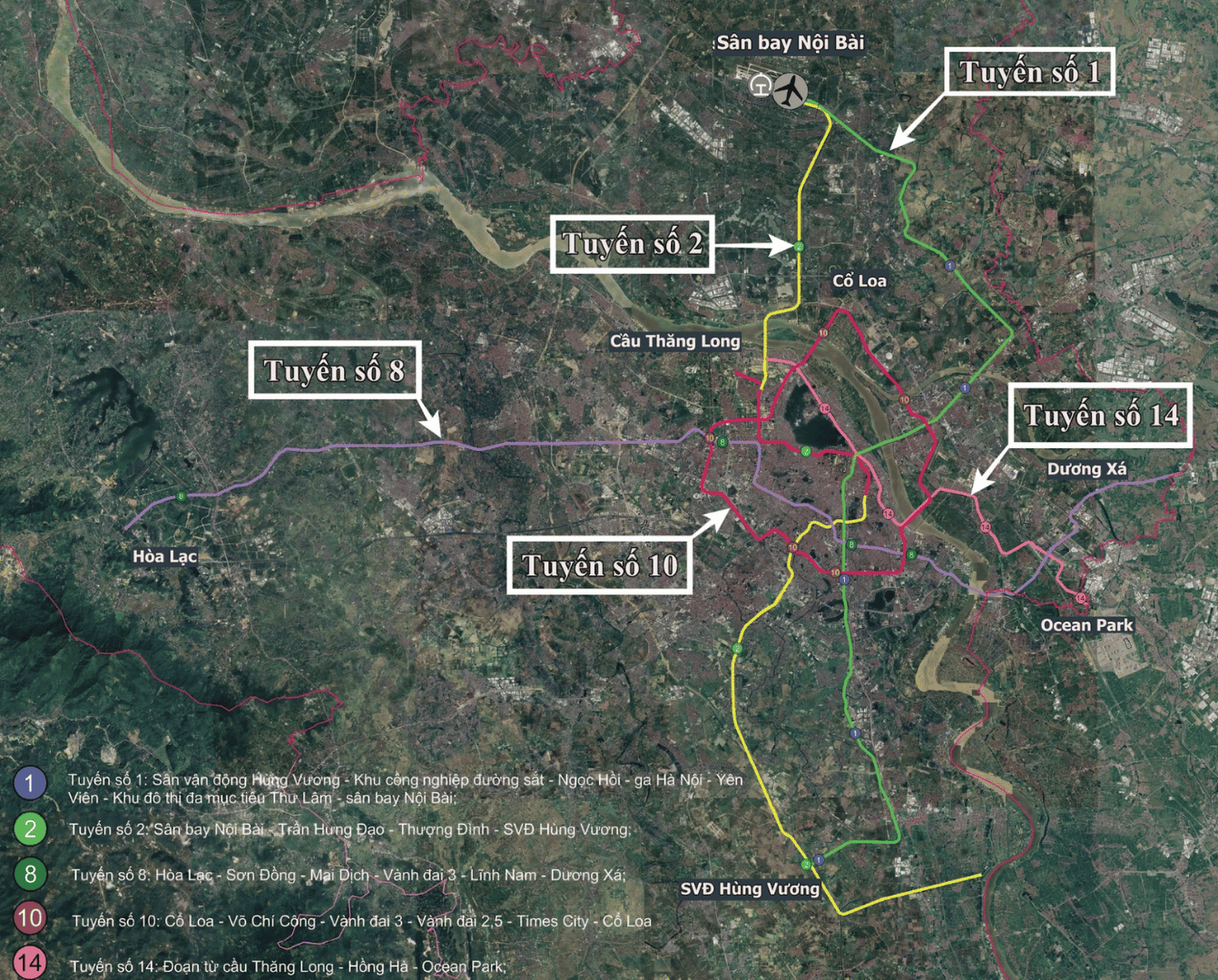
On June 22, Hanoi simultaneously broke ground on five new metro lines, with a total investment of VND 1.3 quadrillion (about US$50 billion). According to Vu Dai Thang, Chairman of Hanoi’s People’s Committee, this is the largest-ever metro development programme for the city, marking a transition from constructing individual metro lines to building an integrated, citywide network.
The move comes as Ho Chi Minh City also aims to complete 200 kilometres of metro lines by 2030. While the first metro line in both cities took more than a decade to complete, the simultaneous launch of multiple projects signals a shift from years of slow metro development to an unprecedented construction push.
The extended metro network by 2030
Hanoi currently has two metro lines in operation: the Cat Linh–Ha Dong Line and the elevated section of the Nhon–Hanoi Railway Station Line. Under the capital’s 100-year master plan, the city aims to develop an 18-line urban railway network spanning approximately 979 kilometres.
The plan targets completing around 500 kilometres of metro lines by 2035, with the remaining network to be built between 2035 and 2045.
On June 22, 2026, Hanoi simultaneously broke ground on five new metro lines with a combined length of more than 300 kilometres. The projects are expected to be substantially completed by 2030.
Once completed, the five lines will connect key transport hubs and emerging urban centres, including Noi Bai International Airport, Hanoi Railway Station, the Ngoc Hoi transport hub, Hoa Lac, Thu Lam, Co Loa and Ocean Park.
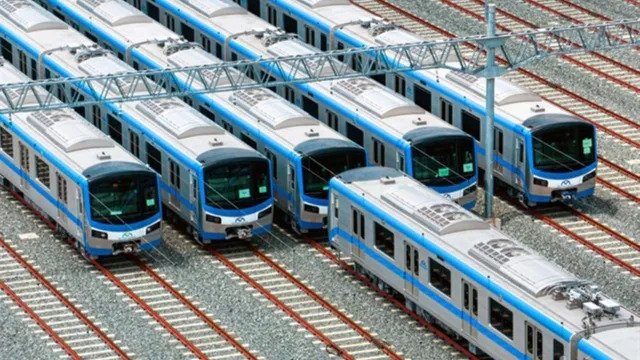
Meanwhile, in May 2026, through Resolution No. 09-NQ/TW, the Politburo directed Ho Chi Minh City to complete around 200 kilometres of metro lines by 2030 and finish its urban rail network by 2045.
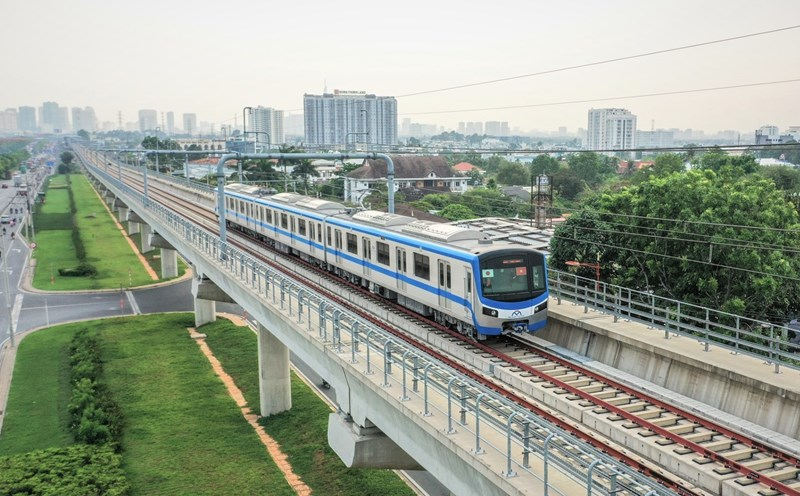
That means the city must build more than 180 additional kilometres of metro within the next 4 years, while the 20-kilometre Metro Line 1 (Ben Thanh-Suoi Tien) took almost two decades to complete and enter operation.
Ho Chi Minh City has already broken ground on several new projects, including the 11-kilometre Ben Thanh–Tham Luong section of Metro Line 2, the approximately 54-kilometre Ben Thanh–Can Gio line, and the six-kilometre Ben Thanh–Thu Thiem section of Metro Line 2.
The city also plans to begin construction on four more rail projects this year: the roughly 48-kilometre Thu Thiem–Long Thanh railway; the Binh Duong New City–Suoi Tien line; Phase 1 of Metro Line 6, connecting Tan Son Nhat International Airport and Phu Huu over 22 kilometres; and the Thu Dau Mot–Ho Chi Minh City railway.
Why do Hanoi and Ho Chi Minh City accelerate expanding metro networks?
Beyond the immediate benefits of easing traffic congestion and improving air quality, Hanoi and Ho Chi Minh City are accelerating metro development in response to broader strategic pressures.
In Hanoi, the capital’s 100-year master plan envisions a comprehensive metro network that is expected to reshape population distribution and the city’s property market. To ensure these long-term planning goals are realised before the next development cycle, the city is under pressure to accelerate construction.
For Ho Chi Minh City, the metro expansion is more than a transport project—it is a real test of whether recent institutional reforms can deliver faster infrastructure development.
The city has been granted two landmark policy frameworks: Resolution 98, which gives it greater autonomy over planning, land use and transit-oriented development (TOD), and Resolution 188, which introduces special mechanisms for financing, technology, procurement and strategic investors for urban rail projects. Together, the two resolutions are intended to address the planning and regulatory bottlenecks that contributed to Metro Line 1 taking nearly two decades to complete.
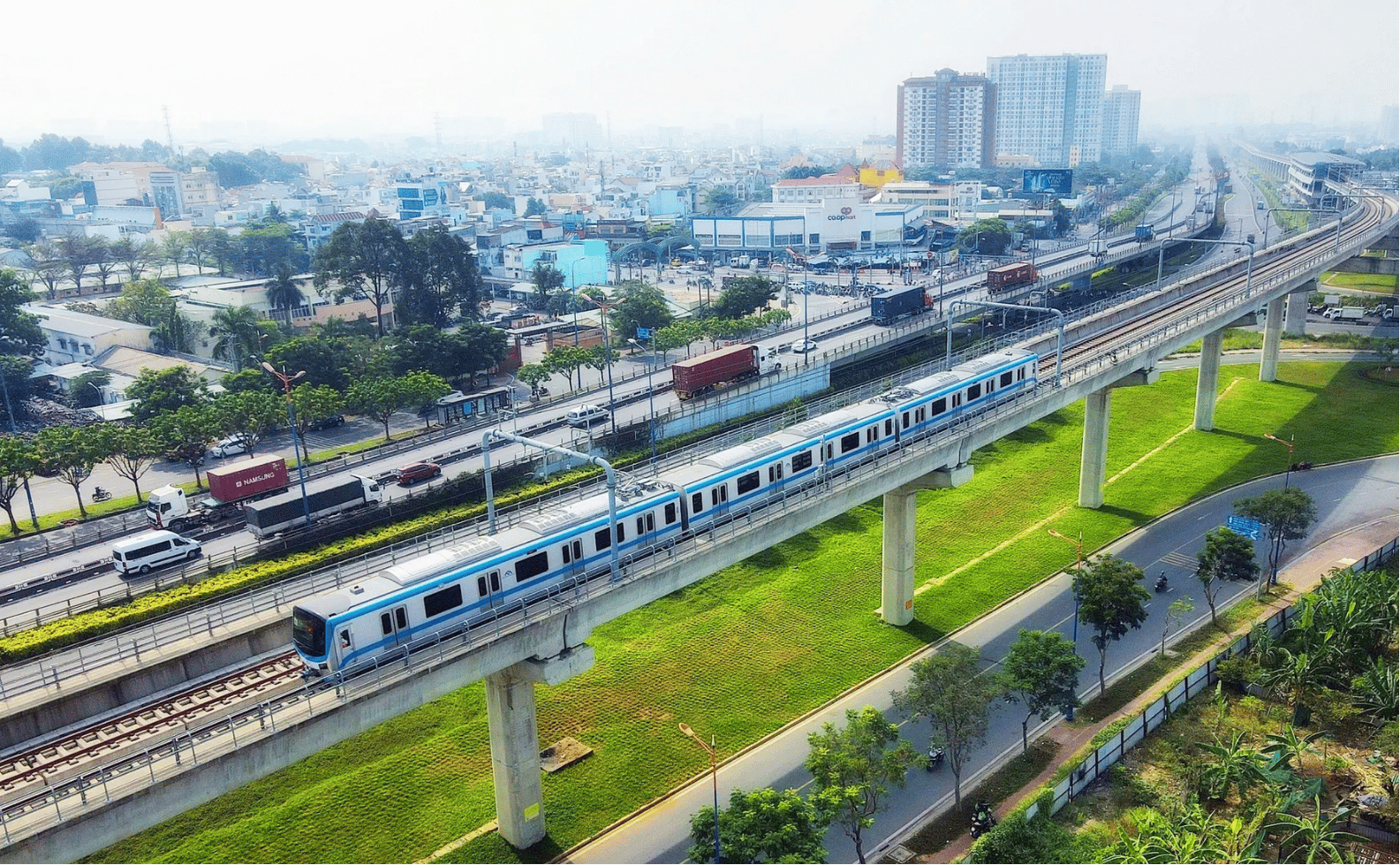
Resolution 188 also gives Ho Chi Minh City unprecedented flexibility in mobilising capital and delivering metro projects, but those advantages depend on timely implementation. Whether the city can translate these new powers into completed metro lines by 2030 will determine its ability to carry the projects in favour of the reform.
Metro expansion is also critical to supporting broader economic development. In Ho Chi Minh City, the rail network needs to keep pace with the opening of Long Thanh International Airport to maximise regional connectivity. Both Hanoi and Ho Chi Minh City see metro systems as the backbone of a transition from monocentric urban growth to multi-centre metropolitan regions capable of sustaining future investment.
“Vietnam needs to move beyond a single-centre urban model and develop well-connected, multi-centre cities. Otherwise, investors may look elsewhere, and economic growth could suffer. If Vietnam wants to prosper, it cannot afford such a long time,” said Marc Townsend, Senior Advisor at Arcadia Consulting Vietnam, to Nhip Cau Dau Tu.
The unprecedented challenge
Experts have described the goal of completing 200–300 kilometres of metro lines within the next four years as “an unprecedented challenge.”
For Ho Chi Minh City, the scale of the challenge remains immense. According to economist Dr Tran Du Lich, delivering 355 kilometres of metro lines within the next decade would require the city to complete around 35 kilometres of urban railway every year—a pace that would be difficult even for countries with far more experience in metro construction.
Analysts stressed that the focus should not be on questioning the target, but on identifying the obstacles and finding solutions. While Resolution 188 provides a new institutional framework, the city must also overhaul its implementation model, project management and administrative approach. “If we continue with the old procedures, Ho Chi Minh City is unlikely to achieve its goal of building 355 kilometres of urban rail within 10 years,” said Nguyen Trong Hoai , Professor and former Vice President of the University of Economics Ho Chi Minh City.
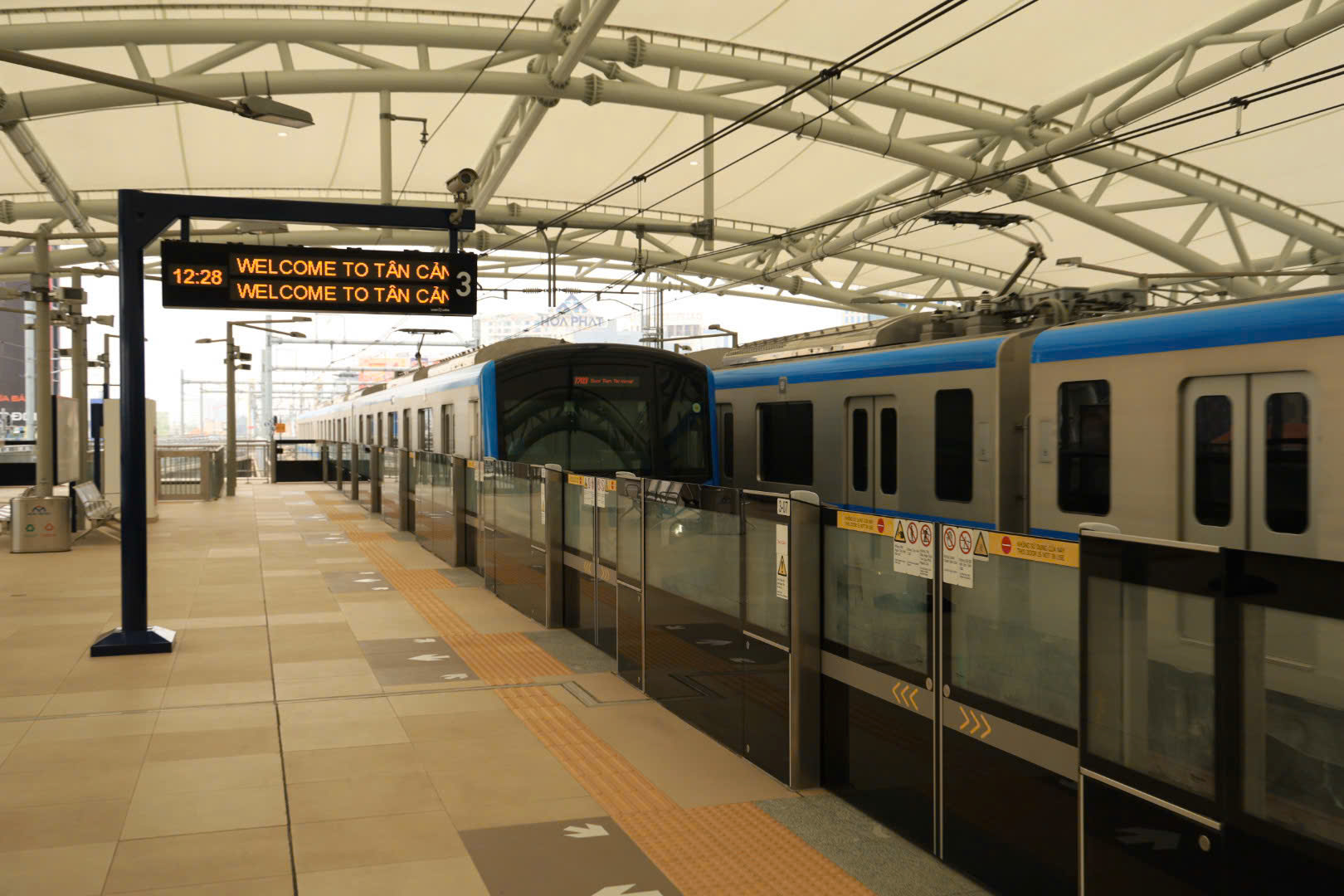
In Hanoi, meanwhile, experts have described the simultaneous construction of five metro lines as a breakthrough, marking a shift from building isolated rail projects to developing an integrated urban transport network.
Hanoi’s metro lines face challenges beyond construction delays: interoperability. Existing and planned metro lines are being built using different technical standards and technologies. The Cat Linh–Ha Dong line uses Chinese technology, the Nhon–Hanoi Railway Station line follows European standards, while the Nam Thang Long–Tran Hung Dao line is expected to adopt Japanese technology. Differences in rolling stock, signalling systems, control technologies and maintenance standards make seamless integration more difficult.
The result is that even physically adjacent lines are not always well connected. For example, Cat Linh Station and Station S10 on the Nhon–Hanoi Railway Station line are only a few hundred metres apart, yet passengers must walk through surrounding streets to transfer because no direct interchange has been built.
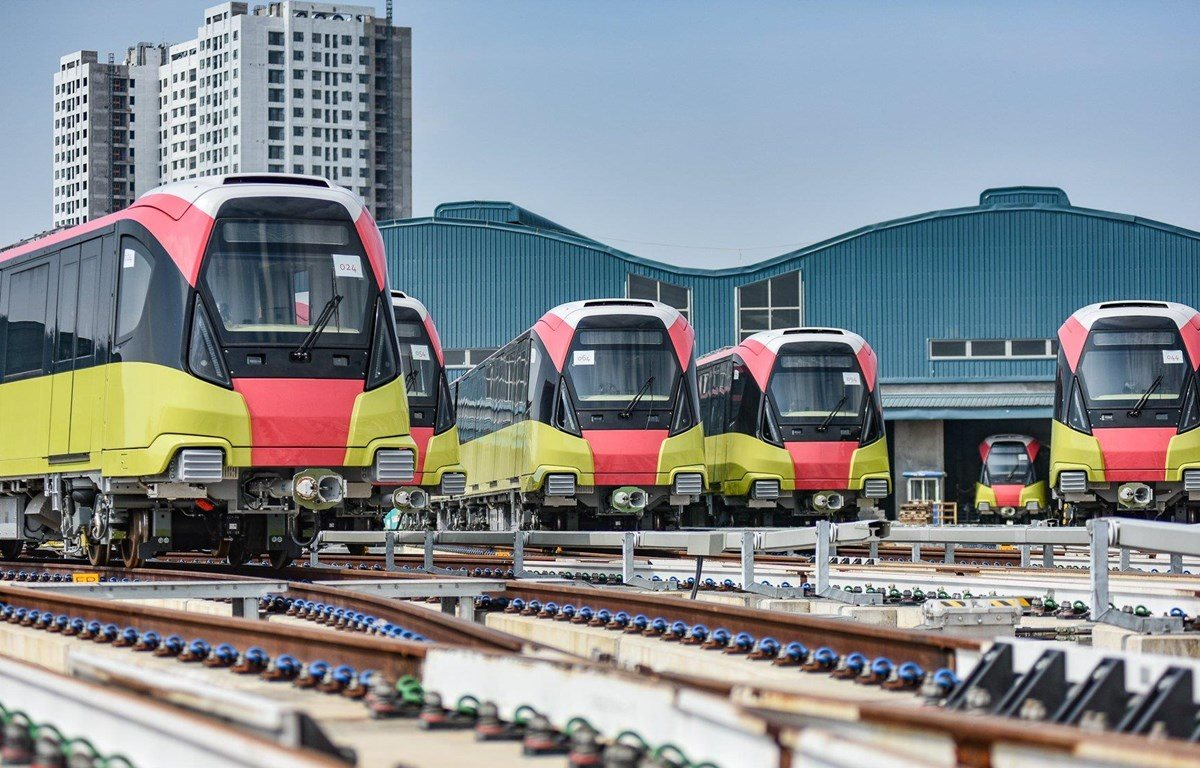
As a result, Hanoi’s challenge is not only delivering hundreds of kilometres of new metro lines on schedule, but also whether the city can integrate those lines into a unified, interoperable network. In that sense, success will be measured not simply by how many kilometres of track are built, but by whether the system functions as a coherent urban railway once it is fully operational.
In that sense, both Hanoi and Ho Chi Minh City are racing against an ambitious deadline while facing unprecedented technical, financial and institutional challenges. Whether the two cities can translate their ambitions into functioning metro systems that ease congestion, support economic growth and reshape urban development remains a question that only time can answer.
Source: https://vietcetera.com/en/vietnams-metro-race-is-finally-underway
Google Translation:
การแข่งขันสร้างรถไฟฟ้าใต้ดินของเวียดนามเริ่มต้นขึ้นแล้วในฮานอยและโฮจิมินห์
นี่แสดงให้เห็นว่าเวียดนามได้เปลี่ยนจากการพัฒนารถไฟฟ้าใต้ดินที่ล่าช้ามาหลายปี สู่การเร่งก่อสร้างอย่างที่ไม่เคยมีมาก่อน
บทความข่าวนี้ได้รับการสนับสนุนโดย FALLPROTEC บริษัทที่มีชื่อเสียงระดับโลกด้านการออกแบบและการผลิตระบบป้องกันการตกจากที่สูงและโซลูชันการเข้าถึงที่สูงระดับพรีเมียม
เมื่อวันที่ 22 มิถุนายน ฮานอยได้เริ่มก่อสร้างรถไฟฟ้าใต้ดินสายใหม่ 5 สายพร้อมกัน ด้วยงบประมาณการลงทุนรวม 1.3 ล้านล้านด่อง (ประมาณ 50 พันล้านดอลลาร์สหรัฐ) ตามที่นายวู ได ถัง ประธานคณะกรรมการประชาชนฮานอย กล่าวว่า นี่เป็นโครงการพัฒนารถไฟฟ้าใต้ดินที่ใหญ่ที่สุดเท่าที่เคยมีมาของเมือง ถือเป็นการเปลี่ยนผ่านจากการสร้างรถไฟฟ้าใต้ดินแต่ละสายไปสู่การสร้างเครือข่ายที่เชื่อมโยงกันทั่วเมือง
การดำเนินการนี้เกิดขึ้นในขณะที่นครโฮจิมินห์ตั้งเป้าที่จะสร้างรถไฟฟ้าใต้ดินให้แล้วเสร็จ 200 กิโลเมตรภายในปี 2030 แม้ว่าการสร้างรถไฟฟ้าใต้ดินสายแรกในทั้งสองเมืองจะใช้เวลานานกว่าทศวรรษ แต่การเปิดตัวโครงการหลายโครงการพร้อมกันนี้บ่งชี้ถึงการเปลี่ยนแปลงจากการพัฒนารถไฟฟ้าใต้ดินที่ล่าช้ามาหลายปี ไปสู่การเร่งก่อสร้างอย่างที่ไม่เคยมีมาก่อน
เครือข่ายรถไฟฟ้าใต้ดินที่ขยายออกไปภายในปี 2030
ปัจจุบันฮานอยมีรถไฟฟ้าใต้ดินเปิดให้บริการอยู่ 2 สาย ได้แก่ สายแคทลินห์-ฮาดง และสายยกระดับเญิน-สถานีรถไฟฮานอย ภายใต้แผนแม่บท 100 ปีของเมืองหลวง ฮานอยตั้งเป้าที่จะพัฒนาเครือข่ายรถไฟฟ้าในเมือง 18 สาย ครอบคลุมระยะทางประมาณ 979 กิโลเมตร
แผนดังกล่าวตั้งเป้าหมายที่จะสร้างรถไฟฟ้าใต้ดินให้แล้วเสร็จประมาณ 500 กิโลเมตรภายในปี 2035 โดยส่วนที่เหลือจะสร้างระหว่างปี 2035 ถึง 2045
เมื่อวันที่ 22 มิถุนายน 2026 กรุงฮานอยได้เริ่มก่อสร้างรถไฟฟ้าใต้ดินสายใหม่ 5 สายพร้อมกัน โดยมีความยาวรวมกันมากกว่า 300 กิโลเมตร โครงการเหล่านี้คาดว่าจะแล้วเสร็จส่วนใหญ่ภายในปี 2030
เมื่อสร้างเสร็จแล้ว รถไฟฟ้าทั้ง 5 สายนี้จะเชื่อมต่อศูนย์กลางการคมนาคมที่สำคัญและศูนย์กลางเมืองที่กำลังเติบโต รวมถึงสนามบินนานาชาตินอยบาย สถานีรถไฟฮานอย ศูนย์กลางการคมนาคมง็อกฮอย ฮวาหลัก ทูลัม โคโลอา และโอเชียนพาร์ค
แผนที่รถไฟฟ้าใต้ดิน 5 สายใหม่ในฮานอย | ที่มา: Hanoimoi
ขณะเดียวกัน ในเดือนพฤษภาคม 2569 คณะกรรมการกรมการเมืองได้ออกมติหมายเลข 09-NQ/TW สั่งการให้นครโฮจิมินห์เร่งสร้างรถไฟฟ้าใต้ดินให้แล้วเสร็จประมาณ 200 กิโลเมตรภายในปี 2563 และสร้างเครือข่ายรถไฟในเมืองให้แล้วเสร็จภายในปี 2588
นั่นหมายความว่าเมืองจะต้องสร้างรถไฟฟ้าใต้ดินเพิ่มอีกกว่า 180 กิโลเมตรภายใน 4 ปีข้างหน้า ในขณะที่รถไฟฟ้าใต้ดินสาย 1 (เบ็นถั่น-สุ่ยเตียน) ระยะทาง 20 กิโลเมตร ใช้เวลาเกือบสองทศวรรษในการก่อสร้างและเปิดให้บริการ
นครโฮจิมินห์ได้เริ่มก่อสร้างโครงการใหม่หลายโครงการแล้ว รวมถึงรถไฟฟ้าใต้ดินสาย 2 ช่วงเบ็นถั่น-ทัมลวง ระยะทาง 11 กิโลเมตร สายเบ็นถั่น-กันจิโอ ระยะทางประมาณ 54 กิโลเมตร และสายเบ็นถั่น-ทูเทียม ระยะทาง 6 กิโลเมตร
นอกจากนี้ เมืองโฮจิมินห์ยังวางแผนที่จะเริ่มก่อสร้างโครงการรถไฟอีก 4 โครงการในปีนี้ ได้แก่ ทางรถไฟสายทูเทียม-ลองถั่น ระยะทางประมาณ 48 กิโลเมตร สายบิ่ญเดือง-ซุยเตียน รถไฟฟ้าใต้ดินสาย 6 ระยะที่ 1 เชื่อมต่อสนามบินนานาชาติเตินเซินญัตและฟู้ฮู ระยะทาง 22 กิโลเมตร และทางรถไฟสายทูเดามอต-นครโฮจิมินห์
นครโฮจิมินห์ตั้งเป้าที่จะสร้างรถไฟฟ้าใต้ดินให้ครบ 200 กิโลเมตรภายในปี 2030 | ที่มา: Lao Dong
เหตุใดฮานอยและโฮจิมินห์จึงเร่งขยายเครือข่ายรถไฟฟ้าใต้ดิน?
นอกเหนือจากประโยชน์โดยตรงในการบรรเทาปัญหาการจราจรติดขัดและปรับปรุงคุณภาพอากาศแล้ว ฮานอยและโฮจิมินห์กำลังเร่งพัฒนาโครงข่ายรถไฟฟ้าใต้ดินเพื่อตอบสนองต่อแรงกดดันเชิงกลยุทธ์ที่กว้างขึ้น
ในฮานอย แผนแม่บท 100 ปีของเมืองหลวงได้วางวิสัยทัศน์เกี่ยวกับโครงข่ายรถไฟฟ้าใต้ดินที่ครอบคลุม ซึ่งคาดว่าจะเปลี่ยนแปลงการกระจายตัวของประชากรและตลาดอสังหาริมทรัพย์ของเมือง เพื่อให้มั่นใจว่าเป้าหมายการวางแผนระยะยาวเหล่านี้จะบรรลุผลสำเร็จก่อนวงจรการพัฒนาครั้งต่อไป เมืองจึงอยู่ภายใต้แรงกดดันให้เร่งการก่อสร้าง
สำหรับโฮจิมินห์ การขยายรถไฟฟ้าใต้ดินเป็นมากกว่าโครงการขนส่ง—มันคือบททดสอบที่แท้จริงว่าการปฏิรูปสถาบันล่าสุดจะสามารถนำไปสู่การพัฒนาโครงสร้างพื้นฐานที่รวดเร็วยิ่งขึ้นได้หรือไม่
เมืองนี้ได้รับกรอบนโยบายสำคัญสองฉบับ ได้แก่ มติที่ 98 ซึ่งให้ความเป็นอิสระมากขึ้นในการวางแผน การใช้ที่ดิน และการพัฒนาที่เน้นการขนส่ง (TOD) และมติที่ 188 ซึ่งแนะนำกลไกพิเศษสำหรับการจัดหาเงินทุน เทคโนโลยี การจัดซื้อจัดจ้าง และนักลงทุนเชิงกลยุทธ์สำหรับโครงการรถไฟในเมือง โดยรวมแล้ว มติทั้งสองฉบับนี้มีจุดมุ่งหมายเพื่อแก้ไขปัญหาคอขวดด้านการวางแผนและกฎระเบียบที่ทำให้รถไฟฟ้าใต้ดินสาย 1 ใช้เวลาเกือบสองทศวรรษในการก่อสร้างให้แล้วเสร็จ
รถไฟฟ้าสาย 1 ซึ่งใช้เวลาก่อสร้าง 20 ปีจึงจะแล้วเสร็จ | ที่มา: Thanh Nien
มติที่ 188 ยังให้อำนาจแก่เมืองโฮจิมินห์ในการระดมทุนและดำเนินโครงการรถไฟฟ้าใต้ดินอย่างที่ไม่เคยมีมาก่อน แต่ข้อได้เปรียบเหล่านั้นขึ้นอยู่กับการดำเนินการที่ทันท่วงที ว่าเมืองจะสามารถเปลี่ยนอำนาจใหม่เหล่านี้ให้เป็นการสร้างรถไฟฟ้าใต้ดินให้แล้วเสร็จภายในปี 2030 ได้หรือไม่นั้น จะเป็นตัวกำหนดความสามารถในการดำเนินโครงการต่างๆ เพื่อสนับสนุนการปฏิรูป
การขยายรถไฟฟ้าใต้ดินยังมีความสำคัญต่อการสนับสนุนการพัฒนาเศรษฐกิจในวงกว้าง ในเมืองโฮจิมินห์ เครือข่ายรถไฟจำเป็นต้องก้าวให้ทันกับการเปิดสนามบินนานาชาติลองแทง เพื่อเพิ่มการเชื่อมต่อในระดับภูมิภาคให้มากที่สุด ทั้งฮานอยและโฮจิมินห์มองว่าระบบรถไฟฟ้าใต้ดินเป็นกระดูกสันหลังของการขนส่ง