 Beware! The most common construction faults I see in houses in my Thai mooban; Thailand’s medical care is pretty damn good; Decline in standing for Thailand’s Royal Anthem is a sign of the times; and more
Ramblings of a long-term construction expat in Thailand, 07 June 2026
Beware! The most common construction faults I see in houses in my Thai mooban
Spelt variously in English as Moo ban, Moo baan, Mu ban, Muban, etc., (Thai: หมู่บ้าน), it is usually translated as village or hamlet or a gated housing community complete with security guards and various facilities Communal gym, swimming pool, parks, etc.).
We bought our house in a ‘Land & Houses’ development over two decades ago. L&H is one of the larger Thai real estate developers with a very good reputation for superior single home, condominium and townhome projects in Bangkok, Outer Bangkok, and other provinces. Initially we were looking to buy one of the houses constructed by L&H’s contractor(s) in the mooban, but eventually bought a privately constructed house in the mooban which offered a better buy.
As the years have passed by, I have noted two very common faults to the ‘Land & Houses’ constructed houses (luckily, not to my house), due to the houses sinking. I would imagine these common faults are found in many housing developments in and around Bangkok.
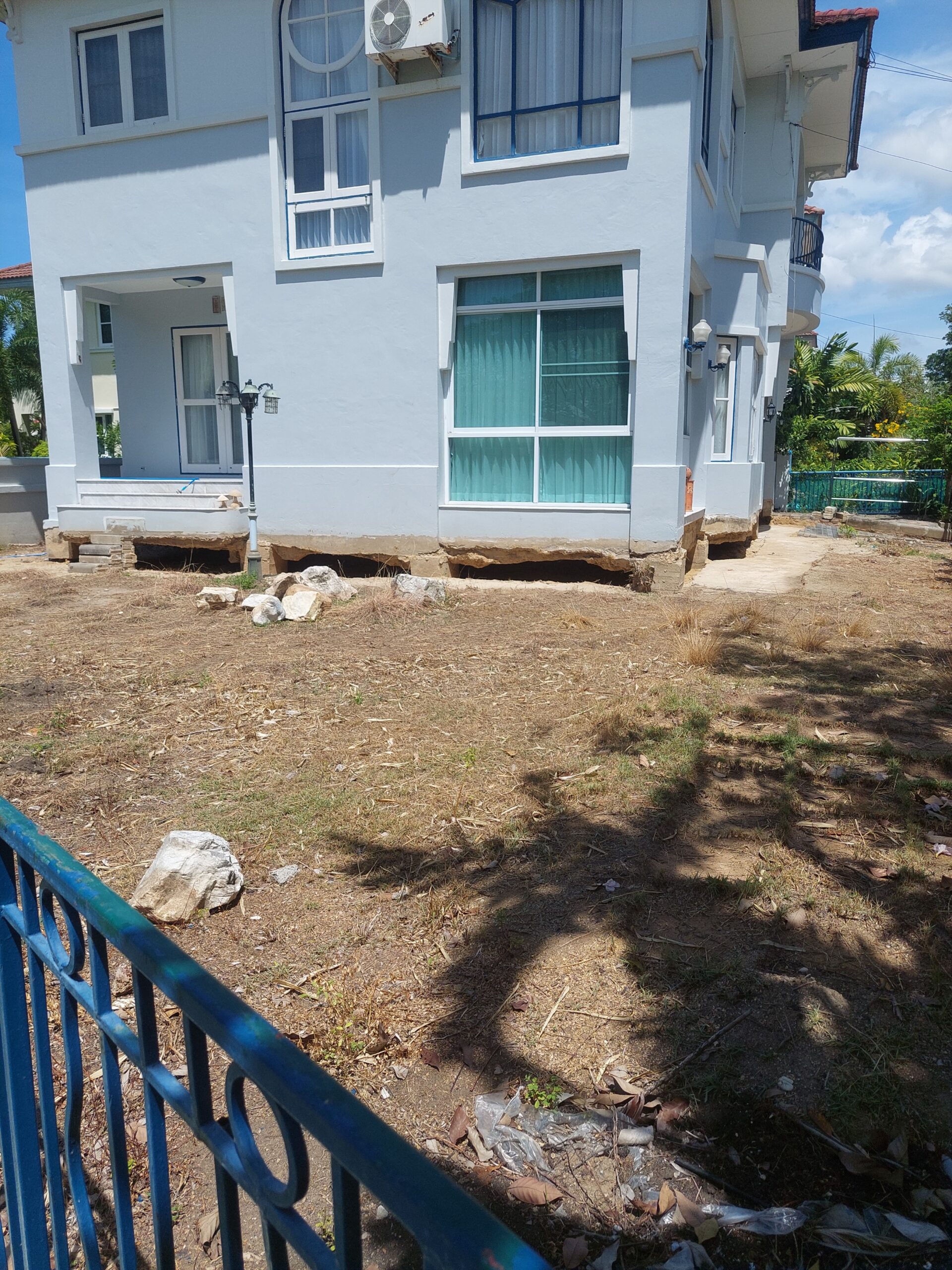
It is very common to see the carpark area sunk and badly broken, rendering the carpark area unusable and requiring the whole carpark to be hacked up, short piles to driven in and the whole carpark reinforcing and concrete to be rebuilt.
Similarly, huge gaps appear running along the bottom of the houses, that are required to be sealed – unsealed, they become popular areas for snakes and monitor lizards to reside under the houses!
I assume the cause of the faults is due to there being insufficient piling depths and/or piling numbers when the house / carparking areas are constructed.
If you are ever thinking of buying a house in a mooban, do ensure that take a walk around the area to check if any of the houses have such problems.
There are many people in my mooban who just can’t afford to fix these faults and have to live with a parking area that they cannot use and/or those gaping openings under the house. Beware!
—————————————————————————–
Thailand’s medical care is pretty damn good
My wife recently had tonsillitis. We visited Thai Nakarin, our local private hospital in Bangna. The time from arriving at the reception desk, to seeing doctor, to paying the cashier, to going to the pharmacy to collect the antibiotics, took no more than 30 minutes, and cost baht 1,200 (approximately £27 or USD$37).
This hospital visit made me think of my family members recent medical treatment on the National Health Service back in the UK. There it’s a process of: make a phone call to doctors’ surgery to book an online appointment with a doctor, call doctor for discussion on symptoms, if need be, attend an in-person appointment with doctor, then hospital appointments, treatments, etc., all of which can take from weeks to months. The irony is, I guarantee most people back in the UK and in other ‘Western countries’, mistakenly think Thailand’s care is very basic when in many ways it is far superior to theirs.
The wife and I have always been very happy with medical treatment at Thai hospitals, from births of our children, to various operations, to general medical conditions, and all treatment received over the years has been excellent. All private and public hospitals that i have experience of, offer excellent services, so it’s not surprising that medical holidays to Thailand, particularly by middle-eastern nationals, is big business here, with some private hospitals resembling top quality shopping malls and high-end hotels combined – if you have ever visited the opulence of Bumrungrad hospital you’ll know what I mean.
For a good mid-range private hospital, we use Bangkok Christian hospital (on Silom and Suriwong roads near to Patpong 1), even though it’s a trek in to the traffic madness of the Big Mango for us ‘baan nok’ folks.
And don’t forget to get and keep your health insurance up to date folks!
—————————————————————————–
Decline in standing for Thailand’s Royal Anthem is a sign of the times
Anyone who stays in Thailand for a while will become familiar with hearing the National Anthem and the Royal Anthem.
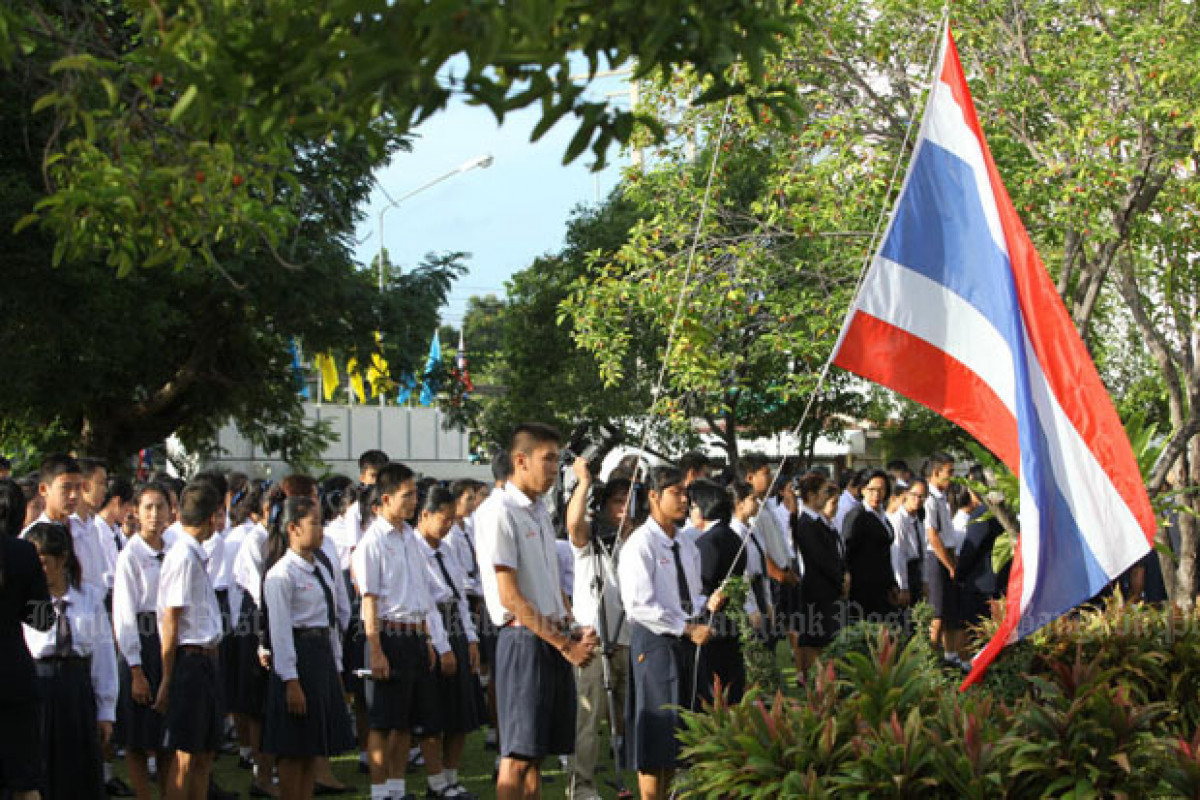
The National anthem is played daily on television and radio at 8 AM and 6 PM, in school assemblies at 8 AM as the Thai flag is raised, in Bangkok’s Lumphini Park stopping everyone in their until the anthem is finished.
The Royal anthem will be familiar to anyone who has ever been to a Thai cinema, as it is played before the movie starts, and everyone stands up. Well, that seems to be changing. Years ago, everyone stood up. Last year my wife and I watched ‘Bridget Jones: Mad About the Boy’ in Central Bangna and about 50% of the audience stood. Last week we watched the Michael Jackson movie ‘Michael’ in Megabangna and my wife and I were the ONLY ones who stood up – I felt a little bit embarrassed but also annoyance that nobody else was honouring the tradition.
The practice of standing for the Royal Anthem in Thai theatres/cinemas was adopted from Britain about a hundred years ago. Prachataienglish.com reports that “Dr Charnvit Kasetsiri, a historian and former Rector of Thammasat University, said that in the 1910s, the early days of cinemas, when the showing of a movie was finished in Britain, the image of King George would be projected onto the screen, and the anthem ‘God Save the King’ would be played. The practice was strictly observed in Britain, and was forced in the British colonies worldwide, including India, Malaya, and Burma. The practice was adopted in Siam, now Thailand, by the British-educated Thais and cinema owners. Initially, the anthem was played after movies, while adverts preceded the movies. In 1970s, the anthem was moved to precede movies as it still does today”.
Until at least the end of the 1960s / early 1970s when it ceased, in Britain the national anthem was played after the main movie (commonly there were two movies played one after the other). The National Anthem was also played at the close of each day’s television schedule on each channel. Both practices were ceased with decades ago
—————————————————————————–
Are motorbike deliveries now the worst offenders in Bangkok’s traffic?
Years ago, I think it was common opinion that the worst offenders in Bangkok’s traffic were taxi drivers, songthaew drivers and minibus drivers.
Taxi drivers drive like they own the roads, songthaew drivers drive as slow as they like and set off without looking, and minibus drivers drive almost on top of your bumper.
I’d also often hear people complaining about Toyota Fortuner drivers, which stung as I owned a ‘tuner.
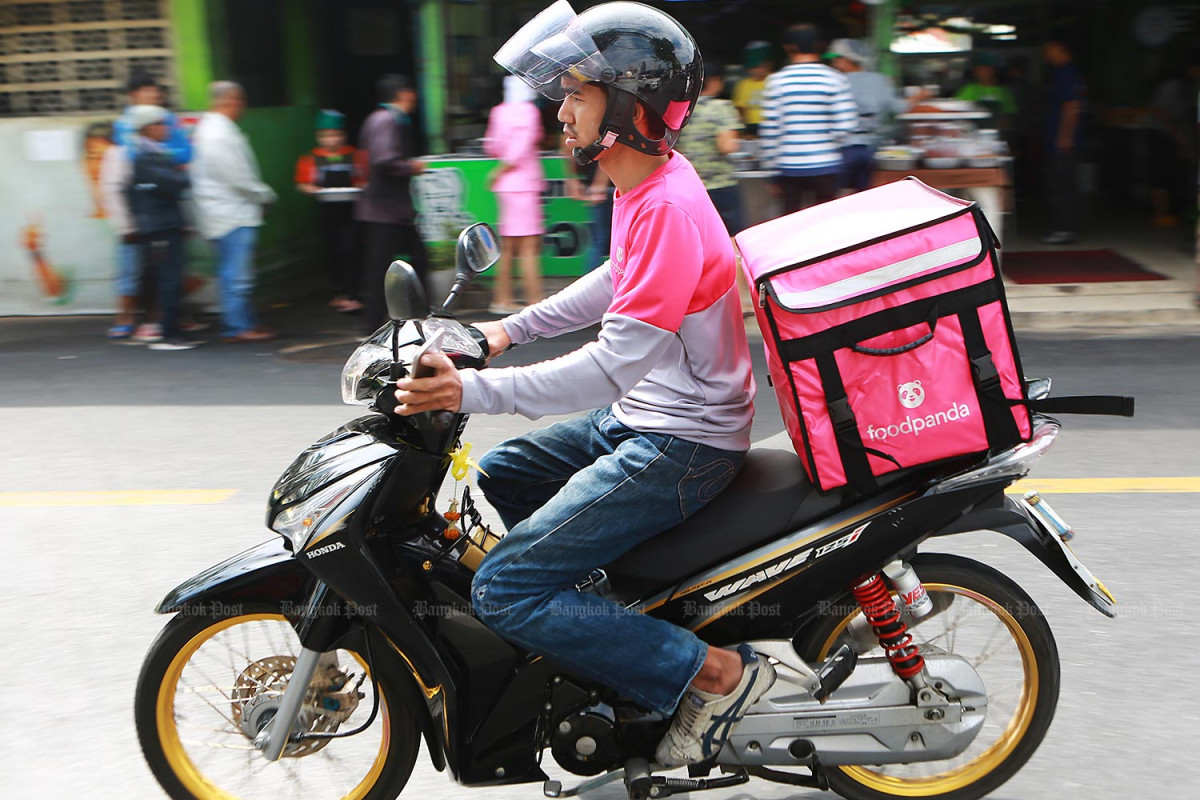
These days though I’d say the worst offenders in Bangkok’s traffic are the motorbike delivery riders (delivering food, post and parcels, whatever). Undertaking, overtaking, riding against the traffic, riding while checking their phones, zipping past you on corners, they are an absolute menace, putting drivers and particularly themselves in danger.
Will anything ever be done about them? Not a chance!
—————————————————————————–
Learning to drive again in Bangkok’s crazy traffic
Following on the Bangkok traffic theme above, after driving here for +30 years, I’m relearning to drive.
People who visit from overseas would often ask me: ‘how can you possibly drive in Bangkok conditions, particularly with all those motorbikes whizzing around?’. I never actually found it a problem, and the fact that there are lots of motorbikes on the roads here even seems to make the cars drive a bit slower than they might minus motorbikes.
As I was recently working on a power plant project in Taiwan for four years, whenever I returned home, usually for short but regular visits, it made sense for my wife to do the driving. The problem with that scenario, is that now I am fully resident again here, I am now the one querying ‘how can you possibly drive in Bangkok conditions, particularly with all those motorbikes whizzing around?’ and I am having to relearn how to drive here.
I have to say I am not enjoying relearning the Bangkok driving style (and prefer my wife to drive, honestly), I am slowly getting used to it.
—————————————————————————–
What am I listening to right now?
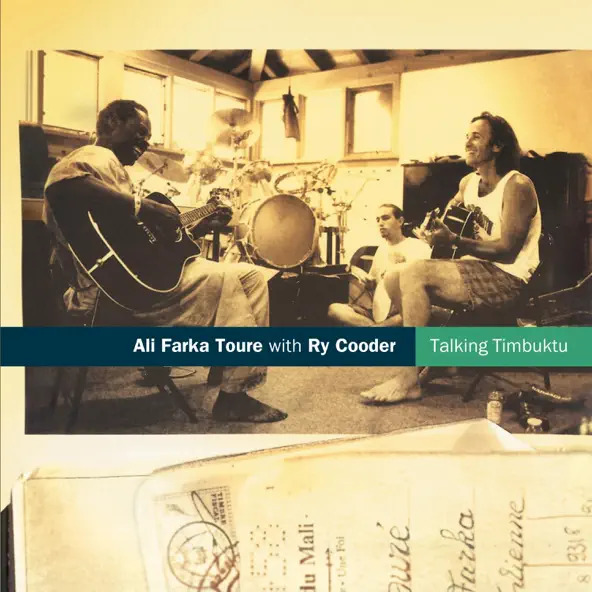
‘Talking Timbuktu’ by Ali Farka Toure and Ry Cooder, with the magnificent track ‘Ai Du’.
It’s really an Ali Farka Toure album, recorded in 1993 in Los Angeles, showcasing Touré’s trance-like desert blues rooted in Malian traditions.
With Ali on vocals, acoustic and electric guitars, six-string banjo, and njarka (a one-string fiddle), his band members on congas and calabash (hollowed-out gourd percussion instrument), and Ry Cooder producing and noodling away on various guitars.
I came across the album as I have been a huge fan of Ry for over 40 years (try ‘Ry Cooder And The Moula Banda Rhythm Acesif you are unfamiliar with his music) – he’s my 2nd favourite guitarist after Jimi Hendrix.
‘Talking Timbuktu’ won the ‘Grammy Award for Best World Music Album’ at the 37th Annual Grammy Awards in 1995. It’s that good people.
If you have never quite gotten in to African music, and yes there’s many types African music, then there can’t be a better introductory album than ‘Talking Timbuktu’.
Another big favourite African music album of mine is the ‘Shabini’ album, a superb debut from Zimbabwe’s most successful band and kings of ‘Jit’ Afropop, the Bhundu Boys; originally released in 1980 and championed by BBC DJ John Peel at the time. I had the immense pleasure of seeing the Bhundu Boys twice in one week in Sydney circa 1990-91: saw them once live in a pub and the other time live outside in Darling Harbour. As a person who doesn’t dance to music, they even had me (slightly) moving – a compliment if ever there was one. One of the best bands I’ve ever seen live, right up there with brilliant The Who and Rory Gallagher concerts I attended in the 1970s, the Bhundu’s were that good.
—————————————————————————–
Googling ‘askew’ –
Try googling the word ‘askew’.
—————————————————————————–
What am I watching right now?
I don’t watch much Truevisions television here, I prefer watching YouTube.
Here’s a few things I watched, enjoyed and would recommend to you.


1. YouTube channel ‘Explore TBR’
(*TBR = Thailand Burma Railway)
Watched all 40 videos on this excellent YouTube channel all about the Thailand-Burma ‘Death’ Railway.
The most popular video is ‘Exploring the Thailand Burma “Death” Railway’. “This video shows some parts of the railway between Kanchanburi and Three Pagodas Pass, and some maps. The sections shown here are around Wang Pho, Tarso, Tonchan, Hellfire Pass, Kannyu, Kinsaiyok, Shimo Nikke, Shimo Songkurai, Songkurai and Three Pagodas Pass.”
Not sure if the owner of the channel is American or Canadian (sorry, i can’t tell the difference), but he’s made an incredible effort to walk, video and then explain sections of the line in Thailand, in incredible detail.
Not a popular website judged on views, but really well put together documentary style videos.
2. From ‘We hate the cold‘ YouTube channel
Not sure how or why the channel name derives, but i really enjoyed this YouTube video ‘I rode a tiny moped from Thailand to UK (no experience)‘ : “I attempted to ride a 125cc moped from Thailand to England, solo and with zero experience. This is a full-length adventure travel documentary of that 35,000km journey through 20+ countries, including Laos, Nepal, India, Iraq, and Turkey.
From surviving the jungles of Laos during monsoon season to finding myself in the middle of a revolution in Nepal, this trip became much more than a motorcycle ride. I crossed some of the world’s most dangerous borders, faced a bomb squad in Delhi, and explored the “cradle of civilization” in Mesopotamia, Iraq
This film is a raw look at global overlanding, the reality of solo travel in level-4 advisory zones, and the incredible kindness of strangers I met along the way”
—————————————————————————–
What am I reading right now?
The Burma-Thailand Railway: The haunting facts of “The Death Railway” by Gavan McCormack, Hank Nelson
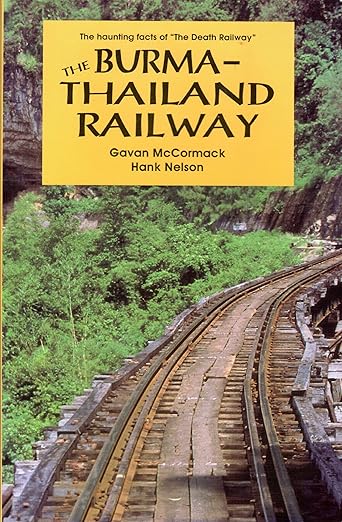
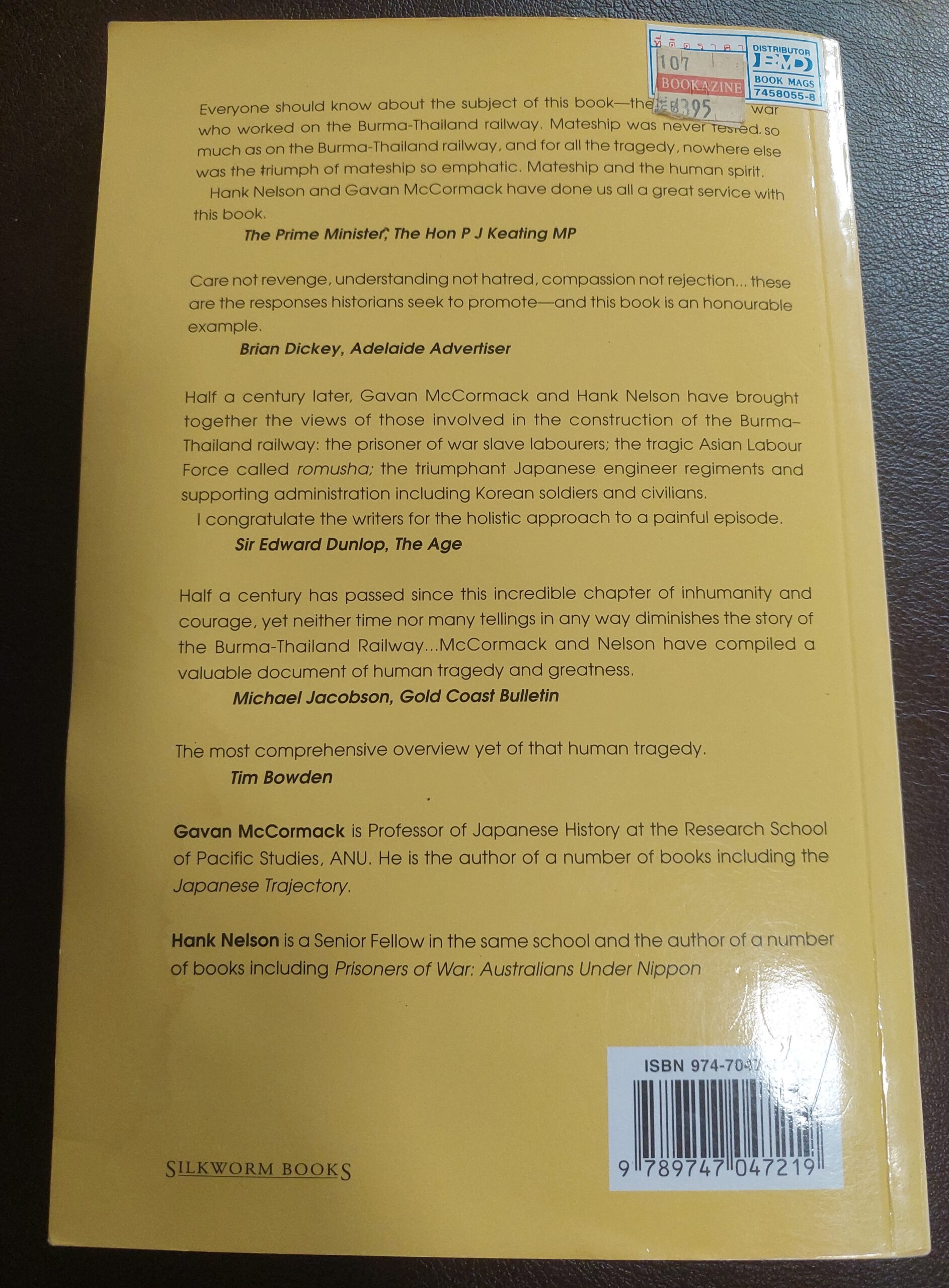
175 pages
ISBN 1863734236, 9781863734233
First published by Allen & Unwin Pty ltd in 1993
My edition published by Silkworm Books in 1993
“Between November 1942 and October 1943, a force of about 60,000 prisoners of the Imperial Japanese Army, together with an even greater number of locally conscripted labourers, was mobilized to construct a railway from Kanchanaburi in Thailand to Thanbuyzayat in Burma. Many died in the construction process, including 12,000 POWs (2,800 of them Australian). They died from overwork, beatings, exhaustion and disease – the result of their taskmasters’ cruelty. Survivors have carried the physical and psychological scars ever since. The crimes committed in order to build the railway need to be understood. In this book some of the Australian survivors, and distinguished Japanese and Australian historians, attempt to come to a real understanding of what happened on the railway and why. Contributors include Tom Uren, Hugh V. Clarke and Sir Edward (Weary) Dunlop”.
I bought my copy of the book in the mid-1990s, but never got round to reading it until this week.
The book is written from the perspective of the Australian armed forces and POWs, but the British, Americans, Dutch and other POWs are referred to, as are the ‘Romusha’ (the Asian workforce).
Various Australian POWs have written chapters, including Sir Edward (Weary) Dunlop, as have Korean guards who were held post-war as Prisoners of War crimes.
At times a tough and depressing read learning about the suffering encountered by the POWs and the cruelty metered out by the Japanese and Korean guards, but very much a worthwhile read.
The book is available as an online purchase from Amazon, etc.
Some facts I learnt:
Allied POWs (such as those from the US, UK, and Commonwealth countries such as Australia) were held under vastly different conditions in German Prisoner-of-War Camps to those in Japanese POW camps. While still suffering the hardships of captivity, the death rate for Western Allied prisoners was kept comparatively low (around 3% to 4%), while approximately 27% to 30% of all Allied prisoners of war (POWs) held by Imperial Japan died in captivity. This was a staggering mortality rate, about seven to eight times higher than the death rate in German POW camps.
The death rate in Japanese camps varied significantly depending on nationality and specific circumstances:
United States: About 34% of American POWs died in Japanese camps, with nearly a third of all U.S. prisoners perishing overall.
Australia: Approximately 33% to 39% of Australian POWs did not survive.
United Kingdom: About 25% to 32% of British and Commonwealth military personnel died in captivity.
The Netherlands: Dutch POW mortality was roughly 20%.
These catastrophic loss rates were primarily driven by starvation, rampant tropical disease, severe physical abuse, and forced labor on brutal projects like the Thai-Burma Railway.
The further up the line away from Kanchanaburi and closer to Sangkhlaburi and the Burma border, the conditions were worse in those POW camps and more deaths occurred there.
Deaths on the Thailand part of the line were far higher than on the Burma part of the line.
—————————————————————————–
IMPORTANT NEWS FOR ALL FARLANGS
Farlangs / foreigners all pronounce ‘Kwai’, as in the famous ‘Bridge on the River Kwai’, incorrectly as ‘Kwhy’ – what you are actually saying is ‘kwai’ (ควาย) which means ‘buffalo’ in Thai (which is why Thais will laugh at you if you pronounce it as ‘Kwhy’).
What you should be saying is closer to ‘Kwhere’ (แคว)]
—————————————————————————–