 Bangkok’s MRT Goes Cashless: Thailand Ditches Old Travel Cards for EMV Contactless from June 2026
27 February 2026
THIS NEWS ARTICLE KINDLY SPONSORED BY FALLPROTEC, A WORLD-RENOWNED NAME IN THE DESIGN AND MANUFACTURE OF PREMIUM FALL PROTECTION SYSTEMS AND HEIGHT ACCESS SOLUTIONS
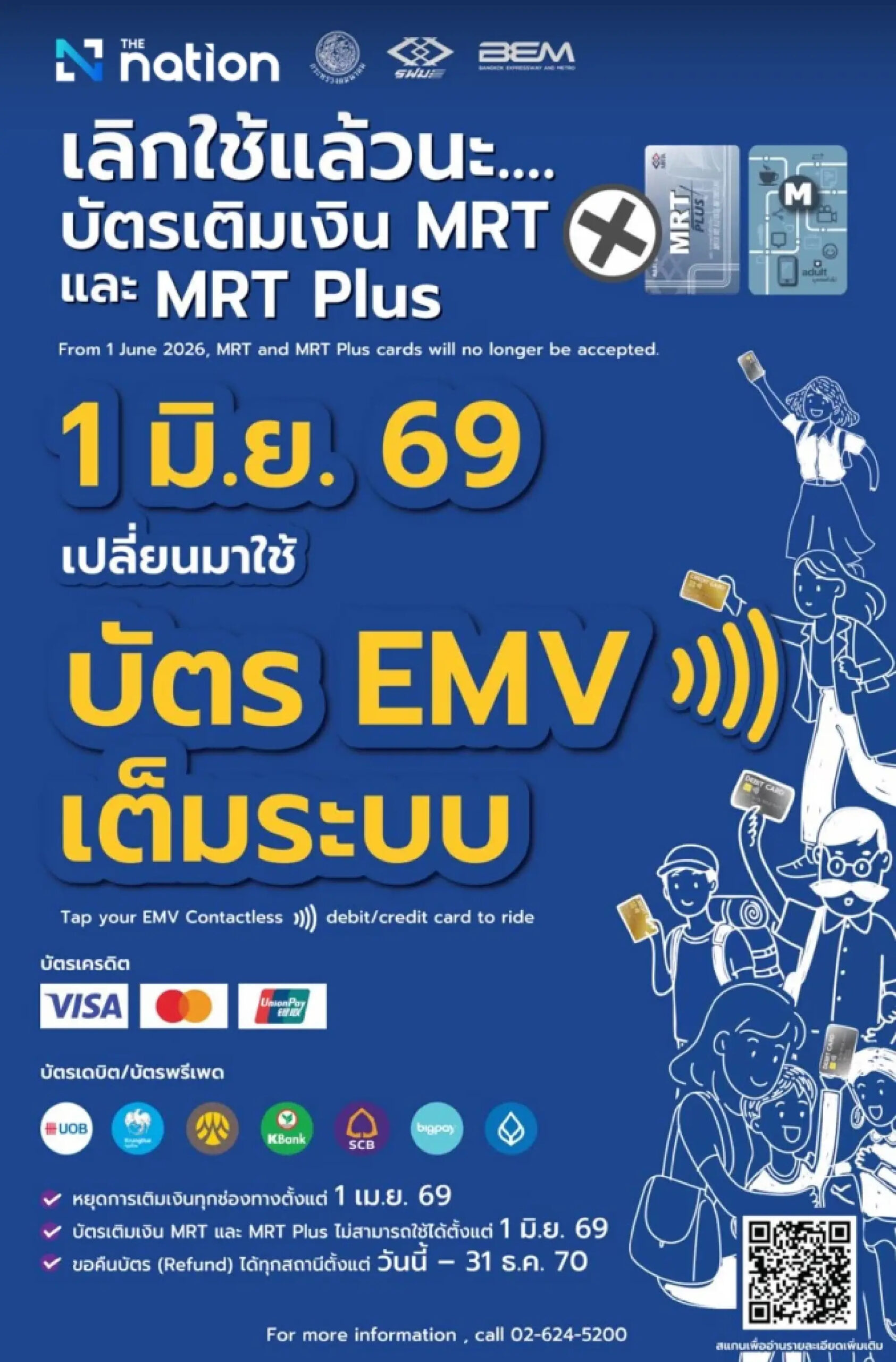
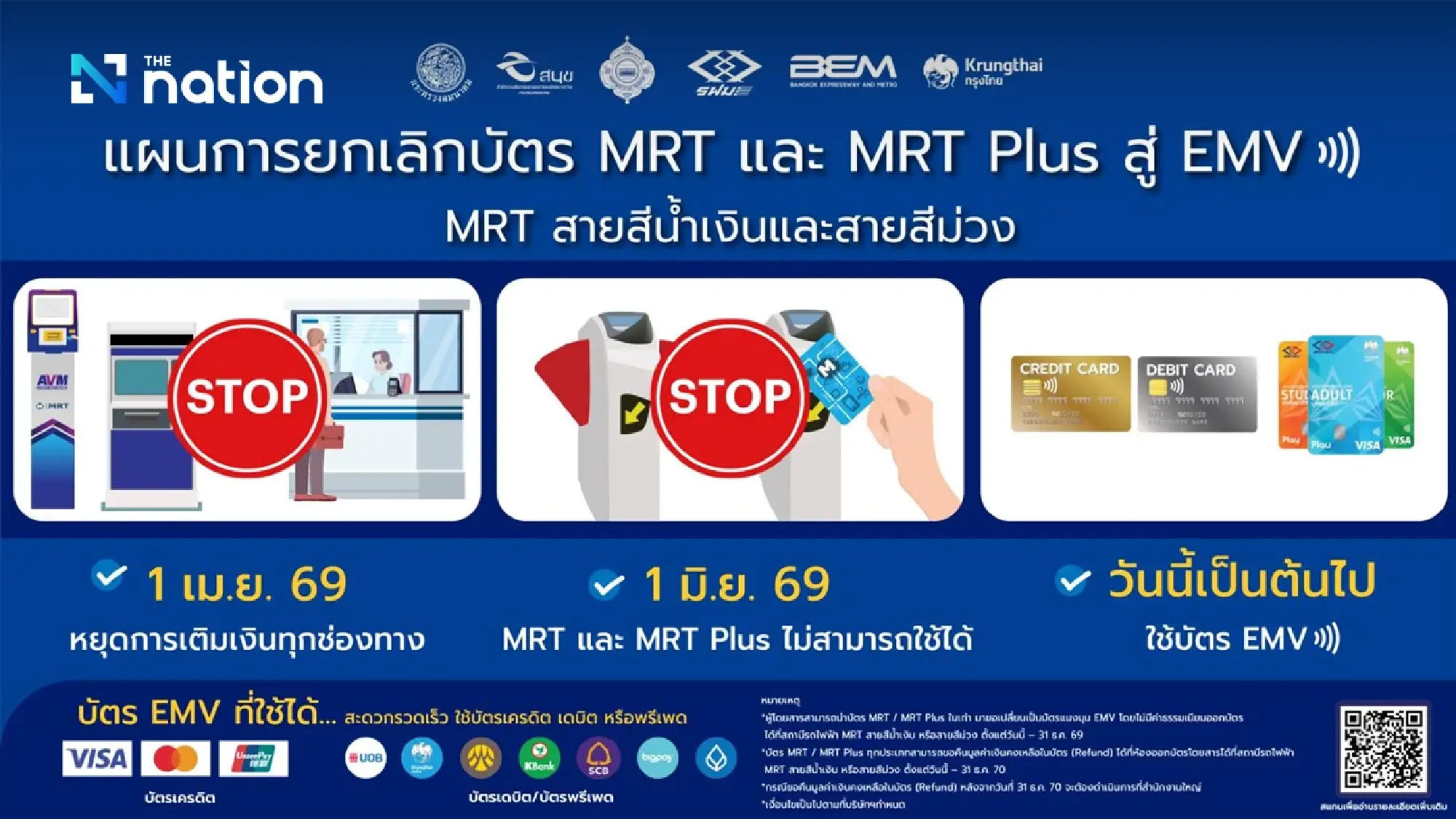
- Bangkok’s MRT system will fully transition to EMV Contactless payments starting June 1, 2026, making existing stored-value cards obsolete on the Blue and Purple Lines.
- Commuters will be able to pay fares by tapping standard contactless credit/debit cards (Visa, Mastercard, UnionPay) or a new dedicated Mangmoom EMV card.
- The phase-out of old travel cards will begin with the cessation of top-ups on April 1, 2026, and passengers can start claiming refunds for their remaining balance from March 1, 2026.
- This initiative is a key step in Thailand’s “Common Ticket Policy” to create a unified, single-card payment system for public transport nationwide.
Passengers on the Blue and Purple Lines have until 31 May to use their existing stored-value cards, as Thailand takes a major step towards a seamless, single-card public transport network.
Thailand’s Deputy Prime Minister and Minister of Transport Phiphat Ratchakitprakarn announced on Friday that Bangkok’s Metropolitan Rapid Transit (MRT) system will fully transition to EMV Contactless payment — the same global standard used on credit and debit cards — from 1 June 2026, marking the country’s most significant step yet towards a unified public transport ticketing system.
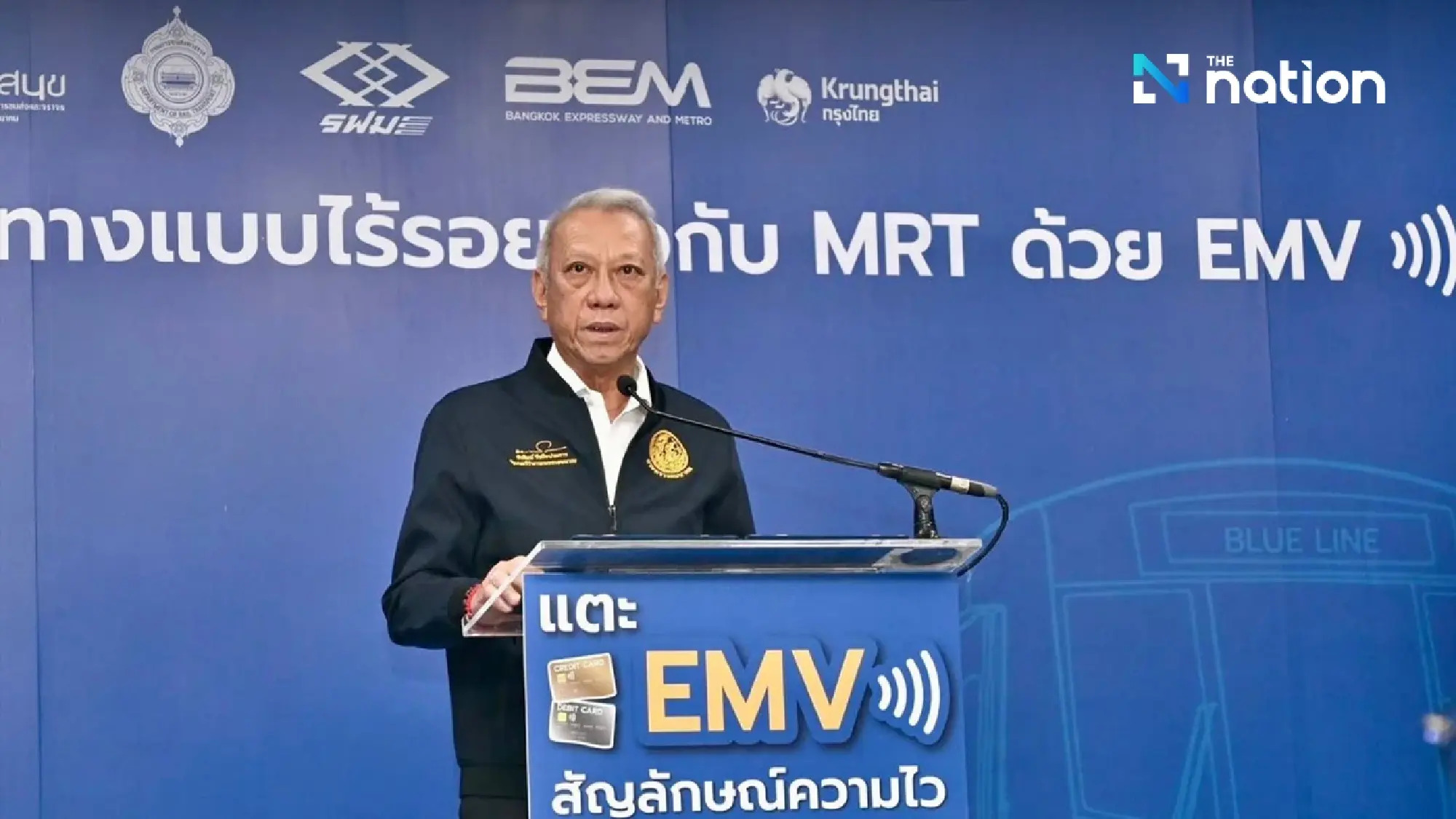
Speaking at Thailand Cultural Centre Station on the MRT Blue Line, Minister Pipat said the government had long championed the so-called “Common Ticket Policy” in the interest of commuters.
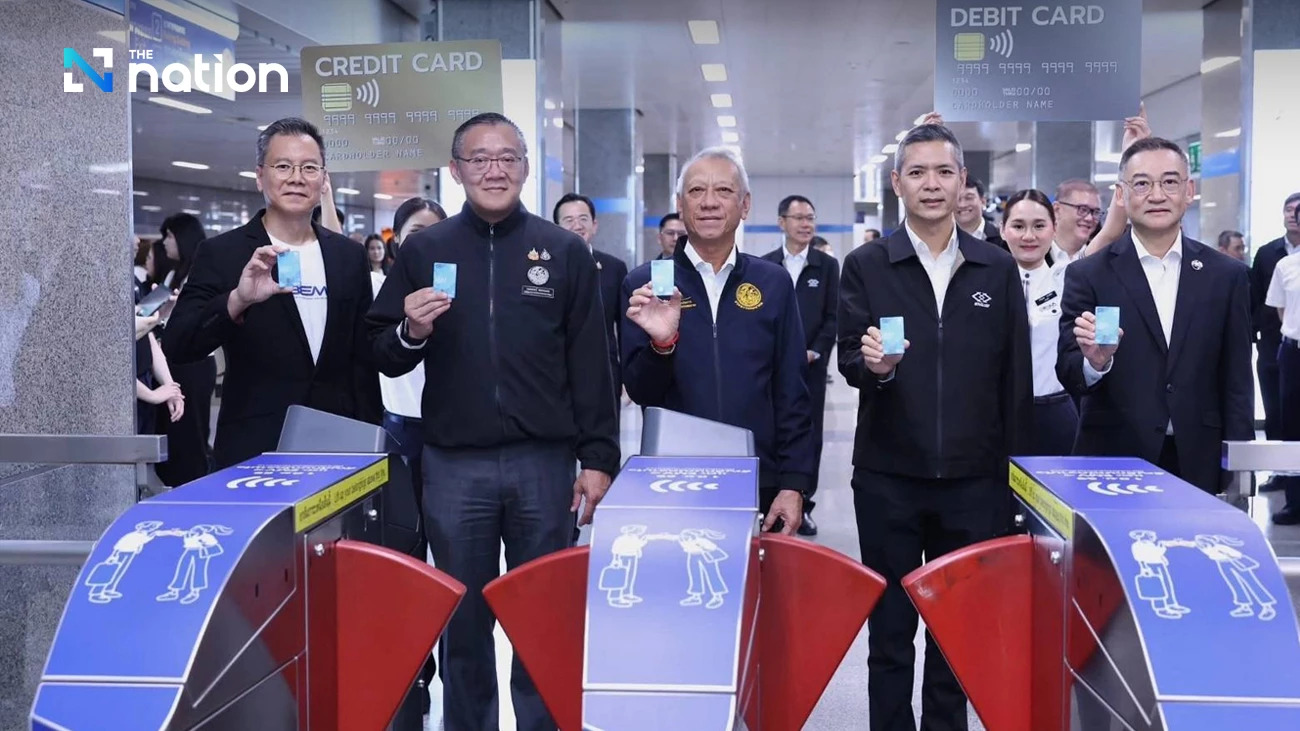
“We want EMV Contactless to be the best answer for a unified ticketing system — for Thai citizens and foreign tourists alike,” he told media at the launch. “Anyone already holding a Visa, MasterCard, or UnionPay credit card can tap straight into the MRT. No new card needed.”
The announcement was made jointly with the Mass Rapid Transit Authority of Thailand (MRTA) Governor Kajpajon Udomthammaphakdi, BEM Deputy Managing Director Anawat Suwannarit — the operator of the Blue and Purple Lines — and Krungthai Bank’s Chief Executive of Product & Business Solutions, Tawatchai Cheevanon.
What’s Changing and When
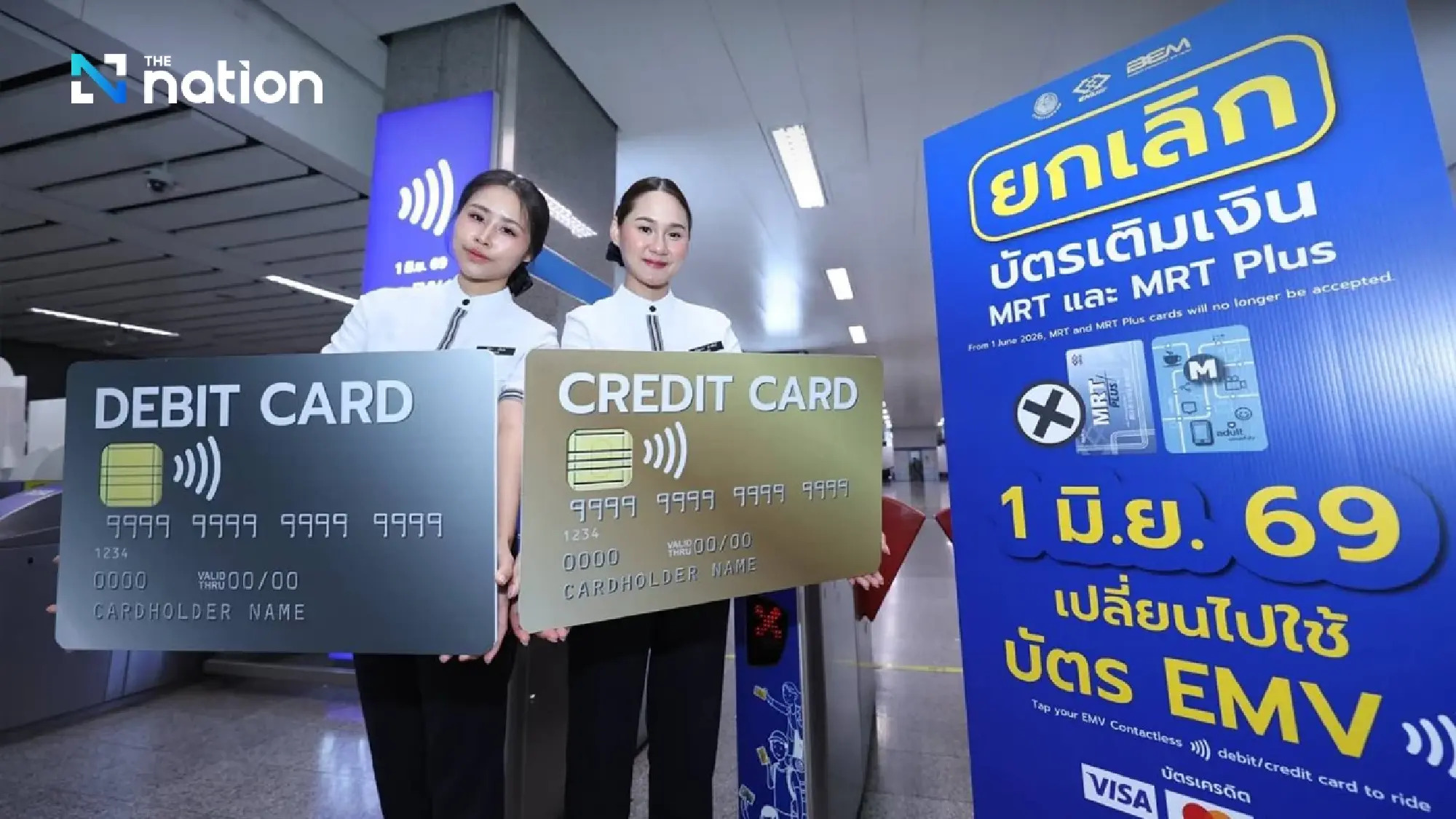 The transition will take place in three phases:
From 1 April 2026, top-ups to existing MRT and MRT Plus stored-value cards will cease across all channels, including at station ticket offices and via apps such as TrueMoney, Krungthai NEXT, and Shopee.
From 1 June 2026, stored-value cards will no longer be accepted at any station on the Blue or Purple Lines. Passengers will be required to use EMV Contactless cards instead — whether that is a bank-issued credit or debit card, or the dedicated Mangmoom EMV card.
From 1 January 2027, single-journey tokens are expected to be replaced by QR Ticket scanning, completing the full migration.
What Passengers Should Do Now
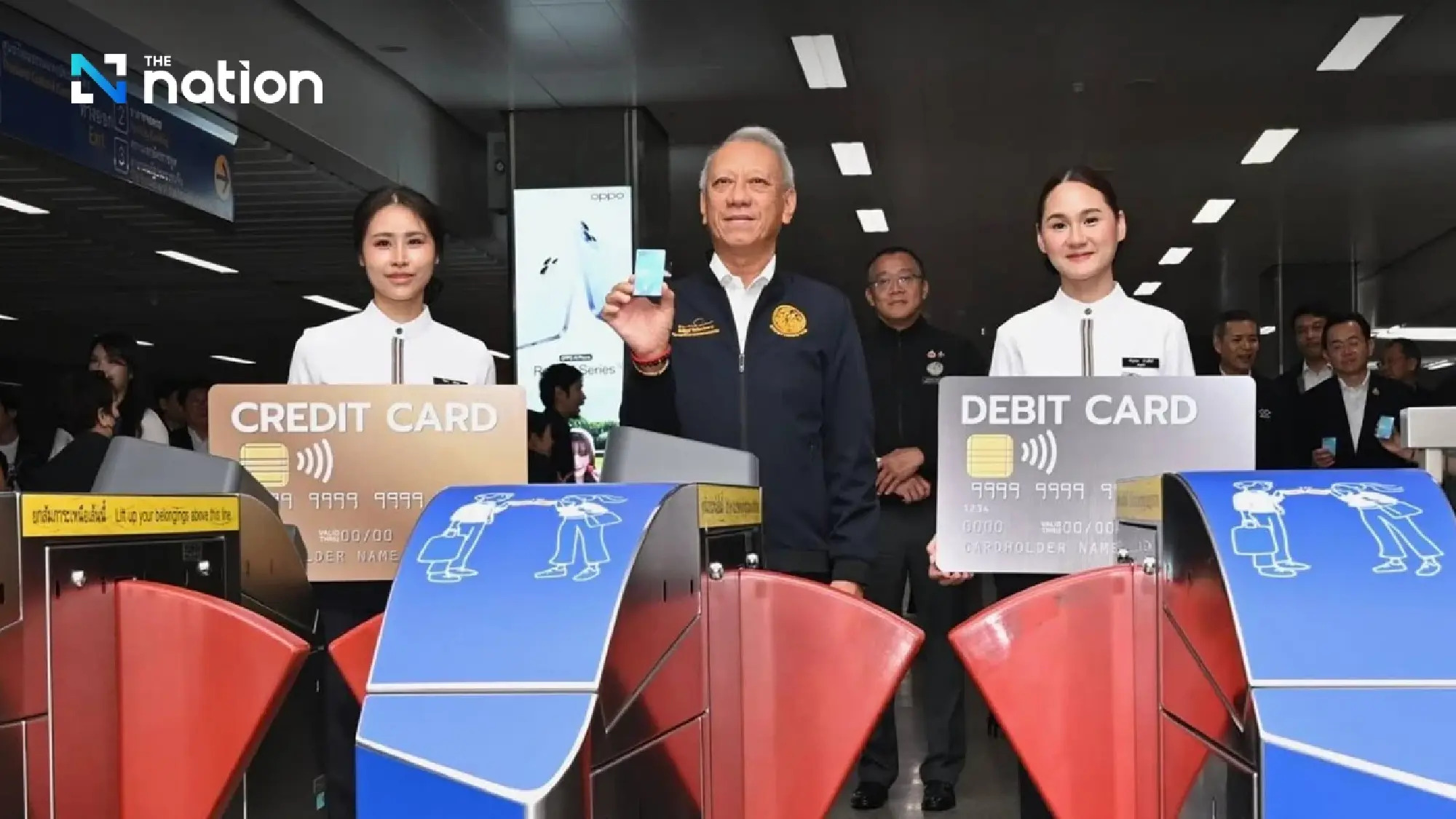 Minister Phiphat urged passengers currently using stored-value cards to act early.
“From 1 March 2026, you can bring your old MRT or MRT Plus card to any station ticket office and request a refund of your remaining balance,” he said. “If you want a Mangmoom EMV card, just ask staff on the spot — the card issuance fee is waived.”
The fee waiver for new Mangmoom EMV cards runs from 1 March to 31 December 2026.
Passengers switching from an old card will need to top up a minimum of 100 baht as an initial travel balance and will receive any remaining balance from their old card in cash.
Refunds on old cards remain available until 31 December 2027.
For those who already hold a Visa or Mastercard credit card bearing the EMV Contactless symbol, no action is required — the card can be used immediately across all four MRT lines: Blue, Purple, Yellow, and Pink.
Students and elderly passengers who currently receive discounted fares are advised to switch to a personalised Mangmoom EMV card to retain their concession benefits. Cards can be obtained at any Blue or Purple Line station ticket office with a national ID card.
A Broader Vision
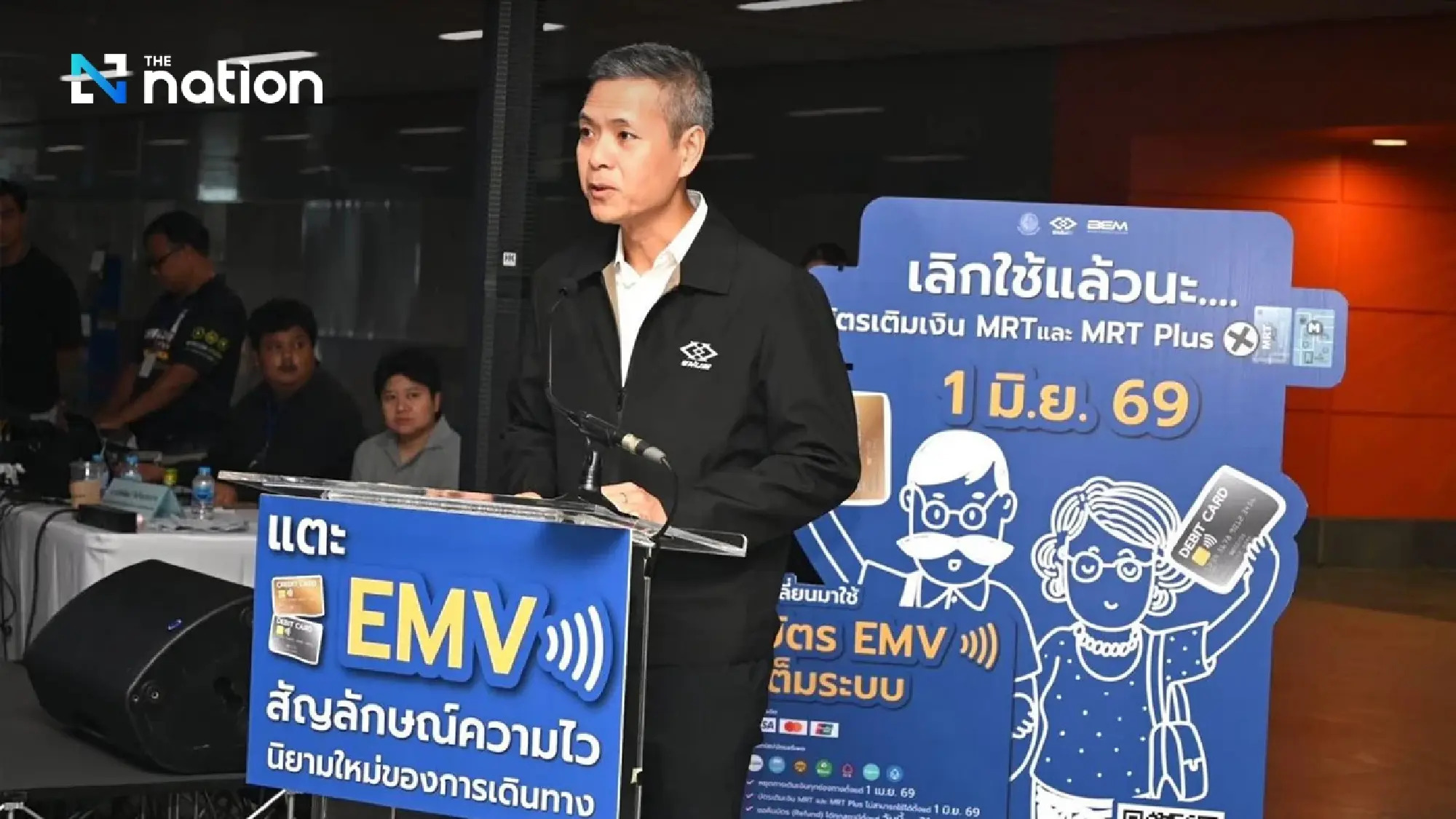
MRTA Governor Kajpajon noted that the share of passengers choosing EMV Contactless payment had grown significantly since the system was first introduced in 2022, giving authorities confidence to proceed with the full migration.
“This is a strong signal from commuters that they are ready,” he said.
BEM’s Anawat added that the company had spent five years developing its Automatic Fare Collection (AFC) system to support Account Based Ticketing (ABT) — the infrastructure underpinning open-loop EMV payment.
“We are moving towards becoming a true Connectivity Hub for urban travellers,” he said.
Krungthai Bank, which issues the Mangmoom EMV card and supports the payment backend, confirmed that the card currently covers six rail lines: the Red, Blue, Purple, Pink, Yellow, and Airport Rail Link.
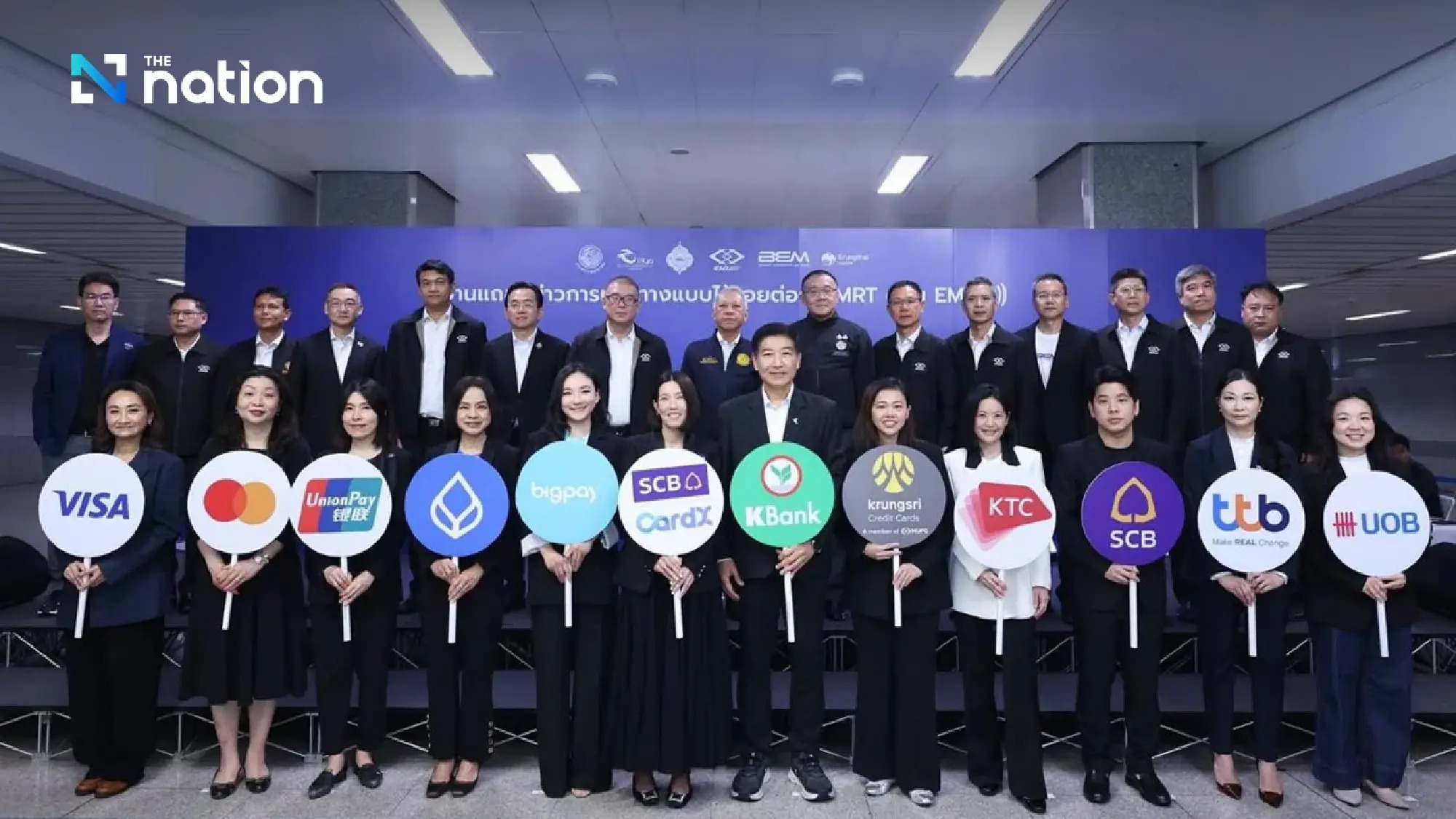 The bank said it intended to expand coverage to buses and other public transport modes in line with its Mass Transit Ecosystem strategy.
Minister Phiphat said the government’s longer-term ambition was to extend the unified ticketing framework — underpinned by the Common Ticketing System Administration Act, which came into effect on 28 December 2025 — to buses operated by BMTA and intercity coaches run by Transport Co., Ltd.
Negotiations with concession operators to align with a common fare structure are ongoing.
For enquiries, passengers can contact the MRT information centre on 0 2624 5200, or follow BEM on Facebook and X at BEM Bangkok Expressway and Metro. For MRTA updates, visit www.mrta.co.th or call 0 2716 4044.
Source: https://www.nationthailand.com/news/policy/40063062
Google Translation:
รถไฟฟ้า MRT กรุงเทพฯ เปลี่ยนมาใช้ระบบไร้เงินสด: ประเทศไทยยกเลิกบัตรโดยสารแบบเก่าและเปลี่ยนมาใช้ระบบ EMV Contactless ตั้งแต่เดือนมิถุนายน 2569
บทความข่าวนี้ได้รับการสนับสนุนโดย FALLPROTEC บริษัทที่มีชื่อเสียงระดับโลกด้านการออกแบบและการผลิตระบบป้องกันการตกจากที่สูงและโซลูชันการเข้าถึงที่สูงระดับพรีเมียม
ระบบรถไฟฟ้า MRT ของกรุงเทพฯ จะเปลี่ยนมาใช้ระบบชำระเงินแบบ EMV Contactless อย่างเต็มรูปแบบตั้งแต่วันที่ 1 มิถุนายน 2569 เป็นต้นไป ทำให้บัตรโดยสารแบบเติมเงินเดิมไม่สามารถใช้งานได้บนสายสีน้ำเงินและสายสีม่วงอีกต่อไป
ผู้โดยสารสามารถชำระค่าโดยสารได้โดยการแตะบัตรเครดิต/เดบิตแบบไร้สัมผัสทั่วไป (Visa, Mastercard, UnionPay) หรือบัตร Mangmoom EMV แบบใหม่
การยกเลิกบัตรโดยสารแบบเก่าจะเริ่มจากการหยุดเติมเงินในวันที่ 1 เมษายน 2569 และผู้โดยสารสามารถขอคืนเงินส่วนที่เหลือได้ตั้งแต่วันที่ 1 มีนาคม 2569 เป็นต้นไป
โครงการนี้เป็นก้าวสำคัญใน “นโยบายตั๋วร่วม” ของประเทศไทย เพื่อสร้างระบบการชำระเงินแบบบัตรเดียวที่ครบวงจรสำหรับระบบขนส่งสาธารณะทั่วประเทศ
ผู้โดยสารรถไฟฟ้าสายสีน้ำเงินและสีม่วงสามารถใช้บัตรเติมเงินที่มีอยู่ได้จนถึงวันที่ 31 พฤษภาคม เนื่องจากประเทศไทยกำลังก้าวไปสู่ระบบขนส่งสาธารณะแบบใช้บัตรเดียวอย่างราบรื่น
นายพิพัฒน์ รัชกิจประการ รองนายกรัฐมนตรีและรัฐมนตรีว่าการกระทรวงคมนาคม ประกาศเมื่อวันศุกร์ว่า ระบบรถไฟฟ้าใต้ดิน (MRT) ของกรุงเทพฯ จะเปลี่ยนไปใช้ระบบชำระเงินแบบไร้สัมผัส EMV อย่างเต็มรูปแบบ ซึ่งเป็นมาตรฐานสากลเดียวกับที่ใช้ในบัตรเครดิตและบัตรเดบิต ตั้งแต่วันที่ 1 มิถุนายน 2569 ซึ่งถือเป็นก้าวสำคัญที่สุดของประเทศในการมุ่งสู่ระบบจำหน่ายตั๋วโดยสารขนส่งสาธารณะแบบรวมศูนย์
นายพิพัฒน์กล่าว ณ สถานีศูนย์วัฒนธรรมแห่งประเทศไทย บนรถไฟฟ้าสายสีน้ำเงิน ว่ารัฐบาลได้สนับสนุนนโยบาย “ตั๋วร่วม” มานานแล้วเพื่อประโยชน์ของผู้โดยสาร
นายพิพัฒน์ รัชกิจประการ
“เราต้องการให้ระบบชำระเงินแบบไร้สัมผัส EMV เป็นคำตอบที่ดีที่สุดสำหรับระบบจำหน่ายตั๋วแบบรวมศูนย์ ทั้งสำหรับคนไทยและนักท่องเที่ยวต่างชาติ” เขากล่าวกับสื่อมวลชนในงานเปิดตัว “ผู้ที่มีบัตรเครดิต Visa, MasterCard หรือ UnionPay อยู่แล้ว สามารถแตะบัตรเพื่อเติมเงินในรถไฟฟ้า MRT ได้โดยตรง ไม่จำเป็นต้องทำบัตรใหม่”
การประกาศครั้งนี้เป็นการร่วมมือระหว่าง นายกัจปจร อุดมธรรมภักดี ผู้ว่าการการรถไฟฟ้าขนส่งมวลชนแห่งประเทศไทย (ม.ท.) นายอนาวัต สุวรรณฤทธิ์ รองกรรมการผู้จัดการใหญ่ บริษัท เอ็มเอ็ม (ผู้ให้บริการรถไฟฟ้าสายสีน้ำเงินและสีม่วง) และนายทวัชชัย ชีวนนท์ ประธานเจ้าหน้าที่บริหาร ฝ่ายผลิตภัณฑ์และโซลูชั่นธุรกิจ ธนาคารกรุงไทย
การเปลี่ยนแปลงและกำหนดเวลา
การเปลี่ยนแปลงจะเกิดขึ้นในสามขั้นตอน:
ตั้งแต่วันที่ 1 เมษายน 2569 การเติมเงินในบัตร MRT และ MRT Plus ที่มีอยู่แล้วจะหยุดให้บริการในทุกช่องทาง รวมถึงที่เคาน์เตอร์จำหน่ายตั๋วในสถานี และผ่านแอปพลิเคชันต่างๆ เช่น TrueMoney, Krungthai NEXT และ Shopee
ตั้งแต่วันที่ 1 มิถุนายน 2569 บัตรเติมเงินจะไม่สามารถใช้ได้ที่สถานีใดๆ ในสายสีน้ำเงินและสีม่วงอีกต่อไป ผู้โดยสารจะต้องใช้บัตร EMV แบบไร้สัมผัสแทน ไม่ว่าจะเป็นบัตรเครดิตหรือบัตรเดบิตที่ออกโดยธนาคาร หรือบัตร EMV ของ Mangmoom โดยเฉพาะ
ตั้งแต่วันที่ 1 มกราคม 2560 เป็นต้นไป คาดว่าจะมีการเปลี่ยนจากโทเค็นเที่ยวเดียวเป็นการสแกนตั๋ว QR อย่างสมบูรณ์
สิ่งที่ผู้โดยสารควรทำตอนนี้
รัฐมนตรีพิพัฒน์ได้กระตุ้นให้ผู้โดยสารที่ใช้บัตรเติมเงินอยู่ในขณะนี้ ดำเนินการโดยเร็ว
“ตั้งแต่วันที่ 1 มีนาคม 2569 เป็นต้นไป คุณสามารถนำบัตร MRT หรือ MRT Plus เก่าของคุณไปที่เคาน์เตอร์จำหน่ายตั๋วของสถานีใดก็ได้ และขอคืนเงินส่วนที่เหลือ” เขากล่าว “หากคุณต้องการบัตร EMV ของ Mangmoom เพียงแค่แจ้งเจ้าหน้าที่ ณ จุดนั้น ค่าธรรมเนียมการออกบัตรจะได้รับการยกเว้น”
การยกเว้นค่าธรรมเนียมสำหรับบัตร Mangmoom EMV ใหม่ มีผลตั้งแต่วันที่ 1 มีนาคม ถึง 31 ธันวาคม 2569
ผู้โดยสารที่เปลี่ยนจากบัตรเก่าจะต้องเติมเงินอย่างน้อย 100 บาท เป็นยอดเงินเริ่มต้น และจะได้รับเงินคืนส่วนที่เหลือจากบัตรเก่าเป็นเงินสด
การขอคืนเงินสำหรับบัตรเก่าสามารถทำได้จนถึงวันที่ 31 ธันวาคม 2560
สำหรับผู้ที่มีบัตรเครดิต Visa หรือ Mastercard ที่มีสัญลักษณ์ EMV Contactless อยู่แล้ว ไม่จำเป็นต้องดำเนินการใดๆ สามารถใช้บัตรได้ทันทีกับรถไฟฟ้า MRT ทั้ง 4 สาย ได้แก่ สายสีน้ำเงิน สายสีม่วง สายสีเหลือง และสายสีชมพู
นักเรียนและผู้สูงอายุที่ได้รับส่วนลดค่าโดยสารในปัจจุบัน ควรเปลี่ยนมาใช้บัตร Mangmoom EMV ส่วนบุคคล เพื่อรักษาสิทธิประโยชน์ส่วนลด บัตรสามารถขอรับได้ที่เคาน์เตอร์จำหน่ายตั๋วสถานีรถไฟฟ้าสายสีน้ำเงินหรือสายสีม่วง โดยแสดงบัตรประจำตัวประชาชน
กาจปะจอน อุดมธรรมภักดี
กาจปะจอน อุดมธรรมภักดี
วิสัยทัศน์ที่กว้างขึ้น
ผู้ว่าการรถไฟฟ้าขนส่งมวลชนแห่งประเทศไทย (MRTA) กาจปะจอน กล่าวว่า สัดส่วนของผู้โดยสารที่เลือกใช้ระบบชำระเงินแบบไร้สัมผัส EMV เพิ่มขึ้นอย่างมีนัยสำคัญนับตั้งแต่เริ่มนำระบบนี้มาใช้ครั้งแรกในปี 2565 ทำให้ทางการมีความมั่นใจที่จะดำเนินการเปลี่ยนไปใช้ระบบนี้อย่างเต็มรูปแบบ
“นี่เป็นสัญญาณที่ชัดเจนจากผู้โดยสารว่าพวกเขากำลังพร้อมแล้ว” เขากล่าว
อนาวัฒน์ จาก BEM กล่าวเสริมว่า บริษัทได้ใช้เวลาห้าปีในการพัฒนาระบบเก็บค่าโดยสารอัตโนมัติ (AFC) เพื่อรองรับระบบออกตั๋วแบบบัญชี (ABT) ซึ่งเป็นโครงสร้างพื้นฐานที่รองรับการชำระเงิน EMV แบบเปิด
“เรากำลังก้าวไปสู่การเป็นศูนย์กลางการเชื่อมต่อที่แท้จริงสำหรับผู้เดินทางในเมือง” เขากล่าว
รถไฟฟ้า MRT กรุงเทพฯ เปลี่ยนเป็นระบบไร้เงินสด: ประเทศไทยยกเลิกบัตรโดยสารแบบเก่าและเปลี่ยนมาใช้ระบบ EMV แบบไร้สัมผัสตั้งแต่เดือนมิถุนายน 2569
ธนาคารกรุงไทย ซึ่งเป็นผู้ออกบัตร Mangmoom EMV และดูแลระบบการชำระเงินเบื้องหลัง ยืนยันว่าปัจจุบันบัตรดังกล่าวครอบคลุม 6 สาย ได้แก่ สายสีแดง สีน้ำเงิน สีม่วง สีชมพู สีเหลือง และรถไฟฟ้าแอร์พอร์ตเรลลิงก์
ธนาคารกล่าวว่ามีแผนจะขยายการให้บริการไปยังรถโดยสารประจำทางและระบบขนส่งสาธารณะอื่นๆ ตามยุทธศาสตร์ระบบนิเวศการขนส่งมวลชนของธนาคาร
รัฐมนตรีพิพัฒน์กล่าวว่า เป้าหมายระยะยาวของรัฐบาลคือการขยายกรอบระบบจำหน่ายตั๋วแบบรวมศูนย์ ซึ่งอยู่ภายใต้พระราชบัญญัติระบบจำหน่ายตั๋วแบบรวมศูนย์ ที่มีผลบังคับใช้เมื่อวันที่ 28 ธันวาคม 2568 ไปยังรถโดยสารประจำทางที่ดำเนินการโดย BMTA และรถโดยสารระหว่างเมืองที่ดำเนินการโดยบริษัทขนส่งมวลชน จำกัด
การเจรจากับผู้ประกอบการสัมปทานเพื่อให้สอดคล้องกับโครงสร้างค่าโดยสารแบบเดียวกันกำลังดำเนินอยู่
สำหรับสอบถามข้อมูล ผู้โดยสารสามารถติดต่อศูนย์ข้อมูล MRT ได้ที่หมายเลข 0 2624 5200 หรือติดตาม BEM บน Facebook และ X ที่ BEM Bangkok Expressway and Metro สำหรับข้อมูลอัปเดตจาก MRTA โปรดไปที่ www.mrta.co.th หรือโทร 0 2716 4044