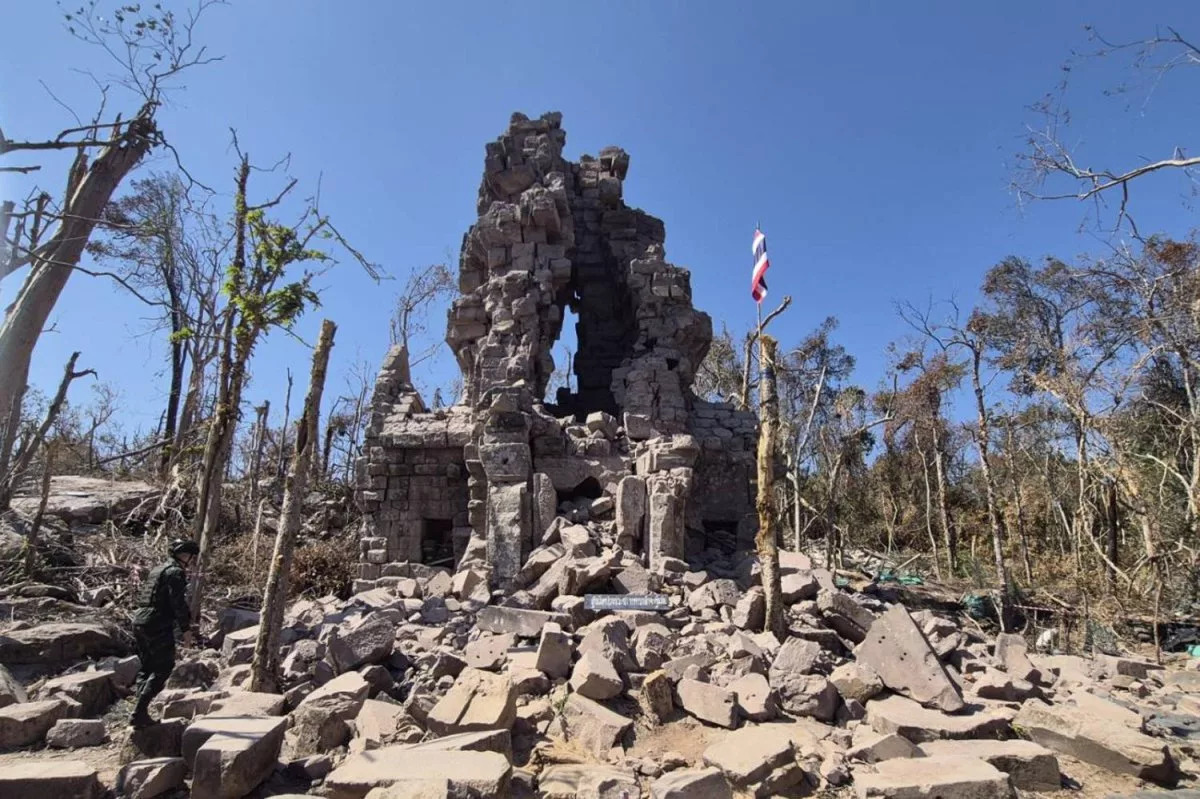
Work on damaged 12th-century Prasat Ta Kwai temple in Surin’s Phanom Dong Rak district to take ‘about two years’
Government keen to get temple restoration going
Prasat Ta Kwai, a 12th-century temple located in Surin’s Phanom Dong Rak district, sustained serious damage when clashes between Thai and Cambodian forces erupted along the border last year.
Thai forces moved in on the area after the military found evidence that it was being used to store weapons — including PMN-2 anti-personnel landmines. They found that not only was the temple used as an armoury, Cambodian forces had dug trenches around the temple, causing damage to the culturally- and historically-significant site.
Such actions, the government said, constitute violations of the Ottawa Convention on the Prohibition of Anti-Personnel Mines and the 1954 The Hague Convention for the Protection of Cultural Property in the Event of Armed Conflict.
Now that the area is under Thai control, the government is keen to start restoring the temple to its former glory.
Any delay, it fears, would not only threaten the temple’s structural integrity, but also Thailand’s diplomatic effort to get its claim on the disputed areas along the Cambodian border accepted.
On Feb 6, Culture Minister Sabeeda Thaised announced that she had ordered the Fine Arts Department to oversee the restoration of temples damaged by clashes along the border on Jan 30.
She said Prasat Ta Kwai, Prasat Ta Muen Thom and Prasat Ta Muen Tot were listed in the Royal Gazette as significant archaeological sites in 1935, a move which Cambodia did not object to.
“The next priority is to expedite the formal registration of Ta Kwai as an ancient monument. Further archaeological surveys and documentation will follow to support conservation planning,” said Ms Sabeeda.
While the work will require close coordination with various security agencies and the Ministry of Foreign Affairs, she said the Ministry of Culture has a strictly non-political mandate.
“The Ministry of Culture has no intention of taking any stance relating to the political conflict. Its sole mandate is the preservation, conservation and restoration of cultural heritage and ancient monuments located within Thailand’s territory.”
Damage assessment
At its core, the dispute over Prasat Ta Kwai stems from the use of different map scales to interpret the border between the two countries, with one party using a 1:200,000 scale while the other uses a 1:50,000 scale.
The dispute is also reflected online, with some applications, like Google Maps, incorrectly placing the temple in Cambodian territory, affirming the 1:200,000 map interpretation.
Ms Sabeeda said a committee comprising experts from the relevant agencies carried out field inspections on Feb 4-5. The visit was intended to determine the appropriate approach and strategy for the restoration process — one which aligns with sound archaeological and heritage preservation principles.
The director of Fine Arts Department’s Regional Office 10 in Nakhon Ratchasima, Thotsaporn Srisaman, said the committee found Prasat Ta Kwai suffered serious structural damage as a result of the fighting, with over 50% of its structure compromised.
Several architectural elements have also collapsed, and temporary stabilisation works have been ordered to prevent further structural failure, he said.
The damage, Mr Thotsaporn noted, is “extensive” and will require comprehensive work.
The department is planning to meet with the army commander to secure clearance for workers, as well as permits for heavy equipment, including cranes, to be brought to the site.
He said the mission won’t be easy, as several routes to access the site are still contaminated with anti-personnel mines. To guide the restoration effort, the department will refer to past surveys of the site, which contain various details about the temple, including the position of stones.
“The main concern right now is that several of these structural stones are missing,” he said.
One possible approach is to carefully dismantle the temple’s structure layer by layer, documenting and recording data at each stage.
However, in the case of Ta Kwai, the situation will require the participation of the military.
The department restored Prasat Ta Muen Thom over several phases in the late 1970s and early 2000s, with an overall budget of approximately 20–30 million baht.
“The restoration of Ta Muen Thom is almost complete, with only the southern side corridor and stairway remaining unfinished. Work on this section was suspended due to developments related to MOUs 2000 and related agreements at that time,” he said.
Each and every stone
Citing expert assessments and the department’s extensive experience in temple restoration, Mr Thotsaporn said he was confident the work on Prasat Ta Kwai can bring the 12th century monument to its former glory, with a central principal sanctuary surrounded by porticoes extending in four directions.
“Prior to the latest outbreak of violence, the temple was structurally intact and the original carvings had not significantly deteriorated,” said Mr Thotsaporn.
Now, he said, the first step is to collect and sort each and every stone and determine their original location. Intact stones would be put back in place, while damaged stones will be replaced with new ones.
“Under normal circumstances, with our previous experience and new technology including drone-based photogrammetry, we expect to finish the restoration process in about two years.
However, the timeline will depend on factors such as site clearance by security forces, availability of resources and the complexity of reconstruction.”
The budget for the restoration is not yet finalised. The department will now call in experts to finalise a phased restoration plan, coordinate with the military on site access and safety, and define operational responsibilities.
Once plans are approved, implementation will proceed accordingly, Mr Thotsaporn said.
Source: https://www.bangkokpost.com/thailand/general/3193193/work-on-prasat-ta-kwai-to-take-about-two-years
Google Translation:
งานบูรณะปราสาทตาควาย วัดเก่าแก่สมัยศตวรรษที่ 12 ในอำเภอพนมดงรัก จังหวัดสุรินทร์ คาดว่าจะใช้เวลา ‘ประมาณสองปี’
รัฐบาลเร่งรัดการบูรณะวัด
ภาพถ่ายที่เผยแพร่โดยกรมศิลปากร แสดงให้เห็นความเสียหายของปราสาทตาควาย วัดเก่าแก่สมัยศตวรรษที่ 12 ในอำเภอพนมดงรัก จังหวัดสุรินทร์ (ภาพ: กรมศิลปากร)
ปราสาทตาควาย วัดเก่าแก่สมัยศตวรรษที่ 12 ตั้งอยู่ในอำเภอพนมดงรัก จังหวัดสุรินทร์ ได้รับความเสียหายอย่างหนักเมื่อเกิดการปะทะกันระหว่างกองกำลังไทยและกัมพูชาตามแนวชายแดนเมื่อปีที่แล้ว
กองกำลังไทยเคลื่อนกำลังเข้าพื้นที่หลังจากพบหลักฐานว่ามีการใช้พื้นที่ดังกล่าวเป็นที่เก็บอาวุธ รวมถึงทุ่นระเบิดต่อต้านบุคคล PMN-2 พวกเขาพบว่าไม่เพียงแต่ปราสาทจะถูกใช้เป็นคลังอาวุธเท่านั้น กองกำลังกัมพูชายังได้ขุดสนามเพลาะรอบปราสาท ทำให้เกิดความเสียหายต่อสถานที่สำคัญทางวัฒนธรรมและประวัติศาสตร์แห่งนี้
รัฐบาลกล่าวว่า การกระทำดังกล่าวเป็นการละเมิดอนุสัญญาออตตาวาว่าด้วยการห้ามใช้ทุ่นระเบิดต่อต้านบุคคล และอนุสัญญากรุงเฮกปี 1954 ว่าด้วยการคุ้มครองทรัพย์สินทางวัฒนธรรมในกรณีเกิดความขัดแย้งทางอาวุธ
ขณะนี้พื้นที่ดังกล่าวอยู่ภายใต้การควบคุมของไทยแล้ว รัฐบาลจึงกระตือรือร้นที่จะเริ่มบูรณะวัดให้กลับคืนสู่ความรุ่งเรืองในอดีต
รัฐบาลเกรงว่าความล่าช้าใดๆ จะไม่เพียงแต่คุกคามความมั่นคงของโครงสร้างวัดเท่านั้น แต่ยังอาจส่งผลกระทบต่อความพยายามทางการทูตของไทยในการขอให้ยอมรับการอ้างสิทธิ์ในพื้นที่พิพาทตามแนวชายแดนกัมพูชาด้วย
เมื่อวันที่ 6 กุมภาพันธ์ นางสาวสบีดา ไทยเสด รัฐมนตรีว่าการกระทรวงวัฒนธรรม ประกาศว่า เธอได้สั่งการให้กรมศิลปากรดูแลการบูรณะวัดที่ได้รับความเสียหายจากการปะทะกันตามแนวชายแดนเมื่อวันที่ 30 มกราคม
เธอกล่าวว่า ปราสาทตาควาย ปราสาทตาเมืองทอม และปราสาทตาเมืองทอต ได้รับการขึ้นทะเบียนในราชกิจจานุเบกษาว่าเป็นแหล่งโบราณคดีสำคัญในปี 1935 ซึ่งกัมพูชาไม่ได้คัดค้าน
“ลำดับความสำคัญต่อไปคือการเร่งดำเนินการขึ้นทะเบียนปราสาทตาควายเป็นโบราณสถานอย่างเป็นทางการ จากนั้นจะมีการสำรวจทางโบราณคดีและจัดทำเอกสารเพิ่มเติมเพื่อสนับสนุนแผนการอนุรักษ์” นางสาวสะบีดากล่าว
แม้ว่างานดังกล่าวจะต้องประสานงานอย่างใกล้ชิดกับหน่วยงานด้านความมั่นคงต่างๆ และกระทรวงการต่างประเทศ แต่เธอกล่าวว่ากระทรวงวัฒนธรรมมีภารกิจที่ไม่เกี่ยวข้องกับการเมืองอย่างเคร่งครัด
“กระทรวงวัฒนธรรมไม่มีเจตนาที่จะแสดงจุดยืนใดๆ เกี่ยวกับความขัดแย้งทางการเมือง ภารกิจหลักของกระทรวงคือการอนุรักษ์ ปกป้อง และบูรณะมรดกทางวัฒนธรรมและโบราณสถานต่างๆ ที่ตั้งอยู่ภายในอาณาเขตของประเทศไทย”
การประเมินความเสียหาย
โดยพื้นฐานแล้ว ข้อพิพาทเกี่ยวกับปราสาทตาควายเกิดจากการใช้มาตราส่วนแผนที่ที่แตกต่างกันในการกำหนดเขตแดนระหว่างสองประเทศ โดยฝ่ายหนึ่งใช้มาตราส่วน 1:200,000 ในขณะที่อีกฝ่ายใช้มาตราส่วน 1:50,000
ความขัดแย้งนี้ยังสะท้อนให้เห็นในโลกออนไลน์ด้วย โดยบางแอปพลิเคชัน เช่น Google Maps แสดงตำแหน่งของวัดผิดพลาด โดยระบุว่าอยู่ในเขตแดนของกัมพูชา และยืนยันการตีความแผนที่มาตราส่วน 1:200,000
นางสาวสาบีดา กล่าวว่า คณะกรรมการผู้เชี่ยวชาญจากหน่วยงานที่เกี่ยวข้องได้ลงพื้นที่ตรวจสอบเมื่อวันที่ 4-5 กุมภาพันธ์ การตรวจสอบครั้งนี้มีจุดประสงค์เพื่อกำหนดแนวทางและกลยุทธ์ที่เหมาะสมสำหรับกระบวนการบูรณะ ซึ่งสอดคล้องกับหลักการทางโบราณคดีและการอนุรักษ์มรดกทางวัฒนธรรมที่ดี
นายทศพร ศรีสมาน ผู้อำนวยการสำนักงานศิลปากรเขต 10 จังหวัดนครราชสีมา กล่าวว่า คณะกรรมการพบว่าปราสาทตาควายได้รับความเสียหายอย่างหนักจากความขัดแย้ง โดยโครงสร้างกว่า 50% เสียหาย
นอกจากนี้ องค์ประกอบทางสถาปัตยกรรมหลายส่วนยังพังทลายลง และได้มีการสั่งให้ดำเนินการค้ำยันชั่วคราวเพื่อป้องกันความเสียหายเพิ่มเติม
นายทศพรกล่าวว่า ความเสียหายนั้น “กว้างขวาง” และจะต้องมีการซ่อมแซมอย่างครอบคลุม
กรมฯ กำลังวางแผนที่จะเข้าพบผู้บัญชาการทหารบกเพื่อขออนุญาตสำหรับคนงาน รวมถึงใบอนุญาตสำหรับอุปกรณ์หนัก เช่น เครน ที่จะนำเข้าไปในพื้นที่
เขากล่าวว่าภารกิจจะไม่ใช่เรื่องง่าย เนื่องจากเส้นทางเข้าถึงพื้นที่หลายเส้นทางยังคงปนเปื้อนด้วยทุ่นระเบิด กรมฯ จะอ้างอิงจากการสำรวจพื้นที่ในอดีต ซึ่งมีรายละเอียดต่างๆ เกี่ยวกับวัด รวมถึงตำแหน่งของหินต่างๆ เพื่อเป็นแนวทางในการบูรณะ
“สิ่งที่น่าเป็นห่วงที่สุดในขณะนี้คือ หินโครงสร้างหลายก้อนหายไป” เขากล่าว
แนวทางหนึ่งที่เป็นไปได้คือการรื้อโครงสร้างของวัดทีละชั้นอย่างระมัดระวัง บันทึกและเก็บข้อมูลในแต่ละขั้นตอน
อย่างไรก็ตาม ในกรณีของวัดตาควาย สถานการณ์จะต้องอาศัยการมีส่วนร่วมของกองทัพ
กรมฯ เคยบูรณะปราสาทตาเมืองทอมหลายครั้งในช่วงปลายทศวรรษ 1970 และต้นทศวรรษ 2000 ด้วยงบประมาณรวมประมาณ 20-30 ล้านบาท
“การบูรณะวัดตาเมืองทอมใกล้เสร็จสมบูรณ์แล้ว เหลือเพียงทางเดินและบันไดด้านทิศใต้ที่ยังสร้างไม่เสร็จ งานในส่วนนี้ถูกระงับเนื่องจากความคืบหน้าเกี่ยวกับบันทึกความเข้าใจปี 2000 และข้อตกลงที่เกี่ยวข้องในขณะนั้น” เขากล่าว
หินทุกก้อน
นายทศาภรณ์กล่าวโดยอ้างอิงจากการประเมินของผู้เชี่ยวชาญและประสบการณ์อันยาวนานของกรมในการบูรณะวัดว่า เขาเชื่อมั่นว่างานบูรณะปราสาทตาควายจะสามารถนำอนุสรณ์สถานอายุ 12 ศตวรรษแห่งนี้กลับคืนสู่ความรุ่งเรืองในอดีต โดยมีวิหารหลักอยู่ตรงกลางล้อมรอบด้วยซุ้มประตูที่ทอดยาวไปในสี่ทิศทาง
“ก่อนที่จะเกิดเหตุการณ์ความรุนแรงครั้งล่าสุด โครงสร้างของวัดยังคงสมบูรณ์ และงานแกะสลักดั้งเดิมก็ไม่ได้เสื่อมโทรมไปมากนัก” นายทศาภรณ์กล่าว
ขณะนี้ เขากล่าวว่า ขั้นตอนแรกคือการรวบรวมและคัดแยกหินทุกก้อน และกำหนดตำแหน่งดั้งเดิมของหินเหล่านั้น หินที่ยังคงสภาพสมบูรณ์จะถูกนำกลับไปวางไว้ที่เดิม ในขณะที่หินที่เสียหายจะถูกแทนที่ด้วยหินใหม่
“ภายใต้สถานการณ์ปกติ ด้วยประสบการณ์ที่เรามีมาก่อนหน้านี้และเทคโนโลยีใหม่ รวมถึงการถ่ายภาพทางอากาศด้วยโดรน เราคาดว่าจะแล้วเสร็จกระบวนการบูรณะในเวลาประมาณสองปี
อย่างไรก็ตาม ระยะเวลาจะขึ้นอยู่กับปัจจัยต่างๆ เช่น การเคลียร์พื้นที่โดยกองกำลังรักษาความปลอดภัย ความพร้อมของทรัพยากร และความซับซ้อนของการบูรณะ”
งบประมาณสำหรับการบูรณะยังไม่ได้รับการสรุป ขณะนี้กรมจะเรียกผู้เชี่ยวชาญเข้ามาเพื่อจัดทำแผนการบูรณะเป็นระยะๆ ให้เสร็จสมบูรณ์ ประสานงานกับกองทัพในเรื่องการเข้าถึงพื้นที่และความปลอดภัย และกำหนดความรับผิดชอบในการปฏิบัติงาน
นายทศาภรณ์กล่าวว่า เมื่อแผนได้รับการอนุมัติแล้ว การดำเนินการจะดำเนินต่อไปตามแผน