Ho Chi Minh City approves sea-crossing route with undersea tunnel between Can Gio and Vung Tau
Ho Chi Minh City has approved a strategic proposal by Vingroup to construct a direct sea-crossing road connecting the Can Gio coastal urban area with Vung Tau beach town, cutting travel time to one hour.
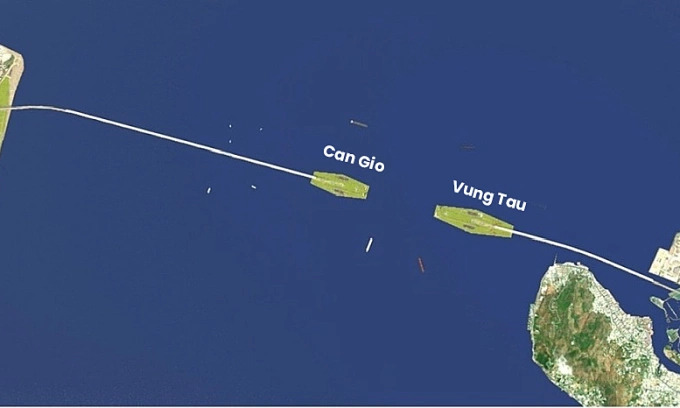
The project, greenlit by the city’s Party Executive Committee during a high-level meeting on Wednesday, will feature a combination of bridges and a 3.1-kilometer undersea tunnel, applying submerged tunnel technology similar to that used for the Thu Thiem Tunnel across the Saigon River.
At the meeting, HCMC Party Secretary Tran Luu Quang emphasized that the city’s current connection to the Vung Tau area — which became a ward of Ho Chi Minh City following recent administrative mergers — is heavily reliant on the Long Thanh–Dau Giay Expressway.
“The current route is frequently congested, lengthy, and makes travel time difficult to plan,” Quang noted, adding that a direct coastal connection is essential for the city’s orientation toward marine-based urban development.
The approved plan outlines a six-lane, 14-kilometer route spanning Ghenh Rai Bay.
To avoid the logistical and environmental challenges of building a 60-meter-high bridge across a major navigation channel, the project will utilize an undersea tunnel beneath the shipping lanes. Construction will be supported by the creation of two artificial islands on either side of the channel, serving as the transition points between the bridge and tunnel sections.
The total project scope includes roughly 8 km of sea-crossing bridges, 3.1 km of subsea tunnel, and 3 km of approach roads.
The project is estimated to cost more than VND104 trillion (US$3.94 billion) and will be developed under a build-transfer (BT) contract.
Vingroup, Vietnam’s largest private conglomerate, has committed to mobilizing 100% of the investment capital, including site clearance costs. In return, the state will repay the investor through land allocations of equivalent value.
The route will specifically connect Bien Dong 2 Street in the Can Gio land-reclamation area to the intersection of the planned Sao Mai–Ben Dinh Road and 30 Thang 4 Street in Vung Tau.
Construction is slated to begin in June 2026 and aimed to complete in the second quarter of 2029.
Once operational, the sea-crossing road is expected to slash travel time between central Ho Chi Minh City and the Vung Tau coast to approximately one hour.
Beyond local commuting, the project is anticipated to act as a vital corridor for the Cai Mep–Thi Vai port complex and the Long Son Industrial Zone, significantly easing the persistent traffic pressure on National Highway 51.
Source: https://e.vnexpress.net/news/news/traffic/hcmc-approves-sea-crossing-route-with-undersea-tunnel-between-can-gio-and-vung-tau-5003354.html
Google Translation:
นครโฮจิมินห์อนุมัติเส้นทางข้ามทะเลพร้อมอุโมงค์ใต้ทะเลเชื่อมระหว่างกันจอ่และหวุงเตา
แบบร่างเส้นทางข้ามทะเลกันจอ่-หวุงเตาที่เสนอมานั้นรวมถึงอุโมงค์ใต้ทะเลตรงกลางด้วย ภาพโดยกรมก่อสร้างนครโฮจิมินห์
นครโฮจิมินห์ได้อนุมัติข้อเสนอเชิงกลยุทธ์ของบริษัทวินกรุ๊ปในการก่อสร้างถนนข้ามทะเลโดยตรงเชื่อมต่อพื้นที่เมืองชายฝั่งกันจอ่กับเมืองชายหาดหวุงเตา ซึ่งจะช่วยลดเวลาการเดินทางเหลือเพียงหนึ่งชั่วโมง
โครงการนี้ได้รับการอนุมัติจากคณะกรรมการบริหารพรรคของเมืองในการประชุมระดับสูงเมื่อวันพุธที่ผ่านมา โดยจะประกอบด้วยสะพานและอุโมงค์ใต้ทะเลความยาว 3.1 กิโลเมตร โดยใช้เทคโนโลยีอุโมงค์ใต้น้ำคล้ายกับที่ใช้ในอุโมงค์ทูเทียมข้ามแม่น้ำไซง่อน
ในการประชุม เลขาธิการพรรคนครโฮจิมินห์ นายเจิ่น ลู กวาง เน้นย้ำว่าการเชื่อมต่อปัจจุบันของเมืองกับพื้นที่หวุงเตา ซึ่งกลายเป็นเขตหนึ่งของนครโฮจิมินห์หลังจากการควบรวมการบริหารเมื่อเร็วๆ นี้ พึ่งพาทางด่วนลองแทง-เดาเจียเป็นอย่างมาก
นายกวางกล่าวว่า “เส้นทางปัจจุบันมักติดขัด ยาว และทำให้วางแผนการเดินทางได้ยาก” พร้อมเสริมว่าการเชื่อมต่อชายฝั่งโดยตรงมีความสำคัญอย่างยิ่งต่อทิศทางการพัฒนาเมืองที่เน้นทะเลเป็นหลักของเมือง
แผนที่ได้รับอนุมัติระบุเส้นทาง 6 เลน ยาว 14 กิโลเมตร ข้ามอ่าวเกิ่นไร่
เพื่อหลีกเลี่ยงความท้าทายด้านโลจิสติกส์และสิ่งแวดล้อมของการสร้างสะพานสูง 60 เมตร ข้ามร่องน้ำเดินเรือหลัก โครงการนี้จะใช้อุโมงค์ใต้ทะเลใต้เส้นทางเดินเรือ การก่อสร้างจะได้รับการสนับสนุนโดยการสร้างเกาะเทียมสองแห่งบนฝั่งใดฝั่งหนึ่งของร่องน้ำ ซึ่งทำหน้าที่เป็นจุดเปลี่ยนระหว่างส่วนสะพานและอุโมงค์
ขอบเขตโครงการทั้งหมดประกอบด้วยสะพานข้ามทะเลประมาณ 8 กิโลเมตร อุโมงค์ใต้ทะเล 3.1 กิโลเมตร และถนนทางเข้า 3 กิโลเมตร
โครงการนี้คาดว่าจะใช้งบประมาณมากกว่า 104 ล้านล้านดอง (3.94 พันล้านดอลลาร์สหรัฐ) และจะพัฒนาภายใต้สัญญาแบบสร้าง-โอน (BT)
วินกรุ๊ป กลุ่มบริษัทเอกชนที่ใหญ่ที่สุดของเวียดนาม ได้ให้คำมั่นที่จะระดมทุนทั้งหมด 100% รวมถึงค่าใช้จ่ายในการเคลียร์พื้นที่ ในทางกลับกัน รัฐบาลจะชดเชยให้กับนักลงทุนผ่านการจัดสรรที่ดินที่มีมูลค่าเท่ากัน
เส้นทางนี้จะเชื่อมต่อถนนเบียนดง 2 ในพื้นที่ถมทะเลกันจิโอ กับจุดตัดของถนนเซาไม-เบ็นดินห์ที่วางแผนไว้ และถนนทัง 4 หมายเลข 30 ในเมืองหวุงเต่า
การก่อสร้างมีกำหนดเริ่มในเดือนมิถุนายน 2569 และตั้งเป้าว่าจะแล้วเสร็จในไตรมาสที่สองของปี 2562
เมื่อเปิดใช้งานแล้ว คาดว่าถนนข้ามทะเลนี้จะช่วยลดเวลาการเดินทางระหว่างใจกลางเมืองโฮจิมินห์และชายฝั่งหวุงเต่าเหลือประมาณหนึ่งชั่วโมง
นอกเหนือจากการเดินทางในท้องถิ่นแล้ว โครงการนี้คาดว่าจะทำหน้าที่เป็นเส้นทางสำคัญสำหรับท่าเรือไคเมป-ธิไว และเขตอุตสาหกรรมลองซอน ช่วยบรรเทาปัญหาการจราจรติดขัดบนทางหลวงหมายเลข 51 ได้อย่างมาก