 The Malaysia-Bangkok Railway: A Wake Up Call for Singapore?
By Delphine Liyuwardi Tan
Managing Director @ DEGROUP |Business, Financial Analysis
THIS NEWS ARTICLE KINDLY SPONSORED BY FALLPROTEC, A WORLD-RENOWNED NAME IN THE DESIGN AND MANUFACTURE OF PREMIUM FALL PROTECTION SYSTEMS AND HEIGHT ACCESS SOLUTIONS
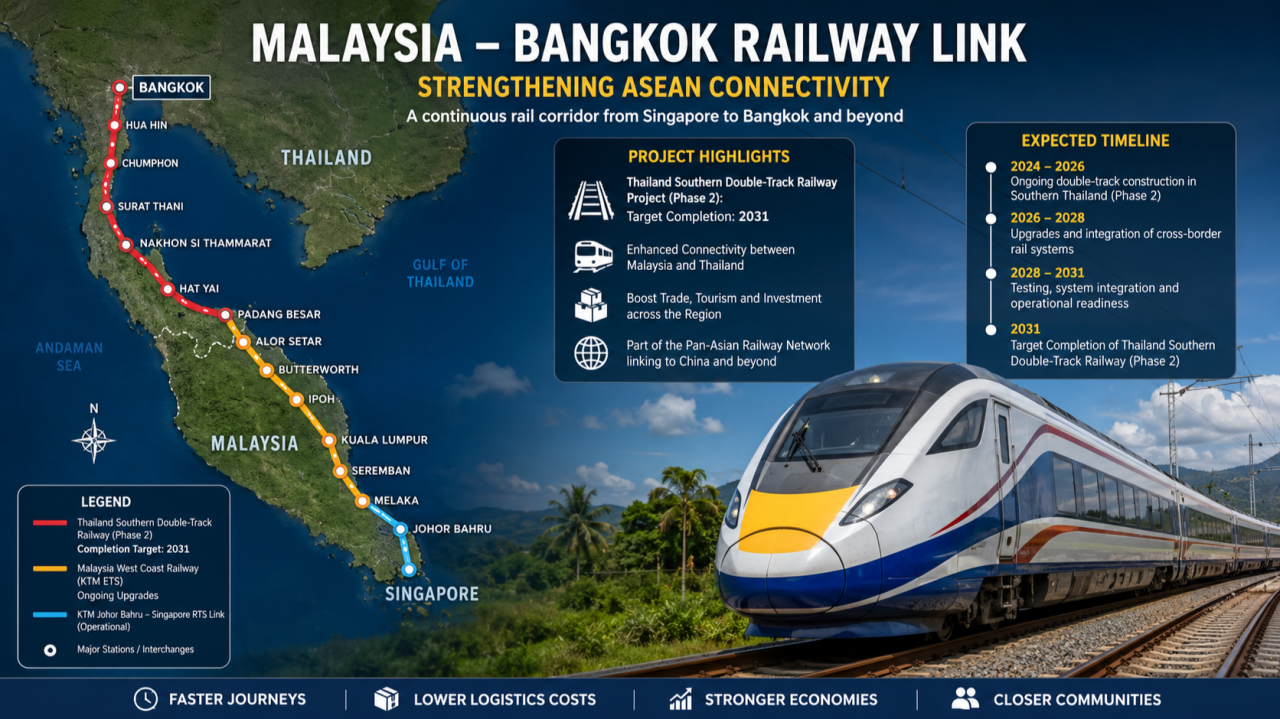
By 2031, Thailand aims to complete Phase 2 of its Southern Double-Track Railway Project, significantly improving rail capacity between Bangkok and the Malaysian border. Combined with Malaysia’s own railway upgrades, this could create one of Southeast Asia’s most important land transport corridors.
At first glance, it may seem like just another railway project.
But history has taught us that major transport infrastructure often reshapes economies.
The railway itself is not the story.
The story is what the railway makes possible.
More Than Steel Tracks
Every railway creates opportunities beyond transportation.
Goods move faster.
Logistics costs fall.
Factories become more competitive.
Industrial parks become more attractive.
Investors gain confidence.
As transport improves, businesses begin to rethink where they manufacture, warehouse, and distribute their products.
The Malaysia-Bangkok railway has the potential to strengthen an economic corridor stretching from southern Thailand through Malaysia and eventually connecting with the wider Asian rail network.
That should capture Singapore’s attention.
How Malaysia Stands to Benefit
For Malaysia, this railway is more than just improved connectivity. It is a strategic economic opportunity.
First, it strengthens Malaysia’s position as a regional logistics hub. With smoother rail connections to Thailand and beyond, goods can move more efficiently across borders, reducing reliance on sea routes and easing congestion at ports.
Second, it enhances the attractiveness of Malaysia’s industrial zones, especially in the northern and central regions. Manufacturers looking for lower operating costs compared to Singapore may find Malaysia increasingly appealing, particularly if transport times and costs continue to fall.
Third, it supports the growth of inland cities. Areas that were previously less accessible can become new centers for manufacturing, warehousing, and distribution. This decentralization can drive balanced economic growth across the country.
Fourth, it complements Malaysia’s broader infrastructure ecosystem. When integrated with highways, ports like Port Klang and Penang Port, and airports, the railway can create a seamless multimodal logistics network, something global investors actively look for.
Finally, it positions Malaysia as a key link in the larger Asian rail network, potentially connecting trade flows from China through mainland Southeast Asia down to the peninsula.
In short, the railway could help Malaysia move up the value chain, from being just a transit point to becoming a critical logistics and manufacturing hub.
Is This a Threat to Singapore?
Not today.
Perhaps not even tomorrow.
But it should certainly be a wake up call.
Singapore has spent decades becoming Southeast Asia’s leading logistics, financial, and business hub.
Meanwhile, our neighbors are investing billions of dollars to improve their own competitiveness.
If Malaysia successfully connects its railways, highways, ports, airports, and industrial zones into one efficient network, businesses will naturally have more choices.
Competition will increase.
And that is exactly how healthy economies evolve.
Why Singapore Should Pay Attention
Singapore’s concern is not about losing relevance overnight, but about gradual shifts over time.
If Malaysia becomes more cost-efficient while maintaining reliable infrastructure, some manufacturing and logistics activities may naturally shift north. Businesses that once depended heavily on Singapore’s ports and facilities may begin to diversify their operations.
Lower land costs, larger industrial spaces, and improving connectivity could make Malaysia an attractive alternative for regional distribution centers and production facilities.
Additionally, if cross-border rail becomes faster and more reliable, it could reduce Singapore’s traditional advantage as the primary gateway for goods entering and leaving the region.
This does not mean Singapore will lose its position, but it does mean its competitive edge could narrow if it does not continue evolving.
Singapore’s Greatest Strength
Singapore has never succeeded because it had the biggest land area or the cheapest labor.
It succeeded because it constantly reinvented itself.
When manufacturing became more competitive, Singapore moved into advanced manufacturing.
When global finance expanded, Singapore became one of the world’s leading financial centers.
When digitalization accelerated, Singapore invested heavily in technology, innovation, and talent.
Our greatest competitive advantage has never been geography.
It has been adaptability.
The Bigger Lesson for Business Owners
Many business owners focus too much on today’s competitors.
Successful leaders focus on tomorrow’s changes.
Imagine if your competitor invested heavily in automation today.
Would you wait until they became more successful before responding?
Or would you begin improving your own business now?
Countries face the same decision.
Waiting until disruption arrives is often too late.
Three Questions Every Business Owner Should Ask
1. If my competitors improve dramatically, what will make my business different?
Competing on yesterday’s strengths is rarely enough.
2. Am I investing in future opportunities or protecting past success?
The businesses that survive are often those that prepare before change becomes obvious.
3. What is one investment I should make today that will still benefit me ten years from now?
Whether it is AI, automation, staff development, branding, or customer experience, the best time to invest is before everyone else does.
Final Thoughts
The Malaysia-Bangkok railway may never replace Singapore’s role as a global financial and maritime hub.
But perhaps it was never meant to.
Its greatest impact may be something even more important.
It reminds every country and every business that competitive advantage is never permanent.
The world keeps moving.
Infrastructure improves.
Technology evolves.
Markets change.
Singapore’s greatest challenge has never been competing with Malaysia or Thailand.
Its greatest challenge has always been continuing to reinvent itself before the rest of the region catches up.
Perhaps that is the real wake up call.
Because in business, as in nations, success does not belong to those who were first.
It belongs to those who continue improving long after they become successful.
Source: https://www.linkedin.com/pulse/malaysia-bangkok-railway-wake-up-call-singapore-liyuwardi-tan-0o0lc/
Google Translation:
ทางรถไฟมาเลเซีย-กรุงเทพฯ: สัญญาณเตือนภัยสำหรับสิงคโปร์?
โดย เดลฟีน ลิยูวาร์ดี ตัน
กรรมการผู้จัดการ @ DEGROUP | ธุรกิจ, การวิเคราะห์ทางการเงิน
บทความข่าวนี้ได้รับการสนับสนุนโดย FALLPROTEC บริษัทชั้นนำระดับโลกด้านการออกแบบและผลิตระบบป้องกันการตกจากที่สูงและโซลูชันการเข้าถึงที่สูงระดับพรีเมียม
ภายในปี 2031 ประเทศไทยตั้งเป้าที่จะสร้างทางรถไฟสายใต้ระยะที่ 2 ให้แล้วเสร็จ ซึ่งจะช่วยเพิ่มขีดความสามารถด้านการขนส่งทางรถไฟระหว่างกรุงเทพฯ และชายแดนมาเลเซียอย่างมีนัยสำคัญ เมื่อรวมกับการพัฒนาทางรถไฟของมาเลเซียเองแล้ว อาจสร้างเส้นทางคมนาคมทางบกที่สำคัญที่สุดแห่งหนึ่งในเอเชียตะวันออกเฉียงใต้
เมื่อมองแวบแรก อาจดูเหมือนเป็นเพียงโครงการทางรถไฟอีกโครงการหนึ่ง
แต่ประวัติศาสตร์สอนเราว่าโครงสร้างพื้นฐานด้านการขนส่งขนาดใหญ่มักจะเปลี่ยนแปลงเศรษฐกิจ
ทางรถไฟเองไม่ใช่เรื่องราวหลัก
เรื่องราวหลักคือสิ่งที่ทางรถไฟทำให้เกิดขึ้นได้
มากกว่าแค่รางเหล็ก
ทางรถไฟทุกสายสร้างโอกาสมากกว่าแค่การขนส่ง
สินค้าเคลื่อนย้ายได้เร็วขึ้น
ต้นทุนด้านโลจิสติกส์ลดลง
โรงงานมีความสามารถในการแข่งขันมากขึ้น
นิคมอุตสาหกรรมน่าดึงดูดยิ่งขึ้น
นักลงทุนมีความมั่นใจมากขึ้น
เมื่อการขนส่งดีขึ้น ธุรกิจต่างๆ เริ่มคิดใหม่เกี่ยวกับการผลิต จัดเก็บ และกระจายสินค้าของตน
ทางรถไฟมาเลเซีย-กรุงเทพฯ มีศักยภาพที่จะเสริมสร้างระเบียงเศรษฐกิจที่ทอดยาวจากภาคใต้ของประเทศไทยผ่านมาเลเซีย และเชื่อมต่อกับเครือข่ายรถไฟเอเชียที่กว้างขึ้นในที่สุด
สิ่งนี้ควรดึงดูดความสนใจของสิงคโปร์
มาเลเซียจะได้รับประโยชน์อย่างไร
สำหรับมาเลเซีย ทางรถไฟสายนี้เป็นมากกว่าการเชื่อมต่อที่ดีขึ้น มันคือโอกาสทางเศรษฐกิจเชิงกลยุทธ์
ประการแรก มันเสริมสร้างตำแหน่งของมาเลเซียในฐานะศูนย์กลางโลจิสติกส์ระดับภูมิภาค ด้วยการเชื่อมต่อทางรถไฟที่ราบรื่นยิ่งขึ้นไปยังประเทศไทยและที่อื่นๆ สินค้าสามารถเคลื่อนย้ายข้ามพรมแดนได้อย่างมีประสิทธิภาพมากขึ้น ลดการพึ่งพาเส้นทางทางทะเล และลดความแออัดที่ท่าเรือ
ประการที่สอง มันเพิ่มความน่าดึงดูดของเขตอุตสาหกรรมของมาเลเซีย โดยเฉพาะในภาคเหนือและภาคกลาง ผู้ผลิตที่มองหาต้นทุนการดำเนินงานที่ต่ำกว่าเมื่อเทียบกับสิงคโปร์ อาจพบว่ามาเลเซียมีความน่าสนใจมากขึ้นเรื่อยๆ โดยเฉพาะอย่างยิ่งหากเวลาและต้นทุนการขนส่งลดลงอย่างต่อเนื่อง
ประการที่สาม ทางรถไฟสนับสนุนการเติบโตของเมืองภายในประเทศ พื้นที่ที่ก่อนหน้านี้เข้าถึงได้ยากสามารถกลายเป็นศูนย์กลางใหม่สำหรับการผลิต คลังสินค้า และการกระจายสินค้า การกระจายอำนาจนี้สามารถขับเคลื่อนการเติบโตทางเศรษฐกิจที่สมดุลทั่วประเทศ
ประการที่สี่ ทางรถไฟเสริมระบบนิเวศโครงสร้างพื้นฐานที่กว้างขวางของมาเลเซีย เมื่อบูรณาการกับทางหลวง ท่าเรือ เช่น ท่าเรือปอร์ตกลังและท่าเรือปีนัง และสนามบิน ทางรถไฟสามารถสร้างเครือข่ายโลจิสติกส์แบบหลายรูปแบบที่ราบรื่น ซึ่งเป็นสิ่งที่นักลงทุนทั่วโลกมองหาอย่างจริงจัง
สุดท้าย ทางรถไฟทำให้มาเลเซียเป็นจุดเชื่อมโยงสำคัญในเครือข่ายรถไฟเอเชียขนาดใหญ่ ซึ่งอาจเชื่อมต่อการค้าจากจีนผ่านเอเชียตะวันออกเฉียงใต้แผ่นดินใหญ่ลงไปยังคาบสมุทรมาเลเซีย
โดยสรุป ทางรถไฟสามารถช่วยให้มาเลเซียก้าวขึ้นสู่ห่วงโซ่คุณค่า จากจุดผ่านแดนธรรมดาไปสู่การเป็นศูนย์กลางโลจิสติกส์และการผลิตที่สำคัญ
นี่เป็นภัยคุกคามต่อสิงคโปร์หรือไม่?
ไม่ใช่ในวันนี้
อาจจะไม่ใช่ในวันพรุ่งนี้ด้วยซ้ำ
แต่แน่นอนว่ามันควรจะเป็นสัญญาณเตือน
สิงคโปร์ใช้เวลาหลายทศวรรษในการก้าวขึ้นเป็นศูนย์กลางด้านโลจิสติกส์ การเงิน และธุรกิจชั้นนำของเอเชียตะวันออกเฉียงใต้
ขณะเดียวกัน ประเทศเพื่อนบ้านของเราก็ลงทุนหลายพันล้านดอลลาร์เพื่อพัฒนาศักยภาพในการแข่งขันของตนเอง
หากมาเลเซียสามารถเชื่อมต่อทางรถไฟ ทางหลวง ท่าเรือ สนามบิน และเขตอุตสาหกรรมเข้าด้วยกันอย่างมีประสิทธิภาพ ธุรกิจต่างๆ ก็จะมีทางเลือกมากขึ้นอย่างเป็นธรรมชาติ
การแข่งขันก็จะเพิ่มขึ้น
และนั่นคือวิธีการที่เศรษฐกิจที่แข็งแรงจะพัฒนาขึ้น
เหตุใดสิงคโปร์จึงควรให้ความสนใจ
ความกังวลของสิงคโปร์ไม่ได้อยู่ที่การสูญเสียความสำคัญในชั่วข้ามคืน แต่เป็นการเปลี่ยนแปลงทีละน้อยในระยะเวลาหนึ่ง
หากมาเลเซียมีประสิทธิภาพด้านต้นทุนมากขึ้นในขณะที่ยังคงรักษาโครงสร้างพื้นฐานที่เชื่อถือได้ กิจกรรมการผลิตและโลจิสติกส์บางส่วนอาจย้ายไปทางเหนือโดยธรรมชาติ ธุรกิจที่เคยพึ่งพาท่าเรือและสิ่งอำนวยความสะดวกของสิงคโปร์อย่างมากอาจเริ่มกระจายการดำเนินงานของตน
ต้นทุนที่ดินที่ต่ำกว่า พื้นที่อุตสาหกรรมที่ใหญ่กว่า และการเชื่อมต่อที่ดีขึ้น อาจทำให้มาเลเซียเป็นทางเลือกที่น่าสนใจสำหรับศูนย์กระจายสินค้าและโรงงานผลิตในภูมิภาค
นอกจากนี้ หากการขนส่งทางรถไฟข้ามพรมแดนเร็วขึ้นและเชื่อถือได้มากขึ้น ก็อาจลดความได้เปรียบดั้งเดิมของสิงคโปร์ในฐานะประตูหลักสำหรับสินค้าที่เข้าและออกจากภูมิภาคได้
นี่ไม่ได้หมายความว่าสิงคโปร์จะเสียตำแหน่ง แต่หมายความว่าความได้เปรียบในการแข่งขันอาจลดลงหากไม่พัฒนาอย่างต่อเนื่อง
จุดแข็งที่ยิ่งใหญ่ที่สุดของสิงคโปร์
สิงคโปร์ไม่เคยประสบความสำเร็จเพราะมีพื้นที่มากที่สุดหรือค่าแรงถูกที่สุด
สิงคโปร์ประสบความสำเร็จเพราะได้ปรับปรุงตัวเองอย่างต่อเนื่อง
เมื่อภาคการผลิตมีการแข่งขันสูงขึ้น สิงคโปร์ก็หันมาผลิตสินค้าขั้นสูง
เมื่อภาคการเงินโลกขยายตัว สิงคโปร์ก็กลายเป็นศูนย์กลางทางการเงินชั้นนำของโลก
เมื่อการเปลี่ยนแปลงสู่ดิจิทัลเร่งตัวขึ้น สิงคโปร์ก็ลงทุนอย่างหนักในด้านเทคโนโลยี นวัตกรรม และบุคลากร
ความได้เปรียบในการแข่งขันที่ยิ่งใหญ่ที่สุดของเราไม่เคยเป็นภูมิศาสตร์
แต่เป็นความสามารถในการปรับตัว
บทเรียนสำคัญสำหรับเจ้าของธุรกิจ
เจ้าของธุรกิจหลายคนมุ่งเน้นไปที่คู่แข่งในปัจจุบันมากเกินไป
ผู้นำที่ประสบความสำเร็จจะมุ่งเน้นไปที่การเปลี่ยนแปลงในอนาคต
ลองนึกภาพว่าถ้าคู่แข่งของคุณลงทุนอย่างหนักในระบบอัตโนมัติในวันนี้
คุณจะรอจนกว่าพวกเขาจะประสบความสำเร็จมากขึ้นก่อนจึงค่อยตอบโต้หรือไม่?
หรือคุณจะเริ่มปรับปรุงธุรกิจของคุณเองตั้งแต่วันนี้?
ประเทศต่างๆ ก็เผชิญกับการตัดสินใจแบบเดียวกัน
การรอจนกว่าการเปลี่ยนแปลงจะมาถึงมักจะสายเกินไป
สามคำถามที่เจ้าของธุรกิจทุกคนควรถาม
1. ถ้าคู่แข่งของฉันพัฒนาขึ้นอย่างมาก อะไรจะทำให้ธุรกิจของฉันแตกต่างออกไป?
การแข่งขันโดยใช้จุดแข็งของเมื่อวานมักไม่เพียงพอ
2. ฉันกำลังลงทุนในโอกาสในอนาคตหรือปกป้องความสำเร็จในอดีต?
ธุรกิจที่อยู่รอดมักเป็นธุรกิจที่เตรียมตัวก่อนที่การเปลี่ยนแปลงจะปรากฏชัด
3. การลงทุนอะไรที่ฉันควรทำในวันนี้ที่จะยังคงเป็นประโยชน์ต่อฉันในอีกสิบปีข้างหน้า?
ไม่ว่าจะเป็น AI ระบบอัตโนมัติ การพัฒนาบุคลากร การสร้างแบรนด์ หรือประสบการณ์ของลูกค้า เวลาที่ดีที่สุดในการลงทุนคือ ก่อนที่คนอื่นๆ จะทำ
ข้อคิดส่งท้าย
ทางรถไฟมาเลเซีย-กรุงเทพฯ อาจไม่สามารถแทนที่บทบาทของสิงคโปร์ในฐานะศูนย์กลางทางการเงินและการเดินเรือระดับโลกได้
แต่บางทีมันก็ไม่ได้ถูกออกแบบมาเพื่อสิ่งนั้นตั้งแต่แรก
ผลกระทบที่ยิ่งใหญ่ที่สุดของมันอาจเป็นสิ่งที่สำคัญยิ่งกว่านั้น
มันเตือนทุกประเทศและทุกธุรกิจว่าความได้เปรียบในการแข่งขันนั้นไม่ยั่งยืน
โลกเปลี่ยนแปลงอยู่เสมอ
โครงสร้างพื้นฐานพัฒนาขึ้น
เทคโนโลยีพัฒนาไป
ตลาดเปลี่ยนแปลง
ความท้าทายที่ยิ่งใหญ่ที่สุดของสิงคโปร์ไม่เคยเป็นการแข่งขันกับมาเลเซียหรือไทย
ความท้าทายที่ยิ่งใหญ่ที่สุดของสิงคโปร์คือการพัฒนาตนเองอย่างต่อเนื่องก่อนที่ประเทศอื่นๆ ในภูมิภาคจะตามทัน
บางทีนั่นอาจเป็นสัญญาณเตือนที่แท้จริง
เพราะในธุรกิจ เช่นเดียวกับในประเทศต่างๆ ความสำเร็จไม่ได้เป็นของผู้ที่มาก่อน
แต่เป็นของผู้ที่พัฒนาตนเองอย่างต่อเนื่องแม้หลังจากประสบความสำเร็จแล้ว