 Thailand’s Transport Ministry and the Mass Rapid Transit Authority needs to provide clear answers to the recent Samsen Road collapse and the Wongwian Yai case
Bangkok Post Editorial
THIS NEWS ARTICLE KINDLY SPONSORED BY FALLPROTEC, A WORLD-RENOWNED NAME IN THE DESIGN AND MANUFACTURE OF PREMIUM FALL PROTECTION SYSTEMS AND HEIGHT ACCESS SOLUTIONS
Bangkok’s subway system is not a symbol of modernity. Launched on July 3, 2004, the Chalerm Ratchamongkhon Line — the country’s first subway line — is a triumph of Thai civil engineering and a source of national pride.
Bangkok is considered one of the most challenging cities in the world in which to build underground rail systems. The capital sits on low-lying soft clay soils, with a high groundwater table, seasonal monsoon flooding and rapid soil subsidence.
Yet local engineers overcame these major challenges. Expensive equipment, such as earth pressure balance tunnel boring machines, was deployed to excavate through soft, water-bearing ground in a densely populated city.
To prevent groundwater intrusion, tunnels were lined with segmental concrete rings sealed with gaskets. Subway construction in Bangkok is a showcase of anticipatory engineering that we should be proud of. Designs were developed to withstand worst-case scenarios, while monitoring systems tracking underground water levels and soil movement operate around the clock.
Later, local engineers took on even more difficult assignments, including building subway lines beneath the Chao Phraya River and constructing underground stations in highly sensitive areas near historic districts and the Grand Palace.
What is even more remarkable is that these projects have operated for two decades without major accidents or serious water leakage.
This exceptional record of subway construction has, however, been tarnished by recent water leakage problems.
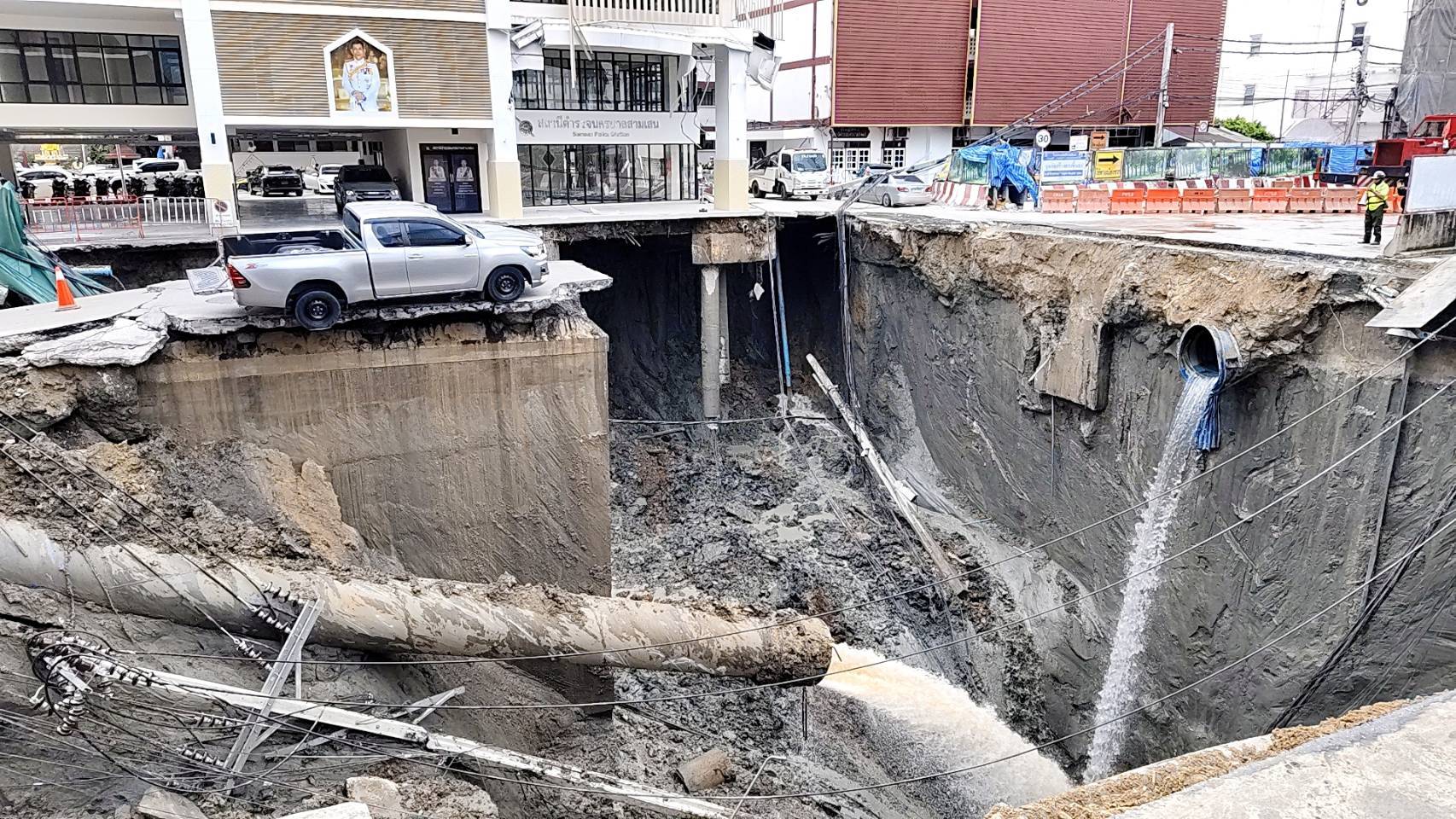
Last September, a section of Samsen Road in front of Vajra Hospital collapsed into a large hole about 50 metres deep and measuring roughly 30m by 30m. No injuries were reported.
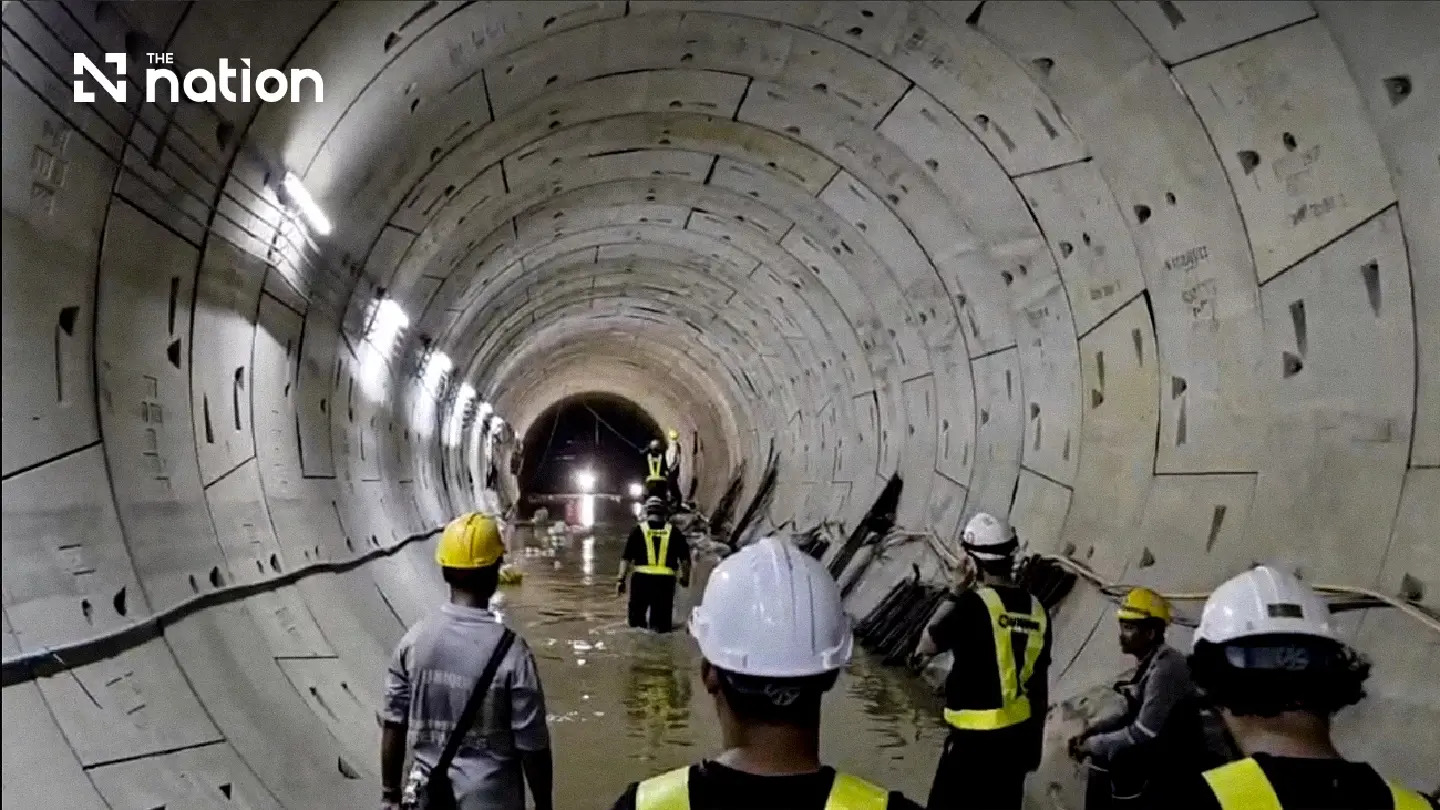
Then, earlier this month, another water leakage incident occurred. On July 8, water began seeping into an under-construction tunnel extension of the Purple Line South, about 30 metres underground near the Wongwian Yai intersection. The incident caused ground subsidence and cracks on Prajadhipok Road, prompting road closures, evacuations and inspections of nearby buildings.
The broader question is: what actually happened?
The Transport Ministry and the Mass Rapid Transit Authority (MRTA), which oversees subway systems and concessions, need to provide clear answers.
In the Samsen Road case, the investigation, which took more than six months, concluded that the collapse resulted from soil loss caused by water leakage. However, it did not identify the underlying cause of the failure.
In the Wongwian Yai case, the MRTA and Transport Ministry have pointed to groundwater and rainfall as contributing factors. But water leakage itself is not the root cause; it is a challenge engineers are expected to overcome.
The Transport Ministry should establish an independent investigation — not a self-review process — to determine the primary cause. Was the incident the result of natural conditions, technical shortcomings or negligence?
Accidents and mistakes can occur even in well-designed and seemingly foolproof construction projects. But preventing future failures requires engineers and responsible developers to identify the root causes.
Source: https://www.bangkokpost.com/opinion/opinion/3286219/beyond-water-leakage
Google Translation:
กระทรวงคมนาคมและองค์การขนส่งมวลชนแห่งประเทศไทยจำเป็นต้องให้คำตอบที่ชัดเจนเกี่ยวกับเหตุการณ์ถนนสามเสนถล่มและกรณีถนนวงเวียนใหญ่ที่เกิดขึ้นเมื่อเร็วๆ นี้
บทบรรณาธิการ บางกอกโพสต์
บทความข่าวนี้ได้รับการสนับสนุนโดย FALLPROTEC บริษัทที่มีชื่อเสียงระดับโลกด้านการออกแบบและผลิตระบบป้องกันการตกจากที่สูงและโซลูชันการเข้าถึงที่สูงระดับพรีเมียม
ระบบรถไฟฟ้าใต้ดินของกรุงเทพฯ ไม่ใช่สัญลักษณ์ของความทันสมัย สายเฉลิมราชมงคล ซึ่งเปิดให้บริการเมื่อวันที่ 3 กรกฎาคม 2547 เป็นความสำเร็จด้านวิศวกรรมโยธาของไทยและเป็นความภาคภูมิใจของชาติ
กรุงเทพฯ ถือเป็นหนึ่งในเมืองที่ท้าทายที่สุดในโลกในการสร้างระบบรถไฟฟ้าใต้ดิน เมืองหลวงตั้งอยู่บนพื้นที่ราบต่ำที่มีดินเหนียวอ่อน มีระดับน้ำใต้ดินสูง น้ำท่วมตามฤดูกาล และการทรุดตัวของดินอย่างรวดเร็ว
อย่างไรก็ตาม วิศวกรท้องถิ่นได้เอาชนะความท้าทายที่สำคัญเหล่านี้ไปได้ อุปกรณ์ราคาแพง เช่น เครื่องเจาะอุโมงค์แบบปรับสมดุลแรงดันดิน ถูกนำมาใช้ในการขุดเจาะดินอ่อนที่มีน้ำขังในเมืองที่มีประชากรหนาแน่น
เพื่อป้องกันน้ำใต้ดินแทรกซึม อุโมงค์จึงถูกบุด้วยวงแหวนคอนกรีตแบบแบ่งส่วนที่ปิดผนึกด้วยปะเก็น การก่อสร้างรถไฟฟ้าใต้ดินในกรุงเทพฯ เป็นตัวอย่างของการวางแผนทางวิศวกรรมที่เราควรภาคภูมิใจ การออกแบบถูกพัฒนาขึ้นเพื่อรับมือกับสถานการณ์ที่เลวร้ายที่สุด ในขณะที่ระบบตรวจสอบระดับน้ำใต้ดินและการเคลื่อนตัวของดินทำงานตลอด 24 ชั่วโมง
ต่อมา วิศวกรท้องถิ่นได้รับมอบหมายงานที่ยากยิ่งขึ้น รวมถึงการสร้างเส้นทางรถไฟฟ้าใต้ดินใต้แม่น้ำเจ้าพระยา และการสร้างสถานีใต้ดินในพื้นที่อ่อนไหวสูงใกล้กับย่านประวัติศาสตร์และพระราชวังหลวง
สิ่งที่น่าทึ่งยิ่งกว่านั้นคือ โครงการเหล่านี้ดำเนินการมาเป็นเวลาสองทศวรรษโดยไม่มีอุบัติเหตุร้ายแรงหรือการรั่วไหลของน้ำอย่างรุนแรง
อย่างไรก็ตาม สถิติการก่อสร้างรถไฟฟ้าใต้ดินที่ยอดเยี่ยมนี้ถูกบดบังด้วยปัญหาการรั่วไหลของน้ำเมื่อเร็วๆ นี้
เมื่อเดือนกันยายนปีที่แล้ว ถนนสามเสนส่วนหนึ่งหน้าโรงพยาบาลวชิระทรุดตัวลงเป็นหลุมขนาดใหญ่ลึกประมาณ 50 เมตร และมีขนาดประมาณ 30 เมตรคูณ 30 เมตร ไม่มีรายงานผู้บาดเจ็บ
จากนั้น ต้นเดือนนี้ ก็เกิดเหตุการณ์น้ำรั่วอีกครั้ง เมื่อวันที่ 8 กรกฎาคม น้ำเริ่มซึมเข้าไปในอุโมงค์ส่วนต่อขยายรถไฟฟ้าสายสีม่วงใต้ที่กำลังก่อสร้างอยู่ ประมาณ 30 เมตรใต้ดิน ใกล้กับทางแยกวงเวียนใหญ่ เหตุการณ์ดังกล่าวทำให้พื้นดินทรุดตัวและเกิดรอยแตกบนถนนประชาธิปก ส่งผลให้ต้องปิดถนน อพยพ และตรวจสอบอาคารใกล้เคียง
คำถามที่สำคัญกว่านั้นคือ เกิดอะไรขึ้นกันแน่?
กระทรวงคมนาคมและองค์การขนส่งมวลชนแห่งประเทศไทย (รฟท.) ซึ่งกำกับดูแลระบบรถไฟฟ้าใต้ดินและสัมปทาน จำเป็นต้องให้คำตอบที่ชัดเจน
ในกรณีถนนสามเสน การสอบสวนซึ่งใช้เวลานานกว่าหกเดือน สรุปว่าการทรุดตัวเกิดจากการทรุดตัวของดินเนื่องจากน้ำรั่ว อย่างไรก็ตาม ไม่ได้ระบุสาเหตุที่แท้จริงของการพังทลาย
ในกรณีท่อน้ำวนใหญ่ การรถไฟฟ้าขนส่งมวลชนแห่งประเทศไทย (MRTA) และกระทรวงคมนาคมชี้ว่าน้ำใต้ดินและปริมาณน้ำฝนเป็นปัจจัยที่ทำให้เกิดเหตุการณ์ แต่การรั่วไหลของน้ำนั้นไม่ใช่สาเหตุหลัก มันเป็นเพียงความท้าทายที่วิศวกรควรแก้ไข
กระทรวงคมนาคมควรจัดตั้งคณะกรรมการสอบสวนอิสระ ไม่ใช่กระบวนการตรวจสอบตนเอง เพื่อหาสาเหตุที่แท้จริง เหตุการณ์ดังกล่าวเป็นผลมาจากสภาพธรรมชาติ ความบกพร่องทางเทคนิค หรือความประมาทเลินเล่อหรือไม่
อุบัติเหตุและความผิดพลาดสามารถเกิดขึ้นได้แม้ในโครงการก่อสร้างที่ออกแบบมาอย่างดีและดูเหมือนจะปลอดภัยไร้ข้อผิดพลาด แต่การป้องกันความล้มเหลวในอนาคตจำเป็นต้องให้วิศวกรและผู้พัฒนาโครงการที่มีความรับผิดชอบระบุสาเหตุที่แท้จริง