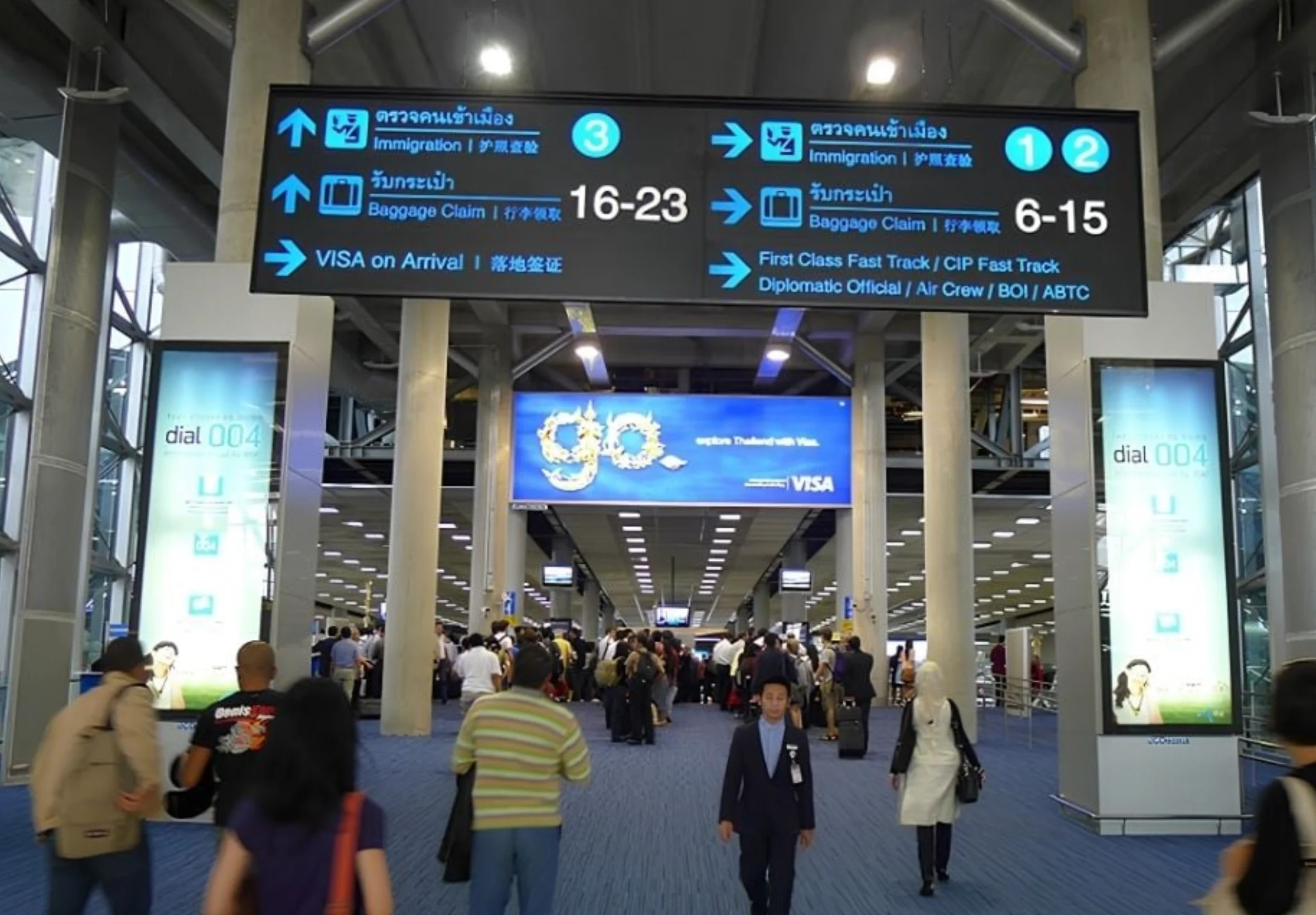
 Thailand entry funds: what travellers may need to show
Foreigners arriving in Thailand may be asked by immigration to show they have enough money to support themselves during their stay. Depending on the entry route, the stated requirement is between 10,000 and 20,000 baht per person.
The Tourism Authority of Thailand (TAT) reiterated the rules in July 2026, stressing that proof-of-funds checks are not new. They have formed part of immigration regulations since 1980, while the current thresholds were set in a Ministry of Interior announcement in 2000.
The requirement does not apply to children under 12. A Thai visa, meanwhile, does not guarantee entry: the immigration officer at the checkpoint makes the final admission decision.
Amounts vary by visa and entry route
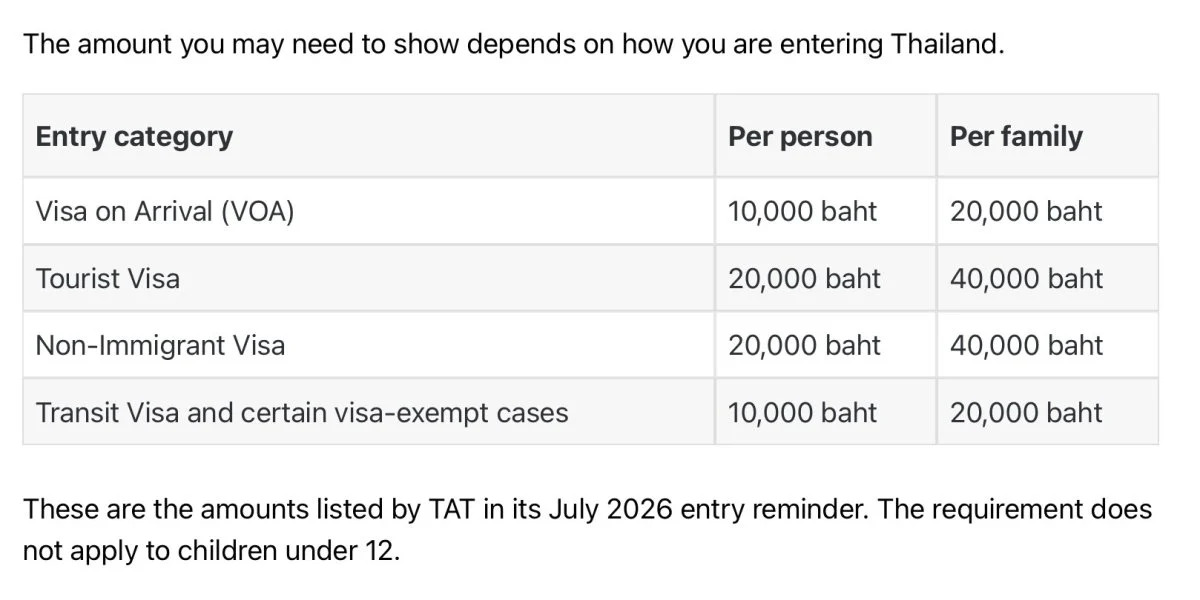
TAT lists the following amounts for arriving foreign nationals:
For tourists and expats returning to Thailand, the practical point is to keep evidence of funds accessible in hand luggage. Travellers can be asked during immigration screening, even if they have entered Thailand previously without being questioned.
Visa on Arrival should not be confused with visa exemption. VOA is a separate category for nationals of specified countries who apply at an eligible Thai entry checkpoint, while visa-exempt visitors enter without applying for a visa at the airport.
Visa-exempt visitors should check their own rules
This is the area most likely to confuse travellers. TAT’s July guidance (www.tatnews) states that certain visa-exempt cases require 10,000 baht per person or 20,000 baht per family, but it does not say this figure applies to all nationalities using visa exemption.
TAT advises visa-exempt travellers to check requirements for their nationality and entry category before flying, as published rules can differ. Thailand’s visa-exemption arrangements and the nationalities eligible for them can also change.
The Royal Thai Embassy in Washington, DC, says travellers using the Tourist Visa Exemption Scheme need cash, or its equivalent, of 20,000 baht per person or 40,000 baht per family. Other Royal Thai embassies publish the same higher figure.
Cash is not the only possible evidence
TAT says immigration may accept Thai baht, the equivalent sum in another currency, or documents showing equivalent funds evidencing payment. Visitors do not necessarily need to convert the entire amount into baht before travelling.
However, official guidance does not clearly state that a credit or debit card alone will always satisfy an officer. Anyone relying on bank documents or other evidence should ensure it can be produced immediately, rather than leaving it in checked baggage.
Tourist Visa holders should also note that the entry threshold is separate from the bank statements, income proof or other financial papers an embassy or consulate may have required during the visa application.
Source: https://aseannow.com/thailand-news/thailand-entry-funds-what-travellers-may-need-to-show-r3378/
Google Translation:
เงินทุนสำหรับการเข้าประเทศไทย: สิ่งที่นักท่องเที่ยวอาจต้องแสดง
ชาวต่างชาติที่เดินทางมาถึงประเทศไทยอาจถูกเจ้าหน้าที่ตรวจคนเข้าเมืองขอให้แสดงหลักฐานว่ามีเงินเพียงพอสำหรับใช้จ่ายระหว่างการพำนัก ขึ้นอยู่กับเส้นทางการเข้าประเทศ ข้อกำหนดที่ระบุไว้คือระหว่าง 10,000 ถึง 20,000 บาทต่อคน
การท่องเที่ยวแห่งประเทศไทย (TAT) ย้ำกฎระเบียบนี้อีกครั้งในเดือนกรกฎาคม 2569 โดยเน้นย้ำว่าการตรวจสอบหลักฐานเงินทุนไม่ใช่เรื่องใหม่ เป็นส่วนหนึ่งของระเบียบตรวจคนเข้าเมืองมาตั้งแต่ปี 2523 ในขณะที่เกณฑ์ปัจจุบันถูกกำหนดไว้ในประกาศของกระทรวงมหาดไทยในปี 2543
ข้อกำหนดนี้ไม่ใช้กับเด็กอายุต่ำกว่า 12 ปี ส่วนวีซ่าไทยนั้นไม่ได้เป็นการรับประกันการเข้าประเทศ เจ้าหน้าที่ตรวจคนเข้าเมือง ณ ด่านตรวจคนเข้าเมืองจะเป็นผู้ตัดสินใจขั้นสุดท้ายเกี่ยวกับการอนุญาตให้เข้าประเทศ
จำนวนเงินแตกต่างกันไปตามวีซ่าและเส้นทางการเข้าประเทศ
TAT ระบุจำนวนเงินต่อไปนี้สำหรับชาวต่างชาติที่เดินทางมาถึง:
สำหรับนักท่องเที่ยวและชาวต่างชาติที่กลับมาประเทศไทย สิ่งสำคัญคือต้องเก็บหลักฐานเงินทุนไว้ในกระเป๋าถือติดตัวให้เข้าถึงได้ง่าย ผู้เดินทางอาจถูกสอบถามระหว่างการตรวจคนเข้าเมือง แม้ว่าพวกเขาจะเคยเข้าประเทศไทยมาก่อนโดยไม่เคยถูกสอบถามก็ตาม
วีซ่าเมื่อเดินทางมาถึง (Visa on Arrival หรือ VOA) ไม่ควรสับสนกับการยกเว้นวีซ่า VOA เป็นประเภทแยกต่างหากสำหรับพลเมืองของประเทศที่ระบุไว้ซึ่งยื่นขอที่ด่านตรวจคนเข้าเมืองของไทยที่ได้รับอนุญาต ในขณะที่ผู้ที่ได้รับการยกเว้นวีซ่าสามารถเข้าประเทศได้โดยไม่ต้องยื่นขอวีซ่าที่สนามบิน
ผู้ที่ได้รับการยกเว้นวีซ่าควรตรวจสอบกฎระเบียบของตนเอง
นี่คือส่วนที่อาจทำให้ผู้เดินทางสับสนมากที่สุด คำแนะนำของการท่องเที่ยวแห่งประเทศไทย (TAT) ในเดือนกรกฎาคม (www.tatnews) ระบุว่ากรณีที่ได้รับการยกเว้นวีซ่าบางกรณีต้องเสียค่าธรรมเนียม 10,000 บาทต่อคน หรือ 20,000 บาทต่อครอบครัว แต่ไม่ได้ระบุว่าตัวเลขนี้ใช้กับทุกสัญชาติที่ใช้การยกเว้นวีซ่า
TAT แนะนำให้ผู้เดินทางที่ได้รับการยกเว้นวีซ่าตรวจสอบข้อกำหนดสำหรับสัญชาติและประเภทการเข้าประเทศของตนเองก่อนเดินทาง เนื่องจากกฎที่เผยแพร่อาจแตกต่างกัน การจัดเตรียมการยกเว้นวีซ่าของประเทศไทยและสัญชาติที่มีสิทธิ์ก็อาจมีการเปลี่ยนแปลงได้เช่นกัน
สถานเอกอัครราชทูตไทยประจำกรุงวอชิงตัน ดี.ซี. ระบุว่า นักท่องเที่ยวที่ใช้โครงการยกเว้นวีซ่าท่องเที่ยวต้องมีเงินสดหรือเทียบเท่า 20,000 บาทต่อคน หรือ 40,000 บาทต่อครอบครัว สถานเอกอัครราชทูตไทยในประเทศอื่นๆ ก็ระบุตัวเลขที่สูงกว่านี้เช่นกัน
เงินสดไม่ใช่หลักฐานเดียวที่ใช้ได้
การท่องเที่ยวแห่งประเทศไทย (ทท.) ระบุว่า เจ้าหน้าที่ตรวจคนเข้าเมืองอาจยอมรับเงินบาทไทย เงินจำนวนเทียบเท่าในสกุลเงินอื่น หรือเอกสารแสดงหลักฐานการชำระเงิน นักท่องเที่ยวไม่จำเป็นต้องแลกเงินทั้งหมดเป็นเงินบาทก่อนเดินทาง
อย่างไรก็ตาม คำแนะนำอย่างเป็นทางการไม่ได้ระบุอย่างชัดเจนว่าบัตรเครดิตหรือบัตรเดบิตเพียงอย่างเดียวจะเพียงพอต่อการพิจารณาของเจ้าหน้าที่เสมอไป ผู้ที่ใช้เอกสารจากธนาคารหรือหลักฐานอื่นๆ ควรตรวจสอบให้แน่ใจว่าสามารถแสดงได้ทันที แทนที่จะทิ้งไว้ในสัมภาระที่โหลดใต้ท้องเครื่อง
ผู้ถือวีซ่าท่องเที่ยวควรทราบด้วยว่า เกณฑ์การเข้าประเทศนี้แยกต่างหากจากใบแจ้งยอดบัญชีธนาคาร หลักฐานรายได้ หรือเอกสารทางการเงินอื่นๆ ที่สถานเอกอัครราชทูตหรือสถานกงสุลอาจต้องการในระหว่างการยื่นขอวีซ่า