
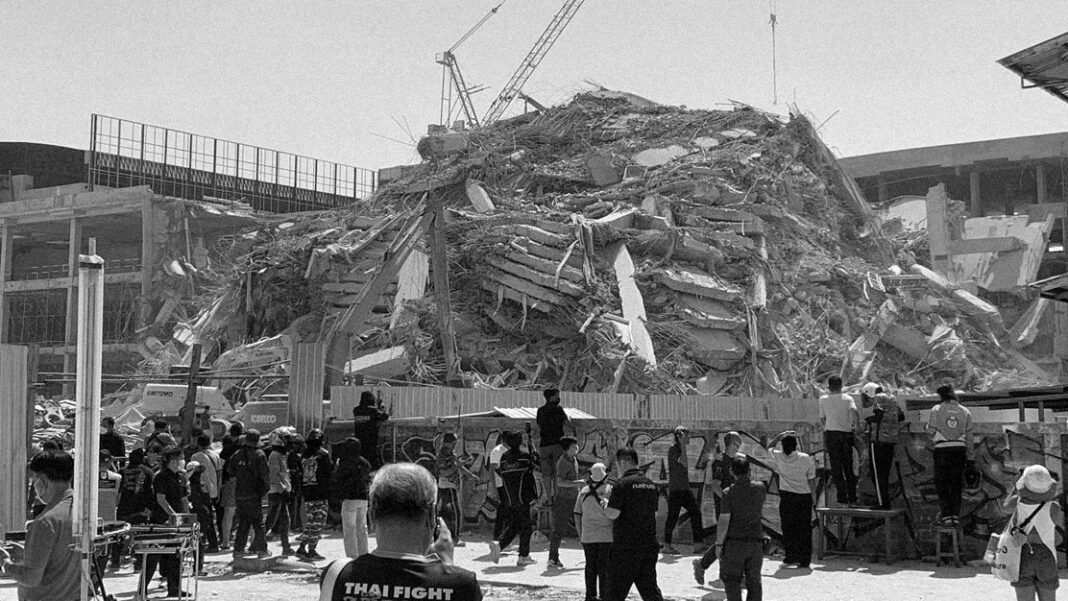
 One year on from the 28 March 2025 Bangkok earthquake: the building collapse that Thailand cannot forget
“What were you doing at 13:20 on 28 March 2025?”
That moment is now etched into memory. When the Sagaing Fault shifted deep beneath Myanmar, a powerful earthquake struck with devastating force, sending tremors across Thailand and turning an ordinary afternoon into one of Bangkok’s darkest days.
Buildings swayed. People stumbled. Elevators shook violently. Across the capital, panic spread as residents rushed out of high-rises, many leaving everything behind. Some fled with only towels wrapped around them. Others helped elderly parents down staircases. Fear gripped the city.
Even today, the scars remain. Cracked walls, damaged ceilings and unrepaired condominiums stand as quiet reminders of the disaster one year on.
From pride to tragedy
Minutes after the quake, crowds gathered in the Chatuchak area, staring at what had once been a towering construction site.
The 33-storey building, intended to become the new headquarters of Thailand’s State Audit Office, had stood tall just moments earlier. Built on a 10-rai site along Kamphaeng Phet 2 Road, the project carried a budget of more than 2 billion baht.
If completed, it would have overlooked Chatuchak Park and Bang Sue Grand Station — a symbol of progress and ambition.
But at 13:20, everything changed.
Seconds before collapse
As the tremors intensified, workers inside the building panicked. Some on the upper floors, including the 29th, gathered together in fear.
“I thought I would never make it home to my mother,” a Myanmar worker later recalled. “I came into this world alone. I thought I would die alone.”
Moments later, concrete began to fall. Then came the collapse.
From the outside, onlookers noticed the building swaying unnaturally. Many raised their phones, recording what they feared might happen — hoping it would not.
But within minutes, the worst unfolded.
The structure gave way, collapsing floor by floor into a cloud of dust and debris. At first, some believed the footage was fake — generated or from another country. It was not. It was happening in Bangkok.
Survival and loss
A survivor said he was thrown from the 29th floor, landing amid the rubble. Bleeding and disoriented, he struggled to free himself.
“I looked around and saw nothing but debris,” he said. “My leg was trapped, but I managed to pull myself out and crawl to safety.”
He heard no cries for help — only silence, and the weight of what had just happened.
“I still remember those who didn’t make it,” he said.
A tragedy that lingers
At least 93 people were confirmed dead, with three others reported missing. Many more were injured. Most victims were construction workers, including migrant labourers.
In the aftermath, authorities pledged accountability. The State Audit Office paid 129 million baht in compensation to victims’ families, while 23 suspects were charged. Investigations into possible construction failures and official negligence remain ongoing, with the case under review by the National Anti-Corruption Commission.
Nearly a year later, a representative of the agency publicly apologised, saying the tragedy continues to weigh heavily.
“The words ‘building collapse’ will stay with us forever,” he said.
Waiting for justice
For families, the pain has not faded.
Punch, the daughter of two victims, lost both parents that day. She is still waiting for justice — and for compensation that has yet to reach many, especially non-Thai victims.
“As this day comes closer, I think more and more about it,” she said quietly.
A memory that will not fade
One year on, the site remains more than just a construction failure. It is a grave, a symbol, and a scar on the city.
This is not just sorrow. It is trauma — a memory many wish to forget but cannot.
Even passing by is too much for some.
“I don’t even want to look,” Punch said.
Source: https://www.khaosodenglish.com/featured/2026/03/28/one-year-on-the-collapse-that-bangkok-cannot-forget/
Google Translation:
หนึ่งปีหลังเหตุการณ์แผ่นดินไหวที่กรุงเทพฯ เมื่อวันที่ 28 มีนาคม 2568: อาคารถล่มที่ประเทศไทยไม่อาจลืม
“คุณกำลังทำอะไรอยู่เวลา 13:20 น. ของวันที่ 28 มีนาคม 2568?”
ช่วงเวลานั้นได้ถูกจารึกไว้ในความทรงจำแล้ว เมื่อรอยเลื่อนสะไกงเคลื่อนตัวลึกใต้ประเทศเมียนมาร์ แผ่นดินไหวรุนแรงได้เกิดขึ้นด้วยพลังทำลายล้าง ส่งแรงสั่นสะเทือนไปทั่วประเทศไทย และเปลี่ยนช่วงบ่ายธรรมดาๆ ให้กลายเป็นหนึ่งในวันที่มืดมนที่สุดของกรุงเทพฯ
อาคารสั่นไหว ผู้คนสะดุดล้ม ลิฟต์สั่นสะเทือนอย่างรุนแรง ทั่วทั้งเมืองหลวง ความตื่นตระหนกแพร่กระจายไปทั่ว ผู้คนต่างวิ่งหนีออกจากอาคารสูง หลายคนทิ้งทุกอย่างไว้เบื้องหลัง บางคนหนีไปโดยมีเพียงผ้าขนหนูพันตัว บางคนช่วยพยุงพ่อแม่ผู้สูงอายุลงบันได ความหวาดกลัวเข้าครอบงำเมือง
แม้กระทั่งทุกวันนี้ ร่องรอยยังคงอยู่ ผนังที่แตกร้าว เพดานที่เสียหาย และคอนโดมิเนียมที่ยังไม่ได้รับการซ่อมแซม ยังคงเป็นเครื่องเตือนใจเงียบๆ ถึงภัยพิบัติครั้งนั้น แม้จะผ่านไปหนึ่งปีแล้วก็ตาม
จากความภาคภูมิใจสู่โศกนาฏกรรม
ไม่กี่นาทีหลังเกิดแผ่นดินไหว ฝูงชนจำนวนมากมารวมตัวกันที่บริเวณจตุจักร จ้องมองไปยังสิ่งที่ครั้งหนึ่งเคยเป็นสถานที่ก่อสร้างสูงตระหง่าน
อาคาร 33 ชั้น ซึ่งตั้งใจจะให้เป็นสำนักงานใหญ่แห่งใหม่ของสำนักงานตรวจสอบบัญชีแห่งชาติของประเทศไทย เคยตั้งตระหง่านอยู่ก่อนหน้านี้ไม่นาน สร้างบนพื้นที่ 10 ไร่ ริมถนนกำแพงเพชร 2 โครงการนี้มีงบประมาณมากกว่า 2 พันล้านบาท
หากสร้างเสร็จสมบูรณ์ จะสามารถมองเห็นสวนจตุจักรและสถานีรถไฟบางซื่อได้ เป็นสัญลักษณ์แห่งความก้าวหน้าและความทะเยอทะยาน
แต่เวลา 13:20 น. ทุกอย่างก็เปลี่ยนไป
ไม่กี่วินาทีก่อนพังถล่ม
เมื่อแรงสั่นสะเทือนรุนแรงขึ้น คนงานภายในอาคารต่างตื่นตระหนก บางคนบนชั้นบน รวมถึงชั้นที่ 29 ต่างมารวมตัวกันด้วยความหวาดกลัว
“ผมคิดว่าผมคงไม่ได้กลับบ้านไปหาแม่แล้ว” คนงานชาวเมียนมาร์คนหนึ่งเล่าในภายหลัง “ผมเกิดมาคนเดียว ผมคิดว่าผมจะตายคนเดียว”
ไม่กี่นาทีต่อมา เศษคอนกรีตก็เริ่มร่วงหล่น จากนั้นอาคารก็พังทลายลง
จากภายนอก ผู้คนสังเกตเห็นอาคารสั่นไหวผิดปกติ หลายคนยกโทรศัพท์ขึ้นบันทึกสิ่งที่พวกเขากลัวว่าจะเกิดขึ้น โดยหวังว่ามันจะไม่เกิดขึ้น
แต่ภายในไม่กี่นาที สิ่งที่เลวร้ายที่สุดก็เกิดขึ้น
โครงสร้างพังทลายลงทีละชั้น กลายเป็นฝุ่นและเศษซาก ในตอนแรก บางคนเชื่อว่าภาพวิดีโอนั้นเป็นของปลอม หรือสร้างขึ้นจากต่างประเทศ แต่มันไม่ใช่ มันเกิดขึ้นจริงในกรุงเทพฯ
การรอดชีวิตและการสูญเสีย
ผู้รอดชีวิตคนหนึ่งกล่าวว่า เขาถูกเหวี่ยงลงมาจากชั้น 29 ตกลงท่ามกลางซากปรักหักพัง เขาเลือดออกและสับสน พยายามดิ้นรนเพื่อปลดตัวเองให้เป็นอิสระ
“ผมมองไปรอบๆ และไม่เห็นอะไรเลยนอกจากเศษซาก” เขากล่าว “ขาของผมติดอยู่ แต่ผมก็พยายามดึงตัวเองออกมาและคลานไปยังที่ปลอดภัย”
เขาไม่ได้ยินเสียงร้องขอความช่วยเหลือ มีเพียงความเงียบ และความหนักหน่วงของสิ่งที่เพิ่งเกิดขึ้น
“ผมยังจำคนที่เสียชีวิตได้” เขากล่าว
โศกนาฏกรรมที่ยังคงตราตรึงใจ
มีผู้เสียชีวิตอย่างน้อย 93 ราย และสูญหายอีก 3 ราย บาดเจ็บอีกจำนวนมาก เหยื่อส่วนใหญ่เป็นคนงานก่อสร้าง รวมถึงแรงงานต่างด้าว
หลังเหตุการณ์ ทางการได้ให้คำมั่นว่าจะรับผิดชอบ สำนักงานตรวจสอบบัญชีของรัฐจ่ายเงินชดเชยให้แก่ครอบครัวผู้เสียชีวิต 129 ล้านบาท ขณะที่ผู้ต้องสงสัย 23 รายถูกตั้งข้อหา การสอบสวนเกี่ยวกับความล้มเหลวในการก่อสร้างและความประมาทเลินเล่อของเจ้าหน้าที่ยังคงดำเนินอยู่ โดยคดีอยู่ระหว่างการพิจารณาของคณะกรรมการป้องกันและปราบปรามการทุจริตแห่งชาติ
เกือบหนึ่งปีต่อมา ตัวแทนของหน่วยงานได้ออกมาขอโทษต่อสาธารณะ โดยกล่าวว่าโศกนาฏกรรมนี้ยังคงสร้างความหนักใจ
“คำว่า ‘อาคารถล่ม’ จะอยู่กับเราตลอดไป” เขากล่าว
พันช์ ลูกสาวของเหยื่อสองราย สูญเสียพ่อแม่ทั้งสองในวันนั้น เธอยังคงรอคอยความยุติธรรม และค่าชดเชยที่ยังไม่ถึงมือหลายคน โดยเฉพาะเหยื่อที่ไม่ใช่คนไทย
“ยิ่งวันนั้นใกล้เข้ามา ฉันก็ยิ่งคิดถึงมันมากขึ้นเรื่อยๆ” เธอกล่าวอย่างแผ่วเบา
ความทรงจำที่ไม่จางหายไป
หนึ่งปีผ่านไป สถานที่แห่งนี้ยังคงเป็นมากกว่าแค่ความล้มเหลวในการก่อสร้าง มันคือหลุมฝังศพ สัญลักษณ์ และรอยแผลเป็นบนเมือง
นี่ไม่ใช่แค่ความเศร้าโศก มันคือบาดแผลทางใจ ความทรงจำที่หลายคนอยากลืมแต่ทำไม่ได้
แม้แต่การเดินผ่านก็ยังมากเกินไปสำหรับบางคน
“ฉันไม่อยากมองเลย” พันช์กล่าว

There is a need for two, quite separate investigations but, it already appears that the two are being mixed up. One is an investigation into regulations, including Building Control and the application of Thai Standards, to see which regulations were not followed, and by whom, and to hold them accountable. However that does not establish the cause of the collapse, which needs to be the subject of the second investigation. No building ever fell down simply because regulations were not followed. When a building is designed, a concrete strength, such as 40 MPa (400 kgf/cm2), will be specified. In service, or in this case on the day of the collapse, the actual stress in the concrete will not be 40 MPa anywhere, as a result of the load and strength factors which we apply. Actual concrete strength somewhere may be only 30 MPa, but that will not lead to failure unless the stress at that point also reaches 30 MPa.
What is required is a detailed forensic analysis, in which actual loads are used rather than the loads required by a Standard or Building Code, to find the point or points in the structure where the maximum stresses occur. Only then can an expert start to see where failure might have been initiated, and how it might have progressed. I have not seen any of that sort of thinking in what I have read on the subject to date.