
Future of Thailand’s 3-Airports (Don Mueang, Suvarnabhumi and U-Tapao) high-speed rail link hangs on contract rejig
30 June 2026
THIS NEWS ARTICLE KINDLY SPONSORED BY FALLPROTEC, A WORLD-RENOWNED NAME IN THE DESIGN AND MANUFACTURE OF PREMIUM FALL PROTECTION SYSTEMS AND HEIGHT ACCESS SOLUTIONS
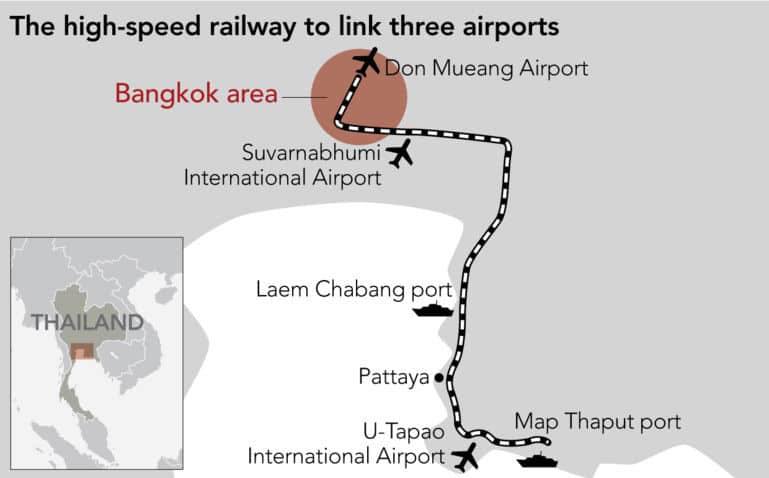
The future of the 224.5-billion-baht high-speed rail project linking Don Mueang, Suvarnabhumi and U-Tapao airports now hinges on whether the government approves amendments to its concession agreement, with the State Railway of Thailand (SRT) warning the contract could otherwise be terminated.
SRT governor Anan Phonimdaeng said the SRT, the Eastern Economic Corridor Office (EECO) and Asia Era One Co, the consortium led by CP Group that won the concession, met last week, during which the private partner said it would be unable to continue with the public-private partnership (PPP) project unless the contract is revised.
He said two options will be submitted to the EEC Policy Committee within the next two months. The first is to proceed with contract amendments previously approved in principle by the EEC board before forwarding the revised agreement, which has already been vetted by the Office of the Attorney General, to the cabinet for final approval.
If the EEC board rejects the amendments, however, the concession agreement would be brought to an end, after which the SRT and the private partner would negotiate the terms of its termination.
Mr Anan said lenders have lost confidence in the project’s commercial viability following the Covid-19 pandemic and subsequent economic downturn, which significantly reduced passenger forecasts. As a result, financial institutions have become reluctant to provide funding, making it difficult for the concessionaire to proceed.
The SRT expects to complete its assessment of both options after discussions by the contract management and project supervisory committees in July before submitting a recommendation to the EEC board within about two months.
Mr Anan stressed that, as the project is structured as a PPP, any termination would have to follow contractual procedures agreed by both parties.
Officials are examining which contractual provisions would apply, including failure to issue a notice to proceed (NTP), force majeure or other circumstances, he said.
If the project is discontinued, the SRT would rely on the existing eastern railway line to maintain rail services in the Eastern Economic Corridor.
Source: https://www.bangkokpost.com/thailand/general/3279167/highspeed-link-hangs-on-contract-rejig
Google Translation:
อนาคตของโครงการรถไฟความเร็วสูงเชื่อมสนามบิน 3 แห่งของไทย (ดอนเมือง สุวรรณภูมิ และอู่ตะเภา) ขึ้นอยู่กับการปรับแก้สัญญา
30 มิถุนายน 2569
บทความข่าวนี้ได้รับการสนับสนุนโดย FALLPROTEC บริษัทชั้นนำระดับโลกด้านการออกแบบและผลิตระบบป้องกันการตกจากที่สูงและโซลูชันการเข้าถึงที่สูง
ภาพจำลองของโครงการรถไฟความเร็วสูงเชื่อมสนามบินดอนเมือง สุวรรณภูมิ และอู่ตะเภา ที่เสนอให้ต่อขยายไปยังจังหวัดตราด (ภาพ: จักรกริต เวียวคลายหง)
อนาคตของโครงการรถไฟความเร็วสูงมูลค่า 224.5 พันล้านบาท ที่เชื่อมสนามบินดอนเมือง สุวรรณภูมิ และอู่ตะเภา ขึ้นอยู่กับว่ารัฐบาลจะอนุมัติการแก้ไขข้อตกลงสัมปทานหรือไม่ โดยการรถไฟแห่งประเทศไทย (ร.ฟ.ท.) เตือนว่าหากไม่อนุมัติ สัญญาอาจถูกยกเลิกได้
ผู้ว่าการการรถไฟฟ้าขนส่งมวลชนแห่งประเทศไทย (รฟฟ.) นายอนันต์ โภนิมแดง กล่าวว่า รฟฟ. สำนักงานเขตเศรษฐกิจพิเศษภาคตะวันออก (EEC) และบริษัท เอเชีย เอรา วัน จำกัด ซึ่งเป็นกลุ่มบริษัทที่นำโดยซีพี กรุ๊ป ผู้ชนะสัมปทาน ได้ประชุมกันเมื่อสัปดาห์ที่แล้ว โดยภาคเอกชนกล่าวว่าจะไม่สามารถดำเนินโครงการความร่วมมือระหว่างภาครัฐและเอกชน (PPP) ต่อไปได้ เว้นแต่จะมีการแก้ไขสัญญา
เขากล่าวว่า จะมีสองทางเลือกที่จะเสนอต่อคณะกรรมการนโยบาย EEC ภายในสองเดือนข้างหน้า ทางเลือกแรกคือ ดำเนินการแก้ไขสัญญาตามที่คณะกรรมการ EEC ได้อนุมัติหลักการไว้ก่อนหน้านี้ จากนั้นจึงส่งข้อตกลงที่แก้ไขแล้ว ซึ่งได้รับการตรวจสอบจากสำนักงานอัยการสูงสุดแล้ว ไปยังคณะรัฐมนตรีเพื่อขออนุมัติขั้นสุดท้าย
อย่างไรก็ตาม หากคณะกรรมการ EEC ปฏิเสธการแก้ไขดังกล่าว สัญญาสัมปทานก็จะสิ้นสุดลง จากนั้น รฟฟ. และภาคเอกชนจะเจรจาเงื่อนไขการยุติสัญญากันอีกครั้ง
นายอนันต์กล่าวว่า ผู้ให้กู้สูญเสียความเชื่อมั่นในความสามารถทางการค้าของโครงการหลังจากเกิดการระบาดของโควิด-19 และภาวะเศรษฐกิจตกต่ำที่ตามมา ซึ่งทำให้การคาดการณ์จำนวนผู้โดยสารลดลงอย่างมาก ส่งผลให้สถาบันการเงินลังเลที่จะให้เงินทุน ทำให้ผู้รับสัมปทานดำเนินการต่อไปได้ยาก
การรถไฟแห่งประเทศไทย (SRT) คาดว่าจะประเมินทางเลือกทั้งสองให้เสร็จสิ้นหลังจากการหารือของคณะกรรมการบริหารสัญญาและคณะกรรมการกำกับดูแลโครงการในเดือนกรกฎาคม ก่อนที่จะส่งคำแนะนำไปยังคณะกรรมการ EEC ภายในประมาณสองเดือน
นายอนันต์เน้นย้ำว่า เนื่องจากโครงการนี้มีโครงสร้างเป็น PPP การยกเลิกใดๆ จะต้องเป็นไปตามขั้นตอนในสัญญาที่ทั้งสองฝ่ายตกลงกัน
เจ้าหน้าที่กำลังตรวจสอบว่าข้อกำหนดในสัญญาใดบ้างที่จะนำมาใช้ รวมถึงการไม่แจ้งกำหนดการดำเนินการต่อ (NTP) เหตุสุดวิสัย หรือสถานการณ์อื่นๆ เขากล่าว
หากโครงการถูกยกเลิก การรถไฟแห่งประเทศไทย (SRT) จะต้องพึ่งพาเส้นทางรถไฟสายตะวันออกที่มีอยู่เพื่อรักษาระดับการให้บริการรถไฟในเขตเศรษฐกิจพิเศษภาคตะวันออก