
 Follow-up to the fifth edition of The Green Real Estate (TGRE) 2026 held in Bangkok on March 12th, 2026
To everyone who joined us on March 12th at TGRE26 Building Resilience, thank you.
Your presence, engagement, and bold questions made this gathering more than just a conference. Together, we created a defining moment for Thailand’s building sector, one where resilience moved from discussion to decision.
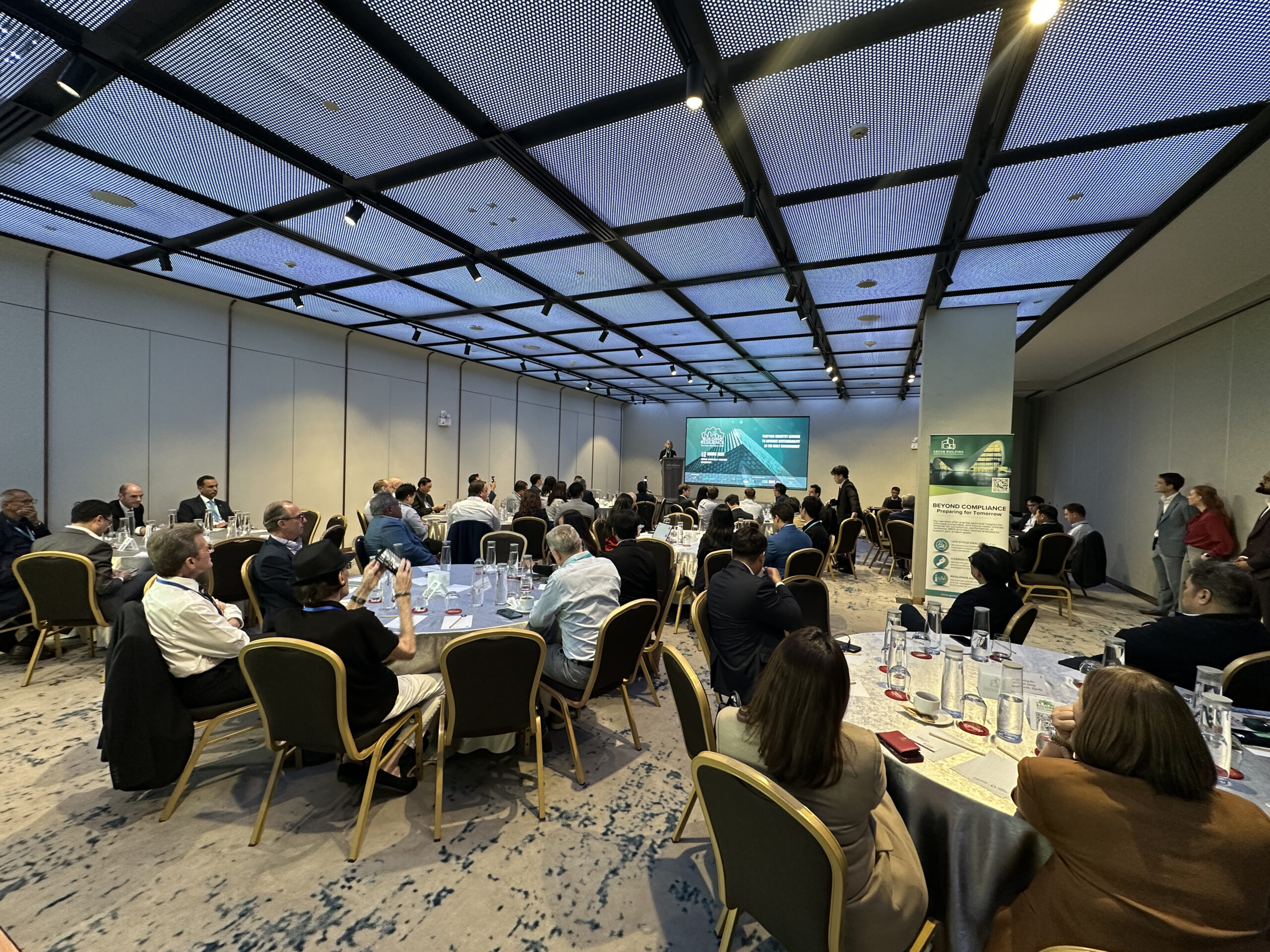
Held in Bangkok and attended by 100+ developers, investors, architects, engineers, bankers, and sustainability leaders, TGRE26 showed that the market is no longer debating if sustainability matters but how fast it can be implemented at scale.
From regulatory shifts to financing mechanisms and next-generation certification frameworks, the conversations were clear. Alignment is accelerating.
What We Learned Together
1.The buildings that survive the next decade won’t be the newest. They’ll be the most resilient.
Buildings must be designed for the world they will face. Many of the buildings designed today will still operate in 2050, yet they will face a very different regulatory, financial, and climate environment. Closing this gap is becoming a key challenge for Thailand’s building sector.
Regulation and finance are accelerating change.
Thailand’s Climate Change Act introduces binding emissions obligations, while the Thailand Taxonomy is redefining access to green finance. International supply chain requirements are also beginning to affect the sector.
The risks of inaction are now financial.
 Stranded assets, loss of access to green finance, regulatory non compliance, and insurance exposure are becoming real costs.
- Climate risk, regulation, finance, and certification are reshaping Thailand’s building sector.
Climate risk is already influencing decisions.
Floods, heat stress, and coastal exposure are increasingly affecting site selection, design priorities, operating costs, and insurability.
Resilience and low carbon design are becoming competitive advantages.
Buildings that deliver verified performance are better positioned to protect value, attract green finance, and respond to investor expectations.
The next generation of assets will be defined by resilience and performance.
In Thailand’s building sector, sustainability is increasingly becoming a business necessity.
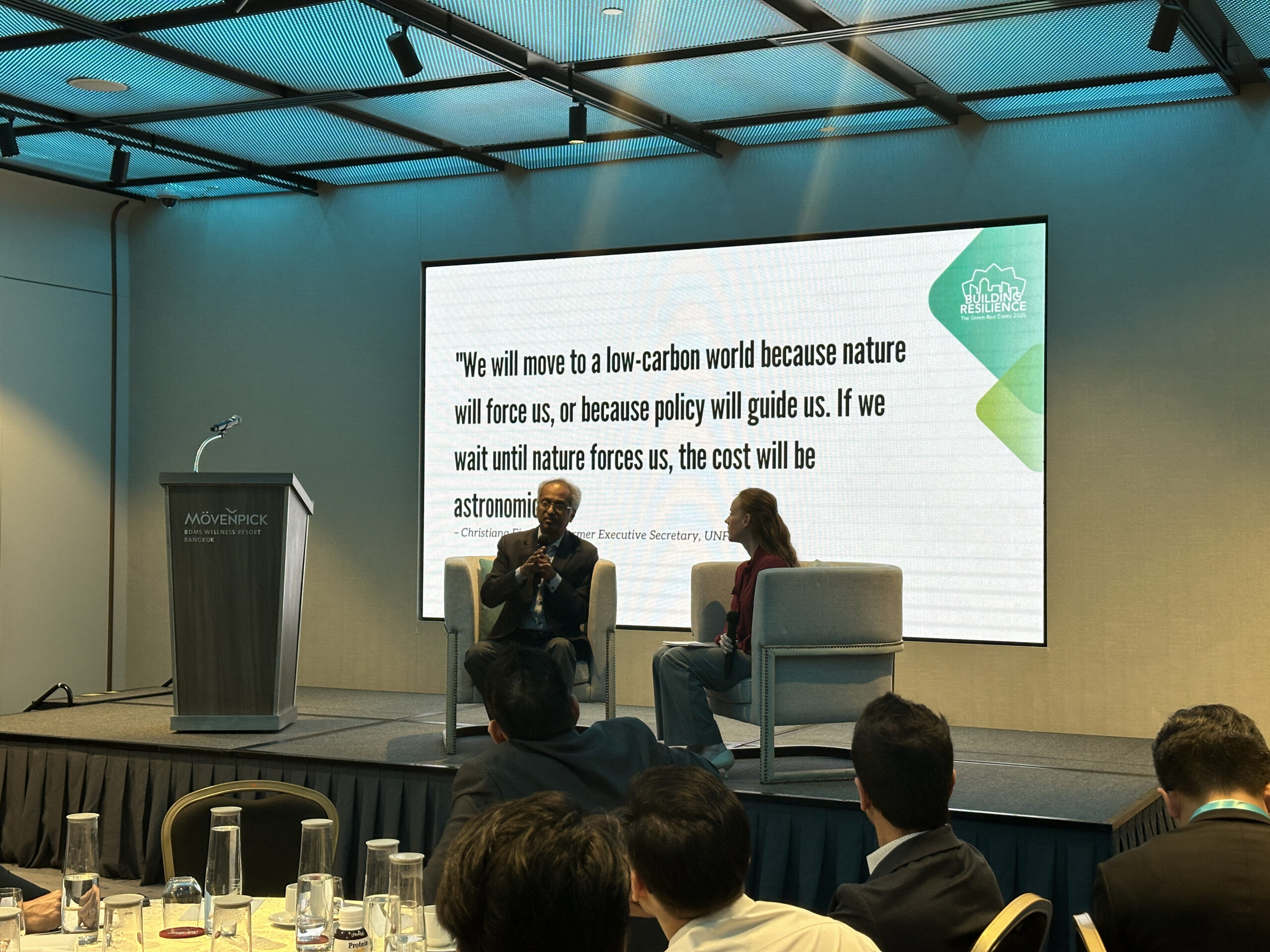
- How will LEED v5 affect South East Asia?
LEED is evolving beyond certification.
The new version of LEED, Version 5, which will be the only version applicable from July 1rst, is positioned as an integrated platform that supports decarbonisation, climate resilience, and inclusive development aligned with global net zero ambitions.
Transparency and data are becoming central.
ESG expectations are driving stronger transparency, with greater
reliance on live building data such as carbon emissions and indoor air quality metrics.
Materials and lifecycle analysis are gaining importance. Environmental Product Declarations and Life Cycle Assessment will play a larger role in evaluating building performance.
Resilience is now a core priority.
LEED v5 strengthens the focus on climate resilience for both new and existing buildings.
Southeast Asia is gaining momentum.
 Countries such as Vietnam and Saudi Arabia are among the fastest growing markets, while Malaysia and Thailand are now within the top 20 globally for LEED certifications.
- Thailand could become the region’s next data center hub.
With strong growth in digital infrastructure, Thailand may follow Malaysia’s trajectory within the next five years as a major location for data center investment.
Power and water are the key constraints.
For operators, two factors determine viability: reliable electricity supply and sufficient water for cooling systems, especially as AI driven workloads increase energy and water demand. Large scale investments, stable regulations, and access to power and water will determine how quickly the sector can grow in Thailand and across Southeast Asia.
Clean energy is becoming essential.
Operators are increasingly relying on solar power, Renewable Energy Certificates, and highly efficient energy systems to secure cleaner electricity for their facilities.
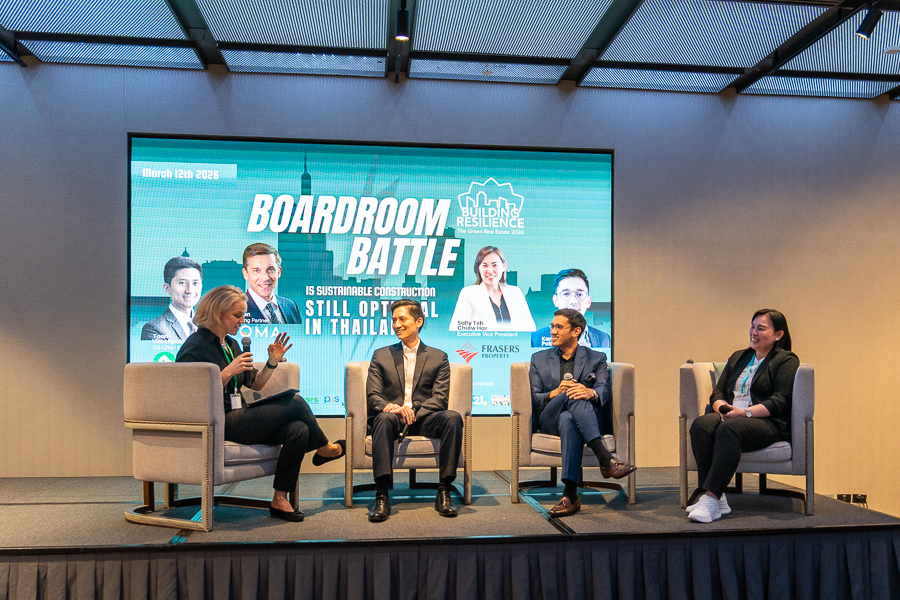
- Can sustainable
construction still be optional in Thailand today?
Cost allocation remains a central challenge.
A key discussion point was who ultimately bears the cost of sustainability measures across the building sector.
Split incentives slow residential adoption.
residential projects often face a split incentive between developers and buyers, making sustainability investments harder to justify. Offices and industrial buildings tend to show clearer financial returns.
Awareness does not always translate into willingness. While awareness of sustainability is growing, willingness to pay remains a major barrier in many markets.
 Market decisions still follow the P&L.
Sustainability adoption is largely driven by financial benefits and depends on the building type and market tier.
Regulation may drive future change.
With markets such as Singapore moving toward mandatory green certification, regional policies could accelerate adoption across Southeast Asia.
�� Snapshot of Impact
- 100 participants across the building value chain
- 12 speakers and executive debate leaders
- 4 hours of curated keynotes, panels, and live roundtables ● 1 shared objective. Future-proofing Thailand’s building sector
️ Words That Inspired Us
“The buildings we design today will still be operating in 2050, in a world very different from the one they were designed for.” — Armelle Le Bihan, CEO, Green Building Consulting & Engineering
“Resilient and low carbon buildings are better positioned to attract capital and retain value in a changing market.” — Sai Balaji, Sustainability Consultant, Green Building Consulting & Engineering
�� With Special Thanks
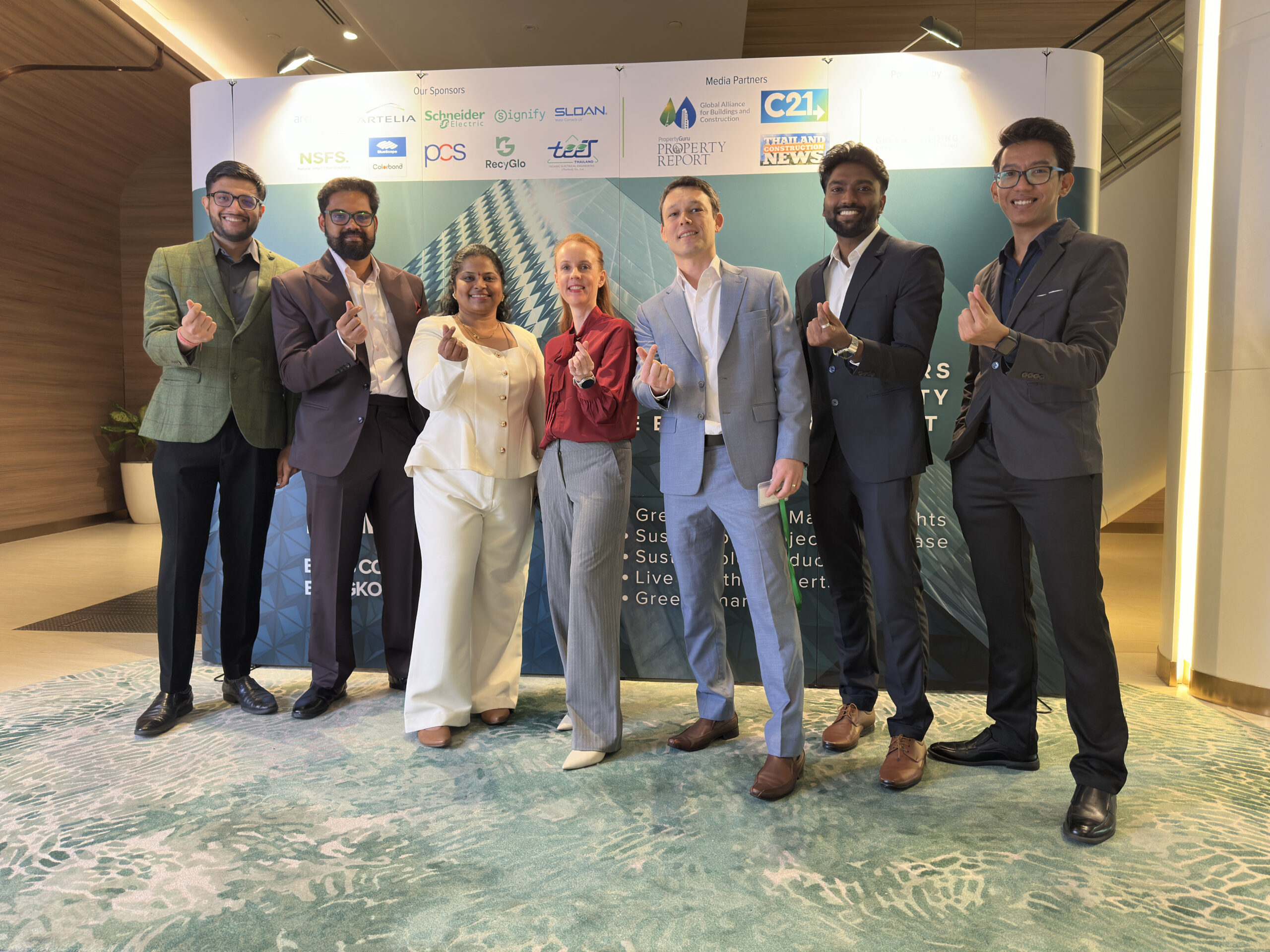
We sincerely thank our sponsors Archetype Group, Artelia, Schneider Electric, Signify, Sloan, NSFS, PCS, RecyGlo, TEET, and Bluescope Colorbond for their valued support in advancing sustainability in the building sector.
We also extend our appreciation to our media partners Global Alliance for Buildings and Construction, Construction21, PropertyGuru, and Thailand Construction News for helping amplify the impact of this event.
Inspired by our latest insights on green building? Reach out to us!
Google Translation:
ติดตามผลการประชุมสุดยอดอสังหาริมทรัพย์สีเขียว (TGRE) ครั้งที่ 5 ประจำปี 2026 ซึ่งจัดขึ้นที่กรุงเทพฯ เมื่อวันที่ 12 มีนาคม 2569
อ่านเพิ่มเติม: การประชุมสุดยอดอสังหาริมทรัพย์สีเขียวกลับมาอีกครั้งในวันที่ 12 มีนาคม 2569 ที่กรุงเทพฯ: เผชิญหน้ากับทศวรรษแห่งความเสี่ยงด้านสภาพภูมิอากาศและการเติบโตที่ยั่งยืน
ขอขอบคุณทุกท่านที่เข้าร่วมกับเราในวันที่ 12 มีนาคม ณ งาน TGRE26 Building Resilience
การเข้าร่วม การมีส่วนร่วม และคำถามที่กล้าหาญของท่าน ทำให้การประชุมครั้งนี้เป็นมากกว่าแค่การประชุม เราร่วมกันสร้างช่วงเวลาสำคัญสำหรับภาคการก่อสร้างของประเทศไทย ซึ่งเป็นช่วงเวลาที่ความยืดหยุ่นได้เปลี่ยนจากการพูดคุยไปสู่การตัดสินใจ
TGRE26 ซึ่งจัดขึ้นที่กรุงเทพฯ และมีผู้เข้าร่วมกว่า 100 คน ประกอบด้วยผู้พัฒนาอสังหาริมทรัพย์ นักลงทุน สถาปนิก วิศวกร นายธนาคาร และผู้นำด้านความยั่งยืน แสดงให้เห็นว่าตลาดไม่ได้ถกเถียงกันอีกต่อไปว่าความยั่งยืนมีความสำคัญหรือไม่ แต่กำลังถกเถียงกันถึงความเร็วในการนำไปใช้ในวงกว้าง
ตั้งแต่การเปลี่ยนแปลงด้านกฎระเบียบไปจนถึงกลไกทางการเงินและกรอบการรับรองรุ่นใหม่ การสนทนามีความชัดเจน การปรับตัวกำลังเร่งตัวขึ้น
สิ่งที่เราได้เรียนรู้ร่วมกัน
1. อาคารที่จะอยู่รอดในทศวรรษหน้าจะไม่ใช่อาคารที่ใหม่ที่สุด แต่จะเป็นอาคารที่มีความยืดหยุ่นมากที่สุด
อาคารต้องได้รับการออกแบบให้เหมาะสมกับโลกที่พวกมันจะต้องเผชิญ อาคารหลายแห่งที่ออกแบบในปัจจุบันจะยังคงใช้งานได้ในปี 2050 แต่พวกมันจะต้องเผชิญกับสภาพแวดล้อมด้านกฎระเบียบ การเงิน และสภาพภูมิอากาศที่แตกต่างออกไป การลดช่องว่างนี้กำลังกลายเป็นความท้าทายสำคัญสำหรับภาคการก่อสร้างของประเทศไทย
กฎระเบียบและการเงินกำลังเร่งการเปลี่ยนแปลง
พระราชบัญญัติการเปลี่ยนแปลงสภาพภูมิอากาศของประเทศไทยได้กำหนดพันธกรณีการปล่อยก๊าซเรือนกระจกที่มีผลผูกพัน ในขณะที่ระบบการจำแนกประเภทพลังงานของประเทศไทยกำลังกำหนดนิยามใหม่ของการเข้าถึงแหล่งเงินทุนสีเขียว ข้อกำหนดห่วงโซ่อุปทานระหว่างประเทศก็เริ่มส่งผลกระทบต่อภาคส่วนนี้เช่นกัน
ความเสี่ยงจากการไม่ดำเนินการในขณะนี้คือความเสี่ยงทางการเงิน
สินทรัพย์ที่ถูกทิ้งร้าง การสูญเสียการเข้าถึงแหล่งเงินทุนสีเขียว การไม่ปฏิบัติตามกฎระเบียบ และความเสี่ยงจากการประกันภัยกำลังกลายเป็นต้นทุนที่แท้จริง
ความเสี่ยงด้านสภาพภูมิอากาศ กฎระเบียบ การเงิน และการรับรอง กำลังเปลี่ยนแปลงภาคการก่อสร้างของประเทศไทย
ความเสี่ยงด้านสภาพภูมิอากาศกำลังส่งผลต่อการตัดสินใจอยู่แล้ว
น้ำท่วม ความเครียดจากความร้อน และการสัมผัสกับสภาพอากาศชายฝั่ง กำลังส่งผลกระทบต่อการเลือกสถานที่ตั้ง ลำดับความสำคัญในการออกแบบ ต้นทุนการดำเนินงาน และความสามารถในการทำประกันภัยมากขึ้นเรื่อยๆ
ความยืดหยุ่นและการออกแบบคาร์บอนต่ำกำลังกลายเป็นข้อได้เปรียบในการแข่งขัน
อาคารที่พิสูจน์ได้ถึงประสิทธิภาพจะอยู่ในตำแหน่งที่ดีกว่าในการปกป้องมูลค่า ดึงดูดเงินทุนสีเขียว และตอบสนองความคาดหวังของนักลงทุน
สินทรัพย์รุ่นต่อไปจะถูกกำหนดโดยความยืดหยุ่นและประสิทธิภาพ
ในภาคการก่อสร้างของประเทศไทย ความยั่งยืนกำลังกลายเป็นสิ่งจำเป็นทางธุรกิจมากขึ้นเรื่อยๆ
LEED v5 จะส่งผลกระทบต่อเอเชียตะวันออกเฉียงใต้อย่างไร?
LEED กำลังพัฒนาไปไกลกว่าการรับรอง
LEED เวอร์ชันใหม่ เวอร์ชัน 5 ซึ่งจะเป็นเวอร์ชันเดียวที่ใช้ได้ตั้งแต่วันที่ 1 กรกฎาคม ถูกวางตำแหน่งให้เป็นแพลตฟอร์มแบบบูรณาการที่สนับสนุนการลดคาร์บอน ความยืดหยุ่นต่อสภาพภูมิอากาศ และการพัฒนาที่ครอบคลุมซึ่งสอดคล้องกับเป้าหมายการปล่อยก๊าซเรือนกระจกสุทธิเป็นศูนย์ทั่วโลก
ความโปร่งใสและข้อมูลกำลังกลายเป็นสิ่งสำคัญ
ความคาดหวังด้าน ESG กำลังผลักดันให้เกิดความโปร่งใสมากขึ้น โดยอาศัยข้อมูลอาคารแบบเรียลไทม์ เช่น การปล่อยก๊าซคาร์บอนและการวัดคุณภาพอากาศภายในอาคาร
การวิเคราะห์วัสดุและวงจรชีวิตกำลังมีความสำคัญมากขึ้น การประกาศข้อมูลผลิตภัณฑ์ด้านสิ่งแวดล้อมและการประเมินวงจรชีวิตจะมีบทบาทมากขึ้นในการประเมินประสิทธิภาพของอาคาร
ความยืดหยุ่นต่อการเปลี่ยนแปลงสภาพภูมิอากาศเป็นสิ่งสำคัญลำดับต้นๆ ในปัจจุบัน
LEED v5 เน้นย้ำถึงความยืดหยุ่นต่อการเปลี่ยนแปลงสภาพภูมิอากาศสำหรับทั้งอาคารใหม่และอาคารที่มีอยู่แล้ว
เอเชียตะวันออกเฉียงใต้กำลังเติบโตอย่างรวดเร็ว
ประเทศต่างๆ เช่น เวียดนามและซาอุดีอาระเบียอยู่ในกลุ่มตลาดที่เติบโตเร็วที่สุด ในขณะที่มาเลเซียและไทยอยู่ใน 20 อันดับแรกของโลกด้านการรับรอง LEED
ประเทศไทยอาจกลายเป็นศูนย์กลางข้อมูลแห่งต่อไปของภูมิภาค
ด้วยการเติบโตอย่างแข็งแกร่งของโครงสร้างพื้นฐานดิจิทัล ประเทศไทยอาจเดินตามรอยมาเลเซียภายในห้าปีข้างหน้าในฐานะสถานที่สำคัญสำหรับการลงทุนในศูนย์ข้อมูล
พลังงานและน้ำเป็นข้อจำกัดที่สำคัญ
สำหรับผู้ประกอบการ ปัจจัยสองประการที่กำหนดความอยู่รอดได้คือ การจัดหาไฟฟ้าที่เชื่อถือได้และน้ำที่เพียงพอสำหรับระบบทำความเย็น โดยเฉพาะอย่างยิ่งเมื่อภาระงานที่ขับเคลื่อนด้วย AI เพิ่มความต้องการพลังงานและน้ำ การลงทุนขนาดใหญ่ กฎระเบียบที่มั่นคง และการเข้าถึงพลังงานและน้ำจะเป็นตัวกำหนดว่าภาคส่วนนี้จะเติบโตได้เร็วแค่ไหนในประเทศไทยและทั่วเอเชียตะวันออกเฉียงใต้
พลังงานสะอาดกำลังกลายเป็นสิ่งจำเป็น
ผู้ประกอบการพึ่งพาพลังงานแสงอาทิตย์ ใบรับรองพลังงานหมุนเวียน และระบบพลังงานที่มีประสิทธิภาพสูงมากขึ้นเรื่อยๆ เพื่อให้ได้มาซึ่งไฟฟ้าที่สะอาดกว่าสำหรับโรงงานของตน
การก่อสร้างที่ยั่งยืนยังคงเป็นทางเลือกในประเทศไทยในปัจจุบันได้หรือไม่
การจัดสรรต้นทุนยังคงเป็นความท้าทายหลัก
ประเด็นสำคัญในการอภิปรายคือ ใครเป็นผู้รับภาระต้นทุนของมาตรการความยั่งยืนในภาคการก่อสร้างในท้ายที่สุด
แรงจูงใจที่แบ่งแยกทำให้การนำไปใช้ในที่อยู่อาศัยช้าลง
โครงการที่อยู่อาศัยมักเผชิญกับแรงจูงใจที่แบ่งแยกกันระหว่างผู้พัฒนาและผู้ซื้อ ทำให้การลงทุนด้านความยั่งยืนยากที่จะหาเหตุผลมาสนับสนุน อาคารสำนักงานและอาคารอุตสาหกรรมมักแสดงผลตอบแทนทางการเงินที่ชัดเจนกว่า
การรับรู้ไม่ได้หมายถึงความเต็มใจเสมอไป ในขณะที่การรับรู้เกี่ยวกับความยั่งยืนกำลังเพิ่มขึ้น ความเต็มใจที่จะจ่ายยังคงเป็นอุปสรรคสำคัญในหลายตลาด
การตัดสินใจของตลาดยังคง
การตัดสินใจของตลาดยังคงยึดตามผลกำไรขาดทุนเป็นหลัก
การนำแนวคิดความยั่งยืนมาใช้ส่วนใหญ่ขับเคลื่อนด้วยผลประโยชน์ทางการเงิน และขึ้นอยู่กับประเภทของอาคารและระดับของตลาด
กฎระเบียบอาจผลักดันให้เกิดการเปลี่ยนแปลงในอนาคต
ด้วยตลาดอย่างเช่นสิงคโปร์ที่กำลังมุ่งไปสู่การรับรองอาคารสีเขียวภาคบังคับ นโยบายระดับภูมิภาคอาจเร่งการนำไปใช้ทั่วเอเชียตะวันออกเฉียงใต้
ภาพรวมของผลกระทบ
ผู้เข้าร่วม 100 คนจากทั่วห่วงโซ่คุณค่าของอาคาร
วิทยากรและผู้นำการอภิปรายระดับผู้บริหาร 12 ท่าน
การบรรยายหลัก การอภิปราย และการสนทนาแบบโต๊ะกลมสด 4 ชั่วโมง ● 1 เป้าหมายร่วมกัน การเตรียมความพร้อมสำหรับอนาคตของภาคการก่อสร้างของประเทศไทย
️ คำพูดที่สร้างแรงบันดาลใจให้เรา
“อาคารที่เราออกแบบในวันนี้จะยังคงใช้งานได้ในปี 2050 ในโลกที่แตกต่างจากโลกที่ออกแบบไว้มาก” — อาร์เมล เลอ บิฮาน ซีอีโอ บริษัท กรีน บิลดิ้ง คอนซัลติ้ง แอนด์ เอ็นจิเนียริ่ง
“อาคารที่มีความยืดหยุ่นและปล่อยคาร์บอนต่ำ มีศักยภาพที่ดีกว่าในการดึงดูดเงินทุนและรักษาคุณค่าในตลาดที่เปลี่ยนแปลงไป” — ไซ บาลาจี ที่ปรึกษาด้านความยั่งยืน บริษัท กรีน บิลดิ้ง คอนซัลติ้ง แอนด์ เอ็นจิเนียริ่ง
ขอขอบคุณเป็นพิเศษ
เราขอขอบคุณผู้สนับสนุนของเราอย่างจริงใจ ได้แก่ Archetype Group, Artelia, Schneider Electric, Signify, Sloan, NSFS, PCS, RecyGlo, TEET และ Bluescope Colorbond สำหรับการสนับสนุนอันทรงคุณค่าในการส่งเสริมความยั่งยืนในภาคการก่อสร้าง
นอกจากนี้ เราขอขอบคุณพันธมิตรด้านสื่อของเรา ได้แก่ Global Alliance for Buildings and Construction, Construction21, PropertyGuru และ Thailand Construction News ที่ช่วยขยายผลกระทบของงานนี้
ได้รับแรงบันดาลใจจากข้อมูลเชิงลึกล่าสุดของเราเกี่ยวกับการก่อสร้างที่เป็นมิตรต่อสิ่งแวดล้อมหรือไม่? ติดต่อเราได้เลย!


