
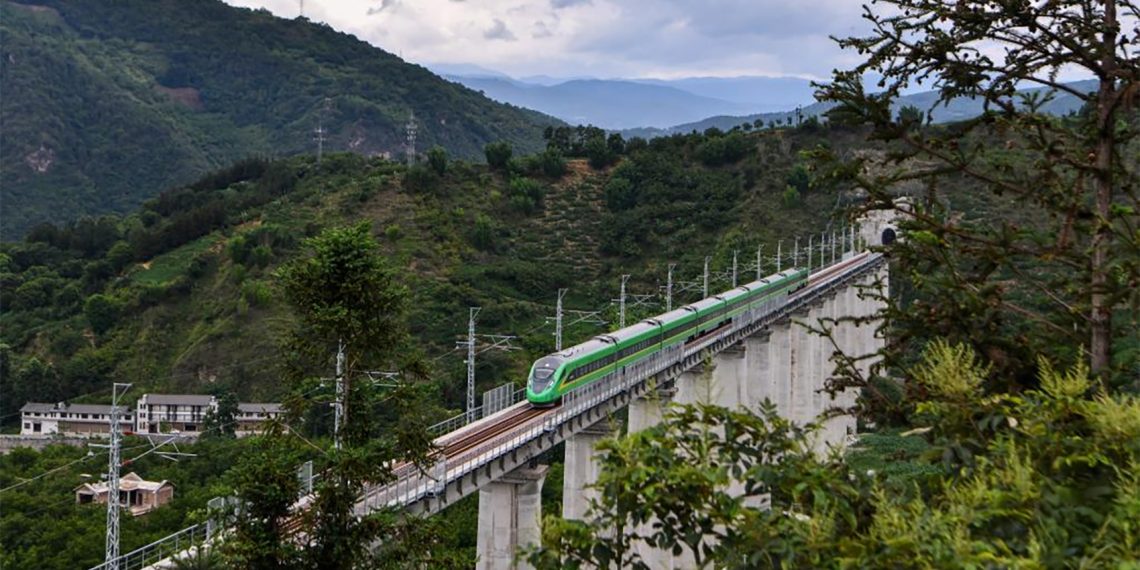
China Speeds Up Railway That Will Cut Swathe Through Myanmar
China is accelerating construction of a strategic railway in western Yunnan that is eventually supposed to connect to Myanmar’s planned Mandalay–Muse line.
The 330‑km Dali–Ruili Railway—described by Chinese engineers as the world’s most difficult railway to build—is entering its final and most technically demanding phase.
The new push is a show of big-power confidence, defying conflict and instability on the Myanmar side of the frontier that threaten to stall the project for years to come.
It goes as far as Ruili on the Myanmar border—and there it will stop for now, since the resistance Brotherhood Alliance now controls the Kyin San Kyawt Border Gate as well as the 105‑Mile Trade Zone in northern Shan State on the other side, dramatically shifting control of the border economy.
The railway is being built in two stages. The first, from Dali to Baoshan, opened in 2022 after 14 years of construction through some of China’s most treacherous terrain. Construction of the second half, from Baoshan to Ruili, began in 2015 and is expected to be completed in 2028.
Baoshan is western Yunnan’s second‑largest metropolitan area after Dali. It sits between the Myanmar border and the Lancang (Mekong) River, bordering Kachin State to the northwest and Shan State to the south. It used to be a major destination for travelers from Myanmar before the global pandemic.
Currently, engineers are tackling the project’s final obstacle: the 34.5‑km Gaoligong Mountain Tunnel, which will be the longest rail tunnel in Asia. It is halfway complete, but officials say recent technical breakthroughs will speed up progress.
Once finished, the line will halve travel time from Kunming to Ruili from nine hours to about 4.5 hours and anchor the China–Myanmar international railway corridor, one of Beijing’s most strategically important Belt and Road Initiative (BRI) routes.
An analyst of China-Myanmar relations said China is preparing to get ready on its side to link with the Muse–Mandalay railway.
“Once connected, Beijing will geopolitically benefit as the railway gives it a direct access to the Indian Ocean,” she said.
“It would also be symbolic for the Yunnan government as the railway could turn the landlocked province into China’s western economic hub.”
Riddled with uncertainty
During Chinese New Year celebrations in Yangon on Feb. 14, junta No. 2 Soe Win touted progress on Beijing‑backed megaprojects, claiming construction of the Muse–Mandalay railway was already underway. He framed it as the first step toward a Kyaukphyu–Kunming connection under the China–Myanmar Economic Corridor (CMEC).
The claim was swiftly challenged by observers, who noted that large swathes of the proposed route lie outside the junta’s control. Several key towns are held by ethnic armed groups, and the corridor has seen some of the fiercest fighting since the 2021 coup. This raises serious doubts about security, land acquisition, and whether the project is feasible at all.
The CMEC is envisaged as a 1,700‑km route from Kunming to Mandalay, then branching east to Yangon and west to the Kyaukphyu Special Economic Zone (SEZ) in Rakhine. Kyaukphyu already hosts the terminus of China’s twin oil and gas pipelines and is slated for a deep‑sea port that would give Beijing direct access to the Indian Ocean, bypassing the Strait of Malacca.
The proposed Mandalay–Muse railway, a 410‑km standard‑gauge electrified line, is designed for trains running at a fairly leisurely 160 km/h, but that would still cut the journey from Mandalay to the border to just three hours—down from eight by road. Muse remains Myanmar’s largest trading gateway with China, while Mandalay is central Myanmar’s commercial hub and second‑largest city.
The route would run from Mandalay through the military hub of Pyin Oo Lwin, Nawnghkio, Kyaukme, Hsipaw, Lashio, Nam Hpat Ka, Kutkai and Seni before reaching Muse. But the rebel Myanmar National Democratic Alliance Army (MNDAA) controls Hseni and most of Lashio outside the urban core, while another Brotherhood Alliance member, the Ta’ang National Liberation Army (TNLA) holds Kutkai.
The railway was first proposed in 2011 under the Thein Sein administration but shelved after strong public opposition in 2014. The route was intended to follow the path of the existing Sino‑Myanmar oil and gas pipelines.
Despite the suspension, China has continued building its own section of the route.
In 2018, China completed a feasibility study for the Muse–Mandalay railway, followed by an MoU between China Railway Eryuan Engineering Group and Myanma Railways to study the Mandalay–Kyaukphyu line—signed in January 2021, just one month before the military coup.
Economists warn that the Muse–Mandalay line alone, estimated to cost nearly US$9 billion, could saddle Myanmar with unsustainable debt at a time when the economy is already collapsing.
Strategic corridor
But for China, the stakes are enormous. A completed Kunming–Kyaukphyu corridor would give Beijing a direct overland route to the Indian Ocean, easing its dependence on contested maritime chokepoints and accelerating development in landlocked Yunnan Province.
For Myanmar, the picture is murkier. While better connectivity could boost trade, the financial, political and security risks are mounting.
Whether the line ever reaches Mandalay—or Kyaukphyu—will depend not on engineering or diplomacy, but on whether the country can resolve the intensifying political crisis.
Source: https://www.irrawaddy.com/news/myanmar-china-watch/china-speeds-up-railway-that-will-cut-swathe-through-myanmar.html
Google Translation:
จีนเร่งสร้างทางรถไฟที่จะตัดผ่านเมียนมาร์
รถไฟความเร็วสูงวิ่งข้ามสะพานบนเส้นทางต้าหลี่-เป่าซาน ของทางรถไฟต้าหลี่-รุ่ยหลี่ ในมณฑลยูนนานทางตะวันตกเฉียงใต้ของจีน เมื่อวันที่ 19 กรกฎาคม 2565 / ซินหัว
จีนกำลังเร่งก่อสร้างทางรถไฟเชิงยุทธศาสตร์ในมณฑลยูนนานตะวันตก ซึ่งในที่สุดจะเชื่อมต่อกับเส้นทางมัณฑะเลย์-มูเซที่เมียนมาร์วางแผนไว้
ทางรถไฟต้าหลี่-รุ่ยหลี่ ระยะทาง 330 กิโลเมตร ซึ่งวิศวกรชาวจีนอธิบายว่าเป็นทางรถไฟที่สร้างยากที่สุดในโลก กำลังเข้าสู่ขั้นตอนสุดท้ายและมีความต้องการทางเทคนิคสูงที่สุด
การเร่งสร้างครั้งใหม่นี้เป็นการแสดงให้เห็นถึงความมั่นใจของมหาอำนาจ โดยไม่สนใจความขัดแย้งและความไม่มั่นคงทางฝั่งเมียนมาร์ที่คุกคามจะทำให้โครงการนี้หยุดชะงักไปอีกหลายปี
ทางรถไฟสายนี้ไปสิ้นสุดที่เมืองรุ่ยหลี่ ชายแดนพม่า—และจะหยุดอยู่แค่นั้นในตอนนี้ เนื่องจากกลุ่มพันธมิตรต่อต้านได้ควบคุมด่านชายแดนคยินซานจอต รวมถึงเขตการค้า 105 ไมล์ในรัฐฉานตอนเหนือฝั่งตรงข้ามแล้ว ซึ่งเป็นการเปลี่ยนแปลงการควบคุมเศรษฐกิจชายแดนอย่างมาก
ทางรถไฟสายนี้กำลังก่อสร้างเป็นสองช่วง ช่วงแรกจากต้าหลี่ไปยังเป่าซาน เปิดให้บริการในปี 2022 หลังจากการก่อสร้างนาน 14 ปี ผ่านภูมิประเทศที่อันตรายที่สุดแห่งหนึ่งของจีน การก่อสร้างช่วงที่สองจากเป่าซานไปยังรุ่ยหลี่เริ่มขึ้นในปี 2015 และคาดว่าจะแล้วเสร็จในปี 2028
เป่าซานเป็นเขตเมืองใหญ่อันดับสองของมณฑลยูนนานตะวันตก รองจากต้าหลี่ ตั้งอยู่ระหว่างชายแดนพม่าและแม่น้ำล้านช้าง (แม่น้ำโขง) ติดกับรัฐคะฉิ่นทางตะวันตกเฉียงเหนือและรัฐฉานทางใต้ เคยเป็นจุดหมายปลายทางสำคัญสำหรับนักเดินทางจากพม่าก่อนเกิดการระบาดใหญ่ทั่วโลก
ปัจจุบัน วิศวกรกำลังแก้ไขอุปสรรคสุดท้ายของโครงการ นั่นคืออุโมงค์ภูเขาเกาหลี่กง ความยาว 34.5 กิโลเมตร ซึ่งจะเป็นอุโมงค์รถไฟที่ยาวที่สุดในเอเชีย ขณะนี้สร้างเสร็จไปแล้วครึ่งหนึ่ง แต่เจ้าหน้าที่กล่าวว่าความก้าวหน้าทางเทคนิคเมื่อเร็วๆ นี้จะช่วยเร่งความคืบหน้า
เมื่อสร้างเสร็จแล้ว เส้นทางรถไฟนี้จะช่วยลดเวลาเดินทางจากคุนหมิงไปยังรุ่ยหลี่ จาก 9 ชั่วโมง เหลือประมาณ 4.5 ชั่วโมง และจะเป็นจุดเชื่อมต่อของระเบียงรถไฟระหว่างประเทศจีน-เมียนมาร์ ซึ่งเป็นหนึ่งในเส้นทางสำคัญทางยุทธศาสตร์ของปักกิ่งภายใต้โครงการริเริ่มหนึ่งแถบหนึ่งเส้นทาง (BRI)
นักวิเคราะห์ความสัมพันธ์จีน-เมียนมาร์กล่าวว่า จีนกำลังเตรียมพร้อมที่จะเชื่อมต่อกับทางรถไฟมูเซ-มัณฑะเลย์
“เมื่อเชื่อมต่อกันแล้ว ปักกิ่งจะได้รับประโยชน์ทางภูมิรัฐศาสตร์ เนื่องจากทางรถไฟจะทำให้เข้าถึงมหาสมุทรอินเดียได้โดยตรง” เธอกล่าว
“นอกจากนี้ยังจะเป็นสัญลักษณ์สำหรับรัฐบาลยูนนาน เนื่องจากทางรถไฟสามารถเปลี่ยนมณฑลที่ไม่มีทางออกสู่ทะเลแห่งนี้ให้กลายเป็นศูนย์กลางทางเศรษฐกิจทางตะวันตกของจีนได้”
เต็มไปด้วยความไม่แน่นอน
ระหว่างการเฉลิมฉลองตรุษจีนในย่างกุ้งเมื่อวันที่ 14 กุมภาพันธ์ โซ วิน ผู้นำคณะรัฐบาลทหารหมายเลข 2 ได้กล่าวถึงความคืบหน้าของโครงการขนาดใหญ่ที่ได้รับการสนับสนุนจากปักกิ่ง โดยอ้างว่าการก่อสร้างทางรถไฟสายมูเซ-มัณฑะเลย์ได้เริ่มขึ้นแล้ว เขาอธิบายว่าเป็นก้าวแรกสู่การเชื่อมต่อเมืองเจาะผิ่ว-คุนหมิงภายใต้ระเบียงเศรษฐกิจจีน-เมียนมาร์ (CMEC)
คำกล่าวอ้างดังกล่าวถูกโต้แย้งอย่างรวดเร็วโดยผู้สังเกตการณ์ ซึ่งตั้งข้อสังเกตว่าพื้นที่ส่วนใหญ่ของเส้นทางที่เสนออยู่นอกเหนือการควบคุมของคณะรัฐบาลทหาร เมืองสำคัญหลายแห่งถูกยึดครองโดยกลุ่มติดอาวุธชาติพันธุ์ และระเบียงเศรษฐกิจนี้ได้เห็นการสู้รบที่ดุเดือดที่สุดนับตั้งแต่การรัฐประหารปี 2021 สิ่งนี้ทำให้เกิดข้อสงสัยอย่างมากเกี่ยวกับความปลอดภัย การจัดหาที่ดิน และความเป็นไปได้ของโครงการ
โครงการ CMEC (Christian Medical Economic Exchange) ถูกวางแผนให้เป็นเส้นทางยาว 1,700 กิโลเมตร จากคุนหมิงไปยังมัณฑะเลย์ จากนั้นแยกไปทางตะวันออกสู่ย่างกุ้ง และไปทางตะวันตกสู่เขตเศรษฐกิจพิเศษเจาะผิ่ว (Kyaukphyu Special Economic Zone) ในรัฐยะไข่ เจาะผิ่วเป็นที่ตั้งสถานีปลายทางของท่อส่งน้ำมันและก๊าซคู่ของจีนอยู่แล้ว และมีแผนจะสร้างท่าเรือน้ำลึกที่จะทำให้ปักกิ่งสามารถเข้าถึงมหาสมุทรอินเดียได้โดยตรง โดยไม่ต้องผ่านช่องแคบมะละกา
ส่วนโครงการรถไฟมัณฑะเลย์-มูเซ (Muse) ที่เสนอมานั้น เป็นเส้นทางรถไฟรางมาตรฐานที่ใช้ระบบไฟฟ้า ยาว 410 กิโลเมตร ออกแบบมาสำหรับรถไฟที่วิ่งด้วยความเร็ว 160 กิโลเมตรต่อชั่วโมง ซึ่งจะช่วยลดเวลาเดินทางจากมัณฑะเลย์ไปยังชายแดนเหลือเพียงสามชั่วโมง จากเดิมแปดชั่วโมงโดยทางถนน มูเซยังคงเป็นประตูการค้าที่ใหญ่ที่สุดของเมียนมาร์กับจีน ในขณะที่มัณฑะเลย์เป็นศูนย์กลางการค้าของเมียนมาร์ตอนกลางและเป็นเมืองที่ใหญ่เป็นอันดับสอง
เส้นทางรถไฟสายนี้จะเริ่มต้นจากมัณฑะเลย์ ผ่านศูนย์กลางทางทหารอย่างปยินอูลวิน นองเกียว เจาะเม สิปาว ลาชิโอ นามฮปัตกา กุตไก และเสณี ก่อนจะถึงเมืองมูเซ แต่กลุ่มกบฏกองทัพพันธมิตรประชาธิปไตยแห่งชาติเมียนมาร์ (MNDAA) ควบคุมเมืองเสณีและพื้นที่ส่วนใหญ่ของลาชิโอ นอกเขตเมืองหลัก ขณะที่สมาชิกอีกกลุ่มหนึ่งของพันธมิตรภราดรภาพ คือ กองทัพปลดปล่อยแห่งชาติเตอาง (TNLA) ควบคุมเมืองกุตไก
โครงการรถไฟสายนี้ได้รับการเสนอครั้งแรกในปี 2554 ในสมัยรัฐบาลเต็งเส่ง แต่ถูกระงับไปหลังจากมีการต่อต้านอย่างรุนแรงจากประชาชนในปี 2557 เส้นทางนี้ตั้งใจจะใช้เส้นทางเดียวกับท่อส่งน้ำมันและก๊าซธรรมชาติระหว่างจีนและเมียนมาร์ที่มีอยู่แล้ว
ถึงแม้จะถูกระงับไป แต่จีนก็ยังคงดำเนินการก่อสร้างส่วนของเส้นทางของตนเองต่อไป
ในปี 2018 จีนได้ทำการศึกษาความเป็นไปได้สำหรับโครงการรถไฟสายมูเซ-มัณฑะเลย์เสร็จสิ้นลง ตามมาด้วยการลงนามบันทึกความเข้าใจระหว่าง China Railway Eryuan Engineering Group และ Myanma Railways เพื่อศึกษาเส้นทางรถไฟมัณฑะเลย์-เจาะผิ่ว ซึ่งลงนามในเดือนมกราคม 2021 เพียงหนึ่งเดือนก่อนการรัฐประหาร
นักเศรษฐศาสตร์เตือนว่า เฉพาะโครงการรถไฟสายมูเซ-มัณฑะเลย์เพียงโครงการเดียว ซึ่งคาดว่าจะใช้งบประมาณเกือบ 9 พันล้านดอลลาร์สหรัฐ อาจก่อให้เกิดภาระมหาศาล