 Older male workers in micro-sized enterprises face highest odds of fatal falls from heights in Thailand
THIS NEWS ARTICLE KINDLY SPONSORED BY FALLPROTEC, A WORLD-RENOWNED NAME IN THE DESIGN AND MANUFACTURE OF PREMIUM FALL PROTECTION SYSTEMS AND HEIGHT ACCESS SOLUTIONS
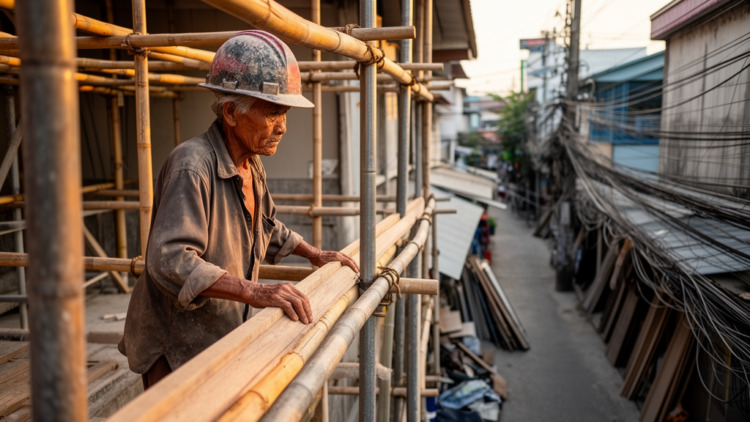
Falls from heights remain the second leading cause of occupational death among Thai workers, and a new national analysis of more than 17,000 compensation claims has now mapped out exactly who is dying, where they work, and how their injuries unfold. The retrospective cross-sectional study, published in Discover Public Health, examined 17,046 occupational falls from heights reported to Thailand’s Workmen’s Compensation Fund between 2016 and 2018, of which 293 were fatal. Its central finding is stark: the highest adjusted odds of a fatal outcome clustered among older male workers, in micro-sized enterprises with ten or fewer employees, and in falls involving construction-related sources of injury.
The research team, led by Preedee Banyatrachata and colleagues, drew on case-level records from the Fund, which operates under the Social Security Office of the Ministry of Labour and serves as the principal national surveillance source for work-related injuries in Thailand. After extracting 17,062 records and removing 16 cases with demonstrable coding errors, the final analytical sample retained 99.91 percent of the extracted falls. The researchers used a five-category descriptive severity outcome — death, disability, organ loss, sick leave of more than three days, and sick leave of three days or less — alongside a binary fatal-versus-non-fatal outcome for their multivariate logistic regression model.
The raw numbers reveal a heavily skewed gender distribution. Male workers accounted for 13,823 of the 17,046 cases, a male-to-female ratio of 4.3 to 1 overall, rising to 25.6 to 1 among fatalities, with 282 of the 293 deaths involving men. After adjustment for other covariates, male workers still had 2.45 times the odds of a fatal fall compared with female workers (95% CI 1.24–4.84). The authors note that Thai labour law prohibits employers from requiring female employees to work on scaffolds at heights of ten metres or more, which may reduce women’s exposure to the highest-risk tasks, while men’s overrepresentation in construction, roofing, and electrical work plausibly drives their elevated risk.
Age showed a striking double pattern. The frequency of falls followed a bell-shaped distribution, peaking among workers aged 35 to 44, who accounted for 30.7 percent of cases, followed by those aged 25 to 34 and 45 to 54. Yet the odds of dying once a fall occurred climbed steadily with age. Compared with workers aged 18 to 24, the adjusted odds ratio was 1.90 for ages 35 to 44, 2.62 for 45 to 54, 3.10 for 55 to 64, and 6.87 for those aged 65 and over (95% CI 1.56–30.28). Workers aged 55 and above together contributed only 6.6 percent of falls but 13.3 percent of fatalities. The authors point to age-related declines in balance, strength, and vision, together with reduced physiological resilience after trauma, as plausible mechanisms reported in the broader literature.
Company size emerged as one of the most consequential organizational factors. Micro-sized enterprises, defined operationally as having ten or fewer employees, accounted for 13.3 percent of all falls but 28.0 percent of fatalities and 60 percent of disabilities. Although the absolute number of deaths was similar between micro-sized and large enterprises — 82 versus 84 — the fatality rate was roughly three times higher in the micro category, at 3.6 percent versus 1.1 percent. In the adjusted model, micro-sized enterprises carried 1.75 times the odds of fatal falls compared with large enterprises of more than 200 employees (95% CI 1.17–2.62), while small and medium enterprises did not differ significantly from the reference. The authors situate this within international evidence, including United States data showing that 55 percent of fatal construction falls between 2008 and 2010 occurred in establishments with one to ten employees, and suggest that shared-resource safety services, such as pooled safety officers or sector-level training programs, warrant further evaluation as policy responses.
Construction-related sources dominated the injury landscape, accounting for 70.5 percent of all falls and 75.4 percent of fatalities. In the adjusted model, construction-related sources — defined as fixed environmental elements such as roofs, floor openings, permanent platforms, building ledges, and incomplete structural frameworks — carried approximately ten-fold higher adjusted odds of fatal outcome compared with object sources such as ladders, mobile scaffolding, and hand tools (aOR 10.26, 95% CI 1.26–83.65). The authors urge caution here: the object reference category contained only a single fatal case, making these estimates vulnerable to sparse-data instability. Machine sources showed an aOR of 8.63 and vehicle sources an aOR of 6.57, neither reaching conventional statistical significance at the 0.05 level.
The injury patterns among fatal cases were dominated by high-impact trauma. Fatal falls primarily involved multiple body parts, at 62.8 percent of deaths, or head and neck injuries, at 30.7 percent. In the adjusted model, head and neck injuries carried the highest odds of any body-part category, at 27.53 times those of back and spine injuries (95% CI 10.18–74.46), a wide interval the authors attribute to the small number of fatalities in the reference category. Internal organ injuries (aOR 8.01) and multiple body-part injuries (aOR 5.58) were also significantly associated with death. Among nature-of-injury categories, multiple organ failure showed the most extreme estimate — an aOR of 168.12 (95% CI 37.28–880.43) — but this rests on just nine cases, seven of which were fatal, and the authors explicitly caution that the estimate is better understood as evidence of a near-uniformly fatal injury pattern than as a stable quantitative effect size. Multiple traumas (aOR 26.50) and internal organ injury (aOR 2.73) were also strongly associated with fatal outcomes, while strains and wounds were associated with markedly lower odds.
Not every descriptive pattern survived adjustment. Falls were distributed fairly evenly across Thailand’s three meteorological seasons, and although the rainy season accounted for the highest proportion of fatalities at 42.7 percent, the adjusted odds ratios for summer and rainy seasons were not statistically significant. Regional findings were presented descriptively only, because regional information in the source dataset was available solely as aggregate counts that could not be linked to individual case records. Bangkok and its vicinities accounted for 57.2 percent of cases, while the Northeastern region contributed the smallest share at 6.3 percent yet showed higher proportions of severe outcomes within its total, including 40 percent of disabilities and 15.4 percent of fatalities. The authors note this could reflect either genuine regional differences in risk or systematic underreporting in peripheral provinces, a question the current data cannot resolve.
The model itself showed strong statistical performance, with an area under the receiver operating characteristic curve of 0.981 (95% CI 0.976–0.985), a Hosmer–Lemeshow goodness-of-fit p-value of 0.388, and a mean variance inflation factor of 2.02 indicating no substantial collinearity. A sensitivity analysis excluding the sparsest category, multiple organ failure, preserved the direction and statistical significance of all remaining estimates. The authors also acknowledge that formal interaction testing was deliberately not undertaken, since only 293 fatal events distributed across multiple covariate strata would have left such testing underpowered.
Several limitations frame the findings. Data-access constraints restricted the study period to 2016 through 2018, because at the time the research was initiated in 2020 that was the most recent fully validated case-level dataset available under the approved data transfer agreement. The Fund’s agency-of-injury coding is not optimized for falls-specific analysis, and more specialized classifications covering agents such as scaffolds and ladders, or surfaces such as platforms and walkways, were not available. Underreporting, particularly in peripheral provinces and among micro-sized enterprises, may also affect the observed distributions. Even so, the authors argue the study provides the first adjusted, Thai-specific estimates of these associations, and that the findings support targeted safety training for older workers, shared-resource safety services for micro-sized enterprises, and reinforced enforcement of existing fall-protection requirements under Thailand’s Occupational Safety, Health and Environment Act in construction settings.
Subject of Research: Risk factors for fatal occupational falls from heights among Thai workers, 2016–2018
Article Title: Prevalence and risk factors of occupational falls from heights in Thailand during 2016–2018
Article References: Banyatrachata, P., Kongtip, P., Nankongnab, N., Kitidumrongsuk, P., & Kongtawelert, A. (2026). Prevalence and risk factors of occupational falls from heights in Thailand during 2016–2018. Discover Public Health, 23(1), Article 1723. https://doi.org/10.1186/s12982-026-03168-3
Image Credits: AI Generated
DOI: 10.1186/s12982-026-03168-3
Keywords: occupational falls from heights, Thailand, Workmen’s Compensation Fund, fatal workplace injuries, construction safety, micro-sized enterprises, worker age, logistic regression, injury severity, occupational health, fall prevention, compensation data
News Source: Ophelia Keating. (October 29, 2026). Older male workers in micro-sized enterprises face highest odds of fatal falls from heights in Thailand. Scienmag.
Source: https://bioengineer.org/older-male-workers-in-micro-sized-enterprises-face-highest-odds-of-fatal-falls-from-heights-in-thailand/
Google Translation:
[We apologise if any of the translation is incorrect: google Translation occasionally gets it wrong]
แรงงานชายที่มีอายุมากในสถานประกอบการขนาดจิ๋วมีความเสี่ยงสูงสุดที่จะเสียชีวิตจากการตกจากที่สูงในประเทศไทย
บทความข่าวนี้ได้รับการสนับสนุนโดย FALLPROTEC แบรนด์ระดับโลกที่มีชื่อเสียงด้านการออกแบบและผลิตระบบป้องกันการตกจากที่สูงและโซลูชันสำหรับการเข้าถึงพื้นที่สูงที่มีคุณภาพระดับพรีเมียม
การตกจากที่สูงยังคงเป็นสาเหตุอันดับสองของการเสียชีวิตจากการทำงานในกลุ่มแรงงานไทย ผลการวิเคราะห์ระดับชาติครั้งใหม่ที่ศึกษาจากข้อมูลการเรียกร้องค่าทดแทนกว่า 17,000 กรณี ได้เผยให้เห็นอย่างชัดเจนว่าผู้ที่เสียชีวิตคือใคร ทำงานที่ไหน และเหตุการณ์ที่นำไปสู่การบาดเจ็บเกิดขึ้นได้อย่างไร งานวิจัยเชิงสำรวจย้อนหลัง (retrospective cross-sectional study) ซึ่งตีพิมพ์ในวารสาร Discover Public Health ได้ตรวจสอบกรณีการตกจากที่สูงระหว่างการทำงานจำนวน 17,046 กรณี ที่มีการรายงานต่อกองทุนเงินทดแทนของประเทศไทยในช่วงปี พ.ศ. 2559 ถึง 2561 โดยในจำนวนนี้มีผู้เสียชีวิต 293 ราย ผลการศึกษาที่สำคัญพบว่า โอกาสที่จะเกิดเหตุการณ์ถึงแก่ชีวิตนั้นสูงที่สุดในกลุ่มแรงงานชายที่มีอายุมาก ซึ่งทำงานในสถานประกอบการขนาดจิ๋ว (มีลูกจ้างไม่เกิน 10 คน) และประสบอุบัติเหตุจากการตกที่เกี่ยวข้องกับงานก่อสร้าง
คณะผู้วิจัยนำโดย ปรีดี บัญญัติราชตา และคณะ ได้ใช้ข้อมูลรายกรณีจากกองทุนเงินทดแทน ซึ่งอยู่ภายใต้สำนักงานประกันสังคม กระทรวงแรงงาน และถือเป็นแหล่งข้อมูลหลักระดับชาติในการเฝ้าระวังการบาดเจ็บจากการทำงานในประเทศไทย โดยหลังจากคัดแยกข้อมูลจำนวน 17,062 กรณี และตัดข้อมูลที่มีความผิดพลาดในการบันทึกรหัสออกไป 16 กรณี ข้อมูลที่นำมาวิเคราะห์จริงจึงครอบคลุมถึง 99.91 เปอร์เซ็นต์ของกรณีการตกจากที่สูงทั้งหมดที่รวบรวมมาได้ คณะผู้วิจัยได้จำแนกระดับความรุนแรงของเหตุการณ์ออกเป็น 5 ประเภท ได้แก่ การเสียชีวิต ความพิการ การสูญเสียอวัยวะ การลาป่วยนานกว่า 3 วัน และการลาป่วย 3 วันหรือน้อยกว่า พร้อมทั้งใช้ตัวแปรแบบแบ่งกลุ่ม (binary outcome) คือ “เสียชีวิต” กับ “ไม่เสียชีวิต” ในการสร้างแบบจำลองทางสถิติแบบโลจิสติกถดถอยพหุตัวแปร (multivariate logistic regression model)
ข้อมูลดิบแสดงให้เห็นถึงความแตกต่างระหว่างเพศอย่างชัดเจน โดยในจำนวนเหตุการณ์ทั้งหมด 17,046 กรณี เป็นแรงงานชายถึง 13,823 กรณี คิดเป็นอัตราส่วนชายต่อหญิงโดยรวมอยู่ที่ 4.3 ต่อ 1 และเมื่อพิจารณาเฉพาะกรณีที่เสียชีวิต อัตราส่วนดังกล่าวจะพุ่งสูงขึ้นเป็น 25.6 ต่อ 1 โดยมีผู้เสียชีวิตที่เป็นชายจำนวน 282 ราย จากจำนวนผู้เสียชีวิตทั้งหมด 293 ราย หลังจากปรับตัวแปรอื่น ๆ แล้ว พบว่าคนงานชายมีโอกาสประสบอุบัติเหตุตกจากที่สูงจนเสียชีวิตสูงกว่าคนงานหญิงถึง 2.45 เท่า (ช่วงความเชื่อมั่น 95% อยู่ที่ 1.24–4.84) ผู้เขียนระบุว่ากฎหมายแรงงานไทยห้ามมิให้นายจ้างกำหนดให้ลูกจ้างหญิงทำงานบนนั่งร้านที่ความสูงตั้งแต่ 10 เมตรขึ้นไป ซึ่งอาจช่วยลดโอกาสที่ผู้หญิงจะต้องเผชิญกับงานที่มีความเสี่ยงสูงสุด ในขณะที่การที่ผู้ชายทำงานในภาคการก่อสร้าง งานมุงหลังคา และงานระบบไฟฟ้าเป็นสัดส่วนที่สูงกว่า อาจเป็นสาเหตุที่ทำให้ผู้ชายมีความเสี่ยงสูงกว่า
ในด้านอายุ พบรูปแบบที่น่าสนใจสองประการ กล่าวคือ ความถี่ของการตกจากที่สูงมีลักษณะการกระจายตัวเป็นรูปทรงระฆัง โดยจุดสูงสุดอยู่ที่กลุ่มคนงานอายุ 35–44 ปี ซึ่งคิดเป็น 30.7% ของกรณีทั้งหมด รองลงมาคือกลุ่มอายุ 25–34 ปี และ 45–54 ปี อย่างไรก็ตาม โอกาสที่จะเสียชีวิตเมื่อเกิดการตกจากที่สูงกลับเพิ่มสูงขึ้นเรื่อย ๆ ตามอายุที่มากขึ้น โดยเมื่อเปรียบเทียบกับคนงานอายุ 18–24 ปี ค่าอัตราส่วนโอกาส (Adjusted Odds Ratio) อยู่ที่ 1.90 สำหรับกลุ่มอายุ 35–44 ปี, 2.62 สำหรับกลุ่มอายุ 45–54 ปี, 3.10 สำหรับกลุ่มอายุ 55–64 ปี และสูงถึง 6.87 สำหรับกลุ่มอายุ 65 ปีขึ้นไป (ช่วงความเชื่อมั่น 95% อยู่ที่ 1.56–30.28) ทั้งนี้ คนงานอายุ 55 ปีขึ้นไปแม้จะมีสัดส่วนการตกจากที่สูงรวมกันเพียง 6.6% แต่กลับคิดเป็น 13.3% ของจำนวนผู้เสียชีวิตทั้งหมด ผู้เขียนชี้ให้เห็นว่าปัจจัยด้านอายุที่ส่งผลต่อการเสื่อมถอยของสมรรถภาพร่างกาย ทั้งในด้านการทรงตัว ความแข็งแรง และการมองเห็น รวมถึงความสามารถในการฟื้นตัวทางสรีรวิทยาที่ลดลงหลังจากได้รับบาดเจ็บ อาจเป็นกลไกสำคัญที่อธิบายปรากฏการณ์นี้ ซึ่งสอดคล้องกับข้อมูลที่มีระบุไว้ในงานวิจัยอื่น ๆ
ขนาดของสถานประกอบการถือเป็นหนึ่งในปัจจัยเชิงองค์กรที่มีผลกระทบมากที่สุด โดยสถานประกอบการขนาดจิ๋ว (นิยามคือสถานประกอบการที่มีลูกจ้างตั้งแต่ 10 คนลงไป) แม้จะมีสัดส่วนการเกิดอุบัติเหตุตกจากที่สูงอยู่ที่ 13.3% ของจำนวนเหตุการณ์ทั้งหมด แต่กลับมีสัดส่วนผู้เสียชีวิตสูงถึง 28.0% และมีสัดส่วนผู้ได้รับความพิการสูงถึง 60% แม้จำนวนผู้เสียชีวิตที่เป็นตัวเลขสัมบูรณ์ระหว่างสถานประกอบการขนาดจิ๋วกับสถานประกอบการขนาดใหญ่จะใกล้เคียงกัน คือ 82 ราย และ 84 ราย ตามลำดับ แต่อัตราการเสียชีวิตในกลุ่มสถานประกอบการขนาดจิ๋วกลับสูงกว่าประมาณ 3 เท่า โดยอยู่ที่ 3.6% เทียบกับ 1.1% ในกลุ่มสถานประกอบการขนาดใหญ่ ในแบบจำลองที่ปรับตัวแปรแล้ว พบว่าวิสาหกิจขนาดจิ๋ว (micro-sized enterprises) มีโอกาสเกิดการพลัดตกจนถึงแก่ชีวิตสูงกว่าวิสาหกิจขนาดใหญ่ที่มีพนักงานมากกว่า 200 คนถึง 1.75 เท่า (ช่วงความเชื่อมั่น 95% อยู่ที่ 1.17–2.62) ในขณะที่วิสาหกิจขนาดกลางและขนาดย่อมไม่มีความแตกต่างอย่างมีนัยสำคัญเมื่อเทียบกับกลุ่มอ้างอิง ผู้เขียนได้เชื่อมโยงผลลัพธ์นี้เข้ากับหลักฐานเชิงประจักษ์ในระดับสากล ซึ่งรวมถึงข้อมูลจากสหรัฐอเมริกาที่ระบุว่า ร้อยละ 55 ของเหตุการณ์พลัดตกจนถึงแก่ชีวิตในภาคการก่อสร้างระหว่างปี ค.ศ. 2008 ถึง 2010 เกิดขึ้นในสถานประกอบการที่มีพนักงานตั้งแต่ 1 ถึง 10 คน พร้อมทั้งเสนอแนะว่าแนวทางเชิงนโยบาย เช่น การใช้บริการด้านความปลอดภัยร่วมกัน (เช่น การแบ่งปันเจ้าหน้าที่ความปลอดภัย หรือการจัดโปรแกรมฝึกอบรมในระดับภาคธุรกิจ) เป็นสิ่งที่ควรค่าแก่การประเมินเพิ่มเติม
สาเหตุที่เกี่ยวข้องกับการก่อสร้างเป็นปัจจัยหลักของการบาดเจ็บ โดยคิดเป็นร้อยละ 70.5 ของการตกจากที่สูงทั้งหมด และร้อยละ 75.4 ของกรณีที่เสียชีวิต ในแบบจำลองที่ปรับค่าตัวแปรแล้ว (adjusted model) พบว่าสาเหตุที่เกี่ยวข้องกับการก่อสร้าง ซึ่งนิยามรวมถึงองค์ประกอบสภาพแวดล้อมที่ยึดติดอยู่กับที่ เช่น หลังคา ช่องเปิดบนพื้น แพลตฟอร์มถาวร ขอบอาคาร และโครงสร้างอาคารที่ยังสร้างไม่เสร็จ มีโอกาสเสี่ยงต่อการเสียชีวิตสูงกว่าสาเหตุที่เกิดจากวัตถุเคลื่อนย้ายได้ (เช่น บันได นั่งร้านแบบเคลื่อนที่ และเครื่องมือช่าง) ถึงประมาณ 10 เท่า (aOR 10.26; 95% CI 1.26–83.65) ทั้งนี้ ผู้เขียนได้ตั้งข้อสังเกตด้วยความระมัดระวังว่า เนื่องจากกลุ่มอ้างอิงที่เป็น “วัตถุ” มีกรณีเสียชีวิตเพียงกรณีเดียว ค่าประมาณดังกล่าวจึงอาจมีความไม่เสถียรเนื่องจากข้อมูลมีจำนวนน้อย สำหรับสาเหตุที่เกี่ยวข้องกับเครื่องจักรและยานพาหนะนั้น พบค่า aOR อยู่ที่ 8.63 และ 6.57 ตามลำดับ ซึ่งทั้งสองค่านี้ไม่มีนัยสำคัญทางสถิติที่ระดับ 0.05
รูปแบบการบาดเจ็บในกรณีที่เสียชีวิตส่วนใหญ่เป็นการบาดเจ็บจากแรงกระแทกสูง โดยการตกจากที่สูงที่นำไปสู่การเสียชีวิตนั้น มักเกี่ยวข้องกับการบาดเจ็บหลายส่วนของร่างกาย (ร้อยละ 62.8 ของผู้เสียชีวิต) หรือการบาดเจ็บที่ศีรษะและลำคอ (ร้อยละ 30.7) ในแบบจำลองที่ปรับค่าตัวแปรแล้ว การบาดเจ็บที่ศีรษะและลำคอมีโอกาสเสี่ยงต่อการเสียชีวิตสูงที่สุดเมื่อเทียบกับส่วนอื่นๆ ของร่างกาย โดยสูงกว่าการบาดเจ็บที่หลังและกระดูกสันหลังถึง 27.53 เท่า (95% CI 10.18–74.46) ซึ่งช่วงความเชื่อมั่นที่กว้างนี้เป็นผลมาจากจำนวนผู้เสียชีวิตในกลุ่มอ้างอิงที่มีน้อย นอกจากนี้ การบาดเจ็บที่อวัยวะภายใน (aOR 8.01) และการบาดเจ็บหลายส่วนของร่างกาย (aOR 5.58) ยังมีความสัมพันธ์อย่างมีนัยสำคัญกับการเสียชีวิตอีกด้วย สำหรับประเภทของการบาดเจ็บนั้น พบว่าภาวะอวัยวะล้มเหลวหลายระบบ (multiple organ failure) มีค่าประมาณการที่สูงที่สุด คือ aOR 168.12 (95% CI 37.28–880.43) อย่างไรก็ตาม ค่านี้คำนวณจากกรณีศึกษาเพียง 9 ราย ซึ่งในจำนวนนี้มีผู้เสียชีวิตถึง 7 ราย ผู้เขียนจึงย้ำเตือนว่าค่าประมาณนี้ควรตีความว่าเป็นหลักฐานที่บ่งชี้ถึงรูปแบบการบาดเจ็บที่เกือบจะนำไปสู่การเสียชีวิตเสมอ มากกว่าที่จะมองว่าเป็นค่าขนาดอิทธิพลเชิงปริมาณที่มั่นคง การบาดเจ็บหลายตำแหน่ง (aOR 26.50) และการบาดเจ็บต่ออวัยวะภายใน (aOR 2.73) มีความสัมพันธ์อย่างมากกับผลลัพธ์ที่นำไปสู่การเสียชีวิต ในขณะที่อาการกล้ามเนื้อตึงหรือบาดเจ็บ (strains) และบาดแผลต่าง ๆ มีความสัมพันธ์กับโอกาสเกิดเหตุการณ์ดังกล่าวในระดับที่ต่ำกว่าอย่างเห็นได้ชัด
รูปแบบเชิงพรรณนาบางประการไม่มีนัยสำคัญทางสถิติหลังจากทำการปรับตัวแปรแล้ว เหตุการณ์การพลัดตกหกล้มกระจายตัวค่อนข้างสม่ำเสมอในทั้งสามฤดูกาลของประเทศไทย แม้ว่าฤดูฝนจะมีสัดส่วนการเสียชีวิตสูงที่สุดคือ 42.7 เปอร์เซ็นต์ แต่ค่าอัตราส่วนโอกาส (odds ratio) ที่ปรับแล้วสำหรับฤดูร้อนและฤดูฝนกลับไม่มีนัยสำคัญทางสถิติ สำหรับข้อมูลรายภูมิภาคนั้นนำเสนอในเชิงพรรณนาเท่านั้น เนื่องจากข้อมูลในชุดข้อมูลต้นทางระบุไว้เพียงจำนวนรวมรายภูมิภาค ซึ่งไม่สามารถเชื่อมโยงกับบันทึกข้อมูลรายกรณีได้ โดยกรุงเทพมหานครและปริมณฑลมีสัดส่วนเหตุการณ์สูงถึง 57.2 เปอร์เซ็นต์ ในขณะที่ภาคตะวันออกเฉียงเหนือมีสัดส่วนน้อยที่สุดคือ 6.3 เปอร์เซ็นต์ แต่กลับพบสัดส่วนของผลลัพธ์ที่รุนแรงสูงกว่าเมื่อเทียบกับจำนวนเหตุการณ์ทั้งหมดในภูมิภาคนั้น โดยมีกรณีที่นำไปสู่ความพิการ 40 เปอร์เซ็นต์ และการเสียชีวิต 15.4 เปอร์เซ็นต์ ผู้เขียนตั้งข้อสังเกตว่าสิ่งนี้อาจสะท้อนถึงความแตกต่างของความเสี่ยงในแต่ละภูมิภาค หรืออาจเกิดจากการรายงานข้อมูลที่ไม่ครบถ้วนในจังหวัดห่างไกล ซึ่งข้อมูลที่มีอยู่ในปัจจุบันยังไม่สามารถหาคำตอบที่แน่ชัดในประเด็นนี้ได้
แบบจำลองที่ใช้มีประสิทธิภาพทางสถิติอยู่ในระดับสูง โดยมีค่าพื้นที่ใต้เส้นโค้ง ROC (Area Under the ROC Curve) เท่ากับ 0.981 (ช่วงความเชื่อมั่น 95% อยู่ที่ 0.976–0.985) ค่า p-value จากการทดสอบความเหมาะสมของแบบจำลอง (Hosmer–Lemeshow goodness-of-fit test) เท่ากับ 0.388 และค่าเฉลี่ยของปัจจัยการขยายความแปรปรวน (Mean Variance Inflation Factor – VIF) เท่ากับ 2.02 ซึ่งบ่งชี้ว่าไม่มีปัญหาความสัมพันธ์กันเองระหว่างตัวแปรอิสระ (collinearity) ในระดับที่มีนัยสำคัญ นอกจากนี้ การวิเคราะห์ความไว (sensitivity analysis) โดยตัดกลุ่มที่มีข้อมูลน้อยที่สุดออกไป คือกลุ่มที่มีภาวะอวัยวะล้มเหลวหลายระบบ (multiple organ failure) พบว่าทิศทางและนัยสำคัญทางสถิติของค่าประมาณการที่เหลือยังคงเดิม ทั้งนี้ ผู้เขียนระบุว่าไม่ได้ทำการทดสอบปฏิสัมพันธ์ระหว่างตัวแปร (interaction testing) เนื่องจากจำนวนเหตุการณ์การเสียชีวิตที่มีเพียง 293 กรณี เมื่อกระจายไปยังกลุ่มย่อยของตัวแปรต่าง ๆ แล้ว จะทำให้การทดสอบดังกล่าวขาดอำนาจทางสถิติ (underpowered) เพียงพอที่จะให้ผลลัพธ์ที่น่าเชื่อถือ
ข้อจำกัดบางประการส่งผลต่อการตีความผลการศึกษา โดยข้อจำกัดในการเข้าถึงข้อมูลทำให้ช่วงเวลาที่ศึกษาครอบคลุมเพียงปี ค.ศ. 2016 ถึง 2018 เท่านั้น เนื่องจากในช่วงเวลาที่เริ่มการวิจัยในปี ค.ศ. 2020 ข้อมูลชุดนี้เป็นชุดข้อมูลรายกรณีที่ผ่านการตรวจสอบความถูกต้องอย่างสมบูรณ์ล่าสุดเท่าที่จะสามารถเข้าถึงได้ภายใต้ข้อตกลงการถ่ายโอนข้อมูลที่ได้รับอนุมัติแล้ว ระบบการจัดหมวดหมู่สาเหตุการบาดเจ็บของกองทุนฯ ยังไม่มีประสิทธิภาพเพียงพอสำหรับการวิเคราะห์กรณีการตกจากที่สูงโดยเฉพาะ อีกทั้งยังขาดการจำแนกประเภทที่ละเอียดกว่านี้ ซึ่งควรครอบคลุมถึงอุปกรณ์หรือสิ่งของที่เป็นต้นเหตุ (เช่น นั่งร้านและบันได) หรือพื้นผิวต่าง ๆ (เช่น แท่นยืนและทางเดิน) นอกจากนี้ ปัญหาการรายงานข้อมูลไม่ครบถ้วน โดยเฉพาะในจังหวัดห่างไกลและในกลุ่มวิสาหกิจขนาดจิ๋ว อาจส่งผลต่อการกระจายตัวของข้อมูลที่ปรากฏ อย่างไรก็ตาม คณะผู้วิจัยชี้ให้เห็นว่าการศึกษานี้ถือเป็นครั้งแรกที่มีการประมาณค่าความสัมพันธ์ดังกล่าวโดยมีการปรับข้อมูลให้เหมาะสมกับบริบทของประเทศไทย ผลการศึกษานี้ยังสนับสนุนให้มีการจัดอบรมด้านความปลอดภัยที่มุ่งเน้นกลุ่มแรงงานสูงอายุ การจัดหาบริการด้านความปลอดภัยแบบใช้ทรัพยากรร่วมกันสำหรับวิสาหกิจขนาดจิ๋ว รวมถึงการบังคับใช้กฎหมายที่เข้มงวดขึ้นเกี่ยวกับมาตรการป้องกันการตกจากที่สูง ตามที่ระบุไว้ในพระราชบัญญัติความปลอดภัย อาชีวอนามัย และสภาพแวดล้อมในการทำงานของประเทศไทย สำหรับภาคการก่อสร้าง
หัวข้อการวิจัย: ปัจจัยเสี่ยงต่อการเสียชีวิตจากการตกจากที่สูงในการทำงานของแรงงานไทย ช่วงปี พ.ศ. 2559–2561
ชื่อบทความ: ความชุกและปัจจัยเสี่ยงของการตกจากที่สูงในการทำงานในประเทศไทย ช่วงปี พ.ศ. 2559–2561