Waste into wealth: Thailand’s regenerative path
Article by Chana Poomee, Honorary President of the Thai Cement Manufacturers Association, President of the Asean Federation of Cement Manufacturers, and a Board Member of the Global Cement and Concrete Association. His contributions reinforce national policy objectives while enhancing Thailand’s industrial competitiveness.
THIS NEWS ARTICLE KINDLY SPONSORED BY FALLPROTEC, A WORLD-RENOWNED NAME IN THE DESIGN AND MANUFACTURE OF PREMIUM FALL PROTECTION SYSTEMS AND HEIGHT ACCESS SOLUTIONS
Waste is often seen as the inevitable by-product of economic growth. In reality, it may become one of the most valuable resources economies possess.
Thailand generates more than 27 million tonnes of municipal solid waste each year, according to data from the Pollution Control Department (PCD), and more than half is either improperly managed or left to accumulate in expanding landfills. What appears to be an environmental problem is increasingly becoming an economic one.
Yet this growing waste mountain may also represent one of Thailand’s greatest untapped opportunities.
In the emerging global economy, competitive advantage will not belong to countries that merely talk about sustainability. It will belong to those that build the infrastructure to make it work. Waste management is no longer simply an environmental service. It is becoming a strategic industrial capability.
To seize this opportunity, Thailand must move beyond conventional recycling programmes and adopt a regenerative model — one that extracts value from every waste stream and returns it to productive use.
A truly regenerative model does not depend on goodwill or environmental awareness alone. It requires coordination across three interconnected forces.
The first force is business. Every category of waste has value if properly separated and processed. Organic waste can be converted into biogas and organic fertiliser. Clean plastics, metals and paper can re-enter manufacturing supply chains. Even contaminated plastics, textiles and other materials traditionally destined for landfills can be transformed into Refuse-Derived Fuel (RDF). Instead of paying to dispose of waste, municipalities can generate revenue, with estimates suggesting net gains of over 3,500 baht per tonne when systems are efficiently integrated.
The second force is operational. Waste management today is an advanced industrial activity rather than a basic public utility. Modern mechanical-biological treatment facilities combine automated sorting technologies with skilled human oversight to maximise recovery rates. Integrated renewable energy systems can further reduce operational costs and carbon emissions, turning treatment plants into low-carbon industrial assets.
The third force is financial. A practical model is one based on Public-Private-People Partnerships. Governments invest in and retain ownership of essential infrastructure, while private operators bring technical expertise and operational efficiency. Such arrangements lower investment barriers, improve service quality and generate long-term savings by reducing dependence on landfills.
The model is not theoretical. Around the world, it is already delivering results. In Mexico City, the Gustavo A. Madero sorting facility diverts around 1,200 tonnes of waste each day from landfills and converts it into alternative fuels for cement production.
Thailand is beginning to demonstrate similar potential. Through the Saraburi Sandbox, the country’s first low-carbon city initiative, advanced waste sorting and recycling systems are being developed to transform municipal waste into industrial raw materials and high-calorific RDF. At the same time, co-processing by the cement industry has significantly reduced dependence on imported fossil fuels, saving the country billions of baht in energy costs.
Waste is also becoming a matter of economic security. In an era of volatile commodity prices and fragile global supply chains, countries can no longer afford to ignore resources already sitting within their own borders. Municipal waste contains energy, materials and economic value that would otherwise need to be imported at significant cost. Every tonne recovered domestically is a tonne less imported of materials and energy to produce it, and that reduces our dependence on external markets.
Around the world, the circular economy is rapidly evolving from an environmental agenda into an industrial strategy. Countries are competing to secure secondary raw materials, build domestic recycling capacity and create low-carbon manufacturing ecosystems. The question is no longer whether waste should be managed better, but which economies will capture the value embedded within it.
A regenerative economy begins with people — but it is accelerated by technology. Waste separation must start at the source, requiring schools and communities to see waste not as rubbish but as a resource. Today, AI and digital platforms can reinforce this shift by enabling real-time tracking of materials, improving sorting accuracy, and connecting waste generators directly with recyclers through digital marketplaces. These tools make circularity more accessible — not only for industries, but for individuals and communities.
Equally important, this transition can create new employment opportunities and strengthen local enterprises around treatment facilities. At the same time, AI-enabled systems — from smart sorting to blockchain-based traceability — open up new roles in data management, system operations, and digital platform ecosystems, expanding the scope of green jobs beyond traditional waste handling.
Perhaps most importantly, it offers Thailand an opportunity to elevate vocational education. Advanced sorting facilities, automated systems, and waste-to-energy technologies increasingly rely on AI, robotics, and data analytics. By integrating vocational institutions directly into these emerging industries, Thailand can cultivate a new generation of industrial professionals — equipped not only to operate systems, but to optimise and continuously improve them.
Every year of delay means more land which should have been used to generate better returns is consumed by a garbage landfill. Delay means more valuable materials lost, and missed opportunities to harness data and technology to unlock efficiency and value.
Without digital enablement, circular systems remain fragmented and inaccessible at scale.
For decades, countries measured infrastructure in highways, ports, and power plants. The low-carbon economy demands a broader definition. Resource recovery facilities, advanced sorting plants, and waste-to-energy systems must now be complemented by digital infrastructure — AI platforms, material tracking systems, and circular marketplaces — that enable transparency, efficiency, and participation across the entire value chain.
Waste is not the by-product of economic activity. It is one of the last great reservoirs of untapped domestic value. With AI as an enabler, countries can unlock this value more efficiently and inclusively, extending circular economy participation to businesses, communities, and individuals alike. Those that succeed will not only build cleaner cities, but stronger industries, greater resource security, and a more resilient, future-ready economy.
Thailand still has time to lead — but only if it combines physical infrastructure with digital intelligence, and starts treating waste not as something to bury, but as something to build with.
Source: https://www.bangkokpost.com/opinion/opinion/3294895/waste-into-wealth-a-regenerative-path
Google Translation:
เปลี่ยนขยะให้เป็นความมั่งคั่ง: เส้นทางสู่การฟื้นฟูของประเทศไทย
บทความโดย ชนา ปูมี ประธานกิตติมศักดิ์สมาคมผู้ผลิตปูนซีเมนต์แห่งประเทศไทย ประธานสหพันธ์ผู้ผลิตปูนซีเมนต์อาเซียน และกรรมการสมาคมปูนซีเมนต์และคอนกรีตโลก ผลงานของท่านช่วยเสริมสร้างเป้าหมายนโยบายระดับชาติและเพิ่มขีดความสามารถในการแข่งขันทางอุตสาหกรรมของประเทศไทย
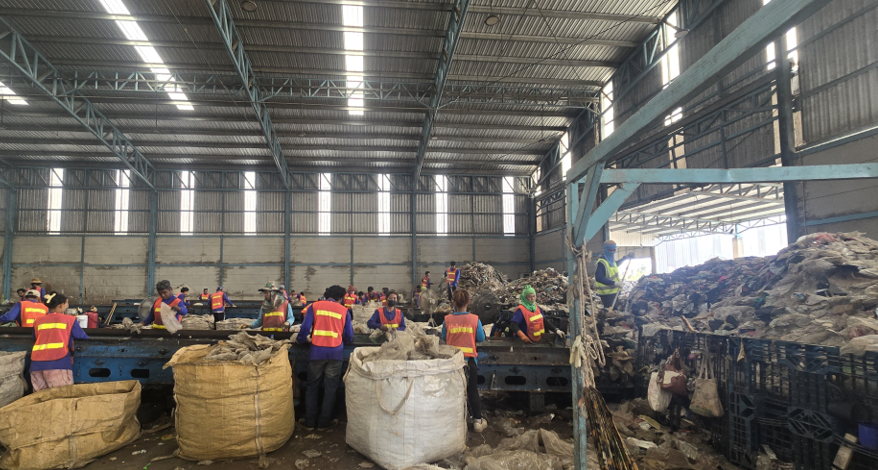
โรงงานห้วยกระเจ้า จังหวัดกาญจนบุรี เป็นตัวอย่างที่ดีของการบูรณาการขยะที่มีมูลค่าสูง โดยการเปลี่ยนขยะมูลฝอยของกรุงเทพฯ ให้เป็นโพลิเมอร์อุตสาหกรรมและเชื้อเพลิงที่ได้จากขยะ (RDF) ที่มีค่าความร้อนสูง เปลี่ยนภาระด้านสิ่งแวดล้อมให้เป็นตัวขับเคลื่อนเศรษฐกิจในท้องถิ่น (ภาพ: ชนา ปูมี)
บทความข่าวนี้ได้รับการสนับสนุนโดย FALLPROTEC บริษัทที่มีชื่อเสียงระดับโลกด้านการออกแบบและการผลิตระบบป้องกันการตกจากที่สูงและโซลูชันการเข้าถึงที่สูงระดับพรีเมียม
ขยะมักถูกมองว่าเป็นผลพลอยได้ที่หลีกเลี่ยงไม่ได้ของการเติบโตทางเศรษฐกิจ ในความเป็นจริงแล้ว มันอาจกลายเป็นหนึ่งในทรัพยากรที่มีค่าที่สุดที่เศรษฐกิจมีอยู่
ประเทศไทยสร้างขยะมูลฝอยมากกว่า 27 ล้านตันต่อปี ตามข้อมูลจากกรมควบคุมมลพิษ และมากกว่าครึ่งหนึ่งนั้นได้รับการจัดการอย่างไม่เหมาะสมหรือถูกปล่อยทิ้งไว้ให้สะสมในบ่อขยะที่ขยายตัวขึ้นเรื่อยๆ สิ่งที่ดูเหมือนจะเป็นปัญหาสิ่งแวดล้อมกำลังกลายเป็นปัญหาเศรษฐกิจมากขึ้นเรื่อยๆ
อย่างไรก็ตาม ภูเขาขยะที่เพิ่มขึ้นนี้อาจเป็นหนึ่งในโอกาสที่ยังไม่ได้ใช้ประโยชน์อย่างเต็มที่ของประเทศไทย
ในเศรษฐกิจโลกที่กำลังเติบโต ความได้เปรียบในการแข่งขันจะไม่ใช่ของประเทศที่เพียงแค่พูดถึงความยั่งยืน แต่จะเป็นของประเทศที่สร้างโครงสร้างพื้นฐานเพื่อให้มันเกิดขึ้นได้ การจัดการขยะไม่ใช่เพียงแค่บริการด้านสิ่งแวดล้อมอีกต่อไป แต่กำลังกลายเป็นความสามารถเชิงกลยุทธ์ทางอุตสาหกรรม
เพื่อคว้าโอกาสนี้ ประเทศไทยต้องก้าวข้ามโครงการรีไซเคิลแบบเดิมๆ และนำรูปแบบการฟื้นฟูมาใช้ ซึ่งเป็นรูปแบบที่ดึงคุณค่าจากทุกกระแสขยะและนำกลับมาใช้ประโยชน์อย่างมีประสิทธิภาพ
รูปแบบการฟื้นฟูอย่างแท้จริงไม่ได้ขึ้นอยู่กับความปรารถนาดีหรือความตระหนักด้านสิ่งแวดล้อมเพียงอย่างเดียว แต่ต้องอาศัยการประสานงานระหว่างสามพลังที่เชื่อมโยงกัน
แรงผลักดันแรกคือด้านธุรกิจ ขยะทุกประเภทมีมูลค่าหากได้รับการคัดแยกและแปรรูปอย่างเหมาะสม ขยะอินทรีย์สามารถเปลี่ยนเป็นก๊าซชีวภาพและปุ๋ยอินทรีย์ได้ พลาสติก โลหะ และกระดาษที่สะอาดสามารถนำกลับเข้าสู่ห่วงโซ่อุปทานการผลิตได้ แม้แต่พลาสติก สิ่งทอ และวัสดุอื่นๆ ที่ปนเปื้อนซึ่งโดยปกติแล้วจะถูกส่งไปฝังกลบ ก็สามารถเปลี่ยนเป็นเชื้อเพลิงจากขยะ (RDF) ได้ แทนที่จะจ่ายเงินเพื่อกำจัดขยะ เทศบาลสามารถสร้างรายได้ โดยประมาณการว่าจะมีกำไรสุทธิมากกว่า 3,500 บาทต่อตัน เมื่อระบบต่างๆ ถูกบูรณาการอย่างมีประสิทธิภาพ
แรงผลักดันที่สองคือด้านการปฏิบัติงาน การจัดการขยะในปัจจุบันเป็นกิจกรรมทางอุตสาหกรรมขั้นสูงมากกว่าสาธารณูปโภคพื้นฐาน โรงงานบำบัดทางกลและชีวภาพที่ทันสมัยผสมผสานเทคโนโลยีการคัดแยกอัตโนมัติเข้ากับการกำกับดูแลของมนุษย์ที่มีทักษะเพื่อเพิ่มอัตราการฟื้นตัวให้สูงสุด ระบบพลังงานหมุนเวียนแบบบูรณาการสามารถลดต้นทุนการดำเนินงานและการปล่อยก๊าซคาร์บอนไดออกไซด์ได้อีกด้วย ทำให้โรงงานบำบัดกลายเป็นสินทรัพย์ทางอุตสาหกรรมคาร์บอนต่ำ
แรงผลักดันที่สามคือด้านการเงิน รูปแบบที่ใช้งานได้จริงคือรูปแบบที่อิงตามความร่วมมือระหว่างภาครัฐ เอกชน และประชาชน รัฐบาลลงทุนและเป็นเจ้าของโครงสร้างพื้นฐานที่จำเป็น ในขณะที่ผู้ประกอบการภาคเอกชนนำความเชี่ยวชาญทางเทคนิคและประสิทธิภาพในการดำเนินงานมาใช้ การจัด arrangements เช่นนี้ช่วยลดอุปสรรคในการลงทุน ปรับปรุงคุณภาพการบริการ และสร้างผลประหยัดในระยะยาวโดยลดการพึ่งพาหลุมฝังกลบ
โมเดลนี้ไม่ใช่เพียงแค่ทฤษฎี ทั่วโลกกำลังให้ผลลัพธ์ที่ดีอยู่แล้ว ในเมืองเม็กซิโกซิตี้ โรงงานคัดแยกขยะ Gustavo A. Madero สามารถลดปริมาณขยะที่ส่งไปยังหลุมฝังกลบได้ประมาณ 1,200 ตันต่อวัน และแปลงเป็นเชื้อเพลิงทางเลือกสำหรับการผลิตปูนซีเมนต์
ประเทศไทยเริ่มแสดงให้เห็นถึงศักยภาพที่คล้ายคลึงกัน ผ่านโครงการ Saraburi Sandbox ซึ่งเป็นโครงการเมืองคาร์บอนต่ำแห่งแรกของประเทศ กำลังมีการพัฒนาระบบคัดแยกและรีไซเคิลขยะขั้นสูงเพื่อเปลี่ยนขยะเทศบาลให้เป็นวัตถุดิบอุตสาหกรรมและ RDF ที่มีค่าความร้อนสูง ในขณะเดียวกัน การร่วมแปรรูปโดยอุตสาหกรรมปูนซีเมนต์ได้ลดการพึ่งพาเชื้อเพลิงฟอสซิลนำเข้าอย่างมีนัยสำคัญ ช่วยประหยัดค่าใช้จ่ายด้านพลังงานของประเทศได้หลายพันล้านบาท
ขยะกำลังกลายเป็นเรื่องของความมั่นคงทางเศรษฐกิจด้วย ในยุคที่ราคาสินค้าโภคภัณฑ์ผันผวนและห่วงโซ่อุปทานโลกเปราะบาง ประเทศต่างๆ ไม่สามารถเพิกเฉยต่อทรัพยากรที่มีอยู่ภายในประเทศของตนได้อีกต่อไป ขยะมูลฝอยมีพลังงาน วัสดุ และมูลค่าทางเศรษฐกิจที่หากไม่นำมาใช้ประโยชน์ก็จะต้องนำเข้าด้วยต้นทุนที่สูงมาก การนำขยะกลับมาใช้ใหม่ภายในประเทศทุกตัน หมายถึงการลดการนำเข้าวัสดุและพลังงานในการผลิตลงหนึ่งตัน และนั่นจะช่วยลดการพึ่งพาตลาดภายนอก
ทั่วโลก เศรษฐกิจหมุนเวียนกำลังพัฒนาอย่างรวดเร็วจากวาระด้านสิ่งแวดล้อมไปสู่กลยุทธ์ทางอุตสาหกรรม ประเทศต่างๆ กำลังแข่งขันกันเพื่อจัดหาวัตถุดิบรอง สร้างศักยภาพในการรีไซเคิลภายในประเทศ และสร้างระบบนิเวศการผลิตคาร์บอนต่ำ คำถามจึงไม่ใช่ว่าควรจัดการขยะให้ดีขึ้นหรือไม่ แต่เป็นว่าเศรษฐกิจใดจะสามารถดึงคุณค่าที่ฝังอยู่ในขยะเหล่านั้นมาใช้ได้
เศรษฐกิจฟื้นฟูเริ่มต้นจากผู้คน แต่ได้รับการเร่งให้เร็วขึ้นด้วยเทคโนโลยี การแยกขยะต้องเริ่มต้นที่แหล่งกำเนิด โดยต้องให้โรงเรียนและชุมชนมองขยะไม่ใช่เป็นเพียงขยะ แต่เป็นทรัพยากร ปัจจุบัน AI และแพลตฟอร์มดิจิทัลสามารถเสริมสร้างการเปลี่ยนแปลงนี้ได้โดยการติดตามวัสดุแบบเรียลไทม์ ปรับปรุงความแม่นยำในการคัดแยก และเชื่อมต่อผู้สร้างขยะโดยตรงกับผู้รีไซเคิลผ่านตลาดดิจิทัล เครื่องมือเหล่านี้ทำให้เศรษฐกิจหมุนเวียนเข้าถึงได้ง่ายขึ้น ไม่เพียงแต่สำหรับอุตสาหกรรมเท่านั้น แต่ยังรวมถึงบุคคลและชุมชนด้วย
ที่สำคัญไม่แพ้กัน การเปลี่ยนแปลงนี้สามารถสร้างโอกาสการจ้างงานใหม่และเสริมสร้างความเข้มแข็งให้กับวิสาหกิจในท้องถิ่นรอบๆ โรงงานบำบัดขยะได้ ในขณะเดียวกัน ระบบที่ขับเคลื่อนด้วย AI ตั้งแต่การคัดแยกอัจฉริยะไปจนถึงการตรวจสอบย้อนกลับบนบล็อกเชน เปิดโอกาสใหม่ๆ ในด้านการจัดการข้อมูล การดำเนินงานของระบบ และระบบนิเวศแพลตฟอร์มดิจิทัล ขยายขอบเขตของงานสีเขียวให้กว้างไกลกว่าการจัดการขยะแบบดั้งเดิม
ที่สำคัญที่สุดคือ เปิดโอกาสให้ประเทศไทยยกระดับการศึกษาด้านอาชีวะ ระบบคัดแยกขั้นสูง ระบบอัตโนมัติ และเทคโนโลยีการเปลี่ยนขยะเป็นพลังงาน ต่างพึ่งพา AI หุ่นยนต์ และการวิเคราะห์ข้อมูลมากขึ้นเรื่อยๆ การบูรณาการสถาบันอาชีวะเข้ากับอุตสาหกรรมที่กำลังเติบโตเหล่านี้โดยตรง ประเทศไทยสามารถสร้างบุคลากรด้านอุตสาหกรรมรุ่นใหม่ ที่ไม่เพียงแต่สามารถใช้งานระบบได้ แต่ยังสามารถเพิ่มประสิทธิภาพและปรับปรุงระบบอย่างต่อเนื่องได้อีกด้วย
ทุกปีที่ล่าช้าหมายถึงพื้นที่ที่ควรนำไปใช้สร้างผลตอบแทนที่ดีกว่าถูกใช้ไปกับหลุมฝังกลบขยะมากขึ้น ความล่าช้าหมายถึงวัสดุที่มีค่าสูญเสียไปมากขึ้น และพลาดโอกาสในการใช้ประโยชน์จากข้อมูลและเทคโนโลยีเพื่อปลดล็อกประสิทธิภาพและมูลค่า
หากปราศจากการเปิดใช้งานทางดิจิทัล ระบบหมุนเวียนจะยังคงกระจัดกระจายและเข้าถึงได้ยากในวงกว้าง
เป็นเวลาหลายทศวรรษแล้วที่ประเทศต่างๆ วัดโครงสร้างพื้นฐานด้วยทางหลวง ท่าเรือ และโรงไฟฟ้า เศรษฐกิจคาร์บอนต่ำต้องการคำจำกัดความที่กว้างขึ้น โรงงานรีไซเคิลทรัพยากร โรงงานคัดแยกขั้นสูง และระบบผลิตพลังงานจากขยะ ต้องได้รับการเสริมด้วยโครงสร้างพื้นฐานดิจิทัล เช่น แพลตฟอร์ม AI ระบบติดตามวัสดุ และตลาดหมุนเวียน ที่ช่วยให้เกิดความโปร่งใส ประสิทธิภาพ และการมีส่วนร่วมตลอดห่วงโซ่คุณค่า
ขยะไม่ใช่ผลพลอยได้จากกิจกรรมทางเศรษฐกิจ แต่เป็นแหล่งสะสมมูลค่าภายในประเทศที่ยังไม่ได้ใช้ประโยชน์อย่างมหาศาล ด้วย AI เป็นตัวขับเคลื่อน ประเทศต่างๆ สามารถปลดล็อกมูลค่านี้ได้อย่างมีประสิทธิภาพและครอบคลุมมากขึ้น ขยายการมีส่วนร่วมในเศรษฐกิจหมุนเวียนไปยังธุรกิจ ชุมชน และบุคคลทั่วไป ประเทศที่ประสบความสำเร็จจะไม่เพียงแต่สร้างเมืองที่สะอาดขึ้นเท่านั้น แต่ยังสร้างอุตสาหกรรมที่แข็งแกร่งขึ้น ความมั่นคงด้านทรัพยากรที่มากขึ้น และเศรษฐกิจที่ยืดหยุ่นและพร้อมสำหรับอนาคตมากขึ้นด้วย
ประเทศไทยยังมีเวลาที่จะเป็นผู้นำ แต่ก็ต่อเมื่อผสมผสานโครงสร้างพื้นฐานทางกายภาพเข้ากับปัญญาดิจิทัล และเริ่มมองขยะไม่ใช่สิ่งที่ต้องฝังกลบ แต่เป็นสิ่งที่สามารถนำมาสร้างสิ่งต่างๆ ได้