Vietnam’s $7.8bn railway project delayed despite early construction
27 June 2026
THIS NEWS ARTICLE KINDLY SPONSORED BY FALLPROTEC, A WORLD-RENOWNED NAME IN THE DESIGN AND MANUFACTURE OF PREMIUM FALL PROTECTION SYSTEMS AND HEIGHT ACCESS SOLUTIONS
Several sections of Vietnam’s flagship railway project are under construction, but unresolved site clearance issues continue to delay broader implementation.
Vietnam’s Railway Project Management Board has provided the latest update on the Lao Cai-Ha Noi-Hai Phong railway, confirming that while construction has begun on several components, the overall project is currently behind schedule.
Speaking to VietNamNet, representatives of the Railway Project Management Board under the Ministry of Construction said work on several components of the railway project began on December 19, 2025. However, implementation has encountered significant challenges, particularly land clearance in several localities.
According to the board, the initial works belong to Component Project 1, which covers access roads to railway stations and station forecourts. During the first phase, construction was planned at five locations under the same contract package.
So far, only two of the five sites – Lao Cai Station and Nam Hai Duong Station – have been handed over for construction. Work at the remaining three locations, Phu Tho, Bac Hong and Luong Tai, has yet to begin because land clearance has not been completed.
For the remaining stations along the route, the project management board is working with consultants to finalize detailed engineering designs. Necessary procedures are expected to be completed in July before contractors are selected and construction expands to additional sites.
According to the board, the pre-feasibility study originally proposed 21 stations. Following further technical reviews and route optimization, the number has been reduced to 20.
Chinese consultants submitted the initial feasibility study report to the Vietnamese side at the end of March. The Ministry of Construction, together with relevant Vietnamese agencies and Chinese counterparts, subsequently reviewed and assessed the report.
On April 10, the preliminary appraisal was completed and returned to the consultants for revisions. Once the feasibility study receives final approval, authorities can proceed with determining the total investment, funding structure and detailed engineering designs.
At the same time, land acquisition boundary markers are being installed across the provinces and cities along the route. Several local authorities have begun receiving documentation to carry out land surveys, asset inventories and compensation plans.
Project running behind schedule
The Railway Project Management Board acknowledged that implementation is behind the timeline set out in Government Resolution No. 127, which guides implementation of the National Assembly’s resolution on the project.
Officials attributed the delays primarily to unexpected technical challenges uncovered during field surveys, including complex geological conditions, fault lines and difficult construction terrain along the route. These issues have extended the time needed to complete technical documentation, engineering designs and related procedures.
“The Railway Project Management Board is coordinating with ministries and relevant agencies to report to the Government and seek adjustments to certain implementation milestones,” the board said.
The railway will adopt Chinese railway technology and technical standards under the special mechanism approved by the National Assembly. The line is designed for operating speeds of up to 160 km/h on many sections and will carry both passengers and freight.
According to the board, the new railway will significantly improve transport capacity along the Lao Cai-Ha Noi-Hai Phong economic corridor, shorten travel times, strengthen logistics connectivity and support long-term socio-economic development as well as national defense and security.
The Lao Cai-Ha Noi-Hai Phong railway will extend nearly 391 km, with an additional 27.9 km of branch lines, using the standard 1,435 mm gauge. The route will pass through six localities, linking the Lao Cai border gate with Lach Huyen Port in Hai Phong.
The project has a total investment of more than VND203.2 trillion (US$7.8 billion) and is scheduled for completion by 2030.
Component Project 1, covering station infrastructure and connecting public spaces, began construction in late 2025 with an investment of VND3.298 trillion (US$126.8 million). Component Project 2, which covers construction of the main railway line, has an estimated investment of VND155.503 trillion (US$6.0 billion).
Despite current delays, authorities said the overall completion target of 2030 remains unchanged.
Source: https://vietnamnet.vn/en/vietnam-s-7-8bn-railway-project-delayed-despite-early-construction-2529337.html
Google Translation:
โครงการรถไฟมูลค่า 7.8 พันล้านดอลลาร์ของเวียดนามล่าช้า แม้จะเริ่มก่อสร้างไปแล้ว
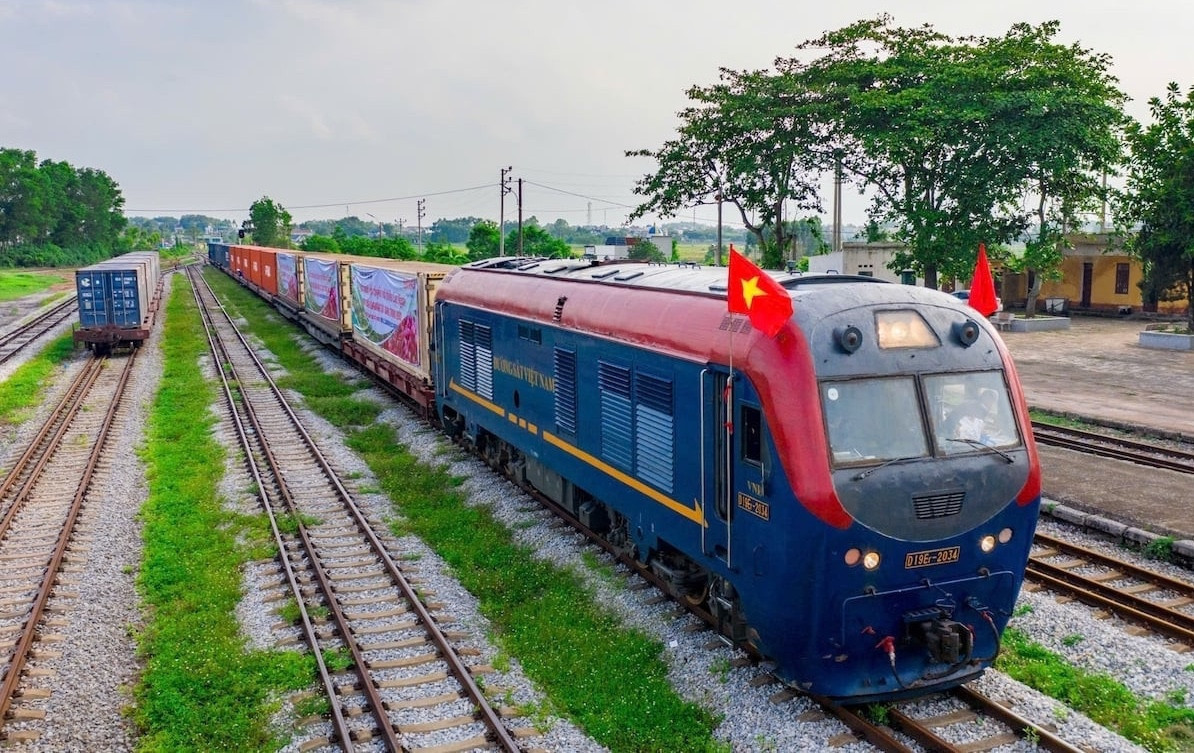
ส่วนประกอบแรกของโครงการรถไฟลาวไค-ฮาน้อย-ไฮฟอง เริ่มก่อสร้างเมื่อปลายปี 2025 ภาพ: พ. นุง
27 มิถุนายน 2026
บทความข่าวนี้ได้รับการสนับสนุนโดย FALLPROTEC บริษัทที่มีชื่อเสียงระดับโลกด้านการออกแบบและผลิตระบบป้องกันการตกจากที่สูงและโซลูชันการเข้าถึงที่สูงระดับพรีเมียม
หลายส่วนของโครงการรถไฟเรือธงของเวียดนามกำลังอยู่ระหว่างการก่อสร้าง แต่ปัญหาการเคลียร์พื้นที่ที่ยังไม่ได้รับการแก้ไขยังคงทำให้การดำเนินงานในวงกว้างล่าช้า
คณะกรรมการบริหารโครงการรถไฟของเวียดนามได้ให้ข้อมูลอัปเดตล่าสุดเกี่ยวกับรถไฟลาวไค-ฮาน้อย-ไฮฟอง โดยยืนยันว่าแม้การก่อสร้างจะเริ่มต้นขึ้นแล้วในบางส่วน แต่โครงการโดยรวมในปัจจุบันล่าช้ากว่ากำหนด
ตัวแทนจากคณะกรรมการบริหารโครงการรถไฟ กระทรวงการก่อสร้าง ให้สัมภาษณ์กับ VietNamNet ว่า งานก่อสร้างในหลายส่วนของโครงการรถไฟเริ่มขึ้นเมื่อวันที่ 19 ธันวาคม 2568 อย่างไรก็ตาม การดำเนินงานประสบกับความท้าทายอย่างมาก โดยเฉพาะอย่างยิ่งการเวนคืนที่ดินในหลายพื้นที่
ตามข้อมูลจากคณะกรรมการฯ งานเริ่มต้นเป็นส่วนหนึ่งของโครงการส่วนที่ 1 ซึ่งครอบคลุมถนนทางเข้าสถานีรถไฟและลานหน้าสถานี ในระยะแรก มีการวางแผนก่อสร้างใน 5 แห่งภายใต้สัญญาเดียวกัน
จนถึงขณะนี้ มีเพียง 2 แห่งจาก 5 แห่ง คือ สถานีลาวกายและสถานีน้ำไฮดวง ที่ได้รับการส่งมอบให้ก่อสร้างแล้ว ส่วนอีก 3 แห่งที่เหลือ ได้แก่ สถานีฟูโถ สถานีบักฮ่อง และสถานีหลวงไท ยังไม่เริ่มดำเนินการเนื่องจากการเวนคืนที่ดินยังไม่แล้วเสร็จ
สำหรับสถานีที่เหลือตามเส้นทาง คณะกรรมการบริหารโครงการกำลังทำงานร่วมกับที่ปรึกษาเพื่อสรุปแบบทางวิศวกรรมโดยละเอียด คาดว่าจะดำเนินการตามขั้นตอนที่จำเป็นให้แล้วเสร็จในเดือนกรกฎาคม ก่อนที่จะคัดเลือกผู้รับเหมาและขยายการก่อสร้างไปยังพื้นที่เพิ่มเติม
ตามที่คณะกรรมการระบุ การศึกษาความเป็นไปได้เบื้องต้นเสนอให้มีสถานี 21 แห่ง หลังจากการตรวจสอบทางเทคนิคเพิ่มเติมและการปรับเส้นทางให้เหมาะสม จำนวนสถานีจึงลดลงเหลือ 20 แห่ง
ที่ปรึกษาชาวจีนได้ส่งรายงานการศึกษาความเป็นไปได้เบื้องต้นให้แก่ฝ่ายเวียดนามเมื่อปลายเดือนมีนาคม กระทรวงการก่อสร้าง ร่วมกับหน่วยงานที่เกี่ยวข้องของเวียดนามและฝ่ายจีน ได้ตรวจสอบและประเมินรายงานดังกล่าวในเวลาต่อมา
เมื่อวันที่ 10 เมษายน การประเมินเบื้องต้นเสร็จสิ้นและส่งคืนให้ที่ปรึกษาเพื่อแก้ไข เมื่อการศึกษาความเป็นไปได้ได้รับการอนุมัติขั้นสุดท้ายแล้ว หน่วยงานที่เกี่ยวข้องจะสามารถดำเนินการกำหนดเงินลงทุนทั้งหมด โครงสร้างการจัดหาเงินทุน และแบบวิศวกรรมโดยละเอียดได้
ในขณะเดียวกัน ก็มีการติดตั้งหลักเขตการเวนคืนที่ดินในจังหวัดและเมืองต่างๆ ตามเส้นทาง หน่วยงานท้องถิ่นหลายแห่งเริ่มได้รับเอกสารเพื่อดำเนินการสำรวจที่ดิน การสำรวจทรัพย์สิน และแผนการชดเชย
โครงการล่าช้ากว่ากำหนด
คณะกรรมการบริหารโครงการรถไฟยอมรับว่าการดำเนินงานล่าช้ากว่ากรอบเวลาที่กำหนดไว้ในมติคณะมนตรีหมายเลข 127 ซึ่งเป็นแนวทางในการดำเนินการตามมติของรัฐสภาเกี่ยวกับโครงการนี้
เจ้าหน้าที่ระบุว่า ความล่าช้าส่วนใหญ่เกิดจากปัญหาทางเทคนิคที่ไม่คาดคิดซึ่งพบระหว่างการสำรวจภาคสนาม รวมถึงสภาพทางธรณีวิทยาที่ซับซ้อน รอยเลื่อน และภูมิประเทศที่ยากลำบากในการก่อสร้างตามเส้นทาง ปัญหาเหล่านี้ทำให้ต้องใช้เวลานานขึ้นในการจัดทำเอกสารทางเทคนิค การออกแบบทางวิศวกรรม และขั้นตอนที่เกี่ยวข้อง
คณะกรรมการบริหารโครงการรถไฟกำลังประสานงานกับกระทรวงและหน่วยงานที่เกี่ยวข้องเพื่อรายงานต่อรัฐบาลและขอปรับเปลี่ยนขั้นตอนการดำเนินงานบางประการ” คณะกรรมการกล่าว
ทางรถไฟสายนี้จะใช้เทคโนโลยีและมาตรฐานทางเทคนิคของทางรถไฟจีนภายใต้กลไกพิเศษที่ได้รับอนุมัติจากรัฐสภา เส้นทางได้รับการออกแบบให้รองรับความเร็วในการวิ่งได้สูงสุดถึง 160 กิโลเมตรต่อชั่วโมงในหลายช่วง และจะขนส่งทั้งผู้โดยสารและสินค้า
ตามที่คณะกรรมการระบุ ทางรถไฟสายใหม่นี้จะช่วยเพิ่มขีดความสามารถในการขนส่งตามระเบียงเศรษฐกิจลาวกาย-ฮาน้อย-ไฮฟองอย่างมีนัยสำคัญ ลดระยะเวลาการเดินทาง เสริมสร้างการเชื่อมต่อด้านโลจิสติกส์ และสนับสนุนการพัฒนาเศรษฐกิจและสังคมในระยะยาว ตลอดจนการป้องกันและความมั่นคงของชาติ
ทางรถไฟสายลาวกาย-ฮาน้อย-ไฮฟอง จะมีความยาวเกือบ 391 กิโลเมตร โดยมีทางแยกเพิ่มเติมอีก 27.9 กิโลเมตร ใช้รางมาตรฐาน 1,435 มิลลิเมตร เส้นทางจะผ่าน 6 ชุมชน เชื่อมต่อด่านชายแดนลาวกายกับท่าเรือลัคฮุยน์ในจังหวัดไฮฟอง
โครงการนี้มีการลงทุนรวมกว่า 203.2 ล้านล้านด่อง (7.8 พันล้านดอลลาร์สหรัฐ) และมีกำหนดแล้วเสร็จภายในปี 2030
โครงการส่วนที่ 1 ซึ่งครอบคลุมโครงสร้างพื้นฐานของสถานีและพื้นที่สาธารณะที่เชื่อมต่อกัน เริ่มก่อสร้างเมื่อปลายปี 2025 ด้วยการลงทุน 3.298 ล้านล้านด่อง (126.8 ล้านดอลลาร์สหรัฐ) โครงการส่วนที่ 2 ซึ่งครอบคลุมการก่อสร้างทางรถไฟสายหลัก มีการลงทุนประมาณ 155.503 ล้านล้านด่อง (6 พันล้านดอลลาร์สหรัฐ)
แม้จะมีความล่าช้าในปัจจุบัน ทางการกล่าวว่าเป้าหมายการแล้วเสร็จโดยรวมในปี 2030 ยังคงไม่เปลี่ยนแปลง