 Thailand’s long-delayed three-airport high-speed rail project faces a key EEC review as contract talks with Asia Era One continue
Long-delayed rail project heads back to EEC scrutiny
THIS NEWS ARTICLE KINDLY SPONSORED BY FALLPROTEC, A WORLD-RENOWNED NAME IN THE DESIGN AND MANUFACTURE OF PREMIUM FALL PROTECTION SYSTEMS AND HEIGHT ACCESS SOLUTIONS
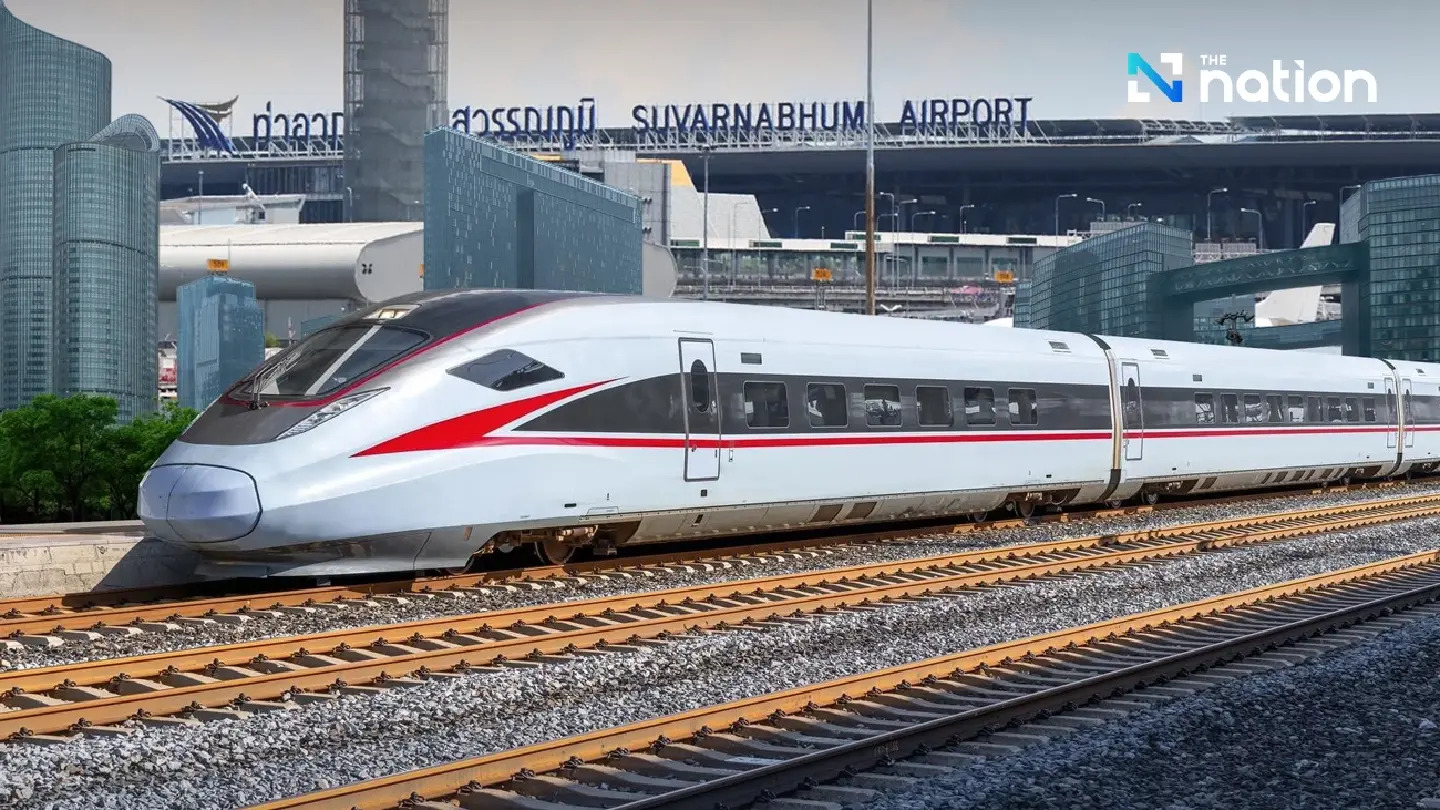
Thailand’s high-speed rail project linking Don Mueang, Suvarnabhumi and U-Tapao airports is moving back towards a key policy decision after eight years of delays, negotiations and changes of government.
The project has passed through seven administrations since the Cabinet under the first Prayut Chan-o-cha government approved it on March 27, 2018.
It later moved into the public-private partnership bidding process, with the State Railway of Thailand naming Eastern High-Speed Rail Linking Three Airports Co Ltd, led by the CP Group and now known as Asia Era One Co Ltd, as the winning bidder. The consortium requested 117.226 billion baht in state co-investment.
The PPP contract was signed on December 22, 2018, during the second Prayut government.
However, before a notice to proceed could be issued, the Covid-19 pandemic disrupted the project, prompting the private partner to seek relief measures. The Cabinet later approved relief measures, including amendments to the PPP contract, on October 19, 2021.
Negotiations continued under the Srettha Thavisin government in 2024 without a final agreement, while issues also emerged over investment promotion certificates.
Talks then carried into the Paetongtarn Shinawatra government, with the Cabinet approving the contract amendment in principle on October 11, 2024.
The issue remained unresolved under the first Anutin Charnvirakul government, which raised concerns that the proposed contract amendment could conflict with PPP principles.
Negotiations continued under the second Anutin government, while the contract amendment agenda was withdrawn from the Eastern Economic Corridor Policy Committee meeting on May 20, 2026.
Attorney-General clears amended draft
SRT acting governor and deputy governor Anan Phonimdang said the Office of the Attorney-General had considered the amended draft contract and sent it back to the SRT.
The agency had previously raised 18 observations, all of which the SRT said it had answered. One key issue involved a review of Cabinet resolutions, which the government had required the private partner to consider.
The SRT has also held talks with Asia Era One to explain the conditions and principles related to amending the Cabinet resolutions.
The company has been asked to review the details, and the SRT is waiting for its formal response before reporting to the EEC Policy Committee and later submitting the matter to the Cabinet.
Anan said the amended contract had now effectively passed the Attorney-General’s review without objection, and the next step would be to compile the report for the EEC Policy Committee while waiting for the private partner’s response.
Financing model remains the main policy concern
A source from the Eastern Economic Corridor Office said the Transport Ministry’s opposition to amending the contract remained an important issue, particularly the proposal to shift the state payment model to a “build-pay” structure.
The source said the payment model was critical because it directly affected the private partner’s ability to secure financing.
The proposed change had been sought by the private side to support loan approval from financial institutions.
During talks between the public and private sectors on May 8, 2026, the private partner was said to have acknowledged the government’s policy position and was asked to return to discussions with financial institutions on alternative ways to manage financial risk.
Once a clearer conclusion is reached, the company is expected to return to talks with the SRT to find a new solution that fits the government’s policy conditions.
A Transport Ministry source said Deputy Prime Minister and Transport Minister Phiphat Ratchakitprakarn had confirmed that there was no policy to amend the PPP contract, especially on changing the payment terms to a build-pay model.
After the Attorney-General approved the revised draft, the source expected the SRT to bring the information for discussion at the EEC Policy Committee meeting on June 5, 2026.
Asia Era One faces 160-billion-baht guarantee requirement
Under the amended contract terms on project guarantees, Asia Era One would be required to place additional guarantees or bank guarantees worth a combined 160 billion baht on top of the original contract framework.
The guarantees are intended to ensure construction is completed within five years.
The company must submit the guarantees to the SRT within 270 days after signing the amended contract.
The amount includes 125.93254 billion baht for civil works, 14.81349 billion baht for systems work, 748.25 million baht for train-operation quality, and 10.671 billion baht for the right to manage the Airport Rail Link.
Once the amended contract is signed, the private partner must immediately pay the first instalment of the Airport Rail Link management-right fee, worth 1.5 billion baht, with the remaining amount to be paid in seven instalments.
The original guarantees required from the private partner are divided into two parts: a 4.5-billion-baht contract guarantee throughout the 50-year contract term and a 149.65-billion-baht shareholder guarantee, also covering the 50-year contract.
However, the private partner would not need to place the new guarantee immediately on the day the amended contract is signed.
It would have 270 days to arrange the guarantee, or could place it immediately when seeking to draw state support. State payments and the return of the private partner’s guarantee would then proceed together.
Initial estimates suggest the build-pay principle would involve state support for civil works being paid in five instalments of 25 billion baht each.
When the private partner completes and delivers each civil-works phase, the government would return the corresponding bank guarantee immediately.
Source: https://www.nationthailand.com/business/investment/40066974
Google Translation:
โครงการรถไฟความเร็วสูงเชื่อมสนามบิน 3 แห่งของไทยที่ล่าช้ามานาน กำลังเผชิญกับการตรวจสอบครั้งสำคัญจาก EEC ขณะที่การเจรจาสัญญากับ Asia Era One ยังคงดำเนินต่อไป
โครงการรถไฟที่ล่าช้ามานาน กลับเข้าสู่การตรวจสอบของ EEC อีกครั้ง
บทความข่าวนี้ได้รับการสนับสนุนโดย FALLPROTEC บริษัทที่มีชื่อเสียงระดับโลกด้านการออกแบบและการผลิตระบบป้องกันการตกจากที่สูงและโซลูชันการเข้าถึงที่สูงระดับพรีเมียม
โครงการรถไฟความเร็วสูงของไทยที่เชื่อมสนามบินดอนเมือง สุวรรณภูมิ และอู่ตะเภา กำลังกลับไปสู่การตัดสินใจเชิงนโยบายที่สำคัญอีกครั้ง หลังจากล่าช้า เจรจา และเปลี่ยนรัฐบาลมานานถึง 8 ปี
โครงการนี้ผ่านการบริหารงานมาแล้วถึงเจ็ดรัฐบาล นับตั้งแต่คณะรัฐมนตรีภายใต้รัฐบาลพลเอกประยุทธ์ จันทร์โอชา ชุดแรก อนุมัติเมื่อวันที่ 27 มีนาคม 2561
ต่อมาได้เข้าสู่กระบวนการประมูลแบบความร่วมมือระหว่างภาครัฐและเอกชน โดยการรถไฟแห่งประเทศไทยได้ประกาศให้บริษัท อีสเทิร์น ไฮสปีด เรล ลิงก์ 3 แอร์พอร์ต จำกัด ซึ่งนำโดยกลุ่มซีพี และปัจจุบันรู้จักกันในชื่อ บริษัท เอเชีย เอรา วัน จำกัด เป็นผู้ชนะการประมูล กลุ่มบริษัทดังกล่าวได้ขอเงินลงทุนร่วมจากภาครัฐจำนวน 117.226 พันล้านบาท
สัญญาความร่วมมือระหว่างภาครัฐและเอกชนได้ลงนามเมื่อวันที่ 22 ธันวาคม 2561 ในสมัยรัฐบาลพลเอกประยุทธ์ ชุดที่สอง
อย่างไรก็ตาม ก่อนที่จะมีการออกหนังสือแจ้งให้เริ่มดำเนินการ โครงการก็หยุดชะงักเนื่องจากการระบาดของโรคโควิด-19 ทำให้ภาคเอกชนต้องขอความช่วยเหลือด้านมาตรการบรรเทาผลกระทบ ต่อมาคณะรัฐมนตรีได้อนุมัติมาตรการบรรเทาผลกระทบ รวมถึงการแก้ไขสัญญา PPP เมื่อวันที่ 19 ตุลาคม 2564
การเจรจายังคงดำเนินต่อไปภายใต้รัฐบาลของศรีถะเทวิสินในปี 2567 โดยไม่มีข้อตกลงขั้นสุดท้าย ขณะเดียวกันก็มีประเด็นปัญหาเกี่ยวกับใบรับรองการส่งเสริมการลงทุนเกิดขึ้น
จากนั้นการเจรจาได้ดำเนินต่อไปในรัฐบาลของแพทองธารชินวัตร โดยคณะรัฐมนตรีอนุมัติการแก้ไขสัญญาในหลักการเมื่อวันที่ 11 ตุลาคม 2567
ปัญหาดังกล่าวยังคงไม่ได้รับการแก้ไขภายใต้รัฐบาลอนุทิน ชาญวีรกุลชุดแรก ซึ่งแสดงความกังวลว่าการแก้ไขสัญญาที่เสนออาจขัดแย้งกับหลักการ PPP
การเจรจายังคงดำเนินต่อไปภายใต้รัฐบาลอนุทินชุดที่สอง ขณะที่วาระการแก้ไขสัญญาถูกถอนออกจากการประชุมคณะกรรมการนโยบายระเบียงเศรษฐกิจภาคตะวันออกเมื่อวันที่ 20 พฤษภาคม 2569
อัยการสูงสุดอนุมัติร่างแก้ไข
นายอนันต์ โพนิมดัง ผู้ว่าการและรองผู้ว่าการ … อนันต์กล่าวว่า สัญญาที่แก้ไขแล้วได้ผ่านการตรวจสอบของอัยการสูงสุดโดยไม่มีข้อโต้แย้ง และขั้นตอนต่อไปคือการจัดทำรายงานสำหรับคณะกรรมการนโยบาย EEC ในขณะที่รอการตอบกลับจากภาคเอกชน
รูปแบบการจัดหาเงินทุนยังคงเป็นประเด็นนโยบายหลัก
แหล่งข่าวจากสำนักงานระเบียงเศรษฐกิจภาคตะวันออกกล่าวว่า การคัดค้านของกระทรวงคมนาคมต่อการแก้ไขสัญญายังคงเป็นประเด็นสำคัญ โดยเฉพาะอย่างยิ่งข้อเสนอที่จะเปลี่ยนรูปแบบการชำระเงินของรัฐไปเป็นโครงสร้าง “สร้าง-จ่าย”
แหล่งข่าวกล่าวว่า รูปแบบการชำระเงินมีความสำคัญอย่างยิ่ง เนื่องจากส่งผลกระทบโดยตรงต่อความสามารถของภาคเอกชนในการจัดหาเงินทุน
การเปลี่ยนแปลงที่เสนอมานั้นมาจากฝ่ายเอกชน เพื่อสนับสนุนการอนุมัติสินเชื่อจากสถาบันการเงิน
ระหว่างการเจรจาระหว่างภาครัฐและเอกชนเมื่อวันที่ 8 พฤษภาคม 2569 มีรายงานว่าภาคเอกชนได้ยอมรับจุดยืนนโยบายของรัฐบาล และถูกขอให้กลับไปหารือกับสถาบันการเงินเกี่ยวกับทางเลือกอื่นในการจัดการความเสี่ยงทางการเงิน
เมื่อได้ข้อสรุปที่ชัดเจนแล้ว คาดว่าบริษัทจะกลับมาเจรจากับ ก.ล.ต. เพื่อหาทางออกใหม่ที่สอดคล้องกับเงื่อนไขนโยบายของรัฐบาล
แหล่งข่าวจากกระทรวงคมนาคมระบุว่า รองนายกรัฐมนตรีและรัฐมนตรีว่าการกระทรวงคมนาคม นายพิพัฒน์ รัชกิจประการ ได้ยืนยันว่าไม่มีนโยบายแก้ไขสัญญา PPP โดยเฉพาะอย่างยิ่งการเปลี่ยนแปลงเงื่อนไขการชำระเงินเป็นแบบสร้าง-จ่าย
หลังจากที่อัยการสูงสุดอนุมัติร่างแก้ไขแล้ว แหล่งข่าวคาดว่า ก.ล.ต. จะนำข้อมูลดังกล่าวมาหารือในการประชุมคณะกรรมการนโยบายภาคเศรษฐกิจภาคตะวันออก ในวันที่ 5 มิถุนายน 2569
เอเชีย เอรา วัน เผชิญข้อกำหนดการค้ำประกัน 160,000 ล้านบาท
ภายใต้เงื่อนไขสัญญาที่แก้ไขเกี่ยวกับการค้ำประกันโครงการ เอเชีย เอรา วัน จะต้องวางหลักประกันเพิ่มเติมหรือหนังสือค้ำประกันจากธนาคารมูลค่ารวม 160,000 ล้านบาท นอกเหนือจากกรอบสัญญาเดิม
การค้ำประกันดังกล่าวมีวัตถุประสงค์เพื่อให้มั่นใจว่าการก่อสร้างจะแล้วเสร็จภายใน 5 ปี
บริษัทต้องยื่นหลักประกันดังกล่าวต่อ ก.ล.ต. ภายใน 270 วันหลังจากลงนามในสัญญาที่แก้ไขแล้ว
จำนวนเงินดังกล่าวรวมถึง 125.93254 พันล้านบาทสำหรับงานก่อสร้างโครงสร้างพื้นฐาน 14.81349 พันล้านบาทสำหรับงานระบบ 748.25 ล้านบาทสำหรับคุณภาพการเดินรถ และ 10.671 พันล้านบาทสำหรับสิทธิ์ในการบริหารจัดการรถไฟฟ้าแอร์พอร์ตเรลลิงก์
เมื่อลงนามในสัญญาแก้ไขแล้ว หุ้นส่วนเอกชนจะต้องชำระงวดแรกของค่าธรรมเนียมสิทธิ์ในการบริหารจัดการรถไฟฟ้าแอร์พอร์ตเรลลิงก์ทันที มูลค่า 1.5 พันล้านบาท โดยส่วนที่เหลือจะชำระเป็น 7 งวด
การค้ำประกันเดิมที่หุ้นส่วนเอกชนต้องวางไว้แบ่งออกเป็นสองส่วน คือ การค้ำประกันตามสัญญา 4.5 พันล้านบาท ตลอดระยะเวลาสัญญา 50 ปี และการค้ำประกันจากผู้ถือหุ้น 149.65 พันล้านบาท ซึ่งครอบคลุมระยะเวลาสัญญา 50 ปีเช่นกัน
อย่างไรก็ตาม หุ้นส่วนเอกชนไม่จำเป็นต้องวางหลักประกันใหม่ทันทีในวันที่ลงนามในสัญญาแก้ไข
ภาคเอกชนจะมีเวลา 270 วันในการจัดหาหนังสือค้ำประกัน หรืออาจจัดหาได้ทันทีเมื่อต้องการขอรับการสนับสนุนจากภาครัฐ การจ่ายเงินจากภาครัฐและการคืนเงินค้ำประกันของภาคเอกชนจะดำเนินการไปพร้อมกัน
จากการประมาณการเบื้องต้น หลักการก่อสร้างและจ่ายเงิน (build-pay) จะเกี่ยวข้องกับการสนับสนุนจากภาครัฐสำหรับงานก่อสร้าง โดยแบ่งจ่ายเป็น 5 งวด งวดละ 25 พันล้านบาท
เมื่อภาคเอกชนดำเนินการก่อสร้างแต่ละเฟสเสร็จสมบูรณ์และส่งมอบแล้ว รัฐบาลจะคืนเงินค้ำประกันจากธนาคารที่เกี่ยวข้องทันที