 Can Thailand finally wake up to its dismal safety standards?
Khaosodenglish.com opinion piece
THIS NEWS ARTICLE KINDLY SPONSORED BY FALLPROTEC, A WORLD-RENOWNED NAME IN THE DESIGN AND MANUFACTURE OF PREMIUM FALL PROTECTION SYSTEMS AND HEIGHT ACCESS SOLUTIONS
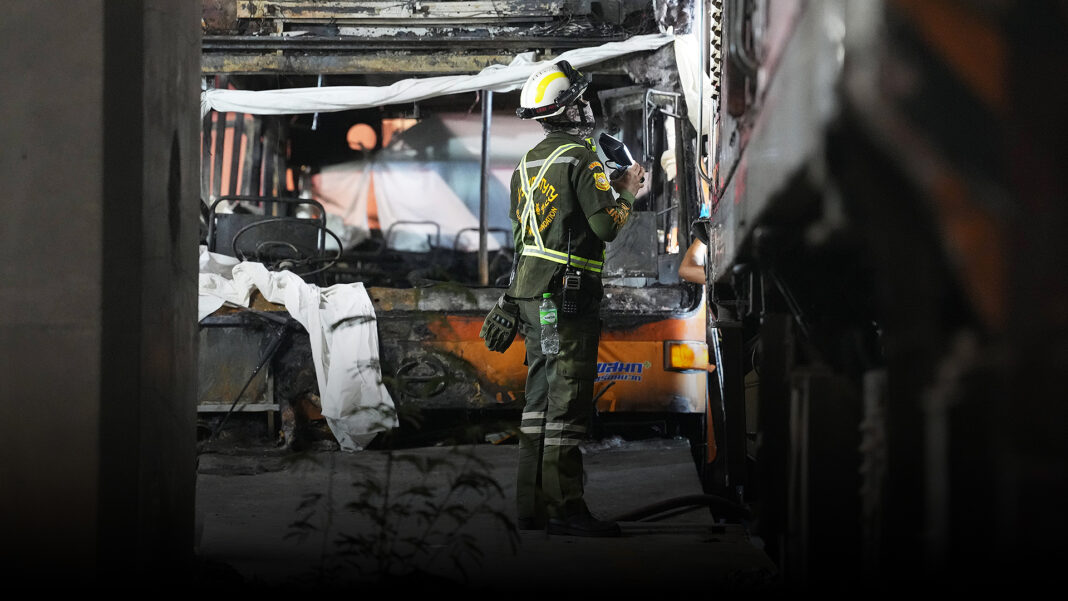
Saturday’s horrific accident — in which a freight train crashed into a public bus at the Makkasan crossing, killing eight people and injuring more than 30 — can be viewed in at least two ways.
The first perspective: An unfortunate freak accident
The first view is that this was merely an unfortunate, one-off accident. Under this outlook, similar incidents could supposedly be prevented simply by addressing the immediate factors involved: a train driver who tested positive for drugs, a crossing officer who allegedly failed to properly warn the driver, and a careless bus driver who stopped directly on the tracks expecting the train to stop.
Under this interpretation, Saturday becomes little more than a tragically unlucky day for the victims. Adherents to this view believe there is little need for broader reflection once the immediate loopholes are closed. We see this in the sudden burst of reactive measures: Transport Minister Phiphat Ratchakitprakarn ordering daily drug and alcohol tests for all public transport drivers, and Bangkok Governor Chadchart Sittipunt proposing the separation of rail and road traffic, possibly through the construction of a tunnel.
The second perspective: A systemic wake-up call
The second way of seeing this is to accept it as a harsh wake-up call for Thai society. We must acknowledge that this is not an isolated tragedy, but an incident emblematic of a society with a dismal public safety culture. It demands a holistic, systematic, and continuous approach to tackle the root problem, rather than treating the Makkasan crossing in a vacuum.
Since I subscribe to this second viewpoint, it inevitably leads me to a singular conclusion:
Thailand urgently needs an independent Department or Office of Public Safety. This body should report directly to both the prime minister and the public several times a year, while possessing broad authority to audit relevant state agencies and issue policy recommendations.
Just as the Tourism Authority of Thailand (TAT) continually strategizes to increase foreign tourist arrivals, this new body’s sole mandate would be to continuously elevate public safety standards across the Kingdom in all respects.
Proactive prevention over reactive remedies
A primary responsibility of this new entity would be to identify public safety vulnerabilities before they claim lives—to actively imagine what could go seriously wrong, where it could happen, and how such risks could be mitigated. Thailand must stop relying on reactive, post-tragedy reforms driven by mass-casualty events.
Furthermore, the body should not limit its scope to road safety; it should also oversee marine transportation safety, high-rise building regulations, and other areas of public risk.
Thailand needs fervent individuals driven by a genuine commitment to make Thailand safer. If budget constraints are cited as an obstacle, the office could easily be established under the umbrella of the Thai Health Promotion Foundation (ThaiHealth), drawing its funding directly from the “sin tax.”
After I floated the idea online, one person on X replied that establishing a new public safety body would merely create another layer of corruption. By that reasoning, perhaps we should dismantle every government agency altogether. The problem is not that Thailand has institutions; the problem is that too many operate without meaningful oversight, transparency or accountability. We cannot realistically expect bureaucracies to effectively police themselves. Fire drills alone will not save lives. Nor will the predictable post-crisis deployment of more traffic police.
Blaming individuals in the Makkasan crash may be convenient and offer instant “satisfaction” that the wrongdoers are being punished, but it is nothing short of a distraction from a systemic failure.
I always tell people that in Thailand, driving cautiously is only half the battle—you must constantly scan for other bad drivers or poorly maintained vehicles because you never know when they might come crashing into you. Shockingly, I must now add trains to that defensive driving checklist.
Visiting the site less than 48 hours after the entirely avoidable accident, I spoke with two motorcycle taxi drivers stationed a stone’s throw from the crossing. One of them, who had rushed to provide first aid to the injured, admitted the crash was no surprise to him. He noted that the traffic layout is notoriously awkward, forcing vehicles from two different roads to compete for space across the tracks. Compounding the danger, the red light at the nearby Petchburi-Asoke intersection regularly leaves cars and buses trapped directly on the rails.
He recalled how freight trains used to stop when seeing vehicles block the tracks, and noted that a single signal staff member at the booth is entirely insufficient. On that fateful Saturday, the staff on duty was negligent and absolutely deserves accountability. Combine that infrastructure nightmare with Bangkok public bus drivers—who historically operate with the reputation of being the undisputed “kings of the road”—and you have a recipe for disaster.
A national crisis, not a localised issue
The debate over responsibility can continue indefinitely, but the truth is that these hazard zones are scattered all over the metropolis. And it is not only Bangkok. Earlier this week tourists near Koh Larn shared terrifying accounts of being stranded in rough seas during a sudden storm, sparking renewed criticism of marine tour safety protocols near Pattaya.
Bangkok alone presents an enormous challenge, yet no singular organization is tasked with a full-time, nationwide mandate to improve Thailand’s safety culture. That institutional vacuum should be the real headline—and it deserves attention for more than just a single news cycle.
We cannot continue addressing public safety piecemeal, waiting for a major, preventable catastrophe to occur before pretending to care for a week or two, only to forget about it entirely.
A grim reminder: The recent improvements to Bangkok’s zebra crossings were only bought with the life of a young female ophthalmologist, who was struck and killed while using one in the Phaya Thai area two years ago.
It is as though Thai society completely lacks the will or imagination to see the tragedies waiting to happen until it is far too late, again and again.
Source: https://www.khaosodenglish.com/featured/2026/05/22/can-thailand-finally-wake-up-to-its-dismal-safety-standards/
Google Translation:
ประเทศไทยจะตระหนักถึงมาตรฐานความปลอดภัยที่ย่ำแย่ของตนเองได้เสียทีหรือไม่?
บทความความคิดเห็นจาก khaosodenglish.com
บทความข่าวนี้ได้รับการสนับสนุนโดย FALLPROTEC บริษัทที่มีชื่อเสียงระดับโลกด้านการออกแบบและการผลิตระบบป้องกันการตกจากที่สูงและโซลูชันการเข้าถึงที่สูงระดับพรีเมียม
อุบัติเหตุอันน่าสยดสยองเมื่อวันเสาร์ที่ผ่านมา ซึ่งรถไฟบรรทุกสินค้าชนกับรถโดยสารประจำทางที่ทางข้ามมักกะสัน ทำให้มีผู้เสียชีวิต 8 รายและบาดเจ็บมากกว่า 30 ราย สามารถมองได้สองแง่มุมเป็นอย่างน้อย
มุมมองแรก: อุบัติเหตุที่ไม่คาดคิด
มุมมองแรกคือ นี่เป็นเพียงอุบัติเหตุที่ไม่คาดคิดและเกิดขึ้นเพียงครั้งเดียว ภายใต้แนวคิดนี้ เหตุการณ์ที่คล้ายกันสามารถป้องกันได้ง่ายๆ โดยการแก้ไขปัจจัยที่เกี่ยวข้องในทันที ได้แก่ คนขับรถไฟที่ตรวจพบสารเสพติด เจ้าหน้าที่ทางข้ามที่ถูกกล่าวหาว่าไม่ได้เตือนคนขับรถไฟอย่างเหมาะสม และคนขับรถโดยสารประจำทางที่ประมาทจอดรถบนรางรถไฟโดยคาดหวังว่ารถไฟจะหยุด
ภายใต้การตีความนี้ วันเสาร์จึงกลายเป็นเพียงวันที่โชคร้ายอย่างน่าเศร้าสำหรับผู้ประสบภัย ผู้ที่ยึดถือมุมมองนี้เชื่อว่าไม่จำเป็นต้องมีการพิจารณาในวงกว้างเมื่อช่องโหว่เฉพาะหน้าถูกปิดลงแล้ว เราเห็นได้จากมาตรการตอบโต้ที่เกิดขึ้นอย่างฉับพลัน เช่น นายพิพัฒน์ รัชกิจประการ รัฐมนตรีว่าการกระทรวงคมนาคม สั่งให้ตรวจหาสารเสพติดและแอลกอฮอล์ทุกวันสำหรับพนักงานขับรถโดยสารสาธารณะทุกคน และผู้ว่าราชการกรุงเทพมหานคร นายชาดชาติ สิทธิพันธุ์ เสนอให้แยกการจราจรทางรถไฟและทางถนน อาจจะโดยการสร้างอุโมงค์
มุมมองที่สอง: สัญญาณเตือนภัยระดับระบบ
วิธีที่สองในการมองเรื่องนี้คือการยอมรับว่าเป็นสัญญาณเตือนภัยที่รุนแรงสำหรับสังคมไทย เราต้องยอมรับว่านี่ไม่ใช่โศกนาฏกรรมที่เกิดขึ้นเพียงครั้งเดียว แต่เป็นเหตุการณ์ที่เป็นสัญลักษณ์ของสังคมที่มีวัฒนธรรมด้านความปลอดภัยสาธารณะที่ย่ำแย่ มันต้องการแนวทางแบบองค์รวม เป็นระบบ และต่อเนื่องเพื่อแก้ไขปัญหาที่ต้นเหตุ แทนที่จะมองเหตุการณ์ที่ทางข้ามมักกะสันต์แบบแยกส่วน
เนื่องจากผมเห็นด้วยกับมุมมองที่สองนี้ จึงนำไปสู่ข้อสรุปเดียวคือ:
ประเทศไทยต้องการหน่วยงานหรือสำนักงานความปลอดภัยสาธารณะที่เป็นอิสระอย่างเร่งด่วน หน่วยงานนี้ควรรายงานโดยตรงต่อนายกรัฐมนตรีและสาธารณชนหลายครั้งต่อปี พร้อมทั้งมีอำนาจกว้างขวางในการตรวจสอบหน่วยงานของรัฐที่เกี่ยวข้องและออกข้อเสนอแนะเชิงนโยบาย
เช่นเดียวกับการท่องเที่ยวแห่งประเทศไทย (TAT) ที่วางแผนกลยุทธ์อย่างต่อเนื่องเพื่อเพิ่มจำนวนนักท่องเที่ยวต่างชาติ หน่วยงานใหม่นี้จะมีภารกิจหลักในการยกระดับมาตรฐานความปลอดภัยสาธารณะทั่วราชอาณาจักรในทุกด้านอย่างต่อเนื่อง
การป้องกันเชิงรุกสำคัญกว่าการแก้ไขเชิงรับ
ความรับผิดชอบหลักของหน่วยงานใหม่นี้คือการระบุจุดอ่อนด้านความปลอดภัยสาธารณะก่อนที่จะคร่าชีวิตผู้คน—เพื่อจินตนาการถึงสิ่งที่อาจผิดพลาดอย่างร้ายแรง สถานที่ที่อาจเกิดขึ้น และวิธีการลดความเสี่ยงดังกล่าว ประเทศไทยต้องหยุดพึ่งพาการปฏิรูปเชิงรับหลังเกิดโศกนาฏกรรมที่เกิดจากเหตุการณ์ที่มีผู้เสียชีวิตจำนวนมาก
ยิ่งไปกว่านั้น หน่วยงานนี้ไม่ควรจำกัดขอบเขตเฉพาะความปลอดภัยบนท้องถนนเท่านั้น หน่วยงานนี้ควรดูแลความปลอดภัยในการขนส่งทางทะเล กฎระเบียบเกี่ยวกับอาคารสูง และพื้นที่เสี่ยงภัยสาธารณะอื่นๆ ด้วย
ประเทศไทยต้องการบุคคลที่มีความกระตือรือร้นและมีความมุ่งมั่นอย่างแท้จริงที่จะทำให้ประเทศไทยปลอดภัยยิ่งขึ้น หากอ้างว่าข้อจำกัดด้านงบประมาณเป็นอุปสรรค หน่วยงานนี้สามารถจัดตั้งขึ้นภายใต้การดูแลของมูลนิธิส่งเสริมสุขภาพแห่งประเทศไทย (ThaiHealth) โดยดึงเงินทุนโดยตรงจาก “ภาษีบาป”
หลังจากที่ผมเสนอแนวคิดนี้ทางออนไลน์ มีคนหนึ่งใน X ตอบกลับว่า การจัดตั้งหน่วยงานความปลอดภัยสาธารณะใหม่จะยิ่งสร้างการทุจริตเพิ่มขึ้นอีกชั้นหนึ่ง ด้วยเหตุผลนั้น บางทีเราอาจควรยุบหน่วยงานราชการทั้งหมดไปเลย ปัญหาไม่ได้อยู่ที่ว่าประเทศไทยมีสถาบัน แต่ปัญหาอยู่ที่ว่ามีสถาบันมากเกินไปที่ดำเนินการโดยปราศจากการกำกับดูแล ความโปร่งใส หรือความรับผิดชอบที่มีความหมาย เราไม่สามารถคาดหวังได้อย่างสมจริงว่าระบบราชการจะตรวจสอบกันเองได้อย่างมีประสิทธิภาพ การฝึกซ้อมดับเพลิงเพียงอย่างเดียวจะไม่ช่วยชีวิตคนได้ เช่นเดียวกับการส่งตำรวจจราจรเพิ่มหลังเกิดวิกฤตการณ์ตามที่คาดการณ์ไว้
การกล่าวโทษบุคคลในอุบัติเหตุรถไฟที่มักกะสันต์อาจสะดวกและให้ความรู้สึก “พอใจ” ในทันทีว่าผู้กระทำผิดกำลังได้รับการลงโทษ แต่ก็เป็นเพียงการเบี่ยงเบนความสนใจจากความล้มเหลวของระบบเท่านั้น
ผมมักบอกคนอื่นเสมอว่าในประเทศไทย การขับรถอย่างระมัดระวังเป็นเพียงครึ่งหนึ่งของการต่อสู้ คุณต้องคอยสังเกตคนขับรถแย่ๆ หรือรถที่บำรุงรักษาไม่ดีอยู่เสมอ เพราะคุณไม่มีทางรู้ว่าเมื่อไหร่พวกเขาจะมาชนคุณ น่าตกใจที่ตอนนี้ผมต้องเพิ่มรถไฟเข้าไปในรายการตรวจสอบการขับขี่อย่างระมัดระวังนั้นด้วย
เมื่อไปเยี่ยมชมที่เกิดเหตุไม่ถึง 48 ชั่วโมงหลังเกิดอุบัติเหตุที่สามารถหลีกเลี่ยงได้อย่างสิ้นเชิง ผมได้พูดคุยกับคนขับมอเตอร์ไซค์รับจ้างสองคนที่จอดอยู่ใกล้กับทางข้ามรถไฟ หนึ่งในนั้นซึ่งรีบไปปฐมพยาบาลผู้บาดเจ็บยอมรับว่าอุบัติเหตุครั้งนี้ไม่ใช่เรื่องน่าประหลาดใจสำหรับเขา เขาตั้งข้อสังเกตว่าผังเมืองนั้นยุ่งยากมาก ทำให้รถจากสองถนนที่แตกต่างกันต้องแย่งพื้นที่ข้ามรางรถไฟกัน สิ่งที่ยิ่งเพิ่มอันตรายเข้าไปอีกก็คือ สัญญาณไฟแดงที่ทางแยกเพชรบุรี-อโศกที่อยู่ใกล้เคียง ทำให้รถยนต์และรถโดยสารติดอยู่บนรางรถไฟเป็นประจำ
เขาเล่าถึงเหตุการณ์ที่รถไฟบรรทุกสินค้าเคยหยุดเมื่อเห็นรถยนต์อยู่บนรางรถไฟ