 Thai Transport ministry accelerates single-ticket system, revives Landbridge megaproject, and pushes EV bus rollout
THIS NEWS ARTICLE KINDLY SPONSORED BY FALLPROTEC, A WORLD-RENOWNED NAME IN THE DESIGN AND MANUFACTURE OF PREMIUM FALL PROTECTION SYSTEMS AND HEIGHT ACCESS SOLUTIONS
The Ministry of Transport is accelerating three major flagship policies: a nationwide single-ticket transit system, the revival of the Landbridge megaproject, and an expanded rollout of electric buses (EVs), Transport Minister Phiphat Ratchakitprakarn said.
Phiphat said the Single Ticket Act has already passed the Senate, with secondary legislation required to be completed within 180 days after publication in the Royal Gazette. The Rail Transport Act is also already in force. The government aims to fully integrate rail, bus, and boat systems by the 2027 New Year, allowing passengers to use one ticket across all modes, supported by feeder services linking local routes to mass transit stations.
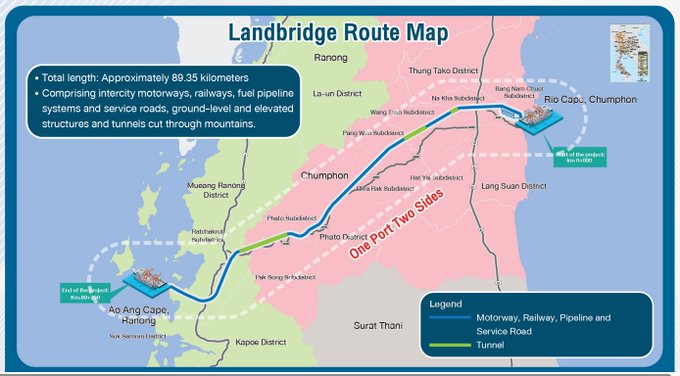 On infrastructure, Phiphat said the ministry is reviving the Landbridge project, which would connect the Indian Ocean and Pacific Ocean via Thailand, citing geopolitical tensions in the Strait of Hormuz and the Red Sea as a key driver. The project, previously studied by the Office of Transport and Traffic Policy and Planning (OTP), will proceed under a 100% public-private partnership (PPP) model. The government has begun preliminary talks with investors from the United Arab Emirates (UAE) to help operate port facilities and develop the project into a regional logistics hub.
On clean transport, the Bangkok Mass Transit Authority (BMTA) has ordered 1,520 electric buses (EVs), scheduled for delivery starting in March 2027. To speed up deployment, the ministry plans to lease around 800 available EV buses from private operators for immediate use while finalizing pricing and contract terms.
Phiphat said the ministry is also pursuing a broader infrastructure plan, including completion of Rama 2 Road (M82) and the Rama 3–Dao Khanong Expressway, improved safety measures and lighting upgrades, and a full trial opening of the M6 motorway (Bang Pa-in–Pak Chong) during the 2027 New Year holiday. Future phases include Phase 2 double-track rail projects, a high-speed rail link connecting three airports, and further expansion of national transport connectivity under the ministry’s long-term investment pipeline.
Source: Thai Enquirer on Twitter /
Google Translation:
Thailand’s Ministry of Transport is accelerating the implementation of a nationwide single-ticket system, revitalizing pedestrian overpass projects, and promoting the use of electric buses.
This news is sponsored by FALLPROTEC, a world-leading company in the design and manufacture of fall protection systems and high-altitude access solutions.
Mr. Pipat Ratchakitprakarn, Minister of Transport, stated that the Ministry of Transport is accelerating the implementation of three key policies: a nationwide single-ticket mass transit system, the restoration of pedestrian overpasses, and the expansion of the use of electric buses (EVs).
Mr. Pipat stated that the Single Ticket Act has passed the Senate, and subordinate legislation must be completed within 180 days of its publication in the Royal Gazette. The Rail Transport Act has also come into effect. The government aims to fully integrate the rail, bus, and ferry systems by the new year of 2017, allowing passengers to use a single ticket for all public transport systems, along with shuttle services connecting local routes to mass transit stations.
Regarding infrastructure, Mr. Pipat stated that the ministry is reviving the Ocean Bridge project, which would connect the Indian and Pacific Oceans through Thailand, citing geopolitical tensions in the Strait of Hormuz and the Red Sea as key drivers. This project, previously studied by the Office of Transport Policy and Planning (OTP), will be implemented under a 100% public-private partnership (PPP) model. The government has begun preliminary negotiations with investors from the United Arab Emirates (UAE) to assist with port operations and develop the project into a regional logistics hub.
In the area of environmentally friendly transportation, the Bangkok Mass Transit Authority (BMTA) has ordered 1,520 electric buses (EVs), with deliveries scheduled to begin in March 2017. To expedite deployment, the Ministry plans to lease approximately 800 existing electric buses from private operators for immediate use while pricing and contract terms are being finalized.
Mr. Pipat stated that the ministry is also implementing more comprehensive infrastructure plans, including the completion of Rama II Road (M82) and the Rama III-Dao Khonong Expressway, improvements to safety measures and lighting systems, and the full trial opening of the M6 (Bang Pa-in-Pak Chong) motorway during the 2017 New Year holiday. Future projects include the second phase of the double-track railway, a high-speed rail project connecting three airports, and further expansion of domestic transport connectivity under the ministry’s long-term investment plan.