 Why Job Seekers and Employers Are Rethinking Recruitment in Thailand
Thailand’s labor market is undergoing a quiet but significant transition. In the years following the pandemic, long-standing assumptions about work, careers, and recruitment have begun to break down.
Digital hiring, hybrid work models, and shifting workforce expectations—especially among younger professionals—are reshaping how both job seekers and employers navigate the employment landscape. One of the clearest reflections of this shift can be seen through platforms such as Thaijob, which has evolved from a simple job-listing website into part of a broader, more dynamic recruitment ecosystem.
What may appear at first glance to be a routine hiring challenge is increasingly tied to deeper structural issues. As Thailand confronts demographic ageing, skills mismatches, and rising competitive pressure, recruitment is no longer just an operational concern for individual companies—it is becoming closely linked to national productivity, workforce development, and long-term economic competitiveness.
In this new environment, traditional, linear hiring methods are proving less effective. Employers face tighter talent pools and more complex skill requirements, while workers are looking beyond job titles and salaries toward flexibility, purpose, and long-term growth. The result is a recruitment system in transition—one that is becoming more digital, more data-driven, and more strategically important to Thailand’s economic future.
 What’s Changing in Thailand’s Recruitment Landscape
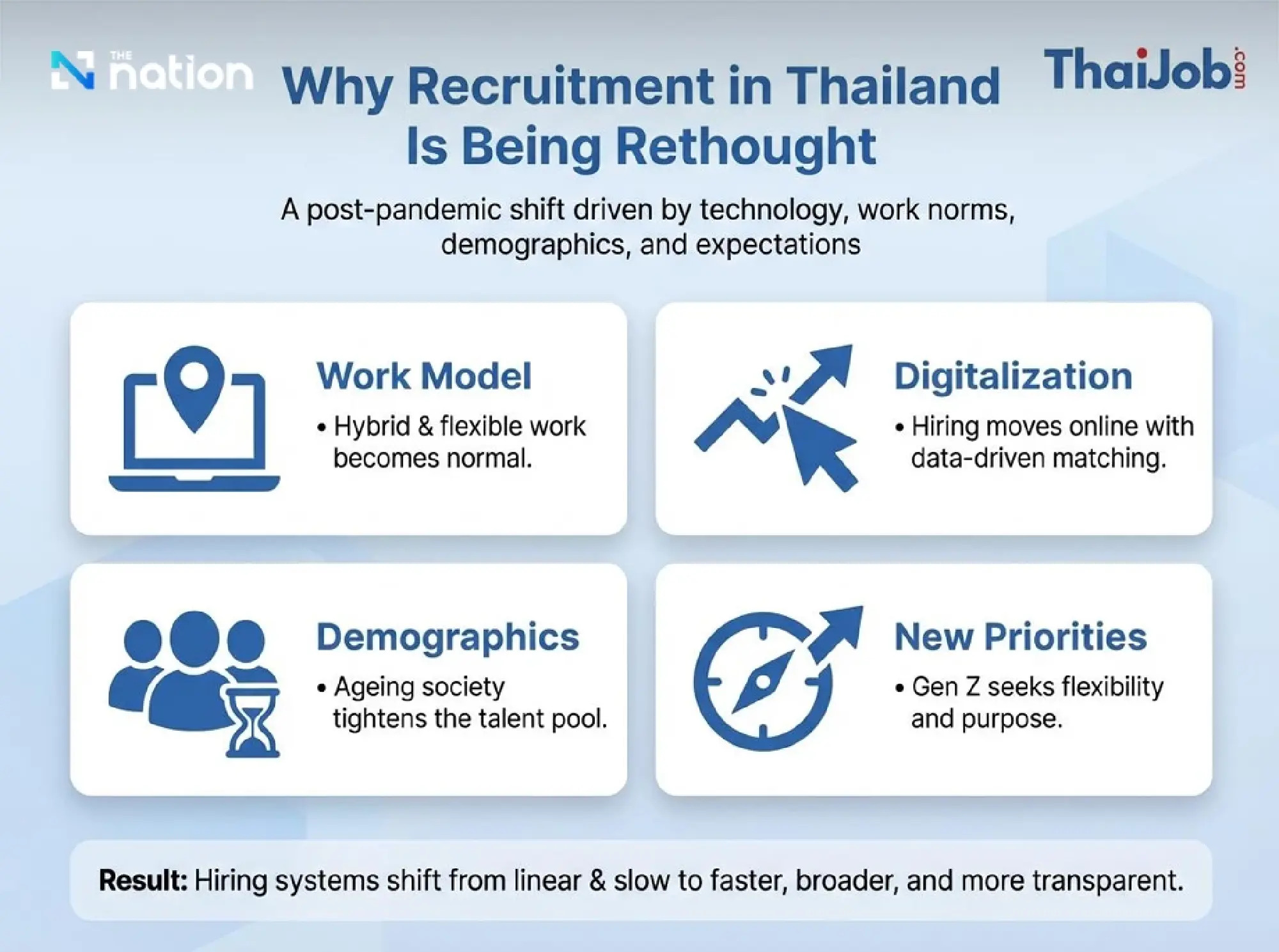
Thailand’s recruitment landscape is changing for reasons that extend far beyond new technology or online platforms. The shift reflects deeper changes in how people work, how companies compete for talent, and how Thai society itself is evolving. Digitalization, hybrid work, demographic change, and the arrival of a new generation of workers are together pushing the labor market in a new direction.
One of the most visible changes is the normalization of flexible and hybrid work. What began as a temporary response to the pandemic has, in many sectors, become part of everyday working life. This has weakened the traditional link between jobs and physical workplaces, expanded the potential talent pool for employers, and reshaped what many workers expect from their careers.
At the same time, recruitment is becoming more digital and data-driven. Companies face growing pressure to hire faster, manage larger volumes of applications, and identify increasingly specialized skills. This is not simply about efficiency, but a response to a labor market where skill mismatches and competition for talent are more pronounced.
Demographic trends are adding further pressure. Thailand is moving deeper into an ageing society, while Gen Z is beginning to play a more prominent role in the workforce. Younger workers often place greater value on flexibility, learning opportunities, and workplace culture, rather than viewing careers primarily through the lens of stability or hierarchy.
Taken together, these shifts help explain why traditional recruitment methods are losing effectiveness. Hiring systems built around rigid job descriptions and slow, linear processes are increasingly out of step with a labor market that is more fluid and competitive than before.
More importantly, this is not just a story about HR or technology. It reflects a broader national adjustment to economic and social change. How Thailand recruits and develops its workforce is becoming a strategic issue for the country’s long-term competitiveness.
Why Job Seekers Are Rethinking How They Find Work
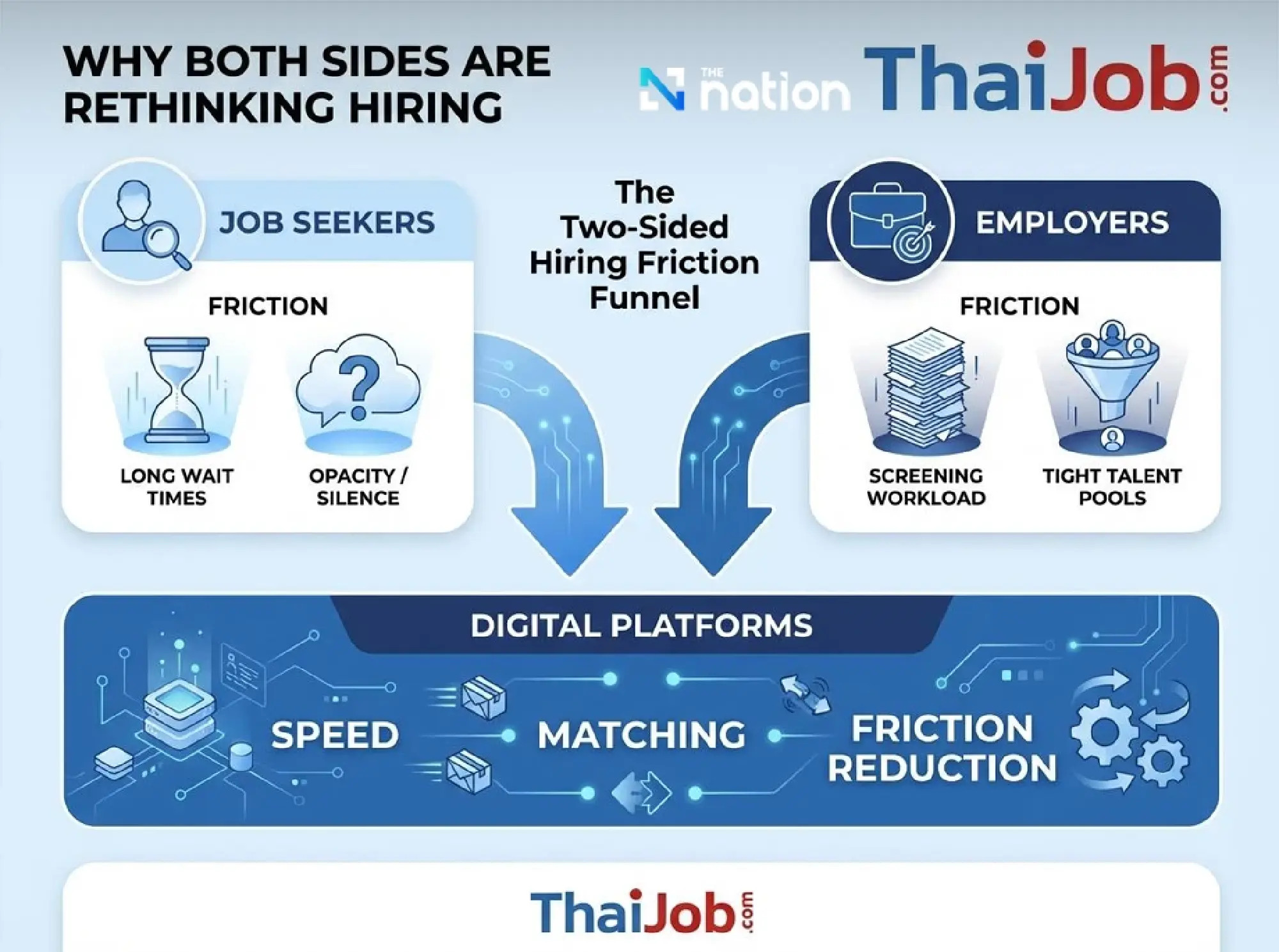
For many Thai job seekers, frustration does not begin with rejection—it begins with the process itself. Long and opaque hiring cycles, unclear job descriptions, and weeks of silence after submitting applications remain common experiences. At the same time, traditional job-search channels often limit candidates to a narrow pool of opportunities, making it harder—especially for those outside major cities or those seeking to change industries—to even see what is available.
These frustrations help explain why more people are rethinking not only where they apply, but how they approach the job search altogether. Increasingly, they are turning to digital platforms that offer broader visibility, faster matching, and more transparent access to information. Platforms such as Thaijob, for example, now function less as simple job boards and more as gateways to a nationwide labor market, allowing candidates to compare options and respond more quickly to new openings.
Just as importantly, this shift is also about autonomy and flexibility. Today’s job seekers want greater control over when and where they apply, and what kind of work fits their lives. As hybrid work and non-linear career paths become more common, access to opportunities across industries and locations is increasingly seen not as a bonus, but as a basic expectation.
In this context, the rise of large-scale job platforms is not merely about convenience. It reflects a broader change in how individuals relate to the labor market—moving away from slow, opaque, and localized job searches toward a model that is faster, more transparent, and far more open in scope.
Why Employers Are Rethinking Talent Acquisition
Employers across Thailand are being forced to rethink how they attract and hire talent—not because of a single disruption, but because several pressures are converging at once. These include intensifying competition for skilled labor, the need for faster and more cost-effective hiring, growing demand for data-driven candidate matching, and the need to expand beyond Bangkok-centric recruitment.
First, competition for skilled workers has intensified across many sectors. As industries modernize and demand more specialized capabilities, the supply of suitably qualified candidates has not always kept pace. Hiring has therefore become more than a routine HR function—it is increasingly a strategic issue that can affect growth, productivity, and competitiveness.
At the same time, companies are under pressure to shorten hiring cycles and control recruitment costs. Long and complex recruitment processes not only delay operations but also increase the risk of losing strong candidates to faster-moving competitors. In a labor market that is more fluid and competitive, speed and efficiency are becoming as important as careful selection.
There is also a growing recognition that recruitment needs to be more data-driven. As application volumes rise and roles become more specialized, relying solely on manual screening or informal judgment is no longer sufficient. Employers are increasingly looking for systems that can help them filter, compare, and match candidates to roles in a more consistent and scalable way.
Geography is another constraint that many organizations are now rethinking. For a long time, recruitment has been heavily concentrated in Bangkok and a few major urban centers. Yet talent is more widely distributed across the country than before, and companies that limit their search to traditional hubs risk missing capable candidates elsewhere.
In response to these pressures, more employers are turning to digital recruitment platforms as part of their broader hiring strategy. Platforms such as Thaijob are increasingly being used not just to post vacancies, but to widen the search beyond existing networks, shorten hiring timelines, and improve the overall matching between roles and candidates. In this sense, technology is not replacing human judgment, but reshaping how organizations navigate a more competitive and geographically dispersed talent market.
Taken together, these trends explain why many companies are rethinking not just where they hire from, but how their entire talent acquisition strategy should work in a fast-changing labor market.
 Digital Recruitment Platforms and the Role of Thaijob
The transformation of Thailand’s labor market is not only visible in the changing behavior of employers and job seekers. It is also reflected in the growing importance of digital recruitment platforms, which are increasingly acting as a bridge between the two sides of a labor market that has become more complex, more competitive, and faster-moving.
In this context, Thaijob should not be seen merely as a job-listing website. It is increasingly becoming part of Thailand’s labor-market infrastructure—helping employers and job seekers find, assess, and match with one another more efficiently and at much larger scale. Employers gain access to broader talent pools in shorter timeframes, while job seekers are no longer limited to opportunities within their personal networks or immediate geography.
One of the most important shifts illustrated by the growing role of Thaijob is the expansion of recruitment beyond Bangkok and a few major cities. With nationwide reach and a wide range of sectors represented—from services and manufacturing to technology and industrial roles—jobs and talent are becoming more evenly connected across regions, helping to loosen the long-standing concentration of opportunity in the capital.
More fundamentally, the rise of Thaijob reflects a deeper change in how recruitment works in Thailand. The system is gradually moving away from fragmented, relationship-based, and paper-driven hiring practices toward a model that is more data-oriented, transparent, and accessible. This is not simply about convenience or speed, but about improving the overall efficiency and quality of matching in the labour market.
In this sense, the growing role of Thaijob is not just a technology story. It is part of a broader process of modernizing Thailand’s labor market itself—reshaping how companies find people, how workers find opportunities, and how the country builds a more productive and competitive workforce for the future.
Key Takeaways for Job Seekers and Employers
Seen in a broader context, the changes unfolding in Thailand’s labor market are no longer simply about new tools or digital platforms. They point to a deeper shift in how both job seekers and employers understand recruitment as part of the economic system. As the pace of the market accelerates, the focus is moving away from merely securing jobs or filling vacancies toward the speed of decision-making, the quality of information, and the range of opportunities available.
In this new environment, speed, transparency, and reach are becoming baseline expectations rather than added advantages. Recruitment systems are now judged not only by outcomes, but also by how efficiently they operate, how clearly decisions are made, and how broadly they expand access to opportunities on both sides of the market.
Taken together, these changes suggest not a temporary adjustment, but a structural shift in how Thailand’s labor market functions. Both job seekers and employers are adapting to a more open and faster-moving system—one increasingly shaped by economic pressures and the changing nature of work.
A Broader Perspective on Thailand’s Workforce Future
From a national perspective, the transformation of Thailand’s recruitment landscape is not only about improving hiring efficiency, but about strengthening long-term economic resilience. A labor market that matches people and jobs more quickly and transparently is better equipped to absorb shocks, adapt to structural change, and sustain productivity—especially as Thailand faces demographic pressures and intensifying global competition.
 This shift matters most for small and medium-sized enterprises (SMEs) and for regional economies beyond Bangkok, where access to suitable talent has long constrained growth. More open and accessible recruitment systems help ease this bottleneck, enabling firms in the provinces to compete for talent, scale up, and connect more fully with the national economy.
In this context, platforms such as Thaijob serve a broader systemic function than simply listing vacancies. By widening access to job information across regions, they help decentralize employment opportunities and reduce economic concentration. Over time, this supports a more balanced pattern of growth and a labor market that is not only more efficient, but also more inclusive and more resilient.
Frequently Asked Questions About Recruitment Trends in Thailand
Why are digital job platforms gaining popularity in Thailand?
Digital job platforms are gaining traction because they make the hiring process faster, more efficient, and easier to navigate for both employers and job seekers. They also expand recruitment beyond traditional networks, while aligning with changing job-seeker behavior that increasingly relies on online search, comparison, and real-time information.
Is online recruitment replacing traditional hiring entirely?
Online recruitment is not replacing traditional hiring methods, but rather complementing them. While digital platforms handle much of the search and matching process, interviews, referrals, and internal recruitment channels continue to play an important role, especially for certain roles and industries.
How do employers benefit from platforms like Thaijob?
Platforms such as Thaijob give employers access to broader and more diverse talent pools, beyond their immediate geographic or professional networks. At the same time, they reduce hiring friction by lowering search costs, shortening time-to-hire, and making candidate screening more systematic.
Are job seekers outside major cities benefiting from this shift?
Yes. One of the most important effects of digital recruitment is improved access to job information for workers in the provinces and smaller cities. By making opportunities more visible across regions, these platforms help reduce geographic barriers and support a more inclusive and less Bangkok-centric labor market.
Voices from the Market
Across the market, a familiar pattern is beginning to emerge. Job seekers now approach the search process with clearer expectations, better information, and more confidence in comparing options, while employers rely less on informal networks and more on structured, data-driven screening. Both sides move more quickly, spend less time navigating uncertainty, and are increasingly able to focus on fit rather than guesswork. What stands out is not only greater efficiency, but a growing sense that the process itself is becoming more aligned with the real needs of both sides of the labor market.
Conclusion
Thailand’s recruitment landscape is no longer being shaped only by new technology. It is undergoing a deeper structural rethink of how the labor market connects people with jobs. The shift towards faster, more transparent, and more open systems shows that the hiring process itself now matters as much as the final outcome.
If this transition is managed thoughtfully, both job seekers and employers stand to gain. Workers can access clearer information and a wider range of opportunities, while companies can find and evaluate talent more efficiently and with greater confidence. Over time, this will also help the labor market adapt more effectively to a faster and more competitive economy.
Looking ahead, platforms such as thaijob should be seen not only as hiring tools, but as part of Thailand’s labor-market infrastructure. By widening access, reducing friction, and linking opportunities across regions, they are closely aligned with the direction in which the country’s workforce ecosystem is moving—towards one that is more efficient, more inclusive, and more resilient.
Author: Monnapha Wangchanakul
Source: https://www.nationthailand.com/pr-news/pr-news/40061610
Google Translation:
เหตุใดผู้หางานและนายจ้างจึงกำลังทบทวนวิธีการสรรหาบุคลากรในประเทศไทย
ตลาดแรงงานของประเทศไทยกำลังอยู่ระหว่างการเปลี่ยนแปลงที่เงียบๆ แต่สำคัญยิ่ง ในช่วงหลายปีหลังจากการระบาดใหญ่ ความคิดเดิมๆ เกี่ยวกับงาน อาชีพ และการสรรหาบุคลากรเริ่มเปลี่ยนแปลงไป
การจ้างงานแบบดิจิทัล รูปแบบการทำงานแบบไฮบริด และความคาดหวังของแรงงานที่เปลี่ยนแปลงไป โดยเฉพาะในกลุ่มคนทำงานรุ่นใหม่ กำลังปรับเปลี่ยนวิธีการที่ทั้งผู้หางานและนายจ้างใช้ในการสำรวจภูมิทัศน์การจ้างงาน หนึ่งในภาพสะท้อนที่ชัดเจนที่สุดของการเปลี่ยนแปลงนี้สามารถเห็นได้จากแพลตฟอร์มต่างๆ เช่น Thaijob ซึ่งได้พัฒนาจากเว็บไซต์ประกาศรับสมัครงานธรรมดาๆ ไปสู่ส่วนหนึ่งของระบบนิเวศการสรรหาบุคลากรที่กว้างขวางและมีพลวัตมากขึ้น
สิ่งที่อาจดูเหมือนเป็นความท้าทายในการจ้างงานตามปกติในตอนแรกนั้น กลับเชื่อมโยงกับปัญหาเชิงโครงสร้างที่ลึกซึ้งยิ่งขึ้น เมื่อประเทศไทยเผชิญกับปัญหาประชากรสูงวัย ความไม่สอดคล้องกันของทักษะ และแรงกดดันด้านการแข่งขันที่เพิ่มขึ้น การสรรหาบุคลากรจึงไม่ใช่แค่เรื่องการดำเนินงานของแต่ละบริษัทอีกต่อไป แต่กำลังเชื่อมโยงอย่างใกล้ชิดกับผลิตภาพของชาติ การพัฒนาแรงงาน และความสามารถในการแข่งขันทางเศรษฐกิจในระยะยาว
ในสภาพแวดล้อมใหม่นี้ วิธีการจ้างงานแบบดั้งเดิมและเป็นเส้นตรงกำลังพิสูจน์แล้วว่ามีประสิทธิภาพน้อยลง นายจ้างเผชิญกับปัญหาการขาดแคลนแรงงานที่มีความสามารถ และความต้องการทักษะที่ซับซ้อนมากขึ้น ในขณะที่คนทำงานมองข้ามตำแหน่งงานและเงินเดือนไปสู่ความยืดหยุ่น จุดมุ่งหมาย และการเติบโตในระยะยาว ผลที่ตามมาคือระบบการสรรหาบุคลากรที่กำลังเปลี่ยนแปลงไป—ระบบที่กำลังก้าวสู่ยุคดิจิทัลมากขึ้น ขับเคลื่อนด้วยข้อมูลมากขึ้น และมีความสำคัญเชิงกลยุทธ์ต่ออนาคตทางเศรษฐกิจของประเทศไทยมากขึ้น
อะไรกำลังเปลี่ยนแปลงในภูมิทัศน์การสรรหาบุคลากรของประเทศไทย
ทำไมผู้หางานและนายจ้างจึงกำลังทบทวนการสรรหาบุคลากรในประเทศไทย
ภูมิทัศน์การสรรหาบุคลากรของประเทศไทยกำลังเปลี่ยนแปลงไป ด้วยเหตุผลที่นอกเหนือไปจากเทคโนโลยีใหม่หรือแพลตฟอร์มออนไลน์ การเปลี่ยนแปลงนี้สะท้อนให้เห็นถึงการเปลี่ยนแปลงที่ลึกซึ้งยิ่งขึ้นในวิธีการทำงานของผู้คน วิธีที่บริษัทต่างๆ แข่งขันกันเพื่อแย่งชิงบุคลากร และวิธีที่สังคมไทยเองกำลังพัฒนา การเปลี่ยนแปลงสู่ดิจิทัล การทำงานแบบไฮบริด การเปลี่ยนแปลงทางประชากร และการมาถึงของคนทำงานรุ่นใหม่ กำลังผลักดันตลาดแรงงานไปในทิศทางใหม่
หนึ่งในความเปลี่ยนแปลงที่เห็นได้ชัดที่สุดคือการทำงานแบบยืดหยุ่นและแบบไฮบริดกลายเป็นเรื่องปกติ สิ่งที่เริ่มต้นจากการตอบสนองชั่วคราวต่อการระบาดใหญ่ ในหลายภาคส่วนได้กลายเป็นส่วนหนึ่งของชีวิตการทำงานประจำวันไปแล้ว สิ่งนี้ทำให้ความเชื่อมโยงแบบดั้งเดิมระหว่างงานและสถานที่ทำงานจริงอ่อนแอลง ขยายกลุ่มผู้มีความสามารถที่มีศักยภาพสำหรับนายจ้าง และปรับเปลี่ยนสิ่งที่คนทำงานจำนวนมากคาดหวังจากอาชีพของตน
ในขณะเดียวกัน การสรรหาบุคลากรก็กำลังเปลี่ยนไปสู่ระบบดิจิทัลและขับเคลื่อนด้วยข้อมูลมากขึ้น บริษัทต่างๆ เผชิญกับแรงกดดันที่เพิ่มขึ้นในการจ้างงานให้เร็วขึ้น จัดการกับใบสมัครจำนวนมาก และระบุทักษะเฉพาะทางที่มากขึ้น นี่ไม่ใช่แค่เรื่องประสิทธิภาพ แต่เป็นการตอบสนองต่อตลาดแรงงานที่ความไม่ตรงกันของทักษะและการแข่งขันเพื่อแย่งชิงบุคลากรมีความชัดเจนมากขึ้น
แนวโน้มด้านประชากรศาสตร์กำลังเพิ่มแรงกดดันมากขึ้น ประเทศไทยกำลังก้าวเข้าสู่สังคมผู้สูงอายุมากขึ้น ในขณะที่คนรุ่น Gen Z เริ่มมีบทบาทที่โดดเด่นมากขึ้นในกำลังแรงงาน คนทำงานรุ่นใหม่มักให้คุณค่ากับความยืดหยุ่น โอกาสในการเรียนรู้ และวัฒนธรรมในที่ทำงานมากกว่าการมองอาชีพผ่านมุมมองของความมั่นคงหรือลำดับชั้นเป็นหลัก
โดยรวมแล้ว การเปลี่ยนแปลงเหล่านี้ช่วยอธิบายว่าทำไมวิธีการสรรหาบุคลากรแบบดั้งเดิมจึงสูญเสียประสิทธิภาพ ระบบการจ้างงานที่สร้างขึ้นจากคำอธิบายงานที่เข้มงวดและกระบวนการเชิงเส้นที่ช้า กำลังไม่สอดคล้องกับตลาดแรงงานที่คล่องตัวและมีการแข่งขันสูงกว่าแต่ก่อนมากขึ้นเรื่อยๆ
ที่สำคัญกว่านั้น นี่ไม่ใช่แค่เรื่องราวเกี่ยวกับฝ่ายทรัพยากรบุคคลหรือเทคโนโลยีเท่านั้น แต่สะท้อนให้เห็นถึงการปรับตัวในวงกว้างของประเทศต่อการเปลี่ยนแปลงทางเศรษฐกิจและสังคม วิธีที่ประเทศไทยสรรหาและพัฒนาบุคลากรนั้นกำลังกลายเป็นประเด็นเชิงกลยุทธ์สำหรับความสามารถในการแข่งขันในระยะยาวของประเทศ
ทำไมผู้หางานจึงคิดใหม่เกี่ยวกับการหางาน
สำหรับผู้หางานชาวไทยหลายคน ความรู้สึกผิดหวังไม่ได้เริ่มต้นจากการถูกปฏิเสธ แต่เริ่มต้นจากกระบวนการเอง วงจรการจ้างงานที่ยาวนานและไม่โปร่งใส คำอธิบายงานที่ไม่ชัดเจน และการเงียบหายไปหลายสัปดาห์หลังจากส่งใบสมัครยังคงเป็นประสบการณ์ที่พบได้ทั่วไป ในขณะเดียวกัน ช่องทางการหางานแบบดั้งเดิมมักจำกัดผู้สมัครให้อยู่ในกลุ่มโอกาสที่แคบ ทำให้ยากขึ้น โดยเฉพาะอย่างยิ่งสำหรับผู้ที่อยู่นอกเมืองใหญ่หรือผู้ที่ต้องการเปลี่ยนอุตสาหกรรม ที่จะเห็นว่ามีตำแหน่งงานอะไรบ้าง
ความรู้สึกผิดหวังเหล่านี้ช่วยอธิบายว่าทำไมผู้คนจำนวนมากขึ้นจึงคิดใหม่ไม่เพียงแต่เกี่ยวกับสถานที่สมัครงานเท่านั้น แต่ยังรวมถึงวิธีการหางานโดยรวมด้วย พวกเขาหันมาใช้แพลตฟอร์มดิจิทัลมากขึ้นเรื่อยๆ ซึ่งให้การมองเห็นที่กว้างขึ้น การจับคู่ที่รวดเร็วขึ้น และการเข้าถึงข้อมูลที่โปร่งใสมากขึ้น แพลตฟอร์มต่างๆ เช่น Thaijob เป็นต้น ปัจจุบันทำหน้าที่มากกว่าแค่เป็นเว็บไซต์หางานธรรมดาๆ แต่เป็นประตูสู่ตลาดแรงงานทั่วประเทศ ช่วยให้ผู้สมัครงานสามารถเปรียบเทียบตัวเลือกต่างๆ และตอบสนองต่อตำแหน่งงานว่างใหม่ได้รวดเร็วยิ่งขึ้น
ที่สำคัญไม่แพ้กัน การเปลี่ยนแปลงนี้ยังเกี่ยวข้องกับความเป็นอิสระและความยืดหยุ่น ผู้หางานในปัจจุบันต้องการควบคุมมากขึ้นว่าพวกเขาจะสมัครงานเมื่อใดและที่ไหน และงานประเภทใดที่เหมาะสมกับชีวิตของพวกเขา เมื่อการทำงานแบบไฮบริดและเส้นทางอาชีพที่ไม่เป็นเส้นตรงกลายเป็นเรื่องปกติมากขึ้น การเข้าถึงโอกาสในอุตสาหกรรมและสถานที่ต่างๆ จึงไม่ได้ถูกมองว่าเป็นเพียงโบนัส แต่เป็นความคาดหวังพื้นฐาน
ในบริบทนี้ การเกิดขึ้นของแพลตฟอร์มหางานขนาดใหญ่ไม่ได้เป็นเพียงเรื่องของความสะดวกสบายเท่านั้น แต่สะท้อนให้เห็นถึงการเปลี่ยนแปลงที่กว้างขึ้นในวิธีที่บุคคลเกี่ยวข้องกับตลาดแรงงาน โดยเปลี่ยนจากการค้นหางานที่ช้า ไม่โปร่งใส และจำกัดเฉพาะพื้นที่ ไปสู่รูปแบบที่รวดเร็ว โปร่งใส และเปิดกว้างมากขึ้น
เหตุใดนายจ้างจึงต้องคิดใหม่เกี่ยวกับการสรรหาบุคลากร
นายจ้างทั่วประเทศไทยถูกบังคับให้คิดใหม่เกี่ยวกับวิธีการดึงดูดและจ้างบุคลากร ไม่ใช่เพราะการเปลี่ยนแปลงเพียงครั้งเดียว แต่เป็นเพราะแรงกดดันหลายอย่างมาบรรจบกันในเวลาเดียวกัน ปัจจัยเหล่านี้รวมถึงการแข่งขันที่รุนแรงขึ้นสำหรับแรงงานฝีมือ ความต้องการการจ้างงานที่รวดเร็วและคุ้มค่ากว่า ความต้องการที่เพิ่มขึ้นสำหรับการจับคู่ผู้สมัครโดยใช้ข้อมูล และความจำเป็นในการขยายขอบเขตการสรรหาบุคลากรออกไปนอกกรุงเทพฯ
ประการแรก การแข่งขันเพื่อแย่งชิงแรงงานฝีมือทวีความรุนแรงขึ้นในหลายภาคส่วน เมื่ออุตสาหกรรมต่างๆ พัฒนาและต้องการความสามารถเฉพาะทางมากขึ้น อุปทานของผู้สมัครที่มีคุณสมบัติเหมาะสมจึงไม่ทันกับความต้องการนั้นเสมอไป ดังนั้น การจ้างงานจึงกลายเป็นมากกว่าหน้าที่ด้านทรัพยากรบุคคลตามปกติ—แต่เป็นประเด็นเชิงกลยุทธ์ที่ส่งผลต่อการเติบโต ผลผลิต และความสามารถในการแข่งขัน
ในขณะเดียวกัน บริษัทต่างๆ ก็อยู่ภายใต้แรงกดดันที่จะต้องลดระยะเวลาการจ้างงานและควบคุมต้นทุนการสรรหา กระบวนการสรรหาที่ยาวนานและซับซ้อนไม่เพียงแต่ทำให้การดำเนินงานล่าช้า แต่ยังเพิ่มความเสี่ยงที่จะสูญเสียผู้สมัครที่มีศักยภาพให้กับคู่แข่งที่เคลื่อนไหวได้เร็วกว่า ในตลาดแรงงานที่มีความผันผวนและมีการแข่งขันสูง ความเร็วและประสิทธิภาพจึงมีความสำคัญเท่ากับการคัดเลือกอย่างรอบคอบ
นอกจากนี้ ยังมีการตระหนักมากขึ้นว่าการสรรหาบุคลากรจำเป็นต้องใช้ข้อมูลมากขึ้น เมื่อปริมาณใบสมัครเพิ่มขึ้นและบทบาทมีความเฉพาะทางมากขึ้น การพึ่งพาการคัดกรองด้วยตนเองหรือการตัดสินใจอย่างไม่เป็นทางการเพียงอย่างเดียวจึงไม่เพียงพออีกต่อไป ปัจจุบันนายจ้างต่างมองหาระบบที่สามารถช่วยคัดกรอง เปรียบเทียบ และจับคู่ผู้สมัครกับตำแหน่งงานได้อย่างสม่ำเสมอและยืดหยุ่นมากขึ้น
ภูมิศาสตร์เป็นอีกข้อจำกัดหนึ่งที่หลายองค์กรกำลังพิจารณาใหม่ เป็นเวลานานแล้วที่การสรรหาบุคลากรนั้นกระจุกตัวอยู่ในกรุงเทพฯ และเมืองใหญ่ๆ เพียงไม่กี่แห่ง แต่ปัจจุบันบุคลากรที่มีความสามารถกระจายอยู่ทั่วประเทศมากกว่าแต่ก่อน และบริษัทที่จำกัดการค้นหาไว้เฉพาะในศูนย์กลางแบบดั้งเดิมอาจพลาดผู้สมัครที่มีศักยภาพในที่อื่นๆ
เพื่อตอบสนองต่อแรงกดดันเหล่านี้ นายจ้างจำนวนมากขึ้นจึงหันมาใช้แพลตฟอร์มการสรรหาบุคลากรดิจิทัลเป็นส่วนหนึ่งของกลยุทธ์การจ้างงานที่กว้างขึ้น แพลตฟอร์มอย่างเช่น Thaijob ถูกนำมาใช้ไม่เพียงแต่เพื่อลงประกาศตำแหน่งงานว่างเท่านั้น แต่ยังใช้เพื่อขยายการค้นหาให้กว้างออกไปนอกเครือข่ายที่มีอยู่เดิม ลดระยะเวลาในการจ้างงาน และปรับปรุงการจับคู่ระหว่างตำแหน่งงานและผู้สมัครให้ดียิ่งขึ้น ในแง่นี้ เทคโนโลยีไม่ได้เข้ามาแทนที่การตัดสินใจของมนุษย์ แต่กำลังปรับเปลี่ยนวิธีการที่องค์กรต่างๆ จัดการกับตลาดแรงงานที่มีการแข่งขันสูงและกระจายตัวทางภูมิศาสตร์มากขึ้น
โดยรวมแล้ว แนวโน้มเหล่านี้อธิบายได้ว่าทำไมหลายบริษัทจึงกำลังทบทวนไม่เพียงแค่แหล่งที่มาของการจ้างงาน แต่ยังรวมถึงกลยุทธ์การสรรหาบุคลากรทั้งหมดของพวกเขาควรทำงานอย่างไรในตลาดแรงงานที่เปลี่ยนแปลงอย่างรวดเร็ว
แพลตฟอร์มการสรรหาบุคลากรดิจิทัลและบทบาทของ Thaijob
ทำไมผู้หางานและนายจ้างจึงกำลังทบทวนการสรรหาบุคลากรในประเทศไทย
การเปลี่ยนแปลงของตลาดแรงงานในประเทศไทยไม่ได้ปรากฏให้เห็นเพียงแค่พฤติกรรมที่เปลี่ยนแปลงไปของนายจ้างและผู้หางานเท่านั้น แต่ยังสะท้อนให้เห็นถึงความสำคัญที่เพิ่มขึ้นของแพลตฟอร์มการสรรหาบุคลากรดิจิทัล ซึ่งทำหน้าที่เป็นสะพานเชื่อมระหว่างสองฝ่ายของตลาดแรงงานที่ซับซ้อนมากขึ้น แข่งขันมากขึ้น และเปลี่ยนแปลงเร็วขึ้น
ในบริบทนี้ Thaijob ไม่ควรถูกมองว่าเป็นเพียงเว็บไซต์ประกาศรับสมัครงานเท่านั้น แต่กำลังกลายเป็นส่วนหนึ่งของโครงสร้างพื้นฐานของตลาดแรงงานในประเทศไทยมากขึ้นเรื่อยๆ ช่วยให้นายจ้างและผู้หางานค้นหา ประเมิน และจับคู่กันได้อย่างมีประสิทธิภาพมากขึ้นและในวงกว้างขึ้น นายจ้างสามารถเข้าถึงกลุ่มผู้มีความสามารถที่กว้างขึ้นในระยะเวลาที่สั้นลง ในขณะที่ผู้หางานไม่ถูกจำกัดอยู่แค่โอกาสภายในเครือข่ายส่วนตัวหรือพื้นที่ทางภูมิศาสตร์ใกล้เคียงอีกต่อไป
หนึ่งในความเปลี่ยนแปลงที่สำคัญที่สุดที่เห็นได้ชัดจากบทบาทที่เพิ่มขึ้นของ Thaijob คือการขยายตัวของการสรรหาบุคลากรออกไปนอกกรุงเทพฯ และเมืองใหญ่ๆ เพียงไม่กี่แห่ง ด้วยการเข้าถึงทั่วประเทศและครอบคลุมหลากหลายภาคส่วน ตั้งแต่บริการและการผลิต ไปจนถึงเทคโนโลยีและงานอุตสาหกรรม ทำให้งานและบุคลากรมีความเชื่อมโยงกันอย่างทั่วถึงมากขึ้นในแต่ละภูมิภาค ช่วยลดการกระจุกตัวของโอกาสในเมืองหลวงที่มีมาอย่างยาวนาน
ที่สำคัญกว่านั้น การเติบโตของ Thaijob สะท้อนให้เห็นถึงการเปลี่ยนแปลงที่ลึกซึ้งยิ่งขึ้นในวิธีการทำงานของการสรรหาบุคลากรในประเทศไทย ระบบกำลังค่อยๆ เปลี่ยนจากการจ้างงานแบบกระจัดกระจาย อาศัยความสัมพันธ์ และใช้เอกสารเป็นหลัก ไปสู่รูปแบบที่เน้นข้อมูล โปร่งใส และเข้าถึงได้ง่ายขึ้น นี่ไม่ใช่แค่เรื่องความสะดวกสบายหรือความเร็ว แต่เป็นการปรับปรุงประสิทธิภาพและคุณภาพโดยรวมของการจับคู่ในตลาดแรงงาน
ในแง่นี้ บทบาทที่เพิ่มขึ้นของ Thaijob จึงไม่ใช่แค่เรื่องของเทคโนโลยี แต่เป็นส่วนหนึ่งของกระบวนการที่กว้างขึ้นในการปรับปรุงตลาดแรงงานของประเทศไทยให้ทันสมัยขึ้น ซึ่งเป็นการปรับเปลี่ยนวิธีการที่บริษัทต่างๆ ค้นหาคน วิธีการที่คนทำงานค้นหาโอกาส และวิธีการที่ประเทศสร้างแรงงานที่มีประสิทธิภาพและแข่งขันได้มากขึ้นสำหรับอนาคต
ข้อคิดสำคัญสำหรับผู้หางานและนายจ้าง
เมื่อมองในบริบทที่กว้างขึ้น การเปลี่ยนแปลงที่เกิดขึ้นในตลาดแรงงานของประเทศไทยไม่ได้เป็นเพียงแค่เครื่องมือใหม่หรือแพลตฟอร์มดิจิทัลเท่านั้น แต่ชี้ให้เห็นถึงการเปลี่ยนแปลงที่ลึกซึ้งยิ่งขึ้นในวิธีที่ทั้งผู้หางานและนายจ้างเข้าใจการสรรหาบุคลากรในฐานะส่วนหนึ่งของระบบเศรษฐกิจ เมื่อตลาดแรงงานเร่งตัวขึ้น จุดสนใจจึงเปลี่ยนจากการเพียงแค่หางานหรือเติมเต็มตำแหน่งว่าง ไปสู่ความเร็วในการตัดสินใจ คุณภาพของข้อมูล และขอบเขตของโอกาสที่มีอยู่
ในสภาพแวดล้อมใหม่นี้ ความเร็ว ความโปร่งใส และการเข้าถึง กำลังกลายเป็นความคาดหวังพื้นฐานมากกว่าข้อได้เปรียบเพิ่มเติม ระบบการสรรหาบุคลากรในปัจจุบันไม่ได้ถูกตัดสินเพียงแค่ผลลัพธ์เท่านั้น แต่ยังรวมถึงประสิทธิภาพในการดำเนินงาน ความชัดเจนในการตัดสินใจ และการขยายการเข้าถึงโอกาสในวงกว้างทั้งสองฝ่ายของตลาดด้วย
โดยรวมแล้ว การเปลี่ยนแปลงเหล่านี้ชี้ให้เห็นว่าไม่ใช่การปรับตัวชั่วคราว แต่เป็นการเปลี่ยนแปลงเชิงโครงสร้างในวิธีการทำงานของตลาดแรงงานไทย ทั้งผู้หางานและนายจ้างกำลังปรับตัวเข้ากับระบบที่เปิดกว้างและเปลี่ยนแปลงรวดเร็วยิ่งขึ้น ซึ่งได้รับอิทธิพลจากแรงกดดันทางเศรษฐกิจและลักษณะงานที่เปลี่ยนแปลงไป
มุมมองที่กว้างขึ้นเกี่ยวกับอนาคตของแรงงานไทย
จากมุมมองระดับชาติ การเปลี่ยนแปลงภูมิทัศน์การสรรหาบุคลากรของประเทศไทยไม่ได้เป็นเพียงแค่การปรับปรุงประสิทธิภาพการจ้างงานเท่านั้น แต่ยังเกี่ยวกับการเสริมสร้างความยืดหยุ่นทางเศรษฐกิจในระยะยาว ตลาดแรงงานที่จับคู่คนกับงานได้รวดเร็วและโปร่งใสมากขึ้น จะมีความพร้อมในการรับมือกับความผันผวน ปรับตัวเข้ากับการเปลี่ยนแปลงเชิงโครงสร้าง และรักษาผลิตภาพได้ดีกว่า โดยเฉพาะอย่างยิ่งเมื่อประเทศไทยเผชิญกับแรงกดดันด้านประชากรศาสตร์และการแข่งขันระดับโลกที่ทวีความรุนแรงขึ้น
เหตุใดผู้หางานและนายจ้างจึงกำลังทบทวนการสรรหาบุคลากรในประเทศไทย
การเปลี่ยนแปลงนี้มีความสำคัญอย่างยิ่งสำหรับวิสาหกิจขนาดกลางและขนาดย่อม (SMEs) และเศรษฐกิจระดับภูมิภาคนอกกรุงเทพฯ ซึ่งการเข้าถึงบุคลากรที่มีความสามารถเหมาะสมเป็นอุปสรรคต่อการเติบโตมาอย่างยาวนาน ระบบการสรรหาบุคลากรที่เปิดกว้างและเข้าถึงได้ง่ายขึ้นจะช่วยลดปัญหาคอขวดนี้ ทำให้บริษัทในต่างจังหวัดสามารถแข่งขันเพื่อดึงดูดบุคลากร ขยายขนาด และเชื่อมต่อกับเศรษฐกิจของประเทศได้อย่างเต็มที่มากขึ้น
ในบริบทนี้ แพลตฟอร์มอย่าง Thaijob ทำหน้าที่เชิงระบบที่กว้างกว่าแค่การลงประกาศตำแหน่งงานว่าง โดยการขยายการเข้าถึงข้อมูลงานไปทั่วภูมิภาค ช่วยกระจายโอกาสการจ้างงานและลดการกระจุกตัวทางเศรษฐกิจ เมื่อเวลาผ่านไป สิ่งนี้จะสนับสนุนรูปแบบการเติบโตที่สมดุลมากขึ้นและตลาดแรงงานที่ไม่เพียงแต่มีประสิทธิภาพมากขึ้น แต่ยังครอบคลุมและยืดหยุ่นมากขึ้นด้วย
คำถามที่พบบ่อยเกี่ยวกับแนวโน้มการสรรหาบุคลากรในประเทศไทย
ทำไมแพลตฟอร์มงานดิจิทัลจึงได้รับความนิยมในประเทศไทย?
แพลตฟอร์มงานดิจิทัลได้รับความนิยมมากขึ้นเพราะทำให้กระบวนการจ้างงานเร็วขึ้น มีประสิทธิภาพมากขึ้น และใช้งานง่ายขึ้นสำหรับทั้งนายจ้างและผู้หางาน นอกจากนี้ยังขยายการสรรหาบุคลากรออกไปนอกเหนือเครือข่ายแบบดั้งเดิม ขณะเดียวกันก็สอดคล้องกับพฤติกรรมของผู้หางานที่เปลี่ยนแปลงไปซึ่งพึ่งพาการค้นหา การเปรียบเทียบ และข้อมูลแบบเรียลไทม์ทางออนไลน์มากขึ้น
การสรรหาบุคลากรทางออนไลน์จะเข้ามาแทนที่การจ้างงานแบบดั้งเดิมทั้งหมดหรือไม่?
การสรรหาบุคลากรทางออนไลน์ไม่ได้เข้ามาแทนที่วิธีการจ้างงานแบบดั้งเดิม แต่เป็นการเสริมซึ่งกันและกัน แม้ว่าแพลตฟอร์มดิจิทัลจะช่วยจัดการกระบวนการค้นหาและจับคู่ส่วนใหญ่ แต่การสัมภาษณ์ การแนะนำ และช่องทางการสรรหาภายในองค์กรยังคงมีบทบาทสำคัญ โดยเฉพาะอย่างยิ่งในบางตำแหน่งงานและอุตสาหกรรม
นายจ้างได้รับประโยชน์อย่างไรจากแพลตฟอร์มอย่าง Thaijob?
แพลตฟอร์มอย่าง Thaijob ช่วยให้นายจ้างเข้าถึงกลุ่มผู้สมัครงานที่กว้างขึ้นและหลากหลายมากขึ้น นอกเหนือจากเครือข่ายทางภูมิศาสตร์หรือเครือข่ายมืออาชีพในบริเวณใกล้เคียง ในขณะเดียวกันก็ช่วยลดอุปสรรคในการจ้างงานโดยลดต้นทุนการค้นหา ลดระยะเวลาในการจ้างงาน และทำให้การคัดกรองผู้สมัครเป็นระบบมากขึ้น
ผู้หางานนอกเมืองใหญ่ได้รับประโยชน์จากการเปลี่ยนแปลงนี้หรือไม่?
ใช่แล้ว หนึ่งในผลกระทบที่สำคัญที่สุดของการสรรหาบุคลากรแบบดิจิทัลคือ การเข้าถึงข้อมูลงานที่ดีขึ้นสำหรับแรงงานในต่างจังหวัดและเมืองเล็กๆ ด้วยการทำให้โอกาสในการทำงานปรากฏให้เห็นได้ชัดเจนมากขึ้นในทุกภูมิภาค แพลตฟอร์มเหล่านี้ช่วยลดอุปสรรคทางภูมิศาสตร์และสนับสนุนตลาดแรงงานที่ครอบคลุมมากขึ้นและไม่เน้นเฉพาะกรุงเทพฯ เป็นศูนย์กลาง
เสียงจากตลาด
ทั่วทั้งตลาด รูปแบบที่คุ้นเคยเริ่มปรากฏขึ้น ผู้หางานในปัจจุบันเข้าสู่กระบวนการค้นหาด้วยความคาดหวังที่ชัดเจนขึ้น ข้อมูลที่ดีขึ้น และความมั่นใจมากขึ้นในการเปรียบเทียบตัวเลือก ในขณะที่นายจ้างพึ่งพาเครือข่ายที่ไม่เป็นทางการน้อยลงและพึ่งพาการคัดกรองที่เป็นระบบและขับเคลื่อนด้วยข้อมูลมากขึ้น ทั้งสองฝ่ายเคลื่อนไหวได้เร็วขึ้น ใช้เวลาน้อยลงในการจัดการกับความไม่แน่นอน และสามารถมุ่งเน้นไปที่ความเหมาะสมมากกว่าการคาดเดา สิ่งที่โดดเด่นไม่ใช่แค่ประสิทธิภาพที่มากขึ้น แต่ยังรวมถึงความรู้สึกที่เพิ่มขึ้นว่ากระบวนการนั้นสอดคล้องกับความต้องการที่แท้จริงของทั้งสองฝ่ายในตลาดแรงงานมากขึ้น
สรุป
ภูมิทัศน์การสรรหาบุคลากรของประเทศไทยไม่ได้ถูกกำหนดโดยเทคโนโลยีใหม่เพียงอย่างเดียวอีกต่อไป แต่กำลังอยู่ระหว่างการคิดใหม่เชิงโครงสร้างที่ลึกซึ้งยิ่งขึ้นเกี่ยวกับวิธีการที่ตลาดแรงงานเชื่อมโยงผู้คนกับงาน การเปลี่ยนแปลงไปสู่ระบบที่รวดเร็ว โปร่งใส และเปิดกว้างมากขึ้น แสดงให้เห็นว่ากระบวนการจ้างงานมีความสำคัญไม่แพ้ผลลัพธ์สุดท้าย
หากการเปลี่ยนแปลงนี้ได้รับการจัดการอย่างรอบคอบ ทั้งผู้หางานและนายจ้างจะได้ประโยชน์ ผู้หางานสามารถเข้าถึงข้อมูลที่ชัดเจนขึ้นและโอกาสที่หลากหลายมากขึ้น ในขณะที่บริษัทต่างๆ สามารถค้นหาและประเมินความสามารถได้อย่างมีประสิทธิภาพและมั่นใจยิ่งขึ้น เมื่อเวลาผ่านไป สิ่งนี้จะช่วยให้ตลาดแรงงานปรับตัวเข้ากับเศรษฐกิจที่รวดเร็วและมีการแข่งขันสูงขึ้นได้อย่างมีประสิทธิภาพมากขึ้น
ในอนาคต แพลตฟอร์มอย่าง thaijob ไม่ควรถูกมองว่าเป็นเพียงเครื่องมือในการจ้างงานเท่านั้น แต่ควรเป็นส่วนหนึ่งของโครงสร้างพื้นฐานตลาดแรงงานของประเทศไทย ด้วยการขยายการเข้าถึง ลดอุปสรรค และเชื่อมโยงโอกาสต่างๆ ข้ามภูมิภาค แพลตฟอร์มเหล่านี้จึงสอดคล้องกับทิศทางที่ระบบนิเวศแรงงานของประเทศกำลังมุ่งไปสู่ ซึ่งมีประสิทธิภาพมากขึ้น ครอบคลุมมากขึ้น และมีความยืดหยุ่นมากขึ้น