The 2026 Rooftop Solar Buyer’s Guide: What Thai homeowners should look for
According to Mr Techatat Buranaaudsawakul, Chairman of the Electrical Engineering Department at the Engineering Institute of Thailand (EIT), rooftop solar should be treated as part of a home’s critical electrical infrastructure, not simply an add-on appliance.
“Safety is a top priority for rooftop solar,” Mr Techatat told the Bangkok Post. “A solar energy system must be designed and installed to the same safety standards as any other electrical system in the house. If homeowners focus only on cost savings without understanding safety requirements and system efficiency, they may expose their families and properties to unnecessary risks.”
Safety First: Rooftop Solar Is Electrical Infrastructure
In 2026, a typical residential rooftop solar system in Thailand is expected to cost between 150,000 and 400,000 baht, depending on system capacity and whether battery energy storage system (BESS) is included. For instance, a 5 kWp system without battery will cost around 150,000 baht, while a 10 kWp system and a 14 kWh BESS could cost up to approximately 400,000 baht. While falling equipment prices have made solar more accessible, experts caution against choosing systems based solely on the lowest quotation.
Hidden costs may arise if equipment does not comply with national standards or if essential safety features are omitted. These risks can translate into higher insurance premiums, maintenance problems, inspection failures or unexpected system downtime, all of which erode the expected financial benefits.
For most households, rooftop solar offers a payback period of four to five years, depending on electricity consumption patterns and overall system efficiency. Homes with higher daytime electricity usage, such as home office, work-from-home households, or families that own electric vehicles, tend to see faster returns.
However, performance consistency is critical. A poorly designed or unsafe system may experience frequent shutdowns, energy losses or faster degradation, reducing long-term savings. High-efficiency inverters, intelligent energy management systems, and certified batteries play a crucial role in ensuring predictable returns over the system’s lifespan, which can exceed 20 years.
Homeowners must apply for grid connection approval from the Provincial Electricity Authority (PEA) or the Metropolitan Electricity Authority (MEA), depending on their location. Installations must comply with Thailand’s electrical standards and be certified by qualified engineers.
Documentation typically includes system design drawings, equipment specifications and safety compliance reports. Mr Techatat noted that systems aligned with the latest EIT standards tend to pass inspections more smoothly, while also protecting homeowners legally and financially should disputes or accidents arise.
Safety is the first question homeowners should ask, and for good reason. Rooftop solar systems involve high-voltage direct current (DC), which poses fire and electrical risks if not properly designed and installed.
What the 2025 EIT Standards Require
Thailand’s latest benchmark is the EIT 2025 – Thai Electrical Code: Solar Power Supply and Battery Energy Storage System 2025 (B.E. 2568). The code places strong emphasis on fire prevention, arc fault protection and rapid shutdown mechanisms.
One of the most critical requirements is the Arc Fault Circuit Interrupter (AFCI) for inverters. Under EIT standards, inverters must be equipped with DC AFCI capable of cutting off power within 2.5 seconds when an arc fault is detected, in accordance with IEC 63027 or UL 1699B.
“AFCI is essential for preventing fires caused by direct current electrical arcs, which are often invisible but extremely dangerous,” Mr Techatat explained. “Homeowners should always confirm that the inverter complies with these standards.”
Beyond AFCI, Rapid Shutdown functionality is mandatory under EIT guidelines. This feature enables the system to quickly reduce voltage during emergencies, protecting firefighters, technicians and occupants.
One of the most prominent and long-known brands in rooftop solar category in Thailand is Huawei Solar Cell, with a great focus over safety, as seen from its inverter and optimizer.
Huawei’s Inverter and Optimizer meet these standards and offer slight advantages over other brands, with the Inverter equipped with a built-in AFCI certified under IEC 63027 by the EIT to automatically cut off DC arcs within 0.5 seconds for enhanced safety, and the Optimizer featuring Rapid Shutdown that reduces voltage below 30 Vdc during a fire to allow firefighters safer access.
Mr Techatat also cautioned about compatibility between Rapid Shutdown systems, Power Line Communication (PLC) and other protective mechanisms such as earth fault detection.
“All components must work together seamlessly,” he said. “If communication protocols are not properly designed, safety systems may fail to activate when needed.”
“Nowadays, many people misunderstand that EIT Standards require to have AFCI and RSD safety functions for rooftop solar with system capacity larger than 200 kW only, this is seriously wrong and leads to potential risks.
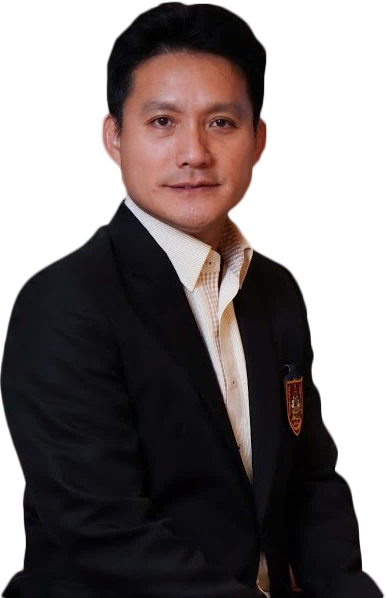 EIT Standards require that ALL rooftop solar, regardless of capacity, must be equipped with AFCI and RSD safety functions”, said Mr Techatat.
“This also implies that many rooftop solar systems under 200 kW which do not have AFCI or RSD are not complied with EIT Standards, and hence possess safety risks.”
For battery energy storage systems, safety certification is even more important. They possess high amount of energy and are always ready to expose.
When choosing a battery for your home, you should consider waterproof and dustproof protection, the use of high-quality cells, safeguards against all types of electrical risks, and, in case of emergencies, a pressure release system to reduce the chance of ignition and fire spread. However, it is recommended to install the battery semi-outdoor.
Homeowners should ensure batteries comply with internationally recognised standards such as IEC 62619, IEC 63056, UN38.3, VDE 2510-50, CE, RCM, ISO 13849, REACH and RoHS, covering thermal stability, electrical safety, transport safety and environmental compliance.
Homeowners are also warned against purchasing rooftop solar systems from small or inexperienced contractors whose installations may not meet required standards, said Poramate Pichitanont, manager for renewable energy at MEA Smart Energy Solution, a subsidiary of the Metropolitan Electricity Authority (MEA).
Many solar-equipped homes remain connected to the state grid, as households still rely on electricity at night. This requires inspection by electricity authorities to ensure that solar-generated power does not flow back into the grid improperly.
“Officials need to check the equipment and installation to ensure electricity from solar panels will not enter the grid,” Mr Poramate said. “Solar power cannot be used if the installation fails inspection.”
He advised homeowners to look beyond promotional pricing by checking customer reviews, the credibility of parent companies, business track records and any history of complaints.
“Rushing into a decision based on price cuts can cause problems and higher costs after installation,” he said.
Efficiency is not just about panel output; it is about how well the system aligns with household routines.
Advanced solutions such as Huawei Solar Cell integrate high-efficiency inverters, intelligent monitoring and safety-by-design architecture.
Their strengths, Mr Techatat noted, include global experience, robust after-sales service, and user-friendly mobile applications.
By combining performance optimisation with compliance to EIT safety standards, such systems aim to deliver both peace of mind and long-term savings.
“Efficiency and safety should never be separated,” Mr Techatat concluded. “A system that performs well but is unsafe is unacceptable, and a safe system that performs poorly will not deliver value.”
As Thailand pushes toward its net-zero emissions target by 2050, rooftop solar is increasingly viewed not just as a cost-saving tool, but as a long-term investment in household security, financial stability and sustainable living for decades to come.
Source: https://www.bangkokpost.com/business/general/3165493/the-2026-rooftop-solar-buyers-guide-what-thai-homeowners-should-look-for