

Bangkok’s State Audit Office 2025 Earthquake collapse still demands answers
One year has passed since the collapse of the State Audit Office (SAO) building — a broad-daylight engineering tragedy that shocked Thailand and, through countless video clips shared online, much of the world. The images were unforgettable: a high-rise sinking almost straight down and ending as a flattened stack of debris within seconds.
Yet even after a year, the most important question remains unanswered: How could this building collapse in such a way?
This is not merely a matter of public curiosity. It is the starting point of forensic engineering. Unless the true cause is correctly understood, no meaningful lesson can be drawn to prevent such a disaster from happening again. In engineering, the first question is not who is to blame. It is — how did the building fail?
Over the past year, the public has been presented with a mixture of partial explanations, isolated technical observations and conspiracy theories. Surprisingly, even some engineers have been sidetracked into focusing on local design flaws or code-related shortcomings without showing that such flaws actually caused the whole building to collapse in the way it did.
Any explanation of the SAO collapse must account for three plain facts. First, it was a total collapse. Second, the building came down almost vertically, with very little tilt. Third, the whole sequence took only about eight seconds. These are not minor details. They are the empirical conditions that every serious hypothesis must be able to clarify.
The first clue lies in the debris. The collapsed mass remained almost entirely within the building’s original footprint and ended as a dense, layered pile. That is the unmistakable signature of a pancake collapse. At the same time, the debris appears to lean slightly towards one side of the structure, suggesting that this may have been the weaker side — the side that gave way first.
The videos then provide an even more revealing clue. Two rear shear walls appear to move downwards together while still connected by a precast wall that shows little visible distortion. In other words, they did not shatter floor by floor at the outset. They sank together, pulling connected structural elements down with them. That is the hallmark of what engineers call a “rigid-body fall”: the supported upper mass initially descends as a relatively coherent block because the support beneath it has suddenly disappeared.
Another video frame shows that while the rear wall zone had already dropped substantially, part of the front floor slab remained near its original level, though beginning to tilt downwards. This suggests that the front columns had not yet fully lost their load-carrying capacity. They were, in effect, the last standing “legs” of the building.
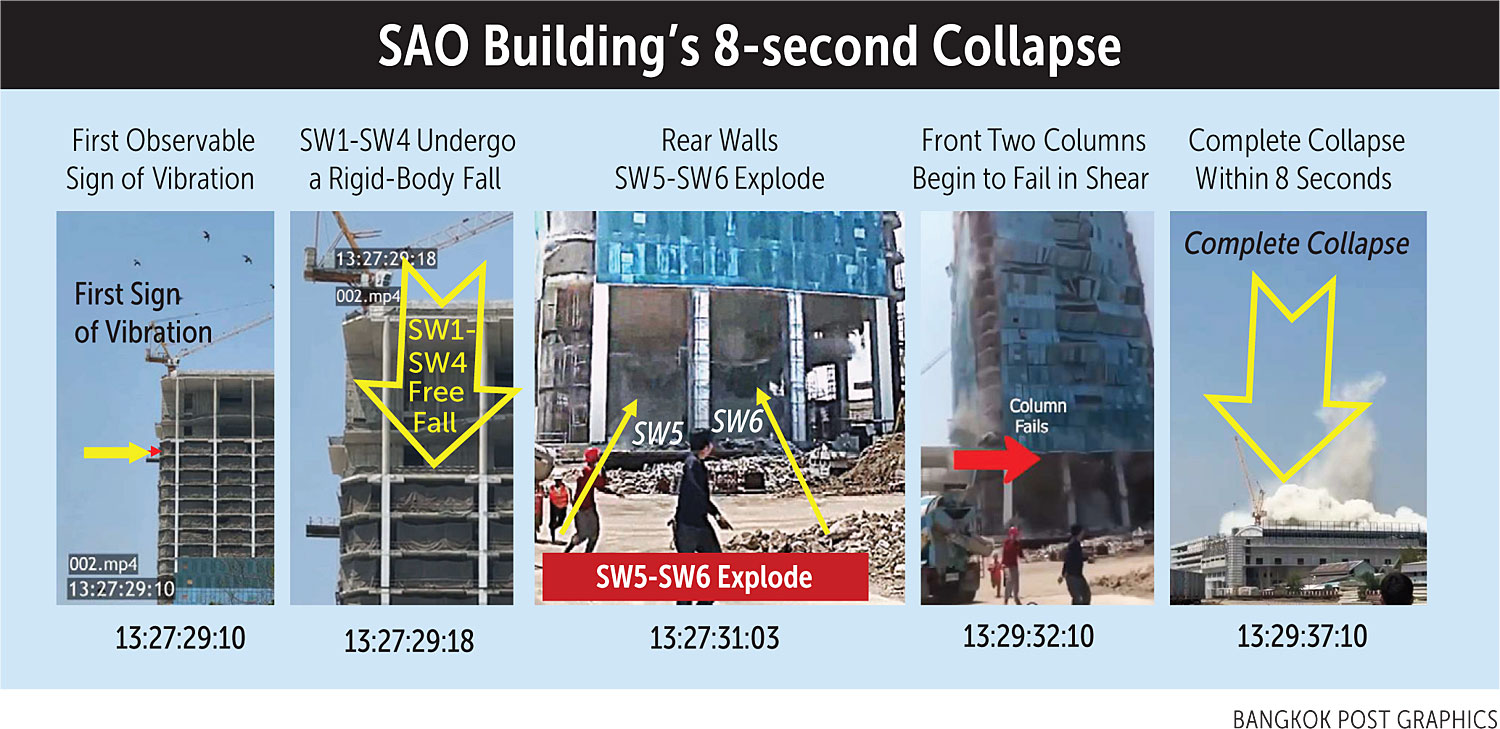 The timing evidence is equally important. The overall collapse took about eight seconds. The first three seconds were the period during which the building’s main vertical support legs — the lower portions of the shear walls and columns — were being destroyed in rapid succession. The next five seconds were of a completely different nature. By then, the lower support system had already failed, and the upper building mass was left without support. It then fell under its own weight.
This interpretation is supported by basic physics. If one measures the fall from roof level to the top of the final debris pile, the theoretical free-fall time is about 4.9 seconds — strikingly close to the observed five-second final stage. This strongly suggests that the last phase of collapse was a near-free-fall vertical descent after the building had already lost its lower support system.
That also explains why the building did not topple sideways. The support system failed too quickly. Once the lower “legs” were destroyed within about three seconds, the upper mass had no time to develop a significant overturning motion.
What happened to the walls? Under repeated shaking and twisting, especially in a structurally asymmetric building, shear walls develop diagonal X-shaped cracking, not only in their plane but also across their thickness where the walls are relatively thin. When such cracked walls are still required to carry immense vertical loads, their lower portions can fail explosively in compression. This is consistent with witness accounts of loud, explosive-like sounds during the event.
Putting the evidence together, the most probable sequence is this: the collapse began on one side of the rear wall system, spread within fractions of a second to adjacent wall zones, then reached the remaining rear walls, and finally shifted the building’s weight onto the front columns, which became the last supporting legs before the entire structure came down.
The videos, therefore, tell a clear story. The SAO building did not simply “fall down”. Its main vertical support system was first destroyed in a matter of seconds. Only after that did the upper mass fall under gravity and crush itself into the pancake-like debris field seen at the end.
One year has already passed; it remains unknown what the culprit is of this tragedy.
Article by:
Professor Emeritus Worsak Kanok-Nukulchai, Ph.D.
Fellow of Royal Society of Thailand
Former President of Asian Institute of Technology (AIT)
Source: https://www.bangkokpost.com/opinion/opinion/3225058/state-audit-office-collapse-still-demands-answers
Google Translation:
เหตุอาคารสำนักงานตรวจสอบบัญชีแห่งชาติ (SAO) ถล่มในกรุงเทพฯ ยังคงต้องการคำตอบ
หนึ่งปีผ่านไปแล้วนับตั้งแต่เหตุการณ์อาคารสำนักงานตรวจสอบบัญชีแห่งชาติ (SAO) ถล่ม ซึ่งเป็นโศกนาฏกรรมทางวิศวกรรมที่เกิดขึ้นในเวลากลางวันแสกๆ สร้างความตกใจให้กับประเทศไทย และทั่วโลกผ่านคลิปวิดีโอมากมายที่เผยแพร่ทางออนไลน์ ภาพเหล่านั้นยากที่จะลืมเลือน: อาคารสูงทรุดตัวลงเกือบเป็นเส้นตรง และจบลงด้วยซากปรักหักพังภายในไม่กี่วินาที
แต่แม้จะผ่านไปหนึ่งปีแล้ว คำถามที่สำคัญที่สุดยังคงไม่มีคำตอบ: อาคารนี้ถล่มลงมาได้อย่างไร?
นี่ไม่ใช่เพียงแค่เรื่องของความอยากรู้อยากเห็นของสาธารณชนเท่านั้น แต่เป็นจุดเริ่มต้นของวิศวกรรมนิติวิทยาศาสตร์ หากไม่เข้าใจสาเหตุที่แท้จริงอย่างถูกต้อง ก็จะไม่สามารถเรียนรู้บทเรียนที่มีความหมายเพื่อป้องกันไม่ให้เกิดภัยพิบัติเช่นนี้ขึ้นอีก ในวิศวกรรม คำถามแรกไม่ใช่ว่าใครเป็นผู้รับผิดชอบ แต่เป็น – อาคารพังทลายได้อย่างไร?
ตลอดปีที่ผ่านมา สาธารณชนได้รับคำอธิบายที่ไม่สมบูรณ์ การสังเกตทางเทคนิคที่กระจัดกระจาย และทฤษฎีสมคบคิดต่างๆ ที่น่าประหลาดใจคือ แม้แต่วิศวกรบางคนก็ยังถูกเบี่ยงเบนความสนใจไปเน้นที่ข้อบกพร่องในการออกแบบเฉพาะจุดหรือข้อบกพร่องที่เกี่ยวข้องกับข้อกำหนด โดยไม่ได้แสดงให้เห็นว่าข้อบกพร่องเหล่านั้นเป็นสาเหตุที่ทำให้ตัวอาคารพังทลายลงในลักษณะเช่นนั้น
คำอธิบายใดๆ เกี่ยวกับการพังทลายของอาคาร SAO ต้องคำนึงถึงข้อเท็จจริงสามประการที่ชัดเจน ประการแรก มันเป็นการพังทลายทั้งหมด ประการที่สอง อาคารพังลงมาเกือบเป็นแนวตั้ง โดยมีการเอียงเพียงเล็กน้อย ประการที่สาม ลำดับเหตุการณ์ทั้งหมดใช้เวลาเพียงประมาณแปดวินาที นี่ไม่ใช่รายละเอียดเล็กน้อย พวกมันเป็นเงื่อนไขเชิงประจักษ์ที่สมมติฐานที่จริงจังทุกข้อต้องสามารถชี้แจงได้
เบาะแสแรกอยู่ที่เศษซาก มวลที่พังทลายยังคงอยู่ภายในพื้นที่เดิมของอาคารเกือบทั้งหมดและสิ้นสุดลงเป็นกองหนาแน่นเป็นชั้นๆ นั่นคือลักษณะเฉพาะของการพังทลายแบบแพนเค้ก ในขณะเดียวกัน เศษซากดูเหมือนจะเอียงไปทางด้านใดด้านหนึ่งของโครงสร้างเล็กน้อย
ซึ่งบ่งชี้ว่านี่อาจเป็นด้านที่อ่อนแอกว่า ซึ่งเป็นด้านที่พังทลายลงก่อน
จากนั้นวิดีโอต่างๆ ก็ให้เบาะแสที่เปิดเผยมากยิ่งขึ้น ผนังรับแรงเฉือนด้านหลังสองด้านดูเหมือนจะเคลื่อนตัวลงมาพร้อมกัน ในขณะที่ยังคงเชื่อมต่อกันด้วยผนังสำเร็จรูปที่แสดงให้เห็นการบิดเบี้ยวเพียงเล็กน้อย กล่าวอีกนัยหนึ่งคือ พวกมันไม่ได้แตกเป็นเสี่ยงๆ ทีละชั้นตั้งแต่แรก แต่พวกมันทรุดตัวลงมาพร้อมกัน ดึงส่วนประกอบโครงสร้างที่เชื่อมต่อกันลงมาด้วย นั่นคือลักษณะเฉพาะที่วิศวกรเรียกว่า “การพังทลายแบบวัตถุแข็ง” (rigid-body fall): มวลส่วนบนที่ได้รับการรองรับในตอนแรกจะทรุดตัวลงมาเป็นก้อนที่ค่อนข้างสมบูรณ์ เพราะการรองรับด้านล่างได้หายไปอย่างกะทันหัน
ภาพวิดีโออีกเฟรมหนึ่งแสดงให้เห็นว่า ในขณะที่บริเวณผนังด้านหลังทรุดตัวลงอย่างมากแล้ว ส่วนหนึ่งของแผ่นพื้นด้านหน้ายังคงอยู่ใกล้ระดับเดิม แม้ว่าจะเริ่มเอียงลงก็ตาม นี่แสดงให้เห็นว่าเสาด้านหน้ายังไม่สูญเสียความสามารถในการรับน้ำหนักไปทั้งหมด พวกมันจึงเป็นเหมือน “ขา” สุดท้ายที่ยังคงยืนอยู่ของอาคาร
หลักฐานเรื่องเวลาเป็นสิ่งสำคัญไม่แพ้กัน การพังทลายโดยรวมใช้เวลาประมาณแปดวินาที สามวินาทีแรกเป็นช่วงเวลาที่ขาค้ำยันแนวตั้งหลักของอาคาร ซึ่งก็คือส่วนล่างของผนังรับแรงเฉือนและเสา ถูกทำลายอย่างรวดเร็วต่อเนื่องกัน ห้าวินาทีถัดมามีลักษณะที่แตกต่างออกไปอย่างสิ้นเชิง ในเวลานั้น ระบบค้ำยันด้านล่างได้พังทลายลงแล้ว และมวลอาคารส่วนบนก็เหลืออยู่โดยปราศจากการค้ำยัน จากนั้นอาคารก็พังทลายลงด้วยน้ำหนักของตัวเอง
การตีความนี้ได้รับการสนับสนุนจากหลักฟิสิกส์พื้นฐาน หากวัดระยะการตกจากระดับหลังคาลงมาถึงยอดกองเศษซากสุดท้าย เวลาการตกอย่างอิสระตามทฤษฎีจะอยู่ที่ประมาณ 4.9 วินาที ซึ่งใกล้เคียงกับเวลาห้าวินาทีสุดท้ายที่สังเกตได้ สิ่งนี้ชี้ให้เห็นอย่างชัดเจนว่าขั้นตอนสุดท้ายของการพังทลายเป็นการตกลงมาในแนวดิ่งเกือบจะเป็นการตกอย่างอิสระหลังจากที่อาคารได้สูญเสียระบบค้ำยันด้านล่างไปแล้ว
นั่นยังอธิบายได้ว่าทำไมอาคารจึงไม่ล้มไปด้านข้าง ระบบค้ำยันพังทลายเร็วเกินไป เมื่อ “ขา” ด้านล่างถูกทำลายภายในเวลาประมาณสามวินาที มวลส่วนบนก็ไม่มีเวลาที่จะพัฒนาการเคลื่อนที่พลิกคว่ำอย่างมีนัยสำคัญ
แล้วผนังล่ะ? ภายใต้การสั่นสะเทือนและการบิดซ้ำๆ โดยเฉพาะอย่างยิ่งในอาคารที่มีโครงสร้างไม่สมมาตร ผนังรับแรงเฉือนจะเกิดรอยแตกเป็นรูปตัว X ในแนวทแยง ไม่เพียงแต่ในระนาบของผนังเท่านั้น แต่ยังเกิดขึ้นตามความหนาของผนังในบริเวณที่ผนังค่อนข้างบางด้วย เมื่อผนังที่แตกร้าวเช่นนี้ยังคงต้องรับน้ำหนักแนวดิ่งมหาศาล ส่วนล่างของผนังอาจพังทลายอย่างรุนแรงเนื่องจากแรงอัด ซึ่งสอดคล้องกับคำบอกเล่าของพยานที่ได้ยินเสียงดังคล้ายระเบิดระหว่างเหตุการณ์
เมื่อนำหลักฐานทั้งหมดมารวมกัน ลำดับเหตุการณ์ที่น่าจะเป็นไปได้มากที่สุดคือ การพังทลายเริ่มต้นที่ด้านใดด้านหนึ่งของระบบผนังด้านหลัง แพร่กระจายภายในเสี้ยววินาทีไปยังบริเวณผนังที่อยู่ติดกัน จากนั้นก็ไปถึงผนังด้านหลังที่เหลือ และในที่สุดก็ถ่ายน้ำหนักของอาคารไปยังเสาด้านหน้า ซึ่งกลายเป็นขาค้ำยันสุดท้ายก่อนที่โครงสร้างทั้งหมดจะพังลงมา
ดังนั้น วิดีโอจึงบอกเล่าเรื่องราวได้อย่างชัดเจน อาคาร SAO ไม่ได้ “พังลงมา” เฉยๆ ระบบค้ำยันแนวตั้งหลักถูกทำลายก่อนในเวลาเพียงไม่กี่วินาที หลังจากนั้นส่วนบนจึงตกลงมาด้วยแรงโน้มถ่วงและบดขยี้กลายเป็นเศษซากแบนราบอย่างที่เห็นในตอนท้าย
หนึ่งปีผ่านไปแล้ว แต่ยังไม่ทราบสาเหตุของโศกนาฏกรรมครั้งนี้
บทความโดย:
ศาสตราจารย์กิตติคุณ ดร. วรศักดิ์ กนกนุกุลชัย
สมาชิกราชสมาคมแห่งประเทศไทย
อดีตอธิการบดีสถาบันเทคโนโลยีแห่งเอเชีย (AIT)