Bangkok-North-East Thailand high-speed rail delayed a year
Land issues, overlapping projects set back progress.
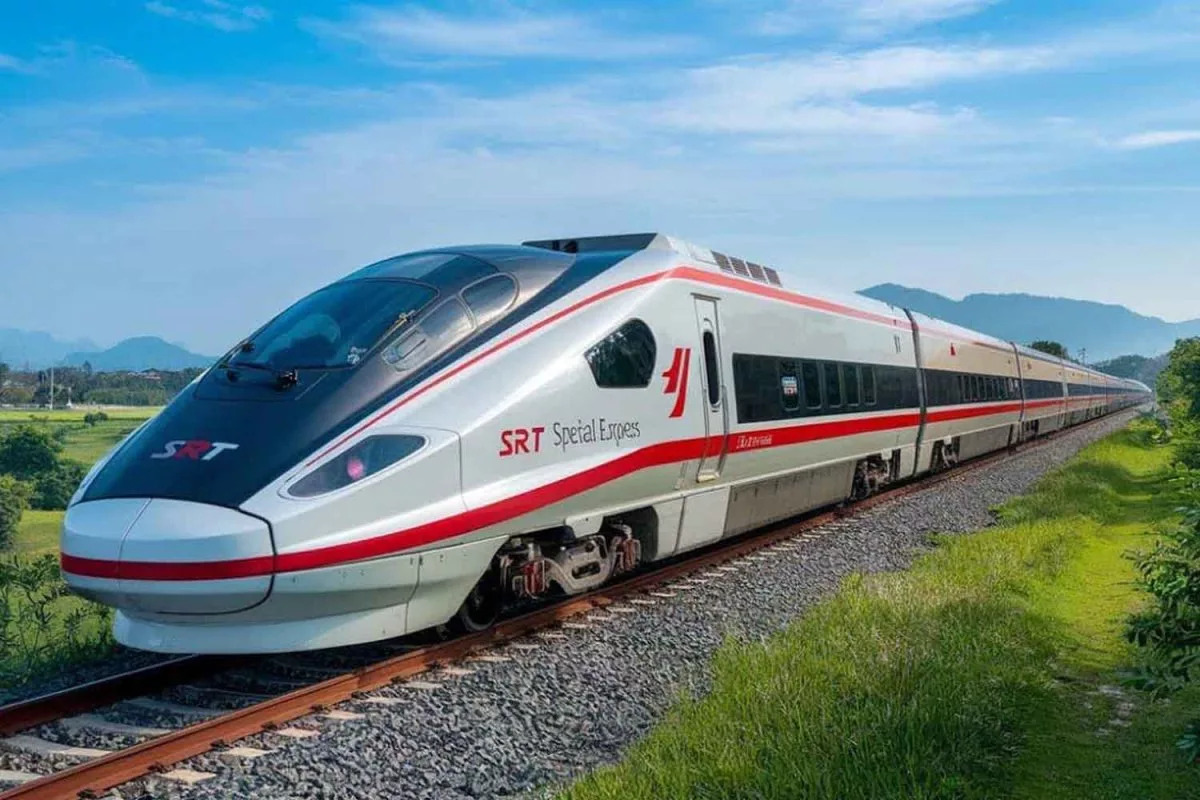
Thailand’s first high-speed rail project, the Bangkok–Nakhon Ratchasima line, is facing a confirmed delay of at least one year due to land expropriation issues and complications arising from overlapping infrastructure projects.
Originally scheduled to open in 2029, the service is now expected to begin operations in 2030.
However, officials at the State Railway of Thailand (SRT) believe that lessons learned from the prolonged first phase will allow construction of Phase 2, from Nakhon Ratchasima to Nong Khai, to be completed faster than originally planned.
The delay stems largely from problems linked to the high-speed rail’s interface with the three-airport rail link project–connecting Don Mueang, Suvarnabhumi, and U-Tapao airports– as well as unresolved land acquisition challenges along the route.
Project overview
Deputy Chief for Special Project and Construction Engineering at the State Railway of Thailand, Kampol Boonchom, who has overseen the project since its inception, provided an update on the first-phase Bangkok–Nakhon Ratchasima route.
The line spans 250.77 kilometres, comprising 188.68 km of elevated track, 54.09 km of at-grade track, and 8 km of tunnels, located in the Muak Lek and Lam Takhong areas.
The total investment value for Phase 1 stands at 179.413 billion baht. The route includes six stations: Krung Thep Aphiwat Central Terminal, Don Mueang, Ayutthaya, Saraburi, Pak Chong, and Nakhon Ratchasima.
As of November 2025, overall construction progress had reached 50%. The project has been divided into 14 construction contracts, with varying levels of completion.
Several sections have already been completed including: Contract 1-1 (Klang Dong–Pang Asok), and Contract 2-1 (Sikhio-Kut Chik).
Other segments are progressing at different speeds. Tunnel works under Contract 3-2 (Muak Lek and Lam Takhong tunnels) are nearly complete at 99.4%, while sections such as Bandai Ma-Lam Takhong (59.4%) and Saraburi-Kaeng Khoi (68.7%) are advancing steadily.
However, two major contracts remain stalled at 0% progress: Contract 4-1 (Bang Sue-Don Muang), and Contract 4-5 (Ban Pho-Phra Kaeo).
Bottlenecks, delays
Mr Kampol said the most problematic segment is Contract 4-1, which overlaps with the three-airport rail link project.
Under the original agreement, construction of this section was to be carried out by Asia Era One Co., the concessionaire led by the CP Group, as both projects share structural components.
“Since 2018, Asia Era One has requested contract renegotiations with the State Railway,” Mr Kampol said. “To date, no conclusion has been reached. We are now waiting for government policy direction on whether the SRT should proceed with construction itself.”
The second stalled section, Contract 4-5 near Ayutthaya station, has been delayed due to its proximity to the Ayutthaya Historical Park, a Unesco World Heritage Site.
Design modifications are required to comply with Unesco guidelines, further slowing progress.
Beyond these two contracts, the project has faced broader challenges. The alignment cuts through mountainous and forested terrain to ensure straight, high-speed operation. This has complicated engineering works and environmental management.
Land expropriation has also proven difficult, with some plots already allocated to other government agencies and others subject to public objections over whether tracks should be elevated or built at ground level.
Lessons for Phase 2
Despite the setbacks, Mr Kampol expressed confidence that these experiences will benefit Phase 2, the Nakhon Ratchasima-Nong Khai section.
“Phase 1 has given the SRT valuable experience,” he said. “Most of Phase 2 runs through flat terrain and does not cut through mountains like Phase 1. That should allow construction to finish faster than planned.”
When completed, Phase 1 is expected to be one of Thailand’s most scenic rail routes, particularly the stretch from Pak Chong to Nakhon Ratchasima, which runs alongside the Lam Takhong reservoir. The line includes three tunnels-Muak Lek, Mahasadet, and Lam Takhong — with the Lam Takhong tunnel stretching up to 5 kilometres, the longest on the route.
Thai–Chinese cooperation
The Bangkok-Nong Khai high-speed rail project originated from Thai-Chinese government cooperation during the Prayut Chan-o-cha administration.
The initiative was revived in 2014, following Gen Prayut’s visit to China on Dec 22-23, 2014 to attend the BRICS (Brazil, Russia, India, China, and South Africa) leaders’ meeting. During that visit, Gen Prayut held bilateral talks with Chinese President Xi Jinping, culminating in the signing of a memorandum of understanding on the Bangkok-Nong Khai railway.
Thai and Chinese working groups held 18 rounds of negotiations over more than two years, eventually agreeing to prioritise construction of the Bangkok–Nakhon Ratchasima section. The project was designed for a maximum speed of 250 km/h, with Thailand fully financing the investment.
Despite agreement in principle, bureaucratic delays prevented construction from starting promptly. The government ultimately invoked Article 44–granting sweeping executive powers at the time — to bypass regulatory obstacles. On July 11, 2017, the cabinet approved construction of Thailand’s first-ever high-speed rail line, with ground-breaking taking place on Dec 21, 2017.
Lengthy Phase 2
Phase 2 covers 357 kilometres, with five stations: Bua Yai, Ban Phai, Khon Kaen, Udon Thani, and Nong Khai. The project includes both elevated and at-grade sections, with a cost of 341.3 billion baht. The cabinet approved Phase 2 on Feb 4, 2025.
Under the current plan, work will begin around mid-2026, with operations commencing in 2032. Both phases will use standard-gauge track (1.435 metres), differing from Thailand’s traditional meter-gauge system.
Demand forecasts
Travel time from Bangkok to Nakhon Ratchasima will be 1 hour and 26 minutes. The journey from Nakhon Ratchasima to Nong Khai will take 1 hour and 44 minutes, while the full Bangkok–Nong Khai trip will take 3 hours and 28 minutes at top speeds of 250 km/h.
Demand is forecast at around 5,000 passengers per trip per day for the Bangkok–Nakhon Ratchasima route upon opening, rising to 9,000 passengers per trip per day for the full Bangkok–Nong Khai line in its first year. Fares are projected at 529 baht for Phase 1 and 1,171 baht for the full route.
The project remains a cornerstone of Thailand’s long-term transport and regional connectivity strategy linking Bangkok to the Northeast and, eventually, cross-border rail networks.
Source: https://www.bangkokpost.com/thailand/general/3168379/cityne-highspeed-rail-delayed-a-year
Google Translate:
โครงการรถไฟความเร็วสูงสายกรุงเทพฯ-ภาคตะวันออกเฉียงเหนือของไทยล่าช้าไปหนึ่งปี
ปัญหาเรื่องที่ดินและโครงการทับซ้อนทำให้ความคืบหน้าล่าช้า
โครงการรถไฟความเร็วสูงสายแรกของประเทศไทย สายกรุงเทพฯ-นครราชสีมา กำลังเผชิญกับความล่าช้าที่ได้รับการยืนยันแล้วอย่างน้อยหนึ่งปี เนื่องจากปัญหาการเวนคืนที่ดินและความซับซ้อนที่เกิดจากโครงการโครงสร้างพื้นฐานที่ทับซ้อนกัน
เดิมทีมีกำหนดเปิดให้บริการในปี 2029 แต่ขณะนี้คาดว่าจะเริ่มให้บริการได้ในปี 2030
อย่างไรก็ตาม เจ้าหน้าที่การรถไฟแห่งประเทศไทย (ร.ฟ.ท.) เชื่อว่าบทเรียนที่ได้จากระยะแรกที่ยืดเยื้อจะทำให้การก่อสร้างระยะที่ 2 จากนครราชสีมาไปยังหนองคาย สามารถแล้วเสร็จได้เร็วกว่าที่วางแผนไว้เดิม
ความล่าช้าส่วนใหญ่เกิดจากปัญหาที่เกี่ยวข้องกับการเชื่อมต่อของรถไฟความเร็วสูงกับโครงการเชื่อมต่อทางรถไฟสามสนามบิน ได้แก่ สนามบินดอนเมือง สุวรรณภูมิ และอู่ตะเภา รวมถึงความท้าทายในการจัดหาที่ดินที่ยังไม่ได้รับการแก้ไขตามเส้นทาง
ภาพรวมโครงการ
นายกำพล บุญชอม รองหัวหน้าฝ่ายโครงการพิเศษและวิศวกรรมก่อสร้าง การรถไฟแห่งประเทศไทย ซึ่งดูแลโครงการนี้มาตั้งแต่เริ่มต้น ได้ให้ข้อมูลอัปเดตเกี่ยวกับโครงการรถไฟฟ้าสายกรุงเทพฯ-นครราชสีมา ระยะที่ 1
เส้นทางนี้มีความยาว 250.77 กิโลเมตร ประกอบด้วยทางยกระดับ 188.68 กิโลเมตร ทางราบ 54.09 กิโลเมตร และอุโมงค์ 8 กิโลเมตร ตั้งอยู่ในพื้นที่มวกเหล็กและลำตะคอง
มูลค่าการลงทุนรวมในระยะที่ 1 อยู่ที่ 179.413 พันล้านบาท เส้นทางนี้มีสถานีทั้งหมด 6 สถานี ได้แก่ กรุงเทพมหานคร ดอนเมือง อยุธยา สระบุรี ปากช่อง และนครราชสีมา
ณ เดือนพฤศจิกายน 2568 ความคืบหน้าการก่อสร้างโดยรวมอยู่ที่ 50% โครงการแบ่งออกเป็น 14 สัญญาการก่อสร้าง โดยมีระดับความคืบหน้าแตกต่างกันไป
หลายส่วนงานก่อสร้างได้เสร็จสมบูรณ์แล้ว ได้แก่ สัญญา 1-1 (กลางดง–ปางอโศก) และสัญญา 2-1 (สิขิ้ว–กุฏจิก)
ส่วนอื่นๆ กำลังดำเนินการด้วยความเร็วที่แตกต่างกัน งานก่อสร้างอุโมงค์ภายใต้สัญญา 3-2 (อุโมงค์มวกเหล็กและลำตะคอง) ใกล้เสร็จสมบูรณ์แล้วที่ 99.4% ในขณะที่ส่วนต่างๆ เช่น บันไดมา–ลำตะคอง (59.4%) และสระบุรี–แก่งคอย (68.7%) กำลังคืบหน้าอย่างต่อเนื่อง
อย่างไรก็ตาม สัญญาหลักสองฉบับยังคงหยุดชะงักอยู่ที่ 0% ได้แก่ สัญญา 4-1 (บางซื่อ–ดอนเมือง) และสัญญา 4-5 (บ้านโพธิ์–พระแก้ว)
ปัญหาคอขวดและความล่าช้า
นายกำพลกล่าวว่าส่วนที่มีปัญหามากที่สุดคือสัญญา 4-1 ซึ่งทับซ้อนกับโครงการเชื่อมต่อทางรถไฟสามสนามบิน
ตามข้อตกลงเดิม การก่อสร้างส่วนนี้จะดำเนินการโดยบริษัท เอเชีย เอรา วัน จำกัด ซึ่งเป็นผู้รับสัมปทานที่นำโดยกลุ่มซีพี เนื่องจากทั้งสองโครงการมีส่วนประกอบโครงสร้างร่วมกัน
“ตั้งแต่ปี 2018 บริษัท เอเชีย เอรา วัน ได้ขอเจรจาต่อรองสัญญากับ การรถไฟแห่งประเทศไทย” นายกำพลกล่าว “จนถึงปัจจุบันยังไม่มีข้อสรุป เรากำลังรอทิศทางนโยบายของรัฐบาลว่าการรถไฟแห่งประเทศไทยควรดำเนินการก่อสร้างเองหรือไม่”
ส่วนที่หยุดชะงักอีกส่วนหนึ่ง คือ สัญญาหมายเลข 4-5 ใกล้สถานีอยุธยา ได้ล่าช้าเนื่องจากอยู่ใกล้กับอุทยานประวัติศาสตร์อยุธยา ซึ่งเป็นมรดกโลกของยูเนสโก
จำเป็นต้องมีการปรับเปลี่ยนการออกแบบเพื่อให้เป็นไปตามแนวทางของยูเนสโก ซึ่งทำให้ความคืบหน้าช้าลงไปอีก
นอกเหนือจากสองสัญญานี้ โครงการยังเผชิญกับความท้าทายที่กว้างขึ้น แนวเส้นทางตัดผ่านภูมิประเทศที่เป็นภูเขาและป่าไม้เพื่อให้มั่นใจว่าการวิ่งด้วยความเร็วสูงและตรง ทำให้งานด้านวิศวกรรมและการจัดการด้านสิ่งแวดล้อมมีความซับซ้อนมากขึ้น
การเวนคืนที่ดินก็พิสูจน์แล้วว่าเป็นเรื่องยากเช่นกัน โดยบางแปลงได้ถูกจัดสรรให้กับหน่วยงานราชการอื่นไปแล้ว และบางแปลงก็อยู่ภายใต้การคัดค้านของประชาชนเกี่ยวกับว่าควรจะสร้างรางรถไฟยกระดับหรือสร้างบนพื้นดิน
บทเรียนสำหรับเฟส 2
แม้จะมีอุปสรรค นายกำพลแสดงความมั่นใจว่าประสบการณ์เหล่านี้จะเป็นประโยชน์ต่อเฟส 2 ซึ่งเป็นช่วงนครราชสีมา-หนองคาย
“เฟส 1 ได้มอบประสบการณ์อันมีค่าให้กับการรถไฟแห่งประเทศไทย” เขากล่าว “ส่วนใหญ่ของเฟส 2 วิ่งผ่านพื้นที่ราบและไม่ได้ตัดผ่านภูเขาเหมือนเฟส 1 นั่นจะทำให้การก่อสร้างเสร็จเร็วกว่าที่วางแผนไว้”
เมื่อสร้างเสร็จ เฟส 1 คาดว่าจะเป็นหนึ่งในเส้นทางรถไฟที่สวยงามที่สุดของประเทศไทย โดยเฉพาะอย่างยิ่งช่วงจากปากช่องไปยังนครราชสีมา ซึ่งวิ่งเลียบอ่างเก็บน้ำลำตะคอง เส้นทางนี้มีอุโมงค์สามแห่ง ได้แก่ อุโมงค์มวกเหล็ก อุโมงค์มหาเสด และอุโมงค์ลำตะคอง โดยอุโมงค์ลำตะคองมีความยาวถึง 5 กิโลเมตร ยาวที่สุดในเส้นทาง
ความร่วมมือไทย-จีน
โครงการรถไฟฟ้าความเร็วสูงกรุงเทพฯ-หนองคาย มีต้นกำเนิดมาจากความร่วมมือระหว่างรัฐบาลไทยและจีนในสมัยรัฐบาลพลเอกประยุทธ์ จันทร์โอชา
โครงการนี้ได้รับการฟื้นฟูขึ้นอีกครั้งในปี 2557 หลังจากการเยือนจีนของพลเอกประยุทธ์ เมื่อวันที่ 22-23 ธันวาคม 2557 เพื่อเข้าร่วมการประชุมผู้นำกลุ่ม BRICS (บราซิล รัสเซีย อินเดีย จีน และแอฟริกาใต้) ในระหว่างการเยือนครั้งนั้น พลเอกประยุทธ์ได้หารือทวิภาคีกับประธานาธิบดีสี จิ้นผิง ซึ่งนำไปสู่การลงนามบันทึกความเข้าใจเกี่ยวกับโครงการรถไฟความเร็วสูงกรุงเทพฯ-หนองคาย
คณะทำงานไทยและจีนได้เจรจากัน 18 รอบ ตลอดระยะเวลากว่าสองปี ในที่สุดก็ตกลงที่จะให้ความสำคัญกับการก่อสร้างส่วนกรุงเทพฯ-นครราชสีมา โครงการนี้ได้รับการออกแบบให้มีความเร็วสูงสุด 250 กิโลเมตรต่อชั่วโมง โดยประเทศไทยเป็นผู้ให้เงินทุนสนับสนุนทั้งหมด
แม้จะเห็นพ้องกันในหลักการแล้ว แต่ความล่าช้าทางด้านระบบราชการทำให้การก่อสร้างไม่สามารถเริ่มต้นได้ทันที ในที่สุดรัฐบาลจึงได้ใช้มาตรา 44 ซึ่งให้อำนาจบริหารอย่างกว้างขวางในขณะนั้น เพื่อหลีกเลี่ยงอุปสรรคทางด้านกฎระเบียบ เมื่อวันที่ 11 กรกฎาคม 2560 คณะรัฐมนตรีได้อนุมัติการก่อสร้างเส้นทางรถไฟความเร็วสูงสายแรกของประเทศไทย โดยมีการวางศิลาฤกษ์เมื่อวันที่ 21 ธันวาคม 2560
ระยะที่ 2 ที่ยาวนาน
ระยะที่ 2 ครอบคลุมระยะทาง 357 กิโลเมตร มี 5 สถานี ได้แก่ บัวใหญ่ บ้านไผ่ ขอนแก่น อุดรธานี และหนองคาย โครงการนี้ประกอบด้วยส่วนยกระดับและส่วนระดับพื้นดิน โดยมีค่าใช้จ่าย 341.3 พันล้านบาท คณะรัฐมนตรีอนุมัติโครงการระยะที่ 2 เมื่อวันที่ 4 กุมภาพันธ์ 2568
ตามแผนปัจจุบัน งานก่อสร้างจะเริ่มประมาณกลางปี 2569 และเริ่มให้บริการในปี 2575 ทั้งสองระยะจะใช้รางมาตรฐาน (1.435 เมตร) ซึ่งแตกต่างจากระบบรางเมตรแบบดั้งเดิมของประเทศไทย
การคาดการณ์ความต้องการ
เวลาเดินทางจากกรุงเทพฯ ไปนครราชสีมาจะใช้เวลา 1 ชั่วโมง 26 นาที การเดินทางจากนครราชสีมาไปหนองคายจะใช้เวลา 1 ชั่วโมง 44 นาที ขณะที่การเดินทางเต็มเส้นทางกรุงเทพฯ-หนองคายจะใช้เวลา 3 ชั่วโมง 28 นาที ด้วยความเร็วสูงสุด 250 กิโลเมตรต่อชั่วโมง
คาดการณ์ความต้องการอยู่ที่ประมาณ 5,000 คนต่อเที่ยวต่อวันสำหรับเส้นทางกรุงเทพฯ-นครราชสีมาเมื่อเปิดให้บริการ และเพิ่มขึ้นเป็น 9,000 คนต่อเที่ยวต่อวันสำหรับเส้นทางกรุงเทพฯ-หนองคายเต็มเส้นทางในปีแรก คาดการณ์ค่าโดยสารอยู่ที่ 529 บาทสำหรับเฟสแรก และ 1,171 บาทสำหรับเส้นทางทั้งหมด
โครงการนี้ยังคงเป็นรากฐานสำคัญของยุทธศาสตร์ด้านการขนส่งและการเชื่อมต่อระดับภูมิภาคในระยะยาวของประเทศไทย ซึ่งเชื่อมโยงกรุงเทพฯ กับภาคตะวันออกเฉียงเหนือ และในอนาคตจะเชื่อมโยงไปยังเครือข่ายรถไฟข้ามพรมแดน