 Bangkok Metropolitan Administration (BMA) moves to revive THB30 billion BTS Silom Line extension
- The Bangkok Metropolitan Administration (BMA) is reviving the THB30 billion BTS Silom Line extension project, which will connect Bang Wa to Taling Chan.
- The BMA is seeking private-sector investment through a Public-Private Partnership (PPP) model and has held a seminar to gather feedback from potential investors.
- The project’s timeline aims for a Cabinet submission in 2028, with construction planned for 2029–2034 and the start of service expected in 2034.
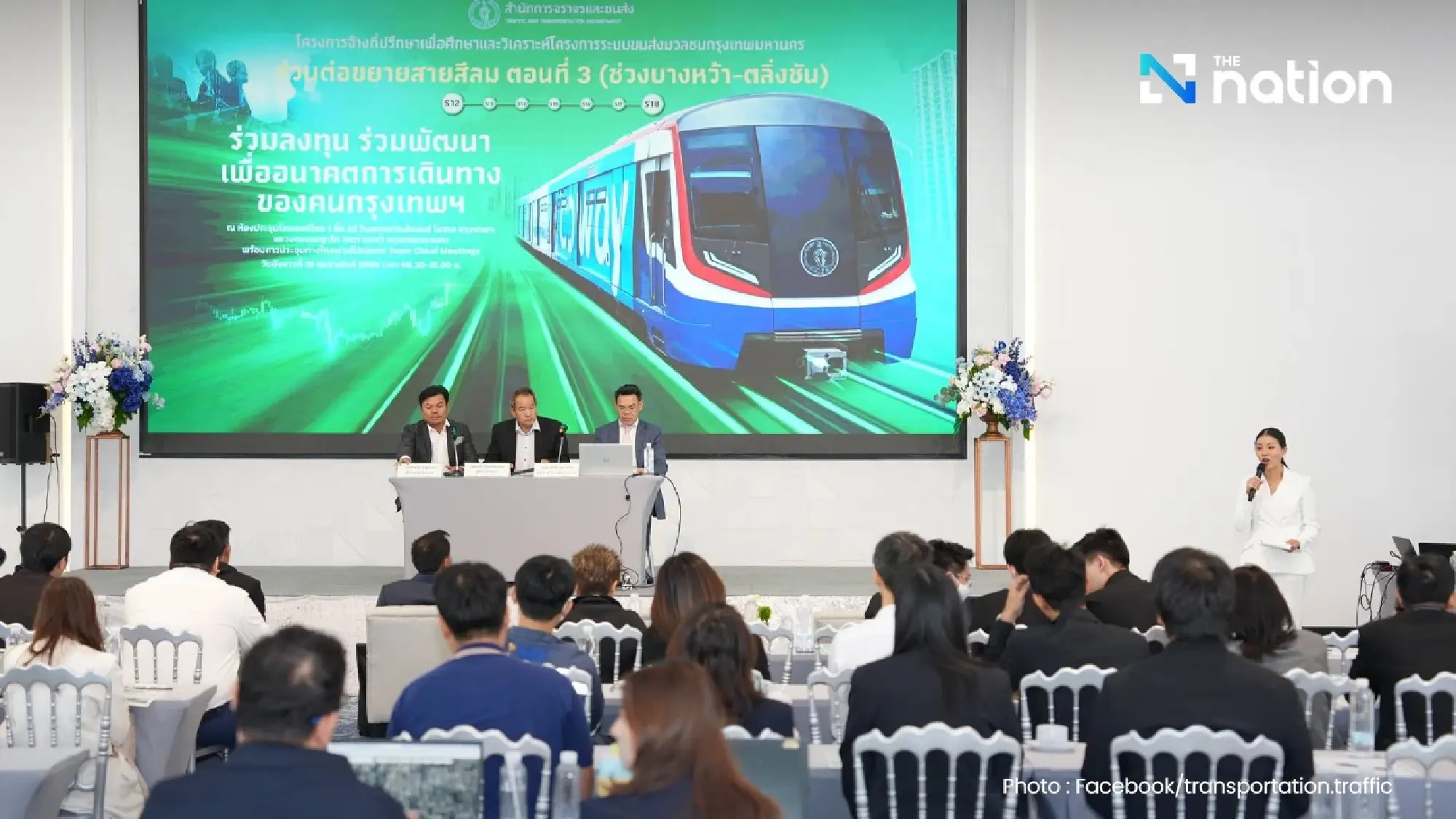
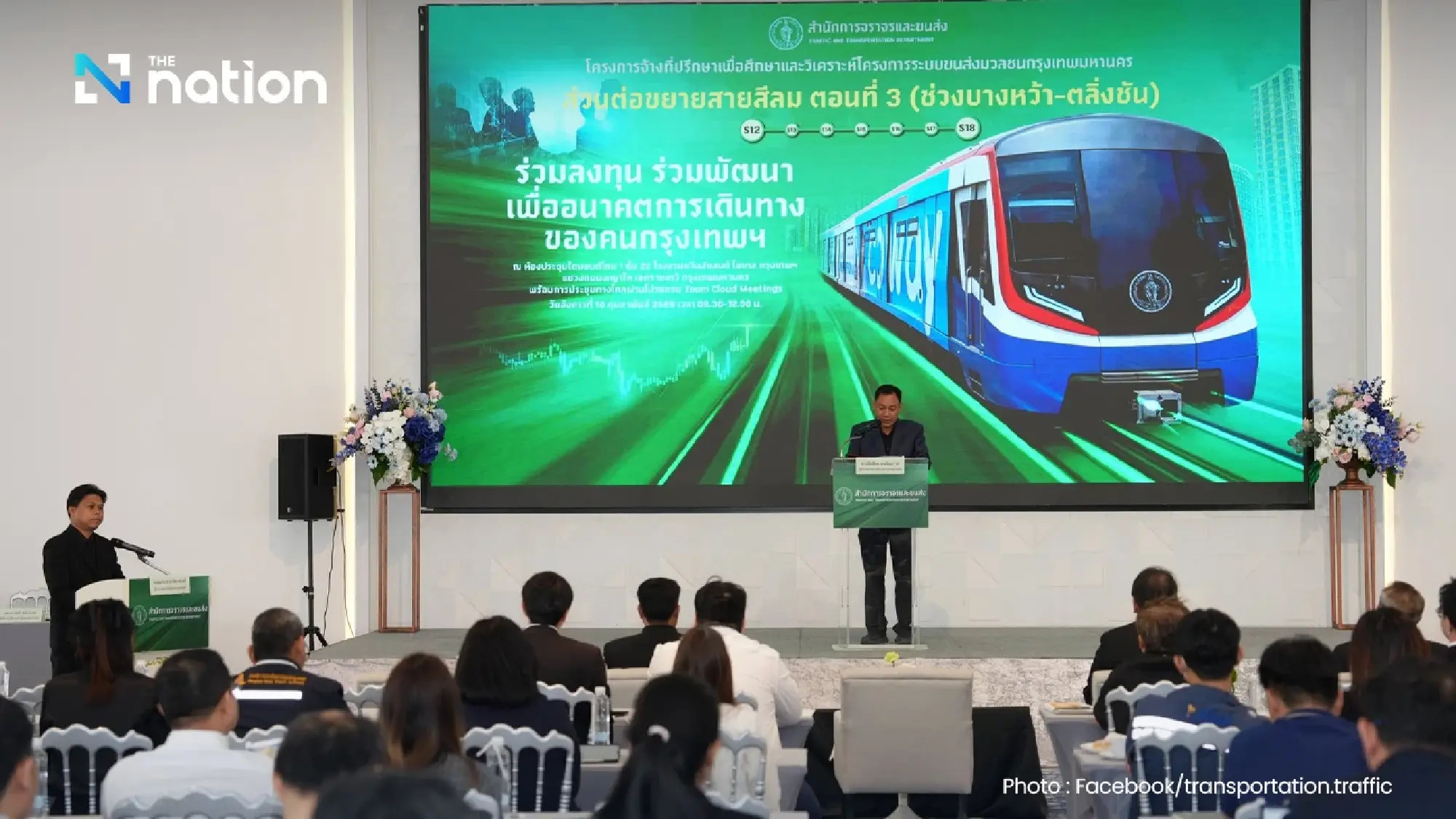
Sitthiporn Somkitsan, Director General, Traffic and Transportation Department, Bangkok Metropolitan Administration (BMA), said the BMA has held a market-sounding seminar to gather private-sector views on investment in the BTS Silom Line Extension (Section 3), running from Bang Wa to Taling Chan, with an estimated budget of THB30 billion.
He said the exercise was conducted in line with the Public-Private Partnership Act, 2019, and the feedback will be used to refine the project study and analysis.
Feedback to shape conditions and incentives
After the seminar, the BMA will compile comments from private firms and relevant agencies to improve the study and produce a more complete and practical investment model, covering feasibility factors, conditions and incentives that the private sector is interested in, while ensuring the public sector receives appropriate value for money.
 Project status and timeline
The project is currently at the stage of submitting an environmental impact assessment (EIA).
The BMA plans to prepare a PPP report in 2026, before submitting the project to the Cabinet in 2028.
It expects the tender to open in 2028–2029, construction to take place in 2029–2034, and service to begin in 2034.
Earlier study completed in 2016
Sitthiporn said the BMA previously completed feasibility studies for the extension in 2016, covering economic, engineering and environmental aspects, passenger-demand forecasts, economic and financial returns, and an appropriate investment model.
Because the project requires significant funding, the BMA is considering a public-private partnership (PPP) approach to bring in private-sector participation.
Waiting on the new government’s policy direction
Sitthiporn said the BMA must also wait for the new government’s policy stance, noting that the Commission for the Management of Road Traffic had transferred responsibility for this rail project to the Mass Rapid Transit Authority of Thailand (MRTA), but the matter has not yet been submitted to the Cabinet, meaning the transfer is not yet in effect and the next steps remain unclear.
Preferred model: PPP Gross Cost
He said the most suitable structure for the project is a PPP Gross Cost model, split into two phases:
Construction investment phase: the public sector will handle land ownership/acquisition and civil works.
Systems and O&M phase: the private sector will build the systems, procure rolling stock, and be fully responsible for operations and maintenance (O&M).
The public sector will own project revenue, while the private partner will receive an availability payment based on service-quality conditions.
Sitthiporn said hiring a private operator under this PPP structure could help reduce fares through a single-fare approach, and that private-sector operational capability could also help reduce overall project costs.
Incumbent operator option: BTSC
On whether the existing concessionaire, Bangkok Mass Transit System Public Company Limited (BTSC), the BTS Skytrain operator, should be granted investment rights, Sitthiporn said it may be appropriate to keep a single private operator to reduce issues such as spare-part changes, maintenance equipment compatibility, and depot/rolling-stock facility requirements.
Multiple operators, he warned, could push up fares.
He said discussions should be held again on whether to hire an operator temporarily or integrate this extension into a single concession alongside the Green Line main routes: the Sukhumvit Line (Mo Chit–On Nut) and the Silom Line (National Stadium–Saphan Taksin).
He noted BTSC began service in 1999 under a 30-year concession that will expire in 2029, after which BTSC must hand over all assets to the BMA.
 Route, stations and design
The Bang Wa–Taling Chan extension will start at the BTS interchange at Bang Wa Station and run north along the median of Ratchaphruek Road, passing Bang Waek junction and the Phran Nok–Phutthamonthon Sai 4 junction.
It will then cross Borommaratchachonnani Road and the Kanchanaphisek Expressway, ending near the down-ramp of the bridge crossing the Light Red Line (Bang Sue–Taling Chan) rail corridor.
The route is around 7.5 kilometres with six stations: Bang Waek, Bang Chueak Nang, Bang Phrom, Intharawat, Borommaratchachonnani, and Taling Chan.
All six will be elevated stations, with the guideway and station structures built on the median of Ratchaphruek Road.
Station entrances will be on sidewalks, with stairs, escalators and lifts.
Revenue and ridership forecast
The project is expected to generate revenue from fares and other commercial sources, including advertising-space rentals, retail units, vending-machine areas and open spaces for activities.
Ridership is forecast at around 73,000 passengers per day in 2034, after services begin.
Companies expressing interest
The BMA said multiple private firms and contractors attended and showed interest, including BTSC, Bangkok Expressway and Metro Public Company Limited (BEM), Nawarat Patanakarn Public Company Limited (NWR), Italian-Thai Development Public Company Limited, A.S. Associated Engineering (1964) Co., Ltd., and Siemens Mobility Company Limited.
Source: https://www.nationthailand.com/blogs/business/investment/40062368
Google Translation:
กรุงเทพมหานคร (BMA) เดินหน้าโครงการขยายเส้นทางรถไฟฟ้าสายสีลม มูลค่า 30 พันล้านบาท
กรุงเทพมหานคร (กรุงเทพมหานคร) กำลังฟื้นฟูโครงการรถไฟฟ้าสายสีลมส่วนต่อขยาย มูลค่า 30,000 ล้านบาท ซึ่งจะเชื่อมต่อสถานีบางหว้ากับสถานีตลิ่งชัน
กรุงเทพมหานครกำลังมองหาการลงทุนจากภาคเอกชนผ่านรูปแบบความร่วมมือระหว่างภาครัฐและเอกชน (PPP) และได้จัดสัมมนาเพื่อรวบรวมความคิดเห็นจากนักลงทุนที่มีศักยภาพ
โครงการนี้มีเป้าหมายที่จะเสนอต่อคณะรัฐมนตรีในปี 2561 โดยวางแผนการก่อสร้างระหว่างปี 2562-2567 และเริ่มให้บริการในปี 2567
นางสาวสิทธิพร สมกิจสัน อธิบดีกรมการขนส่ง กรุงเทพมหานคร (กรุงเทพมหานคร) กล่าวว่า กรุงเทพมหานครได้จัดสัมมนาเพื่อรับฟังความคิดเห็นจากภาคเอกชนเกี่ยวกับการลงทุนในโครงการรถไฟฟ้าสายสีลมส่วนต่อขยาย (ช่วงที่ 3) จากบางหว้าไปยังตลิ่งชัน ด้วยงบประมาณประมาณ 30,000 ล้านบาท
เขากล่าวว่าการดำเนินการดังกล่าวเป็นไปตามพระราชบัญญัติความร่วมมือระหว่างภาครัฐและเอกชน พ.ศ. 2562 และข้อเสนอแนะที่ได้รับจะนำไปใช้ในการปรับปรุงการศึกษาและการวิเคราะห์โครงการให้ดียิ่งขึ้น
ข้อเสนอแนะเพื่อกำหนดเงื่อนไขและแรงจูงใจ
หลังจากการสัมมนา สำนักงานบริหารมหานครบังคลาเทศ (BMA) จะรวบรวมความคิดเห็นจากบริษัทเอกชนและหน่วยงานที่เกี่ยวข้องเพื่อปรับปรุงการศึกษาและสร้างแบบจำลองการลงทุนที่สมบูรณ์และใช้งานได้จริงมากขึ้น โดยครอบคลุมปัจจัยด้านความเป็นไปได้ เงื่อนไข และแรงจูงใจที่ภาคเอกชนสนใจ ในขณะเดียวกันก็รับประกันว่าภาครัฐจะได้รับผลตอบแทนที่คุ้มค่า
สถานะโครงการและระยะเวลา
ขณะนี้โครงการอยู่ในขั้นตอนการยื่นรายงานการประเมินผลกระทบสิ่งแวดล้อม (EIA)
กรุงเทพมหานครมีแผนจะจัดทำรายงานความร่วมมือระหว่างภาครัฐและเอกชน (PPP) ในปี 2569 ก่อนจะนำเสนอโครงการต่อคณะรัฐมนตรีในปี 2561
คาดว่าจะเปิดประมูลในปี 2561-2562 เริ่มก่อสร้างในปี 2562-2567 และเริ่มให้บริการในปี 2567
การศึกษาเบื้องต้นเสร็จสิ้นในปี 2559
สิทธิพรกล่าวว่า กรุงเทพมหานครได้ทำการศึกษาความเป็นไปได้สำหรับการขยายเส้นทางรถไฟฟ้าในปี 2559 ซึ่งครอบคลุมด้านเศรษฐกิจ วิศวกรรม และสิ่งแวดล้อม การคาดการณ์ความต้องการของผู้โดยสาร ผลตอบแทนทางเศรษฐกิจและการเงิน และแบบจำลองการลงทุนที่เหมาะสม
เนื่องจากโครงการนี้ต้องการเงินทุนจำนวนมาก กรุงเทพมหานครจึงกำลังพิจารณาแนวทางความร่วมมือระหว่างภาครัฐและเอกชน (PPP) เพื่อดึงภาคเอกชนเข้ามามีส่วนร่วม
กรุงเทพมหานครเตรียมรื้อฟื้นโครงการรถไฟฟ้าสายสีลมส่วนต่อขยาย มูลค่า 30,000 ล้านบาท
รอทิศทางนโยบายจากรัฐบาลชุดใหม่
สิทธิพรกล่าวว่า กรุงเทพมหานครต้องรอท่าทีนโยบายจากรัฐบาลชุดใหม่ด้วย โดยระบุว่าคณะกรรมการจัดการจราจรทางบกได้โอนความรับผิดชอบโครงการรถไฟฟ้านี้ให้แก่การรถไฟฟ้าขนส่งมวลชนแห่งประเทศไทย (รฟฟ.) แล้ว แต่ยังไม่ได้นำเสนอต่อคณะรัฐมนตรี หมายความว่าการโอนยังไม่มีผลบังคับใช้ และขั้นตอนต่อไปยังไม่ชัดเจน
รูปแบบที่เหมาะสมที่สุด: PPP แบบต้นทุนรวม
เขากล่าวว่าโครงสร้างที่เหมาะสมที่สุดสำหรับโครงการนี้คือรูปแบบ PPP แบบต้นทุนรวม แบ่งออกเป็นสองเฟส:
เฟสการลงทุนก่อสร้าง: ภาครัฐจะรับผิดชอบการเป็นเจ้าของ/จัดหาที่ดินและงานโยธา
เฟสระบบและการดำเนินงานและบำรุงรักษา: ภาคเอกชนจะสร้างระบบ จัดหาขบวนรถ และรับผิดชอบการดำเนินงานและบำรุงรักษา (O&M) อย่างเต็มที่
ภาครัฐจะเป็นเจ้าของรายได้จากโครงการ ในขณะที่ภาคเอกชนจะได้รับค่าตอบแทนตามเงื่อนไขคุณภาพการบริการ
สิทธิพรกล่าวว่า การว่าจ้างผู้ประกอบการภาคเอกชนภายใต้โครงสร้าง PPP นี้จะช่วยลดค่าโดยสารได้ด้วยวิธีการกำหนดค่าโดยสารเดียว และความสามารถในการดำเนินงานของภาคเอกชนยังช่วยลดต้นทุนโครงการโดยรวมได้อีกด้วย
ตัวเลือกผู้ประกอบการรายเดิม: BTSC
เกี่ยวกับว่าควรให้สิทธิ์การลงทุนแก่ผู้รับสัมปทานรายเดิม บริษัท รถไฟฟ้าขนส่งมวลชนกรุงเทพ จำกัด (มหาชน) (BTSC) ผู้ให้บริการรถไฟฟ้า BTS หรือไม่ สิทธิพรกล่าวว่า อาจเหมาะสมที่จะคงผู้ประกอบการภาคเอกชนเพียงรายเดียวไว้ เพื่อลดปัญหาต่างๆ เช่น การเปลี่ยนแปลงอะไหล่ ความเข้ากันได้ของอุปกรณ์บำรุงรักษา และข้อกำหนดด้านสถานที่จอดรถ/รถไฟ
เขาเตือนว่า การมีผู้ประกอบการหลายรายอาจทำให้ค่าโดยสารสูงขึ้น
เขากล่าวว่าควรมีการหารือกันอีกครั้งว่าจะว่าจ้างผู้ประกอบการชั่วคราวหรือรวมส่วนต่อขยายนี้เข้ากับสัมปทานเดียวควบคู่ไปกับเส้นทางหลักของสายสีเขียว ได้แก่ สายสุขุมวิท (หมอชิต-ออนนัท) และสายสีลม (สนามกีฬาแห่งชาติ-สะพานตากสิน)
เขาตั้งข้อสังเกตว่า รถไฟฟ้า BTSC เริ่มให้บริการในปี 2542 ภายใต้สัมปทาน 30 ปี ซึ่งจะหมดอายุในปี 2562 หลังจากนั้น BTSC จะต้องส่งมอบทรัพย์สินทั้งหมดให้กับกรุงเทพมหานคร
เส้นทาง สถานี และการออกแบบ
ส่วนต่อขยายสายบางหว้า-ตะลิ่งชัน จะเริ่มต้นที่สถานีบางหว้า ซึ่งเป็นจุดเชื่อมต่อรถไฟฟ้า BTS และวิ่งไปทางทิศเหนือตามแนวเกาะกลางถนนราชพฤกษ์ ผ่านแยกบางหว้า และแยกพระนอก-พุทธมณฑลสาย 4
จากนั้นจะข้ามถนนบรมราชชนนี และทางด่วนกาญจนภิเษก สิ้นสุดใกล้ทางลงสะพานข้ามทางรถไฟสายสีแดงอ่อน (บางซื่อ-ตะลิ่งชัน)
เส้นทางมีความยาวประมาณ 7.5 กิโลเมตร มี 6 สถานี ได้แก่ บางหว้า บางเชิดนาง บางพรหม อินทราวัฒน์ บรมราชชนนี และตะลิ่งชัน
ทั้ง 6 สถานีจะเป็นสถานียกระดับ โดยทางวิ่งและโครงสร้างสถานีจะสร้างอยู่บนเกาะกลางถนนราชพฤกษ์