
 Vietnam seeks $35 billion for 29 expressway projects
THIS NEWS ARTICLE KINDLY SPONSORED BY FALLPROTEC, A WORLD-RENOWNED NAME IN THE DESIGN AND MANUFACTURE OF PREMIUM FALL PROTECTION SYSTEMS AND HEIGHT ACCESS SOLUTIONS
Vietnam’s Ministry of Construction has announced 29 priority expressway projects seeking public-private partnership (PPP) investment during 2026-2030, with preliminary capital requirements totaling nearly VND923 trillion (US$35 billion).
The Ministry of Construction’s priority list includes projects to widen sections of the eastern North-South Expressway, complete ring road networks and develop new routes connecting major economic regions.
Among the largest proposals are the expansion of the Mai Son-Cam Lo and Quang Ngai-Dau Giay sections of the eastern North-South Expressway, with preliminary investment estimates of VND72.185 trillion and VND78.224 trillion, respectively.
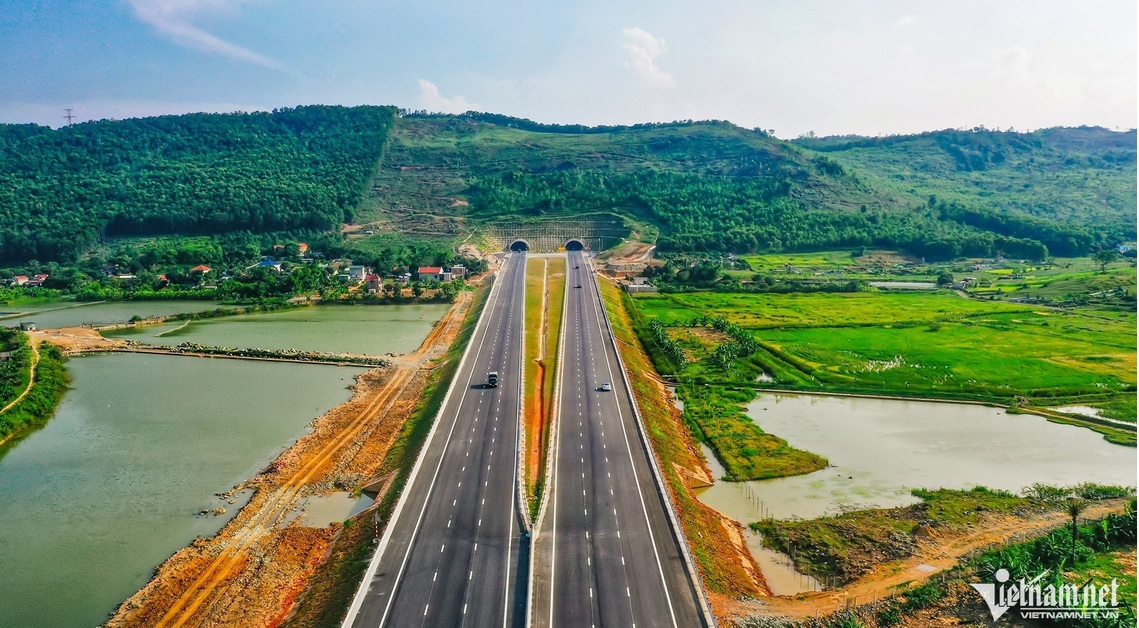
Expanding Vietnam’s expressway network is expected to improve regional connectivity, stimulate economic development and attract investment. Photo: Hoang Ha
Both sections are planned to be upgraded from four limited-standard lanes to full six-lane expressways.
In northern Vietnam, Ring Road 5 in the Hanoi Capital Region is proposed as a six-lane expressway with parallel service roads, passing through Hanoi, Ninh Binh, Bac Ninh, Thai Nguyen and Phu Tho.
The route is expected to strengthen connectivity among localities, divert long-distance traffic away from the capital and expand opportunities for urban and industrial development around Hanoi.
In the Central Highlands, the proposed Pleiku-Buon Ma Thuot, Buon Ma Thuot-Gia Nghia and Ngoc Hoi-Pleiku expressways are intended to gradually complete the region’s expressway network.
These routes would improve connections between economic centers and major production areas.
Meanwhile, the Nha Trang-Da Lat and Phan Thiet-Bao Loc expressways are expected to shorten travel times between the Central Highlands and the south-central coastal region.
The projects would facilitate freight transportation, tourism and access to seaports.
In the Mekong Delta, the priority list includes the Ha Tien-Rach Gia, HCM City-Vinh Long-Can Tho-Ca Mau and Hong Ngu-Tra Vinh expressways.
These projects aim to improve connections among economic centers, production areas, border crossings and seaports while strengthening links with Vietnam’s southern economic growth region.
Alongside new expressways, the list includes a project to widen the 76-kilometer HCM City Ring Road 3.
The road is expected to be upgraded from four limited-standard lanes to eight lanes, requiring preliminary investment of approximately VND38 trillion.
Expanding existing expressways and adding new transport corridors are expected to increase transportation capacity, ease pressure on the road network and attract investment to local economies.
The challenge of mobilizing nearly VND923 trillion
With total preliminary investment estimated at nearly VND923 trillion, implementing the 29-project portfolio will require substantial private-sector financing.
It will also demand financially viable project structures and effective risk-sharing arrangements between the State and investors.
Several projects have already attracted investor interest, received investment proposals or been assigned for preliminary studies.
However, inclusion on the priority investment list does not mean that investor selection procedures have been completed or that the projects are guaranteed to proceed under the PPP model.
Commenting on PPP expressway development, Le Huyen, Vice Chairman of the Khanh Hoa Provincial People’s Committee, said expressways play an important role in expanding development opportunities, improving regional connectivity, supporting tourism and logistics, and attracting investment.
The Nha Trang-Cam Lam and Cam Lam-Vinh Hao expressway sections, developed under build-operate-transfer (BOT) and PPP arrangements, have already helped improve transportation links.
These projects demonstrate the potential contribution of private investment to road infrastructure development.
However, Huyen acknowledged that PPP projects continue to face significant challenges, particularly in securing medium- and long-term financing, clearing land and implementing risk-sharing mechanisms.
Expressways crossing mountainous terrain and steep passes generally require higher investment per kilometer and longer capital recovery periods.
At the same time, access to bank financing remains limited.
Land clearance can also be prolonged by the large scale of affected areas, complicated administrative procedures and fluctuations in compensation costs, placing additional pressure on local government budgets.
Another major risk is that actual traffic volumes may fall below forecasts, resulting in toll revenues that fail to meet the assumptions of the original financial plan.
Determining project revenues, conducting audits and allocating funds for revenue-sharing mechanisms can also delay efforts to resolve financial difficulties.
A representative of the Ministry of Finance emphasized the need to carefully assess financial efficiency, revenue-generating potential and capital recovery arrangements before deciding to implement projects through PPP contracts.
For projects considered necessary but unable to demonstrate financial viability, authorities should consider public investment instead.
After construction, the State could grant concessions for commercial operation, management or toll collection under an appropriate arrangement.
Ultimately, the feasibility of each project will depend not only on identifying financing sources but also on budget availability, capital recovery plans, risk-sharing mechanisms and land clearance progress.
These factors will determine whether Vietnam can turn its proposed portfolio of 29 expressway projects into reality during the 2026-2030 period.
Source: https://vietnamnet.vn/en/vietnam-seeks-35-billion-for-29-expressway-projects-2566076.html
Google Translation:
[We apologise if any of the translation is incorrect: google Translation occasionally gets it wrong]
เวียดนามต้องการเงินทุน 35 พันล้านดอลลาร์สหรัฐสำหรับโครงการทางด่วน 29 โครงการ
บทความข่าวนี้ได้รับการสนับสนุนโดย FALLPROTEC บริษัทชั้นนำระดับโลกด้านการออกแบบและผลิตระบบป้องกันการตกจากที่สูงและโซลูชันการเข้าถึงที่สูงระดับพรีเมียม
กระทรวงการก่อสร้างของเวียดนามได้ประกาศโครงการทางด่วนสำคัญ 29 โครงการที่ต้องการการลงทุนแบบความร่วมมือระหว่างภาครัฐและเอกชน (PPP) ในช่วงปี 2026-2030 โดยมีเงินทุนที่ต้องการเบื้องต้นรวมเกือบ 923 ล้านล้านดอง (35 พันล้านดอลลาร์สหรัฐ)
รายการโครงการสำคัญของกระทรวงการก่อสร้างรวมถึงโครงการขยายทางด่วนสายเหนือ-ใต้ทางตะวันออก การสร้างเครือข่ายถนนวงแหวนให้แล้วเสร็จ และการพัฒนาเส้นทางใหม่เชื่อมต่อเขตเศรษฐกิจสำคัญต่างๆ
หนึ่งในโครงการขนาดใหญ่ที่สุดคือการขยายทางด่วนสายเหนือ-ใต้ฝั่งตะวันออก ช่วงไมซอน-กัมโล และกวางงาย-เดาเจย์ โดยมีการประเมินการลงทุนเบื้องต้นอยู่ที่ 72.185 ล้านล้านดอง และ 78.224 ล้านล้านดอง ตามลำดับ
การขยายเครือข่ายทางด่วนของเวียดนามคาดว่าจะช่วยเพิ่มการเชื่อมต่อในระดับภูมิภาค กระตุ้นการพัฒนาเศรษฐกิจ และดึงดูดการลงทุน ภาพ: ฮว่าง ฮา
ทั้งสองช่วงมีแผนที่จะยกระดับจากทางด่วน 4 เลนมาตรฐานเป็นทางด่วน 6 เลนเต็มรูปแบบ
ในภาคเหนือของเวียดนาม มีการเสนอให้สร้างถนนวงแหวนรอบที่ 5 ในเขตเมืองหลวงฮานอยเป็นทางด่วน 6 เลนพร้อมถนนบริการคู่ขนาน ผ่านฮานอย นิงบิงห์ บักนิงห์ ไทยเหงียน และฟูโถ
คาดว่าเส้นทางนี้จะช่วยเสริมสร้างการเชื่อมต่อระหว่างพื้นที่ต่างๆ ลดปริมาณการจราจรระยะไกลออกจากเมืองหลวง และขยายโอกาสในการพัฒนาเมืองและอุตสาหกรรมรอบๆ ฮานอย
ในเขตที่ราบสูงตอนกลาง โครงการทางด่วนเปลกู-บัวนมาทูโอต บัวนมาทูโอต-เกียเงีย และง็อกฮอย-เปลกู มีเป้าหมายเพื่อค่อยๆ เติมเต็มเครือข่ายทางด่วนของภูมิภาค
เส้นทางเหล่านี้จะช่วยปรับปรุงการเชื่อมต่อระหว่างศูนย์กลางทางเศรษฐกิจและพื้นที่การผลิตที่สำคัญ
ขณะเดียวกัน ทางด่วนญาตรัง-ดาลัด และฟานเถียต-เบาล็อก คาดว่าจะช่วยลดระยะเวลาการเดินทางระหว่างที่ราบสูงตอนกลางและภูมิภาคชายฝั่งตอนกลางและตอนใต้
โครงการเหล่านี้จะช่วยอำนวยความสะดวกในการขนส่งสินค้า การท่องเที่ยว และการเข้าถึงท่าเรือ
ในเขตสามเหลี่ยมปากแม่น้ำโขง รายชื่อโครงการลำดับความสำคัญ ได้แก่ ทางด่วนฮาเตียน-รัชเกีย โฮจิมินห์ซิตี้-วินห์ลอง-กันโถ-กาเมา และฮ่องงู-ตราวิญ
โครงการเหล่านี้มีเป้าหมายเพื่อปรับปรุงการเชื่อมต่อระหว่างศูนย์กลางทางเศรษฐกิจ พื้นที่การผลิต ด่านชายแดน และท่าเรือ ขณะเดียวกันก็เสริมสร้างความเชื่อมโยงกับภูมิภาคการเติบโตทางเศรษฐกิจตอนใต้ของเวียดนาม
นอกจากทางด่วนสายใหม่แล้ว รายชื่อโครงการยังรวมถึงโครงการขยายถนนวงแหวนรอบนอกนครโฮจิมินห์ ระยะทาง 76 กิโลเมตร
คาดว่าจะขยายถนนจาก 4 เลนมาตรฐานเป็น 8 เลน ซึ่งต้องใช้เงินลงทุนเบื้องต้นประมาณ 38 ล้านล้านดง
การขยายทางด่วนที่มีอยู่และการเพิ่มเส้นทางคมนาคมใหม่คาดว่าจะเพิ่มขีดความสามารถในการขนส่ง ลดความแออัดของเครือข่ายถนน และดึงดูดการลงทุนเข้าสู่เศรษฐกิจท้องถิ่น
ความท้าทายในการระดมทุนเกือบ 923 ล้านล้านดง
ด้วยเงินลงทุนเบื้องต้นรวมที่คาดการณ์ไว้เกือบ 923 ล้านล้านดง การดำเนินโครงการทั้ง 29 โครงการจะต้องอาศัยเงินทุนจากภาคเอกชนจำนวนมาก
นอกจากนี้ยังต้องการโครงสร้างโครงการที่สามารถดำเนินการได้ทางการเงินและข้อตกลงการแบ่งปันความเสี่ยงที่มีประสิทธิภาพระหว่างภาครัฐและนักลงทุน
หลายโครงการได้รับความสนใจจากนักลงทุน ได้รับข้อเสนอการลงทุน หรือได้รับการมอบหมายให้ทำการศึกษาเบื้องต้นแล้ว
อย่างไรก็ตาม การรวมอยู่ในรายชื่อโครงการลงทุนลำดับความสำคัญไม่ได้หมายความว่าขั้นตอนการคัดเลือกนักลงทุนเสร็จสมบูรณ์แล้ว หรือโครงการเหล่านั้นจะได้รับการรับประกันว่าจะดำเนินการต่อไปภายใต้รูปแบบ PPP
เลอ ฮุยเยน รองประธานคณะกรรมการประชาชนจังหวัดคั้ญฮวา กล่าวถึงการพัฒนาทางด่วนแบบ PPP ว่า ทางด่วนมีบทบาทสำคัญในการขยายโอกาสในการพัฒนา ปรับปรุงการเชื่อมต่อระดับภูมิภาค สนับสนุนการท่องเที่ยวและโลจิสติกส์ และดึงดูดการลงทุน
ทางด่วนสายญาตรัง-กัมลัม และกัมลัม-วิญเหา ซึ่งพัฒนาภายใต้ข้อตกลงแบบสร้าง-ดำเนินการ-โอน (BOT) และ PPP ได้ช่วยปรับปรุงการเชื่อมโยงด้านการขนส่งแล้ว
โครงการเหล่านี้แสดงให้เห็นถึงศักยภาพของการลงทุนภาคเอกชนในการพัฒนาโครงสร้างพื้นฐานด้านถนน
อย่างไรก็ตาม ฮุยเยนยอมรับว่าโครงการ PPP ยังคงเผชิญกับความท้าทายที่สำคัญ โดยเฉพาะอย่างยิ่งในการจัดหาเงินทุนระยะกลางและระยะยาว การเคลียร์พื้นที่ และการดำเนินการตามกลไกการแบ่งปันความเสี่ยง
ทางด่วนที่ตัดผ่านภูมิประเทศที่เป็นภูเขาและทางลาดชันโดยทั่วไปแล้วต้องการการลงทุนต่อกิโลเมตรที่สูงกว่าและระยะเวลาการคืนทุนที่ยาวนานกว่า
ในขณะเดียวกัน การเข้าถึงแหล่งเงินทุนจากธนาคารยังคงมีจำกัด
การเคลียร์พื้นที่อาจยืดเยื้อออกไปได้เนื่องจากพื้นที่ที่ได้รับผลกระทบมีขนาดใหญ่ ขั้นตอนการบริหารที่ซับซ้อน และความผันผวนของค่าชดเชย ซึ่งสร้างแรงกดดันเพิ่มเติมให้กับงบประมาณของรัฐบาลท้องถิ่น
ความเสี่ยงสำคัญอีกประการหนึ่งคือ ปริมาณการจราจรจริงอาจต่ำกว่าที่คาดการณ์ไว้ ส่งผลให้รายได้จากค่าผ่านทางไม่เป็นไปตามสมมติฐานของแผนการเงินเดิม
การกำหนดรายได้ของโครงการ การตรวจสอบทางการเงิน และการจัดสรรเงินทุนสำหรับกลไกการแบ่งปันรายได้ อาจเป็นปัจจัยที่ทำให้ความพยายามในการแก้ไขปัญหาทางการเงินล่าช้าออกไปได้
ตัวแทนจากกระทรวงการคลังเน้นย้ำถึงความจำเป็นในการประเมินประสิทธิภาพทางการเงิน ศักยภาพในการสร้างรายได้ และแนวทางการคืนทุนอย่างรอบคอบ ก่อนที่จะตัดสินใจดำเนินโครงการผ่านสัญญาความร่วมมือระหว่างภาครัฐและเอกชน (PPP)
สำหรับโครงการที่ถือว่ามีความจำเป็นแต่ไม่สามารถพิสูจน์ได้ว่ามีความเป็นไปได้ทางการเงิน หน่วยงานที่เกี่ยวข้องควรพิจารณาใช้การลงทุนจากภาครัฐแทน
ทั้งนี้ ภายหลังการก่อสร้างแล้วเสร็จ ภาครัฐอาจมอบสัมปทานสำหรับการดำเนินงานเชิงพาณิชย์ การบริหารจัดการ หรือการจัดเก็บค่าธรรมเนียมผ่านทาง ภายใต้รูปแบบที่เหมาะสม
ท้ายที่สุดแล้ว ความเป็นไปได้ของแต่ละโครงการไม่ได้ขึ้นอยู่กับการระบุแหล่งเงินทุนเพียงอย่างเดียว แต่ยังรวมถึงความพร้อมด้านงบประมาณ แผนการคืนทุน กลไกการแบ่งปันความเสี่ยง และความคืบหน้าในการส่งมอบพื้นที่ด้วย
ปัจจัยเหล่านี้จะเป็นตัวกำหนดว่าเวียดนามจะสามารถผลักดันโครงการทางด่วนจำนวน 29 โครงการที่เสนอไว้ให้เกิดขึ้นจริงได้หรือไม่ ในช่วงระหว่างปี ค.ศ. 2026–2030


