
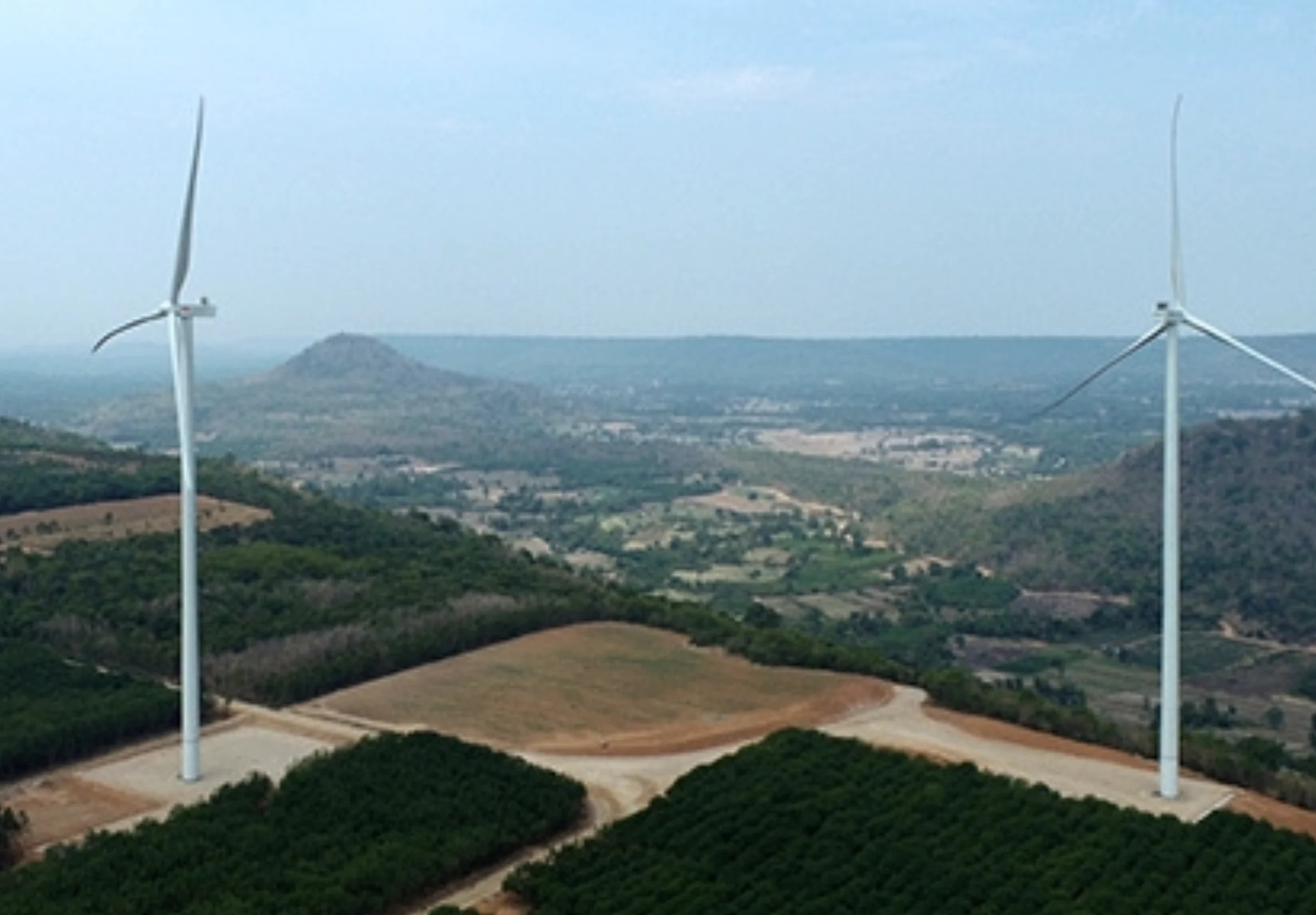
 Thailand urged to open farm land for wind projects
THIS NEWS ARTICLE KINDLY SPONSORED BY FALLPROTEC, A WORLD-RENOWNED NAME IN THE DESIGN AND MANUFACTURE OF PREMIUM FALL PROTECTION SYSTEMS AND HEIGHT ACCESS SOLUTIONS
Energy investors are urging the Thai government to permit wind farms on Sor Por Kor agricultural reform land, saying the policy could help reduce electricity costs, improve energy security and give farmers an additional income stream.
The proposal was discussed at a wind energy forum hosted by the Thai Wind Energy Association (ThaiWEA) on Thursday 15 October 2026. Industry representatives said land reclassified from degraded forest into Sor Por Kor plots could play an important role in expanding Thailand’s renewable power capacity.
Thailand currently has about 1.5 gigawatts of installed wind power. ThaiWEA said around 30 million rai of Sor Por Kor land has strong wind potential, but new projects remain blocked under current rules.
Legal barriers leave projects in limbo
Isares Pahonyinrom, an adviser and former president of ThaiWEA, and Akarat Viriyajarn, a board director, voiced support for renewable energy projects on Sor Por Kor land while highlighting continuing legal obstacles.
In the past, some investors developed wind farms on such land and paid rental fees to farmers because land-use regulations were loosely enforced. However, a court later ruled that the land could not be used for purposes other than agriculture, effectively halting new wind power projects despite strong wind resources in several areas.
The Agricultural Land Reform Act has already been amended to allow renewable energy schemes on Sor Por Kor land, according to the association. But the amendment has not yet received final cabinet approval, leaving proposed projects in limbo.
ThaiWEA believes removing the legal barriers could allow Thailand to significantly increase wind capacity and support its target of achieving net-zero greenhouse gas emissions by 2050.
Farmers could keep cultivating most land
Mr Akarat said wind farm developments would provide farmers with annual rental income and access to community development funds set up by developers.
Wind turbines typically occupy about 10% of a project site, allowing farmers to continue agricultural activities on the remaining 90%, he said.
The association also argued that more renewable generation would reduce Thailand’s dependence on costly imported liquefied natural gas (LNG), which is becoming more important as domestic gas supplies decline. Lower LNG reliance could help reduce electricity costs, ThaiWEA said.
Onshore wind seen as the practical option
Industry representatives said offshore wind farms are not considered practical for Thailand because of weaker wind conditions, high investment costs, and strict regulations governing marine activities and environmental impacts.
Onshore wind also complements solar power by generating electricity at night, helping to improve the reliability of the country’s power system, ThaiWEA said.
Source: https://aseannow.com/thailand-news/thailand-urged-to-open-farm-land-for-wind-projects-r4305/
Google Translation:
[We apologise if any of the translation is incorrect: google Translation occasionally gets it wrong]
เรียกร้องไทยเปิดทางใช้ที่ดิน ส.ป.ก. พัฒนาโครงการพลังงานลม
บทความข่าวนี้ได้รับการสนับสนุนโดย FALLPROTEC แบรนด์ระดับโลกด้านการออกแบบและผลิตระบบป้องกันการตกจากที่สูงและโซลูชันสำหรับการเข้าถึงพื้นที่สูงที่มีคุณภาพเยี่ยม
กลุ่มนักลงทุนด้านพลังงานกำลังผลักดันให้รัฐบาลไทยอนุญาตให้มีการจัดตั้งฟาร์มกังหันลมบนที่ดินภายใต้การปฏิรูปที่ดินเพื่อเกษตรกรรม (ส.ป.ก.) โดยระบุว่านโยบายนี้จะช่วยลดค่าไฟฟ้า เสริมสร้างความมั่นคงทางพลังงาน และสร้างรายได้เสริมให้กับเกษตรกร
ข้อเสนอดังกล่าวได้รับการหยิบยกขึ้นมาหารือในการประชุมด้านพลังงานลม ซึ่งจัดโดยสมาคมพลังงานลมแห่งประเทศไทย (ThaiWEA) เมื่อวันพฤหัสบดีที่ 15 ตุลาคม 2026 โดยตัวแทนจากภาคอุตสาหกรรมกล่าวว่า ที่ดินที่เคยเป็นป่าเสื่อมโทรมและถูกเปลี่ยนสถานะมาเป็นที่ดิน ส.ป.ก. นั้น อาจมีบทบาทสำคัญในการขยายกำลังการผลิตพลังงานหมุนเวียนของประเทศไทย
ปัจจุบันประเทศไทยมีกำลังการผลิตไฟฟ้าจากพลังงานลมติดตั้งอยู่ประมาณ 1.5 กิกะวัตต์ ทั้งนี้ ThaiWEA ระบุว่าที่ดิน ส.ป.ก. กว่า 30 ล้านไร่ มีศักยภาพด้านพลังงานลมสูง แต่โครงการใหม่ๆ ยังคงไม่สามารถดำเนินการได้เนื่องจากกฎระเบียบในปัจจุบัน
อุปสรรคทางกฎหมายทำให้โครงการต่างๆ ต้องหยุดชะงัก
อิสเรศ พหลโยธินรมย์ ที่ปรึกษาและอดีตนายกสมาคม ThaiWEA พร้อมด้วย อัครัตน์ วิริยาจารย์ กรรมการสมาคม ได้แสดงจุดยืนสนับสนุนการพัฒนาโครงการพลังงานหมุนเวียนบนที่ดิน ส.ป.ก. พร้อมทั้งชี้ให้เห็นถึงอุปสรรคทางกฎหมายที่ยังคงมีอยู่
ในอดีต นักลงทุนบางรายเคยพัฒนาฟาร์มกังหันลมบนที่ดินลักษณะดังกล่าวและจ่ายค่าเช่าให้แก่เกษตรกร เนื่องจากกฎระเบียบการใช้ที่ดินยังไม่มีการบังคับใช้อย่างเคร่งครัด อย่างไรก็ตาม ต่อมามีคำวินิจฉัยจากศาลว่าที่ดินดังกล่าวไม่สามารถนำไปใช้เพื่อวัตถุประสงค์อื่นนอกเหนือจากการเกษตรได้ ส่งผลให้โครงการพลังงานลมใหม่ๆ ต้องหยุดชะงักลง แม้ว่าในหลายพื้นที่จะมีศักยภาพด้านพลังงานลมสูงก็ตาม
ทางสมาคมระบุว่า แม้จะมีการแก้ไขพระราชบัญญัติการปฏิรูปที่ดินเพื่อเกษตรกรรมเพื่อให้สามารถดำเนินโครงการพลังงานหมุนเวียนบนที่ดิน ส.ป.ก. ได้แล้ว แต่การแก้ไขดังกล่าวยังไม่ผ่านการอนุมัติขั้นสุดท้ายจากคณะรัฐมนตรี ทำให้โครงการที่เสนอไว้ยังคงอยู่ในสถานะที่ไม่สามารถเดินหน้าต่อได้
ThaiWEA เชื่อว่าหากสามารถขจัดอุปสรรคทางกฎหมายเหล่านี้ได้ ประเทศไทยจะสามารถเพิ่มกำลังการผลิตพลังงานลมได้อย่างมีนัยสำคัญ ซึ่งจะช่วยสนับสนุนเป้าหมายการบรรลุการปล่อยก๊าซเรือนกระจกสุทธิเป็นศูนย์ (Net Zero) ภายในปี 2050
เกษตรกรยังสามารถใช้ประโยชน์จากที่ดินส่วนใหญ่ในการเพาะปลูกได้
อัครัตน์กล่าวเสริมว่า การพัฒนาฟาร์มกังหันลมจะช่วยให้เกษตรกรมีรายได้จากค่าเช่าที่ดินเป็นรายปี อีกทั้งยังได้รับประโยชน์จากกองทุนพัฒนาชุมชนที่ผู้พัฒนาโครงการจัดตั้งขึ้นอีกด้วย เขากล่าวว่า โดยทั่วไปแล้วกังหันลมจะใช้พื้นที่เพียงประมาณ 10% ของพื้นที่โครงการทั้งหมด ทำให้เกษตรกรยังสามารถดำเนินกิจกรรมทางการเกษตรต่อไปได้ในพื้นที่อีก 90% ที่เหลือ
นอกจากนี้ สมาคมฯ ยังระบุว่าการผลิตไฟฟ้าจากพลังงานหมุนเวียนที่เพิ่มขึ้นจะช่วยลดการพึ่งพาก๊าซธรรมชาติเหลว (LNG) นำเข้าที่มีราคาสูง ซึ่งนับวันจะยิ่งมีความสำคัญมากขึ้นเนื่องจากปริมาณก๊าซธรรมชาติที่ผลิตได้ภายในประเทศมีแนวโน้มลดลง โดย ThaiWEA ระบุว่าการลดการพึ่งพา LNG อาจช่วยให้ค่าไฟฟ้าถูกลงได้
มองว่าพลังงานลมบนบกเป็นทางเลือกที่เหมาะสมกว่า
ตัวแทนในอุตสาหกรรมกล่าวว่า ฟาร์มกังหันลมในทะเลไม่ถือเป็นทางเลือกที่เหมาะสมสำหรับประเทศไทย เนื่องจากสภาพลมที่ไม่เอื้ออำนวยเท่าที่ควร ต้นทุนการลงทุนที่สูง รวมถึงกฎระเบียบที่เข้มงวดเกี่ยวกับการดำเนินกิจกรรมทางทะเลและผลกระทบต่อสิ่งแวดล้อม
ThaiWEA ยังเสริมว่า พลังงานลมบนบกสามารถช่วยเสริมพลังงานแสงอาทิตย์ได้ โดยกังหันลมจะผลิตไฟฟ้าในช่วงเวลากลางคืน ซึ่งช่วยเพิ่มเสถียรภาพให้กับระบบไฟฟ้าของประเทศได้อีกทางหนึ่ง

