Ho Chi Minh City officially starts work on first major component of Metro Line No. 2 (Ben Thanh – Tham Luong) on 2 July 2026
THIS NEWS ARTICLE KINDLY SPONSORED BY FALLPROTEC, A WORLD-RENOWNED NAME IN THE DESIGN AND MANUFACTURE OF PREMIUM FALL PROTECTION SYSTEMS AND HEIGHT ACCESS SOLUTIONS
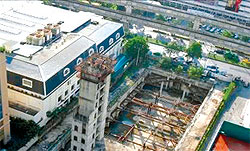
The first construction activity involves lowering a reinforced steel cage for the diaphragm wall at the underground ST10 (Pham Van Bach) station, one of the line’s key stations.
Ho Chi Minh City officially began construction of the first major component of Metro Line No. 2 (Ben Thanh – Tham Luong) on July 2, marking the project’s transition from the preparation phase to full-scale construction.
The first construction activity involves lowering a reinforced steel cage for the diaphragm wall at the underground ST10 (Pham Van Bach) station, one of the line’s key stations. Diaphragm walls are deep reinforced concrete structures that support excavation and form the outer walls of underground stations.
The ceremony, organised by the city’s Management Authority for Urban Railways (MAUR), coincided with the 50th anniversary of Sai Gon – Gia Dinh officially named after President Ho Chi Minh (July 2, 1976–2026).
In his remarks, MAUR Director Phan Cong Bang described the event as an important step for both Metro Line No. 2 and the city’s urban transport system.
He said that nearly three months after the engineering, procurement and construction (EPC) contract was signed on April 8, the project investor and the EPC consortium had completed key legal, technical and preparatory work despite various challenges, paving the way for construction to begin.
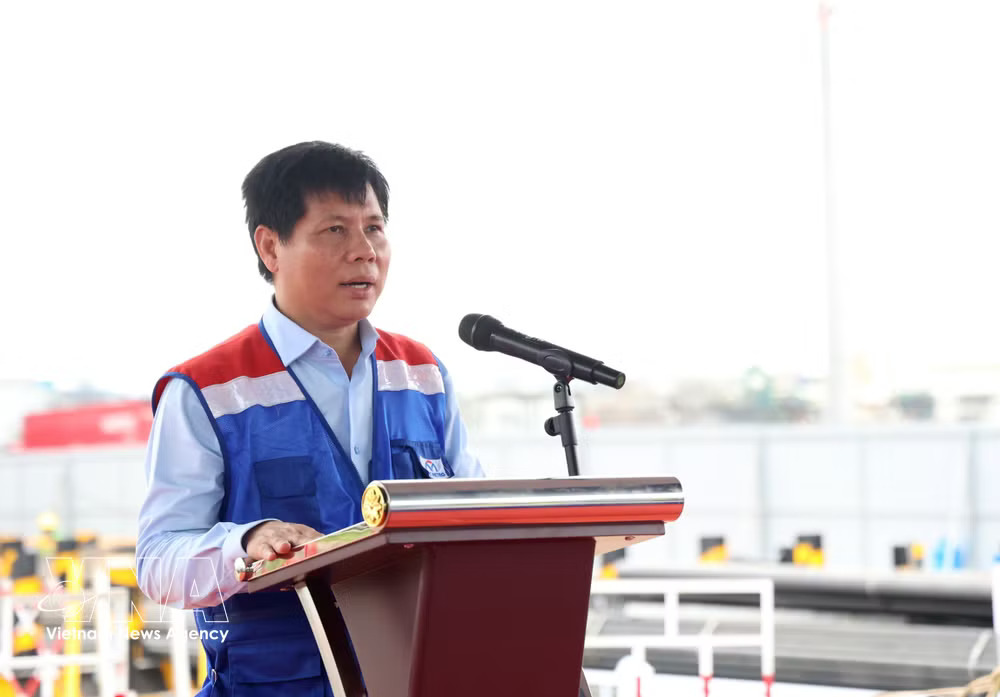
According to Bang, additional geological surveys along the route have largely been completed to support detailed engineering design. Technical solutions have also been finalised for the two most critical underground stations – ST5 (Le Thi Rieng) and ST10 (Pham Van Bach).
The contractor has established a material quality control system, selected qualified subcontractors for diaphragm wall construction, and coordinated with local authorities to widen sections of Cach Mang Thang Tam and Truong Chinh roads to facilitate traffic diversions during construction.
The official urged the EPC consortium to accelerate construction while ensuring absolute safety, particularly when handling oversized and heavy structural components. He also called for construction methods that minimise traffic congestion, dust and disruption to nearby residents.
Representing the EPC consortium, Director of the Metro Line No. 2 project Long Quoc Tuan said ST10 is one of the most technically challenging stations on the route because it is located close to the controlled airspace of Tan Son Nhat International Airport, where construction height is limited to 18 metres.
Despite those constraints, he said the consortium will adhere to the principles of “safety first, quality as the foundation and standards as the lodestar” while complying with both Vietnamese regulations and European technical standards.
According to MAUR, ST10 and ST5 will serve as the launch sites for two tunnel boring machines (TBMs) that will excavate the underground section of the metro line.
Construction of the 534-metre diaphragm wall at ST10 is expected to take around six months. Work is also underway at ST5. Meanwhile, construction at the remaining stations is scheduled to begin in July and August after traffic diversion plans and site preparation are completed.
Once operational, Metro Line No. 2 is expected to help improve public transport capacity, ease road congestion and support transit-oriented urban development in Ho Chi Minh City.
Source: https://en.vietnamplus.vn/ho-chi-minh-city-starts-work-on-first-major-component-of-metro-line-no-2-post347626.vnp
Google Translation:
นครโฮจิมินห์เริ่มงานก่อสร้างส่วนประกอบหลักแรกของรถไฟฟ้าใต้ดินสาย 2 (เบ็นถั่น – ถัมลวง) อย่างเป็นทางการในวันที่ 2 กรกฎาคม 2569
โครงเหล็กเสริมแรงถูกหย่อนลงสำหรับผนังกั้นที่สถานีใต้ดิน ST10 (พามวันบัค) ในวันที่ 2 กรกฎาคม (ภาพ: VNA)
ข่าวนี้ได้รับการสนับสนุนโดย FALLPROTEC บริษัทชั้นนำระดับโลกด้านการออกแบบและผลิตระบบป้องกันการตกจากที่สูงและโซลูชันการเข้าถึงที่สูง
กิจกรรมการก่อสร้างแรกเกี่ยวข้องกับการหย่อนโครงเหล็กเสริมแรงสำหรับผนังกั้นที่สถานีใต้ดิน ST10 (พามวันบัค) ซึ่งเป็นหนึ่งในสถานีสำคัญของสายนี้
เมื่อวันที่ 2 กรกฎาคมที่ผ่านมา นครโฮจิมินห์ได้เริ่มการก่อสร้างส่วนประกอบหลักส่วนแรกของรถไฟฟ้าใต้ดินสาย 2 (เบ็นถั่น – ถัมลวง) อย่างเป็นทางการ ซึ่งถือเป็นการเปลี่ยนผ่านจากขั้นตอนการเตรียมการไปสู่การก่อสร้างเต็มรูปแบบ
กิจกรรมการก่อสร้างแรกเกี่ยวข้องกับการวางโครงเหล็กเสริมแรงสำหรับกำแพงไดอะแฟรมที่สถานีใต้ดิน ST10 (ฟามวันบัค) ซึ่งเป็นหนึ่งในสถานีสำคัญของสายนี้ กำแพงไดอะแฟรมเป็นโครงสร้างคอนกรีตเสริมเหล็กที่อยู่ลึกภายในอาคาร เพื่อรองรับการขุดเจาะและเป็นผนังด้านนอกของสถานีใต้ดิน
พิธีดังกล่าวจัดขึ้นโดยหน่วยงานบริหารจัดการระบบขนส่งมวลชนในเมือง (MAUR) ของเมือง และตรงกับวันครบรอบ 50 ปีของการตั้งชื่อถนนสายไซง่อน-จาดีนตามชื่อประธานาธิบดีโฮจิมินห์ (2 กรกฎาคม 2519–2569) อย่างเป็นทางการ
นายฟานคงบัง ผู้อำนวยการ MAUR กล่าวในสุนทรพจน์ว่า เหตุการณ์นี้เป็นก้าวสำคัญสำหรับทั้งรถไฟฟ้าใต้ดินสาย 2 และระบบขนส่งมวลชนในเมือง
เขากล่าวว่าเกือบสามเดือนหลังจากลงนามในสัญญาวิศวกรรม จัดซื้อ และก่อสร้าง (EPC) เมื่อวันที่ 8 เมษายน ผู้ลงทุนโครงการและกลุ่มบริษัท EPC ได้ดำเนินการด้านกฎหมาย ด้านเทคนิค และงานเตรียมการที่สำคัญเสร็จสิ้นแล้ว แม้จะมีอุปสรรคต่างๆ มากมาย ซึ่งเป็นการปูทางให้การก่อสร้างเริ่มต้นขึ้นได้
นายฟาน คอง บัง ผู้อำนวยการ MAUR กล่าวในงาน (ภาพ: VNA)
ตามที่นายบังกล่าว การสำรวจทางธรณีวิทยาเพิ่มเติมตามเส้นทางส่วนใหญ่ได้ดำเนินการเสร็จสิ้นแล้วเพื่อสนับสนุนการออกแบบทางวิศวกรรมโดยละเอียด นอกจากนี้ยังได้สรุปวิธีการแก้ปัญหาทางเทคนิคสำหรับสถานีรถไฟใต้ดินที่สำคัญที่สุดสองแห่ง ได้แก่ ST5 (เลอ ถิ เรียง) และ ST10 (พาม วัน บัค)
ผู้รับเหมาได้จัดตั้งระบบควบคุมคุณภาพวัสดุ คัดเลือกผู้รับเหมาช่วงที่มีคุณสมบัติเหมาะสมสำหรับการก่อสร้างกำแพงกันดิน และประสานงานกับหน่วยงานท้องถิ่นเพื่อขยายถนนบางส่วนของถนนกัจมังทังตามและถนนตรวงชิง เพื่ออำนวยความสะดวกในการเบี่ยงเส้นทางจราจรระหว่างการก่อสร้าง
เจ้าหน้าที่ได้กระตุ้นให้กลุ่มบริษัท EPC เร่งการก่อสร้างในขณะที่ต้องมั่นใจในความปลอดภัยอย่างสูงสุด โดยเฉพาะอย่างยิ่งเมื่อต้องจัดการกับชิ้นส่วนโครงสร้างขนาดใหญ่และหนัก เขายังเรียกร้องให้ใช้วิธีการก่อสร้างที่ลดปัญหาการจราจรติดขัด ฝุ่นละออง และการรบกวนผู้อยู่อาศัยในบริเวณใกล้เคียงให้น้อยที่สุด
นายลอง กว็อก ตวน ผู้อำนวยการโครงการรถไฟฟ้าสาย 2 ซึ่งเป็นตัวแทนของกลุ่มบริษัทรับเหมาก่อสร้าง กล่าวว่า สถานี ST10 เป็นหนึ่งในสถานีที่มีความท้าทายทางเทคนิคมากที่สุดในเส้นทาง เนื่องจากตั้งอยู่ใกล้กับเขตควบคุมการจราจรทางอากาศของสนามบินนานาชาติเตินเซินเญียต ซึ่งจำกัดความสูงในการก่อสร้างไว้ที่ 18 เมตร
แม้จะมีข้อจำกัดเหล่านั้น เขากล่าวว่ากลุ่มบริษัทรับเหมาก่อสร้างจะยึดมั่นในหลักการ “ความปลอดภัยต้องมาก่อน คุณภาพเป็นรากฐาน และมาตรฐานเป็นแนวทาง” พร้อมทั้งปฏิบัติตามกฎระเบียบของเวียดนามและมาตรฐานทางเทคนิคของยุโรป
ตามข้อมูลของ MAUR สถานี ST10 และ ST5 จะเป็นจุดเริ่มต้นสำหรับเครื่องเจาะอุโมงค์ (TBM) สองเครื่องที่จะใช้ในการขุดส่วนใต้ดินของเส้นทางรถไฟฟ้า
การก่อสร้างกำแพงไดอะแฟรมความยาว 534 เมตรที่สถานี ST10 คาดว่าจะใช้เวลาประมาณหกเดือน และขณะนี้กำลังดำเนินการก่อสร้างที่สถานี ST5 อยู่ ในขณะเดียวกัน การก่อสร้างที่สถานีที่เหลือมีกำหนดจะเริ่มในเดือนกรกฎาคมและสิงหาคม หลังจากที่แผนการเบี่ยงเส้นทางจราจรและการเตรียมพื้นที่เสร็จสมบูรณ์
เมื่อเปิดให้บริการแล้ว รถไฟฟ้าใต้ดินสาย 2 คาดว่าจะช่วยเพิ่มขีดความสามารถในการขนส่งสาธารณะ ลดความแออัดบนท้องถนน และสนับสนุนการพัฒนาเมืองที่เน้นการขนส่งสาธารณะในนครโฮจิมินห์